
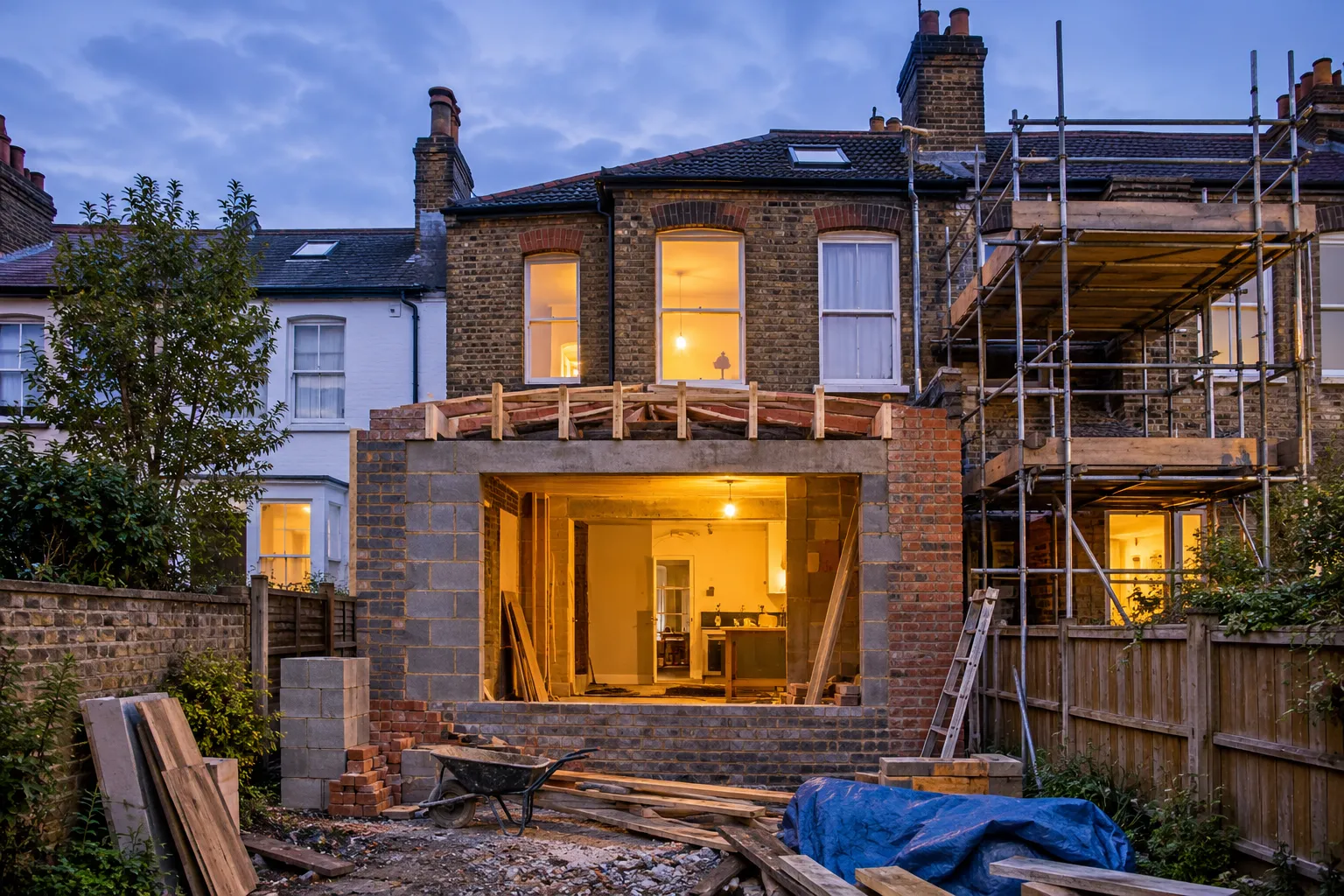
Thirty-five out of every hundred London homeowners have shelved a home improvement in the past five years simply because they could not find a builder they trust. That is not a vague impression. It is the headline finding from new research published by the Federation of Master Builders (FMB), and it points to a growing bottleneck that is now tangled up with London building work on hold party wall questions for anyone planning an extension, loft conversion, or basement dig.
The timing matters. The FMB released its findings on 23 October 2026, just five days before the Autumn Budget, clearly aiming to put pressure on ministers to act. For homeowners, the practical question is different: if trustworthy builders are scarce and booked up for months, how do you avoid your project stalling even further once legal notices, neighbour disputes, and scheduling collide?
Key Takeaways
- 35% of London homeowners have delayed building work in the last five years because they could not find a trustworthy builder, the highest rate in the UK.
- Stalled work is worth an estimated £2 billion a year in London alone, part of £11.2 billion nationwide.
- More than a quarter of homeowners having work done were upgrading electrics, plumbing or heating to keep their homes safe.
- Rising mortgage rates are pushing more Londoners toward extending rather than moving, adding pressure to an already stretched building trade.
- Serving party wall notices early, while a reliable builder is still being found, prevents legal delays stacking on top of building delays.
Why London Building Work on Hold Party Wall Delays Are Piling Up
London’s trust problem with builders is not evenly spread across the country. According to the FMB, the national average for homeowners delaying work due to lack of trust sits at around one in five. London’s rate of 35% is nearly double that, making it the worst-affected region in the UK.
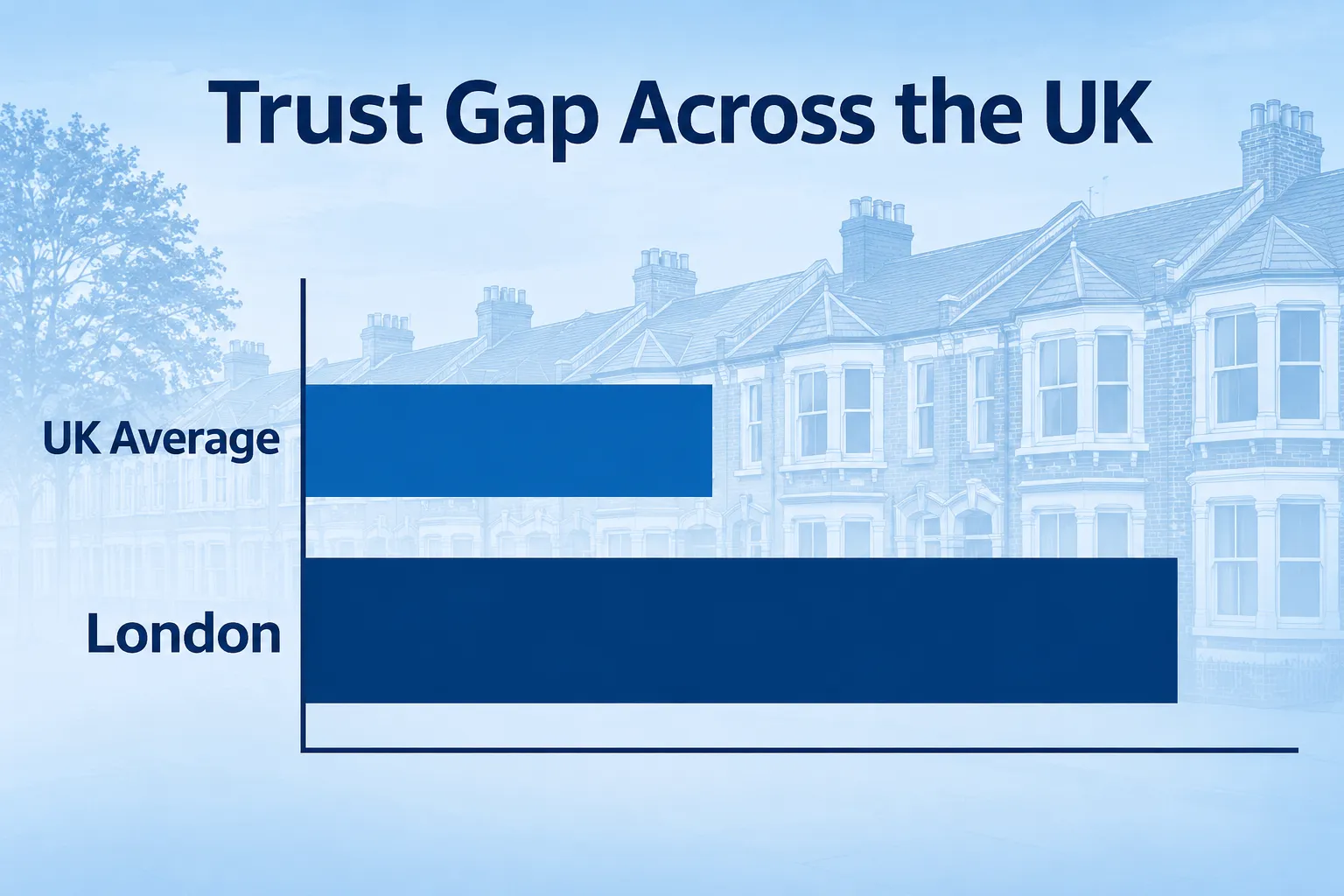
Tom Peardon, FMB London Director, put it bluntly: “London homeowners are the worst affected in the country.” That single line captures why the capital’s housing stock, much of it Victorian and Edwardian terraces sharing party walls, is facing a unique squeeze.
The £2 billion of delayed work in London is part of a much larger national picture. Across the UK, the FMB puts the figure at £11.2 billion a year. Crucially, this is not all cosmetic spending being postponed. More than a quarter of homeowners having work done were upgrading electrics, plumbing or heating to keep their homes safe, improvements tied directly to safety rather than style.
The FMB’s asks include:
- Mandatory licensing of domestic building companies, so homeowners can check credentials before hiring.
- Faster planning decisions for smaller developers and builders.
- A UK-wide network of Build Academies to train the next generation of apprentices.
Until any of that materialises, homeowners are left navigating a market where good builders are rare and in high demand.
How Rising Mortgage Rates Are Adding Pressure
There is a second force pushing Londoners toward extending rather than moving. Moneyfacts reported on 4 November 2026 that the average new mortgage rate had reached a three-year high of 5.89%, with the average two-year fixed rate at 5.97%. Moving house now carries a heavier borrowing cost than it did a year or two ago.
The logical response for many owners is to stay put and improve what they already have: a side-return extension, a loft conversion, a basement dig, or a garden room. That decision adds even more demand onto a building sector already struggling to supply enough trusted labour, which is exactly why London building work on hold party wall issues are becoming more common rather than less.
Party Wall Notices and London Building Work on Hold: What the Law Actually Requires
Here is where many projects grind to an unexpected halt. Even once a trustworthy builder is finally booked, the legal clock on party wall matters has its own rules, and ignoring them can stall a project just as effectively as a missing tradesperson.
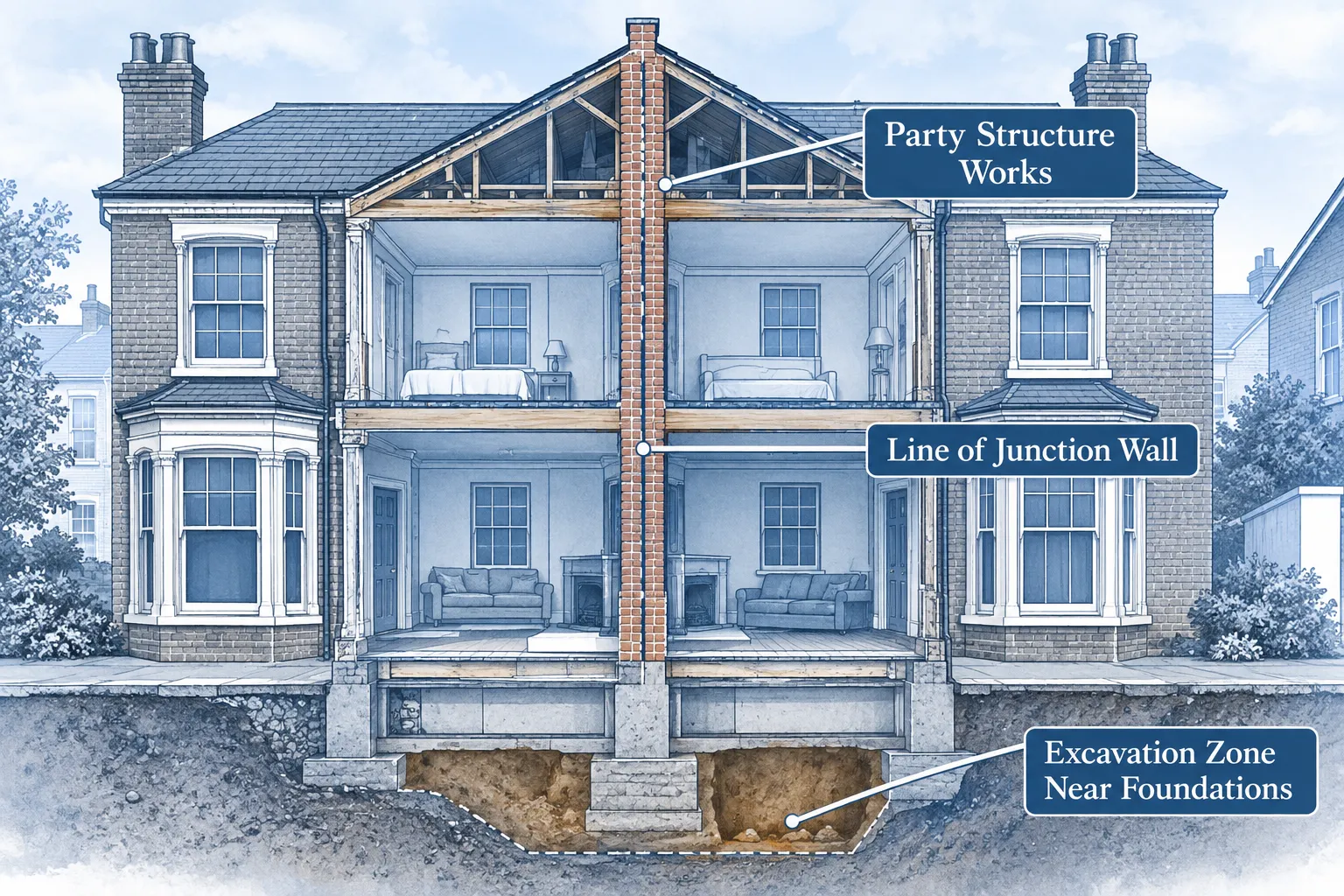
Under the Party Wall etc. Act 1996, which applies in England and Wales, building owners must serve formal notice before:
| Type of work | Minimum notice period |
|---|---|
| Work to a party wall or party structure | 2 months |
| Building a new wall at the line of junction | 1 month |
| Excavating within 3 metres of a neighbour’s structure (to a lower level than its foundations) | 1 month |
| Excavating within 6 metres where a 45-degree line from the neighbour’s foundations is cut | 1 month |
Once a notice is served, the adjoining owner has 14 days to respond. If they dissent, or simply do not respond to a party structure or excavation notice, a dispute is deemed to have arisen automatically. At that point, surveyors are appointed to agree a party wall award before work can proceed. A schedule of condition recording the neighbour’s property is normally carried out before work starts, protecting both sides if damage is later disputed.
One detail trips up many homeowners: a served notice lapses if work does not begin within 12 months. And the Party Wall Act process is entirely separate from planning permission and Building Regulations approval, so ticking one box does not tick the others.
“Neighbours should not be left to find out a party wall project is happening when the scaffolding arrives.”
Serving Notices Early Avoids Compounding Delays
With good builders booked months in advance, the smartest move is to start the party wall notice process as soon as a project is confirmed, not after a contractor is finally secured. Because the response window and potential award process can take weeks, running it in parallel with the search for a builder, rather than afterward, prevents two separate delays from stacking on top of each other.
Homeowners should also treat the trust problem the FMB has identified as a reason to vet contractors more carefully, not less. Before signing anything, check:
- Proof of public liability insurance.
- References from recent, comparable local jobs.
- A written contract setting out scope, timescales, and payment stages.
A trustworthy builder and a properly served party wall notice are two separate safeguards. Skipping either one is how projects stall for months.
FAQ: London Building Work on Hold Party Wall Questions
What percentage of London homeowners have delayed building work due to lack of trust in builders? The FMB’s October 2026 research found 35% of London homeowners had put off work in the last five years because they could not find a builder they trust, the highest rate in the UK.
How much building work is currently on hold in London? The FMB estimates £2 billion a year of building work is delayed in London, part of a £11.2 billion total across the UK.
Do I need a party wall notice for a loft conversion? If the work affects a shared party wall or structure, a notice is required with at least two months’ notice under the Party Wall etc. Act 1996.
What happens if my neighbour does not respond to a party wall notice? If there is no response within 14 days to a party structure or excavation notice, a dispute is deemed to have arisen and surveyors are appointed to agree an award.
Does a party wall notice replace the need for planning permission? No. The Party Wall Act process is entirely separate from planning permission and Building Regulations approval.
How long does a served party wall notice remain valid? A notice lapses if the work does not begin within 12 months of being served.
Conclusion
The FMB’s findings make one thing clear: London’s building trade is under strain, and the trust gap between homeowners and contractors is now large enough to stall £2 billion of work a year. With mortgage rates pushing more owners toward extending rather than moving, demand for reliable builders will likely keep rising faster than supply.
The practical response is to decouple the two sources of delay. Vet builders thoroughly using insurance checks, references, and written contracts, and start the party wall notice process the moment a project is confirmed rather than waiting for a contractor to be secured. Taking both steps early, rather than sequentially, is the clearest way to keep an extension, loft conversion, or basement project moving instead of joining the backlog.