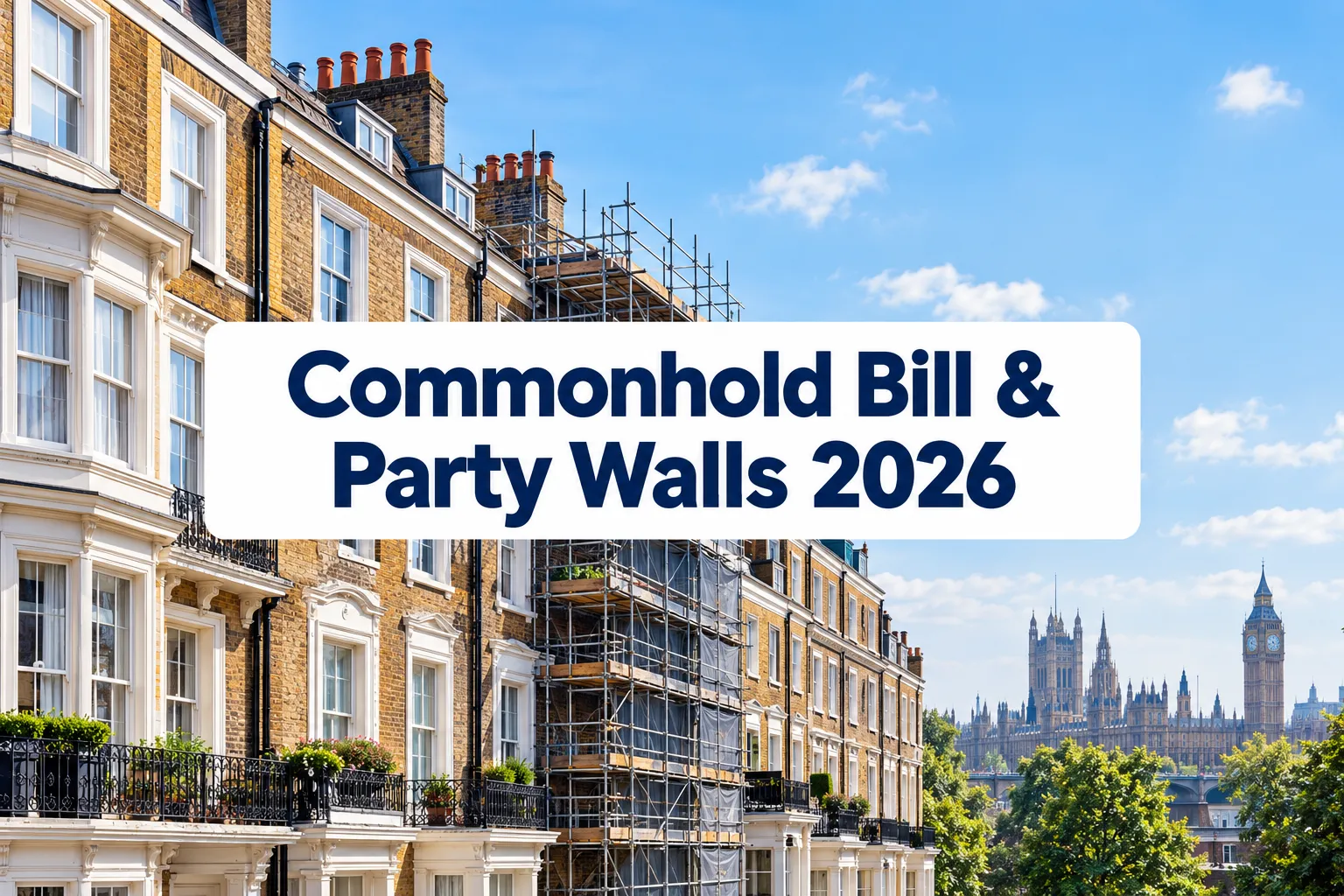
A single paragraph buried in a government press notice on 7 October 2026 could quietly reshape how thousands of London flat owners handle building works next year. The Prime Minister confirmed plans to introduce the Commonhold and Leasehold Reform Bill before Christmas 2026, a move that will eventually touch something far more mundane than headline politics: the party wall notice that lands through your letterbox before a neighbour builds a loft extension. For anyone weighing up a renovation in a converted Victorian terrace or a purpose-built mansion block, the commonhold leasehold reform bill party wall London question is no longer theoretical. It is a practical planning issue for 2027.
This article explains what the draft Bill actually says, how today’s Party Wall etc. Act 1996 rules apply to leasehold flats, and what might change once commonhold tenure and new fee caps take effect.
Key Takeaways
- The Commonhold and Leasehold Reform Bill is expected before Christmas 2026, following a draft published in January 2026 and reviewed by a Select Committee, it is not yet law.
- The draft Bill would make commonhold the default tenure for new flats, cap ground rents, and replace forfeiture with a new lease enforcement system.
- Under current rules, both leaseholders with more than a year left on their lease and freeholders/landlords can count as “owners” for party wall purposes, so multiple notices are often required.
- Commonhold would replace freeholder/leaseholder notice chains with unit owners and a commonhold association, changing who signs party wall awards.
- Separate proposals announced 29 September 2026 would cap permission and administration fees (pets, alterations, documents) charged to leaseholders, relevant to anyone planning works.
What the Commonhold and Leasehold Reform Bill Actually Proposes
The government’s draft Bill, published in January 2026, sets out three central reforms. First, commonhold would become the default tenure for new residential flats in England and Wales, gradually reducing reliance on traditional leasehold structures. Second, ground rents would be capped, addressing years of complaints about escalating charges. Third, forfeiture, the controversial power allowing landlords to repossess a flat over unpaid charges, would be replaced with a proportionate lease enforcement system.
The Housing, Communities and Local Government Select Committee scrutinised the draft earlier in 2026, and Dr Kion Ahadi, Chief Executive of the Leasehold Advisory Service (LEASE), welcomed the direction of travel. Separately, on 29 September 2026, ministers announced plans to cap certain permission and administration fees charged to leaseholders and estate homeowners, covering things like keeping a pet, minor alterations, providing information packs, or recording a change of mortgage lender. A consultation on these fee caps is expected to follow, alongside independent regulation requiring property agents to hold licences and qualifications.
None of this is law yet. The Bill still needs to pass through both Houses of Parliament, and based on the stated timetable, formal introduction before Christmas 2026 would likely mean committee stages and votes running well into 2027.
Why the Commonhold Leasehold Reform Bill Party Wall London Question Matters
London has the highest concentration of leasehold flats in England, many in converted houses, mansion blocks, and purpose-built developments where party walls separate individually owned units. Any shift in how ownership is structured has a direct knock-on effect on the Party Wall etc. Act 1996, the law that governs notices for work on shared walls, floors, and excavations near a boundary.
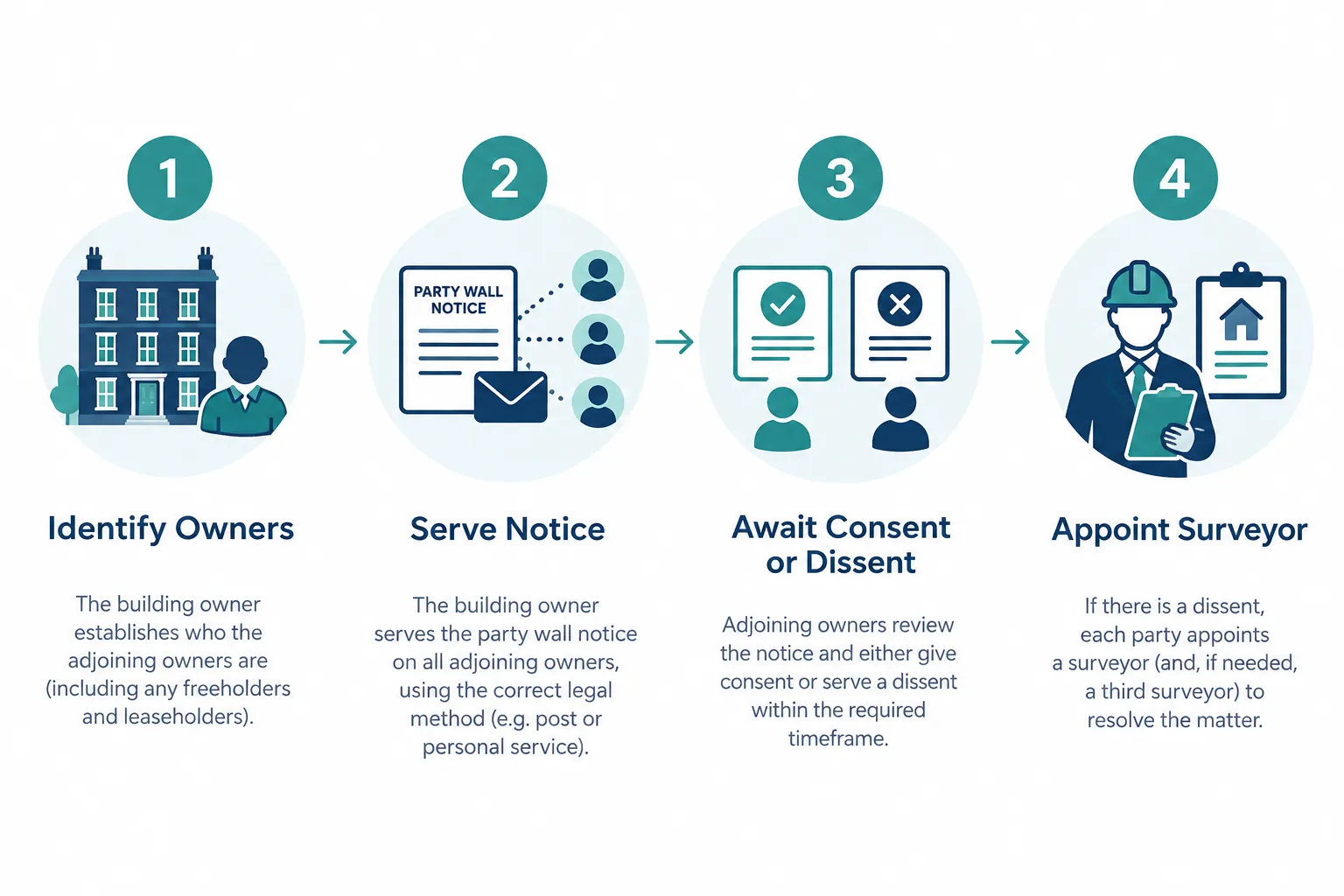
Right now, a leaseholder planning a loft conversion or basement dig must work out exactly who else holds a legal interest in the building before serving notices. Get this wrong, and an award can be challenged or delayed. The commonhold leasehold reform bill party wall London conversation matters because it touches the very definitions the 1996 Act relies on: “building owner” and “adjoining owner.”
Party Wall Act Basics: Building Owners and Adjoining Owners in Flats
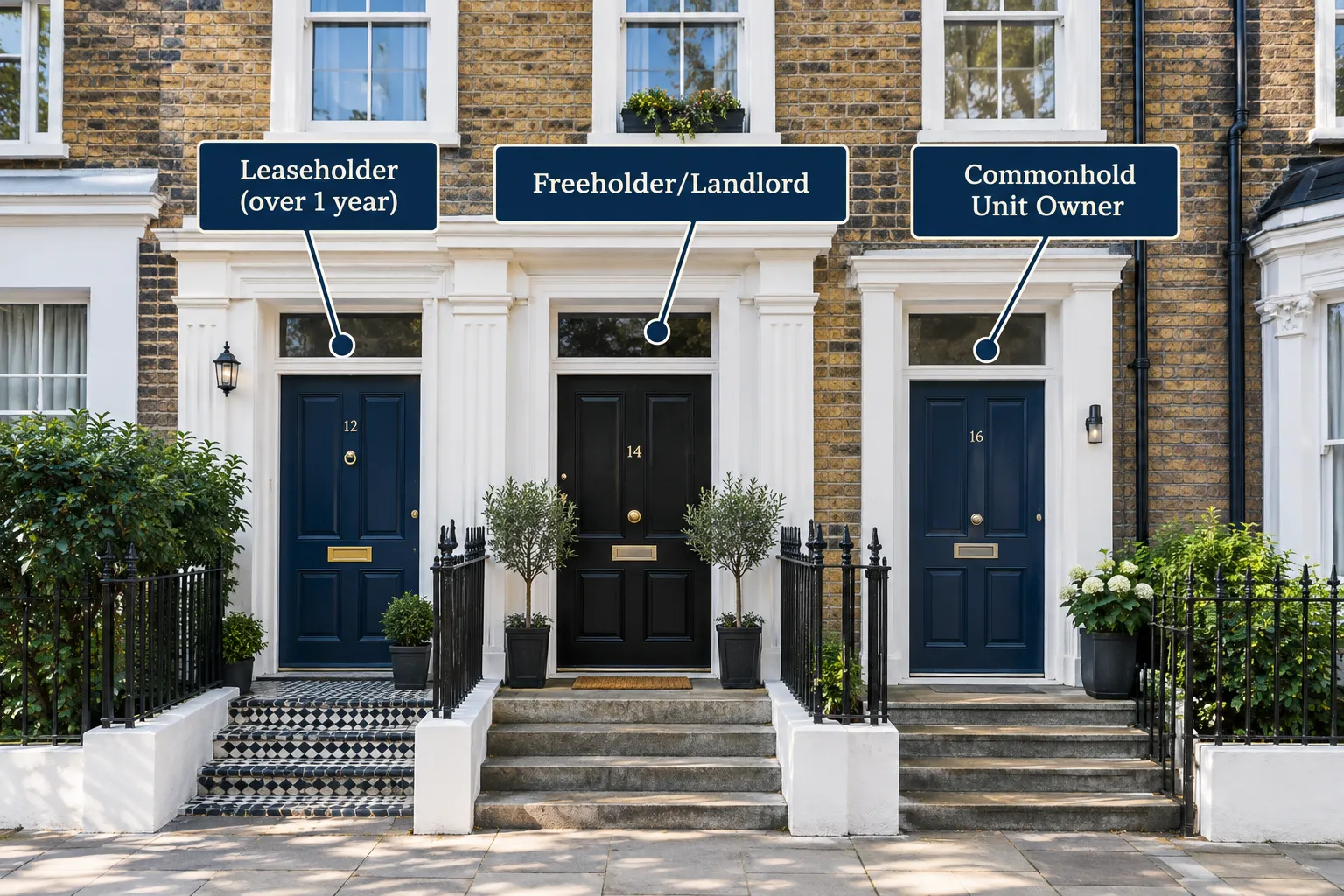
Under the current system, the Party Wall etc. Act 1996 does not just look at who owns the freehold. It recognises anyone with a legal or equitable interest exceeding one year as a potential building owner or adjoining owner. In a typical London conversion, that can mean:
- The freeholder or landlord, who owns the building structure.
- Long leaseholders, whose leases usually run for 90 to 999 years and clearly exceed the one-year threshold.
- Short-term tenants under a year, who generally fall outside the Act’s notice requirements.
This layered ownership is why multiple notices are often needed for a single project. A leaseholder in Flat 2 planning works to a party wall shared with Flat 3 may need to notify both the Flat 3 leaseholder and the building’s freeholder, because both qualify as “adjoining owner” under the Act. Awards must then be agreed or appointed surveyors must adjudicate, sometimes involving three or more parties for one shared wall.
How Commonhold Could Change Party Wall Notices and Awards
Commonhold tenure works differently from leasehold. Instead of a freeholder and multiple leaseholders, each flat becomes a freehold “unit,” and a commonhold association, owned and run by the unit owners collectively, manages shared structures and common parts.
If commonhold becomes the default tenure for new flats, as the draft Bill proposes, the practical effect on party wall notices could be significant:
| Aspect | Current Leasehold Model | Proposed Commonhold Model |
|---|---|---|
| Who serves notice | Leaseholder or freeholder undertaking works | Commonhold unit owner undertaking works |
| Who receives notice | Adjoining leaseholder and freeholder separately | Adjoining unit owner and commonhold association |
| Who signs the award | Building owner, adjoining owner, freeholder (often) | Unit owner and association representative |
| Typical notice count | Multiple, layered by interest | Potentially fewer, more direct |
This table reflects professional interpretation based on how commonhold structures generally operate elsewhere, not a confirmed government position. The Bill has not yet specified exactly how party wall procedures would map onto commonhold associations, and surveyors will be watching closely for guidance once the legislation progresses through Parliament.
Permission Fee Caps, Landlord Consent, and Works Planning
Party wall notices are only one piece of the puzzle for a London flat renovation. Most leases also require landlord consent before structural alterations, and that consent often comes with an administration fee. The 29 September 2026 announcement proposing caps on permission and administration fees could directly reduce the cost of getting that consent, though the detail depends on the promised consultation.
“Multiple layers of consent, lease terms, party wall notices, and now potential fee caps, mean London flat owners should budget time as carefully as money.”
For anyone planning works in 2027, it is sensible to:
- Check the lease for consent and fee requirements before instructing contractors.
- Identify every adjoining owner, including both leaseholders and freeholders, early.
- Serve party wall notices with the standard two-month lead time for most works.
- Keep an eye on the fee cap consultation, since administration charges may fall once rules change.
Separately, the Remediation of Unsafe Cladding Bill, introduced 14 October 2026, will create a register of medium-rise residential buildings and penalties up to £500,000 for breaching remediation orders, a reminder that building-related legislation is moving on several fronts at once, not just leasehold reform.
Quick Reference: Where Things Stand (as of October 2026)- Draft Bill published: January 2026
- Bill due before Parliament: before Christmas 2026
- Legal/valuation cost consultation: closed 23 September 2026
- Valuation rates consultation: closes 21 October 2026
- Marriage-value abolition: not yet in force
FAQ: Commonhold Leasehold Reform Bill Party Wall London
Is the Commonhold and Leasehold Reform Bill already law? No. It is expected to be introduced to Parliament before Christmas 2026 and will need to pass through further readings and committee stages before becoming law, likely stretching into 2027 or beyond.
Do I still need to serve party wall notices under current leasehold rules? Yes. Until the Bill passes and any transitional rules are set, the Party Wall etc. Act 1996 continues to apply exactly as it does now, including the need to identify every qualifying owner.
Will commonhold apply to existing London flats automatically? Not based on current proposals. Commonhold is expected to become the default for new flats; converting existing leasehold blocks is a separate, voluntary process requiring unit owner agreement.
Could fee caps reduce the cost of a party wall project? Potentially, but only for landlord permission and administration fees, not party wall surveyor fees, which are governed separately by the 1996 Act.
Who should I contact to check who needs a party wall notice for my flat? A qualified party wall surveyor can review the lease, title, and building structure to confirm every adjoining owner before notices are served.
Conclusion
The commonhold leasehold reform bill party wall London story is still unfolding, and nothing in the draft legislation changes the Party Wall etc. Act 1996 today. London flat owners planning structural works should continue to follow the current rules: identify every leaseholder and freeholder with a qualifying interest, serve notices correctly, and allow the standard notice periods. At the same time, anyone with a 2027 renovation in mind should track the Bill’s progress through Parliament and watch for consultation outcomes on fee caps and valuation rates, since both could affect project costs and consent processes. The practical next step is simple: get professional advice on notice requirements before any work starts, and revisit that advice once the Bill’s final text is published.
References
- Leasehold Advisory Service (LEASE), “Government confirms plans for Commonhold and Leasehold Reform Bill,” 7 October 2026.
- Ministry of Housing, Communities and Local Government, draft Commonhold and Leasehold Reform Bill, January 2026.
- Housing, Communities and Local Government Select Committee, pre-legislative scrutiny report, 2026.
- Gov.uk announcement on permission and administration fee caps for leaseholders, 29 September 2026.
- Party Wall etc. Act 1996 (as currently in force).
- Leasehold and Freehold Reform Act 2024, valuation rates consultation, closing 21 October 2026.
Party Wall Notice Checker: Who Needs One?
Tenant on lease under 1 year Leaseholder with over 1 year remaining Freeholder / landlord Commonhold unit owner (future tenure)General guidance only, based on the Party Wall etc. Act 1996. The Commonhold and Leasehold Reform Bill is not yet law and may change how commonhold notices work. Always confirm with a party wall surveyor.
commonhold leasehold reform bill, party wall notices London, Party Wall Act 1996, leasehold reform 2026, ground rent cap, commonhold association, London flat renovations, lease extension valuation, forfeiture reform, property agent regulation, building owner adjoining owner, LEASE advisory service