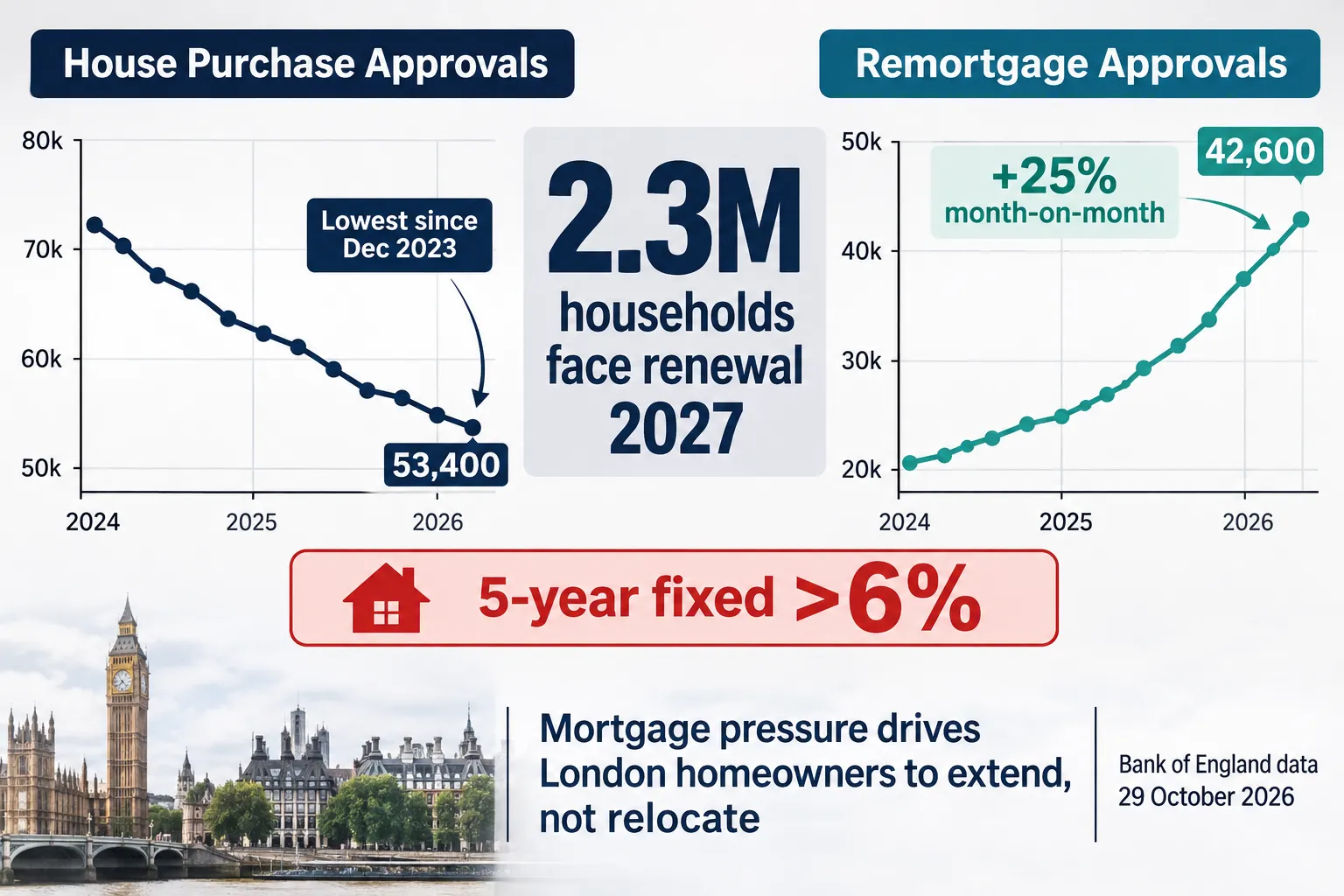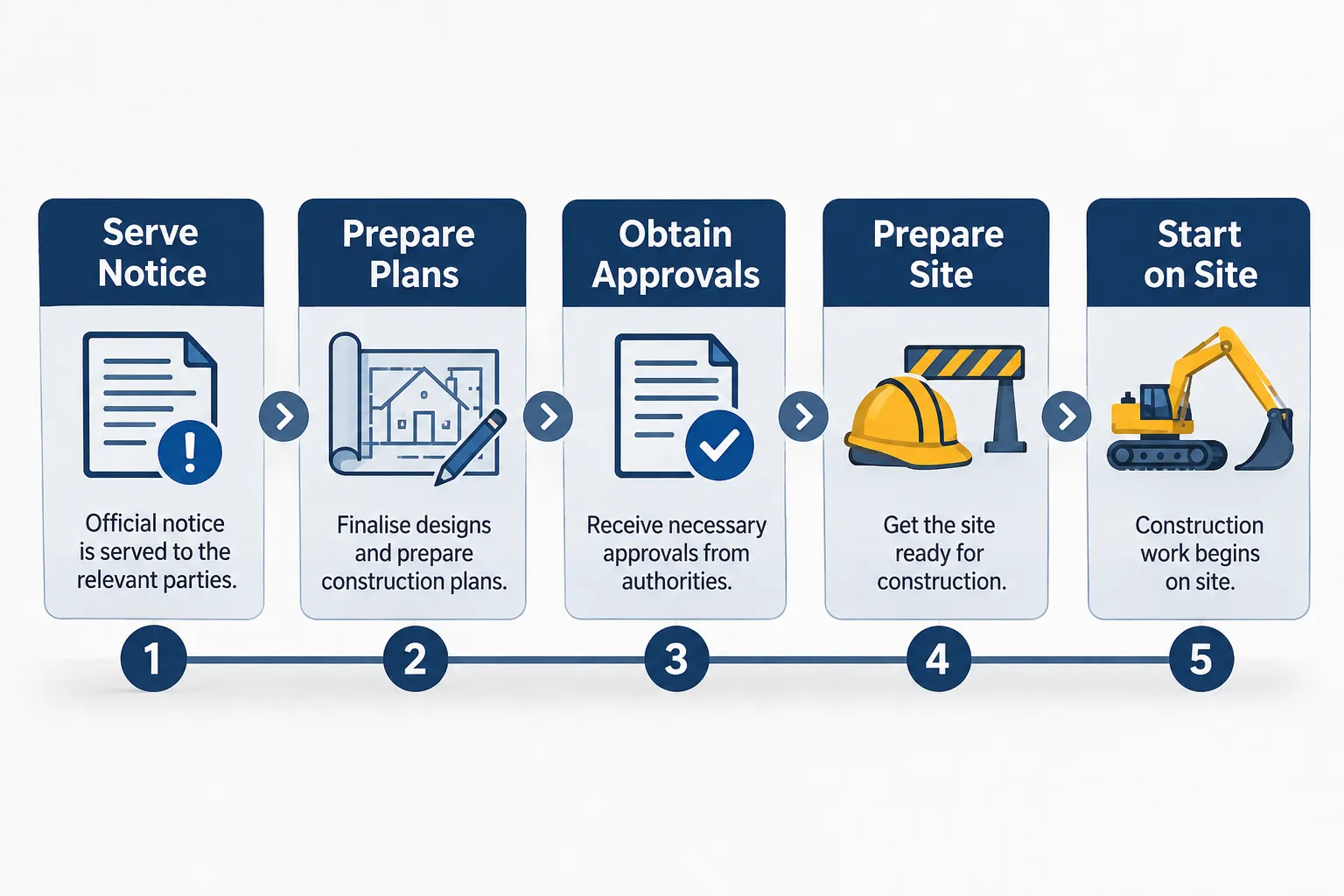

A third of landlords surveyed are now thinking about selling up. That single figure, buried inside a Landbay poll of roughly 2,000 landlords reported by Landlord Today on 2 November 2026, should worry anyone holding rental property in London. But for landlords who are staying put and planning refurbishment works, the real risk sits closer to home: getting the landlords planning works between tenancies party wall notice timeline wrong could cost far more than a registration fee ever will.
With Section 21 abolition, periodic tenancies, and a new £65 annual registration charge all converging this winter, London landlords racing to finish loft conversions, extensions, or HMO conversions during void periods need a clear-eyed plan. Missing a party wall notice is not a paperwork technicality, it is a legal trip-wire that can halt a project, trigger an injunction, and swallow the very void period landlords are relying on.
Key Takeaways
- A third of surveyed landlords are considering selling, driven largely by Section 21 abolition and the shift to periodic tenancies.
- From 15 December 2026, a £65 annual landlord registration fee applies per property across roughly 4.9 million properties in England.
- Periodic tenancies remove fixed end dates, meaning landlords can no longer assume a clean gap to complete party wall works.
- Party wall notices must go out one to two months before works start, late notice can derail a tight refurbishment schedule between tenancies.
- The landlord carrying out the works is the “building owner” under the Party Wall etc. Act 1996 and must serve notice; the occupying tenant cannot do it for them.
The Landbay Survey: What London Landlords Are Actually Doing
The Landbay data, covering around 2,000 landlords, paints a picture of a sector adjusting under pressure rather than panicking outright. Thirty-six percent have increased rents, 34% have tightened tenant referencing or affordability checks, and 29% have scaled back plans to buy further rental property. Sixteen percent are leaning more heavily on letting agents, and 13% are setting aside extra funds to cover rising costs. Still, 28% report no significant changes at all, a reminder that reactions vary widely across the market.
Among landlords citing specific policy impacts, abolition of Section 21 tops the list at 32%, followed by the move to periodic tenancies (15%) and changes to possession grounds (14%). Awareness of the incoming registration scheme is high, over 90% know it is coming, with 65% expecting higher costs and 59% saying they feel prepared.
Key Figures at a Glance
| Measure | Figure | Source |
|---|---|---|
| Landlords considering or deciding to sell | 33% | Landbay / Landlord Today, 2 Nov 2026 |
| Landlords who increased rents | 36% | Landbay / Landlord Today, 2 Nov 2026 |
| Biggest impact cited: Section 21 abolition | 32% | Landbay / Landlord Today, 2 Nov 2026 |
| Landlord registration fee, per property, from 15 Dec 2026 | £65/year | Autumn Budget, 28 Oct 2026 |
| Properties expected in scope of registration | ~4.9 million | Autumn Budget, 28 Oct 2026 |
| Property income tax rates (basic/higher/additional) from 6 April 2027 (up from 22% / 42% / 47%) | 24% / 44% / 49% | Autumn Budget, 28 Oct 2026 |
Why the Party Wall Notice Timeline Matters for Landlords Working Between Tenancies in 2026
The combination of periodic tenancies and tighter margins is reshaping how landlords schedule building works. Under the old fixed-term model, landlords could pencil in works for a known gap between tenancies. Periodic tenancies remove that certainty. A tenant can give notice at any point, and landlords cannot assume a predictable void window exists at all.
This makes early planning essential. Loft conversions, rear extensions, basement digs, chimney breast removals, and cutting into party walls for structural steels all fall under the Party Wall etc. Act 1996. Section 2 works typically require two months’ notice; excavation works under section 6 and new wall works under section 1 require one month. If a landlord waits until a tenancy actually ends before serving notice, the statutory notice period alone can consume the entire void, before a single brick is touched.
For background on which works trigger notice obligations, see this overview of types of party wall works and the detailed guide to party wall notices.
Who Must Serve Notice, and to Whom
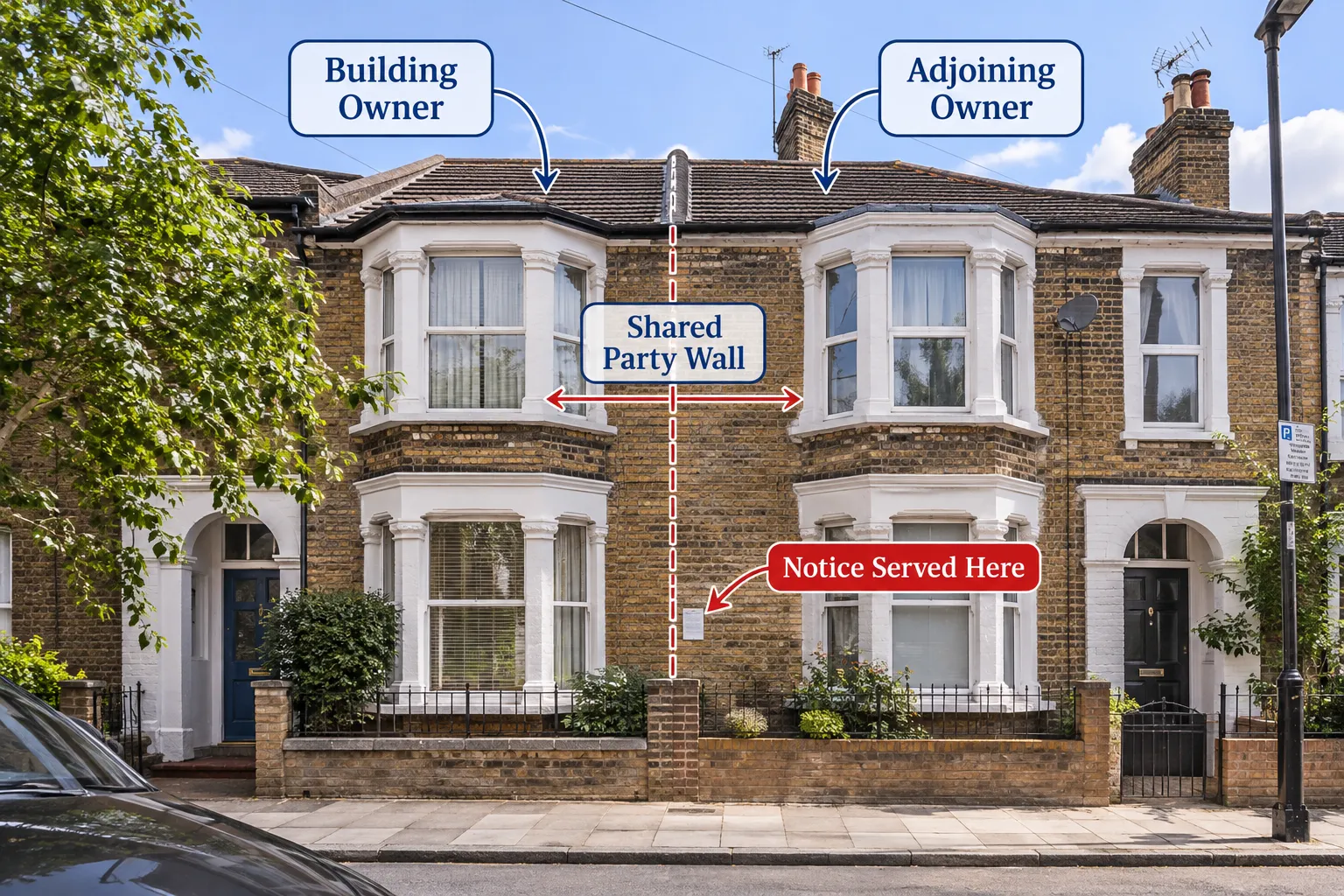
Under the Act, the “building owner” serving notice is the freeholder or landlord undertaking the works, not the tenant occupying the property, even if the tenant is the one dealing with contractors day to day. Landlords converting a house into flats or an HMO, or cutting steels into a shared wall, must identify every adjoining owner correctly.
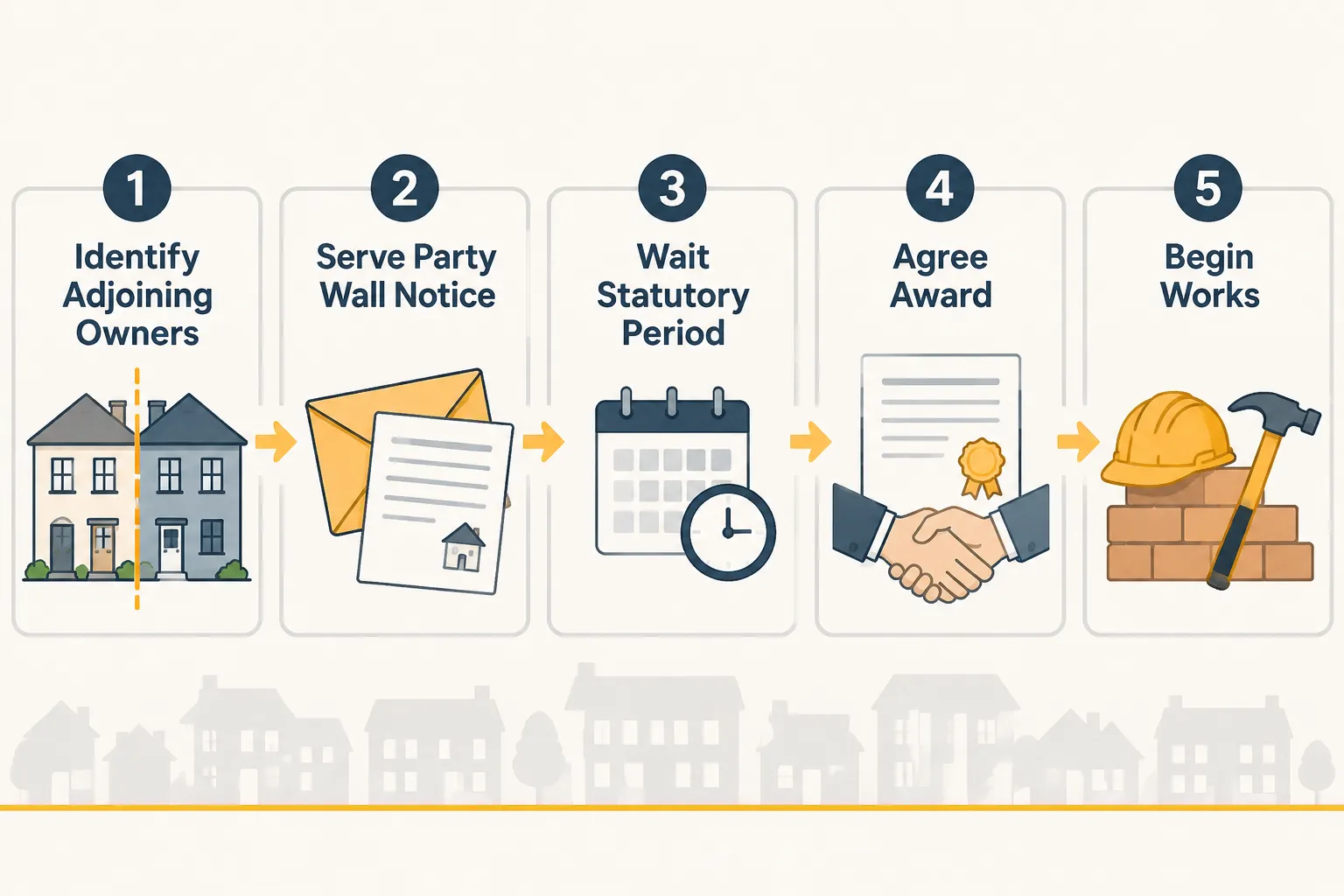
Adjoining owners are not limited to the neighbouring freeholder. They include long leaseholders and any tenant holding a lease with more than a year left to run. Landlords with multiple units on a terrace, or those managing blocks with sitting leaseholders next door, need to map out every party with a legal interest before notices go out. Getting this list wrong can invalidate the notice and restart the clock.
Guidance on serving notices correctly is set out in this explainer on what a party structure notice is and how to serve it, and in this piece on party wall act notices and how to respond.
The Risks of Starting Works Without an Award
Landlords under financial pressure, facing higher rates from April 2027 and a new £65-per-property fee from December 2026, may be tempted to cut corners on process to get works done quickly between tenancies. That is a costly mistake. Starting notifiable works without a party wall award in place exposes the landlord to the risk of an injunction halting the project mid-stream, which can eat further into an already tight void period.
Disputes over damage are also harder to resolve without a schedule of condition recorded before works begin. If an adjoining owner later claims cracking or settlement, the absence of a pre-works record makes it difficult to prove the condition of the wall beforehand. A proper party wall award also sets out access provisions, working hours, and protective measures, all of which reduce the chance of a dispute escalating.
For landlords weighing up whether they can skip formal advice, this piece on having a party wall agreement without a surveyor is a useful starting point, alongside tips on how to keep party wall costs down.
Planning Works Around a Tighter Financial Picture
The Autumn Budget changes add further pressure to get this right the first time. SDLT on the rent element of assured tenancies was removed from 1 May 2026, offering some relief, but from April 2027 Making Tax Digital extends to landlords with qualifying income over £30,000, and income tax rates on property income rise by two percentage points across all bands. Combined with the new registration fee landing on about 4.9 million properties, landlords have less room for costly delays caused by invalid notices or disputed works.
Building in extra lead time, serving notice as early as legally possible and lining up a surveyor well before the anticipated void, protects both the budget and the schedule. Landlords working across multiple boroughs may find it useful to connect with local specialists, such as teams covering north London, west London, east London, south London, or central London.
FAQ
Do party wall notices apply if I only plan to work during a gap between tenants? Yes. The Party Wall etc. Act 1996 applies based on the works and the structure affected, not on whether a property is occupied.
Can my tenant serve the party wall notice on my behalf? No. The building owner, the freeholder or landlord, must serve notice. A managing agent can act for the landlord, but the legal responsibility stays with the owner.
How does the shift to periodic tenancies affect my works schedule? Without fixed end dates, landlords cannot guarantee a known void window. Notices and surveyor arrangements should be started well before any tenancy is expected to end.
What happens if I start works without an award? Adjoining owners can seek an injunction to stop works, and disputes over damage become harder to resolve without agreed terms and a schedule of condition.
Does the £65 registration fee affect party wall obligations? No, the registration fee is a separate administrative charge. Party wall obligations exist independently under the 1996 Act regardless of registration status.
Conclusion
The Landbay findings confirm what many London landlords already sense: regulatory change is squeezing margins and patience. Against that backdrop, a delayed or invalid party wall notice is an entirely avoidable cost. Landlords planning loft conversions, extensions, or conversions between tenancies should map adjoining owners early, serve notices with full lead time, and secure an award before works start, especially now that periodic tenancies make void periods less predictable.
Contact Party Wall Surveyor London today to get notices served correctly, awards agreed promptly, and works programmed so they finish before the next tenancy begins.