
Looking for expert solutions?
Request a Quote

Tag: notices

  • One in Three Landlords Considering Selling as Renters’ Rights Rules and a £65 Registration Fee Land, Why London Landlords Planning Works This Winter Must Get Party Wall Notices Right (November 2026)

    One in Three Landlords Considering Selling as Renters’ Rights Rules and a £65 Registration Fee Land, Why London Landlords Planning Works This Winter Must Get Party Wall Notices Right (November 2026)

    A third of landlords surveyed are now thinking about selling up. That single figure, buried inside a Landbay poll of roughly 2,000 landlords reported by Landlord Today on 2 November 2026, should worry anyone holding rental property in London. But for landlords who are staying put and planning refurbishment works, the real risk sits closer to home: getting the landlords planning works between tenancies party wall notice timeline wrong could cost far more than a registration fee ever will.

    With Section 21 abolition, periodic tenancies, and a new £65 annual registration charge all converging this winter, London landlords racing to finish loft conversions, extensions, or HMO conversions during void periods need a clear-eyed plan. Missing a party wall notice is not a paperwork technicality, it is a legal trip-wire that can halt a project, trigger an injunction, and swallow the very void period landlords are relying on.

    Key Takeaways

    • A third of surveyed landlords are considering selling, driven largely by Section 21 abolition and the shift to periodic tenancies.
    • From 15 December 2026, a £65 annual landlord registration fee applies per property across roughly 4.9 million properties in England.
    • Periodic tenancies remove fixed end dates, meaning landlords can no longer assume a clean gap to complete party wall works.
    • Party wall notices must go out one to two months before works start, late notice can derail a tight refurbishment schedule between tenancies.
    • The landlord carrying out the works is the “building owner” under the Party Wall etc. Act 1996 and must serve notice; the occupying tenant cannot do it for them.

    The Landbay Survey: What London Landlords Are Actually Doing

    The Landbay data, covering around 2,000 landlords, paints a picture of a sector adjusting under pressure rather than panicking outright. Thirty-six percent have increased rents, 34% have tightened tenant referencing or affordability checks, and 29% have scaled back plans to buy further rental property. Sixteen percent are leaning more heavily on letting agents, and 13% are setting aside extra funds to cover rising costs. Still, 28% report no significant changes at all, a reminder that reactions vary widely across the market.
    The Landbay Survey: What London Landlords Are Actually Doing

    Among landlords citing specific policy impacts, abolition of Section 21 tops the list at 32%, followed by the move to periodic tenancies (15%) and changes to possession grounds (14%). Awareness of the incoming registration scheme is high, over 90% know it is coming, with 65% expecting higher costs and 59% saying they feel prepared.

    Key Figures at a Glance

    Measure Figure Source
    Landlords considering or deciding to sell 33% Landbay / Landlord Today, 2 Nov 2026
    Landlords who increased rents 36% Landbay / Landlord Today, 2 Nov 2026
    Biggest impact cited: Section 21 abolition 32% Landbay / Landlord Today, 2 Nov 2026
    Landlord registration fee, per property, from 15 Dec 2026 £65/year Autumn Budget, 28 Oct 2026
    Properties expected in scope of registration ~4.9 million Autumn Budget, 28 Oct 2026
    Property income tax rates (basic/higher/additional) from 6 April 2027 (up from 22% / 42% / 47%) 24% / 44% / 49% Autumn Budget, 28 Oct 2026

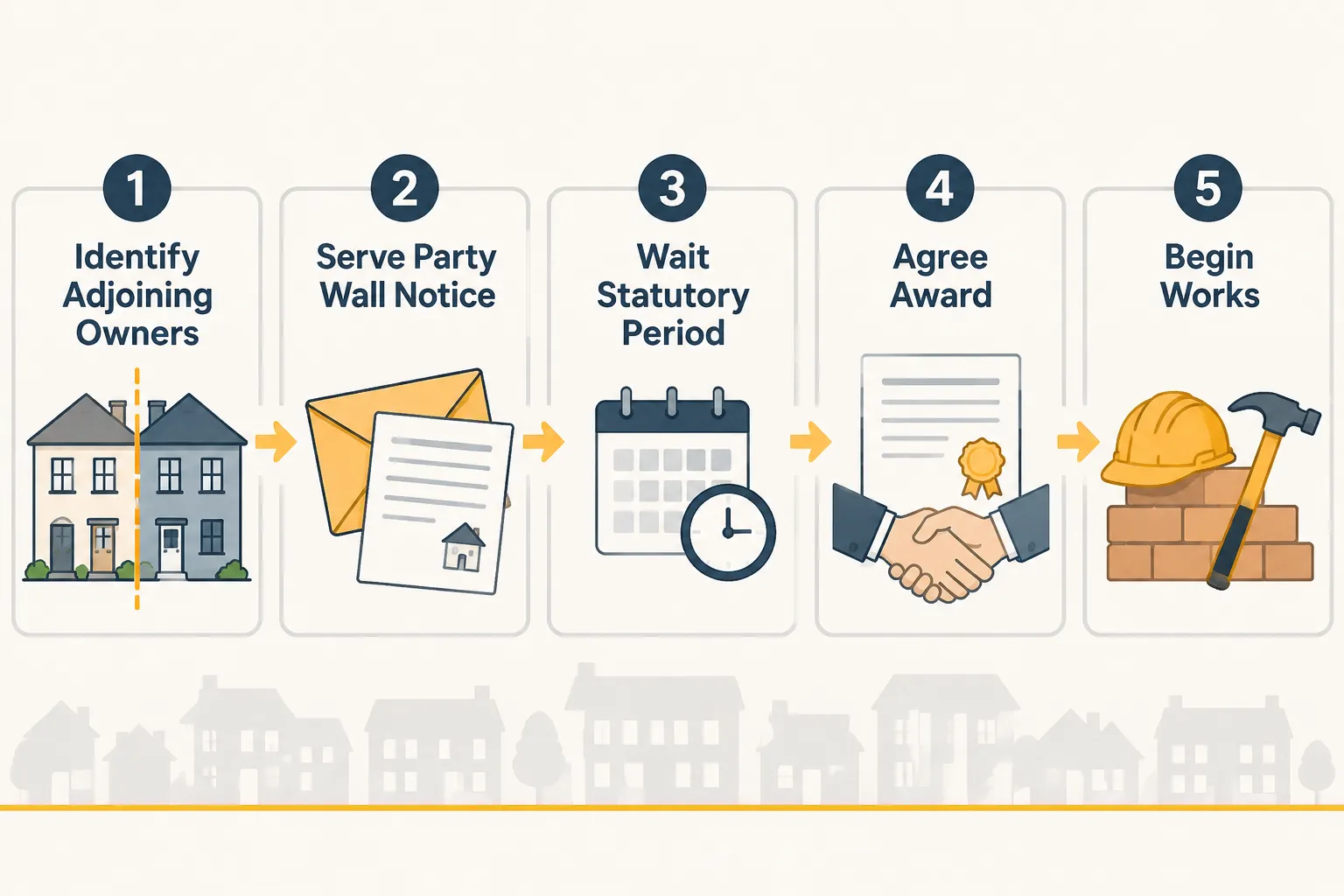
    Why the Party Wall Notice Timeline Matters for Landlords Working Between Tenancies in 2026

    The combination of periodic tenancies and tighter margins is reshaping how landlords schedule building works. Under the old fixed-term model, landlords could pencil in works for a known gap between tenancies. Periodic tenancies remove that certainty. A tenant can give notice at any point, and landlords cannot assume a predictable void window exists at all.

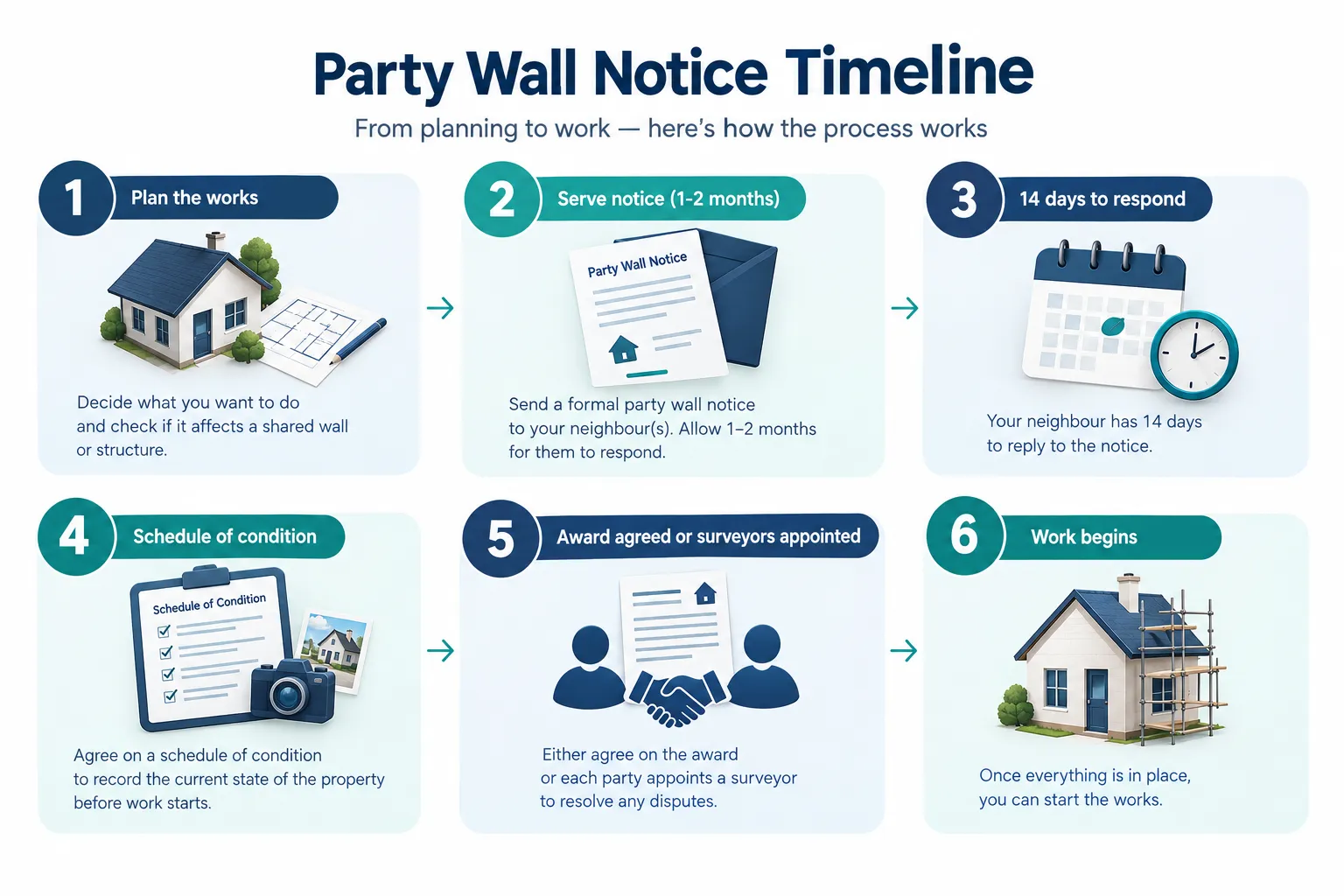
    This makes early planning essential. Loft conversions, rear extensions, basement digs, chimney breast removals, and cutting into party walls for structural steels all fall under the Party Wall etc. Act 1996. Section 2 works typically require two months’ notice; excavation works under section 6 and new wall works under section 1 require one month. If a landlord waits until a tenancy actually ends before serving notice, the statutory notice period alone can consume the entire void, before a single brick is touched.

    For background on which works trigger notice obligations, see this overview of types of party wall works and the detailed guide to party wall notices.

    Who Must Serve Notice, and to Whom

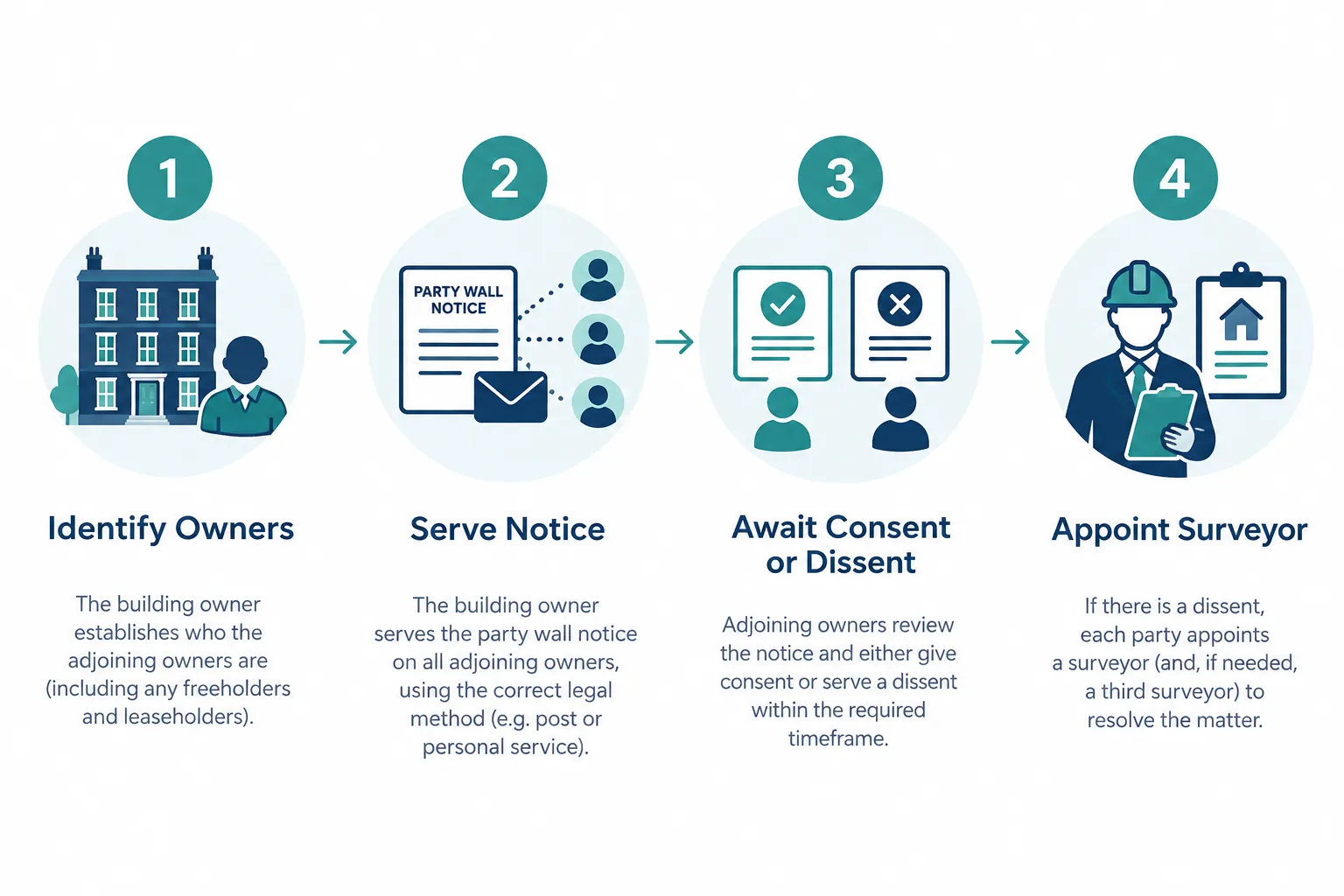
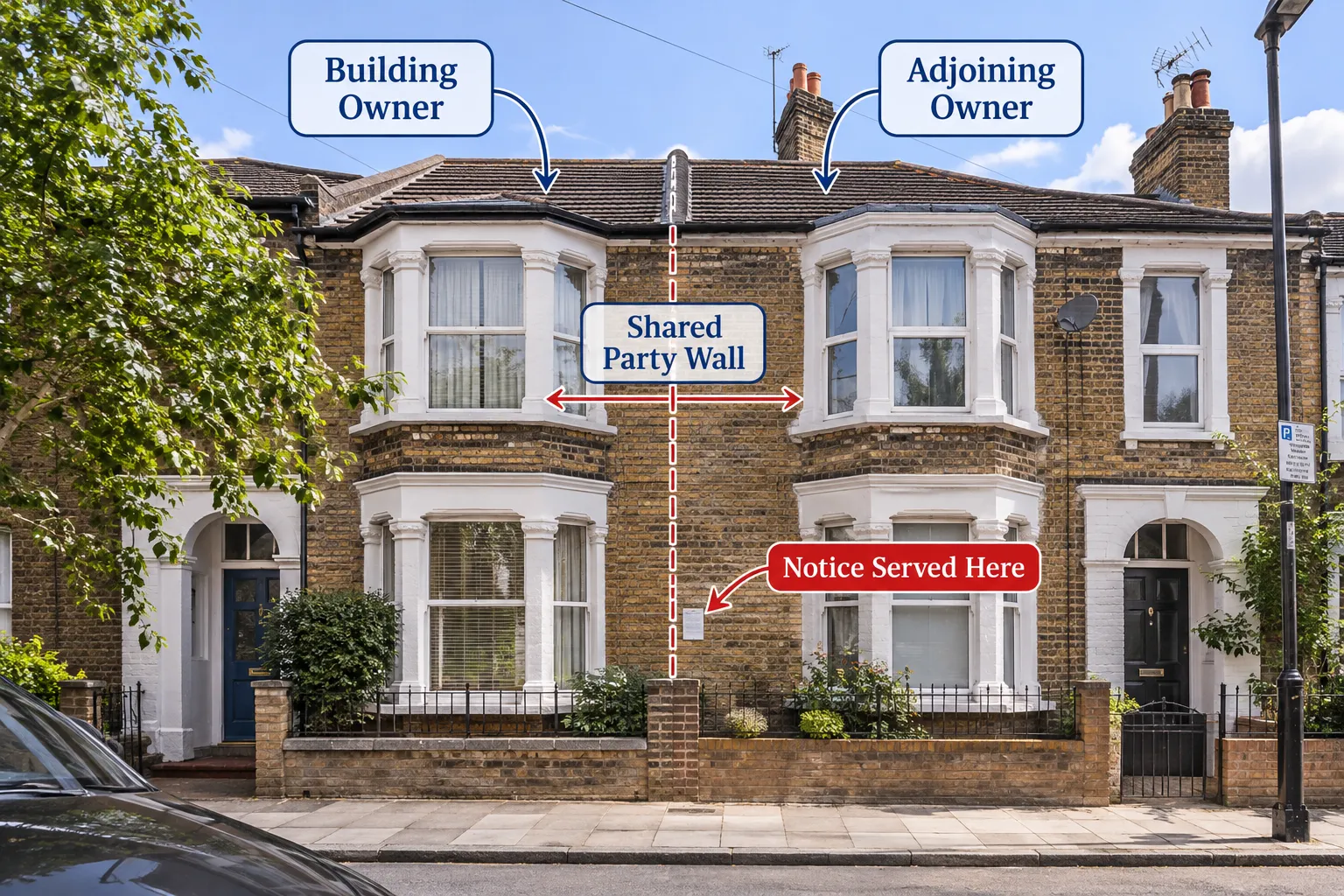
    Under the Act, the “building owner” serving notice is the freeholder or landlord undertaking the works, not the tenant occupying the property, even if the tenant is the one dealing with contractors day to day. Landlords converting a house into flats or an HMO, or cutting steels into a shared wall, must identify every adjoining owner correctly.
    Who Must Serve Notice, and to Whom

    Adjoining owners are not limited to the neighbouring freeholder. They include long leaseholders and any tenant holding a lease with more than a year left to run. Landlords with multiple units on a terrace, or those managing blocks with sitting leaseholders next door, need to map out every party with a legal interest before notices go out. Getting this list wrong can invalidate the notice and restart the clock.

    Guidance on serving notices correctly is set out in this explainer on what a party structure notice is and how to serve it, and in this piece on party wall act notices and how to respond.

    The Risks of Starting Works Without an Award

    Landlords under financial pressure, facing higher rates from April 2027 and a new £65-per-property fee from December 2026, may be tempted to cut corners on process to get works done quickly between tenancies. That is a costly mistake. Starting notifiable works without a party wall award in place exposes the landlord to the risk of an injunction halting the project mid-stream, which can eat further into an already tight void period.

    Disputes over damage are also harder to resolve without a schedule of condition recorded before works begin. If an adjoining owner later claims cracking or settlement, the absence of a pre-works record makes it difficult to prove the condition of the wall beforehand. A proper party wall award also sets out access provisions, working hours, and protective measures, all of which reduce the chance of a dispute escalating.

    For landlords weighing up whether they can skip formal advice, this piece on having a party wall agreement without a surveyor is a useful starting point, alongside tips on how to keep party wall costs down.

    Planning Works Around a Tighter Financial Picture

    The Autumn Budget changes add further pressure to get this right the first time. SDLT on the rent element of assured tenancies was removed from 1 May 2026, offering some relief, but from April 2027 Making Tax Digital extends to landlords with qualifying income over £30,000, and income tax rates on property income rise by two percentage points across all bands. Combined with the new registration fee landing on about 4.9 million properties, landlords have less room for costly delays caused by invalid notices or disputed works.

    Building in extra lead time, serving notice as early as legally possible and lining up a surveyor well before the anticipated void, protects both the budget and the schedule. Landlords working across multiple boroughs may find it useful to connect with local specialists, such as teams covering north London, west London, east London, south London, or central London.

    FAQ

    Do party wall notices apply if I only plan to work during a gap between tenants? Yes. The Party Wall etc. Act 1996 applies based on the works and the structure affected, not on whether a property is occupied.

    Can my tenant serve the party wall notice on my behalf? No. The building owner, the freeholder or landlord, must serve notice. A managing agent can act for the landlord, but the legal responsibility stays with the owner.

    How does the shift to periodic tenancies affect my works schedule? Without fixed end dates, landlords cannot guarantee a known void window. Notices and surveyor arrangements should be started well before any tenancy is expected to end.

    What happens if I start works without an award? Adjoining owners can seek an injunction to stop works, and disputes over damage become harder to resolve without agreed terms and a schedule of condition.

    Does the £65 registration fee affect party wall obligations? No, the registration fee is a separate administrative charge. Party wall obligations exist independently under the 1996 Act regardless of registration status.

    Conclusion

    The Landbay findings confirm what many London landlords already sense: regulatory change is squeezing margins and patience. Against that backdrop, a delayed or invalid party wall notice is an entirely avoidable cost. Landlords planning loft conversions, extensions, or conversions between tenancies should map adjoining owners early, serve notices with full lead time, and secure an award before works start, especially now that periodic tenancies make void periods less predictable.

    Contact Party Wall Surveyor London today to get notices served correctly, awards agreed promptly, and works programmed so they finish before the next tenancy begins.

  • London Homeowners Extending Instead of Moving: Party Wall Notices in October 2026

    London Homeowners Extending Instead of Moving: Party Wall Notices in October 2026

    Average London house prices fell for the eleventh month running in July 2026, according to the Office for National Statistics, and the typical property now sits £19,000 below where it stood a year earlier. That single fact, more than any marketing slogan, explains why skips, scaffolding and party wall notices are becoming a familiar sight on streets across the capital. When selling looks unattractive and borrowing is expensive, staying put and building up or out starts to make financial sense, and for most of those projects, the law requires a formal notice to the neighbours next door.

    This article looks at the trend of London homeowners extending instead of moving party wall notices 2026, why the sales market is pushing people towards building work, and what that means practically for anyone planning a rear extension, loft conversion or basement dig this autumn and winter.

    Key Takeaways

    • ONS data (16 September 2026) shows London’s average house price at £569,000 in July 2026, down 3.3% year-on-year and £19,000 below the July 2025 peak, a market backdrop that makes extending look more attractive than moving.
    • RICS’s September 2026 survey recorded a -32% house price net balance and an 18% fall in agreed sales, with London performing notably worse than the UK average.
    • Rising mortgage rates, average viewings per listing down 57% in two years, and a ruled-out stamp duty reform are all keeping homeowners in place rather than moving.
    • Most rear extensions, loft conversions and basement projects legally require Party Wall etc. Act 1996 notices, serving them late is one of the most common and costly planning mistakes.
    • Notice periods (one or two months) plus a 14-day response window mean notices should go out well before a builder is due on site.

    Why London Homeowners Are Extending Instead of Moving Party Wall Notices 2026

    The case for staying put is built from several overlapping pressures. ONS figures released on 16 September 2026 put the average London house price at £569,000 in July 2026, a 3.3% annual fall and the eleventh consecutive month of year-on-year decline, against a UK average of £273,000 that actually rose 1.4%. London is, unusually, moving in the opposite direction to the rest of the country. The next ONS house price release lands on 21 October 2026, and will be watched closely for signs of whether that run of falls continues.

    Why London Homeowners Are Extending Instead of Moving Party Wall Notices 2026

    RICS’s September 2026 survey, published 8 October, paints a similarly subdued picture: new buyer enquiries down 22%, agreed sales down 18%, and a house price net balance of -32% in current prices. RICS economist Tarrant Parsons noted that “a renewed rise in interest rate expectations has created a fresh headwind” for the market. London, the survey noted, has performed notably worse than the national average.

    Demand-side data backs this up. Analysis of Rightmove figures by Tembo (15 October 2026) found the average number of viewings per listing has fallen to just 1.7 in August 2026, down 57% from nearly four viewings two years earlier. Eighty-six per cent of estate agents reported homes selling below asking price. Mortgage rates are not helping either: the average two-year fix stood at 5.97% and the five-year at 5.99%, with nearly two million fixed-rate deals due to expire across 2026. Yorkshire Building Society data reported by Moneyfacts (14 October 2026) showed home-mover mortgage applications down 10.2% year-on-year between late June and late September 2026.

    Stamp duty is compounding the problem. HomeOwners Alliance research found that over 800,000 homeowners have shelved moving plans because of the tax, and the Prime Minister has ruled out reform ahead of the 28 October 2026 Budget, saying plainly: “That won’t be happening.” With moving costs fixed and sale prices soft, many households are turning their budgets inward instead.

    That shift mirrors wider renovation trends. Legal & General’s “Great Home Renovation” study of 2,000 UK homeowners who had renovated in the past year (reported November 2025) found almost half preferred improving their home to moving, with three in ten citing financial reasons for staying put and 77% funding work from savings. The UK home improvement sector was valued at £29.7 billion in 2024, up 5.1% on the year before. Separately, Propertymark warned on 13 October 2026 that the draft London Plan must turn housing ambition into actual homes, a reminder that denser development across the capital means more building work happening next to existing neighbours, not less.

    Which Projects Trigger the Party Wall etc. Act 1996

    Not every home improvement needs a party wall notice, but most of the popular ones in London terraces and semis do. The Party Wall etc. Act 1996 applies whenever work affects a shared structure, a boundary, or ground near a neighbour’s foundations. Common trigger projects include:

    • Rear extensions where new foundations are dug within 3 metres of a neighbour’s foundations, or deeper than them.
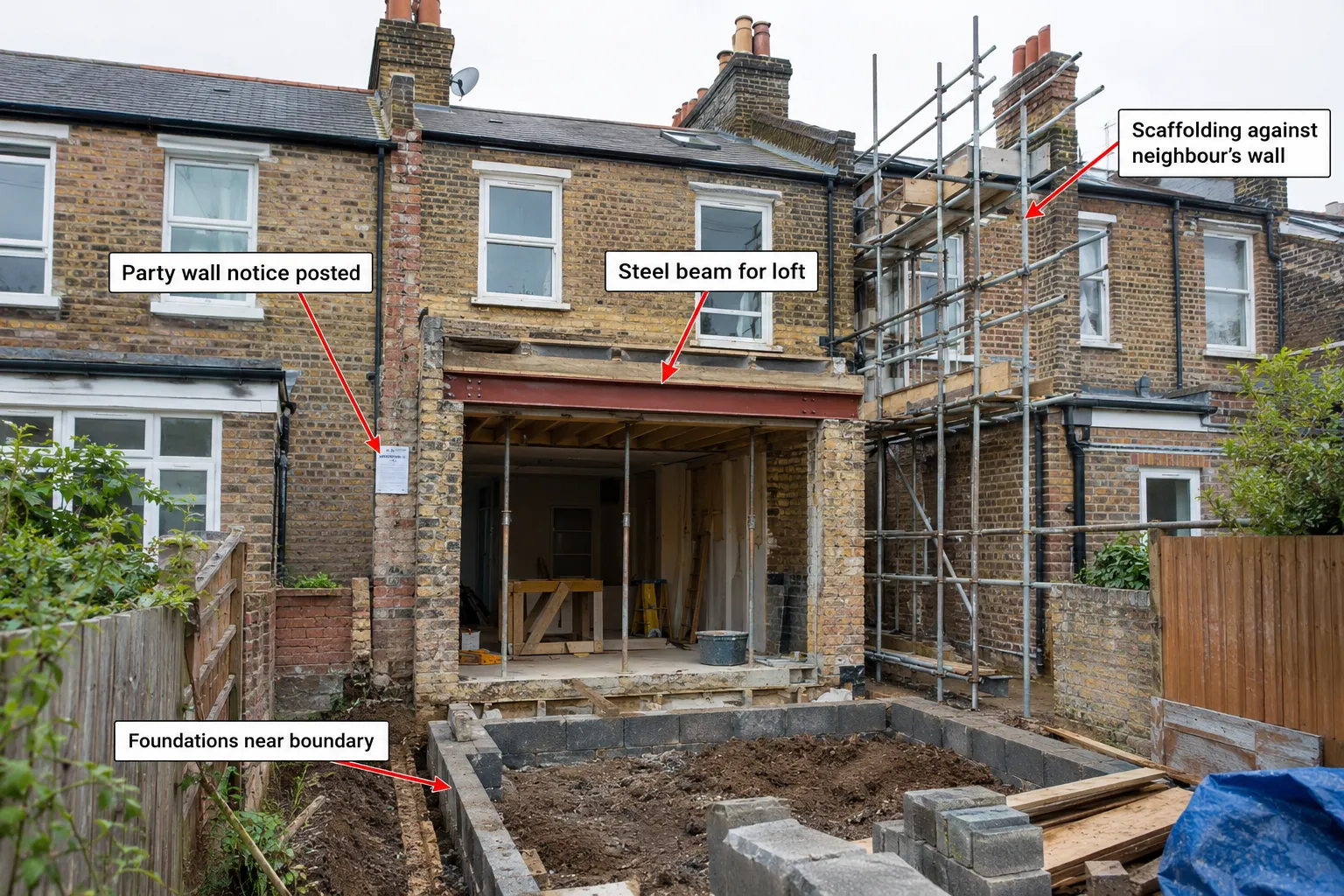
    • Loft conversions that cut into the party wall to support steel beams or install padstones.
    • Basement and lightwell digs, which almost always involve excavation close to, or below, next door’s footings.
    • Chimney breast removal, where the stack is shared between two properties.
    • New boundary walls built astride or up to the line of junction with a neighbour.

    Under the Act, excavation within 3 metres of a neighbour’s building, and deeper than their foundations, is notifiable, as is excavation within 6 metres if it falls within a 45-degree line drawn down from their foundations. Flats above and below a property can also count as adjoining owners, something that is easy to overlook in converted Victorian buildings.

    Timeline Planning for London Homeowners Extending Instead of Moving Party Wall Notices 2026

    Serving notice late is one of the easiest ways to derail a building schedule. Section 2 notices, covering works to an existing party wall or structure, require two months’ notice. Section 1 notices, for new walls at the boundary, and Section 6 notices, for adjacent excavation, each require one month. Once served, a neighbour has 14 days to respond, consent, dissent, or silence (which, after the notice period, is treated as a dispute requiring a surveyor).

    Given those timeframes, notices should ideally be served as soon as drawings are finalised, not once a contractor’s start date is confirmed. Builders booked for a January start, for example, should expect notices to go out well before November to allow for response time, any dissent, and the drafting of an award. For a full breakdown of what a valid notice must contain, see this guide to party wall notices and the explanation of how to serve a party structure notice in London.

    What Happens If a Neighbour Dissents

    A neighbour is entitled to dissent, and this is not unusual, particularly where excavation or structural steel is involved. Once that happens, the parties either agree to appoint a single “agreed surveyor” to act for both, or each appoints their own surveyor, who then select a third surveyor to resolve any disagreement between them. The surveyors produce a party wall award, which sets out the work permitted, any protective measures, and working hours. The building owner, the person carrying out the works, is almost always responsible for the reasonable surveyor fees on both sides, even where two surveyors are appointed. More detail on how awards work is covered in this party wall award and contract template guide, and the costs involved in the party wall process are worth budgeting for early.

    What Happens If a Neighbour Dissents

    Schedule of Condition: Protection for Both Sides

    A schedule of condition is standard practice before notifiable works begin, especially in terraced housing where vibration and settlement can travel between properties. It is a detailed photographic and written record of the adjoining property’s condition, cracks, cornices, floors, taken before work starts. If a dispute arises later about new cracking or damage, the schedule gives both the building owner and the adjoining owner independent evidence of the starting condition. It protects homeowners from unfair blame and protects neighbours from being left to prove damage without a baseline record.

    Common Mistakes to Avoid

    Several avoidable errors come up repeatedly in London party wall disputes:

    • Starting work before notices expire. Even with planning permission granted, works affecting a party wall cannot lawfully begin until the notice period has passed or an award is in place.
    • Assuming planning permission covers everything. Planning consent and building regulations are entirely separate from party wall consent; having one does not remove the need for the other.
    • Missing adjoining owners. In converted houses or blocks, this can mean notifying flats above and below, not just next door, and every leaseholder with an interest, not only the freeholder.
    • Skipping the schedule of condition. Without one, both sides are left arguing from memory if cracks appear later.
    • Treating the 14-day window loosely. Silence after the deadline is a dispute, not consent, and should trigger surveyor appointment promptly rather than being ignored.

    Homeowners in flats and converted properties should also check whether boundary or fence works fall under party wall or separate boundary wall rules, as the two are often confused. Those extending in different parts of the capital can find locally focused guidance, for example from party wall surveyors in East London or party wall surveyors in North London, reflecting the mix of Victorian terraces, conversions and new-build infill common in each area.

    What to Watch Next

    Three dates matter for anyone weighing up whether to move or extend. The ONS releases fresh house price data on 21 October 2026, which will show whether London’s run of annual price falls has reached a twelfth month. The Budget follows on 28 October 2026, where stamp duty reform has already been ruled out, but other housing or tax measures could still shift the moving-versus-improving calculation. The Bank of England’s November decision on interest rates will also influence mortgage pricing at a point when nearly two million fixed-rate deals are due to expire this year.

    Frequently Asked Questions

    Do I need a party wall notice for a loft conversion? Usually yes, if the work involves cutting into the party wall to insert steel beams or padstones for structural support. A straightforward loft conversion that does not touch the shared wall may not require one, but most do.

    How long before building work should I serve a party wall notice? Serve notices as soon as plans are finalised. Section 2 notices need two months, while Section 1 and Section 6 notices need one month, plus a 14-day response period and time to resolve any dissent.

    What if my neighbour ignores the notice? If there is no response within 14 days, this is treated as a dispute. Surveyors are then appointed to produce an award before work can lawfully proceed.

    Who pays for the party wall surveyor? The building owner carrying out the works typically pays reasonable surveyor fees, including where the adjoining owner appoints their own surveyor.

    Does planning permission remove the need for a party wall notice? No. Planning permission and party wall consent are separate legal processes, and both may be required for the same project.

    Conclusion

    A stalled London sales market, expensive mortgages, and a stamp duty system left untouched in the upcoming Budget are combining to make extending look more sensible than moving for many homeowners this autumn. But a cheaper alternative to moving is not a shortcut around the law: rear extensions, loft conversions, basement digs and chimney breast removals typically still require formal party wall notices, correct timing, and often a schedule of condition. Homeowners planning work should check early whether their project is notifiable, identify every adjoining owner, and build notice periods into their build programme rather than their contractor’s start date. Getting this right protects relationships with neighbours as much as it protects the build itself.

    party wall act 1996, party wall notices London, London house extensions, loft conversion rules, basement extension London, party wall surveyor, schedule of condition, London property market 2026, stamp duty reform, ONS house prices, RICS survey, home improvement trends

  • Commonhold Leasehold Reform Bill Party Wall London: What Flat Owners Need to Know Before Christmas 2026

    Commonhold Leasehold Reform Bill Party Wall London: What Flat Owners Need to Know Before Christmas 2026

    A single paragraph buried in a government press notice on 7 October 2026 could quietly reshape how thousands of London flat owners handle building works next year. The Prime Minister confirmed plans to introduce the Commonhold and Leasehold Reform Bill before Christmas 2026, a move that will eventually touch something far more mundane than headline politics: the party wall notice that lands through your letterbox before a neighbour builds a loft extension. For anyone weighing up a renovation in a converted Victorian terrace or a purpose-built mansion block, the commonhold leasehold reform bill party wall London question is no longer theoretical. It is a practical planning issue for 2027.

    This article explains what the draft Bill actually says, how today’s Party Wall etc. Act 1996 rules apply to leasehold flats, and what might change once commonhold tenure and new fee caps take effect.

    Key Takeaways

    • The Commonhold and Leasehold Reform Bill is expected before Christmas 2026, following a draft published in January 2026 and reviewed by a Select Committee, it is not yet law.
    • The draft Bill would make commonhold the default tenure for new flats, cap ground rents, and replace forfeiture with a new lease enforcement system.
    • Under current rules, both leaseholders with more than a year left on their lease and freeholders/landlords can count as “owners” for party wall purposes, so multiple notices are often required.
    • Commonhold would replace freeholder/leaseholder notice chains with unit owners and a commonhold association, changing who signs party wall awards.
    • Separate proposals announced 29 September 2026 would cap permission and administration fees (pets, alterations, documents) charged to leaseholders, relevant to anyone planning works.

    What the Commonhold and Leasehold Reform Bill Actually Proposes

    The government’s draft Bill, published in January 2026, sets out three central reforms. First, commonhold would become the default tenure for new residential flats in England and Wales, gradually reducing reliance on traditional leasehold structures. Second, ground rents would be capped, addressing years of complaints about escalating charges. Third, forfeiture, the controversial power allowing landlords to repossess a flat over unpaid charges, would be replaced with a proportionate lease enforcement system.

    The Housing, Communities and Local Government Select Committee scrutinised the draft earlier in 2026, and Dr Kion Ahadi, Chief Executive of the Leasehold Advisory Service (LEASE), welcomed the direction of travel. Separately, on 29 September 2026, ministers announced plans to cap certain permission and administration fees charged to leaseholders and estate homeowners, covering things like keeping a pet, minor alterations, providing information packs, or recording a change of mortgage lender. A consultation on these fee caps is expected to follow, alongside independent regulation requiring property agents to hold licences and qualifications.

    None of this is law yet. The Bill still needs to pass through both Houses of Parliament, and based on the stated timetable, formal introduction before Christmas 2026 would likely mean committee stages and votes running well into 2027.

    Why the Commonhold Leasehold Reform Bill Party Wall London Question Matters

    London has the highest concentration of leasehold flats in England, many in converted houses, mansion blocks, and purpose-built developments where party walls separate individually owned units. Any shift in how ownership is structured has a direct knock-on effect on the Party Wall etc. Act 1996, the law that governs notices for work on shared walls, floors, and excavations near a boundary.

    Why the Commonhold Leasehold Reform Bill Party Wall London Question Matters
    Why the Commonhold Leasehold Reform Bill Party Wall London Question Matters

    Right now, a leaseholder planning a loft conversion or basement dig must work out exactly who else holds a legal interest in the building before serving notices. Get this wrong, and an award can be challenged or delayed. The commonhold leasehold reform bill party wall London conversation matters because it touches the very definitions the 1996 Act relies on: “building owner” and “adjoining owner.”

    Party Wall Act Basics: Building Owners and Adjoining Owners in Flats

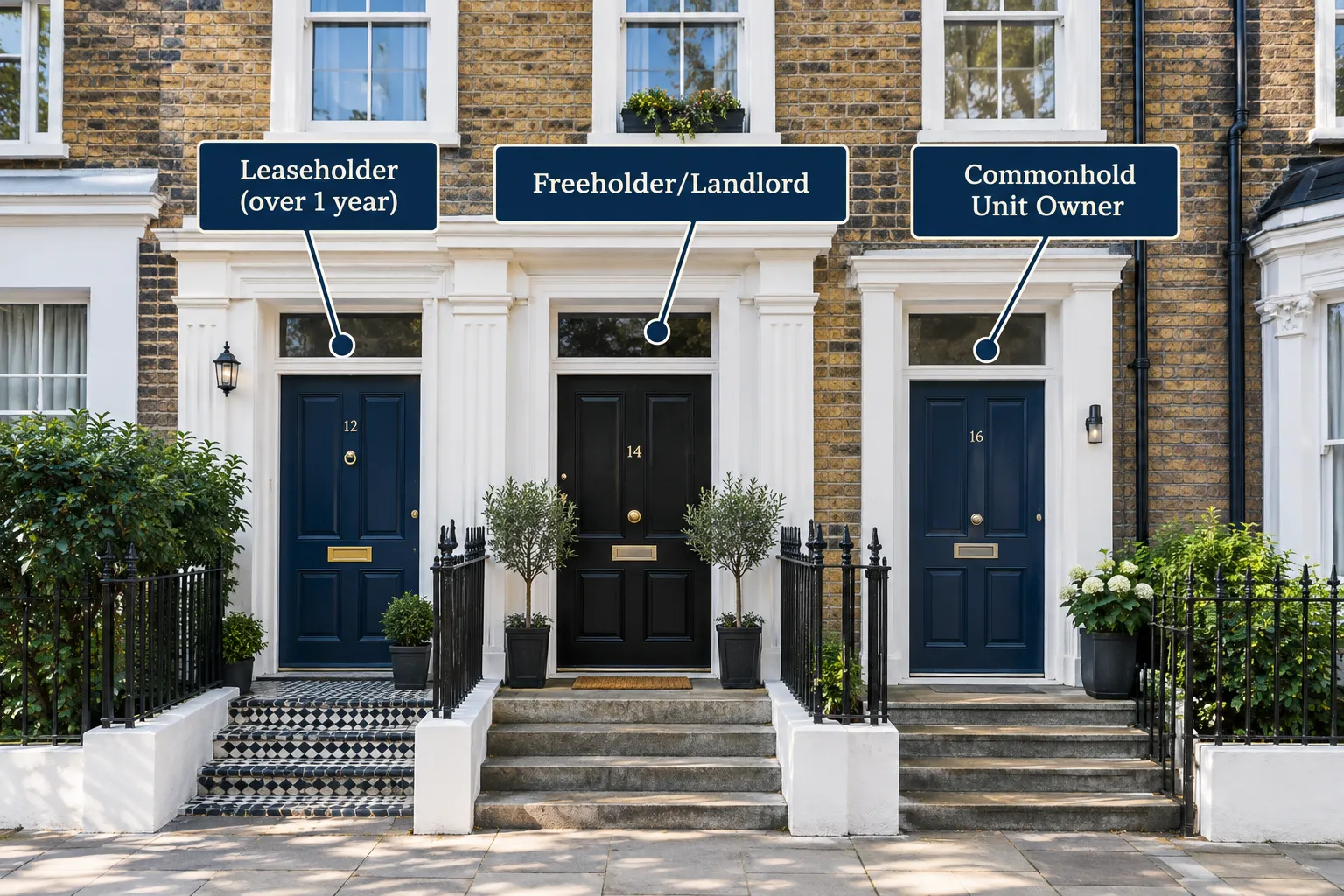
    Under the current system, the Party Wall etc. Act 1996 does not just look at who owns the freehold. It recognises anyone with a legal or equitable interest exceeding one year as a potential building owner or adjoining owner. In a typical London conversion, that can mean:

    • The freeholder or landlord, who owns the building structure.
    • Long leaseholders, whose leases usually run for 90 to 999 years and clearly exceed the one-year threshold.
    • Short-term tenants under a year, who generally fall outside the Act’s notice requirements.

    This layered ownership is why multiple notices are often needed for a single project. A leaseholder in Flat 2 planning works to a party wall shared with Flat 3 may need to notify both the Flat 3 leaseholder and the building’s freeholder, because both qualify as “adjoining owner” under the Act. Awards must then be agreed or appointed surveyors must adjudicate, sometimes involving three or more parties for one shared wall.

    How Commonhold Could Change Party Wall Notices and Awards

    Commonhold tenure works differently from leasehold. Instead of a freeholder and multiple leaseholders, each flat becomes a freehold “unit,” and a commonhold association, owned and run by the unit owners collectively, manages shared structures and common parts.

    If commonhold becomes the default tenure for new flats, as the draft Bill proposes, the practical effect on party wall notices could be significant:

    Aspect Current Leasehold Model Proposed Commonhold Model
    Who serves notice Leaseholder or freeholder undertaking works Commonhold unit owner undertaking works
    Who receives notice Adjoining leaseholder and freeholder separately Adjoining unit owner and commonhold association
    Who signs the award Building owner, adjoining owner, freeholder (often) Unit owner and association representative
    Typical notice count Multiple, layered by interest Potentially fewer, more direct

    This table reflects professional interpretation based on how commonhold structures generally operate elsewhere, not a confirmed government position. The Bill has not yet specified exactly how party wall procedures would map onto commonhold associations, and surveyors will be watching closely for guidance once the legislation progresses through Parliament.

    Permission Fee Caps, Landlord Consent, and Works Planning

    Party wall notices are only one piece of the puzzle for a London flat renovation. Most leases also require landlord consent before structural alterations, and that consent often comes with an administration fee. The 29 September 2026 announcement proposing caps on permission and administration fees could directly reduce the cost of getting that consent, though the detail depends on the promised consultation.

    “Multiple layers of consent, lease terms, party wall notices, and now potential fee caps, mean London flat owners should budget time as carefully as money.”

    For anyone planning works in 2027, it is sensible to:

    1. Check the lease for consent and fee requirements before instructing contractors.
    2. Identify every adjoining owner, including both leaseholders and freeholders, early.
    3. Serve party wall notices with the standard two-month lead time for most works.
    4. Keep an eye on the fee cap consultation, since administration charges may fall once rules change.

    Separately, the Remediation of Unsafe Cladding Bill, introduced 14 October 2026, will create a register of medium-rise residential buildings and penalties up to £500,000 for breaching remediation orders, a reminder that building-related legislation is moving on several fronts at once, not just leasehold reform.

    Quick Reference: Where Things Stand (as of October 2026)
    • Draft Bill published: January 2026
    • Bill due before Parliament: before Christmas 2026
    • Legal/valuation cost consultation: closed 23 September 2026
    • Valuation rates consultation: closes 21 October 2026
    • Marriage-value abolition: not yet in force

    FAQ: Commonhold Leasehold Reform Bill Party Wall London

    Is the Commonhold and Leasehold Reform Bill already law? No. It is expected to be introduced to Parliament before Christmas 2026 and will need to pass through further readings and committee stages before becoming law, likely stretching into 2027 or beyond.

    Do I still need to serve party wall notices under current leasehold rules? Yes. Until the Bill passes and any transitional rules are set, the Party Wall etc. Act 1996 continues to apply exactly as it does now, including the need to identify every qualifying owner.

    Will commonhold apply to existing London flats automatically? Not based on current proposals. Commonhold is expected to become the default for new flats; converting existing leasehold blocks is a separate, voluntary process requiring unit owner agreement.

    Could fee caps reduce the cost of a party wall project? Potentially, but only for landlord permission and administration fees, not party wall surveyor fees, which are governed separately by the 1996 Act.

    Who should I contact to check who needs a party wall notice for my flat? A qualified party wall surveyor can review the lease, title, and building structure to confirm every adjoining owner before notices are served.

    Conclusion

    The commonhold leasehold reform bill party wall London story is still unfolding, and nothing in the draft legislation changes the Party Wall etc. Act 1996 today. London flat owners planning structural works should continue to follow the current rules: identify every leaseholder and freeholder with a qualifying interest, serve notices correctly, and allow the standard notice periods. At the same time, anyone with a 2027 renovation in mind should track the Bill’s progress through Parliament and watch for consultation outcomes on fee caps and valuation rates, since both could affect project costs and consent processes. The practical next step is simple: get professional advice on notice requirements before any work starts, and revisit that advice once the Bill’s final text is published.

    References

    • Leasehold Advisory Service (LEASE), “Government confirms plans for Commonhold and Leasehold Reform Bill,” 7 October 2026.
    • Ministry of Housing, Communities and Local Government, draft Commonhold and Leasehold Reform Bill, January 2026.
    • Housing, Communities and Local Government Select Committee, pre-legislative scrutiny report, 2026.
    • Gov.uk announcement on permission and administration fee caps for leaseholders, 29 September 2026.
    • Party Wall etc. Act 1996 (as currently in force).
    • Leasehold and Freehold Reform Act 2024, valuation rates consultation, closing 21 October 2026.
    .cg-pw-wrap{font-family:Arial,Helvetica,sans-serif;max-width:600px;margin:0 auto;padding:16px;border:1px solid #d6dbe1;border-radius:10px;background:#f7f9fb;} .cg-pw-wrap h3{margin:0 0 10px;color:#13263b;font-size:18px;} .cg-pw-wrap label{font-size:14px;font-weight:bold;color:#13263b;display:block;margin-bottom:6px;} .cg-pw-select{width:100%;padding:8px;border-radius:6px;border:1px solid #b8c2cc;font-size:14px;margin-bottom:14px;} .cg-pw-result{background:#fff;border-left:4px solid #1d6fa5;border-radius:6px;padding:12px 14px;font-size:14px;color:#1b2b3a;min-height:60px;} .cg-pw-note{font-size:12px;color:#5a6b7a;margin-top:10px;}

    Party Wall Notice Checker: Who Needs One?

    Tenant on lease under 1 year Leaseholder with over 1 year remaining Freeholder / landlord Commonhold unit owner (future tenure)
    Choose an option above to see who typically counts as an “owner” under the Party Wall etc. Act 1996.

    General guidance only, based on the Party Wall etc. Act 1996. The Commonhold and Leasehold Reform Bill is not yet law and may change how commonhold notices work. Always confirm with a party wall surveyor.

    var cgData={ short:”A tenant with under a year left on a lease usually does NOT count as an owner under the Act. Notices are normally served on the freeholder or longer leaseholder instead.”, long:”A leaseholder with more than a year remaining typically IS an adjoining owner or building owner. They can serve and must receive party wall notices for shared structures.”, free:”Freeholders and landlords almost always count as owners under the Act, often alongside their leaseholders, which is why multiple notices are frequently required for one project.”, common:”Under proposed commonhold tenure, the unit owner would likely serve and receive notices directly, with the commonhold association involved for shared structural elements. This is not yet confirmed in law.” }; document.getElementById(‘cg-pw-select’).addEventListener(‘change’,function(){ document.getElementById(‘cg-pw-result’).textContent=cgData[this.value]; });

    commonhold leasehold reform bill, party wall notices London, Party Wall Act 1996, leasehold reform 2026, ground rent cap, commonhold association, London flat renovations, lease extension valuation, forfeiture reform, property agent regulation, building owner adjoining owner, LEASE advisory service

  • 6% Mortgage Rates, Fewer Movers: London Extensions and Party Wall Notices in October 2026

    Average five-year fixed mortgage rates have hit 6% for the first time since September 2023, according to Moneyfacts data reported this month. That single number is quietly reshaping how London homeowners think about space. Instead of moving house, a growing number are expected to extend, convert lofts and dig basements, and every one of those projects on a terrace or semi brings the Party Wall etc. Act 1996 into play. This analysis looks at why 6% mortgage rates, fewer movers, London extensions and party wall notices in October 2026 are now closely linked, and what that means for anyone planning works before Christmas.

    Why 6% Mortgage Rates Are Changing London Behaviour

    The mortgage market has shifted quickly. Moneyfacts confirms the average five-year fix reached 6% in October 2026, the highest level in three years. At the same time, the Bank of England reports that mortgage approvals for house purchase in August 2026 sat 14% below the five-year average, a clear sign that fewer people are getting ready to move.

    Bank Rate currently stands at 3.75%, and analyst Michael Brown expects a quarter-point rise to 4% in November 2026. That expectation alone is enough to keep lenders cautious and borrowers hesitant.

    Knight Frank’s Tom Bill points out that mortgage offers can last up to six months, so the full effect of higher rates feeds through gradually rather than all at once. He expects transaction numbers to fall further in the final months of 2026. Knight Frank’s Country market data already shows offers made down 10% and exchanges down 2% in Q3 year on year, while James Cleland describes sentiment as “brittle” ahead of the 28 October 2026 Budget.

    Key Takeaways

    • Moneyfacts confirms average five-year fixed mortgage rates reached 6% in October 2026, the highest since September 2023.
    • Bank of England data shows August 2026 mortgage approvals 14% below the five-year average, with a possible Bank Rate rise to 4% in November 2026.
    • Knight Frank and Savills both point to a market driven mainly by owners with a clear need to move, with values softening across outer prime London and the commuter belt.
    • When fewer people move, more are expected to extend instead, and extensions on terraces or semis almost always trigger Party Wall Act notices.
    • Homeowners planning lofts, rear extensions or basements this autumn should build notice periods and the 14-day response window into their pre-Christmas timeline now.

    A Market Driven by Necessity, Not Choice

    Savills’ Q3 2026 research, reported via Estate Agent Today on 12 October 2026, shows outer prime London values down 1.1% in the quarter and 3.0% annually. Frances McDonald of Savills notes that “the wider South and London’s commuter belt is feeling a ripple effect from a lack of movers,” adding that the market “will continue to be driven by those with a clear motivation to move.”

    Lloyds’ house price index backs this up, showing UK prices flat in September 2026. Garrington’s commentary, cited alongside this, describes prices as “sliding across London, southern England and East Anglia.” Taken together with Property Industry Eye’s reporting on 12 October 2026, the picture is consistent: transaction activity is thinning out, and only those with a genuine need to move are pushing deals through.

    This is the backdrop against which the extensions trend makes sense. It is a reasonable expectation, not a measured statistic, that when moving becomes expensive and slow, homeowners who need more space look at their own four walls first.

    Why 6% Mortgage Rates and Fewer Movers Mean More London Extensions

    When borrowing costs rise and transaction numbers fall, the arithmetic of moving house changes. Stamp duty, estate agent fees, legal costs and a new mortgage at 6% add up quickly. For many London households, especially those already on a competitive rate secured before this year, staying put and building up, down or out becomes the more sensible route.

    This pattern has played out in previous periods of mortgage stress, and the current combination of 6% mortgage rates, fewer movers and softening London values points the same way again. Loft conversions, rear extensions, side-return infills and basement digs are the classic projects homeowners turn to when they want more room without taking on a new loan at today’s rates.

    For London’s dense terraces and semis, almost none of these projects can go ahead without first dealing with the party wall shared with a neighbour.

    Which Projects Trigger Party Wall Notices This Autumn

    The Party Wall etc. Act 1996 applies whenever work affects a shared structure. The most common autumn and winter projects that trigger notices include:

    • Loft conversions, particularly where new steel beams bear onto the party wall.
    • Rear and side-return extensions, where foundations or new walls sit on or near the boundary.
    • Basement excavations, where digging is within 3 metres (or 6 metres for deeper excavations) of a neighbour’s foundations.
    • Chimney breast removal, where the breast is part of a shared wall.

    Each of these falls under a different section of the Act, with different notice periods. For a full breakdown of what a notice must contain, see this guide to party wall notices.

    Type of work Relevant section Minimum notice period
    New wall at the boundary Section 1 One month
    Works to an existing party wall Section 2 Two months
    Excavation within 3m/6m of neighbour’s structure Section 6 One month

    Building the Timeline Into Pre-Christmas Planning

    Anyone hoping to start building before the end of the year needs to work backwards from these notice periods, not forwards from the build date. Once a notice is served, the neighbour has 14 days to respond. If they consent, work can proceed once the notice period expires. If they dissent, or simply fail to respond, surveyors must be appointed to produce a formal Award before any notifiable work starts.

    A realistic pre-Christmas timeline looks something like this:

    1. Mid-October: Finalise drawings and structural details.
    2. Late October: Serve notices on all affected neighbours, allowing the full one or two-month statutory period.
    3. Early November: Fourteen-day response window closes; identify any dissenting neighbours.
    4. November: Appoint surveyors where needed; schedules of condition are prepared.
    5. Late November/December: Award served; work can begin.

    Homeowners who leave notice-serving until November risk pushing their start date into the new year. For guidance on what a valid notice must say and how neighbours should respond, see Party Wall Act notices: what they are and how to respond.

    What Happens When Neighbours Are Both Extending

    In many London streets, it is now common for neighbours on both sides to be planning works at the same time, unsurprising given the broader trend towards extending rather than moving. Where this happens, each project still needs its own notice, but the practicalities can overlap.

    If two adjoining owners are both carrying out notifiable works, it is often sensible to appoint the same agreed surveyor for both sets of notices, provided there is no conflict of interest. This avoids duplicated schedules of condition and keeps professional fees proportionate. Where interests do conflict, each owner appoints their own surveyor and the two produce a joint Award.

    Anyone unsure whether their planned works require a formal party structure notice should read what a party structure notice is and how to serve it in London.

    Keeping Party Wall Costs Down in a Tighter Market

    With household budgets stretched by 6% mortgage rates, controlling party wall costs matters more than ever. Three practical steps help:

    • Serve valid notices early. This avoids the Act’s default position, appointing two separate surveyors, and gives time for a neighbour to simply consent, at no cost.
    • Consider an agreed surveyor. One surveyor acting for both owners is usually quicker and cheaper than two, and is well suited to straightforward lofts or rear extensions. See having a party wall agreement without a surveyor for when this route is, and is not, appropriate.
    • Insist on a schedule of condition. This protects both sides if cracks or damage are later disputed, and is far cheaper than a dispute after the fact.

    Further detail on typical fee structures is available in this guide to the costs of the party wall process, alongside wider tips on how to keep party wall costs down.

    How Party Wall Surveyor London Can Help

    Party Wall Surveyor London serves notices on behalf of building owners, acts as the agreed surveyor for straightforward projects, and represents either the building owner or the adjoining owner where separate surveyors are required. Coverage spans North London, Central London, East London, West London and South London, with experience across the terraced and semi-detached housing stock most affected by the current extend-rather-than-move trend.

    FAQ: 6% Mortgage Rates, Fewer Movers and Party Wall Notices

    Does a higher mortgage rate mean I need a party wall notice for a smaller extension? No, the notice requirement depends on the type of work, not its cost or your mortgage. Any work to a shared wall, a new boundary wall, or excavation near a neighbour’s foundations needs a notice regardless of project size.

    How long before building work can I serve a party wall notice? At least one month ahead for new walls or excavation, and at least two months for work to an existing party wall. Serving earlier gives more flexibility if a neighbour dissents.

    What if my neighbour does not respond to my notice? No response within 14 days is treated as dissent. Surveyors are then appointed to produce an Award before work starts.

    Can one surveyor act for both me and my neighbour? Yes, an agreed surveyor can act for both owners where there is no conflict of interest, which is often quicker and cheaper for straightforward lofts or extensions.

    Will the 28 October 2026 Budget affect extension costs? Knight Frank’s James Cleland describes sentiment as brittle ahead of the Budget, so homeowners should expect continued uncertainty in financing costs, though the party wall process itself is unaffected by fiscal announcements.

    Conclusion

    The combination of 6% mortgage rates, fewer movers and softening London values is a reasonable backdrop for an expected rise in extension and conversion projects across the capital this autumn and winter. For homeowners on terraces and semis, that means the Party Wall etc. Act 1996 is about to become far more relevant to far more households. Acting early, serving valid notices, considering an agreed surveyor, and securing a schedule of condition, is the clearest way to keep a pre-Christmas build on track and costs under control. Anyone planning a loft, extension or basement this autumn should contact Party Wall Surveyor London now to confirm which notices apply and get the statutory clock started before the busiest season of the year takes hold.

    Party Wall Notice Timeline Planner .cg-pw-wrap{font-family:Arial,Helvetica,sans-serif;max-width:640px;margin:0 auto;border:1px solid #d8d8d8;border-radius:8px;padding:16px;background:#fafafa;color:#222} .cg-pw-wrap h2{font-size:18px;margin:0 0 10px;color:#1a3c5e} .cg-pw-row{margin-bottom:10px} .cg-pw-row label{display:block;font-size:13px;font-weight:bold;margin-bottom:4px} .cg-pw-row select,.cg-pw-row input{width:100%;padding:7px;border:1px solid #bbb;border-radius:4px;font-size:14px;box-sizing:border-box} .cg-pw-btn{background:#1a3c5e;color:#fff;border:none;padding:9px 14px;border-radius:4px;cursor:pointer;font-size:14px;width:100%} .cg-pw-btn:hover{background:#13293f} .cg-pw-result{margin-top:14px;background:#fff;border:1px solid #cfd8e3;border-radius:6px;padding:12px;font-size:14px} .cg-pw-result strong{color:#1a3c5e} .cg-pw-note{font-size:12px;color:#666;margin-top:8px}

    Party Wall Notice Timeline Planner

    New wall at the boundary (Section 1 – 1 month) Work to an existing party wall, e.g. loft beams (Section 2 – 2 months) Excavation near neighbour’s foundations (Section 6 – 1 month)
    Enter a start date to see your deadline.

    Guide only. Allow extra time if a neighbour dissents and surveyors must prepare an Award.

    function cgCalc(){ var w=document.getElementById(‘cg-work’).value; var d=document.getElementById(‘cg-date’).value; var out=document.getElementById(‘cg-result’); if(!d){out.innerHTML=’Please choose a start date.’;return;} var months=(w==’2′)?2:1; var start=new Date(d); var notice=new Date(start); notice.setMonth(notice.getMonth()-months); var respond=new Date(notice); respond.setDate(respond.getDate()+14); var opts={day:’numeric’,month:’long’,year:’numeric’}; out.innerHTML=’Serve notice by: ‘+notice.toLocaleDateString(‘en-GB’,opts)+ ‘
    14-day response deadline: ‘+respond.toLocaleDateString(‘en-GB’,opts)+ ‘
    Earliest lawful start (if no dissent): ‘+start.toLocaleDateString(‘en-GB’,opts); }

    mortgage rates 2026, party wall notices, London extensions, loft conversions London, party wall act 1996, Bank of England mortgage approvals, Knight Frank property market, Savills house prices, London property market October 2026, basement extensions London, rear extension party wall, house price slowdown

  • London Movers 2026 Savills Survey: +31% Confidence Meets a Stock Squeeze That Will Fill Autumn With Extensions

    A net balance of minus 23% one year. Plus 24% the next, and plus 31% in London. Few housing indicators reverse that sharply in twelve months, yet that is exactly what has happened, according to fresh data reported by Property Industry Eye and Estate Agent Today on 29 September 2026. The London movers 2026 Savills survey captured around 1,100 prospective buyers and sellers, and the headline number tells a story of pent-up demand finally breaking free. The catch: there are not enough homes to satisfy it, and that shortage is quietly reshaping how London homeowners plan to stay put and build instead.

    For anyone weighing a move this autumn, or a loft conversion, basement dig, or side-return extension instead, the survey results carry practical weight. They also point directly to a legal process many Londoners forget until it is too late: the Party Wall etc. Act 1996.

    Key Takeaways

    • The London movers 2026 Savills survey found a net balance of +24% of respondents nationally plan to move in the next 12 months, up sharply from -23% a year earlier.
    • London leads the country at +31%, ahead of +24% in the regions, with relocating buyers even more confident at +38%.
    • Location remains king: 58% call it the least negotiable factor, and 40% prioritise proximity to family.
    • Just 17% cite insufficient stock as a barrier to moving, a small percentage in survey terms, but a huge number of households in absolute terms across a city of London’s size.
    • With fewer homes to buy, many owners will extend, convert, or dig down instead, triggering Party Wall Act obligations that buyers and sellers both need to understand.

    What the London Movers 2026 Savills Survey Actually Found

    The scale of the swing is the headline. A net balance of -23% twelve months ago meant more people planned to stay than move. That has flipped to +24% nationally, and the London movers 2026 Savills survey shows the capital pulling ahead of every other region.

    Key figures from the survey include:

    Metric Figure
    National net balance planning to move (12 months) +24%
    London net balance +31%
    Regional average (outside London) +24%
    Relocating buyers +38%
    Would move if more location choice existed 34%
    Say location is non-negotiable 58%
    Prioritise proximity to family 40%

    Frances McDonald, research director at Savills, summed up the market dynamic behind these numbers: “quality stock is still moving quickly,” with “demand for turnkey homes in the right location remaining strong.” That single line explains why confidence is high but choice is thin, buyers want ready-to-live-in homes in specific postcodes, and those homes sell fast when they appear.

    Why Location Confidence Is Rising Faster Than Supply

    The London movers 2026 Savills survey paints a picture of buyers who are more decisive but no less picky. Location tops every other consideration. With 58% treating it as their least negotiable requirement and 40% weighting decisions around family proximity, London’s tightly defined micro-markets, specific streets, school catchments, transport links, remain fiercely competitive.

    That specificity is precisely why supply feels so constrained. It is not that London lacks homes overall; it is that London lacks the right homes in the right streets, finished to a turnkey standard. Three barriers stood out in the survey:

    • Domestic political change, 31% cited this as a reason for caution
    • Insufficient stock, 17% said a lack of suitable homes is holding them back
    • Potential tax changes, 15% flagged this as a concern

    Second-home buyers and those shopping above £2 million remain notably cautious, while needs-based movers, families relocating for schools, jobs, or space, are the ones driving the current surge in activity.

    The Knock-On Effect: More Extensions, More Party Wall Notices

    Here is the practical consequence for London homeowners this autumn. When 17% of would-be movers cannot find suitable stock, a meaningful share of them do not simply wait, they improve. Loft conversions, basement digs, rear extensions, and side-return builds become the alternative to moving, especially for families who need more space but cannot find it on the open market at the right price or in the right postcode.

    This shift matters enormously for London’s terraced and semi-detached housing stock, where nearly every significant extension project touches a shared wall, boundary line, or a neighbour’s foundations. That is where the Party Wall etc. Act 1996 comes in, and it is not optional.

    When the Party Wall Act 1996 Applies

    The Act applies in three main situations, and London’s dense terraced streets mean most extension projects hit at least one of them:

    1. Work directly to an existing party wall, cutting into it, inserting damp proofing, raising its height, or underpinning it.
    2. Building a new wall at the boundary line, even a garden wall or the flank wall of a new extension.
    3. Excavating near a neighbour’s structure, digging foundations within 3 metres of a neighbour’s building if the new work goes deeper than their existing foundations, or within 6 metres if it cuts a line drawn at 45 degrees from the underside of their foundations.

    Basement projects, increasingly common as Londoners try to add space without extending their footprint, almost always fall into that third category.

    Notice Periods Homeowners Must Respect

    The Act sets clear minimum notice periods:

    • Section 1 (line of junction notices), one month’s notice before building a new wall on or near the boundary.
    • Section 6 (excavation notices), one month’s notice for digging foundations within the 3-metre or 6-metre zones described above.
    • Section 2 (party structure notices), two months’ notice before carrying out work directly to a shared party wall.

    Serving notice properly starts the clock. Neighbours have 14 days to respond, and if they do not consent, a party wall surveyor becomes essential.

    The Role of the Party Wall Surveyor and the Award

    Once a neighbour dissents, or simply does not reply, the dispute resolution machinery in the Act kicks in. Either one agreed surveyor acts for both parties, or each owner appoints their own surveyor, who then work together to produce a party wall award.

    The award is a formal legal document covering:

    • What work is allowed and how it must be carried out
    • Working hours and access arrangements
    • A schedule of condition for the neighbouring property
    • Who pays the surveyor’s fees (usually the building owner)

    A properly drafted award protects both the person building and the neighbour, reducing the risk of costly disputes over cracks, subsidence claims, or access disagreements later.

    What This Means for London Buyers and Sellers in 2026

    Anyone buying into the current wave of confidence identified by the London movers 2026 Savills survey should treat party wall paperwork as a standard due diligence item, not an afterthought. If a London property has an obvious rear or loft extension, ask two questions before exchanging contracts:

    1. Was a party wall award obtained for the work?
    2. Was a schedule of condition recorded on neighbouring properties before construction began?

    Missing documentation does not necessarily mean the work is unsafe, but it does raise the risk of unresolved disputes surfacing after completion, disputes that become the new owner’s problem, not the seller’s.

    Sellers, meanwhile, should keep award paperwork on file. Solicitors and buyers increasingly ask for it during conveyancing, and gaps can slow down a sale in a market where, per the survey, quality stock is already moving fast and buyers expect a smooth, turnkey transaction.

    Conclusion

    The London movers 2026 Savills survey confirms what agents across the capital have sensed all year: confidence is back, and London is leading the national rebound in moving intentions. But confidence without stock creates its own pressure valve. With only 17% citing shortage as a barrier yet demand concentrated on specific, non-negotiable locations, a wave of Londoners will choose to extend rather than relocate this autumn.

    That means more Section 1, Section 2, and Section 6 notices landing on doormats across the city in the coming months. Homeowners planning works should serve notice early, respect the one- and two-month periods built into the Act, and engage a qualified party wall surveyor the moment a neighbour raises an objection. Buyers should make party wall awards a standard checklist item before exchange. Getting this right protects timelines, budgets, and neighbourly relationships, exactly the things a heated, stock-starved market has no patience to fix later. Party Wall Surveyor London can serve notices, act as agreed surveyor and prepare awards and schedules of condition across Greater London.

    Frequently Asked Questions

    Does the Party Wall Act apply to every extension in London? Not every extension, but most that touch a shared wall, sit on the boundary, or involve excavation within 3 or 6 metres of a neighbour’s foundations will trigger the Act.

    How much notice must be given before starting party wall work? One month for Section 1 line-of-junction and Section 6 excavation notices; two months for Section 2 party structure notices.

    What happens if a neighbour does not respond to a party wall notice? No response within 14 days is treated as a dissent, which means a surveyor (or surveyors) must be appointed to produce a party wall award.

    Who pays for the party wall surveyor? Typically the building owner carrying out the work covers reasonable surveyor fees, including the adjoining owner’s surveyor if one is appointed.

    Should buyers check for a party wall award before purchasing a London home? Yes. If a property shows signs of a loft conversion, extension, or basement dig, buyers should confirm an award and schedule of condition exist before exchange.

    Why are more Londoners extending instead of moving in 2026? The Savills survey shows strong moving intentions but limited suitable stock in preferred locations, pushing many households toward extending their current home instead.