
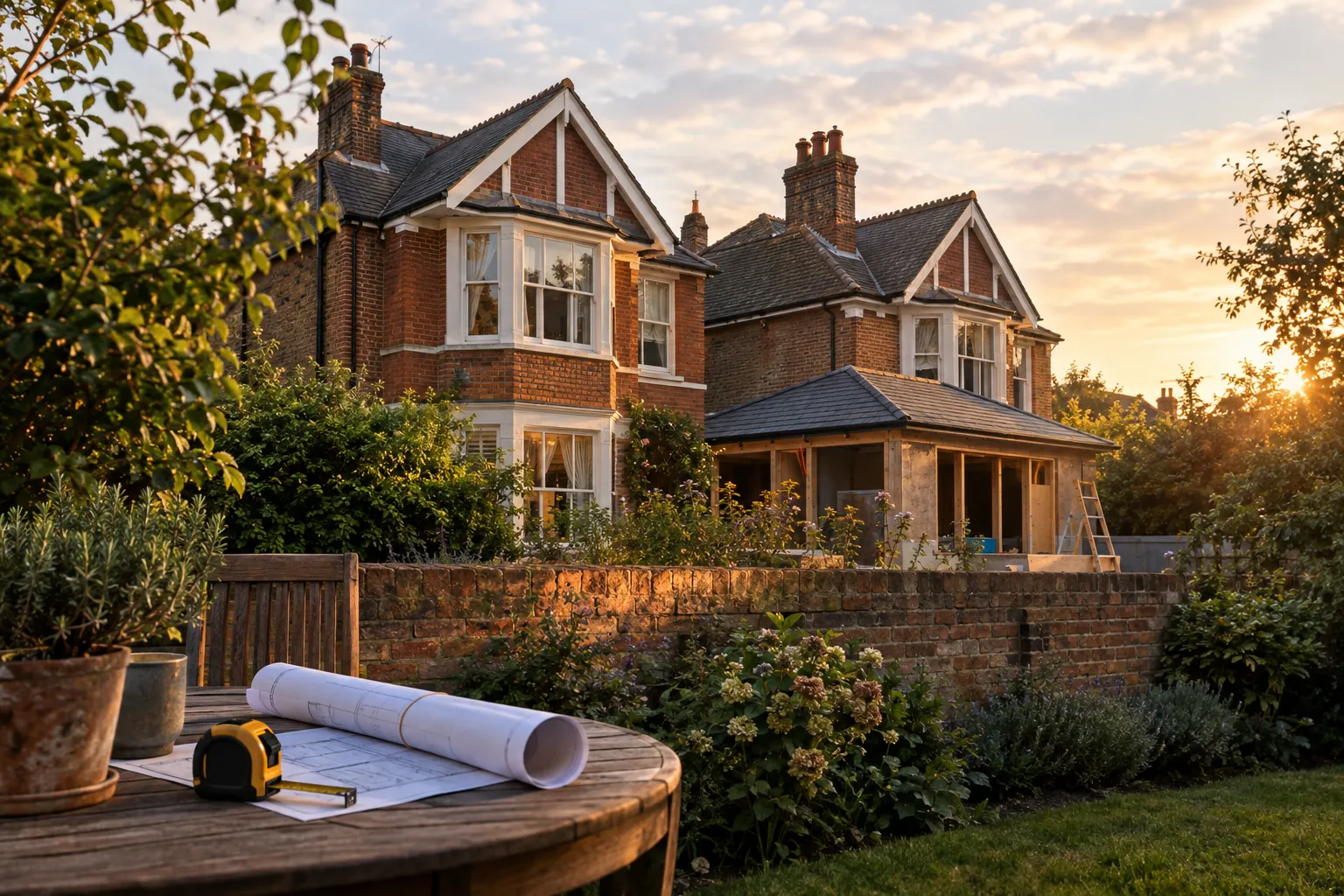
Two extra bedrooms. One shared wall. And a planning inspector who decided that two existing tenants mattered more than two new ones. That is the blunt summary of a decision that every London homeowner, landlord and party wall surveyor should read before they pick up a saw.
On 2 October 2026, a Planning Inspectorate decision on a site in Hanger Lane, Ealing, put daylight loss back in the spotlight. The Ealing HMO extension appeal daylight October 2026 London ruling dismissed plans for a single-storey rear extension at Cecilia House, a large sui generis HMO formed from two former detached houses in the Ealing Common Conservation Area. The case is a sharp reminder that good intentions, more housing, efficient land use, do not automatically beat harm to the people already living next door.
Key Takeaways
- An inspector dismissed a non-determination appeal for a rear extension at Cecilia House, Ealing, because it would harm daylight, sunlight and outlook to two existing ground-floor rooms.
- The appellant’s daylight report was based on a different address and did not assess the actual scheme, which proved fatal to the appeal.
- Housing benefits, two new en-suite bedrooms, were given substantial weight, but harm to existing occupiers was given “greater than substantial weight.”
- Planning daylight and sunlight rules are separate from the Party Wall etc. Act 1996, which covers shared walls, new boundary walls and nearby excavations, not rights to light.
- A site-specific daylight assessment and the right notice sequence can prevent both planning refusals and party wall disputes.
The Cecilia House Appeal: Inside the Ealing HMO Extension Appeal Daylight October 2026 London Decision
Cecilia House sits within the Ealing Common Conservation Area and operates as a 29-unit HMO. The owners wanted to add a single-storey rear extension with a hipped roof, creating two en-suite bedrooms and pushing the total to 31 units. Because Ealing Council failed to decide the application in time, it became a non-determination appeal, the applicant appealed the lack of a decision rather than a refusal.
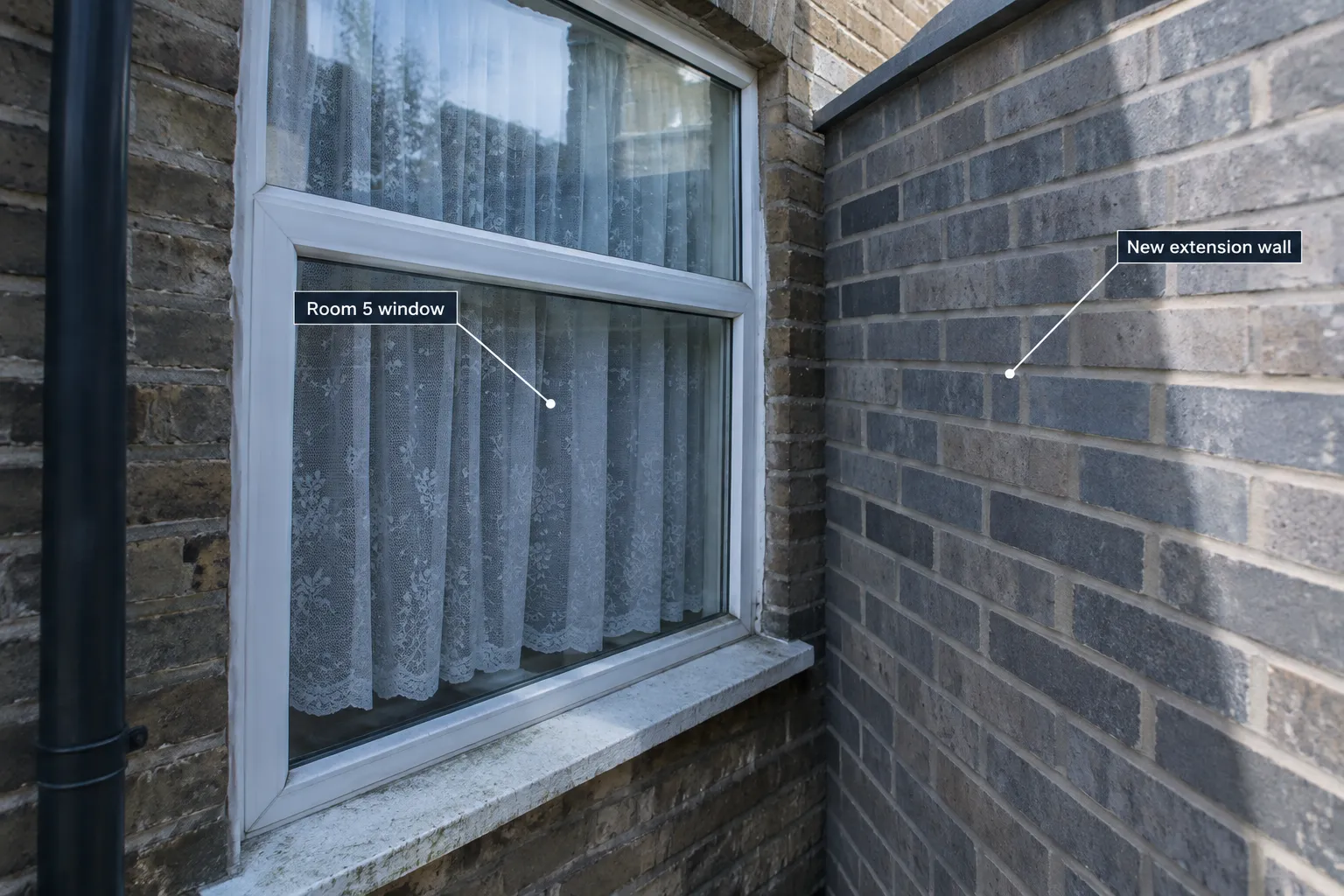
Inspector Carla Livingstone dismissed the appeal. The core problem was not the conservation area, visual impact or scale. It was daylight. Two existing ground-floor rooms, referred to as room 5 and room 30, would lose meaningful light and outlook because the new structure would sit very close to their windows. Room 5 depended on a single large window for all its natural light. Room 30 relied on two small windows plus a kitchen and living area window. The Inspector found the proposed extension would materially harm both.
A key detail sealed the outcome. The appellant’s daylight assessment, submitted to support the scheme, actually related to a different property, 15 Hanger Lane, not Cecilia House itself. The Inspector found the report did not “clearly and accurately assess the specific effect of the appeal scheme,” leaving the decision-maker without credible evidence that the harm was acceptable. In planning appeals, a daylight study tied to the wrong address is effectively no evidence at all.
Why Daylight and Sunlight Rules Are Not the Same as Party Wall Rights
This case highlights a distinction that trips up many homeowners: planning daylight assessment and party wall rights are governed by completely different frameworks, and confusing them can derail a project twice over.
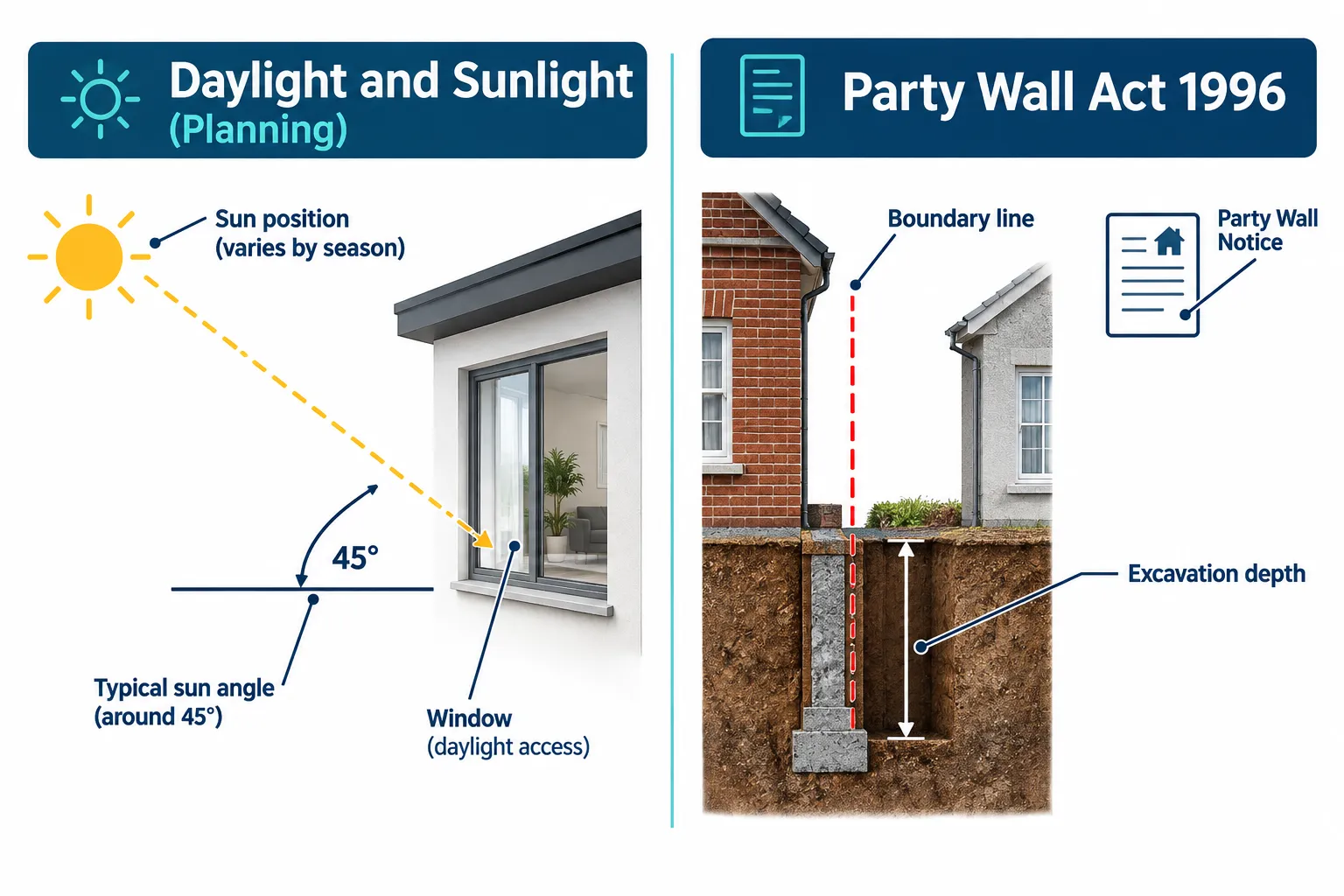
Planning authorities assess daylight and sunlight using Building Research Establishment (BRE) guidance. Surveyors typically run tests such as the 45-degree line and the vertical sky component to judge whether a new structure will block too much natural light reaching existing windows. These tests feed into planning policy judgments, in this case, Ealing’s own daylight and amenity policy (referred to as policy 7B) and a London Plan-style framework policy on protecting existing occupiers, often labelled policy L2 d ii.
The Party Wall etc. Act 1996 works in a different lane entirely. It governs:
- Work directly on a shared wall between two properties.
- Building a new wall at or astride the boundary line.
- Excavation within 3 metres of a neighbour’s building (or 6 metres for deeper foundations), where that work goes below the neighbour’s foundation level.
Crucially, the Party Wall Act does not deal with daylight, sunlight or rights to light. A neighbour cannot block an extension using a party wall notice simply because it will shade their window. Rights to light are a separate area of civil law, distinct from both planning and the Party Wall Act, and usually only bite where a long-established legal right to light has built up over time, typically through at least 20 years of uninterrupted enjoyment of light through a defined aperture.
This is exactly why the Cecilia House case matters beyond Ealing. A scheme can pass every Party Wall Act test, correct notices, agreed surveyors, a sound award, and still be refused at planning stage purely because of daylight harm to existing rooms. The two processes run in parallel, not in sequence, and success in one gives no guarantee of success in the other.
Planning Policy Balance: Housing Need Versus Harm to Existing Occupiers
London boroughs are under real pressure to deliver more homes, and the Inspector in this case acknowledged that genuinely. Two additional en-suite bedrooms and more efficient use of an existing large site were given substantial weight in the planning balance.
But substantial weight was outweighed. The Inspector gave “greater than substantial weight” to the harm the extension would cause to the two existing occupiers of rooms 5 and 30. Under Ealing’s settlement-balance framework, often shortened to policy S4, that tipped the scales decisively against approval. Put simply: protecting the people already living in a building can outweigh the benefit of housing two more people, if the physical harm is serious enough.
Two other points from the decision are worth noting for context:
| Issue raised | Inspector’s finding |
|---|---|
| Harm to Ealing Common and Creffield conservation areas | No harm, the rear extension would not be visible from the public realm |
| Disputes over earlier building works on site | Treated as an enforcement matter, not decisive to this appeal |
| Which version of national planning policy applied | The revised NPPF of 17 August 2026 was applied; no material difference found from the December 2024 version for this case |
The conservation area argument, often the headline concern in Ealing, was actually a non-issue here. The real battleground was daylight to existing internal rooms, a far more technical and easily overlooked risk for anyone extending an HMO or a converted house with closely spaced windows.
Lessons for London Extensions: Getting Planning, Party Wall Notices and Rights of Light in the Right Order
A well-run rear extension project in London should treat three legal processes as distinct but connected:
- Commission a site-specific daylight and sunlight report early. It must assess the actual building, actual windows and actual proposed structure, not a comparable or nearby property. The Cecilia House appeal failed partly because the evidence was for the wrong address.
- Check rights to light separately from planning. Even an approved scheme can face a civil rights-to-light claim from a long-standing neighbour, which sits outside both planning and the Party Wall Act.
- Serve Party Wall Act notices at the right time. Line of junction and party structure notices generally require one to two months’ notice before work starts, while notices for adjacent excavation also require advance notice. Serve too late and work may have to pause; serve without proper detail and neighbours can reasonably dispute the notice.
Sequencing matters. Planning permission should normally be secured, or at least be well advanced, before party wall notices are served, since the design in the notice should match what has been approved. Running both processes with professional advice from the outset, a planning consultant for daylight and policy compliance, a party wall surveyor for notices and boundary work, reduces the risk of a dismissed appeal or a stalled build.
FAQ: Ealing HMO Extension Appeal Daylight October 2026 London
Did the Cecilia House extension get refused because of the conservation area? No. The Inspector found no harm to the Ealing Common or Creffield conservation areas, since the rear extension would not be visible from public viewpoints. The refusal was based on daylight, sunlight and outlook harm to existing rooms.
Why did the daylight report fail to help the appellant’s case? The submitted assessment related to a different property, 15 Hanger Lane, rather than Cecilia House itself. The Inspector found it did not accurately assess the specific scheme under appeal.
Does the Party Wall Act protect a neighbour’s daylight? No. The Party Wall etc. Act 1996 covers shared walls, new boundary walls and nearby excavation. It does not regulate daylight, sunlight or rights to light, which are separate planning and civil law matters.
How much notice is needed under the Party Wall Act for a rear extension? Typically one to two months’ notice is required before starting work, depending on whether the works involve a party structure, a new wall at the boundary, or excavation near a neighbour’s building.
Can a planning-approved extension still face a rights-to-light claim? Yes. Rights to light are a separate legal area from planning permission and the Party Wall Act, and can apply even after planning consent is granted, particularly where a neighbour has enjoyed light through a window for many years.
Conclusion
The Cecilia House decision is a clear warning: daylight to existing rooms is not a minor box to tick, and the Ealing HMO extension appeal daylight October 2026 London ruling shows how quickly a weak or misapplied daylight report can sink an otherwise reasonable housing proposal. Anyone planning a rear extension in London should commission a site-specific daylight and sunlight assessment, understand that the Party Wall Act deals with structural and boundary issues rather than light, and sequence planning, rights-to-light checks and party wall notices carefully. Speak to a qualified party wall surveyor and a planning consultant before drawings are finalised, it is far cheaper than a dismissed appeal.
References
- Planning Geek, “Ealing HMO extension appeal dismissed over daylight harm,” reporting Planning Inspectorate appeal decision APP/6005995, decision dated 2 October 2026, reported 4 October 2026.
- Party Wall etc. Act 1996 (UK Parliament).
- Building Research Establishment, “Site Layout Planning for Daylight and Sunlight: A Guide to Good Practice.”
- National Planning Policy Framework, revised 17 August 2026, Ministry of Housing, Communities and Local Government.