
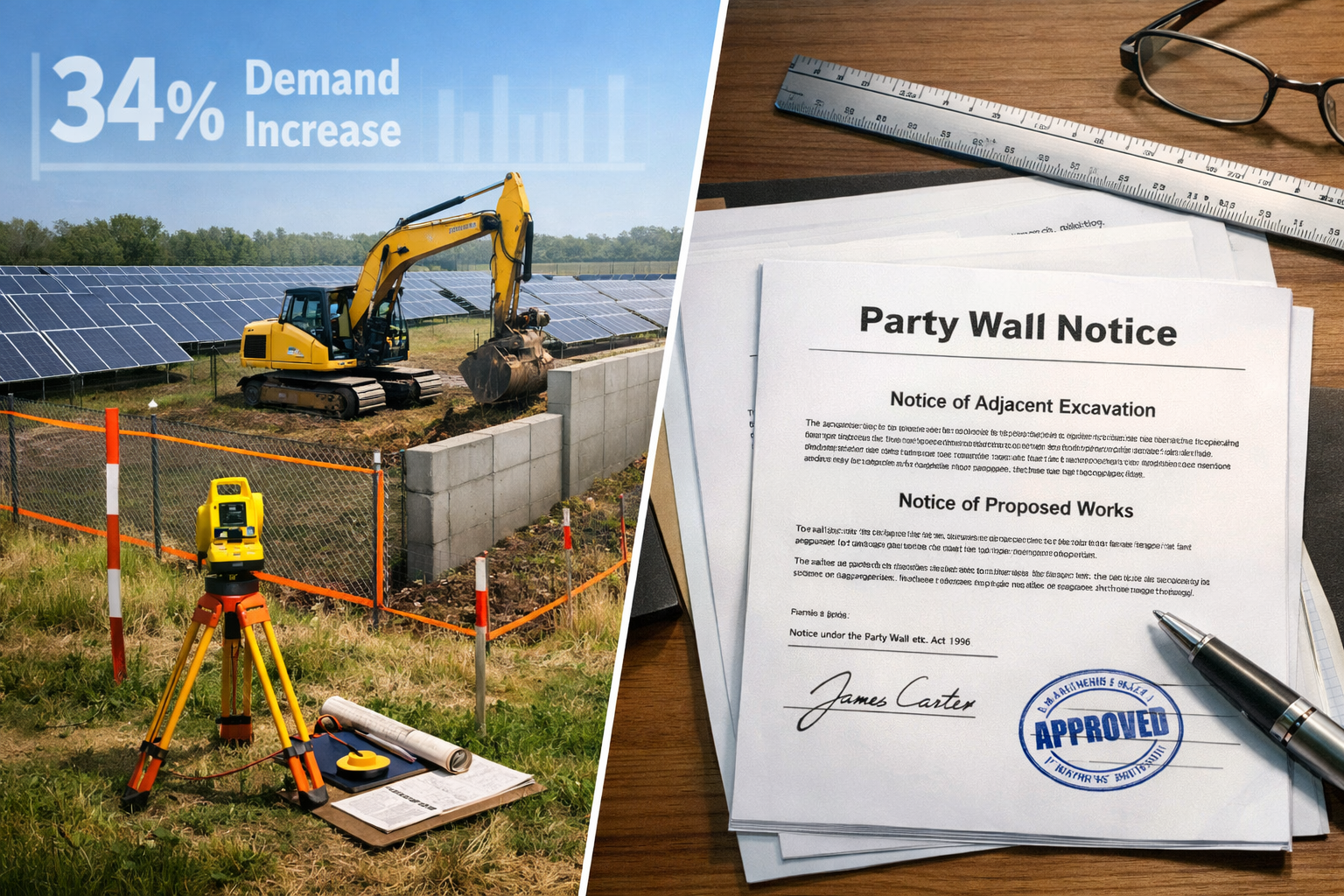
The renewable energy sector is experiencing unprecedented growth in 2026, with power facility development showing a remarkable 34% net positive outlook. As solar farms, wind installations, and battery storage facilities expand across the UK and globally, developers face increasingly complex boundary and party wall requirements. Understanding Power Facility Party Wall Notices: 2026 Sector Guidance with 34% Demand Surge has become essential for energy companies, developers, and property owners navigating this rapidly evolving landscape.
This surge in demand brings unique challenges. Unlike traditional residential construction, power facilities often involve large-scale infrastructure that crosses multiple property boundaries, requires extensive groundwork, and impacts neighboring landowners in ways that standard party wall procedures weren't originally designed to address. With regulatory frameworks adapting to accommodate renewable energy expansion, stakeholders must understand both traditional party wall law and sector-specific requirements.
Key Takeaways
- Power facility development has increased 34% in 2026, creating unprecedented demand for specialized party wall notices and boundary agreements
- Traditional party wall procedures require adaptation for large-scale energy infrastructure, including solar farms, wind turbines, and battery storage facilities
- New regulatory requirements in 2026, including Japan's FIP system for facilities 50kW and larger, mandate resident explanation meetings and enhanced stakeholder consultation [1]
- Proper notice procedures protect all parties by documenting pre-construction conditions, establishing dispute resolution mechanisms, and ensuring compliance with evolving energy sector regulations
- Templates and professional guidance can streamline the notice process, reduce costs, and prevent costly delays in power facility construction timelines
Understanding Party Wall Notices for Power Facilities
What Makes Power Facilities Different
Power facilities present unique challenges compared to residential party wall matters. While the Party Wall etc. Act 1996 provides the foundational legal framework in England and Wales, energy infrastructure projects introduce complexities that require specialized interpretation and application.
Key differences include:
- 🏗️ Scale: Solar farms can span hundreds of acres, potentially affecting dozens of neighboring properties
- ⚡ Infrastructure depth: Battery storage and substation foundations often require excavation exceeding standard residential depths
- 🔌 Ongoing operations: Unlike one-time construction, power facilities generate continuous activity that may impact adjacent properties
- 📊 Regulatory oversight: Energy facilities face additional scrutiny from regulatory bodies beyond local planning authorities
Traditional party wall agreements focus primarily on residential construction scenarios. However, power facilities must address electromagnetic fields, noise from transformers, access for maintenance, and long-term operational impacts that extend far beyond the construction phase.
Types of Party Wall Notices for Energy Infrastructure
Power facility developers must understand which types of party wall works apply to their specific projects. The three main notice types under the Act each serve distinct purposes:
1. Party Structure Notice
Required when building on or near a party wall or structure. For power facilities, this applies when:
- Installing equipment on shared boundary walls
- Constructing substations adjacent to existing structures
- Modifying existing buildings for energy storage
Learn more about party structure notices and how to serve them.
2. Line of Junction Notice
Essential for new construction at property boundaries, including:
- Perimeter fencing for solar farms
- Security barriers around battery storage facilities
- New walls separating energy infrastructure from neighboring land
3. Excavation Notice (3-Meter and 6-Meter)
Critical for power facilities requiring significant groundwork:
- Foundation work for wind turbine bases
- Underground cable trenching near boundaries
- Substation foundation excavation
Understanding boundary wall rules and the difference between party fence walls and boundary walls helps developers determine which notices apply to their specific situations.
The 2026 Regulatory Landscape: Power Facility Party Wall Notices
Global Regulatory Changes Impacting Notice Requirements
The year 2026 marks a significant shift in how power facilities must approach community engagement and legal compliance. Japan's transition to the Feed-in Premium (FIP) system exemplifies this trend, requiring solar facilities of 50kW or larger to conduct mandatory resident explanation meetings [1]. While this specific regulation applies to Japanese projects, similar stakeholder engagement requirements are emerging globally.
2026 Regulatory Trends:
| Region | Key Requirement | Facility Type | Impact on Notices |
|---|---|---|---|
| Japan | Mandatory resident meetings [1] | Solar ≥50kW | Enhanced consultation requirements |
| UK | Updated planning guidance | All renewables | Stricter boundary documentation |
| EU | Community benefit obligations | Wind & solar | Extended notice periods |
| US | Safe harbor construction timelines [3][4] | All facilities | Accelerated notice procedures |
These regulatory changes reflect growing recognition that power facilities require more comprehensive stakeholder engagement than traditional construction projects. The party wall notice process must now accommodate these enhanced requirements.
The 34% Demand Surge Explained
The remarkable 34% increase in power facility development during 2026 stems from converging factors:
Economic Drivers:
- Government incentives for renewable energy transition
- Corporate net-zero commitments requiring clean energy infrastructure
- Improved battery storage technology making facilities more viable
- Rising energy costs driving demand for on-site generation
Policy Catalysts:
- Updated tax credits and safe harbor provisions [3][4]
- Streamlined planning processes for renewable projects
- Grid connection priority for clean energy facilities
- Local authority renewable energy targets
This surge creates unprecedented demand for party wall professionals who understand energy sector requirements. Traditional surveyors accustomed to residential extensions now face complex infrastructure projects requiring specialized knowledge of power facility construction, operational requirements, and long-term boundary implications.
Sector-Specific Compliance Challenges
Power facility developers in 2026 must navigate multiple compliance frameworks simultaneously:
Planning vs. Party Wall Requirements
While planning permission addresses land use and environmental impact, party wall notices focus specifically on protecting neighboring property owners from construction damage. These processes run parallel but serve different purposes. Developers cannot substitute planning approval for proper party wall act notices.
Energy Sector Regulations
Beyond party wall law, power facilities must comply with:
- Grid connection standards
- Safety regulations for electrical infrastructure
- Environmental impact assessments
- Ongoing monitoring and reporting requirements
Community Engagement Obligations
The 2026 regulatory environment increasingly requires meaningful community consultation. The Japanese FIP system's mandatory resident explanation meetings [1] represent a global trend toward enhanced stakeholder engagement that goes beyond minimum legal notice requirements.
Practical Guidance: Serving Power Facility Party Wall Notices in 2026
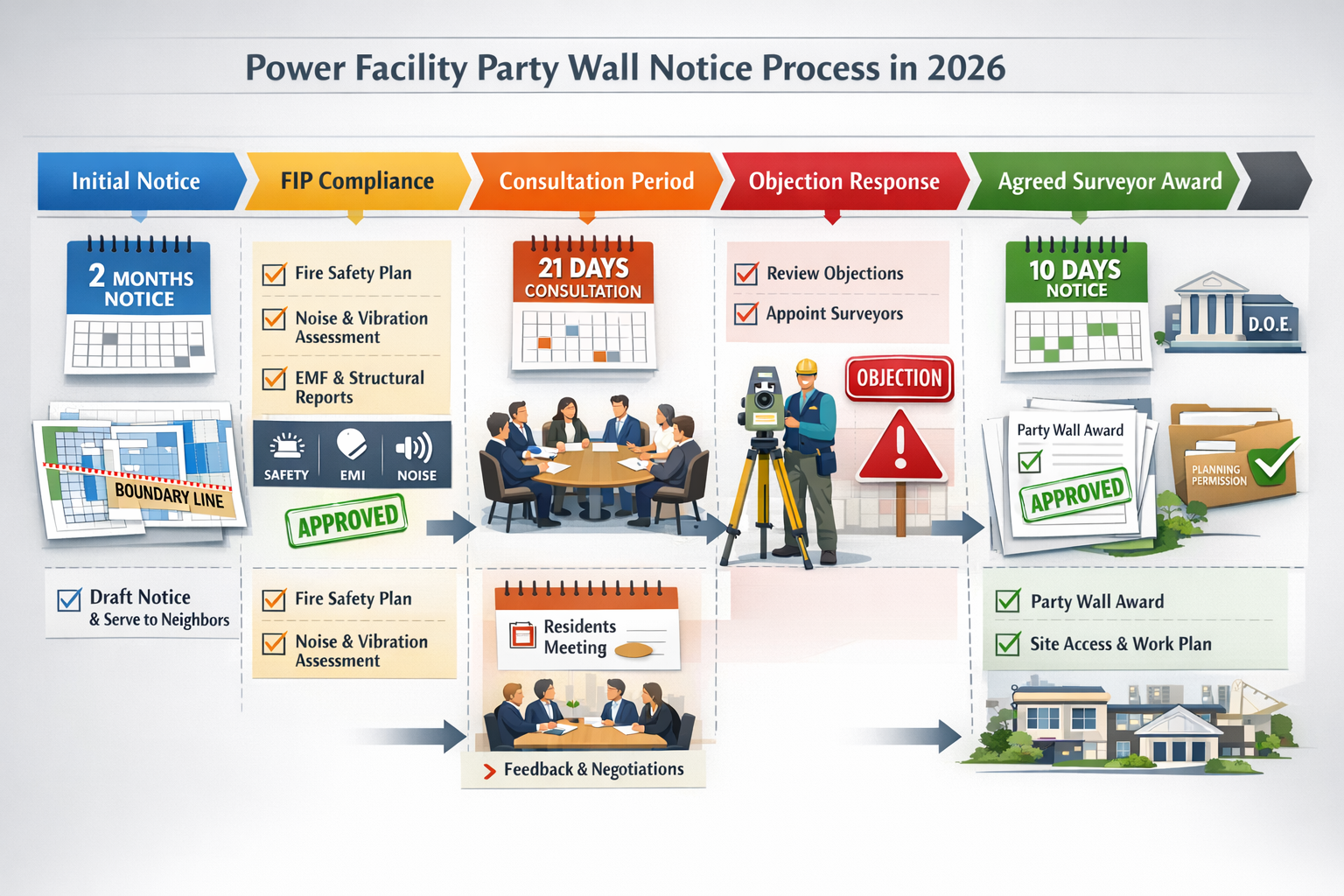
Step-by-Step Notice Process for Energy Infrastructure
Successfully navigating Power Facility Party Wall Notices: 2026 Sector Guidance with 34% Demand Surge requires systematic planning and execution. Here's the comprehensive process:
Phase 1: Pre-Notice Preparation (8-12 weeks before construction)
-
Boundary survey and title investigation
- Identify all properties within notice range
- Verify ownership details for adjoining landowners
- Map underground utilities and existing easements
-
Determine applicable notice types
- Assess excavation depths against 3-meter and 6-meter thresholds
- Identify party structures and boundary walls
- Calculate required notice periods
-
Prepare technical documentation
- Detailed construction drawings showing boundary impacts
- Structural calculations for foundations and excavations
- Schedule of proposed works with timelines
Phase 2: Notice Service (Minimum 2 months before work)
-
Formal notice delivery
- Serve notices via recorded delivery or hand delivery
- Include all required technical information
- Provide clear contact details for responses
-
Track acknowledgment deadlines
- Monitor 14-day response period
- Follow up with non-responsive neighbors
- Document all communications
Phase 3: Response Management
-
Consent scenario
- Obtain written consent from adjoining owners
- Proceed with construction after notice period expires
- Maintain communication throughout construction
-
Dissent or non-response scenario
- Appoint party wall surveyors
- Prepare and agree party wall awards
- Establish dispute resolution procedures
Understanding the costs of the party wall process helps developers budget appropriately for this essential compliance step.
Templates and Documentation for Efficiency
Standardized templates streamline the notice process while ensuring legal compliance. Power facility developers should maintain comprehensive documentation libraries:
Essential Templates:
📄 Party Wall Notice Template
- Facility-specific modifications for energy infrastructure
- Technical appendices for solar, wind, or battery projects
- Standardized language for common scenarios
📋 Schedule of Condition Template
- Pre-construction property documentation
- Photographic evidence protocols
- Baseline measurements for vibration and noise
📝 Party Wall Agreement Template
- Standard terms for power facility construction
- Operational phase provisions
- Maintenance access agreements
Access a free sample party wall agreement template to understand the essential components. For power facilities, these templates require customization to address sector-specific considerations like electromagnetic interference, ongoing access requirements, and decommissioning provisions.
Documentation Best Practices:
✅ Maintain comprehensive records of all notices served, responses received, and agreements reached
✅ Use professional photography for schedule of condition documentation
✅ Create digital archives accessible to all project stakeholders
✅ Establish version control for evolving project specifications
✅ Implement tracking systems for multiple simultaneous notice processes
Cost Management Strategies
The 34% surge in power facility development has increased demand for party wall services, potentially driving up costs. Strategic planning helps control expenses:
Budget Allocation Guidelines:
- Small facilities (<1MW): £3,000-£8,000 for party wall procedures
- Medium facilities (1-10MW): £8,000-£25,000 depending on boundary complexity
- Large facilities (>10MW): £25,000-£100,000+ for extensive boundary impacts
Learn practical strategies for keeping party wall costs down without compromising legal compliance or stakeholder relationships.
Cost-Saving Approaches:
💰 Early engagement: Proactive neighbor consultation before formal notices can prevent disputes
💰 Agreed surveyors: Single surveyor acting for both parties reduces professional fees
💰 Standardized procedures: Template-based approaches minimize custom documentation costs
💰 Phased construction: Strategic sequencing can reduce simultaneous notice requirements
💰 Professional project management: Experienced coordination prevents costly delays and disputes
Regional Considerations Across London and the UK
Power facility location significantly impacts party wall procedures. Urban installations face different challenges than rural developments:
Urban Power Facilities
Cities like London present unique complexities:
- Higher property density means more adjoining owners
- Mixed-use developments create varied stakeholder interests
- Premium property values increase risk exposure
- Stricter planning requirements compound compliance obligations
Developers working in Central London, North London, South London, East London, or West London should engage local specialists familiar with regional planning authorities and property characteristics.
Rural and Industrial Sites
Large-scale solar farms and wind installations typically occupy rural locations where:
- Agricultural land boundaries may lack clear demarcation
- Fewer adjoining properties simplify notice requirements
- Greater distances reduce construction impact concerns
- Agricultural operations create unique access and timing considerations
Stakeholder Perspectives: Building Owners vs. Adjoining Owners
For Building Owners: Power Facility Developers
Power facility developers serve as building owners under party wall legislation, carrying specific rights and responsibilities:
Developer Obligations:
🏗️ Proper notice service: Timely, complete, and accurate notices to all affected parties
🏗️ Cost responsibility: Payment for reasonable surveyor fees and award preparation
🏗️ Construction compliance: Adherence to agreed methods, hours, and protective measures
🏗️ Damage remediation: Prompt repair of any construction-related damage
🏗️ Ongoing communication: Regular updates to adjoining owners throughout the project
Strategic Advantages of Proper Procedures:
✨ Risk mitigation: Formal agreements protect against future damage claims
✨ Project certainty: Resolved party wall matters prevent construction delays
✨ Stakeholder relationships: Professional handling builds community support
✨ Financing requirements: Lenders often require party wall compliance documentation
✨ Insurance benefits: Proper procedures may reduce premium costs
Visit our building owners' guide for comprehensive information on managing the process from the developer perspective.
For Adjoining Owners: Protecting Property Rights
Neighboring property owners affected by power facility construction have important rights as adjoining owners:
Adjoining Owner Rights:
🛡️ Notice receipt: Proper advance notice of all proposed works
🛡️ Professional representation: Right to appoint own surveyor at building owner's expense
🛡️ Schedule of condition: Pre-construction property documentation
🛡️ Protective measures: Requirement for reasonable construction safeguards
🛡️ Damage compensation: Remediation of any construction-related harm
Response Options:
When receiving a party wall notice for a nearby power facility, adjoining owners can:
- Consent to the works: Simplest approach if comfortable with proposed construction
- Dissent and appoint surveyor: Triggers formal award process with professional protection
- Request modifications: Negotiate timing, methods, or protective measures
- Seek clarification: Request additional technical information before deciding
If your neighbor is carrying out works, understanding your rights ensures proper protection throughout the construction process.
Common Challenges and Solutions in Power Facility Party Wall Matters
Challenge 1: Multiple Adjoining Properties
Large power facilities often impact dozens of neighboring properties simultaneously, creating administrative complexity and increased dispute risk.
Solution:
- Implement project management software to track all notice deadlines
- Host group information sessions for multiple adjoining owners
- Standardize documentation while allowing individual concerns
- Consider single surveyor acting for multiple consenting neighbors
- Establish clear communication protocols and contact points
Challenge 2: Complex Boundary Situations
Power facilities frequently encounter unclear property boundaries, historical easements, and underground utility conflicts.
Solution:
- Commission professional boundary surveys before notice preparation
- Research historical title documents and easement agreements
- Engage utility companies early to map existing infrastructure
- Consider boundary agreements to clarify ambiguous situations
- Document all assumptions and obtain written confirmations
Understanding how close neighbors can build to fences and wall height regulations helps clarify common boundary questions.
Challenge 3: Accelerated Construction Timelines
Government incentives and tax credit safe harbor provisions [3][4] often create pressure to begin construction quickly, potentially conflicting with party wall notice periods.
Solution:
- Begin party wall procedures during planning application phase
- Build notice periods into project timelines from inception
- Communicate urgency to adjoining owners while respecting legal requirements
- Consider whether consent can expedite the process
- Never commence work before notice periods expire or awards are agreed
The U.S. Treasury Department's recent restrictions on beginning of construction rules for wind and solar facilities [4] demonstrate how regulatory frameworks increasingly impact project timelines, making early party wall planning essential.
Challenge 4: Operational Phase Considerations
Unlike residential construction that ends after completion, power facilities require ongoing access, maintenance, and eventual decommissioning.
Solution:
- Include operational access provisions in initial party wall agreements
- Address electromagnetic interference and noise concerns proactively
- Establish long-term monitoring protocols for boundary structures
- Create maintenance notification procedures
- Plan for decommissioning impacts in original documentation
Challenge 5: Stakeholder Engagement Beyond Legal Minimums
The 2026 regulatory landscape increasingly expects community consultation beyond minimum party wall notice requirements, as exemplified by Japan's mandatory resident explanation meetings for facilities 50kW and larger [1].
Solution:
- Conduct voluntary community information sessions before formal notices
- Provide accessible technical information about facility operations
- Establish ongoing communication channels with neighbors
- Consider community benefit agreements alongside party wall procedures
- Document all stakeholder engagement for regulatory compliance
Expert Tips for Navigating Power Facility Party Wall Notices in 2026
Tip 1: Engage Specialists Early
The intersection of party wall law and power sector regulations requires specialized expertise. Engage professionals who understand both domains:
- Party wall surveyors with renewable energy project experience
- Legal advisors familiar with energy sector compliance
- Boundary surveyors experienced in large-scale infrastructure
- Community engagement specialists for stakeholder consultation
Tip 2: Leverage Technology for Efficiency
Modern project management tools can streamline complex multi-property notice processes:
📱 Digital notice tracking systems
📱 Automated deadline reminders and follow-ups
📱 Cloud-based document repositories
📱 Virtual consultation platforms for stakeholder meetings
📱 Drone photography for schedule of condition documentation
Tip 3: Build Compliance into Project Planning
Integrate party wall procedures into overall project timelines from inception:
- Pre-planning phase: Identify potential party wall impacts
- Planning application phase: Begin boundary surveys and owner identification
- Planning approval phase: Prepare and serve notices
- Pre-construction phase: Resolve disputes and finalize awards
- Construction phase: Implement agreed protective measures
- Post-construction phase: Document completion and remediate any damage
Tip 4: Maintain Comprehensive Documentation
In the event of disputes or future claims, thorough documentation proves invaluable:
✏️ Photographic evidence of pre-construction conditions
✏️ Written records of all communications with adjoining owners
✏️ Technical reports supporting construction methodology
✏️ Compliance certificates from appointed surveyors
✏️ Completion documentation showing final conditions
Tip 5: Consider the Long-Term Relationship
Power facilities operate for decades, making positive neighbor relationships essential:
- Exceed minimum legal requirements where practical
- Respond promptly to concerns throughout construction and operation
- Establish clear escalation procedures for issues
- Consider voluntary monitoring programs for ongoing reassurance
- Maintain accessible contact information for facility management
Conclusion: Navigating the 2026 Power Facility Party Wall Landscape
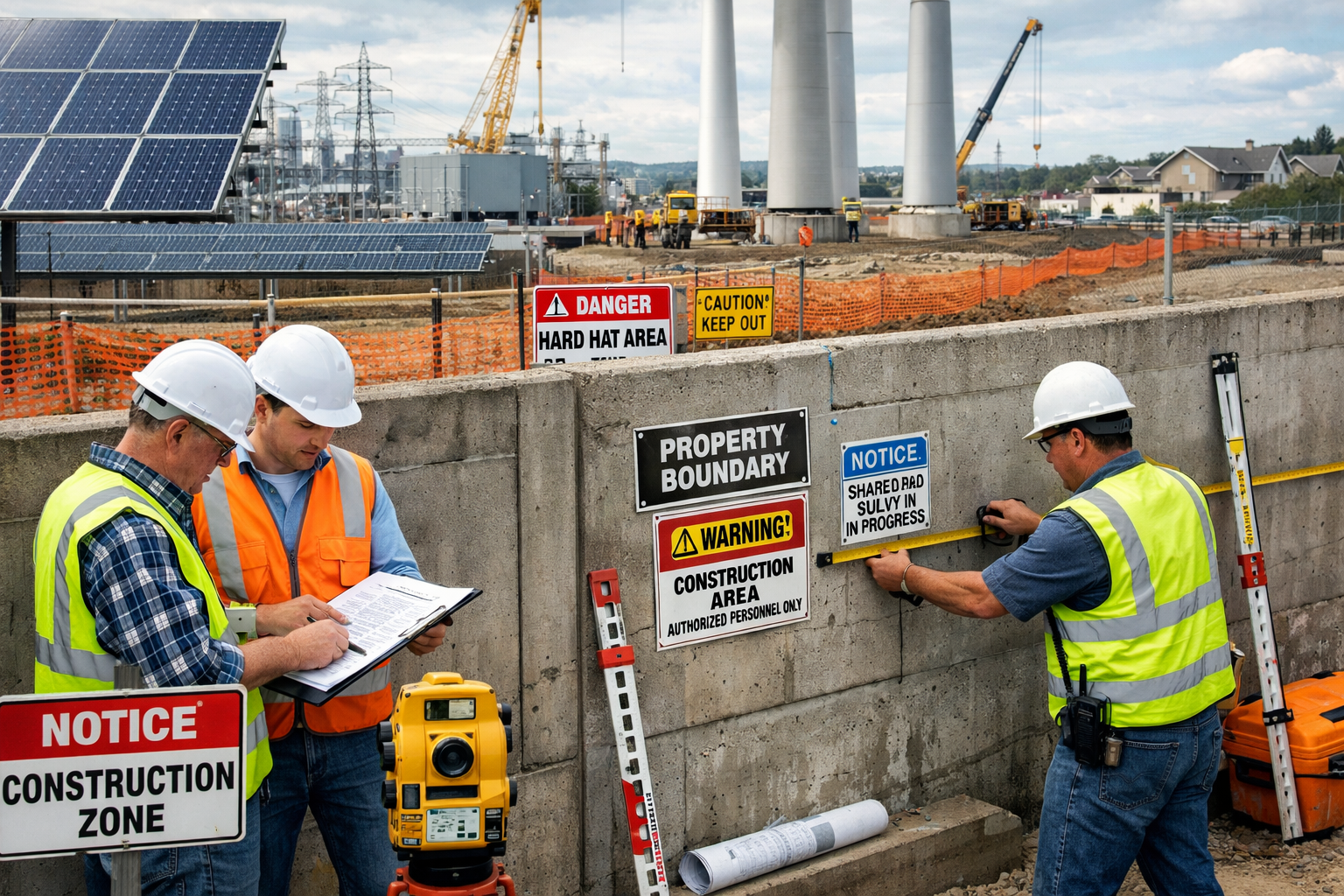
The remarkable 34% surge in power facility development during 2026 reflects the global transition toward renewable energy and sustainable infrastructure. This growth brings unprecedented opportunities for developers, communities, and the environment—but also complex legal and regulatory challenges that require careful navigation.
Power Facility Party Wall Notices: 2026 Sector Guidance with 34% Demand Surge represents more than just compliance with the Party Wall etc. Act 1996 [2]. It encompasses evolving regulatory requirements like Japan's FIP system mandatory consultation meetings [1], enhanced stakeholder engagement expectations, and the unique technical challenges of large-scale energy infrastructure.
Key Success Factors
✅ Early planning: Begin party wall procedures during project conception, not as an afterthought
✅ Specialized expertise: Engage professionals who understand both party wall law and power sector requirements
✅ Comprehensive documentation: Maintain detailed records protecting all parties' interests
✅ Proactive communication: Exceed minimum legal requirements to build community support
✅ Long-term perspective: Consider operational phase impacts, not just construction
Actionable Next Steps
For Power Facility Developers:
- Assess your project's party wall requirements using the guidance in this article
- Engage qualified party wall surveyors experienced in energy infrastructure projects
- Download and customize templates for your specific facility type and location
- Build comprehensive timelines that integrate party wall procedures with construction schedules
- Establish stakeholder engagement protocols that exceed minimum legal requirements
For Adjoining Property Owners:
- Understand your rights when receiving party wall notices for nearby power facilities
- Respond within required timeframes to protect your interests
- Consider appointing your own surveyor for professional representation
- Request schedule of condition documentation before construction begins
- Maintain open communication with developers throughout the process
For All Stakeholders:
The power sector's transformation creates opportunities for collaboration, innovation, and sustainable development. Proper party wall procedures protect everyone's interests while enabling the infrastructure transition our communities need.
Whether you're developing a small rooftop solar installation or a major wind farm, understanding and implementing proper party wall procedures ensures legal compliance, protects property rights, and builds the foundation for successful long-term operations.
The 2026 regulatory landscape demands more than minimum compliance—it requires genuine stakeholder engagement, technical expertise, and commitment to protecting all parties' interests. By following the sector guidance outlined in this article, power facility developers and adjoining owners can navigate this complex landscape successfully, contributing to the renewable energy transition while maintaining positive community relationships and legal compliance.
References
[1] Fip Transition 2026 Solar Legal Guide – https://www.borderless.law/en/topics/fip-transition-2026-solar-legal-guide/
[2] Party Wall Agreement – https://hoa.org.uk/advice/guides-for-homeowners/i-am-improving/party-wall-agreement/
[3] Navigating Safe Harbor Rules For Solar And Wind Sec 48e Facilities – https://www.thetaxadviser.com/issues/2026/feb/navigating-safe-harbor-rules-for-solar-and-wind-sec-48e-facilities/
[4] 15175 Chapman Treasury Department Adds Restrictions To Beginning Of Construction Rules For Wind And Solar Facilities 081925 – https://www.chapman.com/media/publication/15175_Chapman-Treasury-Department-Adds-Restrictions-to-Beginning-of-Construction-Rules-for-Wind-and-Solar-Facilities_-_081925.pdf