

As baby boomers turn 80 in 2026, the senior housing sector is experiencing unprecedented growth. With record-high occupancy rates and an explosion of new construction projects, developers and property managers face a unique challenge: navigating Party Wall Act compliance for multi-unit residential facilities designed specifically for elderly residents. The surge in senior housing developments has created a complex landscape where traditional party wall procedures intersect with specialized accessibility requirements, healthcare considerations, and the unique needs of aging populations.
Understanding Party Wall Act Compliance for Senior Housing Developments: Managing Awards in the 2026 Boomer Wave has become essential for surveyors, developers, and property managers working in this booming sector. This demographic shift represents the largest generational housing transition in modern history, demanding specialized knowledge and careful planning.
Key Takeaways
- 🏘️ Senior housing developments require specialized party wall approaches due to unique accessibility features, shared medical facilities, and complex multi-unit configurations
- 📋 Party wall awards must address additional considerations including noise insulation for health equipment, emergency access provisions, and modifications for aging-in-place
- ⏱️ Proper notice periods and surveyor selection become critical when managing multiple adjoining owners in senior housing complexes
- 💰 Cost management strategies can significantly reduce expenses while maintaining compliance in large-scale senior developments
- 🔍 Proactive schedules of condition protect both developers and elderly residents from disputes related to structural work
Understanding the 2026 Senior Housing Boom
The demographic reality of 2026 cannot be ignored. The oldest baby boomers, born in 1946, are now turning 80 years old. This milestone has triggered massive demand for age-appropriate housing, from independent living communities to assisted living facilities and continuing care retirement communities (CCRCs).
Why Senior Housing Differs from Standard Residential Development
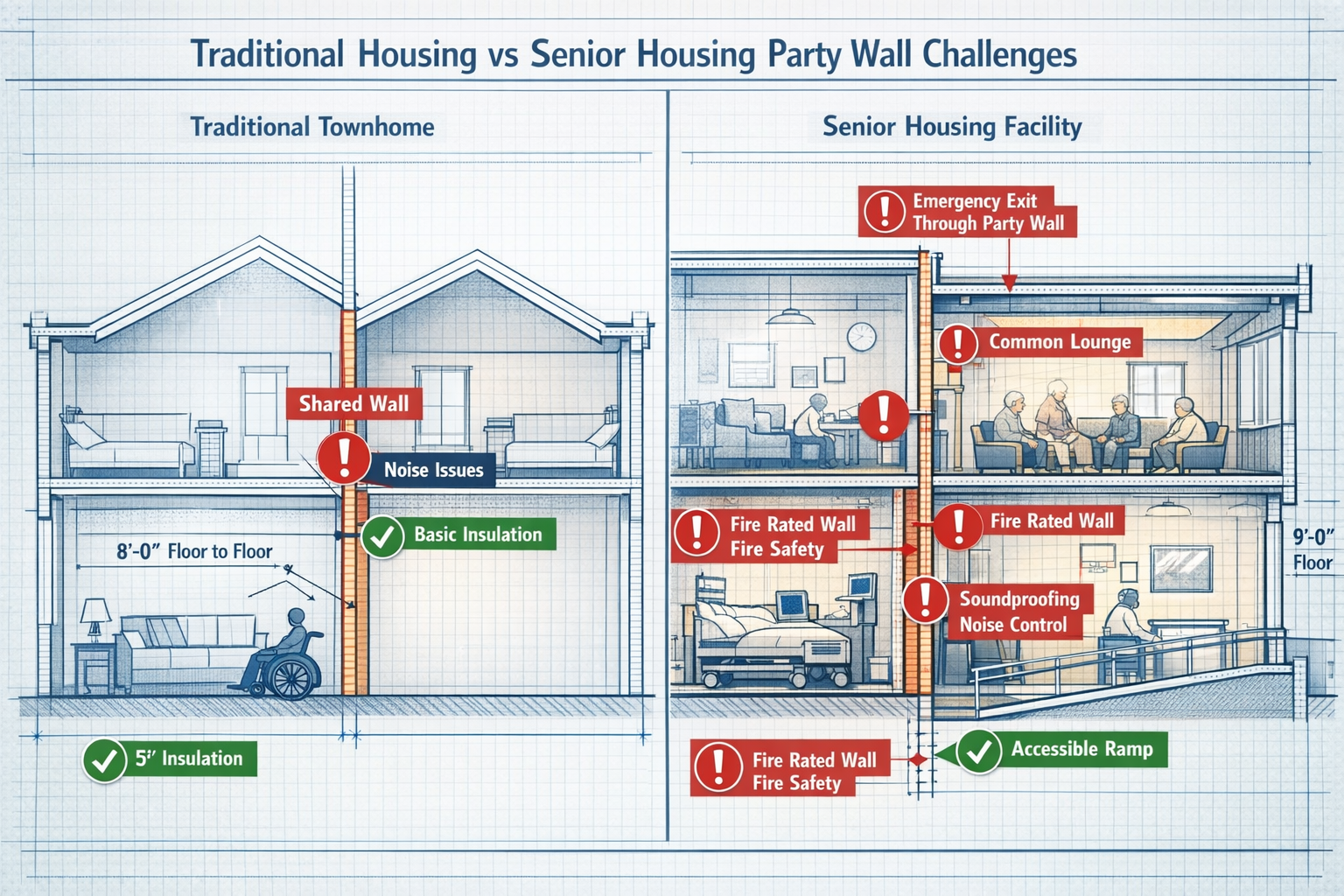
Senior housing developments present unique party wall challenges that standard residential projects don't encounter:
Accessibility Modifications: Wider doorways, reinforced walls for grab bars, and structural changes to accommodate wheelchairs often affect party walls between units [1].
Shared Facilities: Unlike traditional townhomes, senior developments frequently include communal spaces—dining halls, medical clinics, therapy rooms—that share walls with private residences.
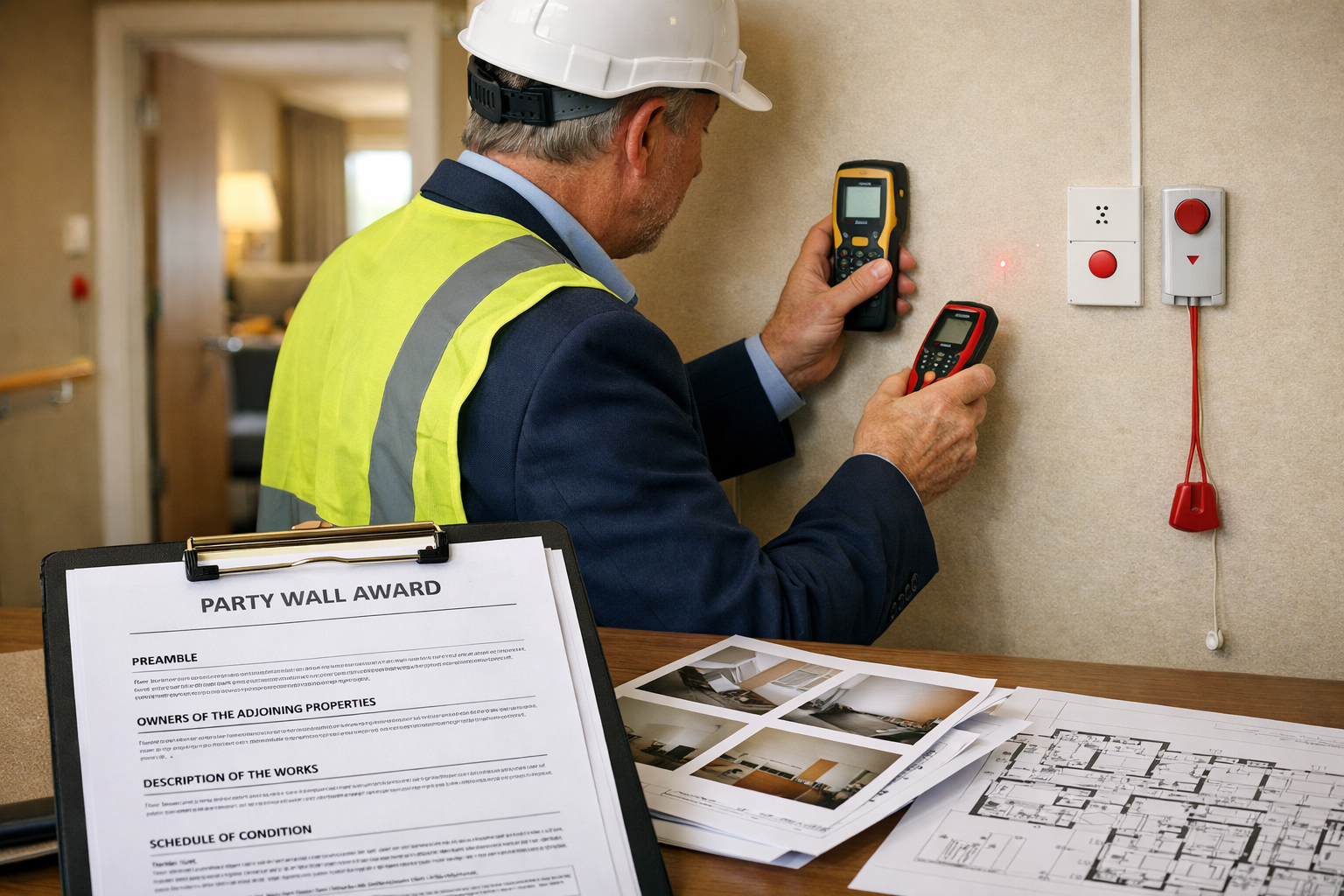
Healthcare Equipment: Medical devices, emergency call systems, and monitoring equipment installed on or through party walls require special consideration in party wall awards.
Enhanced Sound Insulation: Elderly residents often require quieter environments, necessitating superior acoustic treatments in party wall construction.
Party Wall Act Compliance for Senior Housing Developments: Core Requirements
The Party Wall etc. Act 1996 applies to senior housing just as it does to any other development, but the application requires specialized knowledge and careful attention to detail.
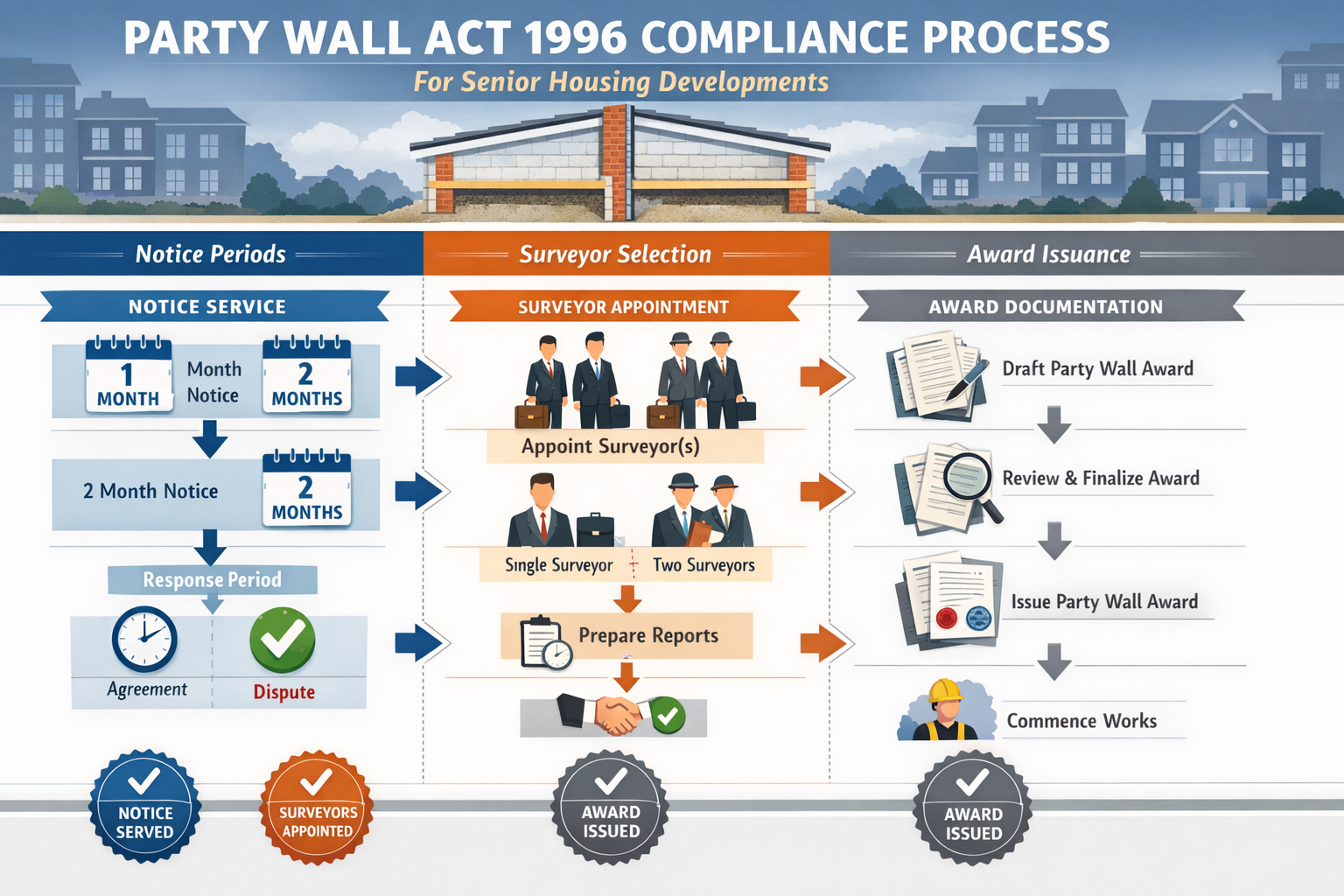
Notice Requirements for Multi-Unit Senior Developments
When building or renovating senior housing facilities, developers must serve appropriate party wall notices to all adjoining owners. The notice period requirements remain the same [1]:
| Notice Type | Minimum Notice Period | Common Senior Housing Applications |
|---|---|---|
| Party Structure Notice | 2 months | Building on existing party walls, inserting beams, cutting into shared structures |
| Line of Junction Notice | 1 month | New builds on boundary lines, new party walls between units |
| 3-Meter/6-Meter Notice | 1 month | Foundation work near existing senior housing buildings |
The complexity increases when a single development involves dozens or even hundreds of units sharing walls. Each adjoining owner must receive proper notice, creating an administrative challenge that requires meticulous organization.
Appointing Surveyors for Large-Scale Senior Projects
When working with senior housing developments, the surveyor appointment process becomes more complex. Options include [1]:
- Agreed Surveyor: A single surveyor acts for both building and adjoining owners—efficient for large projects
- Two Surveyors: Each party appoints their own surveyor—appropriate when disputes arise
- Third Surveyor: Appointed to resolve disagreements between the two surveyors
For developers managing Party Wall Act Compliance for Senior Housing Developments: Managing Awards in the 2026 Boomer Wave, selecting experienced surveyors familiar with elderly housing requirements proves essential. Look for professionals who understand:
- Accessibility standards and building regulations specific to senior housing
- Healthcare equipment installation requirements
- Sound insulation standards for residential care facilities
- Fire safety provisions affecting party walls in senior developments
A qualified party wall surveyor in Central London or other major urban areas can navigate these specialized requirements effectively.
Managing Party Wall Awards in the 2026 Boomer Wave
A party wall award is the legal document that sets out the rights and responsibilities of all parties involved in the work [2]. For senior housing developments, these awards must address additional considerations beyond standard residential projects.
Essential Components of Senior Housing Party Wall Awards
When drafting awards for senior developments, surveyors should include:
📌 Detailed Work Descriptions: Specify exactly what construction or renovation work will occur, including any modifications for accessibility or medical equipment installation.
📌 Access Provisions: Define how and when workers can access adjoining properties, with special consideration for elderly residents who may need advance notice and assistance.
📌 Protection Measures: Outline steps to protect vulnerable residents from dust, noise, and disruption during construction.
📌 Emergency Protocols: Establish procedures if urgent work becomes necessary, particularly important in facilities housing frail or medically dependent residents.
📌 Dispute Resolution: Include clear mechanisms for resolving disagreements without requiring elderly residents to navigate complex legal processes.
Understanding the party wall contract template and awards structure helps ensure comprehensive documentation.
Special Considerations for Shared Facilities
Senior housing developments often feature shared amenities that complicate party wall compliance:
Communal Dining Areas: When dining halls share walls with residential units, awards must address kitchen equipment, ventilation systems, and noise control.
Medical Clinics: Healthcare facilities within senior developments may require specialized electrical, plumbing, or HVAC installations through party walls.
Activity Centers: Therapy rooms, fitness centers, and social spaces need appropriate sound insulation to prevent disturbance to adjacent residents.
Emergency Exits: Fire safety regulations may require emergency doors or corridors that pass through party walls, requiring specific provisions in awards [4].
Cost Management Strategies for Senior Housing Party Wall Compliance
The costs of party wall procedures can escalate quickly in large-scale senior developments. However, strategic planning can control expenses while maintaining full compliance.
Typical Cost Breakdown
Understanding where money goes helps developers budget appropriately:
- Surveyor Fees: £500-£1,500 per party wall matter for straightforward cases; more complex senior housing projects may cost significantly more
- Award Preparation: £800-£2,000 depending on complexity and number of adjoining owners
- Schedule of Condition: £300-£800 per property for photographic documentation [1]
- Legal Fees: Variable, but can be substantial if disputes arise
For developers managing multiple units, these costs multiply rapidly. A 50-unit senior housing development with shared walls could involve 25-50 separate party wall matters.
Strategies to Keep Costs Down
Smart developers employ several tactics to manage Party Wall Act Compliance for Senior Housing Developments: Managing Awards in the 2026 Boomer Wave expenses [2]:
✅ Use Agreed Surveyors: When possible, negotiate for a single agreed surveyor to act for all parties, reducing duplication of effort.
✅ Bundle Related Work: Combine multiple notices and awards for simultaneous work across the development.
✅ Invest in Quality Documentation: Thorough initial surveys and schedules of condition prevent costly disputes later.
✅ Communicate Proactively: Early, clear communication with adjoining owners reduces objections and simplifies the process.
✅ Plan Timing Strategically: Coordinate work schedules to minimize disruption and avoid peak periods when surveyor fees may be higher.
For additional guidance, review tips on how to keep party wall costs down.
Handling Disputes in High-Demand Senior Housing Markets
The 2026 construction boom has intensified party wall disputes across the UK housing market [3]. Senior housing developments face particular challenges due to the vulnerability of elderly residents and the complexity of multi-unit facilities.
Common Dispute Triggers in Senior Housing
Noise and Vibration Concerns: Construction work can be particularly distressing for elderly residents with health conditions. Awards must specify working hours, noise limits, and vibration monitoring.
Structural Concerns: Older residents may worry about building stability and safety. Clear communication and professional reassurance become essential.
Access Issues: Mobility-impaired residents may struggle with construction-related access disruptions. Awards should address alternative routes and assistance provisions.
Duration Anxiety: Elderly residents often have limited tolerance for prolonged disruption. Realistic timelines and regular progress updates help manage expectations.
Resolution Strategies
When disputes arise, several approaches can help:
- Mediation: Engage neutral third parties to facilitate discussions before conflicts escalate
- Enhanced Communication: Provide regular updates, site visits, and opportunities for residents to ask questions
- Third Surveyor Appointment: When building and adjoining owner surveyors cannot agree, a third surveyor makes binding decisions [1]
- Reasonable Accommodations: Offer temporary relocation assistance or other support for severely affected elderly residents
Understanding what party wall notices are and how to respond helps all parties navigate the process smoothly.
Best Practices for Party Wall Act Compliance for Senior Housing Developments: Managing Awards in the 2026 Boomer Wave
Success in this specialized sector requires adopting proven strategies that address both legal requirements and the unique needs of elderly populations.
Pre-Construction Planning
Conduct Comprehensive Site Assessments: Before serving notices, thoroughly survey the property and all adjoining structures. Identify all party walls, boundary walls, and structures within three or six meters of planned excavation [1].
Engage Specialized Surveyors Early: Select surveyors with experience in both party wall law and senior housing development. Their expertise prevents costly mistakes and delays.
Develop Resident Communication Plans: Create clear, accessible materials explaining the party wall process to elderly residents. Use large print, simple language, and multiple communication channels.
Budget Realistically: Factor party wall costs into project budgets from the outset, including contingencies for potential disputes or unexpected complications.
During Construction
Maintain Detailed Records: Document all work meticulously, including photographs, inspection reports, and communications with adjoining owners. This schedule of condition approach protects all parties.
Monitor Compliance Continuously: Ensure work proceeds according to the award specifications. Regular surveyor inspections verify compliance and identify issues early.
Prioritize Resident Welfare: Implement measures to minimize disruption to elderly residents, including dust control, noise management, and maintaining safe access routes.
Respond Promptly to Concerns: Address questions or complaints from adjoining owners immediately. Quick responses prevent minor issues from becoming major disputes.
Post-Construction Follow-Up
Complete Final Inspections: Conduct thorough post-construction surveys to document the condition of all affected properties and verify that work complies with the award.
Resolve Outstanding Issues: Address any damage or non-compliance items promptly and professionally.
Maintain Documentation: Retain all party wall records, awards, and correspondence. These documents may be needed years later if questions arise.
Gather Feedback: Learn from each project by soliciting feedback from residents, surveyors, and contractors about what worked well and what could improve.
Regional Considerations Across London and the UK
Party wall compliance requirements remain consistent across England and Wales, but local market conditions and development patterns vary significantly. Understanding regional nuances helps developers navigate Party Wall Act Compliance for Senior Housing Developments: Managing Awards in the 2026 Boomer Wave more effectively.
London's Senior Housing Landscape
London's high property values and dense development make party wall compliance particularly critical. Different areas present unique challenges:
- North London: Established neighborhoods with aging housing stock often see senior housing conversions requiring extensive party wall work
- East London: Rapid development and regeneration create opportunities for purpose-built senior communities
- South London: Suburban areas accommodate larger senior housing campuses with complex party wall arrangements
- West London: Premium developments demand high-quality finishes and superior sound insulation in party walls
Each region requires surveyors familiar with local building practices, property values, and development trends.
Technology and Innovation in Party Wall Management
The 2026 senior housing boom has accelerated adoption of new technologies that streamline party wall compliance:
Digital Documentation: Cloud-based platforms enable efficient management of multiple party wall matters across large developments, ensuring nothing falls through the cracks.
3D Scanning: Advanced surveying tools create precise digital models of existing structures, improving accuracy in schedules of condition and reducing disputes.
Virtual Consultations: Video conferencing allows elderly residents to participate in surveyor appointments without physical strain or mobility challenges.
Automated Notifications: Digital systems track notice periods and deadlines, ensuring compliance with statutory requirements across complex projects.
These innovations make managing Party Wall Act Compliance for Senior Housing Developments: Managing Awards in the 2026 Boomer Wave more efficient and less prone to error.
Future Outlook: Beyond 2026
While 2026 represents a peak year for the boomer wave's impact on senior housing, the trend will continue for years to come. Developers and surveyors who build expertise in this sector now will be well-positioned for sustained success.
Emerging Trends to Watch
Aging-in-Place Modifications: Increasing numbers of existing properties will undergo conversions to accommodate elderly residents, creating ongoing party wall work.
Intergenerational Developments: Mixed-age communities that include senior housing will require sophisticated party wall management balancing different resident needs.
Sustainable Senior Housing: Green building techniques and renewable energy installations will add new dimensions to party wall considerations.
Technology Integration: Smart home systems, health monitoring, and assistive technologies will continue affecting party wall installations and awards.
Conclusion
Party Wall Act Compliance for Senior Housing Developments: Managing Awards in the 2026 Boomer Wave represents a critical challenge and opportunity for the construction and property sectors. As the largest generation in history transitions into their 80s, the demand for age-appropriate housing continues to surge, creating unprecedented volumes of party wall work.
Success in this specialized field requires:
✅ Deep understanding of both party wall law and senior housing requirements
✅ Proactive planning with early surveyor engagement and comprehensive site assessments
✅ Cost-effective strategies that maintain compliance while controlling expenses
✅ Sensitive communication that addresses the unique needs of elderly residents
✅ Meticulous documentation protecting all parties throughout the process
Next Steps for Developers and Property Managers
If you're planning or managing senior housing development in 2026:
- Engage experienced party wall surveyors who understand elderly housing requirements
- Budget appropriately for party wall costs across your entire development
- Develop comprehensive communication plans for elderly residents and adjoining owners
- Invest in quality documentation including thorough schedules of condition
- Stay informed about regulatory changes and best practices in this evolving sector
The 2026 boomer wave presents challenges, but with proper planning and expert guidance, developers can navigate party wall compliance efficiently while creating high-quality housing that serves this growing population. Whether you're working on a small conversion or a large-scale purpose-built community, understanding and implementing proper party wall procedures protects your investment and ensures positive outcomes for all stakeholders.
For expert assistance with your senior housing party wall matters, consider consulting with qualified professionals who can guide you through every step of the process, from initial party wall notices through final award completion.
References
[1] Party Wall Agreement – https://hoa.org.uk/advice/guides-for-homeowners/i-am-improving/party-wall-agreement/
[2] Party Wall Maintenance Tips For Keeping Your Property In Compliance – https://www.adamjoseph.co.uk/party-wall-maintenance-tips-for-keeping-your-property-in-compliance
[3] Party Wall Surveys Amid 2026 Construction Boom Handling Disputes In High Demand Uk Housing Markets – https://nottinghillsurveyors.com/blog/party-wall-surveys-amid-2026-construction-boom-handling-disputes-in-high-demand-uk-housing-markets
[4] Party Wall Agreements And Townhome Declarations Key Issues To Watch Out For When Drafting – https://ngazette.com/party-wall-agreements-and-townhome-declarations-key-issues-to-watch-out-for-when-drafting/