


Only 15% of chartered surveyors in the UK identify as women — yet in 2026, that figure is shifting faster than at any point in the profession's history. Nowhere is this change more visible than in the specialist world of party wall surveying, where a new generation of skilled women professionals is reshaping how disputes are handled, how notices are served, and how the built environment is protected.
Inspired by trailblazers like Sarah Tanner and other rising female surveyors, the story of women leading party wall surveying in 2026 is one of ambition, resilience, and real market opportunity. As London's construction boom accelerates and party wall notices multiply across the capital, the demand for qualified surveyors has never been higher — and women are stepping in to meet it.
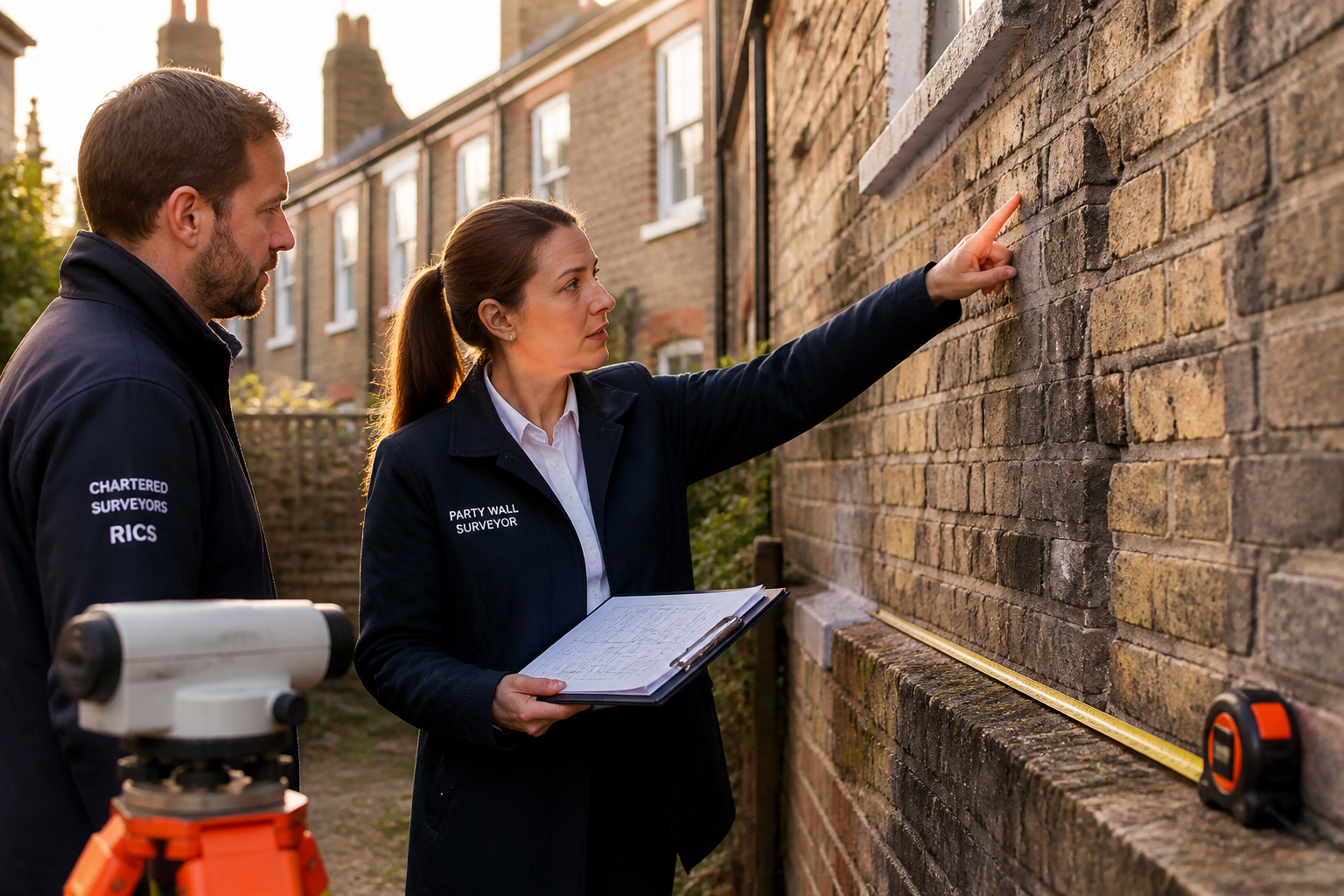
Key Takeaways 📋
- Women now represent a growing share of party wall surveyors in the UK, driven by 2026 construction demand and active diversity initiatives.
- Career entry routes include RICS accreditation, apprenticeships, and graduate schemes — all accessible to women from varied backgrounds.
- Bias, pay gaps, and site culture remain real barriers, but mentorship networks and professional bodies are actively working to close the gap.
- Party wall surveying offers strong earning potential, flexible working, and growing specialisation opportunities.
- Practical steps exist for women to enter, advance, and lead in this field — even amid ongoing industry challenges.
The State of Women in Surveying: Where Things Stand in 2026
The construction and surveying sectors have long been dominated by men. But the numbers are moving. Professional bodies and diversity summits — including events like the Women Surveyors Summit [1] — are creating visible platforms for female professionals across land and built environment disciplines.
Within party wall surveying specifically, the shift is noticeable. More women are qualifying as RICS-accredited surveyors, taking on roles as both building owners' surveyors and adjoining owners' surveyors, and building independent practices. The 2026 construction surge in London — driven by housing demand, infrastructure investment, and urban regeneration — has created a skills shortage that is actively pulling more professionals into the field, regardless of gender.
"The best party wall surveyor is the one who understands the law, communicates clearly, and keeps disputes from escalating. Gender has nothing to do with that." — Sentiment widely shared across the RICS community in 2026.
Why Party Wall Surveying?
Party wall surveying is a highly specialised legal and technical discipline governed by the Party Wall etc. Act 1996. Surveyors in this field:
- Serve and respond to party wall act notices
- Prepare party wall awards and schedules of condition
- Mediate disputes between building owners and adjoining owners
- Advise on types of party wall works including excavations, extensions, and structural alterations
The work is intellectually demanding, legally precise, and people-focused — qualities that many women in the profession say align naturally with their professional strengths.
Career Paths for Women Leading Party Wall Surveying in 2026
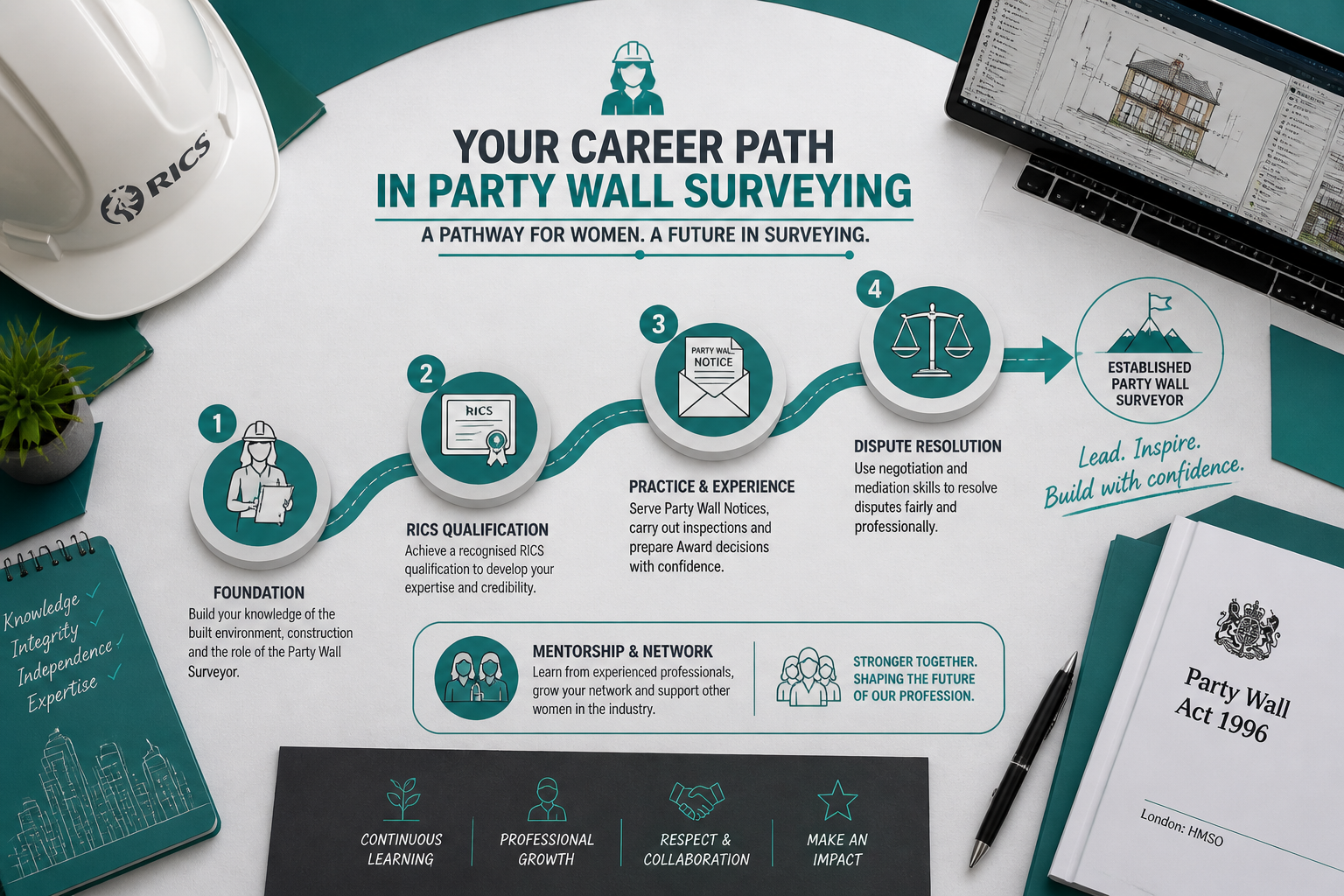
Entry Routes into the Profession
There is no single path into party wall surveying, which makes it more accessible than many assume. The most common routes in 2026 include:
| Route | Description | Typical Duration |
|---|---|---|
| RICS Graduate Route | Degree in surveying + Assessment of Professional Competence (APC) | 4–6 years |
| Apprenticeship | Degree apprenticeship combining work and study | 4–5 years |
| Conversion Route | Professionals from law, architecture, or construction converting via RICS | 2–3 years |
| Technician Route | AssocRICS qualification for those without a degree | 2–4 years |
Women entering from legal backgrounds — particularly property law — often find the transition to party wall surveying straightforward. The work involves interpreting legislation, drafting formal documents, and managing competing interests: skills that transfer directly.
Specialisation Within Party Wall Surveying
Once qualified, women in the field are increasingly specialising in high-demand areas:
- 🏗️ Residential extensions and loft conversions — the most common trigger for party wall notices in London
- 🏢 Commercial and mixed-use developments — higher complexity, higher fees
- ⚖️ Dispute resolution and third surveyor appointments — requiring strong legal knowledge
- 📋 Schedule of condition reporting — a critical protective document for both parties
Understanding the costs of party wall processes is also part of the job. Female surveyors who develop strong client communication skills around fees and timelines often build loyal client bases quickly.
Building an Independent Practice
Several women in 2026 are choosing to establish their own party wall surveying practices rather than joining larger firms. The benefits are clear:
- Flexible working arrangements — particularly valuable for those managing family responsibilities
- Direct client relationships — building reputation through word of mouth
- Geographic specialisation — focusing on specific London areas such as East London, North London, or South London where construction activity is concentrated
Challenges Facing Women in Party Wall Surveying — And How to Overcome Them
The Bias Problem
Bias in construction and surveying is real and documented. Women entering site environments or attending dispute hearings sometimes face assumptions about their authority or expertise. This is not unique to party wall surveying — it reflects broader patterns across the built environment sector.
Research on women in leadership roles consistently shows that even highly qualified women face disproportionate scrutiny. [3] In surveying, this can manifest as clients requesting a "second opinion" from a male colleague, or contractors being slow to cooperate during site inspections.
Practical strategies that work:
- Lead with credentials — introduce yourself with your RICS status and relevant experience upfront
- Document everything — thorough written records protect professional authority
- Build a referral network — trusted colleagues who can vouch for your work
- Join professional networks — RICS Matrics, Women in Property, and similar groups offer peer support
The Pay Gap
The gender pay gap in surveying remains a live issue in 2026. Women in the profession earn, on average, less than male counterparts at equivalent career stages. This is partly explained by the prevalence of men in senior and equity partner roles — but it also reflects negotiation gaps and unconscious bias in fee-setting.
Women entering party wall surveying as independents have a direct opportunity to set their own fees from the outset. Understanding the market rate — and not undercharging — is a critical financial skill.
Work-Life Balance and Site Culture
Construction sites can be physically demanding and culturally challenging environments. Women working in party wall surveying spend time on-site conducting inspections, which means navigating spaces that have historically been unwelcoming.
In 2026, this is improving — but slowly. Larger firms have made more progress than smaller contractors. Women report that:
- Personal protective equipment (PPE) is still not always sized for women
- Informal site culture can be exclusionary
- Client-facing roles are more comfortable than contractor-facing ones at early career stages
The good news: party wall surveying is significantly more office and document-based than many other construction roles. Much of the work — drafting notices, preparing awards, advising clients — happens in professional settings where these barriers are lower.
Demand in 2026: Why Now Is the Right Time to Enter
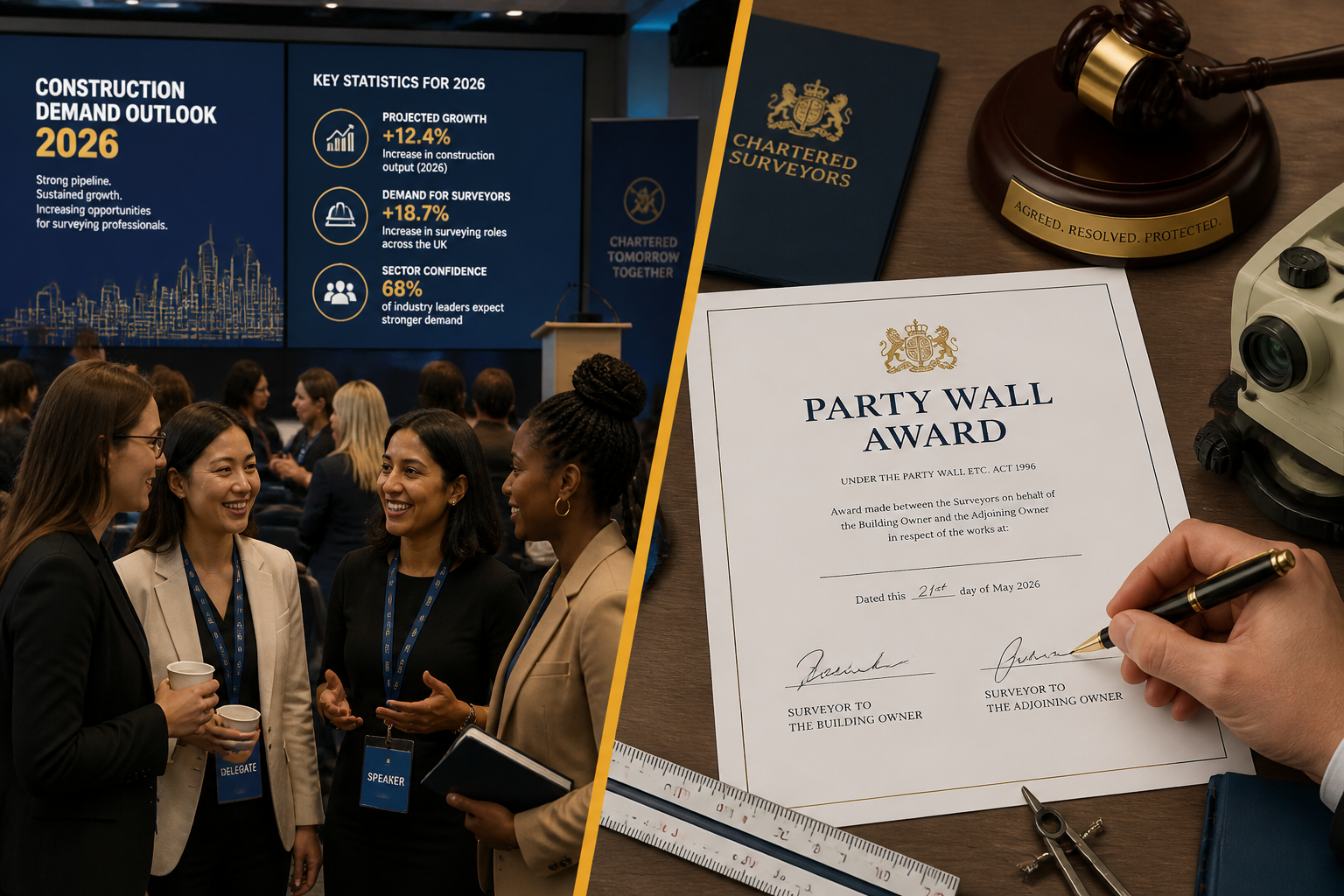
London's Construction Boom Is Creating Real Opportunity
London's housing shortage, combined with major infrastructure projects and urban regeneration schemes, has created sustained demand for party wall surveyors across the capital. Areas like Central London and West London are seeing high volumes of residential and commercial work, with party wall notices being served at record rates.
This demand means:
- Qualified surveyors can command strong fees — typically £700–£1,500+ per case at the party wall award stage
- Workloads are consistent — the volume of construction work shows no sign of slowing
- Specialist expertise is valued — clients are willing to pay for surveyors who know the Act inside out
The Diversity Dividend
There is growing evidence that diverse teams produce better outcomes in professional services. Clients — particularly residential homeowners navigating party wall disputes for the first time — often respond positively to surveyors who communicate clearly, listen carefully, and explain complex processes in plain language.
Many women in the profession report that these interpersonal skills give them a competitive edge. The ability to de-escalate a dispute between neighbours, explain how a party wall agreement works without a surveyor (and when one is genuinely needed), and manage client anxiety is genuinely valuable.
What the Numbers Suggest
While specific data on women in party wall surveying is limited, broader trends in professional surveying are encouraging:
- Women now account for approximately 30% of RICS student members in the UK — a significant pipeline
- Diversity-focused events like the Women Surveyors Summit [1] are growing in attendance year on year
- Professional bodies are introducing mentorship programmes, flexible qualification routes, and diversity targets
The trajectory is clear: more women are entering, more are qualifying, and more are reaching senior roles. [3]
Practical Tips for Women Entering Party Wall Surveying in 2026
Here is a focused action plan for women considering or early in a party wall surveying career:
🎯 Step 1: Get the Right Qualification
- Target RICS accreditation via the most appropriate route for your background
- Consider the AssocRICS route if you are changing careers mid-life
- Look for firms that offer structured APC support
🤝 Step 2: Find a Mentor
- Connect with experienced female surveyors through RICS Matrics or Women in Property
- Seek out practices with visible female leadership
- Attend events like the Women Surveyors Summit [4] to build your network
📚 Step 3: Know the Act Inside Out
- Study the Party Wall etc. Act 1996 thoroughly
- Understand the difference between a party fence wall and a boundary wall
- Familiarise yourself with party wall contract templates and awards
💼 Step 4: Build Your Client Base Strategically
- Start with residential work to build confidence and case experience
- Develop clear, jargon-free client communication — a genuine differentiator
- Use geographic specialisation to become the go-to surveyor in a specific London area
💰 Step 5: Price Your Services Correctly
- Research market rates before setting fees
- Do not undercharge in the hope of winning work — it devalues the profession
- Review your fee structure annually as your experience grows
The Role Models Making a Difference
Women like Sarah Tanner have demonstrated that it is entirely possible to build a respected, successful party wall surveying practice. The qualities that define the best practitioners in this field — attention to detail, legal literacy, strong communication, and the ability to manage conflict — are not gendered. They are professional.
What role models provide is proof of possibility. When young women entering construction or property careers see women leading party wall surveying in 2026 — handling complex disputes, issuing awards, advising developers and homeowners — the field becomes something they can genuinely envision for themselves.
"Representation matters not because women need permission to succeed, but because visibility removes the assumption that they cannot."
Conclusion: The Path Forward for Women in Party Wall Surveying
The evidence is clear: women leading party wall surveying in 2026 is not a future aspiration — it is a present reality, growing stronger every year. The combination of rising construction demand, active diversity initiatives, and a new generation of qualified female professionals is reshaping a field that was, for too long, the preserve of a narrow demographic.
The challenges are real — bias, pay gaps, and site culture have not disappeared overnight. But the tools to navigate them exist, and the professional rewards are substantial.
Actionable Next Steps
✅ If you are considering the field: Research RICS qualification routes and speak to a female surveyor already working in party wall practice.
✅ If you are early in your career: Prioritise mentorship, invest in deep knowledge of the Party Wall etc. Act 1996, and build your network through professional bodies.
✅ If you are a firm or practice: Review your hiring, progression, and pay practices. The talent pipeline of qualified women is growing — make sure your culture is ready to retain it.
✅ If you are a client: Know that the gender of your surveyor has no bearing on the quality of advice you receive. Choose based on qualifications, experience, and communication style.
The party wall surveying profession needs skilled, knowledgeable practitioners. In 2026, more of those practitioners are women — and the field is better for it.
References
[1] Women Surveyors Summit – https://futuresurveyors.org/women-surveyors-summit
[2] Wle 2026 Insight Survey – https://www.womenleadinged.org/resources/wle-2026-insight-survey
[3] Women Leaders How Far Have We Come – https://www.spencerstuart.com/research-and-insight/women-leaders-how-far-have-we-come
[4] Women Surveyors Summit 2026 San Diego – https://www.centralcoastclsa.org/index.php/event/women-surveyors-summit-2026-san-diego/
