
Excavation-related neighbour disputes have surged by 47% across London boroughs in the first quarter of 2026, according to recent party wall surveyor reports. As the UK housing market experiences unprecedented construction activity, foundation work near shared boundaries has become the primary flashpoint for property conflicts. Understanding Rising Objections to Excavation Notices in 2026 Housing Booms: Surveyor Strategies for Swift Resolutions has never been more critical for building owners, adjoining property holders, and construction professionals navigating this complex landscape.
The current construction boom, fuelled by government housing initiatives and post-pandemic urban regeneration projects, has intensified the pressure on surveyors to manage excavation disputes efficiently. When foundation work extends within three metres of a neighbouring property—or below its foundation level within six metres—the Party Wall etc. Act 1996 requires formal notification. However, the volume of objections and the complexity of modern basement conversions have created significant bottlenecks in 2026’s overheated construction market.
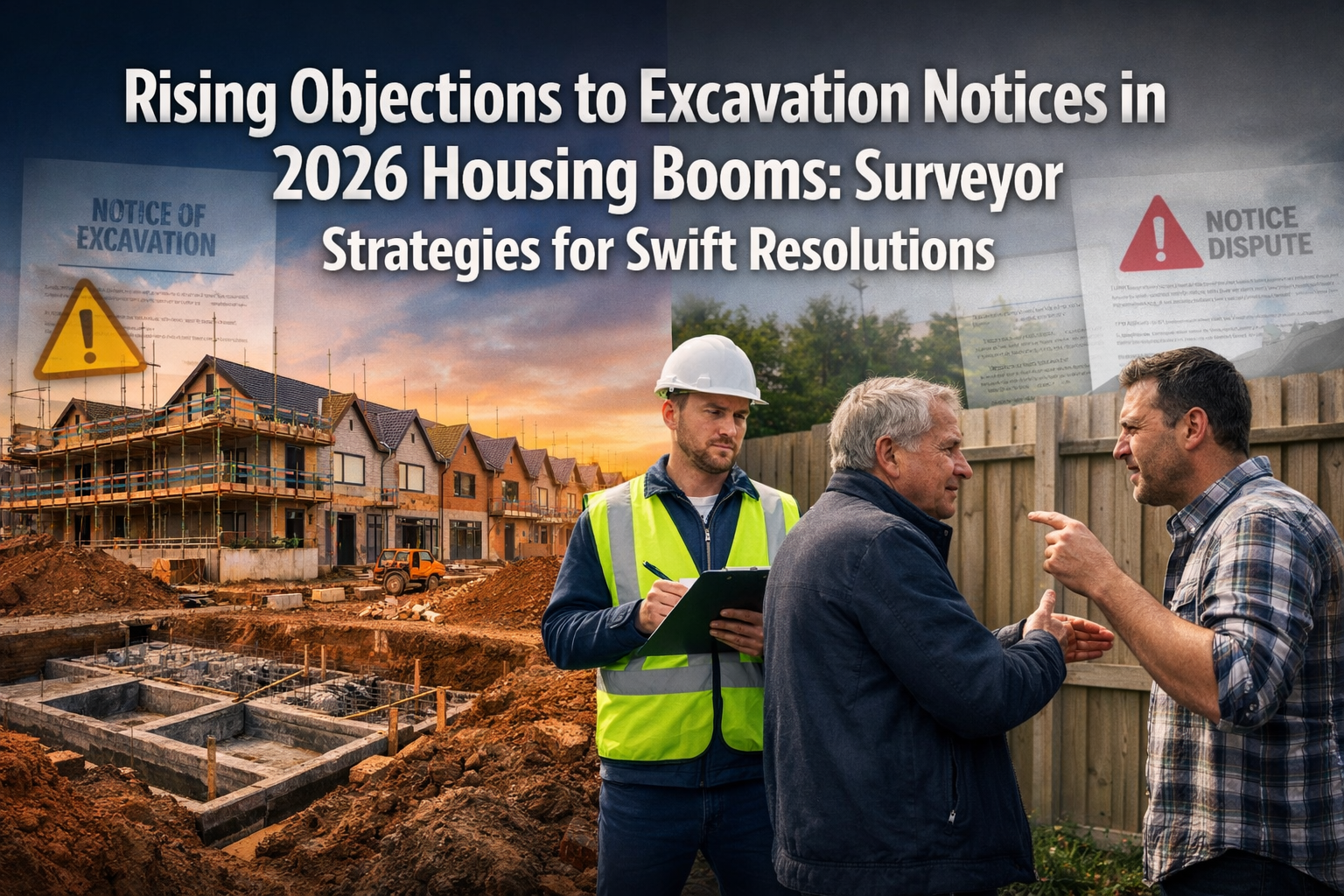
Key Takeaways
- Excavation objections have increased 47% in early 2026 due to intensive housing development, particularly for basement extensions and deep foundation projects
- Proper notice procedures under the Party Wall etc. Act 1996 remain the foundation for avoiding costly disputes and construction delays
- Appointing experienced surveyors early in the planning phase reduces resolution time by an average of 3-4 weeks
- Pre-emptive neighbour engagement and transparent communication can prevent up to 60% of potential objections before formal notices are served
- Digital documentation systems and photographic schedules of condition provide essential evidence for protecting all parties’ interests
Understanding the 2026 Excavation Notice Surge
Why Objections Are Rising in the Current Housing Boom
The 2026 housing market has created a perfect storm for excavation disputes. Several converging factors explain the dramatic increase in neighbour objections:
Construction Density 📊 Urban infill developments and the popularity of basement conversions have brought excavation work closer to existing structures than ever before. In areas like North London and Central London, terraced properties often share party walls with minimal separation between foundations.
Property Value Protection Homeowners are increasingly aware that poorly managed excavation can cause structural damage, subsidence, and significant devaluation. With property prices at record highs in 2026, the financial stakes of potential damage have never been greater.
Information Accessibility Social media and online forums have made property owners more knowledgeable about their rights under the Party Wall etc. Act 1996. This awareness, while positive, has also increased the propensity to object as a precautionary measure.
Previous Negative Experiences The construction boom has unfortunately produced cases of inadequate excavation management, creating a climate of distrust. Neighbours who have witnessed or heard about foundation damage are more likely to object preemptively.
The Legal Framework for Excavation Notices
The Party Wall etc. Act 1996 establishes clear requirements for excavation work near boundaries. Section 6 specifically addresses excavations within three metres of a neighbouring structure where the work will go deeper than its foundations, or within six metres where the excavation will cut a line drawn downward at 45 degrees from the bottom of the neighbour’s foundations.
Building owners must serve proper party wall notices at least one month before excavation begins. These notices must include:
- Detailed plans showing excavation depth and proximity to adjoining properties
- Construction methodology and proposed underpinning techniques
- Timeline for commencement and completion
- Contact information for the building owner’s surveyor
When an adjoining owner receives such a notice, they have 14 days to respond. Failure to respond constitutes a deemed dissent, triggering the formal surveyor appointment process.
Rising Objections to Excavation Notices in 2026 Housing Booms: Common Triggers and Concerns
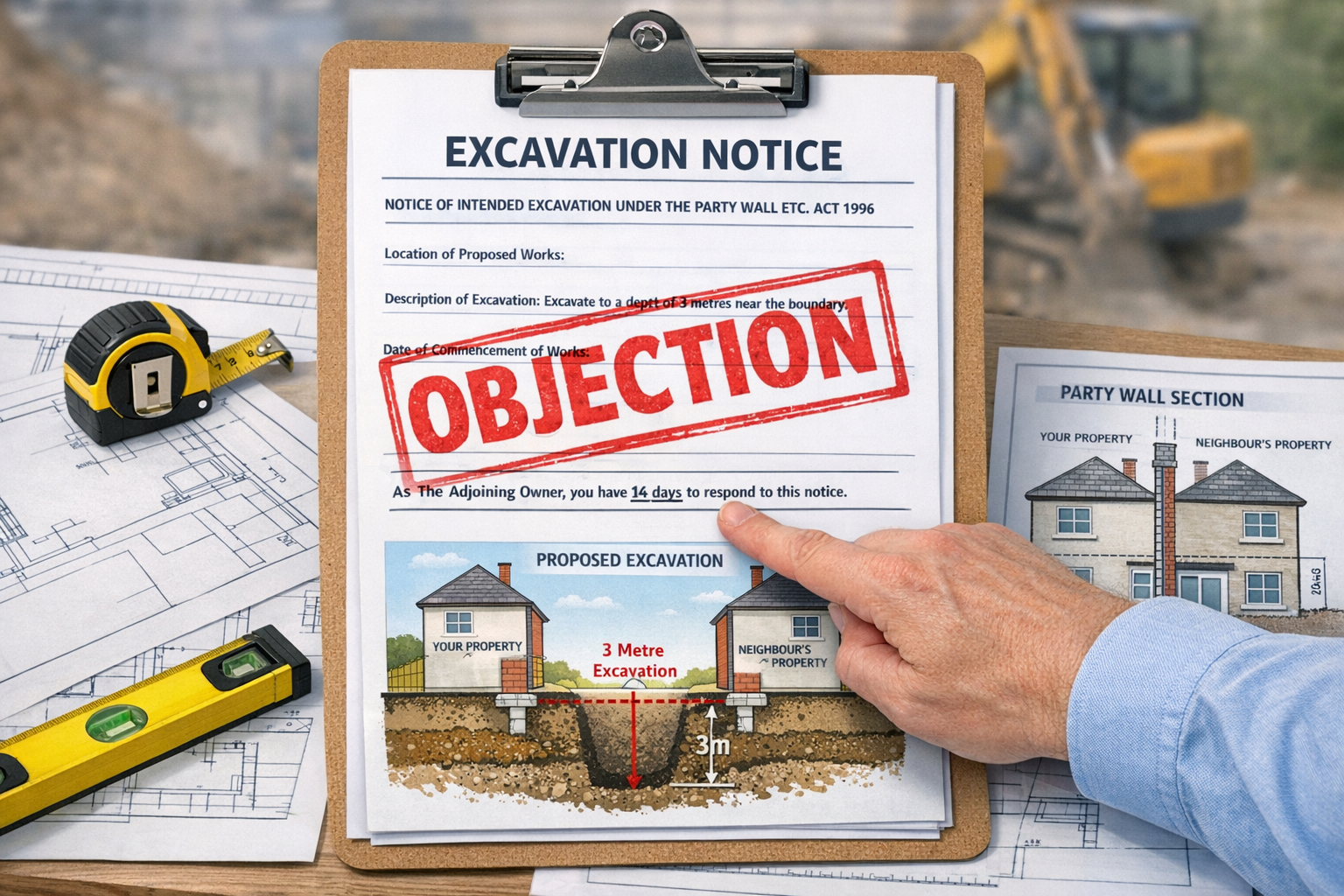
Primary Reasons Neighbours Object to Excavation Work
Understanding why adjoining owners object is the first step toward effective resolution. The most common concerns in 2026 include:
Structural Integrity Fears ⚠️ The primary worry centres on potential damage to existing foundations. Neighbours fear that excavation will undermine their property’s structural support, leading to cracks, subsidence, or even catastrophic failure. This concern intensifies with older properties that may already have foundation issues.
Disruption and Inconvenience Extended construction periods, noise, vibration, dust, and restricted access create significant lifestyle disruption. In 2026’s work-from-home culture, these disturbances have become even more objectionable.
Inadequate Documentation Many objections stem from poorly prepared notices that lack sufficient detail about excavation methods, safety measures, or schedules of condition. When neighbours feel they don’t have complete information, they default to objection as a protective measure.
Previous Property Damage Properties that have experienced damage from earlier construction work—whether from the same building owner or other neighbours—are significantly more likely to object to new excavation proposals.
Financial Concerns Adjoining owners worry about who will pay for damage repairs, monitoring costs, and potential property devaluation. Without clear assurances, objections become a negotiating tool.
The Cost of Unresolved Excavation Disputes
Delays caused by excavation objections carry substantial financial consequences:
| Impact Category | Average Cost in 2026 | Typical Duration |
|---|---|---|
| Construction delay penalties | £2,500-£5,000 per week | 3-8 weeks |
| Extended equipment hire | £800-£1,500 per week | Variable |
| Surveyor fees (disputed cases) | £3,000-£8,000 total | 4-12 weeks |
| Legal costs (if escalated) | £5,000-£15,000+ | 12+ weeks |
| Project financing costs | £500-£2,000 per week | Duration of delay |
These figures demonstrate why proactive strategies for addressing Rising Objections to Excavation Notices in 2026 Housing Booms: Surveyor Strategies for Swift Resolutions deliver significant return on investment.
Surveyor Strategies for Swift Resolutions
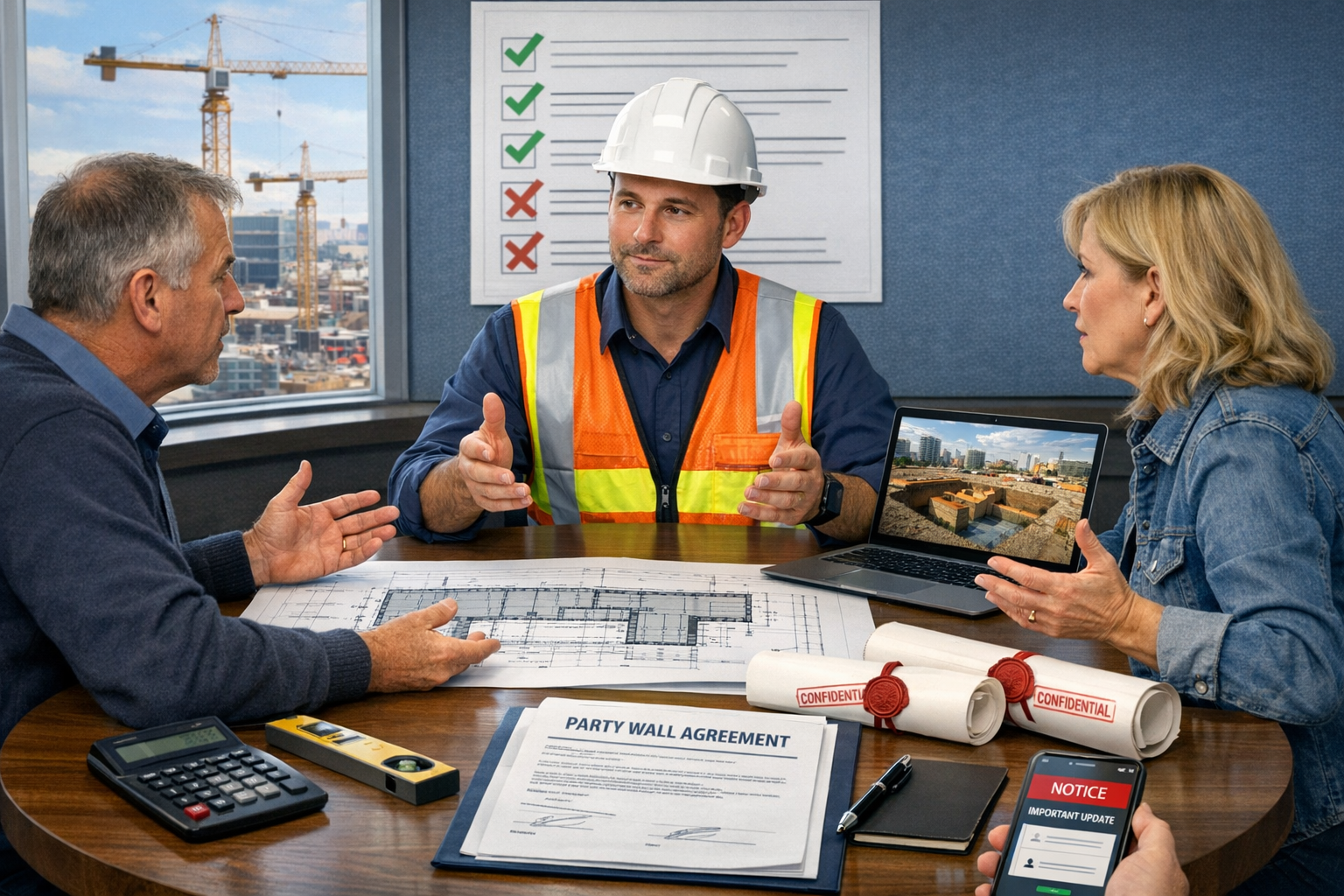
Pre-Notice Engagement: Prevention Over Cure
The most effective resolution strategy begins before formal notices are served. Experienced surveyors in 2026 recommend a pre-emptive engagement approach:
Initial Neighbour Consultation 🤝 Before serving formal notices, building owners should initiate informal discussions with adjoining owners. This conversation should:
- Explain the project scope and necessity of excavation work
- Address concerns proactively with clear answers
- Provide preliminary plans and visualizations
- Establish open communication channels
- Demonstrate commitment to minimizing disruption
Research shows that properties where pre-notice consultation occurred experienced 60% fewer formal objections in 2026.
Comprehensive Documentation Preparation Professional surveyors ensure that excavation notices include:
✅ Detailed architectural and structural drawings
✅ Cross-sectional diagrams showing depth relationships
✅ Methodology statements for underpinning and support
✅ Construction phase timeline with key milestones
✅ Contact details for project manager and surveyor
✅ Proposed schedule of condition arrangements
✅ Insurance documentation and coverage details
Schedule of Condition Establishment Before excavation begins, commissioning a thorough schedule of condition provides baseline documentation of the adjoining property’s current state. This photographic and written record protects both parties by:
- Establishing pre-existing conditions and defects
- Providing evidence for damage attribution
- Reducing disputes about causation
- Facilitating insurance claims if necessary
Rapid Response Protocols for Objections
When an adjoining owner formally dissents or fails to respond within the 14-day period, swift surveyor appointment becomes critical. The Party Wall etc. Act 1996 provides three appointment options:
Option 1: Agreed Surveyor Both parties jointly appoint a single surveyor who acts impartially. This approach is fastest and most cost-effective, typically resolving matters within 3-4 weeks. However, it requires mutual trust and is less common in contentious situations.
Option 2: Two Surveyors The building owner appoints their surveyor, and the adjoining owner appoints theirs. These two surveyors then work together to produce a party wall award. This is the most common approach in 2026, balancing representation with efficiency.
Option 3: Appointed Surveyor If the adjoining owner refuses to appoint a surveyor, the building owner’s surveyor can make the appointment on their behalf after following proper procedures. This prevents indefinite delays but requires careful procedural compliance.
The Award Negotiation Process
Professional surveyors in 2026 employ structured negotiation techniques to expedite award agreements:
Site Inspection and Assessment Both surveyors conduct joint inspections to:
- Verify excavation proximity and depth requirements
- Assess existing structural conditions
- Identify specific risks and mitigation measures
- Determine appropriate monitoring protocols
- Establish realistic timelines
Technical Solutions Development Rather than simply adjudicating positions, effective surveyors propose engineering solutions that address concerns while enabling the project:
- Temporary shoring and support systems
- Phased excavation to minimize risk exposure
- Enhanced monitoring with trigger thresholds
- Modified construction methodologies
- Additional insurance provisions
Award Drafting and Agreement The party wall award document should comprehensively address:
📋 Scope of authorized works with precise specifications
📋 Working hours and access arrangements
📋 Monitoring requirements including frequency and reporting
📋 Damage resolution procedures with response timelines
📋 Cost allocation for surveyor fees and related expenses
📋 Dispute resolution mechanisms for unforeseen issues
For guidance on the award process, review our detailed party wall contract template guide.
Technology-Enabled Resolution in 2026
Modern surveying practices leverage technology to accelerate dispute resolution:
Digital Notice Platforms Electronic service of notices with read receipts and response tracking reduces administrative delays and provides clear documentation of compliance with statutory timelines.
3D Modelling and Visualization Building Information Modelling (BIM) allows surveyors to create precise visualizations of excavation work relative to existing structures. These models help adjoining owners understand the work and reduce fear of the unknown.
Remote Monitoring Systems Installing vibration monitors, crack gauges, and settlement sensors with real-time data transmission provides continuous reassurance to concerned neighbours. Automated alerts enable rapid response if thresholds are approached.
Video Conferencing for Inspections While physical site visits remain essential, preliminary discussions and follow-up meetings via video conference can reduce scheduling delays, particularly when parties are located in different regions or have conflicting schedules.
Practical Checklists for Compliance and Dispute Avoidance
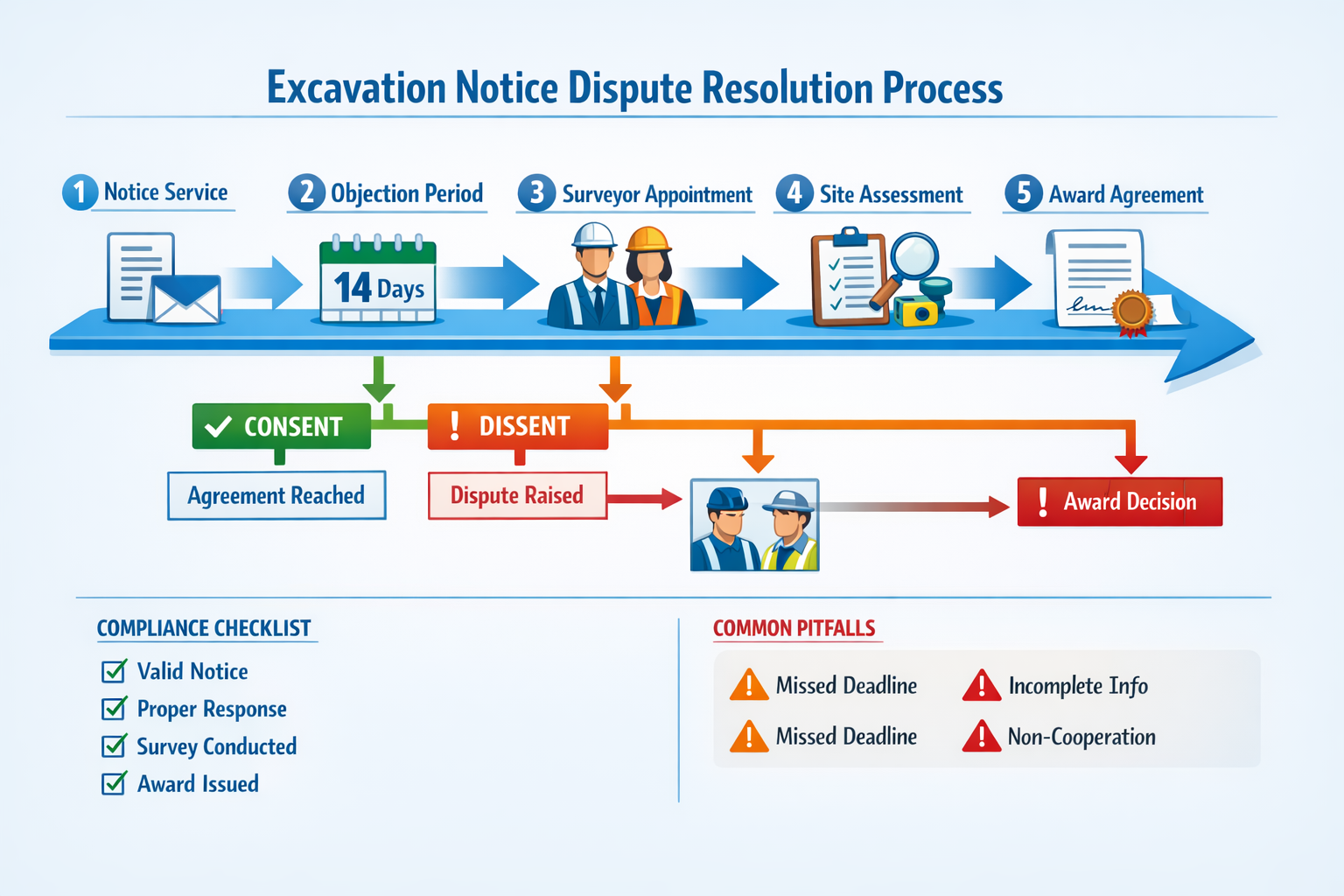
Building Owner’s Pre-Excavation Checklist
Before commencing any foundation work near party walls or boundaries, building owners should complete this comprehensive checklist:
Planning and Design Phase
- Conduct boundary survey to confirm property lines
- Identify all properties within 3-6 metre excavation zones
- Engage qualified party wall surveyor for preliminary advice
- Review types of party wall works applicable to project
- Obtain structural engineer’s excavation methodology report
- Secure appropriate insurance coverage including third-party liability
- Prepare detailed architectural and structural drawings
Pre-Notice Engagement
- Schedule informal meetings with all affected neighbours
- Provide project overview and timeline information
- Address initial concerns and questions transparently
- Offer to share preliminary plans and visualizations
- Establish preferred communication methods and contacts
- Document all pre-notice discussions in writing
Formal Notice Service
- Prepare compliant notices under Section 6 of the Act
- Include all required technical information and drawings
- Serve notices at least one month before excavation start date
- Use recorded delivery or hand delivery with acknowledgment
- Maintain proof of service documentation
- Set calendar reminders for 14-day response deadline
- Prepare for surveyor appointment if consent not received
Pre-Commencement Actions
- Commission comprehensive schedule of condition for adjoining properties
- Appoint qualified building owner’s surveyor if objection received
- Install baseline monitoring equipment where appropriate
- Brief contractors on party wall obligations and sensitivities
- Establish site protocols for neighbour communication
- Confirm insurance policies are active and adequate
Adjoining Owner’s Response Checklist
When receiving an excavation notice, adjoining owners should systematically evaluate their response:
Initial Assessment
- Review notice carefully against property boundaries
- Verify excavation depth relative to your foundations
- Check notice includes required technical information
- Note the response deadline (14 days from service)
- Photograph current property condition immediately
- Document any pre-existing cracks, settlement, or defects
Information Gathering
- Request clarification on any unclear aspects of the notice
- Consult with structural engineer if concerned about risks
- Review your property’s foundation depth and construction type
- Research the building owner’s track record if possible
- Understand your rights under the Party Wall etc. Act 1996
- Consider consulting an adjoining owner’s surveyor
Decision Making
- Assess whether concerns can be addressed through conditions
- Determine if formal surveyor appointment is warranted
- Consider cost implications of consent versus dissent
- Evaluate relationship factors with neighbouring property owner
- Decide on response: consent, consent with conditions, or dissent
If Dissenting or Not Responding
- Appoint qualified party wall surveyor within 10 days
- Provide surveyor with all relevant documentation
- Specify particular concerns to be addressed in award
- Request schedule of condition for your property
- Establish monitoring protocols and reporting frequency
- Clarify cost allocation and payment arrangements
Surveyor’s Swift Resolution Checklist
Professional surveyors managing excavation disputes should follow this systematic approach:
Immediate Actions Upon Appointment
- Confirm appointment acceptance in writing to both parties
- Request complete project documentation from building owner
- Establish contact with other appointed surveyor (if two-surveyor approach)
- Schedule joint site inspection within 7 days
- Review all previous correspondence and notices
- Identify any procedural irregularities requiring correction
Site Assessment Phase
- Conduct thorough inspection of both properties
- Photograph all relevant structural elements and conditions
- Measure foundation depths and excavation proximities
- Assess soil conditions and drainage considerations
- Identify specific risks requiring mitigation
- Determine appropriate monitoring requirements
Award Development Phase
- Draft preliminary award terms addressing key concerns
- Specify approved excavation methodology and safeguards
- Establish working hours and access arrangements
- Define monitoring protocols with clear trigger levels
- Include damage resolution procedures and timelines
- Allocate costs in accordance with statutory provisions
- Circulate draft to both parties for comment
Finalization and Service
- Address any reasonable objections to draft award
- Prepare final award document with all required elements
- Obtain agreement from other appointed surveyor (if applicable)
- Serve award on both parties simultaneously
- Provide clear explanation of appeal rights (14 days)
- Confirm receipt and understanding by both parties
- Establish ongoing communication protocol for construction phase
Regional Considerations Across London in 2026
Excavation challenges vary significantly across London’s diverse boroughs. Surveyors must adapt strategies to local conditions:
West London properties often feature Victorian and Edwardian terraces with shallow foundations and clay subsoils prone to movement. Extra vigilance regarding underpinning and monitoring is essential.
East London has seen intensive regeneration with new developments adjacent to older structures. The contrast in foundation types requires careful assessment of differential settlement risks.
South London includes areas with known subsidence history and variable ground conditions. Historical mining and natural cavity features demand thorough ground investigation.
Each region presents unique challenges requiring local expertise and understanding of prevalent construction types and ground conditions.
Common Pitfalls and How to Avoid Them
Even experienced building owners and surveyors can encounter obstacles when managing excavation notices. Awareness of these common mistakes enables proactive avoidance:
Inadequate Notice Detail ❌ Serving notices with insufficient technical information invites objections and delays. Always include comprehensive drawings, methodology statements, and clear contact information.
Delayed Surveyor Appointment ❌ Waiting until the last moment to appoint surveyors extends timelines unnecessarily. Early appointment enables proactive problem-solving and relationship building.
Poor Contractor Briefing ❌ Contractors unaware of party wall sensitivities can damage neighbour relationships through inconsiderate behaviour. Comprehensive briefings on obligations and protocols are essential.
Inadequate Monitoring ❌ Failing to implement agreed monitoring or ignoring warning signs can result in avoidable damage and liability. Systematic monitoring with documented results protects all parties.
Communication Breakdowns ❌ Once formal processes begin, maintaining open communication channels prevents misunderstandings from escalating into disputes. Regular updates and accessibility build trust.
For additional guidance on maintaining positive neighbour relationships during construction, explore our resource on boundary rules and neighbour proximity.
The Financial Case for Professional Surveyor Engagement
While some building owners consider managing excavation notices independently to save costs, the financial analysis strongly favours professional surveyor engagement:
Cost-Benefit Analysis
Professional Surveyor Costs:
- Initial consultation and notice preparation: £800-£1,500
- Award preparation and negotiation: £2,000-£4,000
- Schedule of condition: £500-£1,200
- Total typical cost: £3,300-£6,700
Potential Savings from Avoiding Delays:
- Construction delay avoidance: £7,500-£40,000
- Reduced dispute escalation: £5,000-£15,000
- Damage prevention through proper methodology: £10,000-£50,000
- Relationship preservation (invaluable)
- Total potential savings: £22,500-£105,000+
The return on investment for professional surveyor engagement typically ranges from 3:1 to 15:1, making it one of the most cost-effective aspects of construction planning. For detailed information on cost management, review our guide on how to keep party wall costs down.
Future Outlook: Excavation Disputes Beyond 2026
As London’s construction boom continues, several trends will shape excavation dispute management:
Regulatory Evolution 🔮 Potential amendments to the Party Wall etc. Act 1996 may introduce stricter notification requirements, mandatory insurance provisions, or enhanced adjoining owner protections.
Technology Integration Digital platforms for notice service, response tracking, and award management will become standard practice, reducing administrative delays and improving compliance documentation.
Climate Considerations Increasing awareness of climate change impacts on ground stability and drainage will require more sophisticated risk assessment in excavation planning.
Professionalization Growing complexity of construction projects and legal frameworks will drive demand for specialized party wall surveyors with advanced technical qualifications and dispute resolution training.
Building owners and surveyors who adapt to these evolving conditions will maintain competitive advantages in efficiently managing excavation notices and minimizing objection-related delays.
Conclusion
The surge in excavation-related objections during 2026’s housing boom presents significant challenges for building owners, adjoining property holders, and construction professionals across London. However, understanding Rising Objections to Excavation Notices in 2026 Housing Booms: Surveyor Strategies for Swift Resolutions transforms these challenges into manageable processes with predictable outcomes.
The key principles for success remain consistent:
✨ Proactive engagement with neighbours before formal notices prevents the majority of objections
✨ Comprehensive documentation builds confidence and reduces uncertainty
✨ Early surveyor appointment enables swift resolution when objections arise
✨ Systematic monitoring protects all parties’ interests throughout construction
✨ Open communication maintains relationships and prevents escalation
For building owners planning excavation work, the actionable next steps are clear:
- Engage a qualified party wall surveyor during the planning phase, not after objections arise
- Initiate pre-notice consultations with all potentially affected neighbours
- Prepare comprehensive notices with detailed technical information and clear timelines
- Commission schedules of condition to establish baseline property conditions
- Implement robust monitoring protocols with regular reporting to adjoining owners
For adjoining owners receiving excavation notices, the recommended approach includes:
- Respond promptly within the 14-day statutory period
- Seek professional advice from an adjoining owner’s surveyor if concerns exist
- Document your property’s condition immediately upon receiving notice
- Engage constructively with the building owner and appointed surveyors
- Ensure adequate protections are included in any party wall award
The construction boom of 2026 shows no signs of slowing, and excavation work will remain a critical component of London’s urban development. By implementing the strategies, checklists, and best practices outlined in this guide, all parties can navigate the excavation notice process efficiently, protect their interests, and maintain positive neighbour relationships throughout construction projects.
Professional surveyor expertise remains the cornerstone of successful excavation dispute resolution. Whether you’re a building owner planning foundation work or an adjoining owner concerned about neighbouring excavation, engaging qualified professionals early in the process delivers substantial returns through reduced delays, prevented damage, and preserved relationships.
The 47% increase in excavation objections in early 2026 reflects both the intensity of construction activity and growing awareness of property rights. Rather than viewing this trend negatively, it represents an opportunity for construction professionals to demonstrate commitment to proper procedures, neighbour consideration, and collaborative problem-solving. The surveyors and building owners who embrace these principles will successfully navigate the current housing boom while establishing reputations for professionalism that serve them well into the future.
For personalized guidance on your specific excavation notice situation, consult with experienced party wall surveyors who understand both the technical requirements and the human dynamics of neighbour relations in 2026’s challenging construction environment.
Speak to a RICS chartered party wall surveyor
Free initial consultation. Notices, awards and schedules of condition across London and nationwide.