

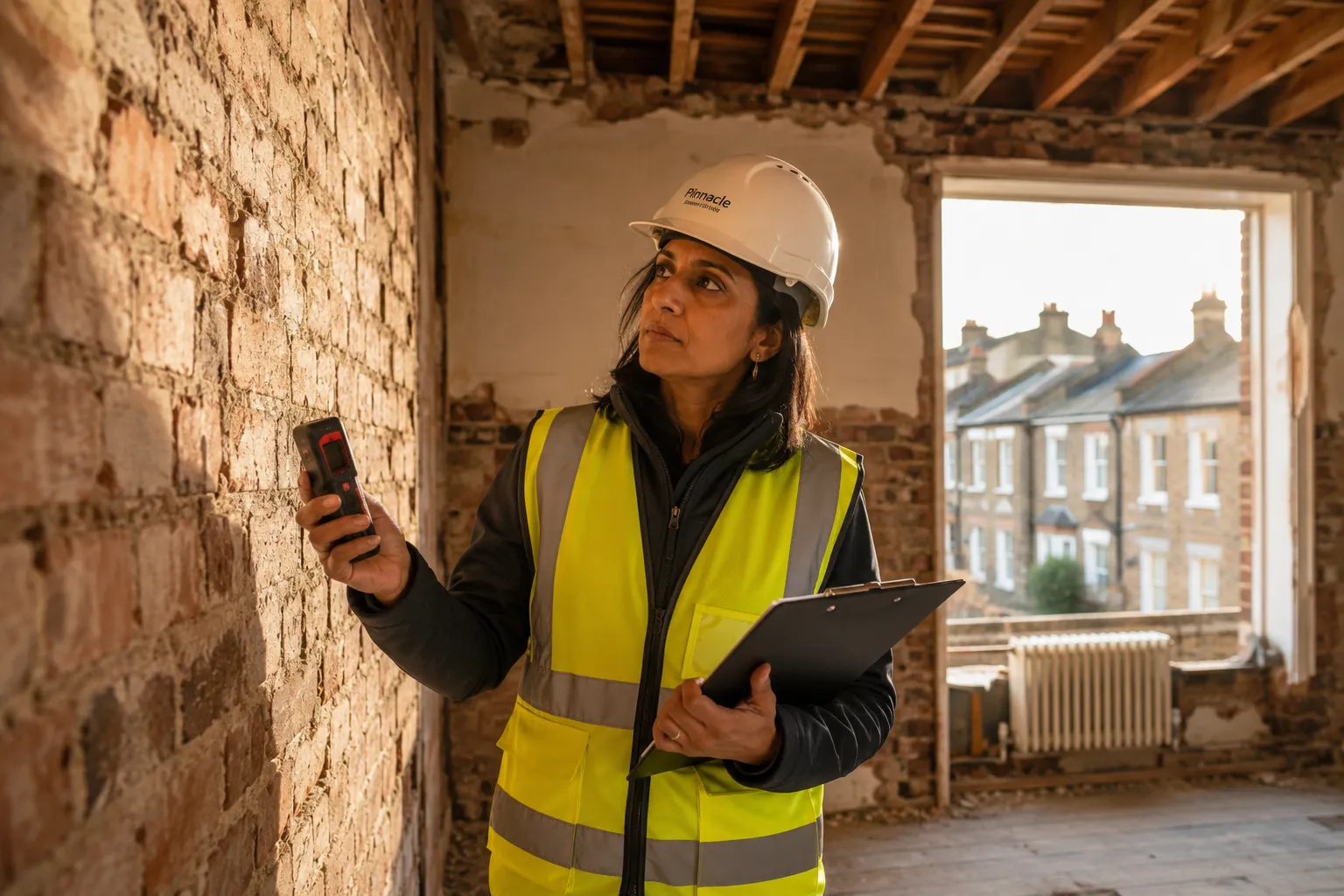
What does a surveyor check? It depends on the survey — but whether it is a homebuyer report, a schedule of condition before next door’s building work, or a damp and timber survey, the core discipline is the same: structured inspection, evidence, and an opinion you can act on. Here is what surveyors look for, room by room and element by element.
Structure and movement
Cracking patterns and widths, bulging or leaning walls, lintel condition, evidence of subsidence or heave, and — in London terraces — the condition of shared party walls and chimney breasts, including past removals without proper support.
Damp and timber
Moisture readings at skirting and wall bases, signs of rising and penetrating damp, condensation and mould risk, sub-floor ventilation, and timber checks for wet rot, dry rot and beetle. See what penetrating damp looks like.
Roof, services and externals
Coverings, flashings and gutters; roof structure from the loft; visible electrics, heating and plumbing (condition, not testing); drainage, boundary walls and outbuildings.
What a party wall surveyor checks specifically
Before notifiable works: a photographic schedule of condition of the neighbouring property — every existing crack and defect recorded so post-works damage claims are provable either way. During and after works: compliance with the party wall award, damage causation and making good.
What surveyors do NOT check
Surveys are non-invasive: no lifting fitted carpets or floorboards, no testing services, no inaccessible areas — the report will flag where further investigation is needed rather than guess.
Book the right survey
Tell us the situation and we will tell you the survey you actually need — and the one you do not. Call 0204 579 8270 or ask a surveyor free.
Leave a Reply