


Picture this: A straightforward basement excavation project suddenly expands to include underpinning, structural reinforcement, and drainage modifications—none of which were in the original party wall award. The adjoining owner grows frustrated, costs spiral, and the surveyor finds themselves caught between conflicting demands. This scenario plays out far too often in party wall projects across London and beyond in 2026.
Navigating Scope Creep in Party Wall Projects: 2026 Best Practices for Surveyors and Contractors has become essential knowledge for construction professionals working under the Party Wall etc. Act 1996. When building work affects shared structures between properties, the potential for scope expansion multiplies exponentially. Unlike standard construction projects, party wall work involves multiple stakeholders with legal protections, making uncontrolled scope changes both costly and legally problematic.
This comprehensive guide provides surveyors and contractors with proven strategies, practical checklists, and protective documentation to maintain project boundaries while fulfilling their obligations under party wall legislation.
Key Takeaways
- ✅ Define precise boundaries early: Use detailed checklists for complex builds like basements and lofts to establish clear scope limits before work begins
- 📋 Implement formal change control: Establish documented approval processes for any variations to the original party wall award to protect all parties
- 🛡️ Deploy design waivers strategically: Protect surveyors and contractors from liability by documenting design decisions and scope limitations under the Party Wall Act
- 📊 Track progress weekly: Monitor budget and timeline against the agreed scope to catch scope creep before it becomes unmanageable
- 🤝 Establish single points of contact: Designate clear decision-making authority for both building and adjoining owners to prevent conflicting instructions
Understanding Scope Creep in Party Wall Projects
What Makes Party Wall Projects Vulnerable
Scope creep occurs when a project's requirements expand beyond the originally agreed boundaries without corresponding adjustments to time, budget, or resources[1]. In party wall contexts, this phenomenon becomes particularly problematic because work involves legally protected rights of multiple property owners.
Party wall projects face unique vulnerability factors:
- Multiple stakeholders: Building owners, adjoining owners, and their respective surveyors each have different priorities and expectations
- Discovery-based complications: Excavation and structural work often reveals unexpected conditions requiring additional work
- Legal framework constraints: The Party Wall etc. Act 1996 establishes specific procedures that must be followed for variations
- Emotional investment: Homeowners often view their property work as deeply personal, leading to "while we're at it" additions
The financial impact can be substantial. Without proper controls, a £15,000 basement underpinning project can easily expand to £25,000 or more when scope boundaries dissolve[2].
Common Triggers in 2026 Party Wall Work
Today's party wall projects encounter several frequent scope creep triggers:
| Trigger Type | Example Scenario | Prevention Strategy |
|---|---|---|
| Design evolution | Loft conversion expands from single dormer to full rear extension | Lock design before serving party wall notices |
| Hidden conditions | Basement dig reveals poor foundation requiring additional underpinning | Include contingency allowances in award |
| Adjoining owner requests | Neighbor asks for "matching" work on their side | Clarify scope boundaries in initial award |
| Regulatory changes | Building control requires additional structural work | Separate party wall scope from building regulations compliance |
| Contractor suggestions | Builder recommends "improvements" during construction | Establish change order process before work begins |
Understanding these triggers allows surveyors and contractors to anticipate and address potential scope expansion before it becomes problematic.
Navigating Scope Creep in Party Wall Projects: Practical Checklists for Complex Builds
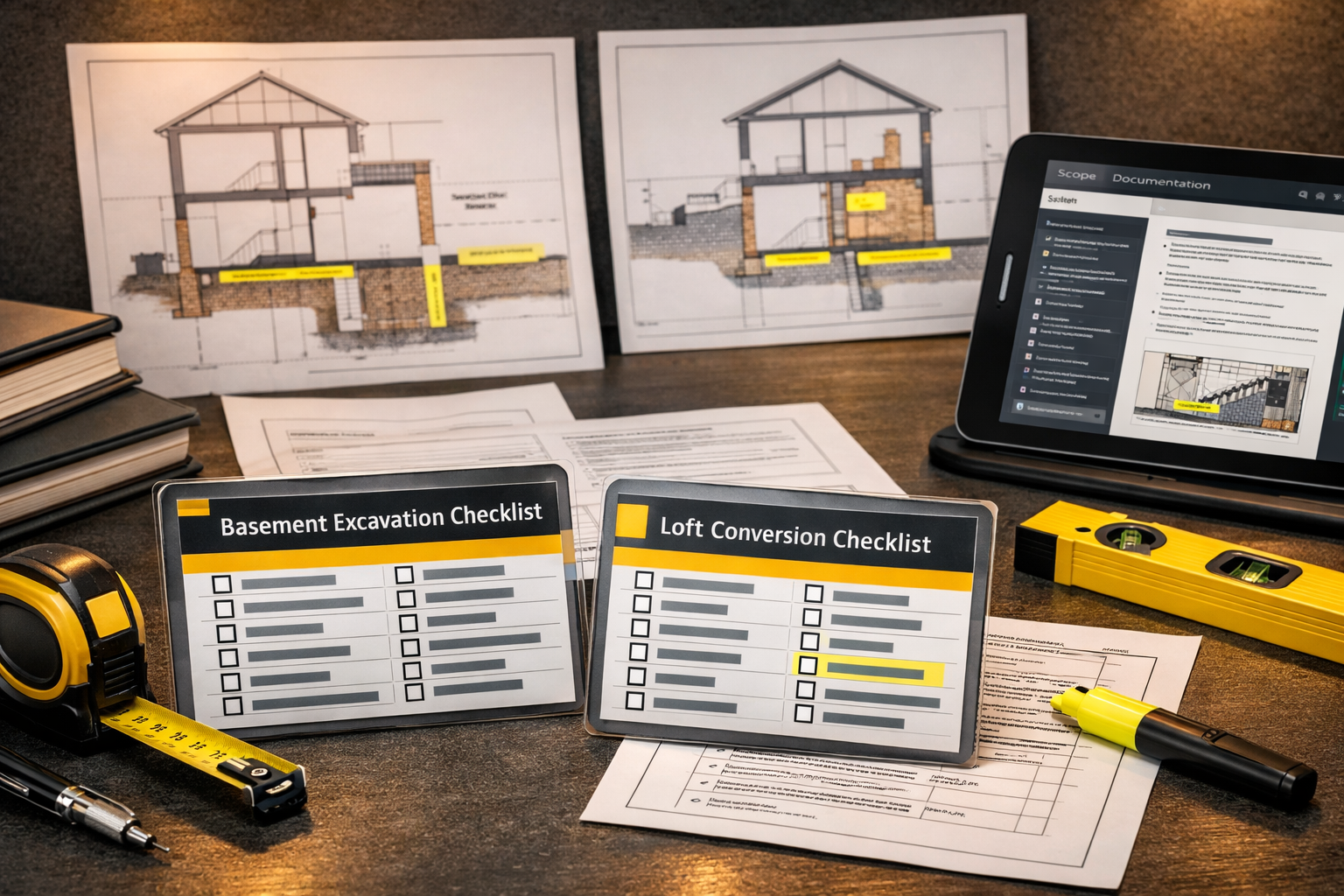
Basement Excavation and Underpinning Projects
Basement projects represent the highest risk for scope creep in party wall work. The underground nature of the work means surprises are common, and the structural implications affect neighboring properties directly.
Pre-Award Basement Scope Definition Checklist:
🔍 Design Specifications
- Final excavation depth confirmed (measured from existing ground level)
- Underpinning methodology specified (mass concrete, mini-piled, etc.)
- Waterproofing system detailed (tanking, cavity drainage, etc.)
- Structural calculations completed and approved
- Drainage and sump pump locations confirmed
📋 Party Wall Boundaries
- Extent of underpinning along party wall measured and documented
- Working space requirements on adjoining owner's land identified
- Temporary works (shoring, props) scope defined
- Access arrangements through adjoining property (if needed) agreed
- Schedule of condition completed for all affected areas
⚠️ Exclusions and Limitations
- Work NOT covered by this award explicitly listed
- Adjoining owner's concurrent work boundaries established
- Future phases clearly separated from current scope
- Design responsibility allocated (architect vs. structural engineer)
- Building regulations compliance separated from party wall scope
💰 Cost and Contingency
- Base scope cost estimate provided
- Contingency percentage for unforeseen conditions specified (typically 10-15%)
- Process for contingency authorization documented
- Payment schedule tied to scope milestones
- Cost responsibility for scope changes allocated
This detailed approach aligns with established project management principles that emphasize defining clear deliverables at the project outset[3]. When working with a party wall surveyor in South London or other areas, ensure these elements are documented before the award is issued.
Loft Conversion and Roof Extension Scope Control
Loft conversions often evolve during the design phase, with homeowners adding dormers, roof lights, or structural modifications. By the time party wall notices are served, the design should be locked.
Pre-Notice Loft Conversion Checklist:
🏗️ Structural Scope
- Steel beam specifications and locations finalized
- Party wall cutting or raising requirements defined
- Chimney breast removal (if applicable) detailed
- Floor strengthening requirements specified
- Load transfer to party walls calculated and documented
🪟 External Modifications
- Dormer dimensions and positions confirmed
- Roof light quantities and locations fixed
- Party wall flashing and weatherproofing details specified
- Scaffolding and access requirements defined
- External finishes and materials selected
🔧 Services and Finishes
- Plumbing and drainage routes established
- Electrical and heating system scope defined
- Staircase design and location confirmed
- Sound insulation specifications documented
- Fire protection measures detailed
📝 Design Waiver Documentation
- Design freeze date established and communicated
- Architect/designer sign-off obtained
- Building owner acknowledgment of scope boundaries
- Variation process explained and agreed
- Design liability allocation clarified
Contractors working on types of party wall works should reference these checklists during initial consultations to set realistic expectations.
Rear Extension and Excavation Adjacent to Party Walls
Single and double-story rear extensions frequently require excavation near party walls, creating opportunities for scope expansion.
Extension Project Scope Boundary Checklist:
📐 Foundation and Excavation
- Foundation depth and type specified
- Excavation proximity to party wall measured (within 3m or 6m triggers notice requirements)
- Temporary support requirements for party wall defined
- Drainage and services protection measures detailed
- Ground level changes and their extent documented
🧱 Party Wall Interface
- New wall connection to existing party wall detailed
- DPC and weatherproofing at junction specified
- Roof connection method (if applicable) confirmed
- Guttering and drainage arrangements finalized
- Access for maintenance considered and documented
The importance of these boundaries cannot be overstated. Research shows that implementing formal change control processes significantly reduces unauthorized scope expansion[1].
Implementing Change Control Processes for Party Wall Projects
Establishing Decision-Making Authority
One of the most effective strategies for preventing scope creep involves establishing clear decision-making authority with a single client contact[2]. In party wall projects, this becomes more complex due to multiple parties.
Decision Authority Framework:
Building Owner's Side:
- Designate one primary contact for all scope decisions
- Require written authorization for any changes exceeding £500 or 5% of original scope
- Establish response timeframes (typically 5 working days)
- Document decision-maker's contact details in the award
Adjoining Owner's Side:
- Identify single point of contact for queries and approvals
- Clarify surveyor's authority to make decisions on their behalf
- Establish communication protocols
- Document in award to prevent later disputes
Agreed Surveyor Scenarios:
- Define scope of agreed surveyor's authority
- Establish when building owner and adjoining owner must be consulted
- Document variation approval thresholds
- Create clear escalation pathway
This structured approach prevents the common scenario where contractors receive conflicting instructions from multiple parties, leading to unauthorized scope expansion.
Weekly Progress Tracking and Budget Monitoring
Consistent monitoring catches scope creep early, before it becomes unmanageable. Implementing weekly progress tracking and budget monitoring provides essential oversight[2].
Weekly Monitoring Protocol:
📊 Progress Against Scope
- Compare completed work to original award schedule
- Identify any work not in original scope
- Document reasons for variations
- Update projected completion timeline
- Communicate status to all parties
💷 Budget Tracking
- Monitor expenditure against original estimates
- Track contingency usage
- Identify cost overruns early
- Attribute costs to scope changes vs. original work
- Provide transparent reporting
🔔 Early Warning System
- Flag potential scope changes before execution
- Require written approval before proceeding
- Document verbal requests formally
- Maintain change log
- Calculate cumulative impact of changes
For those wondering about how to keep party wall costs down, rigorous change control represents one of the most effective strategies.
Formal Variation Documentation
When scope changes are necessary—and sometimes they are—proper documentation protects all parties.
Variation Request Process:
- Initiation: Any party identifies need for scope change
- Description: Detailed written description of proposed variation
- Impact Assessment: Cost, time, and technical implications evaluated
- Approval: All affected parties provide written consent
- Documentation: Variation formally recorded and attached to award
- Execution: Work proceeds only after full approval
Essential Variation Documentation Elements:
- Reference to original award clause being modified
- Clear description of additional or changed work
- Cost impact (increase or decrease)
- Timeline impact
- Responsibility for additional costs
- Updated drawings or specifications
- Signatures from all relevant parties
- Date of approval
This formal process aligns with project management best practices that emphasize structured change control[3][5]. Whether working with a party wall surveyor in West London or elsewhere, this documentation proves invaluable if disputes arise.
Design Waivers and Liability Protection Under the Party Wall Act

Understanding Surveyor Liability in Scope Decisions
Party wall surveyors operate in a unique position—they must balance the interests of both building and adjoining owners while ensuring compliance with the Act. This creates potential liability exposure when scope boundaries blur.
Key Liability Considerations:
⚖️ Surveyor's Duty of Care
- Impartiality between building and adjoining owners
- Professional competence in assessing proposed work
- Reasonable skill in drafting awards
- Duty to prevent unnecessary damage
🛡️ Liability Risks from Scope Creep
- Inadequate award specifications leading to disputes
- Failure to identify necessary protective measures
- Omission of required work from scope
- Unclear boundaries enabling unauthorized work
- Insufficient monitoring provisions
Protective Measures:
Surveyors can protect themselves through careful documentation and clear scope limitation statements in awards. This includes explicitly stating what is not covered by the award, which design elements remain the responsibility of other professionals, and what monitoring the surveyor will and will not provide.
Crafting Effective Design Waivers
Design waivers are protective clauses that clarify the surveyor's role and limit liability for design decisions made by architects, structural engineers, or building owners.
Sample Design Waiver Language:
"This Award addresses the party wall implications of the proposed works as described in the attached drawings and specifications. The Party Wall Surveyor(s) have not verified the structural adequacy of the design, which remains the responsibility of the Building Owner's structural engineer. The surveyor(s) accept no liability for design deficiencies, buildability issues, or compliance with Building Regulations. The Building Owner warrants that all designs have been prepared by appropriately qualified professionals and comply with all applicable regulations."
Key Elements of Effective Waivers:
- Scope of surveyor's review: Clarify that review focuses on party wall implications, not overall design adequacy
- Design responsibility allocation: Explicitly assign design liability to architects/engineers
- Building regulations separation: Distinguish party wall compliance from building control requirements
- Professional indemnity boundaries: Define limits of surveyor's professional responsibility
- Reliance on third-party information: Acknowledge dependence on information provided by building owner's team
These waivers should be incorporated into party wall awards as standard practice in 2026, protecting surveyors while maintaining their core responsibilities under the Act.
Contractor Protection Through Scope Documentation
Contractors face their own liability risks when scope boundaries are unclear. Working without proper authorization can lead to claims from adjoining owners and disputes over payment.
Contractor Protection Strategies:
📄 Pre-Commencement Documentation
- Obtain copy of party wall award before starting work
- Verify that proposed work matches award description
- Identify any discrepancies immediately
- Secure written clarification for ambiguous items
- Document site conditions before work begins
✍️ Change Authorization Requirements
- Refuse to proceed with scope changes without written authorization
- Require building owner's signature on variation requests
- Obtain surveyor confirmation that variation complies with Act
- Document all verbal instructions in writing
- Maintain comprehensive change log
🔒 Liability Limitation Clauses
- Include scope limitation clauses in construction contracts
- Reference party wall award as definitive scope document
- Exclude liability for work outside award scope
- Require indemnification for unauthorized work
- Maintain professional indemnity insurance
When working under awards issued by a party wall surveyor in Central London or other locations, contractors should insist on clarity before proceeding.
2026 Best Practices: Integrating Technology and Communication
Digital Documentation and Scope Management Tools
Technology has transformed scope management in 2026, providing tools that make tracking and controlling project boundaries more efficient.
Recommended Digital Tools:
📱 Project Management Platforms
- Cloud-based document storage for awards and variations
- Real-time progress tracking against original scope
- Automated alerts for potential scope changes
- Budget monitoring dashboards
- Stakeholder communication portals
📸 Visual Documentation
- Photographic schedules of condition with timestamp metadata
- 360-degree site photography for comprehensive records
- Drone surveys for roof and external work documentation
- Time-lapse construction monitoring
- Before/after comparison tools
📊 Scope Tracking Software
- Baseline scope definition modules
- Change request workflows
- Approval tracking systems
- Cost impact calculators
- Cumulative change reporting
These tools support the fundamental principle that clear scope definition at project outset prevents later disputes[4].
Structured Communication Protocols
Effective communication prevents misunderstandings that lead to scope creep. Implementing structured communication protocols ensures all parties receive consistent information.
Communication Framework:
Initial Kickoff Meeting (before work commences)
- All stakeholders present (building owner, adjoining owner, surveyors, contractor)
- Review complete scope as defined in award
- Clarify roles and responsibilities
- Establish communication channels
- Discuss change control process
- Document meeting outcomes
This aligns with best practices emphasizing structured kickoff meetings with all stakeholders[2].
Regular Progress Updates
- Weekly written updates to all parties
- Monthly site meetings for complex projects
- Immediate notification of potential scope changes
- Transparent budget and timeline reporting
- Documented decisions and agreements
Dispute Prevention Communication
- Address concerns immediately when raised
- Provide written responses to queries
- Maintain professional tone in all communications
- Document verbal conversations in writing
- Escalate unresolved issues promptly
For those seeking guidance on having a party wall agreement without a surveyor, these communication protocols become even more critical.
Training and Professional Development
Staying current with best practices requires ongoing professional development. In 2026, several resources support surveyors and contractors:
Recommended Training Areas:
- Party Wall Act interpretation and application
- Construction contract law and liability
- Project scope management techniques
- Dispute resolution and mediation
- Digital documentation tools
- Communication and stakeholder management
Professional organizations offer specialized courses addressing scope management in party wall contexts, helping practitioners navigate these complex projects more effectively.
Case Studies: Scope Creep Prevention in Action
Case Study 1: Basement Excavation in North London
Project Overview: Semi-detached Victorian property requiring basement excavation to 2.5m depth with underpinning of party wall.
Scope Creep Risk: During design phase, building owner requested additional 0.5m depth, extension under rear garden, and installation of light wells—all after initial award was drafted.
Prevention Strategy Applied:
- Design freeze implemented before serving notices
- Comprehensive basement checklist completed
- Design waiver included in award
- Weekly monitoring protocol established
- Formal variation process enforced
Outcome: Building owner revised design before award finalized. Final scope clearly documented. Project completed within 5% of original budget with no disputes. The party wall surveyor in North London maintained clear boundaries throughout.
Case Study 2: Loft Conversion Scope Evolution
Project Overview: Terraced property loft conversion requiring party wall raising and steel beam installation.
Scope Creep Risk: During construction, building owner wanted to add additional dormer, extend conversion into roof space above stairwell, and modify party wall chimney breast.
Prevention Strategy Applied:
- Detailed loft conversion checklist used during design
- Award explicitly listed excluded work
- Change control process clearly documented
- Single decision-maker designated
- Variation documentation prepared for additional work
Outcome: Additional work formally approved through variation process. Costs allocated correctly. Adjoining owner consulted appropriately. Project completed with all legal requirements met.
Case Study 3: Rear Extension with Foundation Complications
Project Overview: Two-story rear extension requiring excavation within 3m of party wall.
Scope Creep Risk: Excavation revealed poor existing foundations requiring additional underpinning not in original scope.
Prevention Strategy Applied:
- Contingency allowance included in award (15%)
- Ground investigation completed before design finalization
- Award included clause for unforeseen ground conditions
- Approval process for contingency use established
- Structural engineer's recommendations documented
Outcome: Additional underpinning approved using contingency fund. Work proceeded without delay. Clear documentation prevented disputes over responsibility for additional costs.
These real-world examples demonstrate how implementing the strategies outlined in this guide prevents scope creep from derailing party wall projects.
Conclusion

Navigating Scope Creep in Party Wall Projects: 2026 Best Practices for Surveyors and Contractors requires a proactive, systematic approach that begins before notices are served and continues throughout construction. The unique legal framework of the Party Wall etc. Act 1996, combined with the multiple stakeholder environment, makes these projects particularly vulnerable to scope expansion.
The strategies outlined in this guide provide a comprehensive framework for protection:
✅ Use detailed checklists for basement excavations, loft conversions, and extensions to define precise scope boundaries before work begins
✅ Implement formal change control processes with clear decision-making authority, weekly monitoring, and documented variation procedures
✅ Deploy design waivers and liability protection clauses to clarify professional responsibilities and protect against claims
✅ Leverage technology for documentation, tracking, and communication to maintain transparency
✅ Establish structured communication protocols that prevent misunderstandings and ensure all parties receive consistent information
Actionable Next Steps
For Surveyors:
- Review your current award templates and incorporate design waiver language
- Develop project-specific checklists for common work types
- Implement digital documentation tools for your practice
- Create standard variation request forms
- Schedule professional development on scope management
For Contractors:
- Request copies of party wall awards before submitting quotes
- Develop written change authorization procedures
- Implement weekly progress tracking systems
- Review professional indemnity coverage for party wall work
- Create pre-commencement checklists to verify scope alignment
For Building Owners:
- Finalize designs completely before serving party wall notices
- Designate a single decision-maker for the project
- Understand the formal process for scope changes
- Budget appropriately for contingencies
- Maintain open communication with all parties
The costs of party wall processes increase significantly when scope creep occurs. By implementing these 2026 best practices, surveyors and contractors can deliver successful party wall projects that meet all legal requirements, satisfy stakeholder expectations, and maintain professional standards.
Remember: preventing scope creep is far easier and less costly than managing it after it occurs. Invest time in thorough planning, clear documentation, and proactive communication to protect all parties and ensure project success.
References
[1] Pmp Scope Creep – https://projectmanagementacademy.net/resources/blog/pmp-scope-creep/
[2] Proven Strategies Manage Project Scope Creep – https://monograph.com/blog/proven-strategies-manage-project-scope-creep
[3] Strategies Combat Project Management Scope Creep – https://ones.com/blog/strategies-combat-project-management-scope-creep/
[4] What Is Scope Creep In Project Management Your Complete Guide – https://pmpwithray.com/blogs/what-is-scope-creep-in-project-management-your-complete-guide/
[5] Controlling Scope Creep 4614 – https://www.pmi.org/learning/library/controlling-scope-creep-4614