


The self-storage industry is experiencing a revolutionary transformation in 2026. As property developers and investors explore innovative ownership models, the storage condo concept is reshaping how commercial storage facilities are built, owned, and expanded. This evolution brings unique challenges for party wall surveyors who must navigate the complex intersection of commercial property law, individual unit ownership, and shared structural elements. Understanding Party Wall Notices for Self-Storage Facility Expansions: The Emerging Storage Condo Niche has become essential for professionals working in this rapidly growing sector.
Unlike traditional self-storage facilities where a single owner controls the entire building, storage condos divide the property into individually owned units—similar to residential condominiums but designed for business inventory, vehicle storage, and commercial use. This ownership structure creates intricate party wall scenarios that require specialized knowledge and careful legal compliance.
Key Takeaways
- 📋 Storage condos create multiple property owners within a single facility, multiplying party wall notice requirements compared to traditional self-storage developments
- 🏗️ Expansion projects must serve notices to each individual condo owner whose property shares a wall, not just a single landlord
- ⚖️ Party wall legislation applies differently when storage units are individually owned versus rented, affecting surveyor appointments and award processes
- 💰 Cost allocation for party wall works becomes more complex with multiple adjoining owners, requiring clear financial agreements
- 🔍 Due diligence before purchasing a storage condo unit should include reviewing existing party wall awards and potential future expansion impacts
Understanding the Storage Condo Business Model
What Makes Storage Condos Different? 🏢
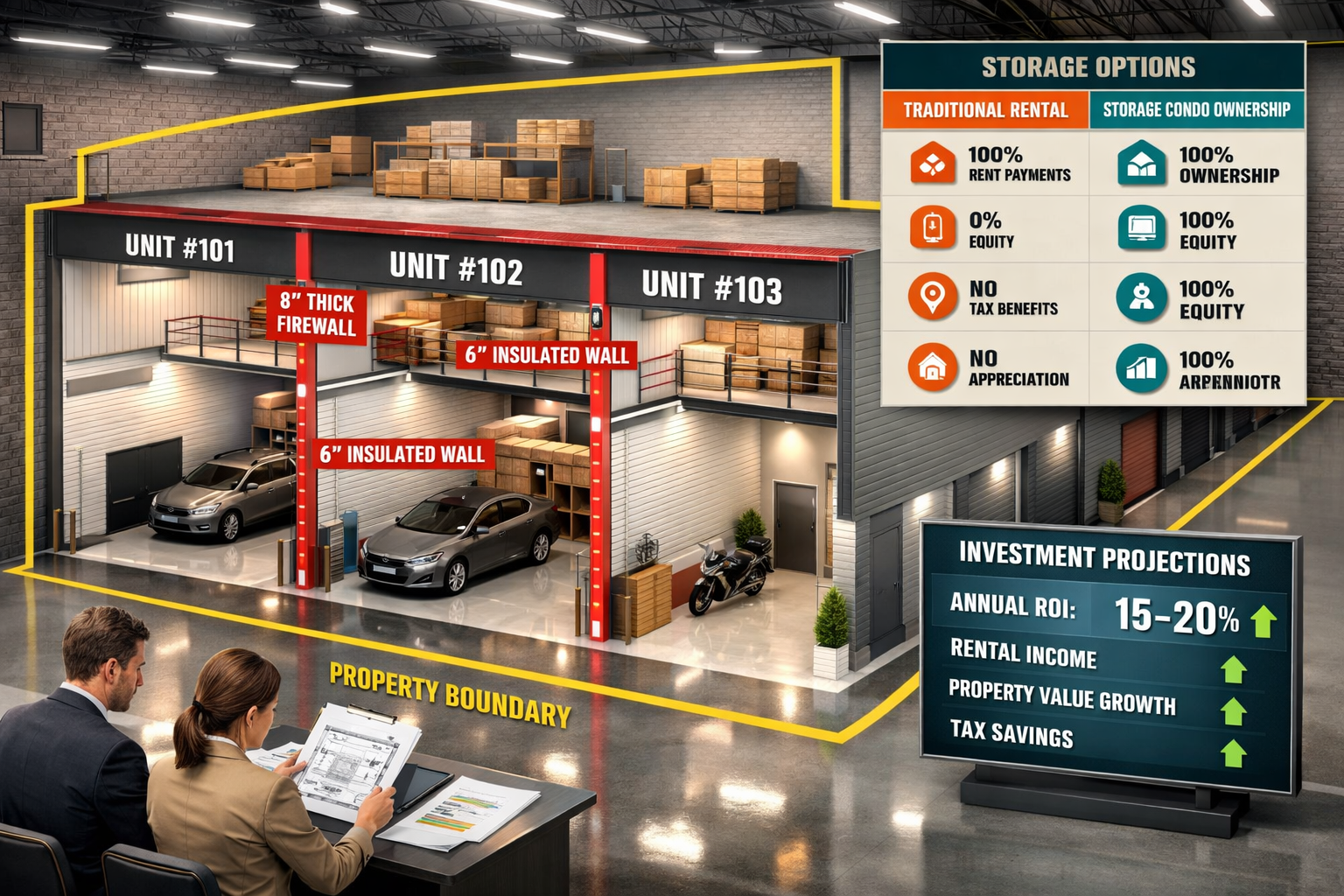
Storage condos represent a hybrid between commercial real estate and personal property investment. Rather than renting storage space monthly, buyers purchase individual units within a larger facility—typically ranging from 200 to 2,000 square feet. These units serve various purposes:
- Business inventory storage for e-commerce operations
- Vehicle and boat storage with climate control
- Workshop spaces for hobbyists and craftspeople
- Wine storage and collector facilities
- Equipment storage for contractors and tradespeople
The ownership model provides several advantages over traditional rental storage:
| Storage Condos | Traditional Rental Storage |
|---|---|
| One-time purchase with long-term ownership | Monthly rental payments indefinitely |
| Property appreciation potential | No equity building |
| Customization allowed | Limited modifications |
| Fixed costs (excluding maintenance fees) | Rent increases over time |
| Can be sold or leased out | No ownership rights |
The Growth of Storage Condos in 2026
The storage condo market has expanded significantly across major metropolitan areas. Developers recognize that individual unit sales provide immediate capital recovery compared to the gradual income stream of traditional rental facilities. Buyers appreciate the investment diversification and practical utility these properties offer.
This growth trajectory means more construction projects, more facility expansions, and consequently, more party wall considerations. When a storage condo facility plans to expand—whether adding vertical floors or horizontal wings—the legal complexity increases exponentially compared to single-owner developments.
Party Wall Notices for Self-Storage Facility Expansions: Legal Framework and Requirements
How Party Wall Legislation Applies to Storage Facilities
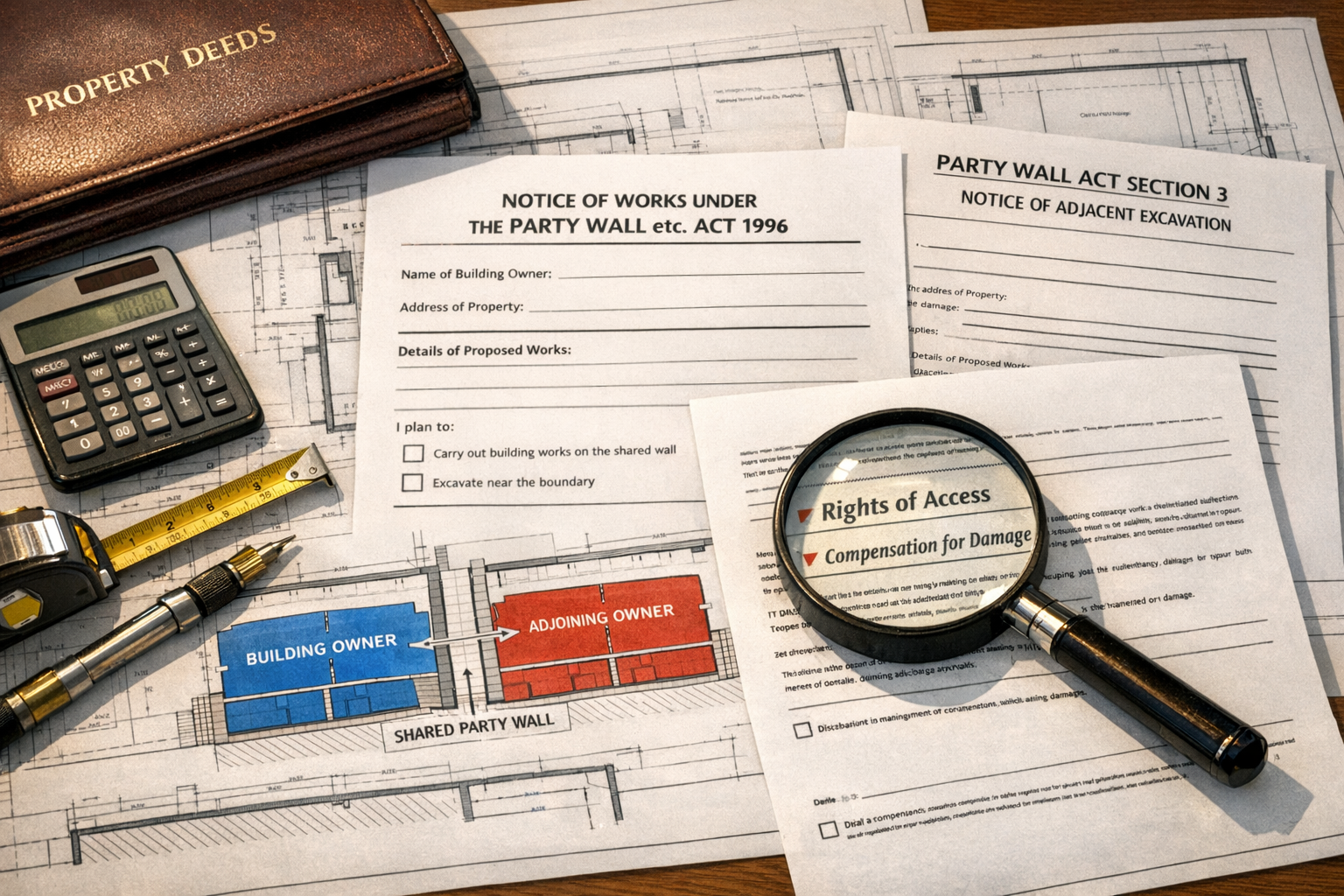
The Party Wall etc. Act 1996 governs construction work on or near boundaries between properties in England and Wales. For self-storage facilities, this legislation becomes relevant in several scenarios:
Section 1 Works – Building a new wall at the boundary line when expanding a storage facility
Section 2 Works – Working on an existing party wall, such as:
- Raising the height of a shared wall between storage units
- Underpinning a party wall during expansion
- Cutting into a party wall to insert structural elements
Section 6 Works – Excavating within three or six meters of a neighboring structure (depending on depth)
When dealing with storage condos, the critical distinction is that each unit owner is a separate legal entity. An expansion project affecting ten adjoining storage condo units requires serving party wall notices to ten different owners—not just one landlord.
Serving Notices in the Storage Condo Context
The notice-serving process for storage condo expansions follows these essential steps:
-
Identify all adjoining owners – Review property deeds and condo association records to determine who owns units sharing walls with the expansion area
-
Prepare appropriate notices – Draft party wall act notices based on the specific work type (Section 1, 2, or 6)
-
Serve notices properly – Deliver notices at least two months before starting work (for Section 1 and 2 works) or one month (for Section 6 works)
-
Document service – Maintain proof of delivery for each individual owner
-
Await responses – Adjoining owners have 14 days to consent or dissent
The complexity multiplies when storage condo owners have leased their units to tenants. Notices must typically go to the legal owner, not the occupant, though best practice involves informing tenants as well to prevent disputes.
Common Challenges with Multiple Adjoining Owners
Storage condo expansions present unique obstacles:
Varied Response Rates ⏰ – While some owners may consent immediately, others may delay or dissent, creating a patchwork of agreements that complicates project timelines.
Surveyor Appointments – When multiple adjoining owners dissent, each can theoretically appoint their own surveyor, though the Party Wall Act allows for an agreed surveyor to represent multiple parties.
Inconsistent Concerns – Different owners may have different priorities—one concerned about structural integrity, another about noise during construction, and another about access disruption.
Cost Disputes – Determining fair cost allocation when works benefit some units more than others requires careful negotiation and clear documentation.
"The storage condo model fundamentally changes party wall dynamics. Instead of negotiating with a single commercial landlord who understands construction processes, surveyors must communicate with individual owners who may have limited property development experience." – Industry Professional
Party Wall Notices for Self-Storage Facility Expansions: The Emerging Storage Condo Niche in Practice
Case Study: Vertical Expansion of a Storage Condo Facility
Consider a three-story storage condo building where the developer retained ownership of the roof and plans to add two additional floors. This expansion affects:
- 18 third-floor unit owners whose ceiling structures will bear additional load
- 6 adjacent property owners whose buildings are within excavation distance
- The condo association representing common area interests
The building owner must serve party structure notices to all 18 third-floor owners, as the works involve raising and thickening the party walls between units to support the new floors. Additionally, Section 6 notices go to the six neighboring properties.
Timeline Implications:
- Month 1: Identify all owners and prepare notices
- Month 2: Serve notices and begin response period
- Month 3-4: Negotiate with dissenting owners and appoint surveyors
- Month 5-6: Prepare and agree party wall awards
- Month 7: Construction can commence (if all awards finalized)
This extended timeline—potentially six months before breaking ground—represents a significant planning consideration for storage condo expansions.
Horizontal Expansion Considerations
When a storage facility expands horizontally by adding new wings or buildings, the party wall implications differ:
Boundary Wall Construction 🧱 – New storage buildings often require constructing walls at or near property boundaries. Understanding the difference between party fence walls and boundary walls becomes crucial, as the notice requirements vary.
Foundation Work – Excavation for new building foundations may trigger Section 6 notices to existing storage condo owners if the work occurs within the prescribed distances.
Shared Infrastructure – Expanding facilities often share utilities, drainage, and access roads with existing buildings, creating additional easement and rights-of-way considerations beyond standard party wall matters.
The Role of Condo Associations
Most storage condo developments establish homeowners' associations (HOAs) or property management companies. These entities typically:
- Maintain common areas and shared infrastructure
- Collect fees for collective expenses
- Enforce usage restrictions and architectural guidelines
- Coordinate with developers on expansion projects
However, condo associations cannot consent to party wall notices on behalf of individual owners. Each owner retains personal property rights requiring individual notice and consent. The association may facilitate communication and coordinate responses, but legal authority remains with individual unit owners.
Smart developers work with condo associations early in the planning process to:
- Present expansion plans at association meetings
- Address collective concerns before formal notices
- Identify owners who may need additional information
- Coordinate surveyor appointments to minimize costs
Financial and Legal Considerations
Cost Allocation in Multi-Owner Scenarios
The costs of party wall processes in storage condo expansions require careful consideration:
Building Owner's Responsibilities:
- Serving all required notices
- Paying for the building owner's surveyor
- Covering reasonable costs of adjoining owners' surveyors
- Funding the actual construction work
- Compensating for any damage caused
Adjoining Owners' Positions:
- May claim surveyor fees if they dissent
- Can request specific protective measures
- May negotiate compensation for disruption
- Cannot block reasonable development but can ensure proper safeguards
When expansion works benefit certain units more than others, equitable cost-sharing becomes complex. For example, if adding upper floors increases property values for ground-floor units (by enhancing the overall facility), should those owners contribute? These questions often require negotiation beyond statutory party wall requirements.
Protecting Adjoining Owners' Interests
Storage condo owners affected by expansion works should take several protective steps:
✅ Request a Schedule of Condition – Professional schedules of condition document the pre-construction state of your property with photographs and detailed descriptions, providing evidence if damage claims arise later.
✅ Appoint a Qualified Surveyor – Even if costs seem prohibitive, appointing an experienced adjoining owner's surveyor ensures your interests receive proper representation throughout the process.
✅ Review Insurance Coverage – Verify that your property insurance covers construction-related damage and understand the claims process.
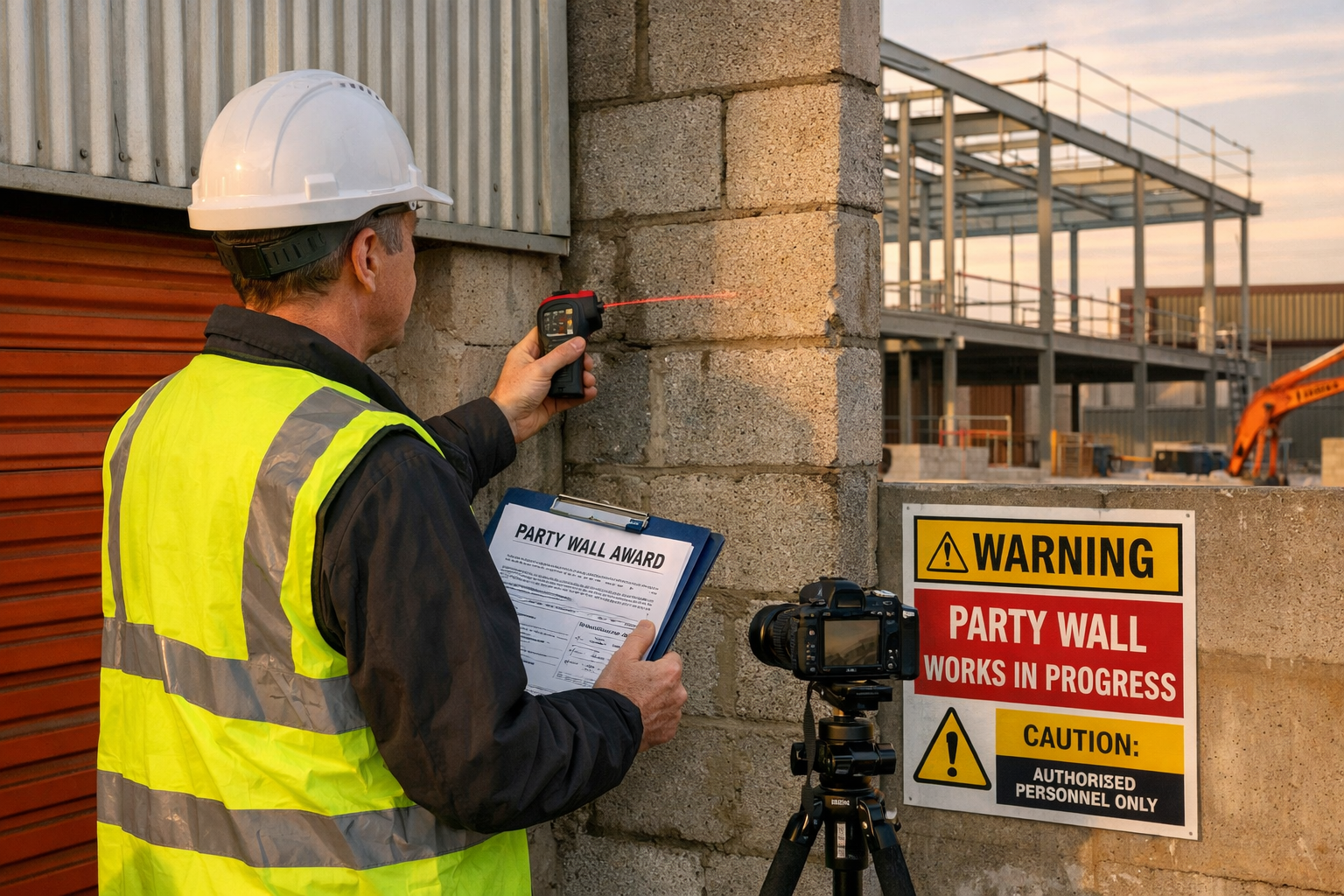
✅ Understand Award Terms – Party wall awards specify working hours, access arrangements, and protective measures. Read these documents carefully and request clarifications.
✅ Document Everything – Keep copies of all notices, correspondence, and agreements related to the expansion project.
Due Diligence for Storage Condo Buyers
Prospective storage condo purchasers should investigate potential party wall issues before buying:
Pre-Purchase Inquiries:
- Are there existing party wall awards affecting the unit?
- Has the developer or condo association announced expansion plans?
- What are the facility's development rights and future building potential?
- Have previous expansions caused disputes or damage claims?
- Does the purchase agreement address future party wall obligations?
Understanding these factors helps buyers assess long-term ownership costs and potential disruptions. A unit adjacent to undeveloped expansion areas may face construction impacts within a few years of purchase.
Best Practices for Surveyors and Developers
Streamlining the Notice Process
Professional surveyors working on storage condo expansion projects can improve efficiency through:
Early Stakeholder Engagement 🤝 – Contact the condo association months before formal notices to explain the project, timeline, and expected impacts. This proactive communication reduces anxiety and opposition.
Batch Processing – When serving notices to multiple owners, create standardized documentation with unit-specific details inserted. This ensures consistency while addressing individual circumstances.
Clear Communication – Many storage condo owners are small business operators or individual investors unfamiliar with party wall procedures. Use plain language explanations alongside technical notices to improve understanding and response rates.
Coordinated Surveyor Appointments – Encourage adjoining owners to appoint a single agreed surveyor to represent multiple parties, reducing costs and simplifying negotiations. The types of party wall works often affect multiple units similarly, making collective representation practical.
Digital Documentation – Utilize electronic notice service where legally permissible, maintain digital records of all correspondence, and create shared document repositories for awards and schedules of condition.
Managing Construction Impact
Storage condo facilities often remain operational during expansion projects, creating additional considerations:
Access Management – Coordinate construction vehicle access to minimize disruption to unit owners and their tenants accessing stored goods.
Noise and Hours – Party wall awards should specify working hours that balance construction efficiency with minimal disruption to business operations in adjacent units.
Security Concerns – Storage facilities house valuable goods. Construction access points require additional security measures to prevent unauthorized entry or theft.
Dust and Debris Control – Climate-controlled storage units demand stringent dust control measures during construction to protect stored items.
Communication Protocols – Establish clear channels for reporting concerns or damage during construction, with designated contacts for both the building owner and adjoining owners.
Regional Variations and Considerations
While this article focuses primarily on English and Welsh party wall legislation, storage condo developments occur in various jurisdictions with different legal frameworks:
Scotland – Different property law traditions mean party wall matters follow common law principles rather than the Party Wall etc. Act 1996.
International Markets – Storage condo concepts have gained traction in North America, Australia, and parts of Europe, each with distinct construction and property rights legislation.
Surveyors working across regions must understand local requirements while applying general principles of fair dealing and proper notice. For London-based projects, working with specialists familiar with local authorities—whether in North London, South London, East London, West London, or Central London—provides valuable local knowledge.
Emerging Trends and Future Outlook
Technology Integration in Party Wall Processes
The storage condo sector's growth coincides with technological advancement in property management and construction:
Digital Notice Platforms – Emerging software solutions streamline notice service, response tracking, and document management for projects involving numerous adjoining owners.
Virtual Inspections – Drone photography and 3D scanning technology enhance schedule of condition documentation, providing comprehensive pre-construction records.
Blockchain Property Records – Some jurisdictions experiment with blockchain-based property registries that could simplify ownership verification and notice service in multi-owner developments.
Collaborative Project Management – Cloud-based platforms allow building owners, surveyors, and adjoining owners to track project progress, share documents, and communicate efficiently.
Regulatory Developments
As storage condos become more prevalent, regulatory frameworks may evolve:
Standardized Disclosure Requirements – Future regulations might mandate that storage condo developers disclose expansion plans and party wall implications during initial unit sales.
Condo Association Authority – Legislation could grant condo associations limited authority to consent to certain party wall works on behalf of owners, streamlining processes while protecting individual rights.
Dispute Resolution Mechanisms – Specialized arbitration or mediation services for storage condo party wall disputes may emerge as the sector matures.
Investment and Market Implications
The storage condo model's success depends partly on how effectively party wall and expansion issues are managed:
Property Values – Well-managed expansions that follow proper party wall procedures protect and potentially enhance unit values. Conversely, contentious construction projects with inadequate notice compliance can depress prices.
Investor Confidence – Institutional investors entering the storage condo market scrutinize legal frameworks and historical dispute patterns. Jurisdictions with clear, efficient party wall processes attract more development capital.
Insurance Products – Specialized insurance covering party wall disputes and construction impacts may become more available as the market grows, providing additional protection for unit owners.
Conclusion
Party Wall Notices for Self-Storage Facility Expansions: The Emerging Storage Condo Niche represents a fascinating intersection of property law, commercial development, and innovative investment models. As the storage condo sector continues expanding in 2026 and beyond, understanding the unique party wall implications becomes increasingly critical for developers, surveyors, and individual unit owners.
The fundamental challenge—serving proper notices to multiple individual owners rather than a single landlord—requires careful planning, clear communication, and professional expertise. Success depends on recognizing that storage condo owners bring diverse backgrounds and varying levels of property development knowledge to the party wall process.
Actionable Next Steps
For Developers Planning Storage Condo Expansions:
- Begin party wall planning at least 6-9 months before intended construction start dates
- Engage with the condo association early to build support and address concerns
- Budget adequately for surveyor costs reflecting the number of adjoining owners
- Consider phasing expansions to reduce the number of simultaneous party wall processes
For Storage Condo Owners Receiving Party Wall Notices:
- Respond within the 14-day statutory period, even if you need more time to make a final decision
- Consult with a qualified building owner's surveyor or adjoining owner's surveyor to understand your rights and options
- Request a comprehensive schedule of condition before works commence
- Maintain open communication with the building owner and their representatives
For Party Wall Surveyors:
- Develop specialized knowledge of storage condo ownership structures and condo association dynamics
- Create efficient systems for managing multiple adjoining owner relationships
- Stay current with emerging technologies that can streamline documentation and communication
- Build relationships with condo associations and property managers in your service area
For Prospective Storage Condo Buyers:
- Investigate the facility's expansion plans and development rights before purchasing
- Review any existing party wall awards or ongoing disputes
- Understand your potential obligations if future expansions occur
- Factor potential construction disruption into your investment analysis
The storage condo niche offers compelling opportunities for investors, developers, and service providers. By approaching Party Wall Notices for Self-Storage Facility Expansions with professionalism, transparency, and attention to legal requirements, all parties can benefit from this innovative property model while protecting their respective interests.
As this sector matures, best practices will continue evolving. Staying informed about regulatory changes, technological tools, and industry standards ensures that storage condo developments proceed smoothly, with proper respect for party wall rights and obligations. The future of self-storage is increasingly about individual ownership and mixed-use flexibility—and party wall professionals who understand this evolution will be well-positioned to serve this growing market.