

Over 40% of urban renovation disputes in England and Wales involve a misunderstanding of the Party Wall etc. Act 1996 — a law that has been in force for nearly three decades yet still catches building owners off guard. For anyone planning structural work near a shared boundary in 2026, the Most Common Party Wall Questions Answered: Notices, Awards, and Surveyor Roles in 2026 guide below cuts through the confusion with clear, practical answers drawn from surveyor expertise and real-world scenarios.
Whether you are extending a kitchen, digging new foundations, or simply raising a garden wall, the Act almost certainly applies to your project. Getting the process wrong can halt works, trigger legal disputes, and cost thousands in unnecessary delays.
Key Takeaways 📌
- Serve notice early — most party wall notices must be given at least two months before work begins.
- A Party Wall Award is a legally binding document, not just a formality; ignoring it carries real legal risk.
- Surveyors act as impartial decision-makers, not advocates — understanding this prevents costly misunderstandings.
- Consent in writing from a neighbour can remove the need for a formal award, but only if properly documented.
- Costs are usually paid by the building owner (the person doing the work), though exceptions exist.
What Is the Party Wall etc. Act 1996 and Who Does It Affect?
The Party Wall etc. Act 1996 is a piece of UK legislation that governs construction work on or near shared walls, boundaries, and excavations. It applies to:
- Building owners — anyone planning to carry out notifiable works.
- Adjoining owners — neighbours whose property shares a wall, floor, or boundary with the site of proposed works.
The Act covers three main types of work:
| Work Type | Relevant Section | Notice Period Required |
|---|---|---|
| Work on an existing party wall or structure | Section 2 | 2 months |
| New building at or near the boundary line | Section 1 | 1 month |
| Excavation within 3–6 metres of a neighbour's structure | Section 6 | 1 month |
💡 Pull Quote: "The Act exists to protect both parties — not to stop work, but to ensure it is carried out safely and with proper record-keeping."
Understanding the types of party wall works that trigger the Act is the essential first step before any urban renovation project begins.
Most Common Party Wall Questions Answered: Notices, Awards, and Surveyor Roles in 2026 — The Notice Process
What Is a Party Wall Notice and When Must It Be Served?
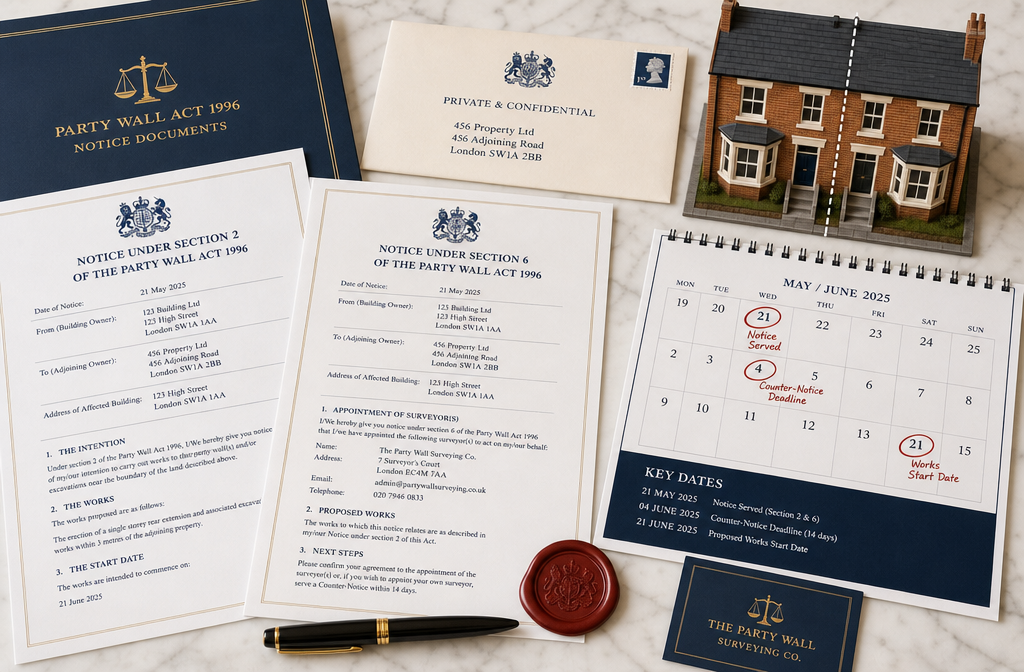
A party wall notice is a formal written document that informs a neighbour of planned construction work. It is not optional — failing to serve one is a civil wrong and can result in an injunction stopping your project mid-build.
For a detailed breakdown, the guide on party wall act notices — what they are and how to respond is an excellent starting point.
Key notice rules for 2026:
- ✅ Notices must be in writing (email is generally accepted if the neighbour agrees).
- ✅ They must include the building owner's name and address, a description of the works, and the proposed start date.
- ✅ The notice must be served on every adjoining owner, including tenants with leases of more than one year.
- ❌ A verbal agreement is not a valid substitute for a written notice.
What Happens After a Notice Is Served?
The adjoining owner has 14 days to respond. There are three possible responses:
- Consent — Works can proceed without a formal award.
- Dissent and appoint a surveyor — The dispute resolution process begins.
- No response — After 14 days, a dispute is deemed to have arisen automatically.
If the neighbour consents in writing, the process is straightforward. However, it is strongly advisable to still record the condition of the adjoining property beforehand — a schedule of condition protects both parties if damage claims arise later.
Do I Need a Party Wall Notice for a Garden Wall?
This is one of the most frequently asked questions. The answer depends on whether the wall qualifies as a party fence wall — a wall that sits astride the boundary and is not part of a building. Understanding the party fence wall definition under the Party Wall Act helps clarify whether notice obligations apply.
Understanding Party Wall Awards: What They Are and How They Work
What Is a Party Wall Award?
A Party Wall Award (also called a Party Wall Agreement in common usage) is a legal document drawn up by one or more surveyors. It sets out:
- The scope of permitted works
- The method and timing of construction
- Access rights for the building owner
- Compensation or remediation if damage occurs
- A record of the property's condition before work starts
For a comprehensive overview, the guide on party wall awards explains how these documents are structured and enforced.
Is a Party Wall Award Legally Binding?
Yes — absolutely. An award made under the Act is enforceable in a Magistrates' Court. Both the building owner and the adjoining owner are bound by its terms. Neither party can simply ignore it.
⚠️ Important: If a building owner begins work that deviates from the terms of the award, the adjoining owner can apply for an injunction to stop the works immediately.
Can I Write My Own Party Wall Agreement?
Technically, yes — but with significant caveats. The Act does allow parties to reach an agreed settlement without appointing surveyors, provided both parties consent in writing. A party wall agreement without a surveyor is possible for straightforward, low-risk projects where neighbours are cooperative and fully informed.
However, for any structural work — loft conversions, basement excavations, underpinning — professional involvement is strongly recommended. A poorly drafted agreement offers little protection if something goes wrong.
Surveyor Roles Explained: Who Does What?
The Three-Surveyor Framework
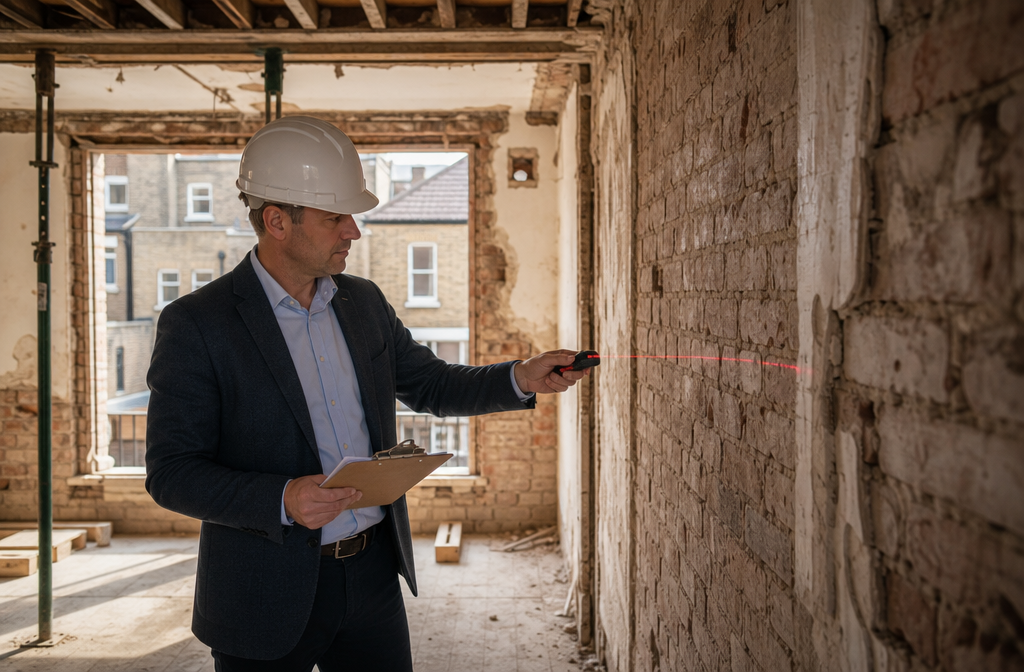
One of the most misunderstood aspects of the Act is the surveyor appointment structure. There are three possible configurations:
| Appointment Type | Description |
|---|---|
| Agreed surveyor | One surveyor appointed by both parties to act impartially |
| Two surveyors | Each party appoints their own surveyor; they work together |
| Third surveyor | Selected in advance by the two appointed surveyors; called in only if the two cannot agree |
What Does the Building Owner's Surveyor Do?
The building owner's surveyor is appointed to represent the interests of the person carrying out the works. Their responsibilities include:
- Drafting the party wall notice
- Preparing or reviewing the Party Wall Award
- Liaising with the adjoining owner's surveyor
- Ensuring the award reflects the planned scope of works accurately
What Does the Adjoining Owner's Surveyor Do?
The adjoining owner's surveyor acts to protect the neighbour's property. Key duties include:
- Reviewing the proposed works for potential risks
- Inspecting the adjoining property and documenting its condition
- Negotiating award terms that adequately protect the neighbour
- Monitoring compliance during construction
Are Surveyors Advocates or Impartial Officers?
This is a critical distinction. Under the Act, surveyors are quasi-judicial officers — they must act impartially and in accordance with the law, even when appointed by one party. They are not lawyers or advocates. Their duty is to the Act, not to the person who appointed them.
💡 Pull Quote: "A party wall surveyor appointed by your neighbour is not your enemy — they are a professional officer of the Act, bound to reach a fair and lawful outcome."
Most Common Party Wall Questions Answered: Notices, Awards, and Surveyor Roles in 2026 — Costs, Timelines, and Disputes
Who Pays for the Party Wall Surveyor?
In the vast majority of cases, the building owner pays all reasonable surveyor fees — including those of the adjoining owner's surveyor. This is a statutory default under the Act.
Exceptions apply where:
- The adjoining owner's demands are unreasonable or excessive
- The adjoining owner has caused unnecessary delays
- The third surveyor determines a different cost allocation is fair
For practical strategies, the resource on how to keep party wall costs down offers useful guidance for building owners managing renovation budgets.
How Long Does the Party Wall Process Take?
Timelines vary depending on the complexity of the works and the level of cooperation between neighbours. A typical breakdown:
- Notice period: 1–2 months (depending on work type)
- Surveyor appointment and award drafting: 2–6 weeks
- Award review and sign-off: 1–2 weeks
⏱️ Total minimum timeline before works can start: Approximately 10–14 weeks from the decision to proceed.
This is why serving notice as early as possible — ideally at the planning stage — is consistently the best advice surveyors give.
What Happens If My Neighbour Refuses to Engage?
If an adjoining owner refuses to appoint a surveyor or simply ignores all correspondence, the building owner's surveyor can appoint a surveyor on the adjoining owner's behalf after the statutory waiting period has passed. The process does not require the neighbour's active participation to proceed.
Can a Party Wall Award Be Appealed?
Yes. Either party can appeal an award to the County Court within 14 days of receiving it. Appeals must be based on a legal or procedural error — disagreement with the outcome alone is not sufficient grounds.
Practical Surveyor Insights for Urban Renovations in 2026

Urban properties — particularly terraced and semi-detached houses common across London and other major cities — present unique party wall challenges. Shared walls are often older, structurally complex, and already carrying the load of multiple floors.
Top surveyor tips for building owners in 2026:
- Commission a schedule of condition early. Photographically documenting your neighbour's property before works begin is the single best way to avoid post-construction disputes.
- Do not assume planning permission equals party wall compliance. These are entirely separate legal processes.
- Appoint an agreed surveyor where possible. A single surveyor acting for both parties is typically faster and cheaper than two separate appointments.
- Communicate with your neighbour directly before serving formal notice. Goodwill reduces friction and speeds up the process.
- Understand the difference between a party wall and a boundary wall. The difference between a party fence wall and a boundary wall affects whether the Act applies at all.
For those carrying out works, the dedicated page for building owners planning construction provides a clear overview of obligations and next steps.
Frequently Asked Questions at a Glance
Q: Does the Act apply to internal works?
Only if those works affect a party wall or structure. Pure internal renovations that do not touch a shared wall are generally exempt.
Q: What if I own a flat?
The Act applies to flats — the floors and ceilings between units can qualify as party structures, triggering notice obligations for works such as underpinning or structural alterations.
Q: Can I start work before the award is finalised?
No. Starting notifiable works without a valid award (or written consent) is a breach of the Act and can result in an injunction and damages.
Q: Is there a template I can use for a party wall notice?
Yes — a free sample party wall agreement template is available for straightforward cases, though professional review is always advisable.
Conclusion: Actionable Next Steps for Building Owners in 2026
Navigating the party wall process does not need to be stressful — but it does require early action and accurate information. The Most Common Party Wall Questions Answered: Notices, Awards, and Surveyor Roles in 2026 guide above covers the essential framework, but every project has its own nuances.
Here is what to do right now:
- ✅ Identify whether your works trigger the Act by reviewing the three main categories (party wall works, boundary line building, and excavation).
- ✅ Serve notice as early as possible — at least two months before the planned start date for structural works.
- ✅ Appoint a qualified party wall surveyor who understands urban renovation contexts and can draft a watertight award.
- ✅ Commission a schedule of condition on the adjoining property before any work begins.
- ✅ Keep communication open with your neighbour — most disputes arise from poor communication, not genuine legal disagreement.
For professional guidance tailored to your specific project and location, connecting with a qualified surveyor early is always the most cost-effective decision.