
Water and sewer infrastructure projects are experiencing a notable resurgence in 2026, with industry forecasts anticipating 16% net growth in construction activity across key markets. This modest but significant expansion brings renewed attention to a critical yet often overlooked aspect of utility development: Party Wall Act compliance when infrastructure works affect shared structures and adjacent properties. As municipalities upgrade aging systems and expand capacity to meet growing demand, property owners, contractors, and surveyors must navigate the complex intersection of infrastructure development and Party Wall Act obligations.
Understanding Party Wall Act Compliance in 2026 Water and Sewer Projects: Managing Shared Structures Amid Modest Demand Growth has become essential for anyone involved in utility construction, particularly in densely populated urban areas where excavations, pipe installations, and drainage works frequently impact neighboring properties. The stakes are high—improper compliance can lead to costly disputes, project delays, and legal challenges that undermine even the most carefully planned infrastructure improvements.
Key Takeaways
- Water and sewer construction is projected to grow 16% in 2026, creating increased demand for party wall surveyors to manage compliance when utility works affect shared structures and adjacent properties.
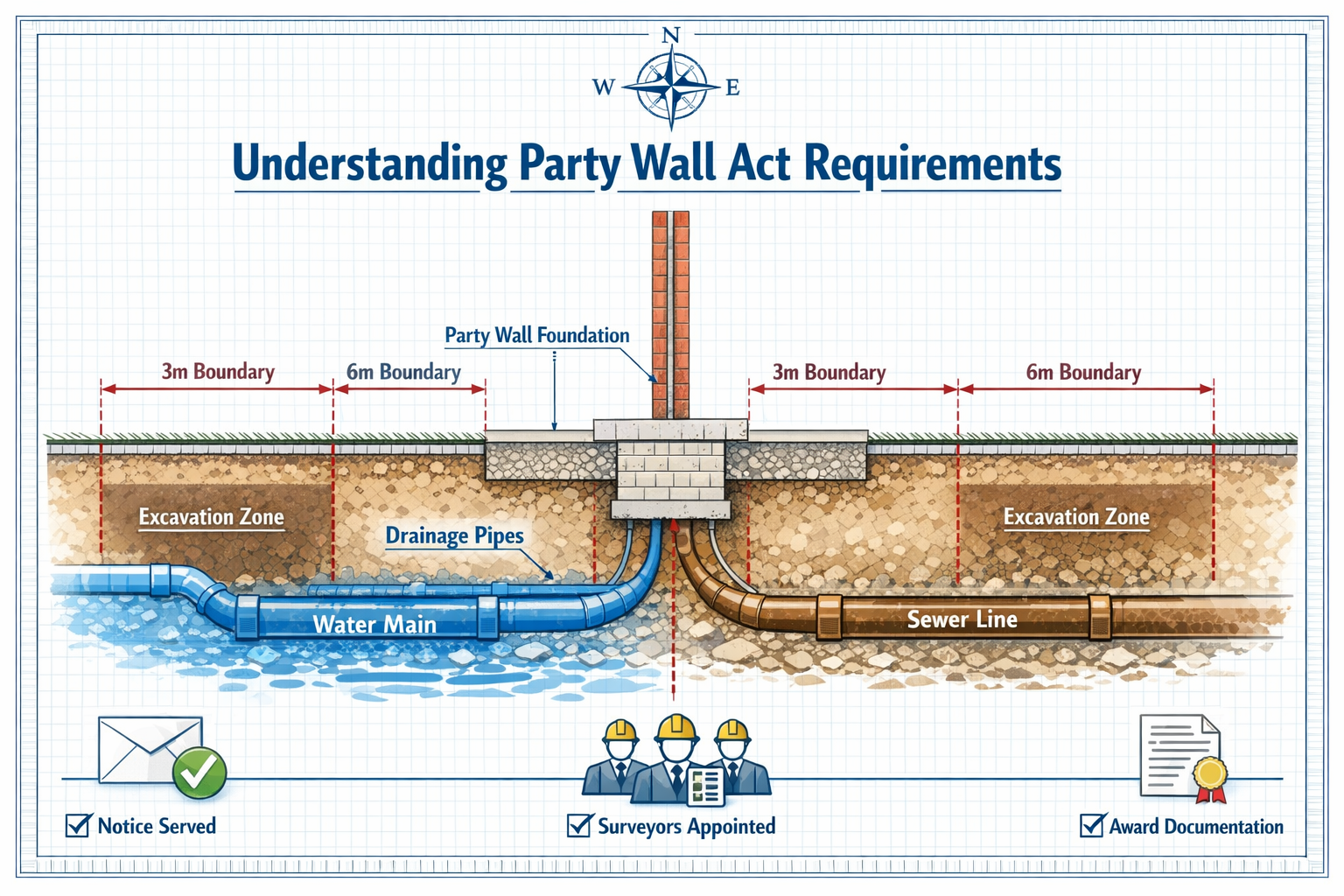
- Three key notice types under the Party Wall Act apply to infrastructure projects: Section 1 (new walls on boundary lines), Section 3 (excavations within 3 meters of neighboring structures), and Section 6 (excavations within 6 meters affecting foundations).
- Proper notice serving is mandatory and must occur at least two months before work begins, with detailed specifications of planned excavations, pipe installations, and structural impacts.
- Party wall awards provide legal protection for both building and adjoining owners, establishing conditions of work, access rights, and dispute resolution mechanisms for infrastructure projects.
- Professional party wall surveyors play crucial roles in documenting pre-work conditions, monitoring construction impacts, and ensuring compliance throughout water and sewer installation projects.
Understanding the Party Wall Act Framework for Infrastructure Projects
The Party Wall etc. Act 1996 establishes the legal framework governing building works that affect shared structures or involve excavations near neighboring properties. While many associate this legislation primarily with residential extensions and loft conversions, its provisions apply equally to water and sewer infrastructure projects that impact party walls, boundary structures, or foundations of adjacent buildings.
What Constitutes a Party Wall in Infrastructure Context
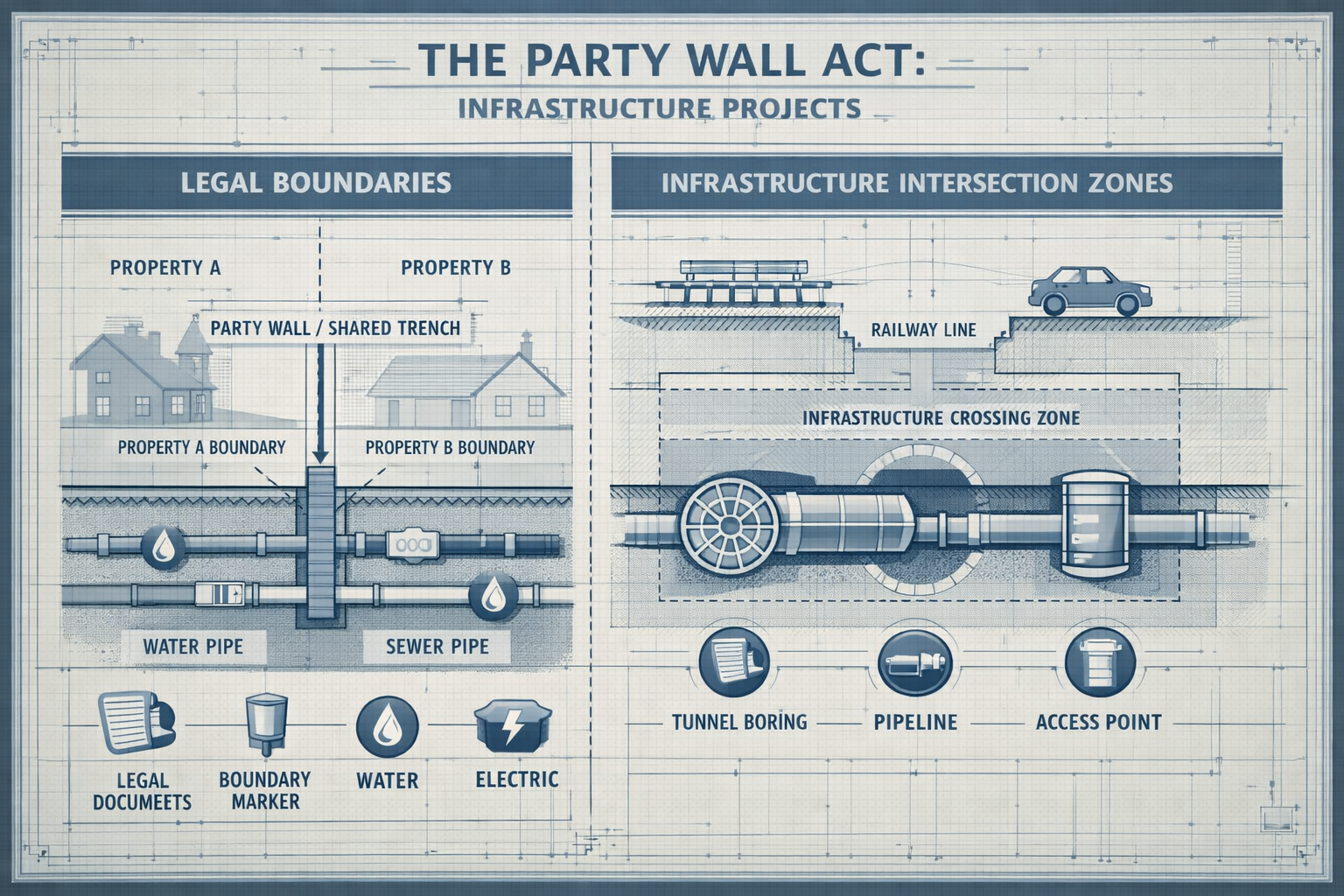
A party wall or party fence wall represents any wall or structure that stands on the boundary between two properties and is used by both owners. In the context of water and sewer projects, several scenarios commonly trigger Party Wall Act requirements:
- Shared basement or foundation walls where new drainage pipes must penetrate or run alongside existing structures
- Boundary walls affected by excavations for sewer line installations
- Party fence walls impacted by trenching operations for water main replacements
- Shared structures requiring temporary support during underground utility work
The Act's scope extends beyond the physical wall itself to include excavations and construction activities that could affect the stability or integrity of neighboring structures—a particularly relevant consideration for infrastructure projects involving significant underground work.
The Three Critical Notice Types for Water and Sewer Works
Infrastructure projects involving shared structures typically require one or more of three distinct party wall notices:
Section 1 Notice: Party Wall Notice 📋
This notice applies when building a new wall on or astride the boundary line between properties. For water and sewer projects, Section 1 becomes relevant when:
- Constructing new boundary walls to enclose pump stations or utility infrastructure
- Building retaining walls on property lines to support drainage systems
- Erecting structures that house water meters or sewer access points on shared boundaries
Section 3 Notice: Adjacent Excavation Notice 🏗️
Section 3 governs excavations within 3 meters of a neighboring building where the work will go deeper than the neighbor's foundations. This frequently applies to:
- Sewer line installations requiring deep trenching near existing structures
- Water main replacements involving excavations below foundation depth
- Drainage system installations in proximity to party walls or shared foundations
Section 6 Notice: Excavation Notice ⚠️
Section 6 addresses excavations within 6 meters of a neighboring structure that could affect its foundations through a 45-degree plane extending downward from the neighbor's foundation base. Infrastructure projects commonly triggering Section 6 include:
- Large-scale sewer trunk line installations
- Stormwater management system excavations
- Deep utility corridor development affecting multiple adjacent properties
Understanding which notice type applies—and recognizing that multiple notices may be required for a single project—represents the first critical step in achieving Party Wall Act Compliance in 2026 Water and Sewer Projects: Managing Shared Structures Amid Modest Demand Growth.
The Growing Infrastructure Landscape: 16% Growth and Its Implications
The anticipated 16% net growth in water and sewer construction for 2026 reflects several converging factors that are reshaping the infrastructure development landscape. This modest but meaningful expansion carries significant implications for Party Wall Act compliance across urban and suburban markets.
Drivers Behind Water and Sewer Infrastructure Expansion
Several key factors are fueling the projected growth in utility construction:
Aging Infrastructure Replacement 🔧
Much of the existing water and sewer infrastructure in established urban areas dates back decades, with many systems approaching or exceeding their design life. Municipalities are prioritizing replacement programs to prevent catastrophic failures and maintain service reliability. These replacement projects often involve excavations in densely built areas where party wall considerations are unavoidable.
Regulatory Compliance Pressures 📊
Environmental regulations continue to evolve, with stricter requirements for stormwater management, wastewater treatment, and discharge quality. The EPA's proposed 2026 Multi-Sector General Permit (MSGP) introduces enhanced stormwater pollution prevention requirements that necessitate infrastructure upgrades [3]. Similarly, Texas Pollutant Discharge Elimination System (TPDES) permits impose stringent standards that drive investment in treatment capacity and collection system improvements [2].
Federal Funding Availability 💰
The Clean Water State Revolving Fund (CWSRF) continues to provide substantial financing for eligible water quality infrastructure projects. Texas alone has allocated significant resources through its State Fiscal Year 2026 CWSRF Intended Use Plan, supporting projects ranging from wastewater treatment plant upgrades to collection system rehabilitation [4]. This federal support enables municipalities to undertake projects that might otherwise be financially prohibitive.
Population Growth and Development 🏘️
Even modest population increases in established urban areas create demand for expanded water and sewer capacity. New residential and commercial developments require connection to existing utility networks, often necessitating main extensions, lateral installations, and capacity upgrades that impact adjacent properties.
Infrastructure Growth Impact on Party Wall Compliance
The 16% growth projection translates directly into increased party wall compliance requirements across several dimensions:
| Impact Area | Compliance Consideration | Frequency Increase |
|---|---|---|
| Deep Excavations | Section 3 and Section 6 notices for trenching operations | +18-22% |
| Boundary Work | Section 1 notices for utility enclosures and access structures | +12-15% |
| Surveyor Demand | Need for qualified party wall surveyors in infrastructure sector | +20-25% |
| Award Complexity | Multi-party awards involving utility easements and access rights | +15-18% |
| Dispute Resolution | Conflicts arising from infrastructure work impacts | +10-14% |
This growth creates both opportunities and challenges. For party wall surveyors in Central London and other dense urban markets, infrastructure projects represent an expanding practice area requiring specialized knowledge of both Party Wall Act procedures and utility construction standards.
Regional Variations in Infrastructure Development
While the 16% growth figure represents an aggregate projection, regional variations significantly affect Party Wall Act compliance patterns:
Urban Core Markets 🌆
Cities like Fort Worth, San Antonio, and major UK metropolitan areas experience concentrated infrastructure activity in established neighborhoods where properties share walls and boundaries. The Fort Worth Infrastructure Division oversees extensive water and sewer construction programs that frequently trigger party wall requirements [1]. These urban projects typically involve:
- Multiple adjacent property impacts requiring coordinated notice serving
- Complex excavation scenarios affecting terraced housing and attached structures
- Higher dispute rates due to property density and construction disruption
Suburban Expansion Zones 🏡
Suburban areas experiencing new development face different compliance patterns:
- Main extension projects affecting existing boundary structures
- Pump station and lift station installations near residential properties
- Stormwater management facilities requiring excavations adjacent to established homes
Mixed-Use Districts 🏢
Commercial and mixed-use areas present unique challenges:
- Large-diameter sewer installations affecting multi-story building foundations
- Utility corridor development impacting multiple property types simultaneously
- Complex ownership structures requiring careful identification of affected parties
Understanding these regional patterns helps contractors and property owners anticipate Party Wall Act Compliance in 2026 Water and Sewer Projects: Managing Shared Structures Amid Modest Demand Growth requirements specific to their project locations.
Navigating the Party Wall Notice Process for Utility Projects
Proper notice serving represents the foundation of Party Wall Act compliance. For water and sewer infrastructure projects, the notice process involves specific considerations that differ from typical residential building works. Failing to serve appropriate notices—or serving them incorrectly—can result in project delays, legal challenges, and financial penalties that far exceed the cost of proper compliance.
Timing Requirements and Notice Periods
The Party Wall Act establishes strict timing requirements that infrastructure project managers must integrate into their construction schedules:
Two-Month Minimum Notice Period ⏰
For most party wall works, including excavations and boundary construction, the building owner must serve notice at least two months before the intended start date. This timeline allows:
- Adjoining owners adequate time to review proposed works
- Opportunity for surveyor appointment if the adjoining owner dissents
- Preparation of party wall awards before construction begins
- Coordination of access arrangements and protective measures
One-Month Notice for Specific Works 📅
Certain works under Section 2 of the Act (repairs and maintenance to existing party walls) require only one month's notice, though these provisions rarely apply to new infrastructure installations.
Strategic Timing Considerations 🎯
Successful infrastructure project managers incorporate party wall notice periods into their critical path planning:
- Serve notices during design development to avoid construction delays
- Coordinate notice timing with permit applications and regulatory approvals
- Allow buffer time for potential disputes or surveyor appointment processes
- Schedule pre-construction surveys well in advance of mobilization
Content Requirements for Infrastructure Project Notices
Party wall notices for water and sewer projects must contain specific information to satisfy statutory requirements. A comprehensive notice should include:
Essential Notice Elements ✅
- Building owner's name and contact information clearly identified
- Precise description of proposed works including excavation depths, pipe sizes, and construction methods
- Location details with site plans showing relationship to party walls and neighboring structures
- Intended start date providing the required notice period
- Technical specifications relevant to structural impacts (trench dimensions, shoring methods, foundation protection measures)
Infrastructure-Specific Details 🔍
Water and sewer project notices should additionally specify:
- Pipe materials, diameters, and installation depths
- Excavation methods (open-cut trenching, directional drilling, pipe bursting)
- Temporary support systems for adjacent structures
- Dewatering plans if groundwater management is required
- Traffic management and access arrangements affecting neighboring properties
- Duration of construction activities in proximity to party structures
Visual Documentation 📐
Effective notices include:
- Site plans showing property boundaries and party wall locations
- Cross-sectional drawings illustrating excavation depths relative to neighboring foundations
- Utility routing diagrams indicating pipe alignments and connection points
- Photographic documentation of existing conditions
Serving Notices to Multiple Adjoining Owners
Infrastructure projects frequently affect multiple properties simultaneously, creating complex notice-serving scenarios:
Identifying All Affected Parties 🏘️
Thorough title research and site investigation are essential to identify:
- All property owners whose structures fall within the 3-meter or 6-meter excavation zones
- Tenants with statutory rights requiring separate notification
- Easement holders and parties with property interests affected by the works
- Local authorities or utility companies with ownership interests in affected structures
Coordinated Notice Serving 📬
Best practices for multi-party notice serving include:
- Simultaneous service to all affected parties to maintain consistent timelines
- Detailed record-keeping documenting service dates and methods for each recipient
- Registered mail or hand-delivery with signed acknowledgment to prove service
- Follow-up communication to confirm receipt and address initial questions
Managing Multiple Responses 🤝
When serving notices to numerous adjoining owners, expect varied responses:
- Some owners will consent to the works without requiring surveyor involvement
- Others will dissent or fail to respond within 14 days, triggering the surveyor appointment process
- Certain owners may raise specific concerns requiring additional technical information or design modifications
For those carrying out works, maintaining organized tracking systems for notice service, response deadlines, and surveyor appointments becomes critical to project management success.
Common Notice-Serving Mistakes in Infrastructure Projects
Several pitfalls frequently undermine party wall compliance in water and sewer construction:
Inadequate Excavation Analysis ❌
Failing to properly calculate the 3-meter and 6-meter zones based on actual foundation depths and excavation plans leads to incomplete notice serving. Infrastructure projects should engage structural engineers or party wall surveyors early to determine precise notice requirements.
Insufficient Technical Detail ❌
Generic notice descriptions that fail to specify excavation methods, depths, and protective measures create uncertainty and increase the likelihood of adjoining owner concerns. Detailed technical information builds confidence and facilitates consent.
Delayed Notice Service ❌
Serving notices too close to the intended start date—or worse, after work has begun—represents the most common compliance failure. This mistake creates legal liability and can result in injunctions halting construction.
Improper Service Methods ❌
Using email or verbal communication instead of proper written notice served by registered mail or personal delivery fails to satisfy statutory requirements and creates evidentiary problems if disputes arise.
The Role of Party Wall Surveyors in Infrastructure Projects
Professional party wall surveyors serve as essential facilitators in achieving Party Wall Act Compliance in 2026 Water and Sewer Projects: Managing Shared Structures Amid Modest Demand Growth. Their specialized expertise bridges the gap between infrastructure construction requirements and neighboring property protection, ensuring that utility development proceeds lawfully while safeguarding adjoining owners' interests.
Surveyor Appointment and Selection
When an adjoining owner dissents to proposed works or fails to respond within the 14-day statutory period, the Party Wall Act's surveyor appointment provisions activate:
Three Surveyor Scenarios 👥
-
Agreed Surveyor Approach: Both parties jointly appoint a single surveyor to act impartially on behalf of both building and adjoining owners. This streamlined approach often works well for straightforward infrastructure projects affecting a single neighbor.
-
Two Surveyor Approach: The building owner appoints their own surveyor, the adjoining owner appoints a separate surveyor, and these two professionals jointly select a third surveyor to serve as an impartial referee if needed. This structure provides robust protection for both parties in complex projects.
-
Building Owner's Surveyor: When the adjoining owner fails to appoint a surveyor within 10 days of the building owner's request, the building owner may appoint a surveyor on the neighbor's behalf—though this surveyor must still act impartially.
Selecting Qualified Infrastructure Surveyors 🎓
Water and sewer projects benefit from surveyors with specific qualifications:
- RICS membership (Royal Institution of Chartered Surveyors) ensuring professional standards
- Infrastructure project experience understanding utility construction methods and impacts
- Local market knowledge familiar with regional construction practices and regulatory requirements
- Technical competence in structural assessment, excavation engineering, and foundation protection
For projects in specific areas, engaging specialists like a party wall surveyor in South London or party wall surveyor in North London who understands local building stock and construction conditions provides valuable advantages.
Preparing Party Wall Awards for Utility Construction
The party wall award represents the formal document that establishes the conditions under which infrastructure work may proceed. For water and sewer projects, comprehensive awards address unique considerations:
Core Award Components 📄
A properly drafted party wall award for infrastructure work includes:
- Detailed work description specifying excavation methods, pipe installation procedures, and construction sequencing
- Condition schedule documenting pre-work property conditions through photographs, written descriptions, and technical measurements
- Access provisions establishing rights for surveyors and contractors to enter neighboring properties for monitoring and inspection
- Working hours limiting construction activities to reasonable times to minimize disruption
- Protective measures requiring specific shoring, underpinning, or foundation protection techniques
- Insurance requirements specifying coverage levels and liability provisions
- Dispute resolution procedures establishing processes for addressing concerns that arise during construction
- Cost allocation determining which party bears surveyor fees and other compliance costs
Infrastructure-Specific Award Provisions 🚰
Water and sewer project awards should additionally address:
- Vibration monitoring requirements for excavation and pipe installation activities
- Groundwater management protocols to prevent dewatering impacts on neighboring foundations
- Utility protection measures for existing services that may be affected by new infrastructure
- Restoration obligations specifying how disturbed areas will be returned to original condition
- Long-term access rights for future maintenance of installed infrastructure
- Emergency procedures establishing protocols for unexpected conditions or structural concerns
Award Timing and Effectiveness ⏱️
Party wall awards must be finalized and served on all parties before construction begins. The award becomes legally binding upon service, and construction may commence in accordance with its terms. For infrastructure projects with phased construction, awards may address multiple work stages with specific conditions applicable to each phase.
Schedule of Condition: Documenting Pre-Work Status
The schedule of condition represents one of the most critical protective measures in party wall compliance. For water and sewer infrastructure projects, comprehensive condition documentation serves multiple purposes:
Protection for All Parties 🛡️
- Building owners gain evidence that pre-existing conditions are unrelated to their construction activities
- Adjoining owners establish baseline documentation to support claims for construction-related damage
- Insurers receive objective evidence for evaluating damage claims and liability
- Contractors obtain protection against unfounded damage allegations
Comprehensive Documentation Methods 📸
Professional schedules of condition for infrastructure projects employ multiple documentation techniques:
-
Photographic Records: High-resolution images capturing:
- External elevations of affected structures
- Internal finishes in rooms adjacent to party walls
- Existing cracks, settlement, or structural defects
- Drainage systems and external ground conditions
- Utility connections and service entry points
-
Written Descriptions: Detailed narratives documenting:
- Structural condition assessments
- Material types and construction methods
- Visible defects with measurements and locations
- Drainage performance and groundwater conditions
-
Technical Measurements: Precise documentation including:
- Crack width measurements using calibrated gauges
- Level surveys establishing baseline settlement conditions
- Moisture readings in walls and foundations
- Vibration baseline measurements before excavation begins
Timing and Access Considerations 🔑
Schedules of condition should be prepared:
- Before construction begins to establish true baseline conditions
- With adjoining owner cooperation ensuring access to all relevant areas
- By qualified professionals with expertise in structural assessment
- With sufficient detail to support future damage assessments if necessary
Monitoring and Inspection During Construction
Party wall surveyors' responsibilities extend throughout the construction period, particularly for infrastructure projects involving significant excavation and structural risk:
Ongoing Monitoring Activities 🔍
- Site inspections at critical construction stages (excavation commencement, maximum depth, backfilling, restoration)
- Compliance verification ensuring work proceeds according to award conditions
- Structural monitoring checking for movement, cracking, or settlement in adjacent structures
- Documentation updates recording construction progress and any variations from planned methods
- Communication facilitation maintaining dialogue between building owners, contractors, and adjoining owners
Addressing Issues During Construction ⚠️
When concerns arise during water and sewer installation work, party wall surveyors:
- Investigate reported problems promptly
- Determine whether issues relate to the infrastructure work or pre-existing conditions
- Recommend remedial measures or construction modifications if necessary
- Facilitate resolution discussions between parties
- Document all issues and resolutions for the permanent record
Final Inspections and Sign-Off ✔️
Upon project completion, surveyors conduct final inspections to:
- Verify that work was completed in accordance with the award
- Assess whether any damage occurred to neighboring properties
- Recommend repairs or compensation if construction-related damage is identified
- Provide final documentation closing out the party wall process
For guidance on keeping party wall costs down, consider the value that proactive surveyor engagement provides in preventing disputes and minimizing overall project expenses.
Practical Compliance Strategies for Water and Sewer Contractors
Infrastructure contractors undertaking water and sewer projects can implement specific strategies to ensure smooth Party Wall Act Compliance in 2026 Water and Sewer Projects: Managing Shared Structures Amid Modest Demand Growth while minimizing delays and disputes.
Early Compliance Planning and Risk Assessment
Pre-Design Compliance Analysis 🎯
Before finalizing infrastructure designs, conduct comprehensive party wall risk assessments:
- Identify all properties within 6 meters of proposed excavations
- Research property ownership through title searches and municipal records
- Evaluate foundation types and depths of neighboring structures
- Assess potential for alternative construction methods that reduce party wall impacts
- Budget adequate time and resources for notice serving and award preparation
Design Optimization for Compliance 📐
Where feasible, modify infrastructure designs to minimize party wall complications:
- Route utilities to avoid deep excavations near party walls when alternative alignments exist
- Employ trenchless technologies (directional drilling, pipe bursting) to reduce excavation impacts
- Specify protective measures (sheet piling, soldier beam systems) that prevent foundation disturbance
- Phase construction to address party wall requirements in manageable segments
Building Strong Neighbor Relations
Proactive Communication 💬
Successful infrastructure projects invest in neighbor relations before formal notice serving:
- Conduct pre-notice meetings to explain project benefits and construction methods
- Provide contact information for project managers who can address concerns
- Distribute project newsletters or updates keeping neighbors informed
- Host community meetings for large-scale utility improvement programs
Addressing Concerns Constructively 🤝
When neighbors raise concerns about proposed infrastructure work:
- Listen actively and acknowledge legitimate worries
- Provide technical information explaining how protective measures will prevent damage
- Offer to arrange surveyor consultations at the building owner's expense
- Consider reasonable design modifications that address specific concerns
- Document all communications for future reference
Managing Disruption Professionally 🚧
Infrastructure construction inevitably creates disruption. Minimize impacts through:
- Restricting noisy activities to reasonable daytime hours
- Maintaining safe pedestrian and vehicle access to neighboring properties
- Controlling dust, mud, and debris migration
- Providing advance notice of particularly disruptive activities
- Responding promptly to complaints and adjusting operations when reasonable
Coordinating with Regulatory Compliance
Water and sewer infrastructure projects must satisfy multiple regulatory frameworks simultaneously. Effective coordination ensures that Party Wall Act compliance integrates seamlessly with other requirements:
Permit Coordination 📋
Infrastructure projects typically require various permits and approvals:
- Building permits addressing structural and construction safety requirements
- Utility permits from water authorities governing system connections and specifications
- Environmental permits for stormwater management and discharge quality [3]
- Traffic management approvals for work in public rights-of-way
- Excavation permits addressing utility location and protection requirements
Party wall notice periods should align with permit application timelines to avoid construction delays. In many cases, serving party wall notices can proceed concurrently with permit applications, ensuring all approvals are in place before the intended start date.
Construction Standards Integration 🏗️
Modern water and sewer construction must satisfy evolving technical standards:
- San Antonio Water System (SAWS) construction requirements for water resource compliance and protection [2]
- Municipal infrastructure standards governing materials, installation methods, and testing
- Environmental protection measures addressing erosion control and pollution prevention
- Safety regulations protecting workers and the public during excavation activities
Party wall awards should reference applicable construction standards, ensuring that protective measures satisfy both Party Wall Act requirements and regulatory compliance obligations.
Documentation and Record-Keeping Best Practices
Comprehensive Project Files 📁
Maintain organized documentation throughout the party wall compliance process:
- Notice serving records: Copies of all notices served, proof of service, and response tracking
- Surveyor correspondence: All communications with appointed surveyors and adjoining owners
- Award documents: Executed party wall awards with all amendments and clarifications
- Condition schedules: Complete photographic and written documentation of pre-work conditions
- Inspection reports: Surveyor inspection records throughout construction
- Incident documentation: Records of any concerns, complaints, or issues that arose during work
- Final sign-off: Completion documentation and final surveyor reports
Digital Documentation Systems 💻
Modern infrastructure projects benefit from digital documentation platforms:
- Cloud-based file sharing enabling real-time access for all parties
- Photographic databases with metadata tagging for easy retrieval
- Project management software tracking notice deadlines and surveyor appointments
- Communication logs documenting all neighbor interactions
- Mobile inspection tools allowing surveyors to document conditions on-site
Retention Requirements 🗄️
Party wall documentation should be retained for extended periods:
- Minimum 6 years to satisfy statute of limitations for potential claims
- Longer retention for major infrastructure projects that may face future questions
- Permanent retention of final awards and condition schedules as property records
Cost Management and Budgeting
Understanding and controlling party wall compliance costs helps infrastructure projects remain financially viable:
Typical Cost Components 💰
| Cost Category | Typical Range | Notes |
|---|---|---|
| Surveyor Fees | £800-£2,500 per property | Varies with project complexity and property count |
| Condition Schedules | £300-£800 per property | Depends on property size and documentation detail |
| Award Preparation | £500-£1,500 per award | Complex multi-party awards cost more |
| Monitoring Inspections | £200-£500 per visit | Frequency depends on construction duration |
| Legal Fees | £1,000-£5,000+ | Only if disputes require legal intervention |
Cost Allocation Under the Act 📊
The Party Wall Act establishes that the building owner typically bears surveyor fees and award costs. However, if the adjoining owner causes unreasonable expense through frivolous objections or excessive demands, cost allocation may be adjusted.
For infrastructure projects affecting multiple properties, total compliance costs can become significant. A water main replacement project affecting 10 properties might incur £15,000-£30,000 in party wall compliance costs—a material consideration in project budgeting.
Cost Control Strategies 💡
- Engage experienced surveyors who work efficiently and command neighbor confidence
- Use agreed surveyor approaches where appropriate to reduce duplication
- Invest in thorough condition documentation to prevent unfounded damage claims
- Maintain excellent construction practices to avoid actual damage requiring costly repairs
- Consider having a party wall agreement without a surveyor for simple projects where neighbors consent
For detailed guidance on managing expenses, review strategies for understanding party wall costs and the process.
Dispute Resolution and Problem-Solving
Despite best efforts at compliance and communication, disputes sometimes arise during water and sewer infrastructure projects. Understanding resolution mechanisms and preventive strategies helps contractors and property owners navigate conflicts effectively.
Common Sources of Party Wall Disputes in Infrastructure Projects
Damage Claims 🏚️
The most frequent disputes involve allegations that infrastructure construction caused damage to neighboring properties:
- Cracks in walls or ceilings attributed to excavation vibration or settlement
- Drainage problems blamed on groundwater level changes from dewatering
- Structural movement linked to foundation disturbance during pipe installation
- Cosmetic damage from construction activities or equipment operation
Comprehensive schedules of condition provide critical evidence for evaluating whether damage relates to the infrastructure work or pre-existed construction.
Access Disagreements 🚪
Infrastructure projects sometimes require access to neighboring properties for:
- Installing temporary support systems
- Monitoring structural conditions during excavation
- Routing utilities through easement areas
- Conducting repairs if construction-related damage occurs
Adjoining owners may resist access requests, creating project delays and compliance complications. Well-drafted party wall awards establish clear access rights and procedures, minimizing potential conflicts.
Work Method Disputes ⚙️
Neighbors may object to specific construction methods proposed for infrastructure installation:
- Concerns about vibration from excavation equipment
- Worries about groundwater impacts from dewatering operations
- Questions about adequacy of temporary support systems
- Disagreements about working hours or construction duration
Technical explanations from qualified engineers and surveyors often resolve these concerns. In some cases, modifying construction methods or adding protective measures addresses legitimate objections.
Cost Disputes 💷
Conflicts over party wall compliance costs can arise when:
- Building owners resist paying surveyor fees they consider excessive
- Adjoining owners demand compensation for inconvenience beyond statutory requirements
- Disagreements emerge about which party should bear specific costs
- Disputes occur over damage repair estimates and responsibility
Clear award provisions addressing cost allocation help prevent these conflicts.
The Party Wall Dispute Resolution Process
The Party Wall Act establishes a structured process for resolving disputes:
Surveyor Determination 🔨
When disagreements arise, the appointed party wall surveyors have authority to:
- Investigate the facts and technical issues
- Make determinations about work methods, protective measures, and conditions
- Resolve cost allocation questions
- Issue binding decisions through the party wall award or supplemental determinations
Surveyor decisions are legally enforceable, providing efficient resolution without court involvement.
Third Surveyor Intervention ⚖️
In the two-surveyor scenario, if the building owner's surveyor and adjoining owner's surveyor cannot agree, the third surveyor makes the final determination. This mechanism ensures that deadlocks do not prevent project progress.
Appeal to County Court 🏛️
Either party may appeal a surveyor's determination to the County Court within 14 days of receiving the decision. However, courts generally defer to surveyor expertise on technical matters, intervening primarily when:
- Surveyors exceeded their authority under the Act
- Procedural irregularities affected the determination
- Decisions were manifestly unreasonable or arbitrary
The appeal process adds time and expense, making it a last resort for serious disputes.
Preventive Strategies for Avoiding Disputes
Invest in Quality Professional Advice 👨💼
Engaging experienced party wall surveyors from the outset prevents many disputes:
- Qualified professionals understand both Party Wall Act requirements and infrastructure construction
- Experienced surveyors build neighbor confidence through competent, impartial service
- Technical expertise enables realistic assessment of risks and appropriate protective measures
For specialized support, consider building owners' surveyor services or adjoining owners' surveyor representation depending on your role in the project.
Maintain Excellent Construction Standards 🏗️
The best dispute prevention strategy is avoiding actual damage through:
- Proper excavation support systems preventing ground movement
- Vibration monitoring and control during trenching operations
- Groundwater management preventing settlement from dewatering
- Careful equipment operation avoiding accidental impacts to structures
- Prompt repairs if minor damage does occur
Document Everything Thoroughly 📸
Comprehensive documentation protects all parties:
- Detailed condition schedules establish baseline conditions
- Progress photographs show construction methods and protective measures
- Inspection reports document surveyor observations throughout the project
- Communication logs record all neighbor interactions and concern resolution
When disputes arise, thorough documentation often provides clear answers about responsibility and appropriate resolution.
Communicate Proactively and Transparently 📞
Keep neighbors informed throughout the infrastructure project:
- Provide advance notice of particularly disruptive activities
- Respond promptly to questions and concerns
- Invite neighbors to observe protective measures being implemented
- Acknowledge problems quickly and explain resolution plans
Open communication builds trust and prevents minor concerns from escalating into formal disputes.
Special Considerations for Different Infrastructure Project Types
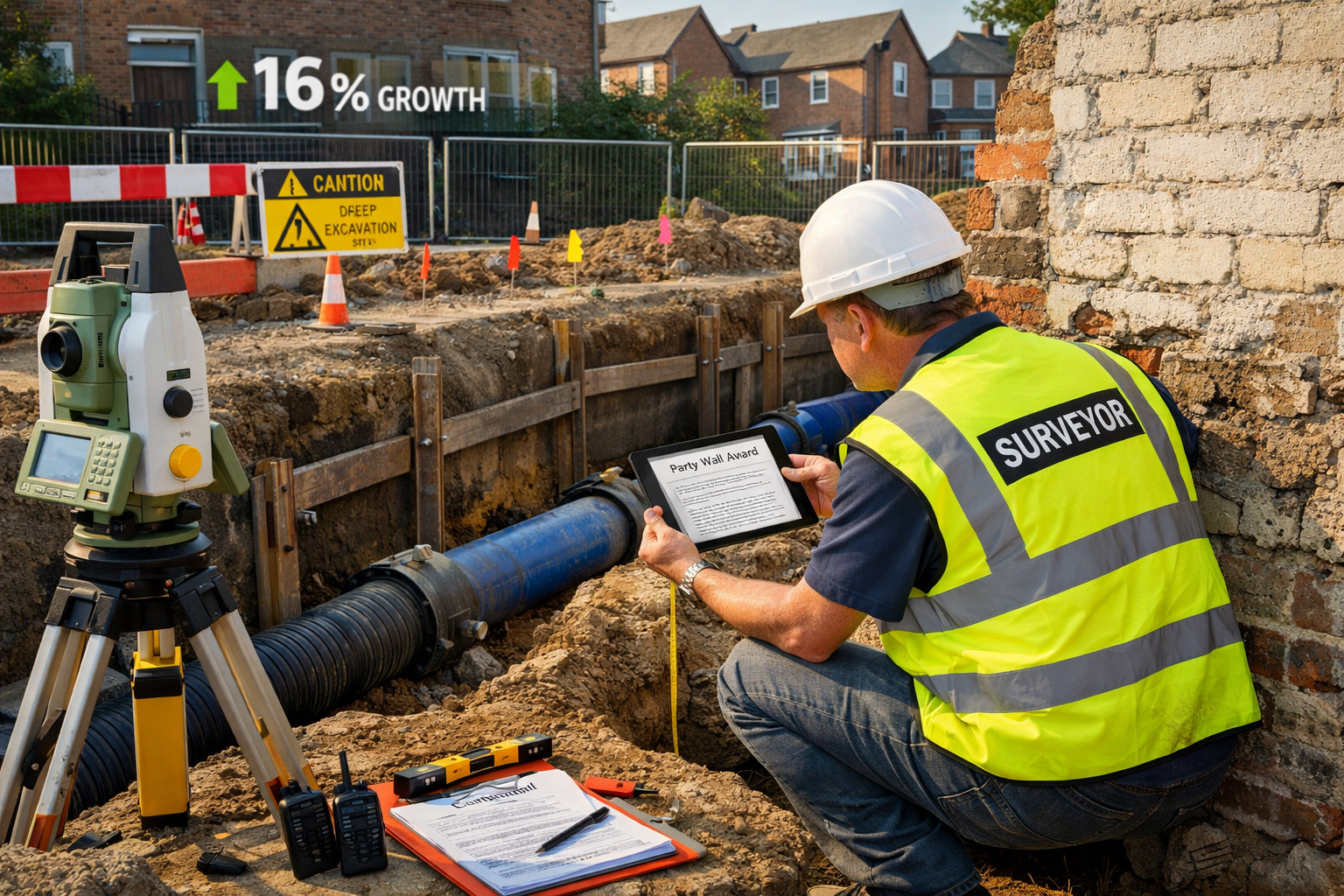
Water and sewer infrastructure encompasses diverse project types, each with unique Party Wall Act compliance considerations:
Water Main Installation and Replacement
Typical Party Wall Triggers 💧
Water main projects frequently involve:
- Deep excavations (often 1.5-2.5 meters) triggering Section 3 notices when within 3 meters of neighboring structures
- Trenching along property boundaries affecting party fence walls
- Service lateral connections requiring excavations near building foundations
- Valve vault installations creating permanent structures near shared boundaries
Specific Compliance Strategies 🔧
- Route mains in public rights-of-way where possible to minimize private property impacts
- Employ trenchless installation methods (horizontal directional drilling) to avoid excavation near sensitive structures
- Schedule work during dry seasons to minimize groundwater management requirements
- Coordinate with multiple property owners along extended main routes using consistent notice and award processes
Sewer Line Construction and Rehabilitation
Typical Party Wall Triggers 🚰
Sewer projects often create more significant party wall implications due to:
- Greater excavation depths (commonly 2-4 meters) increasing the likelihood of Section 3 and Section 6 notice requirements
- Larger pipe diameters requiring wider trenches
- Gravity flow requirements limiting routing flexibility
- Pump station installations creating permanent structures on or near property boundaries
Specific Compliance Strategies 🛠️
- Conduct thorough geotechnical investigations to determine neighboring foundation depths and soil conditions
- Specify robust excavation support systems (sheet piling, trench boxes) appropriate to depth and soil conditions
- Plan dewatering operations carefully to prevent groundwater drawdown affecting neighboring foundations
- Consider pipe bursting or other rehabilitation methods that minimize excavation for existing sewer replacement
Stormwater Management Systems
Typical Party Wall Triggers ⛈️
Stormwater infrastructure creates unique compliance scenarios:
- Large detention or retention basin excavations potentially affecting multiple adjacent properties
- Underground storage systems requiring deep excavations over extensive areas
- Drainage pipe networks following property boundaries
- Infiltration systems affecting groundwater levels and neighboring foundations
Specific Compliance Strategies 🌧️
- Design stormwater facilities with adequate setbacks from property boundaries where site conditions permit
- Conduct comprehensive hydrological analysis to demonstrate that groundwater impacts remain within acceptable limits
- Employ modular underground storage systems that reduce excavation depths
- Coordinate with environmental permit requirements (NPDES, TPDES) ensuring that party wall compliance and stormwater quality measures work together effectively [3]
Pump Stations and Treatment Facilities
Typical Party Wall Triggers 🏭
Utility facilities present distinct party wall challenges:
- Building foundations for pump stations and treatment buildings potentially affecting party walls
- Deep excavations for wet wells and underground equipment chambers
- Permanent structures on or near property boundaries requiring Section 1 notices
- Vibration from operating equipment potentially affecting neighboring structures
Specific Compliance Strategies ⚙️
- Site facilities with generous setbacks from neighboring properties when land availability permits
- Design foundations to minimize depth and excavation impacts
- Specify vibration isolation systems for pumps and other equipment
- Include operational vibration monitoring provisions in party wall awards to address long-term impacts
- Consider prefabricated pump station systems that reduce on-site construction intensity
Future Trends in Party Wall Act Compliance for Infrastructure
As water and sewer infrastructure development continues its modest growth trajectory through 2026 and beyond, several emerging trends are reshaping Party Wall Act Compliance in 2026 Water and Sewer Projects: Managing Shared Structures Amid Modest Demand Growth:
Technology Integration
Digital Notice Serving 📱
Electronic communication platforms are gradually being integrated into party wall processes:
- Digital notice serving with electronic acknowledgment tracking
- Online portals allowing adjoining owners to review project details and documentation
- Virtual meetings between surveyors and property owners reducing scheduling challenges
- Cloud-based document repositories providing all parties real-time access to awards and condition schedules
While traditional paper-based notice serving remains the legal standard, technology supplements and enhances the process.
Advanced Monitoring Systems 📡
Infrastructure projects increasingly employ sophisticated monitoring technology:
- Automated vibration monitoring with real-time alerts when thresholds are approached
- Structural movement sensors detecting settlement or displacement during excavation
- Groundwater level monitoring documenting dewatering impacts
- Time-lapse photography documenting construction progress and protective measure implementation
These technologies provide objective data that supports both compliance verification and dispute resolution.
Building Information Modeling (BIM) 🏗️
BIM technology offers new capabilities for party wall compliance:
- Three-dimensional modeling showing precise relationships between proposed infrastructure and neighboring structures
- Clash detection identifying potential conflicts before construction begins
- Accurate excavation volume calculations supporting notice documentation
- Visual communication tools helping neighbors understand proposed work and protective measures
Regulatory Evolution
Enhanced Environmental Integration 🌍
Water and sewer infrastructure regulation continues evolving with stronger environmental protection requirements:
- Stricter stormwater quality standards driving infrastructure upgrades [3]
- Green infrastructure requirements affecting project design and party wall implications
- Climate resilience mandates influencing system capacity and construction methods
- Groundwater protection regulations affecting dewatering and excavation practices
Party wall compliance must integrate with these environmental requirements, ensuring that protective measures satisfy both structural and environmental objectives.
Streamlined Permitting Processes 📋
Some jurisdictions are exploring integrated permitting approaches:
- Single application processes addressing building, utility, environmental, and party wall requirements
- Coordinated review timelines aligning various approval processes
- Digital permit systems tracking compliance across multiple regulatory frameworks
These initiatives aim to reduce administrative burden while maintaining protection for all stakeholders.
Professional Development
Specialized Infrastructure Expertise 🎓
The growing infrastructure sector is driving demand for party wall surveyors with specialized knowledge:
- Understanding of utility construction methods and equipment
- Familiarity with water and sewer design standards and regulatory requirements
- Experience with deep excavation engineering and foundation protection
- Knowledge of environmental compliance and groundwater management
Professional organizations like RICS are developing specialized training programs addressing infrastructure-specific party wall compliance.
Cross-Disciplinary Collaboration 🤝
Effective infrastructure party wall compliance increasingly requires collaboration among:
- Party wall surveyors providing statutory compliance expertise
- Civil engineers designing utility systems and protective measures
- Geotechnical specialists assessing soil conditions and foundation risks
- Environmental consultants addressing stormwater and discharge requirements
- Construction managers coordinating work execution and neighbor relations
Integrated project teams that bring these disciplines together from the outset achieve superior compliance outcomes.
Conclusion: Building Infrastructure While Protecting Shared Structures
The anticipated 16% growth in water and sewer construction through 2026 presents both opportunities and responsibilities for infrastructure developers, contractors, and property owners. Successfully navigating Party Wall Act Compliance in 2026 Water and Sewer Projects: Managing Shared Structures Amid Modest Demand Growth requires comprehensive understanding of statutory requirements, proactive planning, professional expertise, and commitment to protecting neighboring properties while advancing essential utility improvements.
Key Success Factors include:
✅ Early compliance planning that integrates party wall requirements into project design and scheduling from the outset
✅ Thorough risk assessment identifying all affected properties and appropriate notice requirements well before construction begins
✅ Professional surveyor engagement leveraging qualified experts who understand both Party Wall Act procedures and infrastructure construction
✅ Comprehensive documentation through detailed condition schedules, inspection records, and communication logs
✅ Proactive neighbor relations building trust through transparent communication and responsive problem-solving
✅ Quality construction practices employing appropriate protective measures and maintaining high standards throughout project execution
✅ Regulatory coordination ensuring that party wall compliance integrates seamlessly with permits, environmental requirements, and construction standards
Actionable Next Steps
For building owners and developers planning water or sewer infrastructure projects:
- Conduct preliminary party wall assessments during project feasibility and design phases
- Engage qualified party wall surveyors early to guide notice preparation and compliance strategy
- Budget adequate time and resources for the two-month notice period and award preparation
- Invest in comprehensive condition documentation to protect against unfounded damage claims
- Develop neighbor communication plans addressing concerns proactively
- Review available resources including party wall contract templates and awards guidance
For adjoining owners receiving notices about neighboring infrastructure work:
- Review notices carefully understanding proposed work scope and potential impacts
- Consider appointing a surveyor to protect your interests, particularly for complex projects
- Respond within statutory deadlines (14 days) to preserve your rights
- Request detailed information about protective measures and construction methods
- Insist on comprehensive condition schedules documenting your property's pre-work status
- Maintain open communication with building owners and surveyors throughout the process
- Understand your rights as an adjoining owner
For contractors and construction professionals:
- Develop party wall compliance expertise within your organization or through consultant relationships
- Integrate compliance requirements into project planning, scheduling, and budgeting processes
- Maintain high construction standards preventing damage through proper excavation support and careful operations
- Document work thoroughly with photographs, inspection records, and progress reports
- Train field personnel in party wall awareness and neighbor relations best practices
- Explore resources on types of party wall works relevant to infrastructure projects
The intersection of infrastructure development and Party Wall Act compliance need not be adversarial or problematic. With proper planning, professional guidance, and commitment to protecting all stakeholders' interests, water and sewer projects can proceed efficiently while maintaining excellent neighbor relations and full statutory compliance. As infrastructure investment continues its modest growth trajectory, those who master Party Wall Act Compliance in 2026 Water and Sewer Projects: Managing Shared Structures Amid Modest Demand Growth will be best positioned to deliver successful projects that serve communities while respecting property rights and shared structures.
For additional guidance and professional support with your infrastructure project party wall requirements, consult with experienced specialists who understand both utility construction and Party Wall Act compliance. The investment in proper compliance delivers returns through smoother project execution, reduced dispute risk, and protected relationships with neighboring property owners—all essential elements of successful infrastructure development in 2026 and beyond.
References
[1] Infrastructure Division – https://www.fortworthtexas.gov/departments/development-services/infrastructure-division
[2] Construction – https://www.saws.org/protecting-our-environment/water-resource-compliance-protection/construction/
[3] Proposed 2026 Msgp Fact Sheet – https://www.epa.gov/system/files/documents/2024-12/proposed-2026-msgp-fact-sheet.pdf
[4] Draft Sfy2026 Cwsrf Iup – https://www.twdb.texas.gov/financial/programs/CWSRF/doc/SFY2026/Draft_SFY2026_CWSRF_IUP.pdf