


The healthcare construction sector is experiencing unprecedented growth in 2026, with a remarkable 24% net positive outlook driving clinic expansions, laboratory upgrades, and outpatient facility developments across the country. As medical practices race to meet increasing patient demand and comply with evolving regulatory standards, many healthcare providers find themselves navigating the complex world of Healthcare Party Wall Agreements: Managing Notices for Clinic and Lab Expansions in 2026. When your clinic shares a wall with a neighboring business or another healthcare facility, understanding party wall procedures becomes essential to protect both your expansion plans and your patients' sensitive medical environment.
Unlike standard commercial construction, healthcare facilities face unique challenges when working on shared walls. Vibration-sensitive diagnostic equipment, HIPAA privacy requirements, infection control protocols, and continuous patient care operations all demand specialized attention during party wall procedures. This comprehensive guide walks healthcare administrators, practice owners, and facility managers through every step of managing party wall notices for medical expansions in 2026.
Key Takeaways
- 🏥 Healthcare facilities require specialized party wall agreements that address infection control, patient privacy, equipment protection, and operational continuity during construction
- 📋 Proper notice procedures are legally mandatory when expanding clinics or labs that share walls, foundations, or boundaries with neighboring properties
- ⚖️ Appointing qualified surveyors early prevents costly disputes and ensures healthcare-specific concerns are documented in party wall awards
- 🔒 HIPAA compliance and Joint Commission standards must be integrated into party wall agreements to protect patient data and maintain accreditation
- ⏱️ Timeline management is critical – party wall notice periods can add 2-3 months to healthcare construction schedules if not properly planned
Understanding Party Wall Agreements in Healthcare Settings
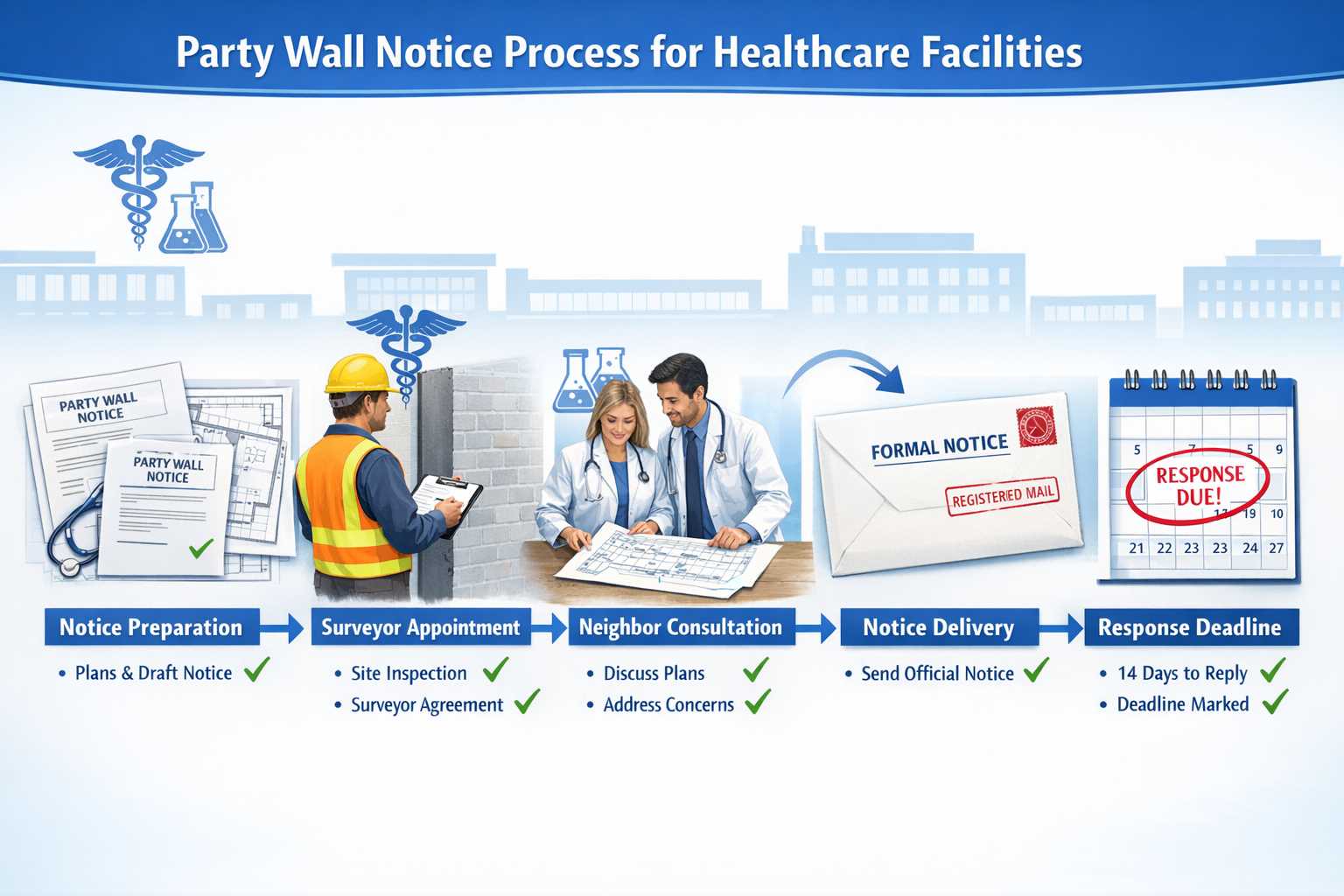
Party wall agreements serve as legal frameworks that protect both property owners when construction work affects shared structures. In healthcare contexts, these agreements take on additional significance due to the sensitive nature of medical operations and regulatory compliance requirements.
What Qualifies as Party Wall Work in Medical Facilities?
Party wall work encompasses any construction that affects walls, floors, or structures shared between two properties. For healthcare facilities expanding in 2026, common scenarios include:
- Building new examination rooms that extend to or beyond the boundary line with adjacent properties
- Excavating for basement laboratories within three meters of a neighboring building's foundation
- Structural modifications to shared walls between medical suites in multi-tenant buildings
- Installing heavy medical equipment requiring reinforcement of party walls or floors
- Adding floors or vertical expansions above existing clinic spaces with shared structural elements
The Party Wall etc. Act 1996 provides the legal foundation for these procedures in England and Wales, while similar statutes govern party wall matters in other jurisdictions. Healthcare providers must understand that these legal requirements apply regardless of the good relationship they may have with neighboring property owners.
Healthcare-Specific Considerations
Medical facilities face unique challenges that standard party wall agreements may not adequately address:
Infection Control Requirements 🦠
Construction dust, debris, and worker access can compromise sterile environments. Party wall agreements for healthcare expansions must specify containment measures, air quality monitoring, and cleaning protocols that meet Joint Commission standards[3].
Equipment Sensitivity
Diagnostic imaging machines, laboratory analyzers, and surgical equipment can malfunction when exposed to vibration, electromagnetic interference, or temperature fluctuations. Detailed schedules of condition must document baseline performance metrics for sensitive medical devices.
Operational Continuity
Unlike retail or office spaces, clinics cannot simply close during construction. Party wall agreements should establish construction hours that minimize patient disruption and include provisions for emergency access and utility protection.
Privacy and HIPAA Compliance
Construction workers accessing medical facilities must receive HIPAA training, and party wall awards should mandate confidentiality agreements, restricted access zones, and patient data protection measures[2].
The Party Wall Notice Process for Clinic and Lab Expansions
Navigating the notice process correctly prevents delays, reduces costs, and establishes clear expectations with neighboring property owners. Healthcare facilities planning expansions in 2026 should follow this systematic approach.
Step 1: Early Planning and Assessment
Begin party wall considerations at least 4-6 months before your planned construction start date. This timeline accommodates:
- Notice periods (typically 2 months for most work types)
- Surveyor appointment and agreement negotiations
- Potential dispute resolution
- Schedule of condition preparation
- Healthcare-specific documentation requirements
Engage an architect or structural engineer familiar with both healthcare construction and party wall procedures. They can identify which aspects of your expansion trigger notice requirements and help develop construction methods that minimize impact on neighbors.
Step 2: Serving Proper Party Wall Notices
The party wall notice you serve depends on your specific work type:
| Notice Type | When Required | Notice Period |
|---|---|---|
| Party Structure Notice | Work directly to an existing party wall or structure | 2 months |
| Line of Junction Notice | Building a new wall on or astride the boundary | 1 month |
| Adjacent Excavation Notice | Digging within 3-6 meters of neighboring foundations | 1 month |
Your notice must include:
✅ Detailed description of proposed works
✅ Architectural drawings and structural plans
✅ Anticipated start date
✅ Healthcare-specific impact assessments
✅ Contact information for your appointed surveyor
For comprehensive guidance on notice requirements, review our detailed resource on party wall act notices and how to respond.
Step 3: Appointing Qualified Surveyors
After serving notice, the neighboring owner (called the "adjoining owner") has 14 days to respond. Three scenarios may unfold:
Scenario A: Consent
The neighbor consents in writing to your proposed work. While this simplifies matters, healthcare facilities should still consider obtaining a basic party wall agreement to document access rights, working hours, and damage procedures.
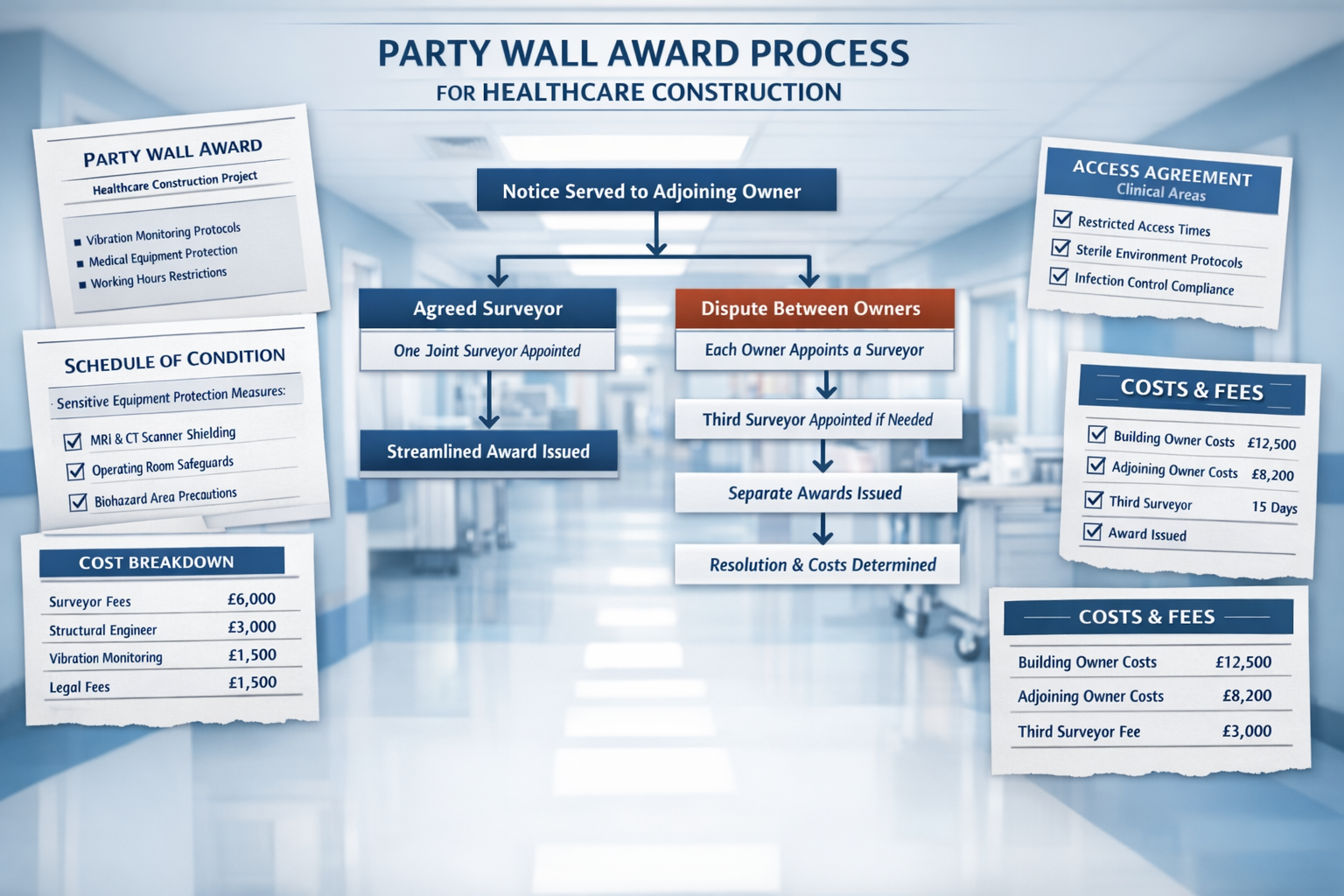
Scenario B: Agreed Surveyor
Both parties agree to appoint a single surveyor to prepare the party wall award. This approach reduces costs and streamlines the process. The agreed surveyor must act impartially and protect both parties' interests.
Scenario C: Separate Surveyors
Each party appoints their own surveyor. If disputes arise, the two surveyors may appoint a third surveyor to resolve disagreements. This approach provides maximum protection but increases costs.
For healthcare expansions, selecting surveyors with medical facility experience is crucial. They understand equipment sensitivity, infection control requirements, and regulatory compliance issues that general construction surveyors might overlook.
Consider location-specific expertise as well. If your clinic is expanding in London, for example, a party wall surveyor in Central London or party wall surveyor in West London brings valuable knowledge of local building patterns and jurisdiction-specific requirements.
Step 4: Preparing the Schedule of Condition
The schedule of condition documents the existing state of the neighboring property before construction begins. For healthcare party wall agreements, this process requires enhanced detail:
- Photographic evidence of all rooms adjacent to the party wall, including medical equipment
- Baseline measurements of vibration levels, temperature, and humidity in sensitive areas
- Equipment calibration records for diagnostic machines near the construction zone
- Structural surveys documenting existing cracks, settlement, or defects
- Air quality baselines for laboratories and sterile environments
This documentation protects both parties. The building owner can defend against false damage claims, while the adjoining owner has clear evidence if construction causes genuine harm.
Learn more about this critical process in our guide to schedules of condition.
Step 5: Negotiating the Party Wall Award
The party wall award is the legally binding document that governs the construction work. For Healthcare Party Wall Agreements: Managing Notices for Clinic and Lab Expansions in 2026, awards should address:
Construction Methodology
- Specific techniques to minimize vibration (e.g., hand digging near sensitive equipment)
- Dust containment systems meeting healthcare standards
- Noise limits during patient care hours
- Emergency shutdown procedures if issues arise
Access Provisions
- Designated entry points that avoid patient areas
- HIPAA training requirements for construction workers
- Escort protocols for workers accessing medical facilities
- Security badge and background check requirements
Timing and Scheduling
- Permitted construction hours (often restricted in healthcare settings)
- Blackout periods during high patient volume times
- Notice requirements for particularly disruptive activities
- Coordination with medical facility operations managers
Financial Protections
- Security deposits or performance bonds
- Insurance requirements and coverage limits
- Procedures for damage assessment and repair
- Cost allocation for shared expenses
Healthcare-Specific Clauses
- Infection control protocols and PPE requirements
- Equipment protection and recalibration provisions
- Patient privacy and confidentiality obligations
- Compliance with Joint Commission and state health department standards[3]
For detailed information about party wall awards, consult our comprehensive guide on party wall awards.
Managing Costs and Preventing Disputes in Healthcare Party Wall Agreements
Healthcare construction budgets are often tight, and unexpected party wall expenses can derail expansion plans. Understanding cost structures and dispute prevention strategies helps medical practice owners manage this aspect of their projects effectively.
Typical Party Wall Costs for Healthcare Facilities
Party wall expenses for clinic and lab expansions in 2026 generally include:
Surveyor Fees
- Agreed surveyor: £1,200-£2,500 for straightforward cases
- Separate surveyors: £2,000-£5,000+ per surveyor for complex healthcare projects
- Third surveyor (if needed): Additional £2,000-£4,000
Enhanced Documentation
- Healthcare-specific schedules of condition: £800-£2,000
- Equipment baseline testing: £500-£1,500
- Infection control assessments: £400-£1,000
Legal and Administrative
- Notice preparation and service: £200-£500
- Legal review of healthcare clauses: £800-£2,000
- Award registration and filing: £150-£400
Contingency Provisions
- Security deposits (typically 10-15% of construction value)
- Insurance premium increases
- Potential damage repairs
The building owner (the healthcare facility expanding) typically pays all reasonable party wall costs, including the adjoining owner's surveyor fees. However, strategic planning can minimize these expenses.
For practical cost management strategies, review our article on how to keep party wall costs down.
Dispute Prevention Strategies
Early Communication 💬
Before serving formal notices, meet with neighboring property owners to explain your expansion plans, address concerns, and build goodwill. For healthcare facilities, emphasizing your commitment to patient care continuity and minimal disruption can ease tensions.
Transparent Documentation
Provide comprehensive information about your construction methods, timeline, and safety measures. Healthcare providers can leverage their reputation for professionalism and regulatory compliance to build trust.
Proactive Problem-Solving
Anticipate potential issues and propose solutions before they become disputes. For example, if your lab expansion might generate vibration, offer to relocate sensitive equipment in the neighboring space temporarily or fund protective measures.
Professional Representation
Engage experienced surveyors and construction attorneys familiar with healthcare projects. Their expertise prevents procedural errors that often trigger disputes.
Flexible Scheduling
Healthcare facilities have unique operational patterns. Demonstrating flexibility about construction timing—avoiding peak patient hours or critical procedures—shows respect for neighbors and reduces friction.
When Disputes Arise
Despite best efforts, disagreements sometimes occur. Common healthcare party wall disputes include:
- Concerns about infection risk from construction dust
- Damage to sensitive medical equipment from vibration
- Patient privacy breaches by construction workers
- Excessive noise disrupting medical procedures
- Access disputes in multi-tenant medical buildings
When disputes emerge:
- Document everything – photographs, correspondence, incident reports
- Engage surveyors immediately to assess and mediate
- Consider alternative dispute resolution before litigation
- Maintain patient care continuity as the top priority
- Consult healthcare construction attorneys if necessary
The costs of party wall processes increase significantly when disputes escalate, making prevention the most cost-effective strategy.
Integrating Healthcare Compliance into Party Wall Agreements
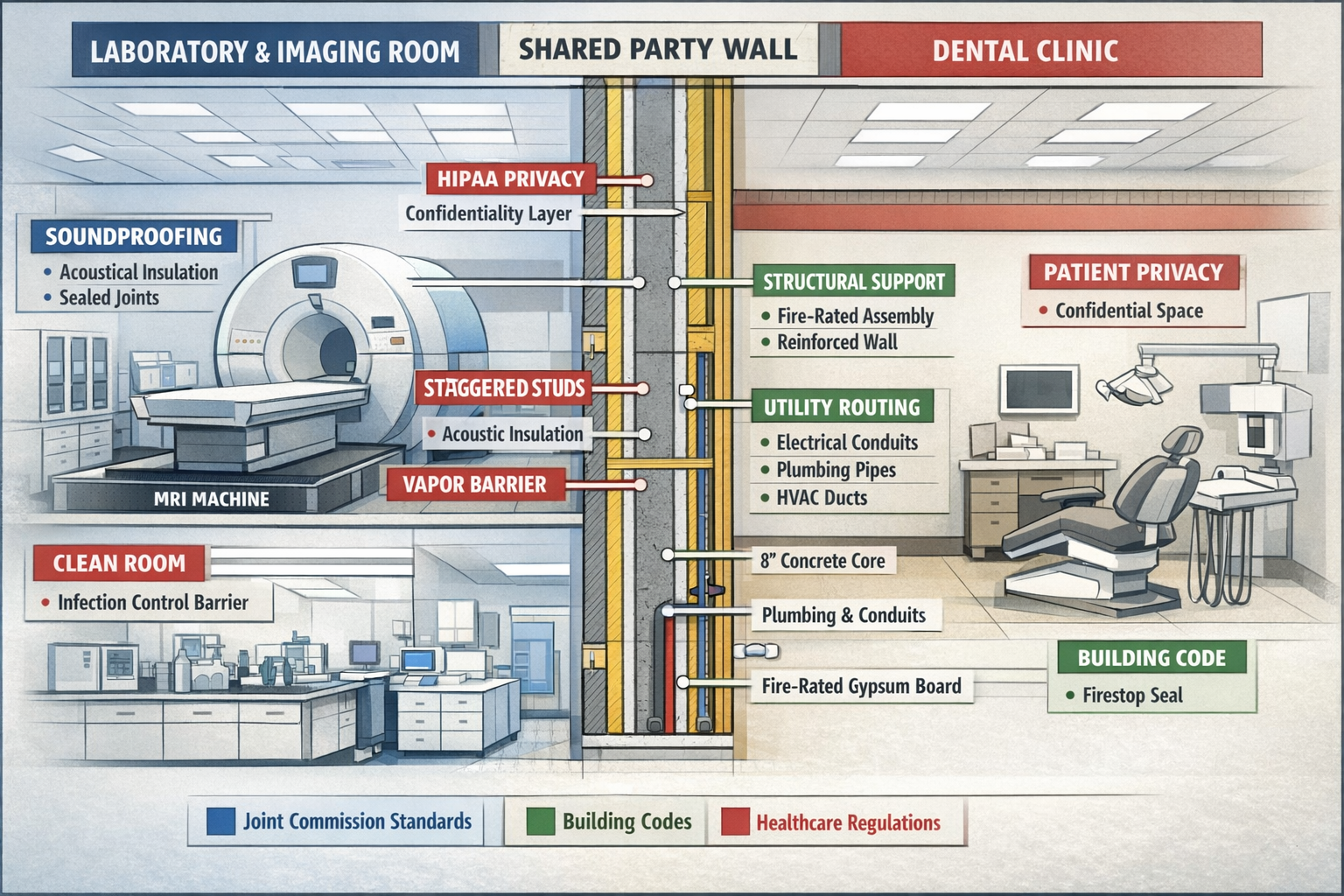
Healthcare Party Wall Agreements: Managing Notices for Clinic and Lab Expansions in 2026 must address multiple regulatory frameworks beyond standard building codes. Medical facilities operate under strict oversight, and party wall work can trigger compliance reviews.
HIPAA and Patient Privacy Requirements
The Health Insurance Portability and Accountability Act (HIPAA) imposes strict requirements on protecting patient health information. When construction workers access medical facilities during party wall work, healthcare providers must:
Implement Business Associate Agreements (BAAs)
Construction contractors and their workers who may encounter protected health information (PHI) must sign BAAs acknowledging their obligations under HIPAA[2].
Restrict Access to Patient Areas
Party wall awards should designate specific entry routes that avoid patient treatment areas, waiting rooms with visible patient information, and areas where medical records are stored or displayed.
Provide Privacy Training
All construction personnel accessing healthcare facilities should receive basic HIPAA privacy training, even if they won't directly handle patient information. This training should be documented and updated for 2026 regulatory changes[2].
Secure Data Systems
If party wall work affects areas with electronic health record systems or patient data storage, additional cybersecurity measures may be required, including temporary data relocation or enhanced physical security.
Joint Commission Accreditation Standards
For accredited healthcare facilities, party wall construction must comply with Joint Commission standards, which received significant updates recently[3]. Key considerations include:
Environment of Care Standards
Construction activities must maintain compliance with:
- Life Safety Code requirements
- Emergency management protocols
- Infection prevention and control standards
- Hazardous materials handling
- Utility system protection
Infection Control Risk Assessments (ICRAs)
Before party wall work begins, facilities must complete ICRAs that:
- Classify the construction type and risk level
- Identify vulnerable patient populations nearby
- Specify containment and barrier requirements
- Establish air quality monitoring protocols
- Define cleaning and disinfection procedures
Interim Life Safety Measures (ILSMs)
When party wall work affects fire barriers, exits, or life safety systems, facilities must implement temporary protective measures and document their effectiveness.
State and Local Healthcare Regulations
Beyond federal requirements, healthcare facilities must navigate state-specific regulations that may affect party wall agreements in 2026:
California Healthcare Facilities
California has implemented new reporting requirements for healthcare organizations, particularly those involving management services organizations (MSOs) and private equity ownership[1][9]. Facilities undergoing expansions should ensure party wall agreements don't create compliance issues with these reporting obligations.
Licensing and Certificate of Need
Some states require healthcare facilities to obtain approval before expanding services or square footage. Party wall work that adds clinical capacity may trigger these requirements, and construction should not begin until proper approvals are secured.
Infection Control Permits
Certain jurisdictions require special permits for construction in healthcare settings, particularly when work affects areas housing immunocompromised patients or sterile environments.
Building Code Compliance for Medical Facilities
Healthcare construction faces enhanced building code requirements compared to standard commercial projects. The 2026 Facility Guidelines Institute (FGI) codes include updated provisions for healthcare facilities[5] that may affect party wall work:
- Enhanced structural requirements for equipment loads
- Specialized HVAC and air pressure requirements
- Fire-rated assemblies and smoke barriers
- Accessibility standards for medical equipment
- Emergency power and backup system requirements
Party wall awards should reference these healthcare-specific codes and confirm that proposed work maintains compliance throughout construction and after completion.
Best Practices for Healthcare Party Wall Agreements in 2026
Drawing on current healthcare real estate trends and regulatory developments, these best practices help medical facilities successfully navigate party wall procedures during expansions.
Strategic Planning Recommendations
Align with Healthcare Real Estate Strategy
The healthcare real estate landscape in 2026 emphasizes outpatient facility growth, specialty clinic expansion, and laboratory modernization[6]. When planning party wall work, consider:
- Long-term expansion potential beyond the current project
- Integration with telehealth and hybrid care models
- Flexibility for future service line additions
- Market positioning and competitive differentiation
Engage Specialized Professionals Early
Assemble a team with healthcare construction expertise:
- Architects experienced in medical facility design
- Party wall surveyors familiar with healthcare requirements
- Construction managers with hospital/clinic project portfolios
- Healthcare attorneys who understand regulatory compliance
- Infection control specialists for ICRA assessments
Coordinate with Accreditation Cycles
Schedule party wall work to avoid Joint Commission surveys or state licensing inspections when possible. If construction must occur during accreditation periods, ensure all documentation is current and compliance measures are visibly implemented.
Operational Continuity Planning
Develop Comprehensive Communication Protocols
Establish clear communication channels between:
- Construction teams and clinical staff
- Building owner's surveyor and facility operations
- Contractors and infection control personnel
- Practice administrators and neighboring property owners
Create Patient Care Contingency Plans
Identify how party wall construction might affect patient services and develop backup plans:
- Alternative treatment room assignments
- Temporary equipment relocation procedures
- Patient notification and rescheduling protocols
- Emergency response modifications during construction
Implement Phased Construction Approaches
When feasible, phase party wall work to minimize operational disruption:
- Complete noisy/disruptive work during low patient volume periods
- Sequence construction to maintain access to critical equipment
- Schedule utility interruptions during off-hours or planned closures
- Coordinate with seasonal patient flow patterns
Documentation and Record-Keeping
Maintain Comprehensive Project Files
Healthcare party wall projects require meticulous documentation:
- All notices served and responses received
- Surveyor appointment letters and agreements
- Complete party wall awards with healthcare-specific clauses
- Schedules of condition with equipment baselines
- HIPAA training records for construction personnel
- Infection control assessments and monitoring results
- Incident reports and resolution documentation
- Final completion certificates and post-construction surveys
Establish Digital Documentation Systems
Use secure, HIPAA-compliant document management systems to organize party wall records. This facilitates:
- Quick retrieval during accreditation surveys
- Evidence production if disputes arise
- Coordination among multiple professional teams
- Long-term institutional knowledge preservation
Create Post-Construction Verification Protocols
After party wall work completes:
- Conduct final inspections with surveyors and neighbors
- Recalibrate affected medical equipment
- Verify infection control measures were effective
- Document any remaining punch-list items
- Obtain formal completion acknowledgments
- Update facility drawings and records
For template resources and documentation guidance, explore our sample party wall agreement template.
Common Challenges and Solutions for Medical Facility Expansions
Healthcare providers encounter unique obstacles when managing party wall procedures. Understanding these challenges and proven solutions helps facilities navigate the process successfully.
Challenge 1: Neighboring Property Owner Concerns About Infection Risk
The Problem:
Neighbors, particularly those in adjacent medical or dental practices, may fear that construction dust and debris will compromise their infection control protocols or create liability exposure.
The Solution:
- Conduct pre-construction meetings with infection control specialists from both facilities
- Implement hospital-grade containment barriers and negative air pressure systems
- Provide detailed construction methodologies emphasizing dust suppression
- Offer to fund air quality monitoring in the neighboring space
- Include specific infection control provisions in the party wall award
- Consider scheduling disruptive work during the neighbor's planned closures
Challenge 2: Vibration Sensitivity of Diagnostic Equipment
The Problem:
MRI machines, CT scanners, laboratory analyzers, and other precision medical equipment can malfunction or produce inaccurate results when exposed to construction vibration.
The Solution:
- Conduct pre-construction vibration baseline testing
- Establish vibration limits based on equipment manufacturer specifications
- Use low-vibration construction techniques (hand digging, specialized equipment)
- Install vibration monitoring systems with real-time alerts
- Develop protocols for immediate work stoppage if limits are exceeded
- Budget for equipment recalibration after construction completion
- Consider temporary equipment relocation for particularly sensitive devices
Challenge 3: Continuous Operation Requirements
The Problem:
Unlike retail or office spaces, many healthcare facilities operate 24/7 or have critical hours when construction noise and disruption are unacceptable.
The Solution:
- Map patient care schedules and identify low-impact time windows
- Negotiate extended construction hours during evenings or weekends
- Sequence work to minimize disruption during peak clinical times
- Establish emergency communication protocols for urgent construction needs
- Build schedule flexibility into the party wall award
- Consider premium payments to contractors for off-hours work
Challenge 4: Multi-Tenant Medical Building Complexities
The Problem:
Medical office buildings often house multiple practices with different specialties, patient populations, and operational requirements. Party wall work may affect numerous parties with varying concerns.
The Solution:
- Identify all potentially affected tenants early in the planning process
- Serve notices to all relevant parties, not just immediate neighbors
- Conduct building-wide informational meetings
- Coordinate with building management or property owners
- Address specialty-specific concerns (e.g., pediatric practices need different considerations than surgical centers)
- Consider master party wall agreements for building-wide projects
Challenge 5: Regulatory Compliance Documentation
The Problem:
Healthcare facilities must demonstrate ongoing compliance with multiple regulatory frameworks, and party wall work creates documentation burdens that clinical staff may not understand.
The Solution:
- Designate a compliance coordinator for the construction project
- Integrate party wall documentation into existing compliance management systems
- Train administrative staff on regulatory requirements specific to construction
- Establish review checkpoints with compliance officers throughout the project
- Maintain audit-ready documentation from project inception
- Engage consultants familiar with both party wall law and healthcare regulations
For additional guidance on specific notice types, review our resource on what is a party structure notice and how to serve it.
Future-Proofing Healthcare Party Wall Agreements
As healthcare delivery models evolve and regulatory landscapes shift, forward-thinking party wall agreements can provide flexibility for future needs.
Anticipating Future Expansion Needs
When negotiating party wall awards in 2026, consider provisions that facilitate future modifications:
Phased Expansion Rights
If your clinic's strategic plan includes multiple expansion phases, negotiate preliminary agreements for future work. This can streamline subsequent party wall procedures and lock in favorable terms.
Equipment Upgrade Allowances
Medical technology advances rapidly. Party wall agreements should contemplate future equipment installations that may require structural modifications or increased utility capacity.
Service Line Flexibility
Healthcare facilities frequently add or modify service lines based on market demand and reimbursement changes. Party wall awards can include general parameters for future modifications within certain scopes.
Adapting to Regulatory Changes
Healthcare regulations continue evolving. Recent developments affecting party wall considerations include:
Updated HIPAA Regulations
New HIPAA regulations address emerging privacy concerns and technological changes[2]. Party wall agreements should reference current standards while building in flexibility for future regulatory updates.
Joint Commission Standard Updates
The Joint Commission regularly revises accreditation standards[3]. Healthcare party wall awards should require compliance with "current" standards rather than citing specific versions that may become outdated.
State-Specific Healthcare Requirements
States increasingly regulate healthcare facility operations, ownership structures, and reporting requirements[1][9]. Party wall agreements should accommodate these evolving compliance obligations.
Technology Integration
Modern construction and healthcare delivery increasingly rely on technology that affects party wall considerations:
Digital Monitoring Systems
Install permanent monitoring systems during party wall work that provide ongoing data about structural performance, vibration levels, and environmental conditions. This protects against future disputes and supports predictive maintenance.
Building Information Modeling (BIM)
Utilize BIM technology to create detailed digital twins of party wall structures. This facilitates future planning and provides precise documentation for subsequent construction projects.
Telehealth Infrastructure
As telehealth continues growing, party wall work may need to accommodate enhanced telecommunications infrastructure, data centers, and technology equipment rooms.
Conclusion
Healthcare Party Wall Agreements: Managing Notices for Clinic and Lab Expansions in 2026 requires careful navigation of legal requirements, regulatory compliance, and operational sensitivities unique to medical facilities. As the healthcare construction sector continues its strong growth trajectory, medical practice owners and facility managers who master party wall procedures position themselves for successful expansions that protect patient care, maintain regulatory compliance, and preserve positive neighbor relationships.
The key to successful healthcare party wall management lies in early planning, professional expertise, and comprehensive documentation. By serving proper notices, appointing qualified surveyors, negotiating detailed awards, and integrating healthcare-specific provisions, medical facilities can expand confidently while minimizing disruption and controlling costs.
Actionable Next Steps
If your clinic or laboratory is planning an expansion in 2026:
- Assess your project scope to determine which party wall procedures apply
- Engage specialized professionals with healthcare construction experience at least 6 months before your planned start date
- Review regulatory requirements specific to your facility type, location, and accreditation status
- Initiate neighbor communication early to build goodwill and identify concerns
- Develop comprehensive documentation systems that support both party wall compliance and healthcare regulatory requirements
- Budget appropriately for party wall costs, including surveyors, enhanced documentation, and contingencies
- Integrate party wall timelines into your overall project schedule, accounting for notice periods and award negotiations
For expert guidance on your specific healthcare expansion project, consult with experienced party wall professionals who understand the unique intersection of construction law and medical facility requirements. Understanding the types of party wall works that apply to your project is an excellent starting point.
With proper planning and professional support, Healthcare Party Wall Agreements: Managing Notices for Clinic and Lab Expansions in 2026 becomes a manageable aspect of your facility growth strategy rather than an obstacle to your healthcare mission.
References
[1] California Msos New Requirements Coming For 2026 – https://jacksonllp.com/california-msos-new-requirements-coming-for-2026/
[2] New Hipaa Regulations – https://www.hipaajournal.com/new-hipaa-regulations/
[3] Joint Commission Standards Receive Significant Updates – https://www.ashe.org/joint-commission-standards-receive-significant-updates
[5] efamagazine – https://efamagazine.com/trends/2026-fgi-codes-what-you-need-to-know-about-changes-to-the-residential-codes/166141/
[6] Healthcare Real Estate Strategy In 2026 Navigating Hospital Growth Outpatient Demand And Compliance Risk – https://lpc.com/insights-research/healthcare-real-estate-strategy-in-2026-navigating-hospital-growth-outpatient-demand-and-compliance-risk/
[9] Recent California Laws Increase Scrutiny On – https://www.venable.com/insights/publications/2025/12/recent-california-laws-increase-scrutiny-on