


As climate patterns shift across the UK in 2026, property owners and developers face an emerging challenge that sits at the intersection of environmental engineering and property law. Climate-Resilient Foundations and Party Wall Implications: Preparing Notices for Frost Heave Risks has become a critical consideration for anyone planning construction work on shared boundaries. With increasingly unpredictable freeze-thaw cycles affecting soil stability, understanding how to properly notify adjoining owners about deeper, climate-adapted foundations is no longer optional—it's essential for legal compliance and structural integrity.
The changing climate demands that foundations extend deeper into the ground to reach stable soil layers unaffected by frost penetration. This engineering necessity triggers specific obligations under the Party Wall etc. Act 1996, particularly when construction affects shared walls or boundaries. Property owners must navigate both the technical requirements of frost-resistant design and the legal protocols for party wall notices.
Key Takeaways
- 🏗️ Deeper foundations required for climate resilience often trigger Section 6 notice requirements under the Party Wall Act when excavating near neighbouring properties
- 📋 Proactive notice preparation must include detailed soil assessments, frost depth calculations, and climate-specific foundation designs to satisfy legal and engineering standards
- 🔍 Professional surveyor involvement ensures that party wall awards contain appropriate conditions for monitoring, protecting adjoining structures during deeper excavation work
- ❄️ Frost heave risk assessment should incorporate local climate data, soil composition analysis, and future climate projections to determine appropriate foundation depths
- ⚖️ Legal compliance requires understanding how climate-driven foundation changes intersect with party wall legislation, particularly for excavation and underpinning work
Understanding Frost Heave and Its Impact on Foundations
What Is Frost Heave?
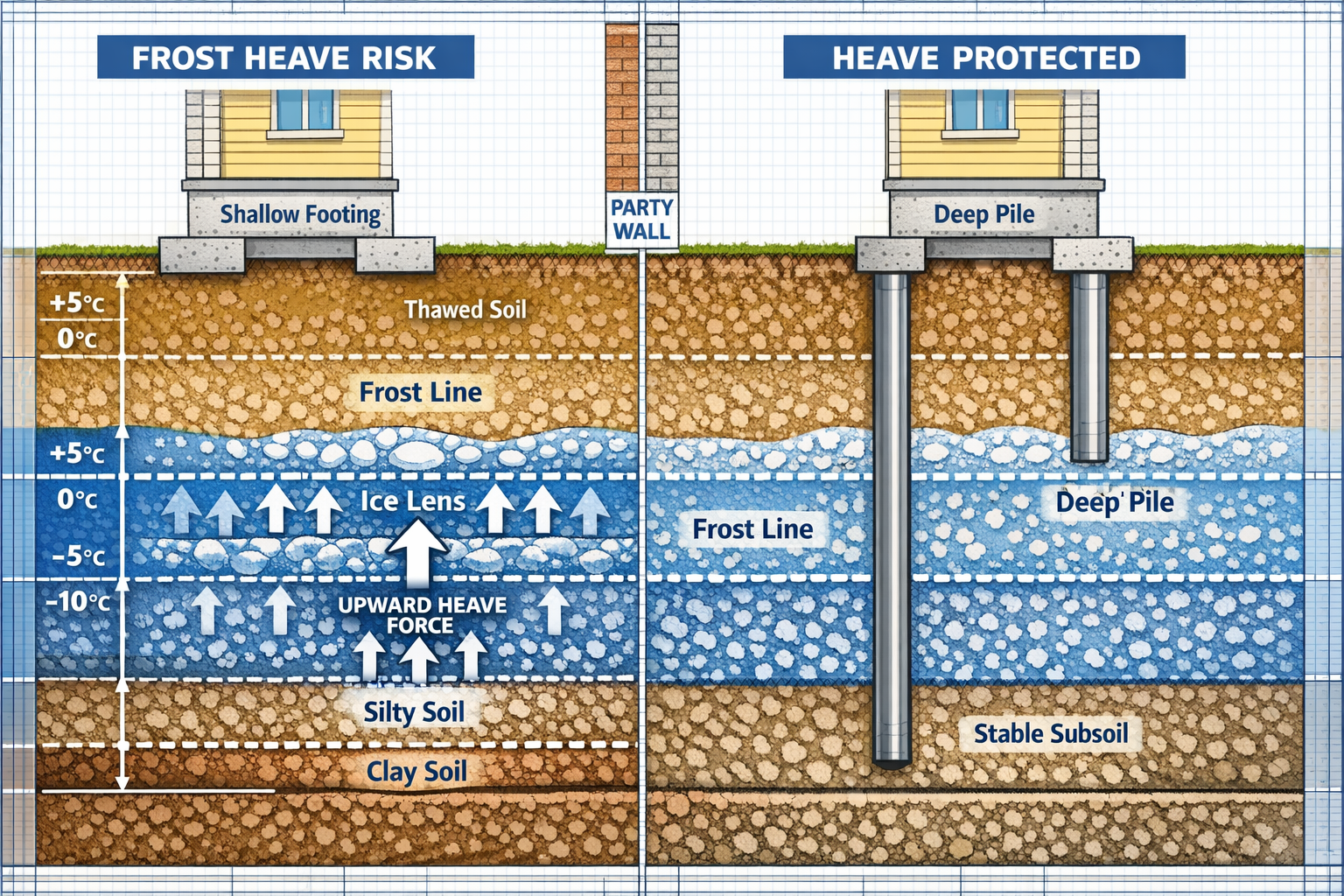
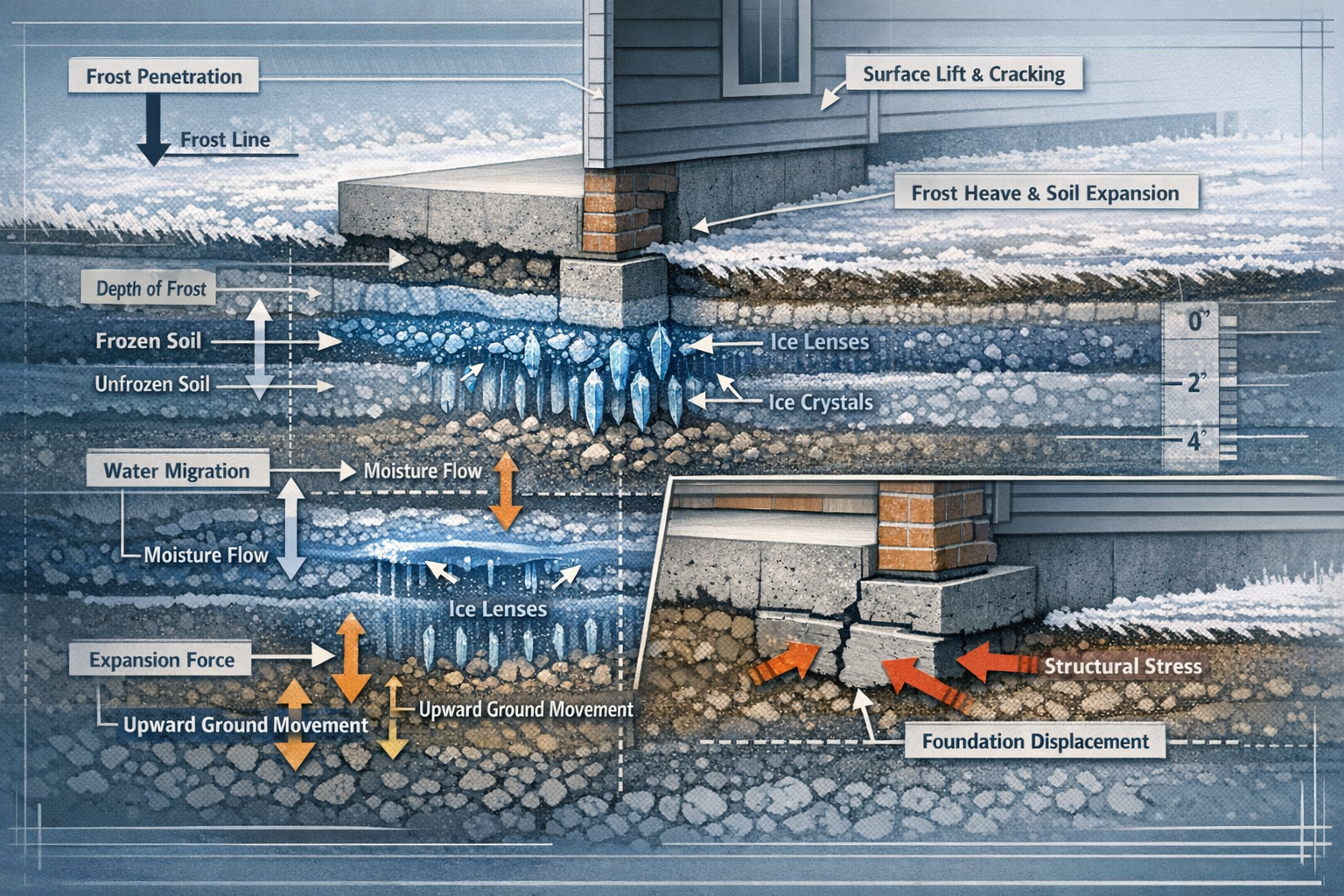
Frost heave occurs when moisture in soil freezes and expands, creating upward pressure that can lift and damage building foundations. This phenomenon is particularly problematic in clay-rich soils that retain water. As temperatures drop below freezing, water within soil pores transforms into ice crystals, increasing in volume by approximately 9%. This expansion generates significant upward forces—sometimes exceeding 50,000 pounds per square foot—capable of cracking foundations, displacing walls, and compromising structural integrity.
The process doesn't happen uniformly. Ice lenses form in susceptible soils, creating layers of pure ice that push soil particles apart. When spring arrives and thawing begins, the soil settles unevenly, leading to differential settlement that can be even more damaging than the initial heave.
Climate Change and Frost Penetration Patterns
Traditional foundation design relied on historical frost depth data—the maximum depth to which soil freezes in a given region. However, climate change has disrupted these predictable patterns. In 2026, engineers face:
- Erratic freeze-thaw cycles that subject foundations to repeated stress
- Deeper frost penetration during extreme cold snaps
- Extended periods of soil saturation before freezing events
- Regional variations that make historical data less reliable
These changing conditions mean that foundations designed using decades-old frost depth tables may no longer provide adequate protection. The solution often requires excavating deeper to reach soil layers that remain stable year-round, regardless of surface temperature fluctuations.
Soil Types and Frost Susceptibility
Not all soils pose equal frost heave risks. Understanding soil composition is crucial for both foundation design and party wall notice preparation:
| Soil Type | Frost Heave Risk | Typical Characteristics |
|---|---|---|
| Gravel and Sand | Low | Good drainage, minimal water retention |
| Silty Sand | Moderate | Some water retention, variable risk |
| Silt and Clay | High | Poor drainage, significant expansion potential |
| Organic Soils | Very High | High water content, unstable when frozen |
Professional geotechnical assessments identify soil composition and moisture levels, providing the foundation for both engineering decisions and the technical documentation required in party wall notices.
Party Wall Act Requirements for Climate-Resilient Foundation Work
Section 6 Notices and Excavation Near Boundaries
When climate-resilient foundation design requires deeper excavation near a shared boundary, the Party Wall etc. Act 1996 comes into play. Section 6 specifically addresses excavation within three or six meters of a neighbouring structure, depending on depth and proximity.
Building owners must serve a Section 6 notice when planning to:
- Excavate within 3 meters of a neighbour's structure if going deeper than its foundation
- Excavate within 6 meters if the excavation extends below a 45-degree plane from the bottom of the neighbour's foundation
Climate-driven foundation changes frequently trigger these requirements. A foundation that once extended 1.2 meters below ground might now need to reach 1.8 meters or deeper to stay below the frost line—potentially crossing the threshold that requires formal notification.
Preparing Comprehensive Notices for Frost-Related Foundation Changes
A properly prepared notice for climate-resilient foundation work must go beyond standard templates. It should include:
Essential Technical Information:
- Current and proposed foundation depths with justification
- Soil assessment results showing frost susceptibility
- Climate data supporting the need for deeper foundations
- Engineering calculations for frost penetration depth
- Proposed construction methodology and timeline
- Protective measures for the adjoining property
Documentation Requirements:
- Detailed plans showing excavation extent and proximity to party wall
- Cross-sectional drawings illustrating foundation depth relative to neighbour's structure
- Geotechnical survey results
- Structural engineer's specifications
- Proposed monitoring and protection protocols
The notice must clearly explain why deeper foundations are necessary. Adjoining owners are more likely to consent when they understand that climate-resilient design protects both properties from future frost damage. For guidance on the notice process, review our resource on party wall act notices and how to respond.
The Role of Party Wall Surveyors in Climate-Adaptive Construction
Professional surveyors play a crucial role in navigating Climate-Resilient Foundations and Party Wall Implications: Preparing Notices for Frost Heave Risks. Their expertise ensures that:
✅ Notices contain sufficient technical detail to satisfy both legal requirements and engineering standards
✅ Soil assessments are properly interpreted and communicated to all parties
✅ Party wall awards include appropriate conditions for monitoring ground movement during excavation
✅ Protective measures are specified to prevent damage to adjoining structures
✅ Dispute resolution proceeds efficiently if disagreements arise
When frost heave risks necessitate deeper foundations, surveyors can recommend specific award conditions such as:
- Pre-construction condition surveys documenting existing cracks or settlement
- Real-time monitoring of ground movement during excavation
- Vibration limits for equipment operating near party walls
- Temporary support requirements for adjacent foundations
- Post-construction inspections to verify no damage occurred
Understanding types of party wall works helps property owners recognize when professional surveyor involvement becomes necessary.
Implementing Climate-Resilient Foundation Strategies with Proper Party Wall Compliance
Engineering Solutions for Frost Heave Prevention
Modern foundation engineering offers several approaches to combat frost heave while maintaining party wall compliance:
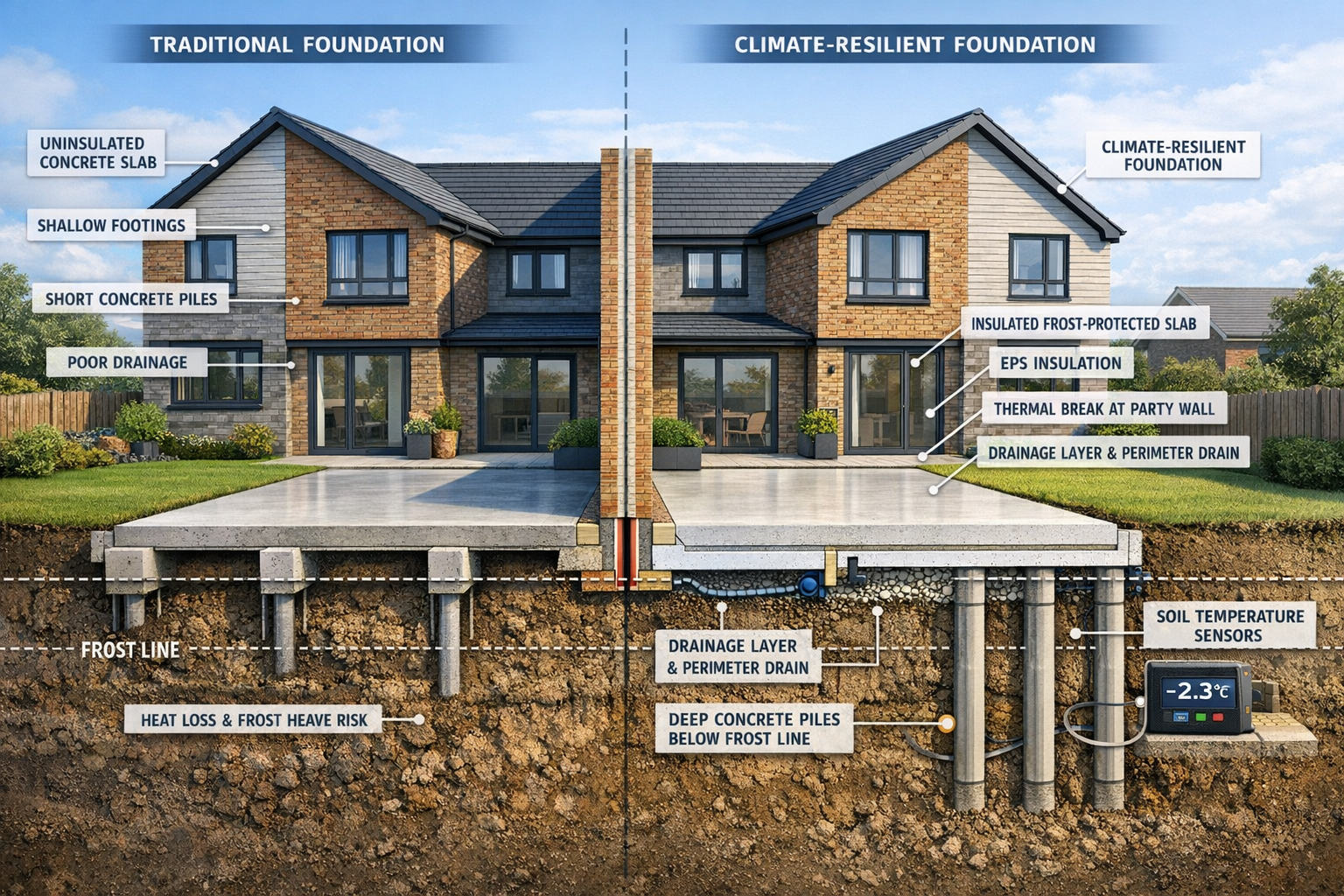
1. Frost-Protected Shallow Foundations (FPSF)
This innovative approach uses insulation to prevent frost penetration rather than simply excavating below it. Horizontal insulation boards extend outward from the foundation, keeping the soil beneath warmer. While this reduces excavation depth, it may still trigger party wall requirements if insulation extends near or under a neighbour's property.
2. Deep Foundation Systems
Traditional deep foundations—including piles, piers, and caissons—extend well below the frost line. These systems often require Section 6 notices due to their depth and proximity to adjoining structures. The notice must detail:
- Pile or pier locations and depths
- Installation methods (driven, bored, or helical)
- Potential vibration or ground disturbance
- Protection measures for neighbouring foundations
3. Heated Foundations
Some high-value properties incorporate heating elements that prevent soil freezing. While these systems may allow shallower foundations, they introduce ongoing energy costs and maintenance requirements that should be disclosed in party wall documentation.
4. Drainage and Moisture Control
Since frost heave requires both freezing temperatures and water, comprehensive drainage systems reduce risk. French drains, foundation wraps, and proper grading can minimize moisture accumulation. These measures may extend into areas requiring boundary wall considerations.
Coordinating Soil Assessments with Party Wall Procedures
Effective management of Climate-Resilient Foundations and Party Wall Implications: Preparing Notices for Frost Heave Risks requires coordinating geotechnical investigation with legal notification:
Timeline Integration:
-
Preliminary soil assessment (4-6 weeks before notice)
- Identify soil composition and frost susceptibility
- Determine appropriate foundation depth
- Calculate excavation extent
-
Engineering design (2-4 weeks before notice)
- Specify foundation type and construction method
- Plan protective measures for adjoining properties
- Prepare detailed drawings
-
Notice preparation and service (minimum 2 months before work)
- Compile technical documentation
- Serve formal notices to adjoining owners
- Allow statutory response period
-
Surveyor appointment and award (4-8 weeks)
- Appoint party wall surveyors if needed
- Negotiate award conditions
- Finalize monitoring protocols
-
Construction with monitoring (project duration)
- Implement specified protective measures
- Conduct required monitoring
- Document compliance
This coordinated approach prevents delays and ensures all parties have the information needed to make informed decisions. Details about the financial aspects can be found in our guide on costs of party wall procedures.
Award Conditions Specific to Climate-Resilient Construction
Party wall awards for frost-resilient foundation work should include conditions that address unique risks:
Ground Movement Monitoring:
- Baseline surveys before excavation begins
- Regular monitoring during construction
- Trigger levels that halt work if excessive movement occurs
- Post-construction verification surveys
Soil Stabilization Requirements:
- Temporary support for excavations deeper than standard
- Dewatering protocols if groundwater is encountered
- Backfill specifications ensuring proper compaction
- Frost protection measures during construction
Seasonal Considerations:
- Restrictions on excavation during freeze-thaw periods
- Requirements for temporary frost protection
- Extended monitoring periods spanning multiple seasons
- Provisions for addressing delayed settlement
Climate Data Documentation:
- Requirement to share climate projections used in design
- Justification for foundation depth based on future conditions
- Provisions for design modifications if conditions change
- Long-term monitoring agreements for unprecedented climate events
These specialized conditions protect both the building owner's investment in climate-resilient construction and the adjoining owner's property from construction-related damage. More information about award specifics is available in our party wall awards resource.
Best Practices for Property Owners and Developers
Early Engagement with Neighbours
Proactive communication significantly improves outcomes when dealing with Climate-Resilient Foundations and Party Wall Implications: Preparing Notices for Frost Heave Risks. Before serving formal notices:
- Explain the climate-related necessity for deeper foundations
- Share soil assessment results demonstrating frost heave risk
- Discuss how the work protects both properties
- Address concerns about construction impact
- Offer to coordinate work with any planned improvements on their property
This approach builds goodwill and often results in consent rather than disputes, reducing both timeline and costs.
Selecting Qualified Professionals
Climate-resilient foundation work requires expertise in multiple disciplines:
Geotechnical Engineers with experience in:
- Frost heave assessment and mitigation
- Climate change impact on foundation design
- Local soil conditions and seasonal variations
Structural Engineers capable of:
- Designing foundations for changing climate conditions
- Specifying appropriate construction methods
- Calculating loads and safety factors for extreme conditions
Party Wall Surveyors knowledgeable about:
- Section 6 excavation requirements
- Climate-related foundation modifications
- Technical documentation standards
- Dispute resolution procedures
Verify that professionals have relevant experience with both climate-adaptive construction and party wall procedures in your specific region.
Documentation and Record-Keeping
Comprehensive documentation protects all parties:
📄 Before Construction:
- Soil investigation reports
- Climate data and frost depth calculations
- Foundation design specifications
- Photographic condition surveys
- Served notices and responses
- Party wall awards
📄 During Construction:
- Daily work logs
- Monitoring data (ground movement, vibration)
- Photographic progress documentation
- Any variations from approved plans
- Communication records with neighbours
📄 After Construction:
- Final inspection reports
- Post-construction condition surveys
- As-built drawings
- Warranty and maintenance information
- Long-term monitoring schedules
This documentation proves compliance, facilitates future work, and provides evidence if disputes arise years later.
Cost Management Strategies
Climate-resilient foundations and associated party wall procedures involve additional costs. Strategies to manage expenses include:
- Early planning to avoid rushed decisions and premium pricing
- Combined soil assessments serving both engineering and party wall documentation needs
- Agreed surveyor appointments where both parties use one surveyor (when appropriate)
- Efficient communication reducing surveyor time spent on disputes
- Bundled work addressing multiple properties simultaneously for economy of scale
For detailed cost considerations, consult our guide on keeping party wall costs down.
Regional Considerations Across London
Frost heave risk and soil conditions vary significantly across London's diverse geology. Understanding regional differences helps in preparing appropriate notices:
North London areas often feature London Clay, which is highly susceptible to frost heave when saturated. Properties in these areas may require particularly deep foundations or comprehensive drainage solutions.
South London presents varied geology including clay, sand, and gravel deposits. Localized soil assessments are essential, as conditions can change dramatically within short distances.
East London includes areas with high water tables and alluvial soils near the Thames. Frost heave risk combines with settlement concerns, requiring integrated foundation solutions.
West London features both clay-rich areas and better-draining soils. Historic properties may have shallow foundations requiring careful consideration when nearby new construction goes deeper.
Central London presents unique challenges with closely spaced buildings, complex party wall arrangements, and historic structures. Climate-resilient foundation work requires exceptional care and detailed party wall procedures.
Regional party wall surveyors bring valuable local knowledge to these challenges. Consider consulting specialists familiar with your area's specific conditions.
Future-Proofing Your Property
Anticipating Further Climate Change
Foundation design in 2026 must consider not just current conditions but projected changes over a building's lifespan:
Design for Resilience:
- Use conservative frost depth projections accounting for extreme events
- Incorporate flexibility for future modifications
- Install monitoring systems for long-term observation
- Document design assumptions for future owners
Adaptive Strategies:
- Design drainage systems with excess capacity
- Plan for potential foundation enhancement
- Consider modular approaches allowing future upgrades
- Maintain relationships with professional advisors for ongoing consultation
Updating Party Wall Awards for Changing Conditions
As climate patterns continue evolving, party wall awards may need updating:
- Review clauses allowing for design modifications based on new climate data
- Long-term monitoring provisions extending beyond typical construction periods
- Reopening mechanisms if unprecedented conditions emerge
- Shared responsibility frameworks for addressing climate impacts affecting multiple properties
These forward-looking provisions acknowledge the uncertainty inherent in climate change while providing frameworks for cooperative responses.
Conclusion
Climate-Resilient Foundations and Party Wall Implications: Preparing Notices for Frost Heave Risks represents a critical intersection of environmental adaptation and property law that every building owner must navigate in 2026. As climate patterns shift and frost heave risks evolve, the traditional approaches to foundation design and party wall notification require thoughtful updates.
Key actions for property owners include:
- Conduct comprehensive soil assessments early in the planning process to understand frost susceptibility and determine appropriate foundation depths
- Engage qualified professionals—geotechnical engineers, structural engineers, and experienced party wall surveyors—who understand both climate-resilient design and legal requirements
- Prepare detailed Section 6 notices that clearly explain the climate-related necessity for deeper foundations, supported by technical data and engineering specifications
- Communicate proactively with adjoining owners, building understanding and cooperation rather than relying solely on legal processes
- Ensure party wall awards include appropriate conditions for monitoring, protection, and long-term oversight specific to climate-adaptive construction
- Document everything from initial soil tests through final inspections, creating a comprehensive record that protects all parties
The changing climate demands that we build differently, with foundations designed for conditions our predecessors never anticipated. By understanding how these engineering requirements intersect with party wall legislation, property owners can protect their investments while maintaining positive relationships with neighbours and full legal compliance.
Whether you're planning a new extension, underpinning existing foundations, or developing a new property, addressing frost heave risks through proper foundation design and meticulous party wall procedures is essential. The time invested in proper soil assessments, detailed notices, and professional surveyor guidance pays dividends in structural integrity, legal compliance, and neighbourly relations.
For assistance with your specific project, consider consulting specialists who understand both the technical and legal dimensions of climate-resilient construction. The complexity of these intersecting requirements makes professional guidance not just valuable but essential for successful project outcomes.
Start your journey toward climate-resilient construction with proper party wall compliance by reviewing our comprehensive resources on party wall procedures and connecting with experienced professionals who can guide your specific project.