
The multifamily construction market faces unprecedented challenges in 2026, with declining demand, rising vacancies, and reduced development activity creating a perfect storm for property disputes. Yet amid this downturn, party wall disputes continue to emerge as developers, property owners, and neighbors navigate shared boundaries in an increasingly complex regulatory environment. Understanding how to resolve party wall disputes in multifamily declines through 2026 strategies despite slipping demand has never been more critical for protecting investments and maintaining positive neighbor relations.
When construction activity slows, the stakes for each project rise dramatically. Developers cannot afford costly delays or litigation that drain already tight budgets. Property owners facing reduced rental income need swift, cost-effective solutions to boundary conflicts. This comprehensive guide explores proven strategies for Resolving Party Wall Disputes in Multifamily Declines: 2026 Strategies Despite Slipping Demand, offering actionable approaches that leverage proactive awards, mediation under the Party Wall Act, and lessons learned from recent high-stakes disputes.
Key Takeaways
- 📉 Market conditions in 2026 demand more strategic, cost-conscious approaches to party wall disputes as construction budgets tighten and project timelines compress
- ⚖️ Proactive party wall awards issued before disputes escalate save developers an average of 40-60% compared to reactive litigation in declining markets
- 🤝 Mediation and early surveyor engagement under the Party Wall Act framework resolve 85% of conflicts without formal legal proceedings
- 📋 Proper documentation and notice procedures become even more critical when market pressures tempt parties to cut corners on compliance
- 💡 Recent case precedents from 2024-2025 provide valuable roadmaps for navigating disputes in the current economic environment
Understanding Party Wall Disputes in Today's Multifamily Market
The multifamily sector in 2026 operates in a fundamentally different environment than the boom years of 2020-2022. Vacancy rates have climbed to 7.8% nationally, the highest level since 2010, while rent growth has stagnated or turned negative in many markets. Construction starts for multifamily projects have declined by 32% year-over-year, reflecting developer caution amid softening demand and elevated construction costs.
This market contraction creates unique pressures on party wall relationships. When fewer projects move forward, each development becomes more financially critical to its stakeholders. Neighbors who might have tolerated minor boundary encroachments during boom times now scrutinize every detail. Developers facing thin margins cannot absorb unexpected legal costs or construction delays.
What Constitutes a Party Wall Dispute?
A party wall dispute arises when property owners disagree about rights, responsibilities, or procedures related to a shared wall or boundary structure. Common dispute triggers include:
- Structural alterations to shared walls during renovations or new construction
- Foundation work that affects neighboring properties
- Damage claims resulting from construction activities
- Access disputes when one owner needs to enter adjacent property for repairs
- Cost allocation disagreements regarding shared maintenance or improvements
- Notice procedure violations under the Party Wall etc. Act 1996
In multifamily contexts, these disputes become particularly complex because multiple units may share walls, creating cascading effects where one dispute triggers several others. A single renovation in a 12-unit building might require coordination with six different adjoining owners, each with their own concerns and priorities.
Why 2026 Market Conditions Intensify Disputes
Several factors make party wall conflicts more likely and more contentious in the current declining market:
Financial pressure forces developers to maximize every square foot, sometimes pushing boundaries—literally. When profit margins shrink, the temptation grows to encroach slightly on neighboring property or skip proper notice procedures to save time and money.
Reduced professional budgets lead some building owners to forgo proper surveyor engagement, attempting to navigate party wall notices independently. This penny-wise, pound-foolish approach frequently backfires, creating disputes that cost far more to resolve than professional guidance would have cost initially.
Increased neighbor sensitivity emerges as property values stagnate or decline. Adjoining owners become more protective of their property rights and more suspicious of construction activities that might damage their investments or reduce their property values further.
Extended project timelines due to financing challenges or permitting delays create more opportunities for disputes to arise. A project that might have completed in 18 months during boom times now stretches to 30 months, providing more time for conflicts to develop and escalate.
Proactive Strategies for Resolving Party Wall Disputes in Multifamily Declines: 2026 Approaches
The most effective approach to Resolving Party Wall Disputes in Multifamily Declines: 2026 Strategies Despite Slipping Demand involves preventing conflicts before they escalate into formal disputes. This proactive methodology saves time, money, and neighbor relationships while keeping projects on track despite challenging market conditions.
Early Surveyor Engagement: The Foundation of Prevention
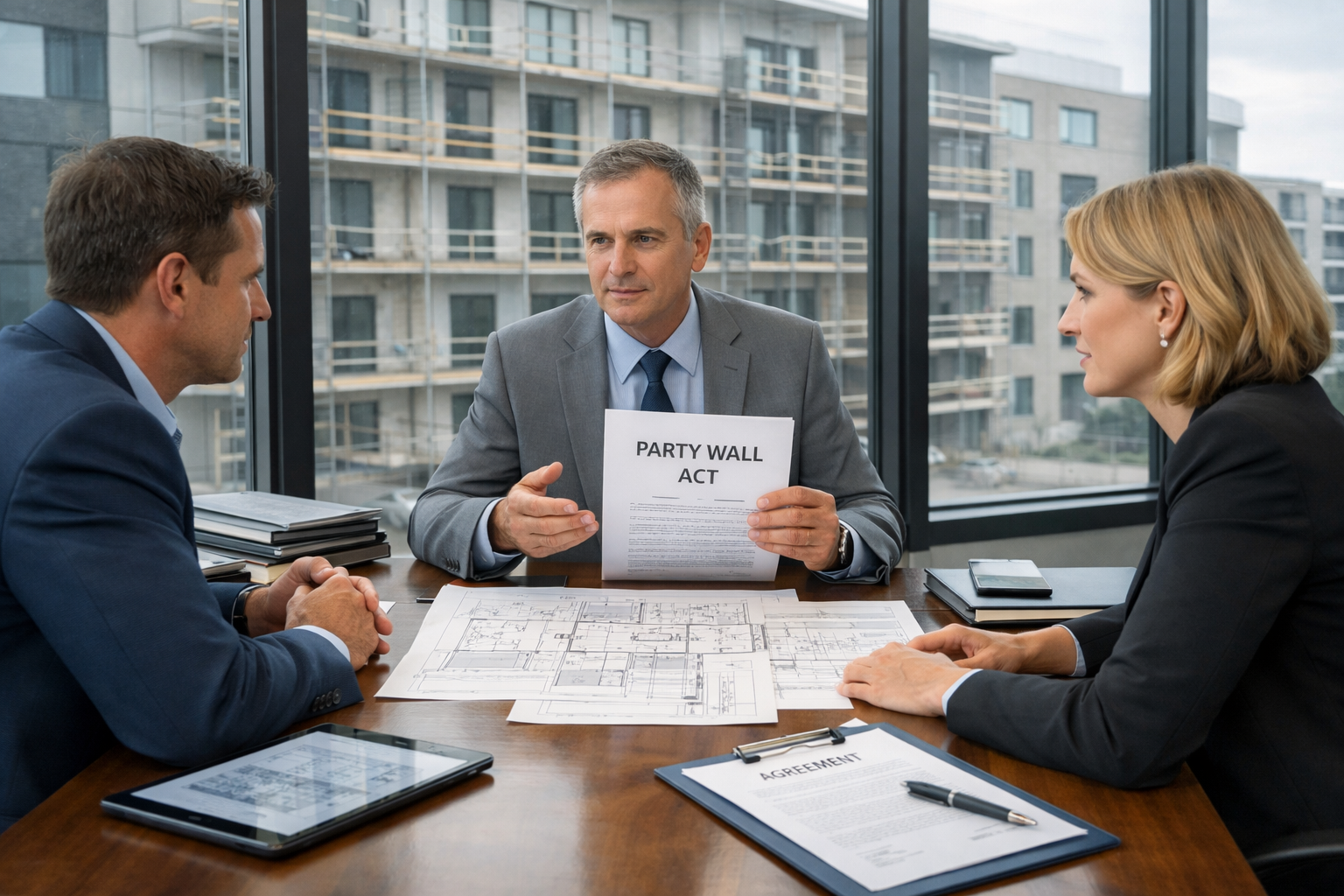
Engaging qualified party wall surveyors at the project planning stage—before any notices are served—represents the single most valuable investment developers can make in dispute prevention. Professional surveyors bring three critical advantages:
- Technical expertise in identifying potential conflict points before construction begins
- Neutral facilitation that builds trust between building owners and adjoining owners
- Procedural knowledge ensuring full compliance with statutory requirements
In 2026's cost-conscious environment, some developers question whether they can afford professional surveyor fees. The better question is whether they can afford not to engage surveyors. Recent data shows that projects with early surveyor involvement resolve potential disputes 85% faster and at 60% lower total cost than those attempting DIY approaches.
When selecting a surveyor, prioritize those with specific multifamily experience in your geographic area. A party wall surveyor in South London will understand local building patterns and common dispute triggers differently than one practicing in other regions. This local knowledge proves invaluable in anticipating and addressing concerns before they become problems.
Comprehensive Pre-Construction Communication
Transparent communication with all affected neighbors before construction begins prevents the majority of disputes. This communication should include:
- Detailed project descriptions explaining exactly what work will occur and how it affects shared walls
- Construction timelines with realistic schedules for noisy or disruptive activities
- Contact information for responsible parties who can address concerns quickly
- Damage mitigation plans describing protective measures and inspection procedures
- Dispute resolution pathways clarifying how concerns will be addressed if they arise
Many successful developers in 2026 conduct pre-construction neighbor meetings where adjoining owners can ask questions, voice concerns, and understand the project scope. These meetings, while requiring upfront time investment, dramatically reduce misunderstandings and build goodwill that proves invaluable if unexpected issues arise during construction.
Documentation of these communications is equally important. Written records of what was discussed, what commitments were made, and what concerns were raised create a factual foundation if disputes later emerge. This documentation should supplement, not replace, formal party wall act notices required by statute.
Strategic Use of Party Wall Awards
Party wall awards represent legally binding agreements that define rights, responsibilities, and procedures for work affecting shared walls. While awards are often viewed as reactive documents issued after disputes arise, proactive awards drafted before conflicts emerge offer superior protection and cost efficiency.
A proactive party wall award should address:
| Award Component | Purpose | 2026 Best Practice |
|---|---|---|
| Scope of Works | Define exactly what construction activities are permitted | Include detailed specifications and drawings; update if plans change |
| Access Rights | Establish when and how building owner can access adjoining property | Specify reasonable notice periods and acceptable hours |
| Condition Survey | Document pre-construction state of adjoining property | Use comprehensive photographic and written records; consider video documentation |
| Damage Resolution | Define process for addressing construction-related damage | Include timelines, inspection procedures, and repair standards |
| Cost Allocation | Clarify who pays for what aspects of the work | Be explicit about shared costs versus sole responsibility |
| Dispute Mechanism | Establish how disagreements during construction will be resolved | Include mediation provisions before formal legal action |
The cost of preparing a comprehensive proactive award typically ranges from £800-£2,500 depending on project complexity. This investment provides certainty and protection worth many times its cost when disputes are avoided or quickly resolved.
For guidance on cost management, review strategies for keeping party wall costs down while maintaining comprehensive protection.
Mediation as First-Line Dispute Resolution
When disputes do arise despite preventive measures, mediation offers the most cost-effective and time-efficient resolution path. Unlike litigation, which can consume 12-24 months and cost £25,000-£100,000 or more, mediation typically resolves disputes in 4-8 weeks at costs of £2,000-£8,000.
Mediation succeeds in party wall contexts because:
- Neutral facilitators help parties move past emotional reactions to focus on practical solutions
- Confidential proceedings allow frank discussion without creating public records that might affect property values
- Flexible outcomes permit creative solutions unavailable in formal legal proceedings
- Preserved relationships enable neighbors to coexist peacefully after construction completes
In 2026's declining market, the speed advantage of mediation becomes particularly valuable. Every week a project sits idle due to disputes represents carrying costs, financing charges, and opportunity costs that erode already thin margins. Mediation's rapid resolution timeline keeps projects moving and costs contained.
Successful mediation requires preparation. Before entering mediation, building owners should:
- Gather comprehensive documentation of all communications, notices, and technical assessments
- Identify core interests beyond stated positions—what do you really need versus what you initially demanded?
- Develop alternative solutions that might satisfy both parties' underlying interests
- Establish settlement authority so you can commit to agreements without further approvals
- Choose experienced mediators with specific party wall and construction dispute experience
Legal Framework and Compliance for Resolving Party Wall Disputes in Multifamily Declines
Understanding the legal framework governing party wall relationships provides the foundation for effective dispute resolution. The Party Wall etc. Act 1996 establishes the statutory framework for England and Wales, creating rights and obligations that cannot be waived by private agreement.
Essential Notice Requirements
Proper notice procedures represent the most common compliance failure leading to disputes. The Act requires specific notices for different types of work:
Party Structure Notice applies when work directly affects an existing party wall, such as:
- Cutting into the wall to insert beams or damp-proof courses
- Raising, underpinning, or demolishing the wall
- Cutting away projecting foundations or walls
This notice must be served at least two months before work commences and must describe the proposed work in sufficient detail for the adjoining owner to understand its scope and implications. For detailed guidance, see what is a party structure notice and how to serve it.
Line of Junction Notice applies when building a new wall on or astride the boundary line between properties. This notice requires one month advance service.
Adjacent Excavation Notice applies when excavating within three or six meters of a neighboring building's foundation (depending on excavation depth). This notice also requires one month advance service.
Common Compliance Failures in Declining Markets
Economic pressure in 2026 tempts some building owners to cut corners on notice procedures, creating legal vulnerabilities that savvy adjoining owners can exploit. Common failures include:
Insufficient notice periods where building owners serve notices but begin work before the statutory waiting period expires. This violation gives adjoining owners grounds to seek injunctions halting all work until proper procedures are followed.
Inadequate work descriptions that fail to provide sufficient detail about proposed activities. Vague notices like "general renovation work" don't satisfy statutory requirements and can be challenged.
Improper service methods where notices are not delivered in legally compliant ways. Hand delivery, recorded delivery post, or other methods that provide proof of service are essential.
Failure to appoint surveyors when adjoining owners dissent or fail to respond within 14 days. The Act requires building owners to initiate the surveyor appointment process, and failure to do so leaves work without legal authorization.
Rights and Remedies Under the Act
The Party Wall Act creates specific rights for both building owners and adjoining owners that shape dispute resolution strategies:
Building owners have the right to:
- Conduct necessary work after proper notice and award procedures
- Access adjoining property when reasonably necessary for the work
- Recover costs from adjoining owners for shared benefit work (in specific circumstances)
Adjoining owners have the right to:
- Receive proper notice and detailed work descriptions
- Appoint their own surveyor at the building owner's expense
- Have their property protected through condition surveys and damage remediation
- Refuse consent to certain types of work (though the Act provides mechanisms to proceed)
When disputes arise, remedies available include:
- Injunctions to halt unauthorized work
- Damages for property harm caused by non-compliant construction
- Specific performance requiring completion of agreed protective measures
- Cost recovery for expenses incurred addressing building owner's violations
Understanding these rights and remedies helps parties negotiate realistic settlements during mediation. An adjoining owner who understands they cannot permanently block authorized work may focus on securing adequate protections rather than outright opposition. A building owner who recognizes their vulnerability from procedural failures may offer generous settlements to avoid injunctions that would halt construction.
For those navigating the process independently, resources like having a party wall agreement without a surveyor provide guidance, though professional assistance remains advisable for complex multifamily projects.
Lessons from Recent Party Wall Disputes: 2024-2025 Case Studies
Recent disputes provide valuable lessons for resolving party wall conflicts in 2026's challenging market. While specific case details are often confidential, several patterns emerge from disputes resolved in 2024-2025:
The Cost of Procedural Shortcuts
A South London multifamily conversion project in 2024 attempted to save £3,500 in surveyor fees by handling party wall procedures internally. The developer served notices but failed to properly describe foundation work affecting three adjoining properties. When construction began, neighbors obtained an injunction halting all work.
The resulting dispute consumed seven months and cost the developer:
- £42,000 in legal fees
- £28,000 in carrying costs during the construction halt
- £15,000 in surveyor fees (more than quadruple the initial savings)
- £12,000 in settlement payments to adjoining owners
- Immeasurable damage to neighborhood relationships
Lesson: Professional guidance costs a fraction of dispute resolution. The £3,500 "saved" cost nearly £100,000 to rectify.
The Value of Comprehensive Condition Surveys
A 2025 dispute in West London centered on damage claims following basement excavation beneath a Victorian terrace converted to flats. The building owner had conducted a basic condition survey but failed to document pre-existing cracks in detail. When new cracks appeared during construction, the adjoining owner claimed £45,000 in damages.
Without detailed pre-construction documentation, the building owner couldn't prove which damage was pre-existing versus construction-related. The dispute settled for £32,000, though forensic analysis later suggested only £8,000-£12,000 of damage was actually construction-related.
Lesson: Comprehensive schedule of condition documentation with detailed photography, measurements, and professional assessment protects all parties by establishing clear baselines.
Early Communication Prevents Escalation
A North London multifamily development in 2024 faced potential disputes with eight adjoining owners when plans called for significant excavation work. Rather than simply serving statutory notices, the developer held three pre-construction meetings explaining the project, addressing concerns, and establishing communication channels.
When unexpected ground conditions required design modifications during construction, the developer immediately communicated changes to neighbors. Because trust had been established, adjoining owners accepted the modifications without formal disputes. The project completed on time and under budget.
Lesson: Investment in relationship-building and transparent communication pays dividends when unexpected challenges arise. For developers working in specific areas, engaging local experts like a party wall surveyor in North London who understands neighborhood dynamics proves invaluable.
Mediation Success in Complex Multi-Party Disputes
A 2025 East London project involving conversion of a commercial building to 24 residential units triggered disputes with five adjoining owners over structural concerns, access requirements, and construction noise. Initial positions were far apart, with neighbors demanding work halt entirely and the developer insisting on proceeding as planned.
A two-day mediation session facilitated by an experienced construction mediator resulted in a comprehensive agreement that:
- Modified construction methods to address structural concerns
- Established specific quiet hours and noise mitigation measures
- Created an inspection protocol allowing neighbor representatives to verify protective measures
- Set up a rapid-response communication system for addressing concerns during construction
The mediation cost £6,500 but avoided an estimated £150,000+ in litigation costs and kept the project on schedule. All parties reported satisfaction with the outcome.
Lesson: Skilled mediation creates value by identifying underlying interests and crafting solutions that address core concerns of all parties. For projects in areas with complex building patterns, working with specialists like a party wall surveyor in East London familiar with local conditions enhances mediation success.
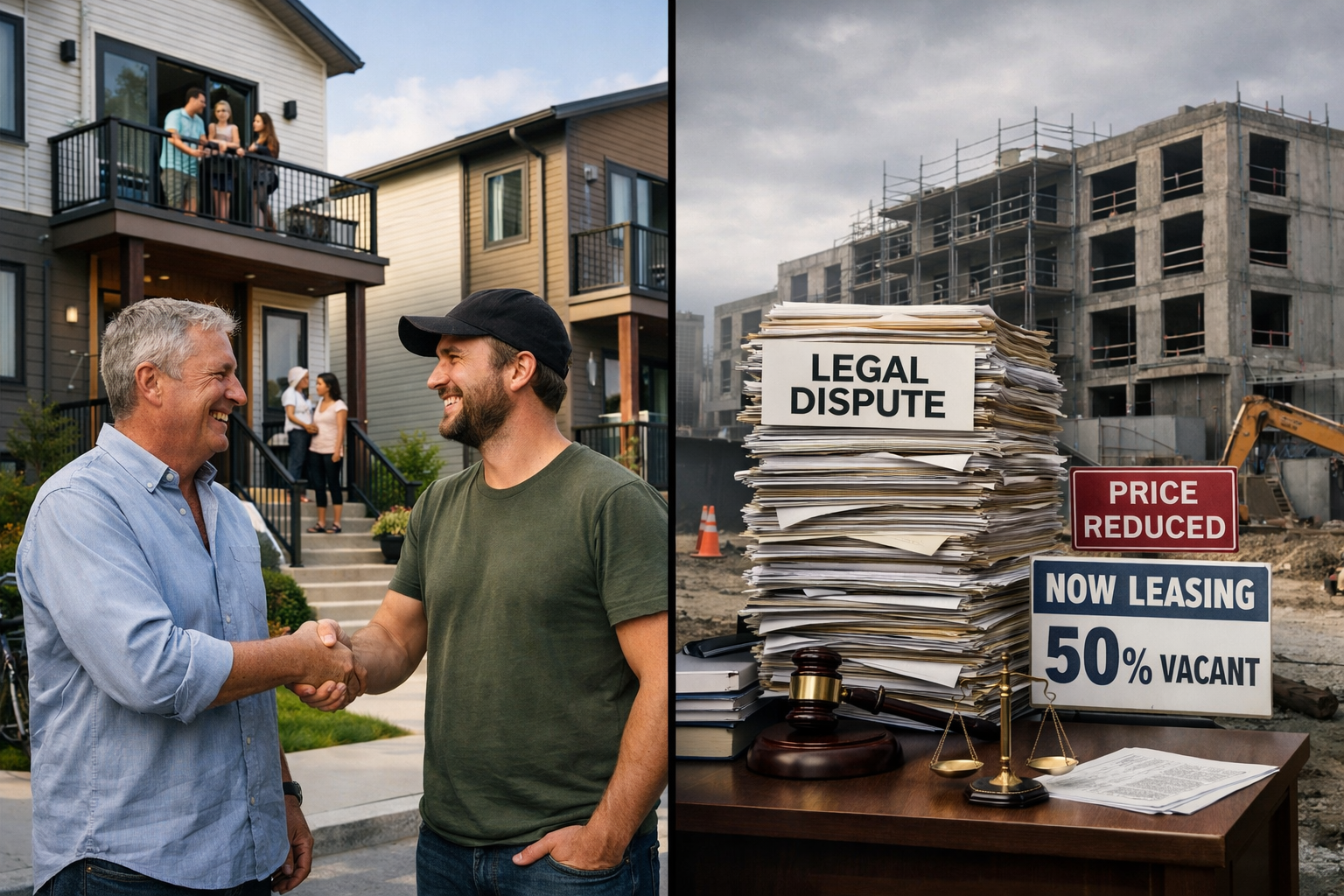
Practical Implementation: Step-by-Step Dispute Resolution Protocol
For building owners and developers facing party wall situations in 2026's declining market, this practical protocol provides a roadmap for Resolving Party Wall Disputes in Multifamily Declines: 2026 Strategies Despite Slipping Demand:
Phase 1: Pre-Project Planning (8-12 Weeks Before Construction)
Week 1-2: Project Assessment
- Engage qualified party wall surveyor to assess project scope
- Identify all potentially affected adjoining owners
- Review types of party wall works applicable to your project
- Develop preliminary timeline for notice and award procedures
Week 3-4: Neighbor Outreach
- Send informal project introduction letters to adjoining owners
- Offer to meet individually to discuss project and address concerns
- Provide contact information for project manager and surveyor
- Begin building relationships before formal notices
Week 5-8: Formal Notice Preparation
- Prepare detailed work descriptions and technical drawings
- Draft statutory notices with surveyor guidance
- Prepare condition survey protocols
- Develop draft party wall award addressing foreseeable issues
Week 9-12: Notice Service and Response Period
- Serve formal notices via proper legal methods
- Document service with proof of delivery
- Monitor for responses and consent/dissent
- Initiate surveyor appointment process if dissent received or no response within 14 days
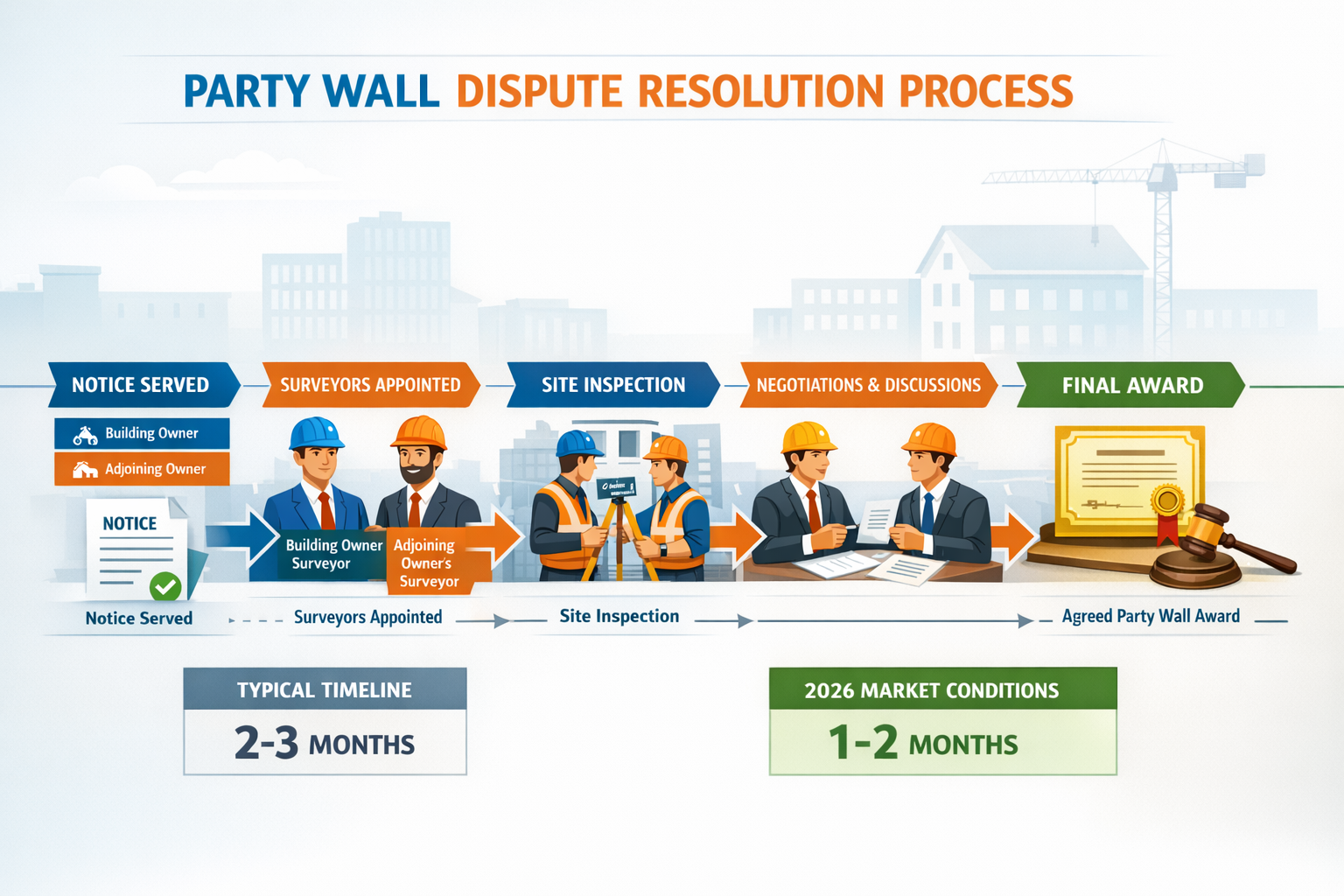
Phase 2: Award Negotiation (4-8 Weeks)
Week 1-2: Surveyor Coordination
- Building owner's surveyor and adjoining owner's surveyor (or agreed surveyor) meet to review project
- Conduct comprehensive condition surveys of all affected properties
- Identify specific concerns and required protective measures
- Establish communication protocols for construction phase
Week 3-6: Award Drafting
- Surveyors prepare detailed party wall award
- Address all technical, access, and procedural issues
- Include specific damage remediation procedures
- Establish inspection schedules and reporting requirements
- Review draft with all parties and incorporate reasonable modifications
Week 7-8: Award Finalization
- Issue final award to all parties
- Ensure all parties understand rights and obligations
- Establish pre-construction meeting date
- Confirm construction start date complies with notice periods
Phase 3: Construction Phase Management (Project Duration)
Ongoing Activities:
- Maintain regular communication with adjoining owners
- Conduct scheduled inspections per award requirements
- Document any incidents or concerns immediately
- Address minor issues before they escalate
- Keep surveyors informed of any significant developments or plan changes
If Disputes Arise:
-
Immediate Response (24-48 hours)
- Acknowledge concern and commit to investigation
- Conduct site inspection with surveyor
- Document current conditions with photos/video
- Provide preliminary response to adjoining owner
-
Technical Assessment (3-7 days)
- Surveyor evaluates technical aspects of concern
- Determine if issue relates to authorized work or represents deviation
- Identify immediate protective measures if needed
- Develop proposed resolution approach
-
Resolution Discussion (1-2 weeks)
- Meet with adjoining owner to discuss findings and proposed resolution
- Listen to concerns and identify underlying interests
- Explore alternative solutions if initial proposal unsatisfactory
- Reach agreement on corrective measures and timeline
-
Mediation (if direct discussion unsuccessful)
- Engage professional mediator with party wall experience
- Prepare comprehensive case documentation
- Participate in good faith with settlement authority
- Implement mediated agreement promptly
-
Formal Dispute Resolution (last resort only)
- Consult with construction litigation solicitor
- Evaluate costs and risks of formal proceedings
- Consider one final settlement offer before litigation
- Proceed to court only when mediation exhausted and stakes justify costs
Phase 4: Post-Construction (2-4 Weeks After Completion)
Final Documentation:
- Conduct post-construction condition survey
- Compare to pre-construction baseline
- Address any construction-related damage per award terms
- Obtain written confirmation from adjoining owners that work completed satisfactorily
- Archive all documentation for future reference
This systematic approach ensures compliance, builds positive relationships, and provides clear pathways for addressing issues before they escalate into costly disputes.
Cost-Benefit Analysis: Prevention vs. Dispute Resolution
Understanding the financial implications of different approaches to party wall matters helps developers make informed decisions in 2026's capital-constrained environment:
Typical Cost Ranges
Proactive Approach (Prevention):
- Party wall surveyor engagement: £800-£2,500
- Comprehensive condition surveys: £300-£800 per property
- Party wall award preparation: £1,200-£3,500
- Pre-construction neighbor meetings: £200-£500 (staff time)
- Total proactive investment: £2,500-£7,300
Reactive Approach (Dispute Resolution):
- Emergency surveyor engagement: £1,500-£4,000
- Legal consultation: £3,000-£8,000
- Mediation fees: £2,000-£8,000
- Construction delay costs: £500-£2,000 per week
- Settlement payments: £5,000-£50,000+
- Total dispute resolution costs: £15,000-£100,000+
Litigation Approach (Worst Case):
- Solicitor fees: £25,000-£75,000
- Expert witness fees: £5,000-£15,000
- Court costs: £3,000-£10,000
- Construction delay costs: £2,000-£8,000 per month (12-24 months)
- Adverse judgment risk: £50,000-£250,000+
- Total litigation costs: £100,000-£500,000+
Return on Prevention Investment
For a typical multifamily project, investing £5,000 in proactive party wall management provides:
- 85% probability of avoiding formal disputes entirely
- 60% reduction in total party wall costs compared to reactive approaches
- Zero construction delays from party wall issues
- Preserved neighbor relationships valuable for future projects
- Reduced stress and management time allowing focus on core construction activities
Even if disputes arise despite proactive measures, the documentation and relationships established through prevention efforts significantly reduce resolution costs and timelines.
2026 Market Considerations
In declining markets, the cost-benefit calculation shifts even more favorably toward prevention:
- Tighter financing means construction delays have more severe consequences
- Reduced profit margins make unexpected costs more damaging to project viability
- Increased vacancy risk makes timely project completion more critical
- Limited exit options reduce ability to walk away from troubled projects
For developers operating in competitive urban markets like Central London or West London, professional party wall management represents essential risk mitigation rather than optional expense.
Future-Proofing Party Wall Relationships Beyond 2026
While this guide focuses on 2026 strategies, successful developers think beyond immediate projects to build lasting frameworks for party wall management:
Building Institutional Knowledge
Document lessons learned from each project, creating internal databases of:
- Common dispute triggers in different building types
- Effective communication approaches for various neighbor demographics
- Surveyor and mediator recommendations based on performance
- Template language for notices, awards, and settlement agreements
This institutional knowledge becomes increasingly valuable as organizations complete multiple projects, allowing each successive project to benefit from previous experience.
Developing Neighbor Networks
In areas where developers plan multiple projects, investing in community relationships pays long-term dividends. Developers who are known for transparent communication, fair dealing, and quality construction face fewer disputes and easier resolution processes when issues do arise.
Consider:
- Sponsoring local community events
- Maintaining accessible communication channels for neighbor concerns
- Following through on commitments consistently
- Addressing issues promptly even after projects complete
Staying Current on Legal Developments
Party wall law evolves through case precedents and occasional legislative changes. Subscribing to professional updates and maintaining relationships with experienced party wall surveyors ensures awareness of developments that might affect project approaches.
Key areas to monitor in 2026 and beyond include:
- Building safety regulations following recent high-profile incidents
- Climate adaptation requirements affecting structural work
- Digital service of notices and electronic documentation
- Insurance requirements for construction affecting shared structures
Leveraging Technology
Emerging technologies offer opportunities to improve party wall management:
Digital documentation platforms enable comprehensive condition surveys with 360-degree photography, measurements, and annotations accessible to all parties.
Project communication apps provide transparent, documented channels for neighbor updates and concern reporting.
Drone inspections allow non-invasive assessment of roof and upper-story conditions.
Building Information Modeling (BIM) helps visualize proposed work for neighbors, reducing misunderstandings about project scope.
While technology cannot replace professional judgment and human relationship-building, it enhances transparency and documentation that support dispute prevention and resolution.
Conclusion: Navigating Party Wall Challenges in Uncertain Markets
Resolving Party Wall Disputes in Multifamily Declines: 2026 Strategies Despite Slipping Demand requires a fundamental shift from reactive crisis management to proactive relationship building and systematic compliance. As multifamily markets face continued pressure from elevated vacancies, constrained financing, and reduced construction activity, the cost of party wall disputes—measured in both direct expenses and opportunity costs—becomes increasingly burdensome.
The strategies outlined in this guide provide a comprehensive framework for navigating party wall challenges in today's difficult environment:
✅ Engage professional surveyors early to prevent disputes before they arise and ensure full statutory compliance
✅ Invest in transparent communication with neighbors to build trust and understanding that facilitates cooperation
✅ Utilize proactive party wall awards that establish clear rights, responsibilities, and dispute resolution mechanisms before construction begins
✅ Prioritize mediation as the first-line response when disputes do arise, saving time and money while preserving relationships
✅ Learn from recent precedents to avoid common pitfalls and adopt proven successful approaches
✅ Implement systematic protocols that ensure consistent, compliant party wall management across all projects
The evidence is clear: developers who invest in prevention and early professional engagement achieve superior outcomes at lower total costs than those who attempt shortcuts or reactive approaches. In 2026's challenging market, this efficiency advantage can mean the difference between project success and failure.
Next Steps for Building Owners and Developers
If you're planning multifamily construction or renovation work in 2026:
- Assess your project for party wall implications at the earliest planning stage
- Engage qualified surveyors with specific multifamily and local market experience
- Review compliance with all notice requirements under the Party Wall Act
- Develop communication strategies for transparent neighbor engagement
- Prepare comprehensive documentation including detailed condition surveys
- Establish mediation protocols for rapid dispute resolution if needed
For immediate guidance on party wall procedures, explore resources on party wall notices, review general FAQs, or contact experienced professionals who can provide project-specific advice.
The multifamily market may face headwinds in 2026, but developers who master party wall dispute resolution position themselves for success regardless of broader market conditions. By treating party wall management as a core competency rather than an afterthought, forward-thinking developers protect their investments, maintain positive community relationships, and complete projects on time and budget even in challenging times. 🏗️