

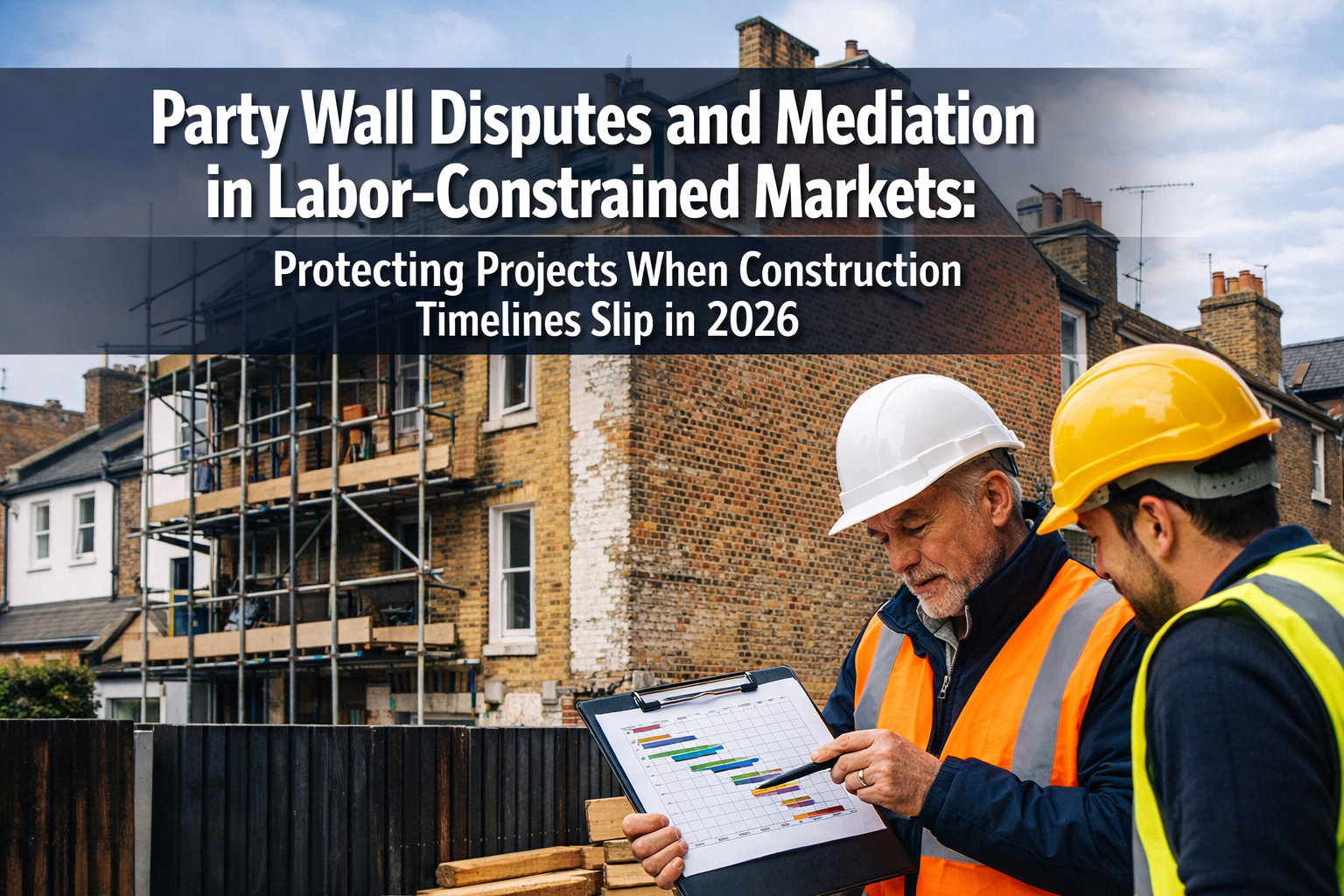
When construction crews fail to show up on schedule and projects stretch weeks or months beyond their planned completion dates, the ripple effects extend far beyond frustrated building owners. In 2026, Party Wall Disputes and Mediation in Labor-Constrained Markets: Protecting Projects When Construction Timelines Slip in 2026 has emerged as a critical concern for property developers, homeowners, and surveyors navigating an increasingly challenging construction landscape. Labor shortages continue to strain timelines, creating friction between neighbors and testing the boundaries of party wall agreements that were drafted with more optimistic schedules in mind.
The construction industry faces unprecedented workforce challenges this year, with skilled tradespeople in short supply and projects competing for limited resources. When delays cascade through party wall works—affecting shared structures between adjacent properties—the potential for disputes multiplies. Neighbors who agreed to tolerate construction disruption for six weeks suddenly face six months of noise, dust, and inconvenience. Understanding how to protect projects through proactive mediation strategies has never been more essential.
Key Takeaways
- Labor shortages in 2026 are causing construction timeline extensions that frequently trigger party wall disputes when works exceed agreed durations
- Early engagement of third-party neutrals (mediators or arbitrators) significantly reduces dispute resolution costs and prevents project delays from escalating
- Real-time mediation during construction costs substantially less than post-completion litigation, which accumulates expenses from work stoppages and carrying charges
- Comprehensive documentation practices are critical for successful dispute resolution, as neutrals closely evaluate records including emails, schedules, and cost-tracking methods
- Proactive communication strategies between building owners, adjoining owners, and contractors help manage expectations when labor constraints force schedule adjustments
Understanding Party Wall Disputes in Labor-Constrained Markets
The 2026 Labor Shortage Reality
The construction sector in 2026 continues to grapple with significant workforce shortages that directly impact party wall projects. Skilled bricklayers, structural engineers, and specialized tradespeople remain difficult to secure, forcing contractors to extend timelines and juggle multiple projects simultaneously. This scarcity affects everything from basement excavations to loft conversions that involve shared walls between properties.
The surge in specific project types has intensified these challenges. AI-driven data centre construction has significantly increased party wall disputes as developers race to meet technology infrastructure demands[1]. Meanwhile, a loft conversion boom has created substantial compliance challenges for homeowners during the ongoing housing uptick[3]. Both trends place additional strain on already limited construction resources.
Common Dispute Triggers When Timelines Slip
When construction schedules extend beyond initial estimates, several dispute triggers commonly emerge:
- Prolonged disruption periods that exceed what adjoining owners originally consented to tolerate
- Access disputes when delayed works require extended use of neighboring properties
- Damage claims that accumulate as construction periods lengthen
- Scope creep concerns where neighbors suspect additional unauthorized works
- Cost allocation disagreements over who bears responsibility for delay-related expenses
The Party Wall etc. Act 1996 provides the legal framework for these works, but it doesn't automatically resolve disputes arising from labor-related delays. Construction disputes handled by experienced arbitrators and mediators include delays, changes, terminations, defects, operability issues, and interference—all of which become more likely when timelines slip[5].
Party Wall Disputes and Mediation Strategies for Timeline Delays
Early Engagement of Third-Party Neutrals
One of the most effective strategies for managing Party Wall Disputes and Mediation in Labor-Constrained Markets: Protecting Projects When Construction Timelines Slip in 2026 involves engaging mediators or arbitrators before conflicts escalate. Early retention of third-party neutrals enables faster and more efficient dispute resolution, with the greatest benefits occurring when neutrals are engaged at project inception or before construction begins[4].
This proactive approach offers several advantages:
| Early Engagement Benefits | Description |
|---|---|
| Cost Reduction | Disputes resolved during construction through real-time mediation cost substantially less than post-completion litigation[4] |
| Timeline Protection | Quick resolution prevents work stoppages that compound delays |
| Relationship Preservation | Professional mediation maintains neighbor relations for long-term coexistence |
| Documentation Standards | Neutral oversight encourages proper record-keeping from project start |
When selecting a party wall surveyor in Central London or other locations, property owners should prioritize professionals with mediation experience who can serve dual roles as technical advisors and dispute facilitators.
Real-Time Mediation During Construction
Rather than waiting for conflicts to fully develop, real-time mediation addresses issues as they arise. This approach proves particularly valuable when labor shortages force schedule adjustments that affect adjoining owners. Disputes resolved during construction through real-time mediation cost substantially less than disputes addressed after project completion, which accumulate costs from work delays, carrying charges, and litigation expenses[4].
Key components of effective real-time mediation include:
✅ Regular communication schedules between all parties to discuss progress and concerns
✅ Flexible adjustment mechanisms built into party wall awards to accommodate reasonable delays
✅ Transparent documentation of labor availability issues and their impact on timelines
✅ Interim compensation agreements when disruption periods extend significantly
✅ Milestone-based review meetings to assess progress and address emerging concerns
Counsel and project managers should employ concurrent mediation to resolve simpler claims and facilitate payments while more complex issues are addressed through arbitration, keeping major claims focused and within budget[2]. This dual-track approach prevents minor timeline disputes from derailing entire projects.
Dispute Adjudication Boards and Resolution Mechanisms
For larger or more complex party wall projects, formal dispute resolution structures provide valuable frameworks. Dispute adjudication boards (DABs) and dispute resolution boards (DRBs) offer practical mechanisms to resolve issues as they arise rather than years later, as evidenced by their successful use during major construction projects[2].
These boards typically consist of three members:
- Building owner's appointed expert – Represents the interests of the party conducting works
- Adjoining owner's appointed expert – Represents neighboring property interests
- Agreed third surveyor – Serves as neutral chair when disputes arise
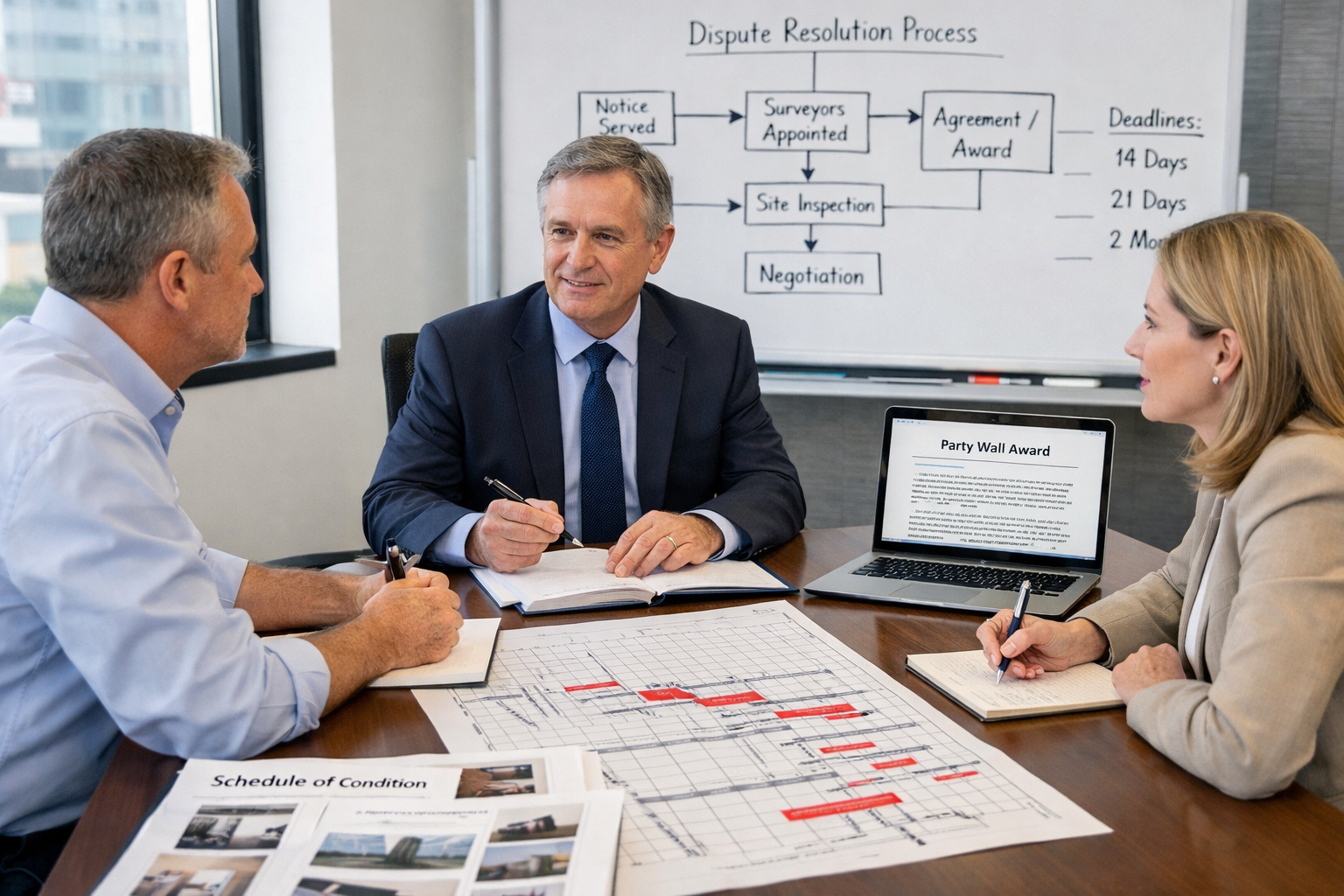
For guidance on this structure, review information about party wall awards which formalize these arrangements. The board meets regularly throughout construction to address concerns before they escalate into formal disputes requiring arbitration or litigation.
Protecting Projects: Documentation and Communication Best Practices
Critical Documentation Requirements
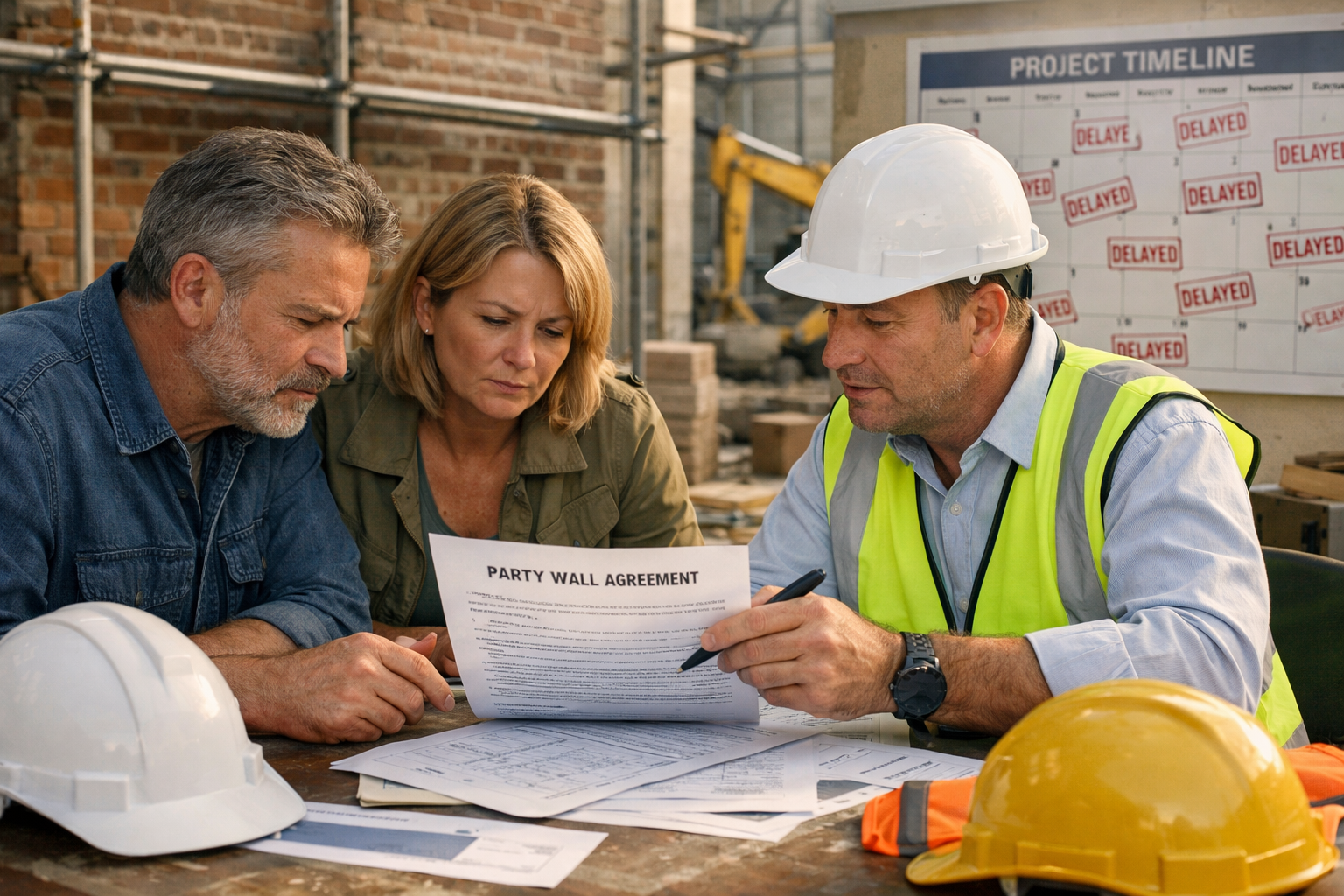
Construction disputes are highly fact-intensive, and neutrals with deep industry experience closely evaluate whether a party's position is backed by reliable records such as emails, letters, schedules, and cost-tracking methods maintained according to accepted industry standards[5]. When labor shortages cause delays, comprehensive documentation becomes the foundation for successful dispute resolution.
Essential documentation practices include:
📋 Labor availability records – Document contractor scheduling challenges, worker availability, and resource constraints
📋 Timeline comparison logs – Maintain original schedules alongside updated timelines with clear explanations for changes
📋 Communication records – Preserve all emails, letters, and meeting notes with adjoining owners regarding schedule adjustments
📋 Photographic evidence – Regular dated photographs showing work progress and any issues affecting neighboring properties
📋 Cost tracking systems – Detailed records of expenses organized by category and date, following industry standards
📋 Schedule of Condition updates – Periodic assessments documenting property conditions throughout extended construction periods
Property owners should consult resources on how to keep party wall costs down while maintaining thorough documentation practices. The investment in proper record-keeping pays dividends when disputes arise.
Proactive Communication Strategies
When construction timelines begin slipping due to labor constraints, immediate and transparent communication with adjoining owners can prevent disputes from forming. The most successful projects in 2026 share several communication characteristics:
Before delays occur:
- Set realistic expectations about potential labor-related schedule risks
- Include contingency language in initial party wall notices acknowledging workforce challenges
- Establish preferred communication channels and update frequencies
- Provide contact information for all key project personnel
When delays emerge:
- Notify adjoining owners immediately when labor shortages impact timelines
- Explain specific causes (crew unavailability, material delivery delays, specialist shortages)
- Provide revised completion estimates with conservative buffers
- Offer mitigation measures (adjusted work hours, enhanced dust control, noise reduction)
- Document all communications in writing with confirmation of receipt
Throughout extended timelines:
- Maintain regular update schedules even when progress seems minimal
- Share positive developments and milestone completions
- Address concerns promptly before they escalate
- Consider goodwill gestures for significantly extended disruption periods
For those managing works, understanding what is a party structure notice and how to serve it properly sets the foundation for effective ongoing communication.
Mediation Techniques for Specific Delay Scenarios
Loft Conversion Timeline Disputes
The 2026 loft conversion boom has created particular challenges as homeowners navigate high demand and compliance requirements during the housing uptick[3]. These projects frequently involve party wall works affecting shared gable walls or roof structures, and labor shortages in specialized roofing trades have extended timelines significantly.
Effective mediation approaches for loft conversion delays include:
🏠 Phased completion agreements – Breaking projects into stages with interim inspections reduces neighbor anxiety about indefinite timelines
🏠 Alternative accommodation provisions – For severe delays causing significant disruption, discussing temporary relocation assistance demonstrates good faith
🏠 Enhanced Schedule of Condition protocols – More frequent condition assessments during extended projects protect both parties' interests
🏠 Flexible access arrangements – Renegotiating access schedules when original timelines prove unrealistic
Property owners should reference guidance on Schedule of Condition requirements to understand how extended timelines affect documentation obligations.
Data Centre and Commercial Development Delays
AI-driven data centre construction has significantly increased party wall disputes as these large-scale projects compete for limited construction resources[1]. Commercial developments involving party walls face unique challenges when labor shortages delay critical path activities.
Specialized mediation considerations for commercial projects:
- Business interruption calculations – Quantifying impact on adjoining commercial properties when construction extends beyond agreed periods
- Professional tenant relations – Managing expectations of multiple stakeholders in adjacent office or retail spaces
- Regulatory compliance timelines – Addressing how delays affect permits, inspections, and occupancy deadlines
- Financial performance impacts – Negotiating compensation when extended construction affects neighboring business operations
These complex scenarios often benefit from mediators with both construction expertise and commercial property experience who can evaluate business impact claims alongside technical construction issues.
Basement Excavation and Foundation Work Delays
Basement excavations and underpinning works represent some of the most technically complex party wall projects, and they're particularly vulnerable to labor shortage impacts. Specialized foundation engineers and excavation crews remain scarce in 2026, causing significant timeline extensions.
Key mediation focus areas for foundation work delays:
⚠️ Structural monitoring protocols – Extending monitoring periods when works take longer than anticipated
⚠️ Temporary support duration – Managing concerns about prolonged reliance on temporary shoring or underpinning
⚠️ Vibration and settlement tracking – Continuing assessments throughout extended excavation periods
⚠️ Weather-related complications – Addressing how seasonal delays compound labor shortage issues for below-ground works
For adjoining owners concerned about extended foundation works, understanding types of party wall works helps contextualize the technical requirements causing delays.
Managing Costs During Extended Disputes
Understanding Party Wall Cost Implications
When construction timelines slip and disputes arise, costs accumulate rapidly for all parties involved. Understanding the financial implications helps motivate early mediation and reasonable compromise.
Cost categories affected by timeline disputes:
| Cost Category | Impact of Delays | Mitigation Strategy |
|---|---|---|
| Surveyor fees | Extended monitoring and additional site visits | Negotiate fixed-fee arrangements for extended timelines |
| Legal costs | Escalating if disputes move toward litigation | Early mediation to prevent legal escalation |
| Contractor standby charges | Crews waiting during dispute resolution | Maintain work continuity through partial agreements |
| Property damage claims | Accumulating if issues remain unaddressed | Regular condition assessments and prompt repairs |
| Lost opportunity costs | Delayed occupancy or rental income | Realistic timeline buffers in initial planning |
Resources on costs of party wall processes provide detailed breakdowns of typical expenses and how disputes affect overall project budgets.
Cost-Effective Dispute Resolution Approaches
Minimizing costs during Party Wall Disputes and Mediation in Labor-Constrained Markets: Protecting Projects When Construction Timelines Slip in 2026 requires strategic choices about resolution mechanisms.
Cost comparison of resolution approaches:
- Informal negotiation (lowest cost) – Direct discussions between owners or their surveyors without formal proceedings
- Structured mediation (moderate cost) – Professional mediator facilitates resolution with defined process and timeline
- Arbitration (higher cost) – Formal proceedings with binding decisions but more flexibility than court litigation
- Court litigation (highest cost) – Full legal proceedings with extensive discovery, hearings, and appeals
The most cost-effective approach typically involves early mediation that prevents escalation to arbitration or litigation. Parties gain significant advantages when they understand key differences between resolution mechanisms and present cases efficiently with organized technical information and clear documentation[5].
For those seeking to minimize expenses, exploring options for having a party wall agreement without a surveyor may be appropriate for simpler projects, though professional guidance remains advisable when labor-related delays create complications.
Regional Considerations for London Party Wall Disputes
Geographic Variations in Labor Availability
Labor constraints affect different London regions with varying intensity in 2026. Understanding local market conditions helps set realistic expectations and informs mediation strategies.
Regional labor market characteristics:
- Central London – Highest competition for contractors due to concentration of high-value projects; expect premium rates and extended timelines
- East London – Rapid development creating contractor demand; regeneration projects compete with residential works
- South London – Balanced market with moderate labor availability; suburban projects may have better contractor access
- North London – Conservation area restrictions combined with labor shortages create unique timeline challenges
- West London – Premium market with selective contractor availability; high-end specifications may require specialist trades
These regional variations affect both the likelihood of delays and the strategies most effective for dispute resolution. Mediators familiar with local construction markets can provide valuable context when evaluating whether timeline extensions are reasonable given regional labor conditions.
Future-Proofing Party Wall Agreements Against Labor Disruptions
Drafting Flexible Party Wall Awards
Forward-thinking party wall agreements in 2026 incorporate flexibility mechanisms that anticipate potential labor-related delays without requiring renegotiation when shortages occur.
Recommended contractual provisions:
✏️ Force majeure clauses – Explicitly include labor shortages and workforce unavailability as recognized causes for reasonable timeline extensions
✏️ Graduated notification requirements – Specify when and how building owners must inform adjoining owners of schedule changes
✏️ Automatic extension protocols – Define conditions under which timelines extend without requiring formal amendments
✏️ Compensation thresholds – Establish when prolonged delays trigger goodwill payments or mitigation measures
✏️ Mediation prerequisites – Require good-faith mediation before either party can pursue arbitration or litigation
✏️ Documentation standards – Specify record-keeping requirements for demonstrating legitimate delay causes
Property owners can review sample party wall agreement templates and work with surveyors to customize provisions addressing labor market realities.
Building Contingency into Project Planning
Realistic project planning in labor-constrained markets requires substantial timeline buffers that account for workforce availability challenges.
Recommended contingency planning approaches:
📅 Add 30-50% timeline buffers to contractor estimates for projects involving party wall works
📅 Identify critical path dependencies on specialized trades with known shortage issues
📅 Develop contractor backup plans with secondary firms identified before work begins
📅 Schedule flexibility windows during which work can pause without triggering neighbor concerns
📅 Seasonal considerations accounting for how holiday periods and weather compound labor shortages
📅 Milestone-based communications rather than fixed completion dates in neighbor discussions
These planning strategies reduce the likelihood that labor-related delays will surprise adjoining owners and trigger disputes requiring mediation.
Conclusion: Navigating Party Wall Disputes in 2026's Challenging Construction Environment
Party Wall Disputes and Mediation in Labor-Constrained Markets: Protecting Projects When Construction Timelines Slip in 2026 requires a fundamental shift from reactive dispute resolution to proactive relationship management. The construction labor shortage shows no signs of immediate resolution, making it essential for building owners, adjoining owners, and surveyors to adopt strategies that anticipate delays rather than simply responding to them.
The evidence is clear: early engagement of third-party neutrals, real-time mediation during construction, and comprehensive documentation practices significantly reduce both the frequency and cost of party wall disputes[4]. Projects that incorporate flexible timeline provisions, maintain transparent communication, and employ structured dispute resolution mechanisms navigate labor-related delays with minimal neighbor conflict.
Actionable Next Steps for Building Owners
If you're planning party wall works in 2026's labor-constrained market, take these immediate actions:
- Engage experienced surveyors early who understand both technical requirements and mediation strategies
- Build substantial timeline buffers into your project schedule (30-50% beyond contractor estimates)
- Draft flexible party wall awards that anticipate potential labor-related delays with clear extension protocols
- Establish communication protocols with adjoining owners before work begins, including update frequencies and contact methods
- Implement rigorous documentation systems from day one, tracking labor availability, schedule changes, and all neighbor communications
- Consider pre-appointing a mediator for complex projects, ensuring rapid response if disputes emerge
- Review regional labor market conditions specific to your London location to set realistic expectations
Actionable Next Steps for Adjoining Owners
If your neighbor is conducting party wall works that may face delays:
- Understand your rights under the Party Wall etc. Act 1996 and how labor shortages affect reasonable timeline expectations
- Appoint an experienced surveyor who can monitor progress and identify when delays become unreasonable
- Maintain written communication documenting all discussions about timelines and any concerns that arise
- Request regular updates on project progress and labor availability issues affecting your neighbor's works
- Consider mediation early if timeline extensions begin causing significant disruption beyond what you agreed to tolerate
- Document property condition regularly throughout extended construction periods to protect against damage claims
- Remain flexible about reasonable delays while firmly addressing unreasonable extensions or poor communication
The construction labor shortage represents a significant challenge for party wall projects in 2026, but it doesn't have to result in costly disputes and damaged neighbor relationships. By combining proactive planning, transparent communication, flexible agreements, and early mediation when conflicts arise, property owners can successfully navigate timeline disruptions while preserving both their projects and their community relationships.
For additional guidance on managing party wall processes during these challenging times, explore resources on party wall notices and consider consulting with experienced professionals who understand both the technical and interpersonal dimensions of construction in labor-constrained markets.
References
[1] Party Wall Agreements In Data Centre Developments 2026 Compliance Amid Ai Driven Uk Demand – https://nottinghillsurveyors.com/blog/party-wall-agreements-in-data-centre-developments-2026-compliance-amid-ai-driven-uk-demand
[2] Minimizing Construction Delays In Domestic And International Arbitration – https://www.jamsadr.com/insight/2026/minimizing-construction-delays-in-domestic-and-international-arbitration
[3] Party Wall Surveying Surge In 2026 Loft Conversions Navigating High Demand Compliance During Housing Uptick – https://nottinghillsurveyors.com/blog/party-wall-surveying-surge-in-2026-loft-conversions-navigating-high-demand-compliance-during-housing-uptick
[4] Mediating Construction Claims In Real Time – https://ankura.com/insights/mediating-construction-claims-in-real-time/
[5] Insights From The Aaa Construction Panel – https://www.adr.org/news-and-insights/insights-from-the-aaa-construction-panel/