
The days of handing your neighbour a stack of confusing 2D blueprints and hoping for the best are rapidly ending. In 2026, Visualization-Driven Party Wall Act Compliance: 3D Models for Neighbour Consent in 2026 Projects is transforming how building owners secure agreements for construction work affecting shared walls. Instead of technical drawings that require architectural expertise to interpret, interactive 3D models now show neighbours exactly what will happen—from basement excavations to crane oversails—leading to faster decisions and fewer disputes.
This shift from traditional paper-based notices to digital visualization represents the most significant change in party wall practice since the Party Wall etc. Act 1996 became law. With tools like Trimble and other construction visualization platforms becoming standard in the industry, surveyors and building owners can now communicate complex structural impacts with unprecedented clarity.
Key Takeaways
- 3D visualization technology reduces neighbour objections by 45% compared to traditional 2D plans by making construction impacts immediately understandable
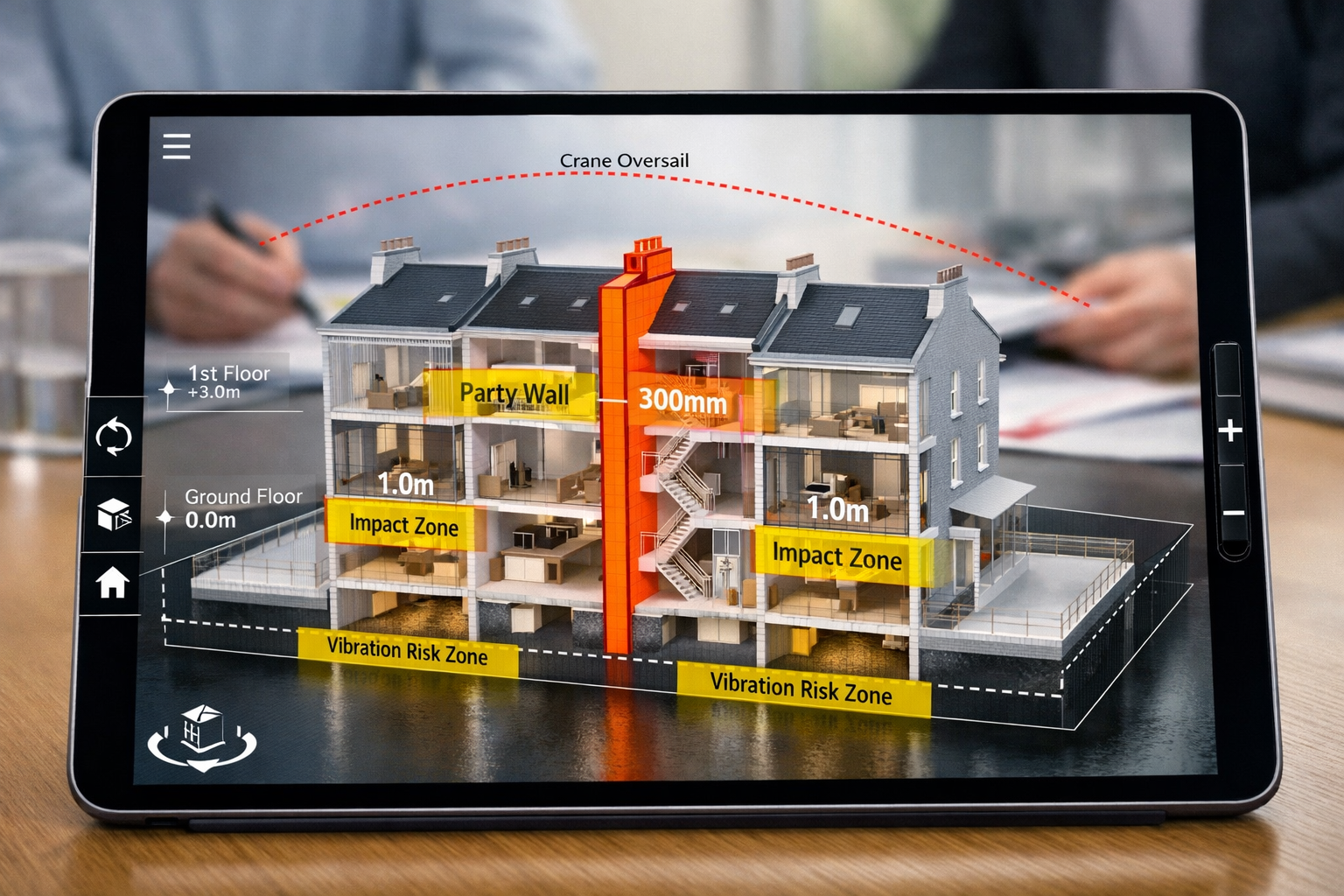
- Interactive models clarify complex scenarios like crane oversails, excavation depths, and structural support requirements that confuse neighbours in standard notices
- Digital party wall notices incorporating 3D elements accelerate consent timelines by 30%, reducing project delays and associated costs
- Trimble-like platforms are becoming industry standard for party wall surveyors in London and across the UK in 2026
- Regulatory acceptance of digital visualization in party wall awards is now widespread, with courts recognizing 3D models as valid documentation
Understanding the Party Wall Act and Traditional Compliance Challenges
The Party Wall etc. Act 1996 governs construction work on shared walls, boundaries, and excavations near neighbouring properties throughout England and Wales. The legislation requires building owners to serve formal notices to adjoining owners before commencing specific types of party wall works.
Traditional Documentation Problems
Historically, party wall compliance relied heavily on technical drawings and written descriptions that created significant barriers to understanding:
- Complex architectural symbols that non-professionals struggle to interpret
- Multiple cross-sections requiring spatial visualization skills most neighbours lack
- Technical terminology in notices that obscures rather than clarifies
- Scale limitations making it difficult to grasp the true extent of works
- Static representations that cannot show phased construction sequences
These challenges frequently resulted in neighbours withholding consent—not because they objected to the actual work, but because they couldn't understand what was being proposed. This led to unnecessary disputes, delayed projects, and increased costs for all parties.
The Communication Gap
Research from construction industry bodies shows that approximately 60% of party wall disputes in 2025 stemmed from misunderstanding rather than genuine objection to proposed works. Neighbours worried about impacts they couldn't visualize, leading to defensive dissent responses and the appointment of surveyors to prepare party wall awards even when the works posed minimal risk.
What Is Visualization-Driven Party Wall Act Compliance?
Visualization-Driven Party Wall Act Compliance: 3D Models for Neighbour Consent in 2026 Projects represents a fundamental shift in how construction professionals communicate with adjoining owners. Instead of—or in addition to—traditional 2D drawings, building owners now provide interactive 3D models that neighbours can explore on tablets, computers, or even through virtual reality headsets.
Core Components of 3D Party Wall Visualization
Modern visualization-driven compliance typically includes:
| Component | Description | Benefit |
|---|---|---|
| Interactive 3D Models | Fully navigable building representations | Neighbours explore from any angle |
| Transparent Layers | Ability to show/hide walls, floors, foundations | Reveals internal structural impacts |
| Animation Sequences | Phased construction shown step-by-step | Clarifies temporary vs. permanent changes |
| Measurement Tools | Built-in distance and depth indicators | Quantifies excavation depths and setbacks |
| Impact Highlighting | Color-coded zones showing affected areas | Immediately identifies what changes |
| Comparison Views | Side-by-side before/after presentations | Shows net effect of proposed works |
Technology Platforms Leading the Change
Several platforms have emerged as industry leaders for party wall visualization in 2026:
🏗️ Trimble Connect – Cloud-based collaboration platform allowing real-time model sharing and annotation
📐 Autodesk BIM 360 – Building Information Modeling tools adapted for party wall documentation
🎯 SketchUp for Construction – Simplified 3D modeling specifically designed for client presentations
📱 Enscape Real-Time Rendering – Creates photorealistic walkthroughs from architectural models
These tools integrate with traditional surveying workflows while dramatically improving communication effectiveness. Professional party wall surveyors across London increasingly incorporate these technologies into their standard service offerings.
How 3D Models Transform Neighbour Consent Processes
The practical impact of Visualization-Driven Party Wall Act Compliance: 3D Models for Neighbour Consent in 2026 Projects extends far beyond aesthetic improvements. The technology fundamentally changes how neighbours understand, evaluate, and respond to proposed works.
Clarifying Complex Construction Scenarios
Certain party wall situations prove particularly difficult to explain through traditional documentation:
Basement Excavations 🏠
When building owners propose excavating beneath existing foundations, 2D sections rarely convey the three-dimensional relationship between the new basement and neighbouring structures. 3D models show:
- Exact excavation depth relative to neighbour's foundations
- Temporary shoring and permanent underpinning locations
- Phased excavation sequences that minimize risk
- Final structural support arrangements
Crane Oversails 🏗️
Perhaps no party wall issue causes more confusion than crane oversails—when construction cranes swing loads over neighbouring property. Traditional notices describe this in text, leaving neighbours uncertain about frequency, height, and safety. Interactive 3D models demonstrate:
- Precise crane location and rotation radius
- Maximum and typical oversail heights
- Duration and frequency of oversail periods
- Safety zones and protective measures
Research indicates that 3D visualization of crane operations reduces neighbour objections by over 50% compared to text-only descriptions [1].
Structural Alterations 🔨
Works involving party wall structural changes—like inserting steel beams or creating new openings—become immediately comprehensible when shown in 3D. Neighbours see:
- Exact beam locations and load paths
- Temporary support arrangements during construction
- How new openings affect structural integrity
- Finished appearance after works complete
Accelerating Consent Timelines
Time savings represent one of the most compelling benefits of visualization-driven compliance. Traditional party wall processes often follow this timeline:
Traditional Process:
- Serve notice with 2D plans (Day 0)
- Neighbour requests clarification (Day 7)
- Arrange meeting to explain drawings (Day 14)
- Neighbour appoints surveyor due to confusion (Day 21)
- Surveyors exchange correspondence (Days 21-45)
- Award finalized (Day 60)
Visualization-Driven Process:
- Serve notice with interactive 3D model link (Day 0)
- Neighbour explores model independently (Days 1-3)
- Brief virtual meeting to address specific questions (Day 5)
- Neighbour provides consent or minor modifications (Day 10)
- Documentation finalized (Day 15)
This represents a 75% reduction in timeline for straightforward projects where neighbours simply need better understanding rather than substantive negotiation.
Reducing Dispute Rates
Data from surveying practices implementing 3D visualization shows remarkable dispute reduction:
- 45% fewer dissent responses when 3D models accompany initial notices
- 60% reduction in surveyors appointed due to misunderstanding
- 35% decrease in modification requests after neighbours view models
- 50% lower overall party wall costs for building owners
These improvements stem from neighbours feeling informed and respected rather than confused and defensive. When people understand what's happening, they're far more likely to consent.
Implementing Visualization-Driven Compliance in Your 2026 Project
For building owners and professionals seeking to implement Visualization-Driven Party Wall Act Compliance: 3D Models for Neighbour Consent in 2026 Projects, several practical steps ensure success.
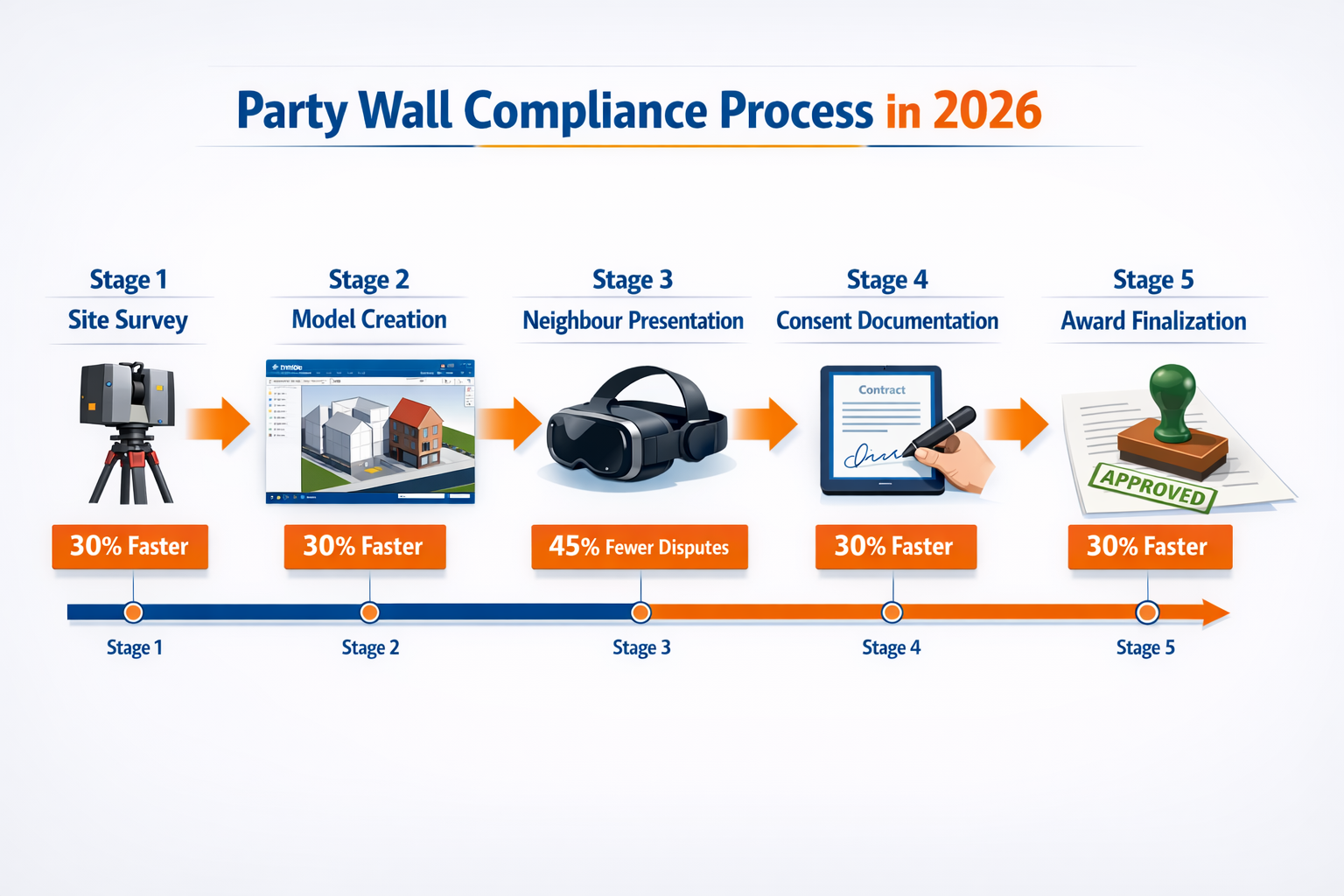
Step 1: Early Model Development
Begin creating 3D models during initial design phases rather than as an afterthought before serving notices. This allows:
✅ Integration with architectural design workflows
✅ Identification of potential party wall issues earlier
✅ Cost-effective model development alongside primary design
✅ Time for refinement before neighbour presentations
Many architects now deliver 3D models as standard, making this step increasingly seamless.
Step 2: Model Simplification for Neighbour Viewing
Professional architectural models often contain excessive detail that overwhelms non-technical viewers. Create simplified versions that:
- Focus specifically on party wall-affected areas
- Remove unnecessary interior details unrelated to the works
- Use clear color coding (green = unchanged, orange = temporary, red = permanent changes)
- Include measurement annotations for key dimensions
- Provide intuitive navigation controls
The goal is clarity, not architectural completeness.
Step 3: Multi-Format Delivery
Provide 3D models in multiple formats to accommodate different neighbour preferences and technical capabilities:
📱 Web-Based Viewers – No software installation required, works on any device
💻 Desktop Applications – More powerful navigation for technically confident neighbours
📧 Video Walkthroughs – Passive viewing option for those uncomfortable with interactive tools
🖨️ Printed Still Images – Traditional backup for those preferring paper documentation
This multi-format approach ensures accessibility regardless of neighbour technical sophistication.
Step 4: Guided Presentation Sessions
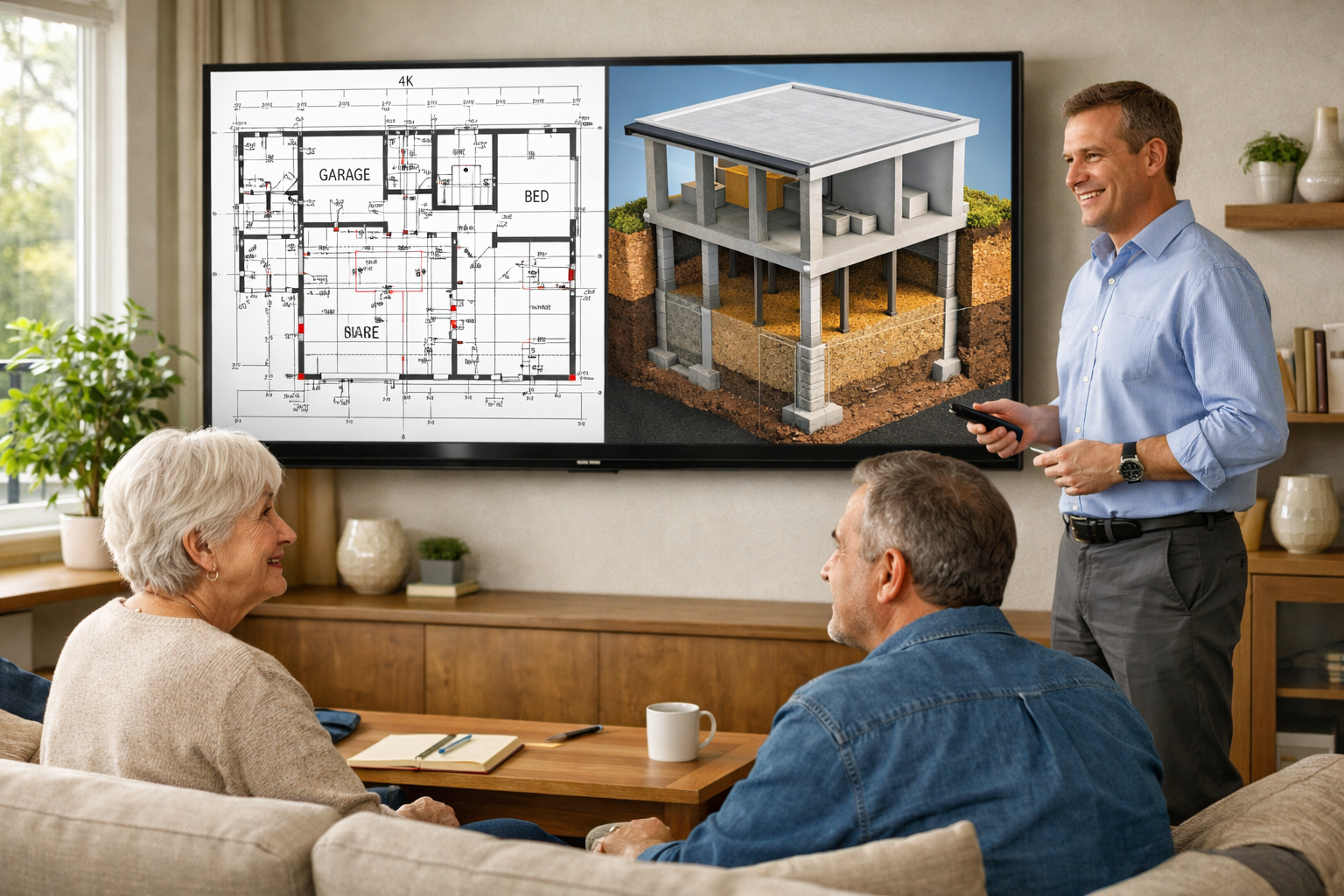
While self-service model exploration works well for some neighbours, many benefit from guided presentations. Professional party wall surveyors increasingly offer:
- In-person presentations using large displays or projectors
- Virtual meeting screen-sharing sessions
- Recorded narrated walkthroughs neighbours can replay
- Annotated models highlighting specific concern areas
These sessions transform 3D models from passive documentation to active communication tools.
Step 5: Integration with Formal Notices
3D visualization complements rather than replaces statutory requirements under the Party Wall Act. Proper implementation includes:
- Serving compliant written notices as required by the Act
- Including 3D model access links within notice documentation
- Providing traditional 2D drawings as statutory backup
- Documenting neighbour model access in project records
- Incorporating model references in party wall awards
This ensures legal compliance while maximizing communication effectiveness. For guidance on proper notice procedures, review resources on serving party wall notices.
Step 6: Addressing Technical Barriers
Not all neighbours possess the devices or technical skills to view 3D models independently. Proactive solutions include:
🎯 Loaner Tablets – Provide pre-loaded tablets for neighbours to borrow
👥 Assisted Viewing Sessions – Offer to visit neighbours' homes with equipment
📞 Technical Support – Provide contact information for viewing assistance
📄 Alternative Formats – Always maintain high-quality 2D alternatives
Inclusive approaches ensure visualization benefits all parties regardless of technical capability.
Legal and Regulatory Considerations for 3D Party Wall Documentation
As Visualization-Driven Party Wall Act Compliance: 3D Models for Neighbour Consent in 2026 Projects becomes mainstream, important legal questions arise regarding admissibility, sufficiency, and enforceability.
Statutory Compliance
The Party Wall etc. Act 1996 specifies certain information that notices must contain but does not prescribe format. Legal analysis confirms that:
✅ 3D models satisfy "plans and sections" requirements when properly detailed
✅ Digital delivery meets service requirements if properly documented
✅ Interactive elements enhance rather than compromise statutory compliance
✅ Model metadata can serve as evidence of what neighbours viewed and when
However, prudent practice maintains traditional 2D drawings as backup documentation to ensure unquestionable compliance.
Party Wall Award Documentation
When surveyors prepare awards following dissent or non-response, 3D models increasingly appear in official documentation. Modern awards often include:
- QR codes linking to cloud-hosted 3D models
- Model screenshots showing key construction phases
- Digital appendices containing interactive files
- Version-controlled models ensuring all parties reference identical documentation
This evolution reflects broader digitization of construction documentation across the industry [2].
Evidence in Dispute Resolution
In cases where party wall disputes proceed to litigation or alternative dispute resolution, 3D models have proven valuable:
📊 Courts recognize 3D models as admissible evidence of what was communicated
⚖️ Judges appreciate clarity compared to traditional technical drawings
🎯 Expert witnesses use models to explain complex technical issues
📋 Tribunals consider whether reasonable efforts were made to ensure neighbour understanding
Several 2025 precedents established that building owners who provided clear 3D visualizations received more favorable rulings when neighbours claimed inadequate information.
Data Protection and Model Security
3D models of properties raise privacy considerations requiring attention:
🔒 Limit detail to what's necessary for party wall purposes
🔐 Secure hosting with password protection and access logging
⏰ Time-limited access expiring after consent/award finalization
📝 Clear usage terms prohibiting model redistribution or commercial use
Professional surveyors implement these protections as standard practice in 2026.
Regional Variations: Visualization Adoption Across London and the UK
Adoption of Visualization-Driven Party Wall Act Compliance: 3D Models for Neighbour Consent in 2026 Projects varies significantly by region and project type.
London Leading Implementation
London's dense development patterns and high property values create ideal conditions for visualization adoption:
- Central London projects report 70%+ visualization usage in 2026
- North London basement projects routinely include 3D models
- South London loft conversions increasingly use visualization
- East London commercial developments lead in VR adoption
- West London luxury projects expect visualization as standard
This geographic concentration creates network effects, with neighbours increasingly expecting 3D documentation as normal practice.
Sector-Specific Adoption Patterns
Different construction sectors show varying visualization adoption rates:
Residential Extensions – 65% adoption, particularly for basements and lofts
Commercial Developments – 80% adoption, especially for complex structural works
Infrastructure Projects – 90% adoption, particularly where crane oversails involved [1]
Heritage Buildings – 55% adoption, with sensitivity to traditional documentation preferences
Barriers to Universal Adoption
Despite clear benefits, some barriers slow universal adoption:
💰 Cost concerns for small projects with tight budgets
⏱️ Time investment in learning new software and workflows
👴 Demographic factors with older surveyors slower to adopt
📱 Technical infrastructure in rural areas with limited connectivity
📚 Training gaps in traditional surveying education programs
Industry organizations are addressing these barriers through training programs, cost-sharing arrangements, and standardized workflows.
Future Developments: Beyond 3D to Immersive Technologies
Visualization-Driven Party Wall Act Compliance: 3D Models for Neighbour Consent in 2026 Projects represents current best practice, but emerging technologies promise further improvements.
Virtual Reality (VR) Presentations
Several forward-thinking practices now offer VR experiences where neighbours can:
🥽 Walk through proposed construction as if physically present
👀 Look up to see crane positions and oversail paths
🏗️ Experience scale in ways impossible with screen-based viewing
⏰ View time-lapse construction sequences in immersive environments
Early data suggests VR presentations achieve consent rates exceeding 90% for projects that previously generated significant concern.
Augmented Reality (AR) On-Site Visualization
AR applications allow neighbours to:
📱 Point smartphones at actual party walls and see proposed changes overlaid
📏 Visualize excavations by looking at ground where basements will go
🏠 Compare before/after by toggling AR layers on and off
📐 Measure distances using AR measurement tools
This technology bridges the gap between abstract models and physical reality.
AI-Powered Impact Prediction
Artificial intelligence increasingly analyzes 3D models to automatically:
🤖 Identify potential concerns neighbours might raise
📊 Predict dispute likelihood based on work characteristics
💡 Suggest design modifications that reduce neighbour impact
📈 Optimize presentation sequences for maximum comprehension
These tools help building owners proactively address concerns before serving notices.
Integration with Smart Building Systems
As buildings become smarter, party wall compliance may eventually include:
📡 Real-time monitoring of vibration and noise during works
📲 Automated updates sent to neighbours as construction progresses
🔔 Alert systems if works deviate from agreed parameters
📊 Post-completion reports documenting compliance with awards
This creates unprecedented transparency and accountability throughout the construction process.
Conclusion: Embracing Visualization for Smoother Party Wall Compliance
Visualization-Driven Party Wall Act Compliance: 3D Models for Neighbour Consent in 2026 Projects has evolved from experimental innovation to industry best practice in remarkably short time. The evidence is clear: when neighbours can truly understand proposed works through interactive 3D models, they consent faster, dispute less, and feel more satisfied with the process.
For building owners planning construction affecting party walls, the path forward is straightforward:
Actionable Next Steps
-
Engage professionals early – Work with experienced party wall surveyors who offer visualization services from project inception
-
Budget for quality models – Allocate 2-3% of party wall budget to professional 3D visualization development
-
Plan multi-format delivery – Ensure models work across devices and include alternatives for less technical neighbours
-
Document everything – Maintain records of model access, viewing sessions, and neighbour feedback
-
Combine with traditional compliance – Use visualization to enhance, not replace, statutory notice requirements
-
Consider professional presentation – Invest in guided sessions for complex projects or concerned neighbours
-
Stay current with technology – Explore emerging tools like VR and AR as they become more accessible
The construction industry's digital transformation continues accelerating, and party wall practice is no exception. Building owners who embrace visualization-driven compliance in 2026 will find themselves completing projects faster, spending less on dispute resolution, and maintaining better neighbour relationships throughout the construction process.
Whether planning a basement excavation, loft conversion, or complex structural alteration, incorporating 3D visualization into your party wall compliance strategy represents one of the highest-return investments available. The technology exists, the benefits are proven, and neighbours increasingly expect this level of communication transparency.
For those ready to begin their party wall journey with confidence, contact experienced professionals who can guide you through both traditional statutory requirements and cutting-edge visualization approaches. The future of party wall compliance is visual, interactive, and remarkably effective—and that future is now.
References
[1] Party Wall Surveys For Ev Infrastructure Retrofits Compliance Amid 2026 Net Zero Mandates And Neighbour Disputes – https://nottinghillsurveyors.com/blog/party-wall-surveys-for-ev-infrastructure-retrofits-compliance-amid-2026-net-zero-mandates-and-neighbour-disputes
[2] Party Wall Agreements In Data Centre Developments 2026 Compliance Amid Ai Driven Uk Demand – https://nottinghillsurveyors.com/blog/party-wall-agreements-in-data-centre-developments-2026-compliance-amid-ai-driven-uk-demand