

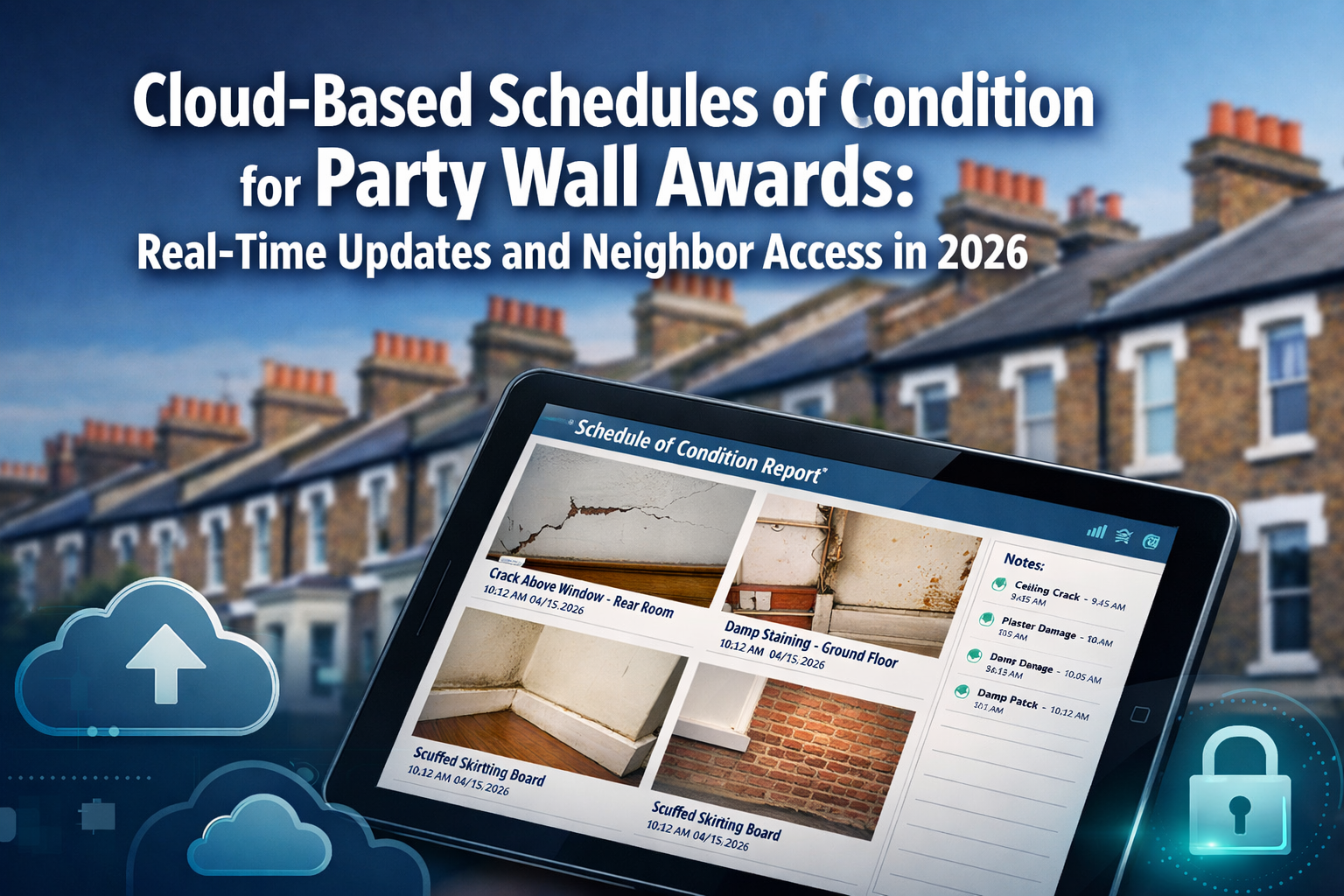
The traditional paper-based approach to documenting property conditions during party wall works is rapidly becoming obsolete. In 2026, Cloud-Based Schedules of Condition for Party Wall Awards: Real-Time Updates and Neighbor Access are transforming how surveyors, building owners, and adjoining owners manage documentation under the Party Wall etc. Act 1996. This digital revolution enables instant updates, transparent neighbor access, and dispute prevention through secure, collaborative platforms that keep all parties informed throughout the construction process.
Key Takeaways
- Cloud-based schedules of condition provide real-time access for all parties involved in party wall awards, eliminating delays and miscommunication associated with paper documentation
- Secure neighbor access portals allow adjoining owners to review condition reports instantly, reducing disputes and building trust between parties
- Digital templates and standardized formats help surveyors create comprehensive, consistent schedules of condition that comply with the Party Wall etc. Act 1996
- Automated version control and audit trails ensure complete transparency and legal defensibility throughout the party wall process
- Mobile-first platforms enable surveyors to capture, annotate, and upload condition evidence directly from construction sites in 2026
Understanding Schedules of Condition in Party Wall Awards
A schedule of condition serves as a critical protective document that records the existing state of an adjoining owner's property before construction work begins. This photographic and written record establishes a baseline condition that can be referenced if disputes arise about damage caused during building works.
Under the Party Wall etc. Act 1996, schedules of condition are not legally mandatory but are highly recommended as part of comprehensive party wall awards. These documents protect both building owners and adjoining owners by providing clear evidence of pre-existing conditions, cracks, decorative finishes, and structural elements [2].
Traditional Challenges with Paper-Based Documentation
Historically, schedules of condition were compiled as printed documents with physical photographs attached or bound into reports. This approach created several significant problems:
- Limited accessibility – Only one party could review the document at a time
- Version control issues – Updates required reprinting and redistribution
- Storage challenges – Physical documents could be lost, damaged, or degraded
- Delayed communication – Neighbors waited days or weeks to receive copies
- High reproduction costs – Multiple color copies with photographs were expensive
- Difficulty with updates – Adding supplementary evidence required creating entirely new documents
These limitations often contributed to misunderstandings and disputes that could have been prevented with better documentation practices.
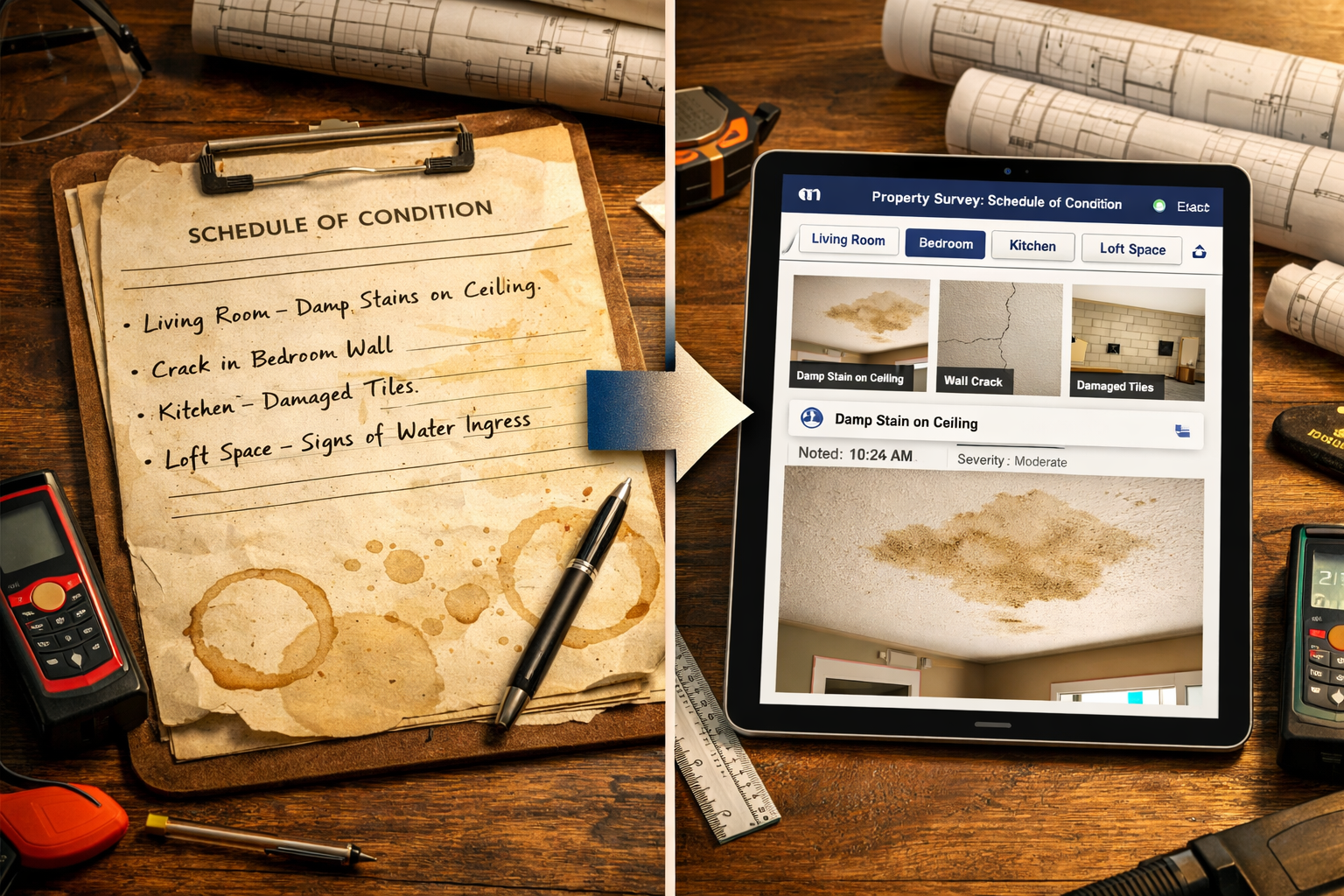
The Digital Transformation of Party Wall Documentation in 2026
The surveying industry has undergone significant technological advancement in recent years. In 2026, cloud-based platforms specifically designed for party wall documentation have become increasingly sophisticated and widely adopted across the UK construction sector.
What Are Cloud-Based Schedules of Condition?
Cloud-based schedules of condition are digital documentation systems hosted on secure internet servers that allow authorized parties to access, review, and update property condition records from any device with internet connectivity. These platforms integrate:
- High-resolution photography with geolocation and timestamp metadata
- Interactive annotation tools for marking specific areas of concern
- Structured templates that ensure comprehensive coverage
- Automatic organization by room, elevation, or structural element
- Real-time synchronization across all authorized users
- Version history tracking that maintains complete audit trails
These systems transform static documents into dynamic, collaborative records that serve the interests of all parties involved in party wall works.
Key Features of Modern Cloud Platforms
Leading cloud-based party wall documentation platforms in 2026 offer comprehensive feature sets designed specifically for surveying professionals:
| Feature | Benefit | Impact on Party Wall Process |
|---|---|---|
| Mobile capture | Surveyors photograph conditions on-site using smartphones or tablets | Faster documentation, immediate upload, reduced office processing time |
| Automated indexing | AI-powered categorization of images by location and element type | Consistent organization, easier navigation, professional presentation |
| Neighbor portals | Secure login access for adjoining owners to review documentation | Increased transparency, reduced disputes, improved trust |
| Comment threads | Stakeholders can add notes and questions directly to specific images | Clear communication, documented discussions, collaborative resolution |
| Comparison tools | Side-by-side viewing of before/after conditions | Objective damage assessment, dispute prevention, clear evidence |
| Digital signatures | Electronic approval and acknowledgment of condition records | Legal compliance, faster approvals, complete audit trail |
Security and Data Protection Considerations
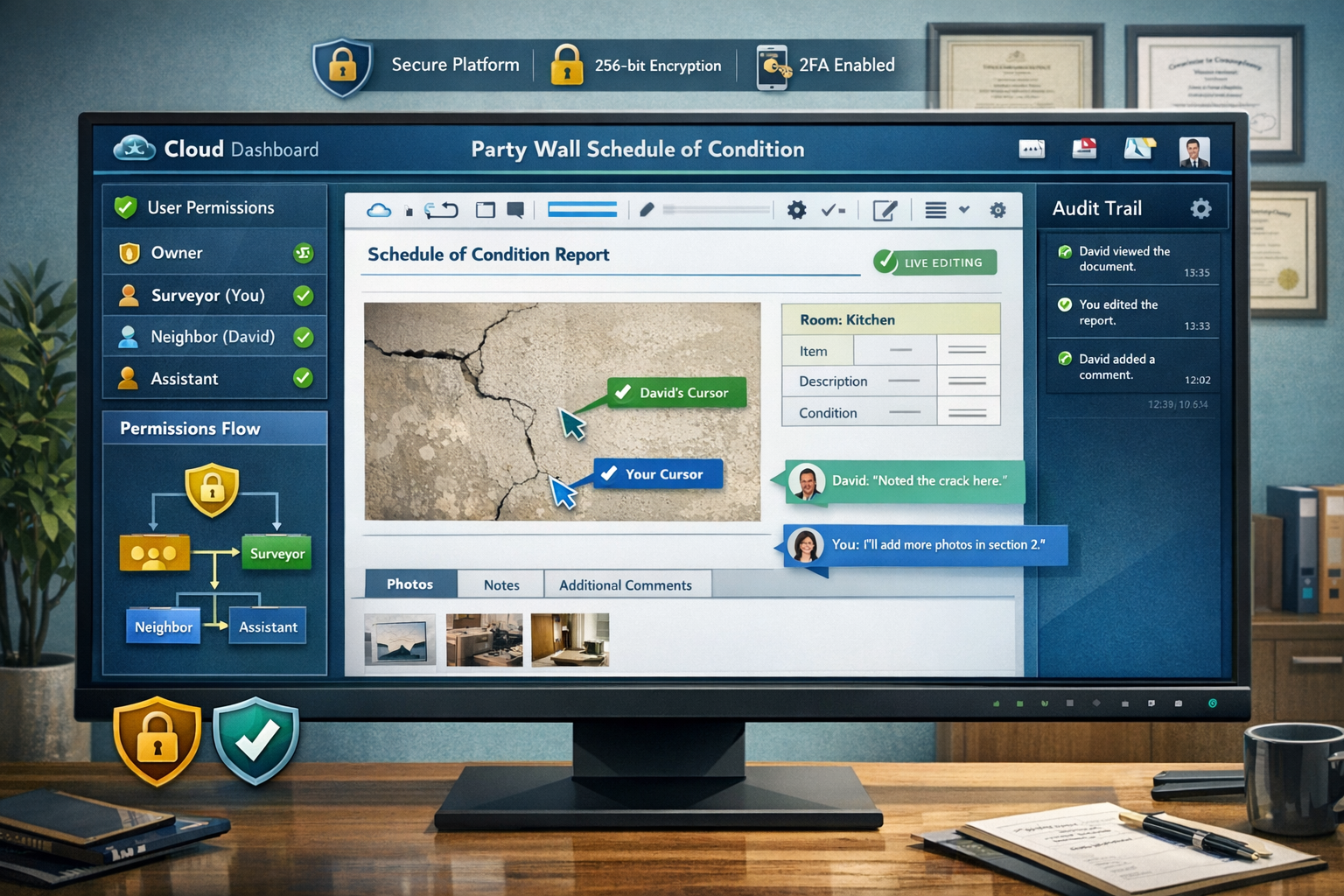
When implementing cloud-based schedules of condition for party wall awards, security must be paramount. Professional platforms in 2026 incorporate multiple layers of protection:
Encryption Standards 🔒
- End-to-end encryption for data transmission
- AES-256 encryption for stored documents
- Secure socket layer (SSL) certificates for all connections
Access Control Measures 👥
- Role-based permissions (surveyor, building owner, adjoining owner)
- Two-factor authentication requirements
- Individual login credentials with password complexity requirements
- Session timeout protocols for inactive users
Compliance Requirements ✅
- UK GDPR compliance for personal data handling
- ISO 27001 information security standards
- Regular third-party security audits
- Data residency within UK servers when required
Backup and Recovery 💾
- Automated daily backups to geographically separate locations
- Point-in-time recovery capabilities
- Redundant server infrastructure
- Disaster recovery protocols
These security measures ensure that sensitive property information remains protected while still enabling the transparency and accessibility that make cloud-based systems valuable.
Real-Time Updates and Neighbor Access: Transforming Party Wall Relationships
The most significant advantage of Cloud-Based Schedules of Condition for Party Wall Awards: Real-Time Updates and Neighbor Access in 2026 is the fundamental transformation of how parties communicate and collaborate throughout construction projects.
Immediate Neighbor Access Benefits
When adjoining owners receive instant access to condition schedules through secure portals, the entire party wall process becomes more transparent and collaborative:
Enhanced Trust Building 🤝
Neighbors can review documentation immediately after the surveyor's site visit, rather than waiting for printed reports to arrive by post. This immediacy demonstrates professionalism and builds confidence in the process.
Proactive Question Resolution ❓
Adjoining owners can raise questions or concerns about specific photographs or descriptions directly within the platform. Surveyors receive notifications and can respond quickly, preventing small concerns from escalating into formal disputes.
Reduced Anxiety and Uncertainty 😌
Construction work affecting shared walls naturally creates anxiety for adjoining owners. Real-time access to comprehensive condition records provides reassurance that their property interests are being properly protected and documented.
Empowered Participation 💪
Rather than being passive recipients of information, neighbors become active participants in the documentation process. They can suggest additional areas for photography or request clarification on specific elements before works commence.
Real-Time Update Capabilities
Cloud platforms enable surveyors to maintain living documents that evolve as circumstances change:
Supplementary Inspections 📸
If unexpected conditions are discovered during construction, surveyors can immediately add supplementary photographs and notes to the existing schedule. All parties receive automatic notifications of updates, ensuring everyone stays informed.
Progress Monitoring 📊
Some advanced platforms in 2026 allow for periodic condition checks during construction, with new photographs added to the same document structure. This creates a complete timeline of the property's condition throughout the project.
Damage Documentation ⚠️
If damage occurs during works, immediate photographic evidence can be captured and uploaded with precise timestamps. This contemporaneous documentation is far more credible than retrospective claims.
Resolution Tracking ✔️
When remedial works are completed to address any damage, before-and-after comparisons can be documented within the same system, creating a complete record of the resolution process.
Practical Implementation for Surveyors
For party wall surveyors adopting cloud-based systems in 2026, successful implementation requires thoughtful planning and clear communication:
Client Onboarding Process 📋
- Explain the benefits of cloud-based documentation when accepting instructions
- Obtain email addresses for all parties who will receive access
- Clarify data protection measures and security protocols
- Set expectations for notification frequency and response times
- Provide simple user guides for accessing the portal
Documentation Standards 📝
Professional surveyors should maintain consistent standards regardless of delivery method:
- Comprehensive photographic coverage of all relevant areas
- Clear written descriptions accompanying each image
- Systematic organization by location or structural element
- Professional presentation with firm branding
- Compliance with party wall award requirements
Communication Protocols 📧
Establish clear guidelines for how parties should use the platform:
- Specify expected response times for questions
- Define appropriate use of comment features
- Clarify when formal written correspondence is still required
- Maintain professional boundaries in digital communications
Surveyor Templates and Standardization
One of the most valuable aspects of cloud-based platforms for schedules of condition is the ability to create and utilize standardized templates that ensure comprehensive, consistent documentation across all projects.
Benefits of Template-Based Approaches
Consistency Across Projects 📐
Templates ensure that every schedule of condition covers the same essential elements, reducing the risk of overlooking important details. This standardization is particularly valuable for firms with multiple surveyors who need to maintain consistent quality standards.
Efficiency Gains ⚡
Pre-structured templates with standard room categories, typical defect descriptions, and common photographic requirements significantly reduce the time required to complete documentation. Surveyors can focus on property-specific details rather than recreating basic document structures.
Training and Quality Control 🎓
New surveyors can learn proper documentation techniques more quickly when working with comprehensive templates. Senior surveyors can review work more efficiently when all schedules follow the same organizational structure.
Legal Defensibility ⚖️
Standardized templates that comprehensively address all relevant aspects of property condition provide stronger legal protection if disputes arise. Courts and arbitrators recognize the thoroughness of systematic documentation approaches.
Essential Template Components
Professional schedule of condition templates for party wall work should include structured sections for:
Property Identification 🏠
- Full address and property description
- Ownership details and contact information
- Date and time of inspection
- Weather conditions during inspection
- Names of persons present during survey
Exterior Elements 🧱
- Roof coverings and condition
- Chimneys and flues
- External walls and rendering
- Windows and doors
- Rainwater goods and drainage
- Boundary structures and party fence walls
- Paving and ground surfaces
Interior Elements 🏡
- Room-by-room photographic coverage
- Wall and ceiling finishes
- Floors and floor coverings
- Decorative condition and quality
- Built-in fixtures and fittings
- Pre-existing cracks, stains, or damage
Structural Elements 🔨
- Party walls and their condition
- Load-bearing walls
- Floor and ceiling joists (where visible)
- Foundations (where accessible)
- Structural movement or defects
Utilities and Services 🔌
- Visible plumbing and pipework
- Electrical installations
- Heating systems
- Ventilation arrangements
Customization for Specific Work Types
While standardized templates provide a foundation, cloud-based systems in 2026 allow easy customization for different types of party wall works:
Loft Conversions 🏗️
Additional focus on roof structures, ceiling joists, and upper floor rooms most likely to be affected by works above.
Basement Excavations ⛏️
Enhanced documentation of foundations, ground floor levels, and potential settlement indicators throughout the adjoining property.
Party Wall Rebuilding 🧰
Detailed recording of the existing party wall structure, its connection to adjoining structures, and comprehensive coverage of rooms on both sides.
New Boundary Walls 🧱
Focus on existing boundary conditions, ground levels, drainage arrangements, and potential access issues.
Best Practices for Cloud-Based Party Wall Documentation
To maximize the benefits of Cloud-Based Schedules of Condition for Party Wall Awards: Real-Time Updates and Neighbor Access in 2026, surveyors and property owners should follow established best practices:
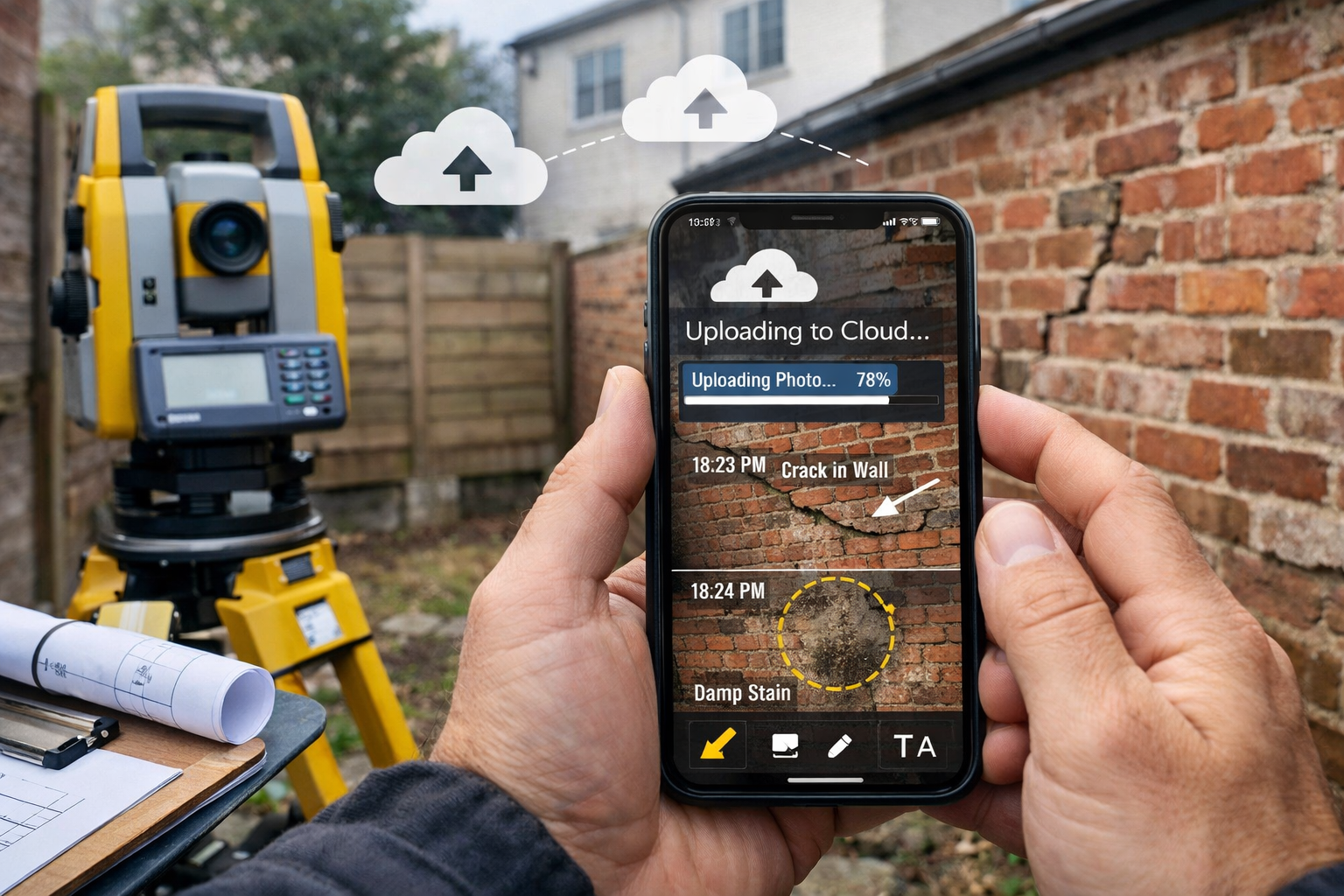
Technical Best Practices
Image Quality Standards 📷
- Use high-resolution cameras (minimum 12 megapixels)
- Ensure adequate lighting for all photographs
- Include scale references where appropriate
- Capture wide shots for context and close-ups for detail
- Enable GPS tagging for location verification
- Use timestamp features to verify documentation timing
Metadata Management 🏷️
- Apply consistent naming conventions to all images
- Tag photographs with relevant keywords
- Organize by room, elevation, or structural element
- Include descriptive captions for all images
- Link related photographs together
Platform Selection Criteria 💻
When choosing a cloud-based platform, surveyors should evaluate:
- Security certifications and compliance standards
- User interface simplicity for non-technical clients
- Mobile app functionality and offline capabilities
- Integration with existing surveying software
- Customer support and training resources
- Pricing structure and scalability
- Data export options and portability
Professional Practice Standards
Informed Consent ✍️
Always obtain explicit consent from all parties before providing cloud-based access. Explain the system, its benefits, and any limitations clearly in writing.
Data Retention Policies 📅
Establish clear policies for how long condition records will remain accessible. Many surveyors maintain access throughout the construction period and for a defined period afterward (commonly 6-12 months post-completion).
Backup Procedures 💾
Despite cloud storage reliability, maintain independent backups of all critical documentation. Export final schedules to PDF format and store in multiple locations.
Professional Indemnity Considerations 🛡️
Ensure that professional indemnity insurance covers digital documentation methods and data security incidents. Discuss cloud-based practices with insurers to confirm coverage.
Client Communication 📞
Maintain regular communication with all parties about documentation progress, access issues, and any questions that arise. Don't rely solely on platform notifications—supplement with direct contact.
Dispute Prevention Strategies
The ultimate goal of comprehensive schedules of condition is preventing disputes rather than merely documenting evidence for potential disputes. Cloud-based systems support this goal through:
Pre-Work Agreement 🤝
Encourage all parties to review and acknowledge the schedule of condition before works commence. Digital signature features facilitate this process and create clear records of agreement.
Interim Inspections 🔍
Schedule periodic condition checks during construction, particularly at key milestones. Document that no damage has occurred or address any issues immediately.
Open Communication Channels 💬
Use platform comment features to maintain transparent dialogue about any concerns. Address questions promptly and professionally.
Photographic Evidence Standards 📸
Capture sufficient evidence to resolve potential disputes objectively. Include reference points that allow precise location identification in future inspections.
Integration with the Party Wall Award Process
Cloud-based schedules of condition should be seamlessly integrated into the broader party wall award process to maximize their effectiveness.
Timing Within the Party Wall Procedure
The schedule of condition is typically prepared after the party wall award has been agreed but before works commence. The optimal timing sequence is:
- Party wall notices served by building owner
- Surveyors appointed (if required)
- Site inspections and discussions conducted
- Party wall award drafted and agreed
- Schedule of condition prepared and shared ✅
- All parties acknowledge condition documentation
- Construction works commence
This timing ensures that the protective documentation is in place before any risk of damage occurs, while still being current and accurate.
Incorporation into Party Wall Awards
The party wall award document should explicitly reference the schedule of condition and establish its role in the process. Standard clauses might include:
"A schedule of condition has been prepared documenting the existing condition of the Adjoining Owner's property at [address]. This schedule is available to all parties through a secure cloud-based platform and forms part of this Award. The Building Owner shall be responsible for making good any damage to the Adjoining Owner's property that occurs during the Works, as evidenced by comparison to the schedule of condition."
Relationship to Other Award Provisions
Cloud-based schedules of condition complement other important award provisions:
Access Rights 🚪
The award should specify rights of access for periodic inspections to verify that no damage is occurring. Cloud platforms facilitate documenting these interim inspections.
Damage Resolution Procedures 🔧
Awards should establish clear procedures for addressing any damage discovered during or after works. The schedule of condition provides the baseline for assessing whether damage has occurred.
Cost Provisions 💷
Understanding how to keep party wall costs down includes efficient documentation processes. Cloud-based systems can reduce surveyor time and therefore fees compared to traditional paper-based approaches.
Regional Considerations Across London
The adoption of cloud-based schedules of condition varies somewhat across different areas of London, influenced by property types, construction activity levels, and local surveying practices.
High-Activity Areas
Areas with intensive development activity have seen faster adoption of digital documentation methods:
- Central London – High-value properties and sophisticated clients expect cutting-edge documentation
- North London – Extensive loft conversion activity drives demand for comprehensive condition records
- South London – Growing development areas benefit from efficient documentation processes
- East London – Regeneration projects require robust documentation for multiple adjoining properties
- West London – Premium property market values transparency and professional documentation
Property Type Considerations
Different property types present varying documentation challenges that cloud-based systems address effectively:
Victorian Terraces 🏘️
These properties with shared party walls on both sides benefit enormously from comprehensive condition records. Cloud systems efficiently manage the large volume of photographs required.
Mansion Blocks 🏢
Multi-unit buildings with complex party wall relationships require careful organization of documentation by unit. Cloud platforms' indexing capabilities excel in these situations.
Detached Properties 🏡
Even properties without party walls may require condition schedules for boundary wall work. Digital systems maintain consistency across all project types.
Future Developments in Cloud-Based Party Wall Documentation
Looking ahead beyond 2026, several emerging technologies promise to further enhance cloud-based schedules of condition:
Artificial Intelligence Integration 🤖
AI-powered analysis tools are beginning to:
- Automatically identify and flag potential defects in photographs
- Compare before-and-after images to detect changes
- Generate written descriptions from photographic evidence
- Predict areas most vulnerable to construction damage
Augmented Reality Applications 📱
AR technology enables:
- Overlay of historical condition photographs onto current views
- Virtual site inspections for remote parties
- Interactive 3D models of property conditions
- Enhanced visualization of potential damage risks
Blockchain Verification 🔗
Blockchain technology offers:
- Immutable timestamps for all documentation
- Cryptographic proof of document authenticity
- Decentralized storage reducing single-point failures
- Enhanced legal defensibility of evidence
Internet of Things Monitoring 📡
IoT sensors can provide:
- Continuous monitoring of vibration levels during works
- Real-time alerts if movement thresholds are exceeded
- Automated documentation of environmental conditions
- Objective evidence of construction impact
Conclusion: Embracing Digital Transformation for Better Party Wall Outcomes
Cloud-Based Schedules of Condition for Party Wall Awards: Real-Time Updates and Neighbor Access in 2026 represent a fundamental improvement over traditional paper-based documentation methods. By providing instant access, transparent communication, and comprehensive evidence, these digital platforms serve the interests of all parties involved in party wall works under the Party Wall etc. Act 1996.
For surveyors, cloud-based systems offer efficiency gains, professional presentation, and enhanced risk management. For building owners, they provide robust protection and streamlined processes. For adjoining owners, they deliver transparency, participation, and peace of mind.
Actionable Next Steps
For Party Wall Surveyors 📋
- Research and evaluate cloud-based documentation platforms suitable for your practice
- Develop standardized templates for common work types
- Create client onboarding materials explaining digital documentation benefits
- Update professional indemnity insurance to cover digital practices
- Train staff on platform features and best practices
For Building Owners Planning Works 🏗️
- Discuss cloud-based documentation options with your surveyor
- Ensure your party wall notices mention digital documentation methods
- Provide email addresses for all relevant parties early in the process
- Review condition schedules promptly when access is granted
- Maintain open communication through platform features
For Adjoining Owners 🏡
- Request cloud-based access when responding to party wall notices
- Review condition documentation thoroughly and raise questions promptly
- Take advantage of comment features to document concerns
- Save or export final documentation for your records
- Monitor for update notifications throughout the construction period
The digital transformation of party wall documentation is not merely a technological upgrade—it represents a fundamental shift toward more collaborative, transparent, and effective management of party wall relationships. By embracing cloud-based schedules of condition in 2026, all parties can benefit from reduced disputes, improved communication, and better protection of property interests throughout the construction process.
References
[2] Party Wall Agreement – https://hoa.org.uk/advice/guides-for-homeowners/i-am-improving/party-wall-agreement/