

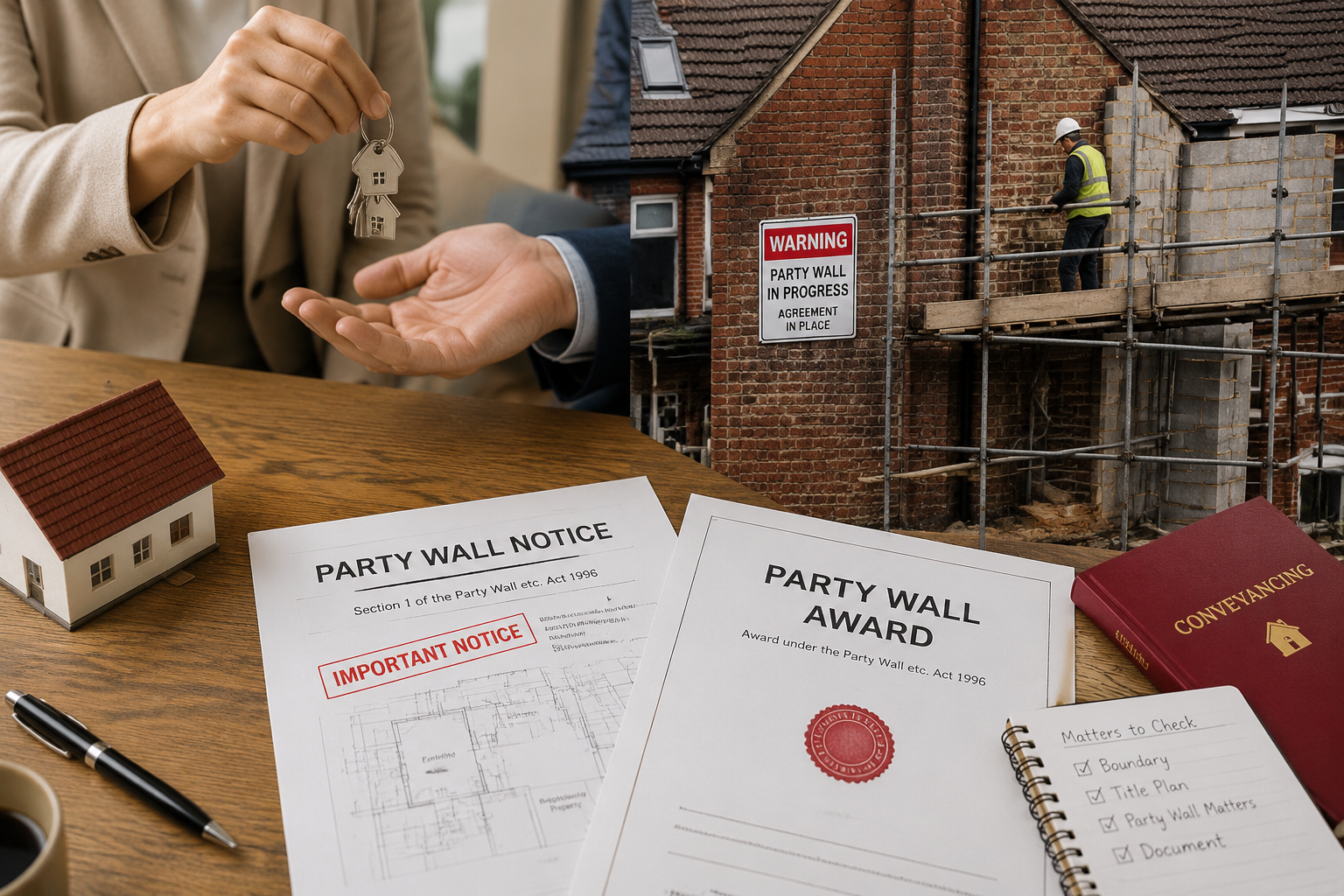
Nearly one in three property transactions involving terraced or semi-detached homes in England and Wales encounters some form of party wall issue — yet a significant number of buyers only discover unresolved works after they have exchanged contracts. That gap between discovery and exchange is where deals stall, costs escalate, and disputes begin.
Navigating Party Wall Agreements During Property Sales: How Buyers, Sellers, and Conveyancers Should Handle Ongoing Works is not simply a procedural box-ticking exercise. It is a core part of due diligence that directly affects completion timelines, mortgage approvals, and long-term ownership obligations. Whether works are underway, recently finished, or about to begin, every party in the transaction — buyer, seller, and conveyancer — carries specific responsibilities under the Party Wall etc. Act 1996.
This article breaks down exactly what those responsibilities are, what documentation must be in place, and how to protect all parties when a property sale intersects with ongoing or recent party wall works.
Key Takeaways 📋
- Ongoing party wall works do not pause during a sale. The buyer steps into the seller's legal shoes as "building owner" upon completion, inheriting all obligations under the Act.
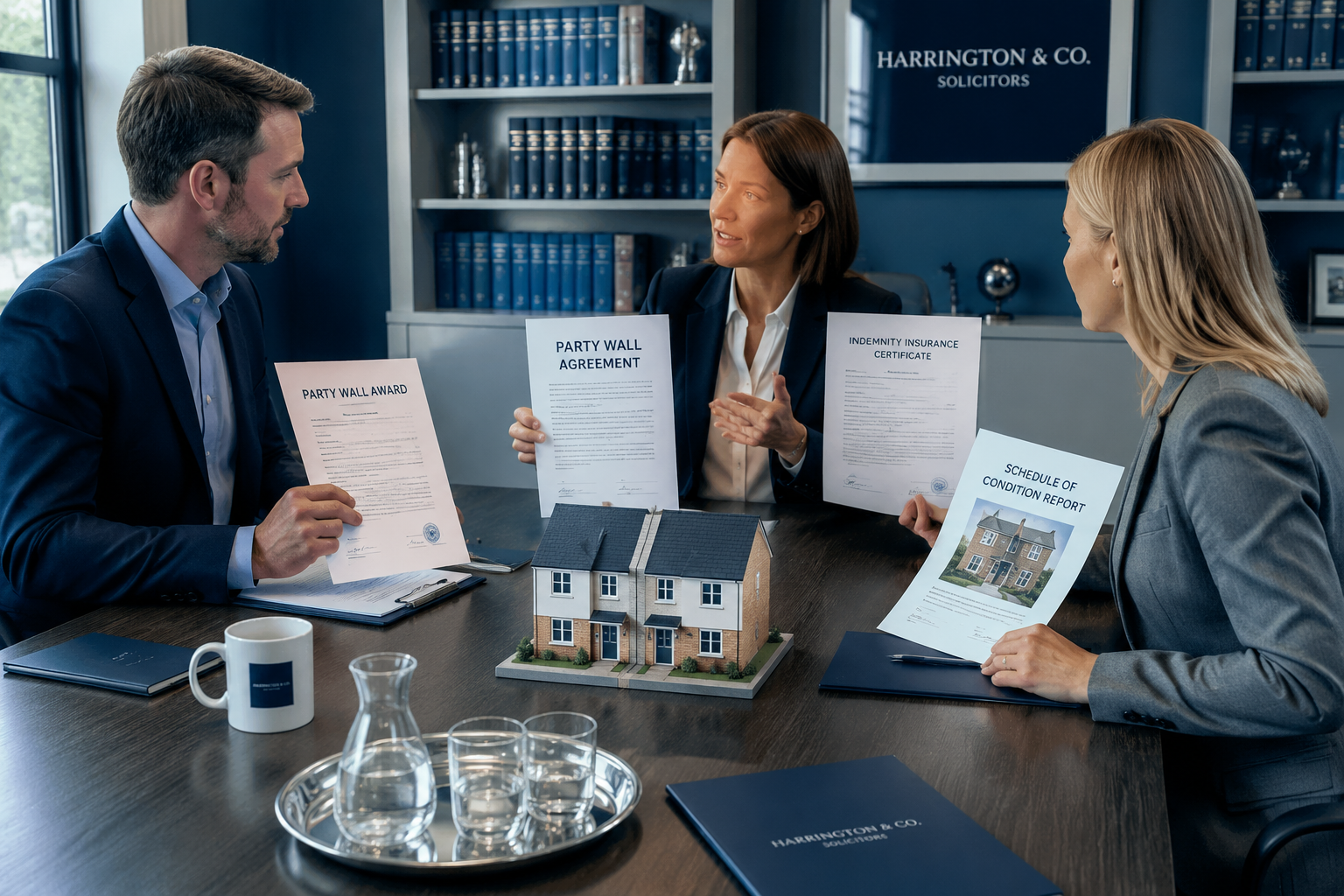
- A Party Wall Award is a legally binding document that allocates liability for damage and sets conditions for works — conveyancers must obtain and review it before exchange.
- Informal neighbour consents are not automatically transferable to a new owner; fresh notices or written consent may be needed.
- Lenders may refuse to release funds if party wall compliance cannot be evidenced, making early identification critical.
- Existing party wall agreements "run with the land," meaning buyers inherit both the benefits and the burdens from the moment of completion.
What Is a Party Wall Agreement and Why Does It Matter in a Sale?
A party wall is a shared wall, floor, or structure that sits on or near the boundary between two properties [1]. Under the Party Wall etc. Act 1996, any owner planning works that affect such a structure must serve formal Party Wall Notices on all adjoining owners before works begin [2].
If the adjoining owner does not consent in writing within 14 days, a dispute is deemed to have arisen. At that point, surveyors are appointed and a Party Wall Award is produced — a legally binding document that governs how works are carried out, including:
- Working hours and access arrangements
- A schedule of condition of the adjoining property (pre-works photographic record)
- Liability for any damage caused
- Insurance requirements
💡 Pull Quote: "A Party Wall Award does not just govern the works — it allocates legal liability. Any buyer who inherits ongoing works without reviewing the Award is taking on risk they may not even know exists."
The Difference Between a Party Wall Award and a Party Wall Agreement
These two terms are often used interchangeably, but they are distinct:
| Term | What It Is | Legally Binding? |
|---|---|---|
| Party Wall Award | Formal document issued by appointed surveyor(s) under the 1996 Act | Yes — under statute |
| Party Wall Agreement | Written consent from an adjoining owner, or a private contractual arrangement | Yes — as a contract |
| Informal Consent | Verbal or written agreement without formal surveyor involvement | Limited — not always transferable |
For a deeper look at how Awards work in practice, see this guide on party wall contract templates and awards.
How Party Wall Agreements During Property Sales Affect Buyers, Sellers, and Conveyancers
The Seller's Obligations: Disclosure and Documentation
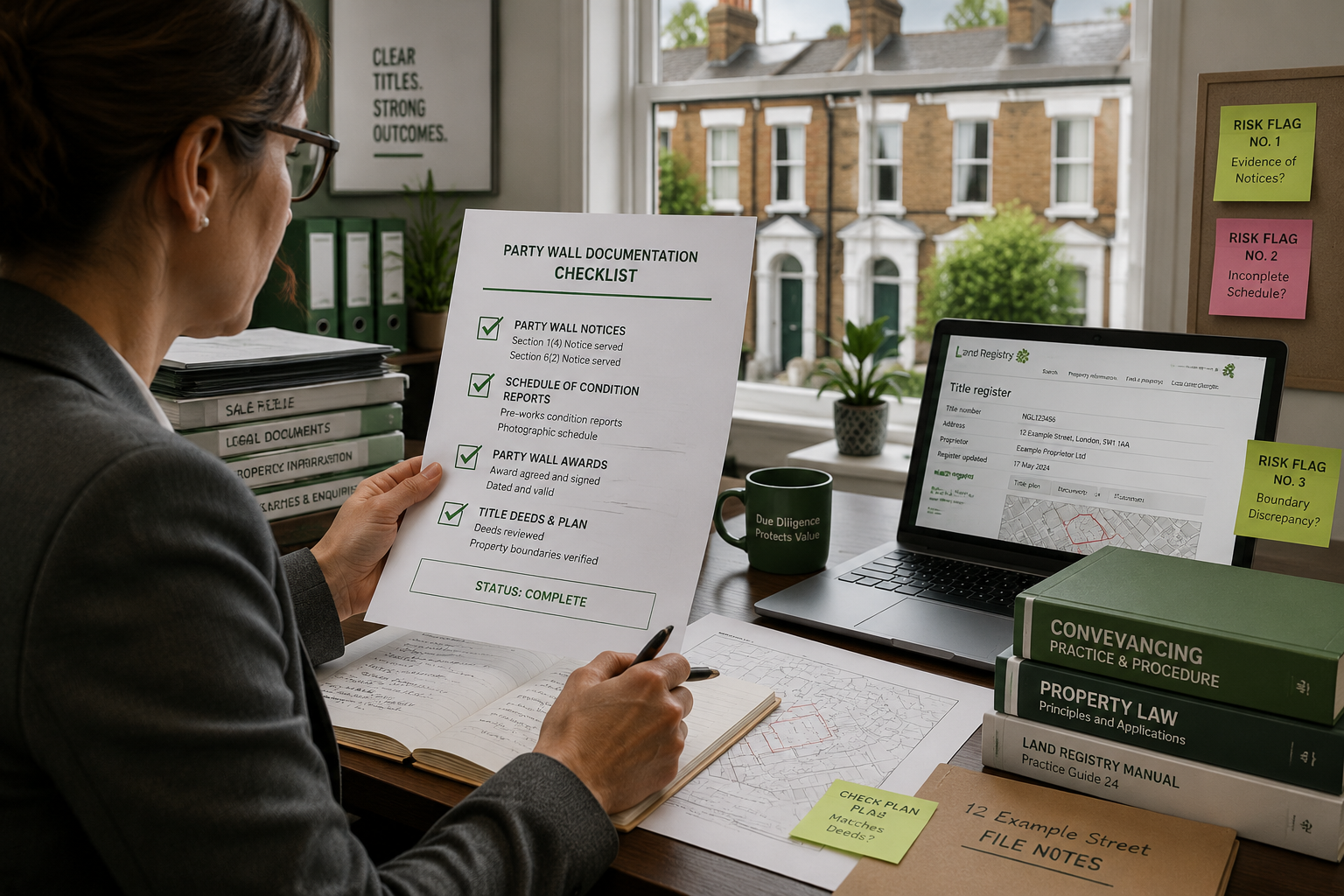
Sellers have a duty to disclose all material facts about a property. Where party wall works are ongoing or recently completed, this means providing:
- ✅ Copies of all Party Wall Notices served
- ✅ Written consents received from adjoining owners (if applicable)
- ✅ The Party Wall Award (if one was issued)
- ✅ The schedule of condition
- ✅ Evidence that any surveyor fees have been settled
- ✅ Details of any outstanding disputes or damage claims [3]
Failing to disclose these documents is not merely an oversight — it can expose sellers to claims for misrepresentation after completion [10].
Where a seller has started works without serving valid notices or obtaining an Award, this is a serious compliance failure. Specialist construction lawyers advise that completion should normally be delayed until the seller achieves compliance, or the contract must include robust protections such as:
- A retention held by the buyer's solicitor until works are completed and signed off
- An indemnity from the seller against future claims by the adjoining owner
- A contractual obligation for the seller to obtain an Award before or immediately after completion [3]
The Buyer's Risks: Stepping Into the Seller's Shoes
When a property is purchased mid-works, the buyer does not inherit a clean slate. Under the Party Wall etc. Act 1996, the buyer becomes the new "building owner" from the moment of completion. This means:
- Any ongoing works continue under the buyer's legal responsibility
- The buyer is liable for any damage caused to the adjoining property after completion, even if the works were planned and started by the seller
- If no valid Award was in place, the buyer may face challenges from the adjoining owner [2]
There is no automatic statutory transfer of a neighbour's informal consent to a new owner. Expert commentary consistently recommends that buyers either obtain fresh written consent from adjoining owners or ensure new or updated Party Wall Notices are served and, where necessary, a new Award is procured [4].
Buyers should also be aware that existing party wall agreements recorded in the title run with the land — they automatically bind future owners [6]. This means buyers inherit:
- Cost-sharing obligations for shared wall maintenance and repairs
- Access rights (and obligations) for future works
- Restrictions on modifications to shared structures
- Insurance and reserve requirements in some multi-unit settings [6]
🔑 Key Point: In townhouse, HOA, or multi-unit settings, refusing an existing party wall agreement is effectively the same as refusing to buy the property. These covenants are a condition of purchase, not a negotiable add-on [9].
The Conveyancer's Checklist: What Must Be Verified Before Exchange
For both buyer's and seller's conveyancers, party wall matters require structured due diligence. The following checklist reflects current best practice for 2026 transactions:
Pre-Exchange Checks:
- Search the title — Check Land Registry records and any local authority records for existing party wall agreements or covenants
- Review the title pack — Confirm it includes all Notices, consents, Awards, and schedules of condition for any past or ongoing works
- Verify Notice validity — Confirm that all required party wall notices were served correctly and within the required timeframes
- Check for outstanding disputes — Confirm no surveyor fees, damage claims, or injunctions are pending
- Assess lender requirements — Many mortgage lenders require sight of the Award and evidence of compliance before releasing funds [8]
- Advise on post-completion liability — Buyers must understand they may be liable for damage claims if works continue after they become building owner
Post-Exchange / Pre-Completion Checks:
- Confirm works are progressing in line with the Award
- Verify no new disputes have arisen since exchange
- Ensure any retentions or indemnities agreed in the contract are properly documented
Handling Specific Scenarios: Practical Guidance for Each Party
Scenario 1: Works Are Ongoing at the Point of Sale
This is the highest-risk scenario. The seller should:
- Immediately provide all party wall documentation to their conveyancer
- Confirm the Award is in place and the works are being carried out in compliance with it
- Disclose any damage already caused or claimed by the adjoining owner
The buyer's conveyancer should treat the absence of a valid Award as a red flag requiring resolution before exchange — not after [3].
Scenario 2: Works Were Completed Recently (Within 12 Months)
Even completed works carry residual risk. The adjoining owner may still bring a claim for damage caused during the works. Conveyancers should:
- Obtain a copy of the Award and schedule of condition
- Check whether any damage was identified and whether it has been remedied
- Consider whether indemnity insurance is appropriate if documentation is incomplete [10]
Scenario 3: The Seller Plans to Start Works After Sale
Where a seller intends to carry out party wall works but has not yet started, the buyer should ensure:
- Any contractual obligation for the seller to complete works before completion is clearly documented
- The buyer is not left to deal with the notice and Award process on their own after taking ownership
- The types of party wall works involved are clearly identified, as different works carry different risk profiles
Scenario 4: The Adjoining Owner Is Also Selling
Where both properties in a party wall situation are being sold simultaneously, coordination between all four conveyancers becomes essential. New owners on both sides may need to confirm their acceptance of existing Awards or agree to fresh arrangements.
The Impact on Mortgages and Completion Timing ⏱️
Party wall issues can directly affect whether and when a mortgage is approved. Lenders and their panel solicitors frequently require:
- Sight of any Party Wall Award for structural works (loft conversions, extensions, new foundations)
- Evidence that all required notices were served correctly
- Confirmation that no disputes are outstanding
- Adequate insurance where compliance cannot be fully evidenced [8]
Where these requirements are not met, lenders may refuse to release funds until the issues are resolved. This can delay completion by weeks or even months — a significant problem in chains.
Early identification is the single most effective way to prevent these delays. Conveyancers who raise party wall questions in the initial enquiries stage — rather than waiting for the results of searches — consistently achieve smoother completions.
For those managing costs, it is also worth noting that unresolved party wall disputes can significantly increase surveyor and legal fees. Practical tips on keeping party wall costs down are available for those navigating the process for the first time.
When There Is No Party Wall Agreement: Risks and Remedies
A surprisingly common situation — particularly in older properties — is where works were carried out without any party wall compliance whatsoever [10]. This can occur when:
- The original owner was unaware of the Act's requirements
- Works were carried out informally with a verbal agreement from the neighbour
- The property has changed hands multiple times since the works were done
In these cases, the adjoining owner retains the right to bring a claim for damages, even years after the works were completed. The absence of a schedule of condition makes it very difficult to prove what damage (if any) was caused by the works.
Options for buyers in this situation include:
- Obtaining a retrospective party wall indemnity insurance policy (widely available from specialist insurers)
- Negotiating a price reduction to reflect the risk
- Requiring the seller to obtain retrospective consent from the adjoining owner in writing before exchange
Buyers who are concerned about whether a neighbour's works may have affected their property can find guidance on what to do when a neighbour is carrying out works.
Summary: Roles and Responsibilities at a Glance
| Party | Key Responsibilities |
|---|---|
| Seller | Disclose all party wall documentation; ensure valid Award is in place; settle outstanding fees and disputes |
| Buyer | Review all documentation before exchange; understand inherited obligations; seek fresh consents if needed |
| Seller's Conveyancer | Include all party wall documents in the title pack; advise on disclosure obligations; negotiate indemnities if needed |
| Buyer's Conveyancer | Verify compliance with the 1996 Act; check lender requirements; advise buyer on post-completion liability |
| Party Wall Surveyor | Issue Awards; prepare schedules of condition; advise on compliance for ongoing or planned works |
Conclusion: Actionable Next Steps for a Smoother Transaction
Party Wall Agreements During Property Sales: How Buyers, Sellers, and Conveyancers Should Handle Ongoing Works is a topic that rewards early action and thorough documentation. The risks — delayed completions, lender refusals, post-completion damage claims — are entirely manageable when identified and addressed before exchange.
Here are the immediate next steps for each party:
- 🏡 Sellers: Gather all party wall documentation now. Do not wait for the buyer's solicitor to ask. If works are ongoing without a valid Award, instruct a party wall surveyor immediately.
- 🔍 Buyers: Ask specific questions about party wall works in your initial enquiries. Do not exchange contracts until you have reviewed the Award and understand your inherited obligations.
- ⚖️ Conveyancers: Make party wall compliance a standard item in your pre-exchange checklist. Raise it early, raise it clearly, and document your advice to clients.
Where works are complex, or where documentation is incomplete, engaging a specialist party wall surveyor is the most cost-effective way to protect all parties. The Party Wall etc. Act 1996 exists to protect neighbours and building owners alike — but only when it is followed correctly.
References
[1] Party Wall – https://www.investopedia.com/terms/p/party-wall.asp
[2] Party Wall Agreement – https://hoa.org.uk/advice/guides-for-homeowners/i-am-improving/party-wall-agreement/
[3] Buying Property Party Wall Award – https://osborneslaw.com/blog/buying-property-party-wall-award/
[4] What Is A Party Wall Agreement – https://www.trelora.com/blog/what-is-a-party-wall-agreement/
[6] Party Wall Agreements And Townhome Declarations Key Issues To Watch Out For When Drafting – https://ngazette.com/party-wall-agreements-and-townhome-declarations-key-issues-to-watch-out-for-when-drafting/
[8] What You Need To Know About Party Wall Agreements – https://www.carpenterlourie.com/blog/2021/04/what-you-need-to-know-about-party-wall-agreements/
[9] Party Walls and Boundary Fences – https://journal.firsttuesday.us/party-walls-and-boundary-fences/83883/
[10] Party Wall Agreement Never Sought – https://www.property118.com/party-wall-agreement-never-sought/