
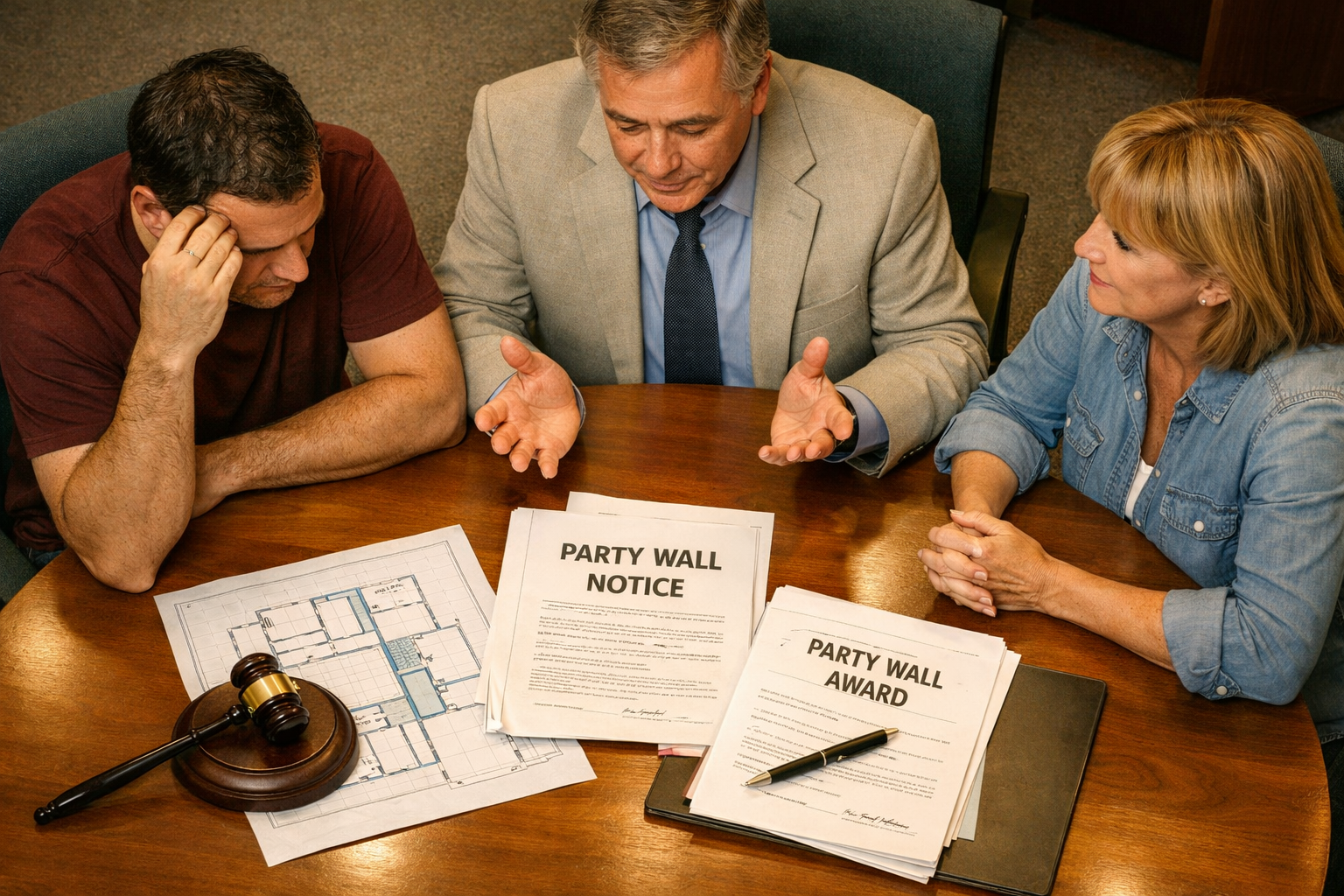

Nearly 35% of party wall disputes escalate beyond the initial notice stage — not because of legal complexity, but because of broken communication and unchecked emotion. In 2026, as urban development intensifies and neighbor relationships grow more strained, the role of emotional intelligence in party wall surveying has moved from a “nice to have” to an essential professional competency.
Emotional Intelligence in Party Wall Surveying: Managing Neighbor Disputes and Building Consensus in 2026 Projects is no longer a soft-skills footnote. It is the difference between a smoothly executed loft conversion and a two-year legal standoff. Drawing from expert insights — including experiences shared by surveyors like Sarah Tanner, who has navigated hundreds of contentious London neighbor disputes — this article explores how emotional fluency, empathy, and strategic communication are reshaping how surveyors serve both building owners and adjoining owners in high-stakes interactions.
Key Takeaways
- 🧠 Emotional intelligence (EQ) is now a core professional skill for party wall surveyors, not just a personality trait.
- 🤝 De-escalation during notice service is one of the highest-impact moments where EQ determines project outcomes.
- 📋 Award negotiations benefit enormously from surveyors who can manage both parties’ emotional states alongside legal obligations.
- 🏘️ Consensus-building techniques reduce costs, delays, and the likelihood of formal disputes reaching tribunal.
- 📈 In 2026, EQ is being recognized across industries as foundational infrastructure for effective professional practice [1].
Why Emotional Intelligence Has Become Central to Party Wall Practice
“Technical knowledge gets you through the door. Emotional intelligence keeps it open.”
— Surveyor Sarah Tanner, reflecting on two decades of neighbor dispute work
The Party Wall etc. Act 1996 provides a clear legal framework. But no statute can legislate how a neighbor feels when they receive a formal notice telling them that construction will begin next door. Fear, distrust, and territorial anxiety are the emotional realities that surveyors walk into every day.
A 2025 Korn Ferry CEO and Board Survey found that emotional intelligence ranks as a critical leadership competency, cited by 38% of respondents — behind AI proficiency (69%) and crisis management (51%), but ahead of many traditional technical skills [2]. The message is clear: in high-pressure, relationship-dependent roles, EQ matters enormously.
For party wall surveyors, this is not abstract. Their work sits at the intersection of property law, construction management, and interpersonal conflict. Every interaction — from serving a party wall notice to negotiating a party wall award — carries emotional weight for the people involved.
The 2026 Emotional Intelligence Landscape
Ayerhs Magazine describes 2026 as “the era of emotional intelligence,” positioning EQ as “the new social infrastructure” — a shift from performative confidence toward genuine emotional fluency and self-awareness [1]. This cultural shift is reaching professional services including surveying, where clients increasingly expect their advisors to be emotionally attuned, not just technically proficient.
Mark Duckworth, a building surveyor featured on The Surveyor Hub Podcast, emphasizes that emotional intelligence and communication skills are inseparable from technical ability in modern surveying practice [3]. The best surveyors, he argues, are those who can read a room as fluently as they can read a set of structural drawings.
The Five EQ Competencies That Matter Most in Party Wall Surveying
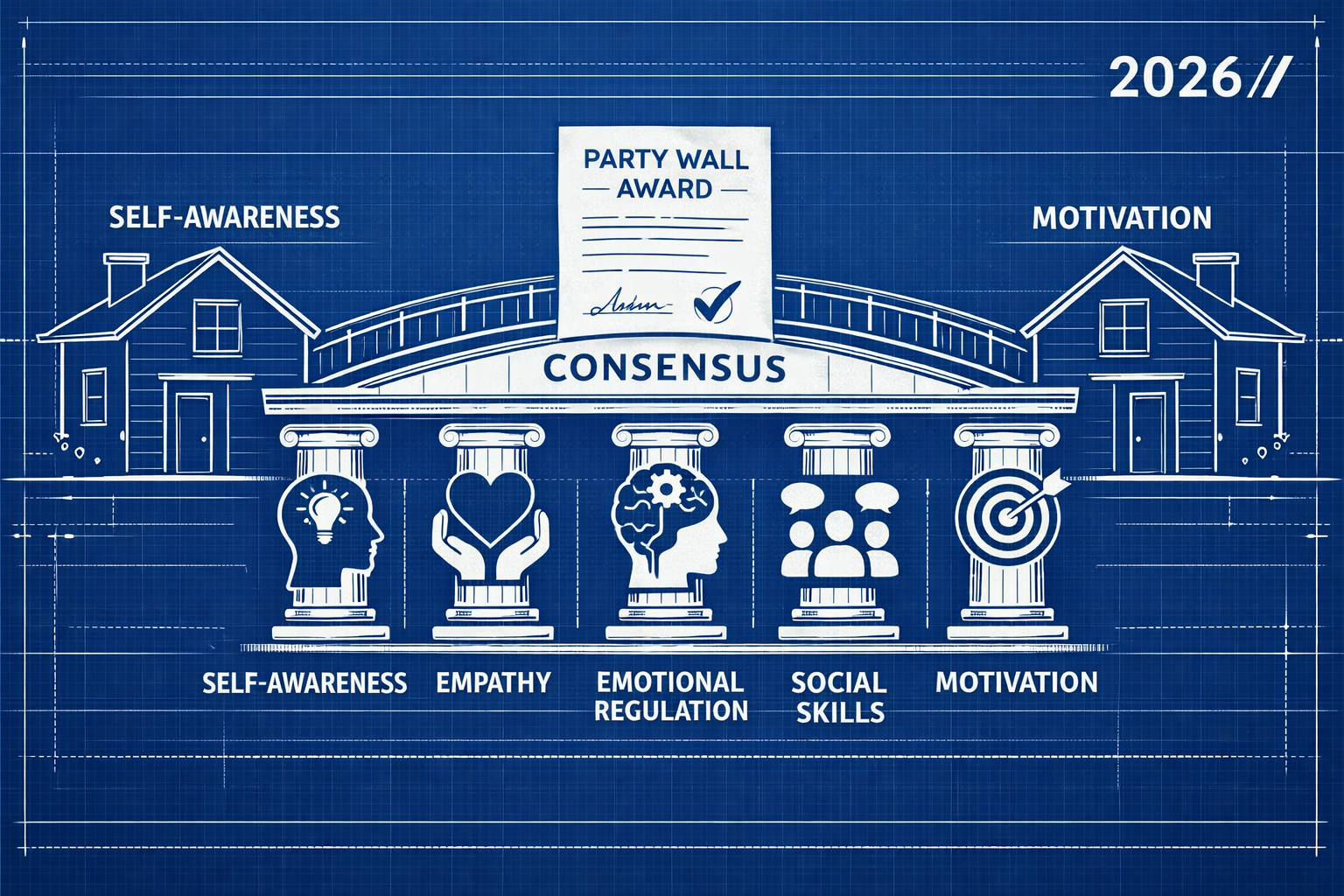
Emotional intelligence is not a single skill — it is a cluster of competencies. In the context of Emotional Intelligence in Party Wall Surveying: Managing Neighbor Disputes and Building Consensus in 2026 Projects, five competencies stand out as particularly impactful.
1. 🔍 Self-Awareness
A surveyor who recognizes their own frustration when an adjoining owner is being obstructive can choose a measured response rather than a reactive one. Self-awareness prevents professional tone from slipping into adversarial language — a small shift that can derail an entire project.
Practical tip: Before entering a contentious meeting, experienced surveyors like Sarah Tanner recommend a brief emotional “check-in” — identifying any personal stress or bias that might color professional judgment.
2. 🧘 Emotional Regulation
Party wall work regularly involves people who are genuinely distressed. An adjoining owner who fears their Victorian terrace will be damaged during excavation is not being unreasonable — they are being human. Surveyors who can remain calm under pressure create a psychological safety net that allows both parties to think more clearly.
3. 👂 Empathy
Empathy is not agreement. A surveyor can fully understand why a neighbor objects to proposed works without conceding that the objection is legally valid. This distinction is critical. Empathy allows the surveyor to acknowledge feelings without abandoning professional neutrality.
When serving notices under the Act — including a party structure notice — the manner of delivery matters as much as the legal content. A notice hand-delivered with a brief, friendly explanation lands very differently than one that arrives cold through a letterbox.
4. 🗣️ Social Skills and Communication
This encompasses active listening, clear explanation of complex legal concepts, and the ability to reframe conflict as a shared problem to be solved. Surveyors who communicate the costs of the party wall process transparently — including who pays and why — reduce suspicion and build trust.
5. 🎯 Motivation and Persistence
Consensus-building is rarely quick. An emotionally intelligent surveyor stays motivated to find workable solutions even when negotiations stall, rather than defaulting to adversarial procedures that cost everyone more time and money.
EQ Competency Impact Table
| EQ Competency | Key Application in Party Wall Work | Impact Level |
|---|---|---|
| Self-Awareness | Managing personal bias during disputes | 🔴 High |
| Emotional Regulation | Staying calm with distressed neighbors | 🔴 High |
| Empathy | Acknowledging fears during notice service | 🔴 High |
| Social Skills | Explaining legal processes clearly | 🟠 Medium-High |
| Motivation | Persisting toward agreed outcomes | 🟠 Medium-High |
Applying EQ at Every Stage: From Notice to Award
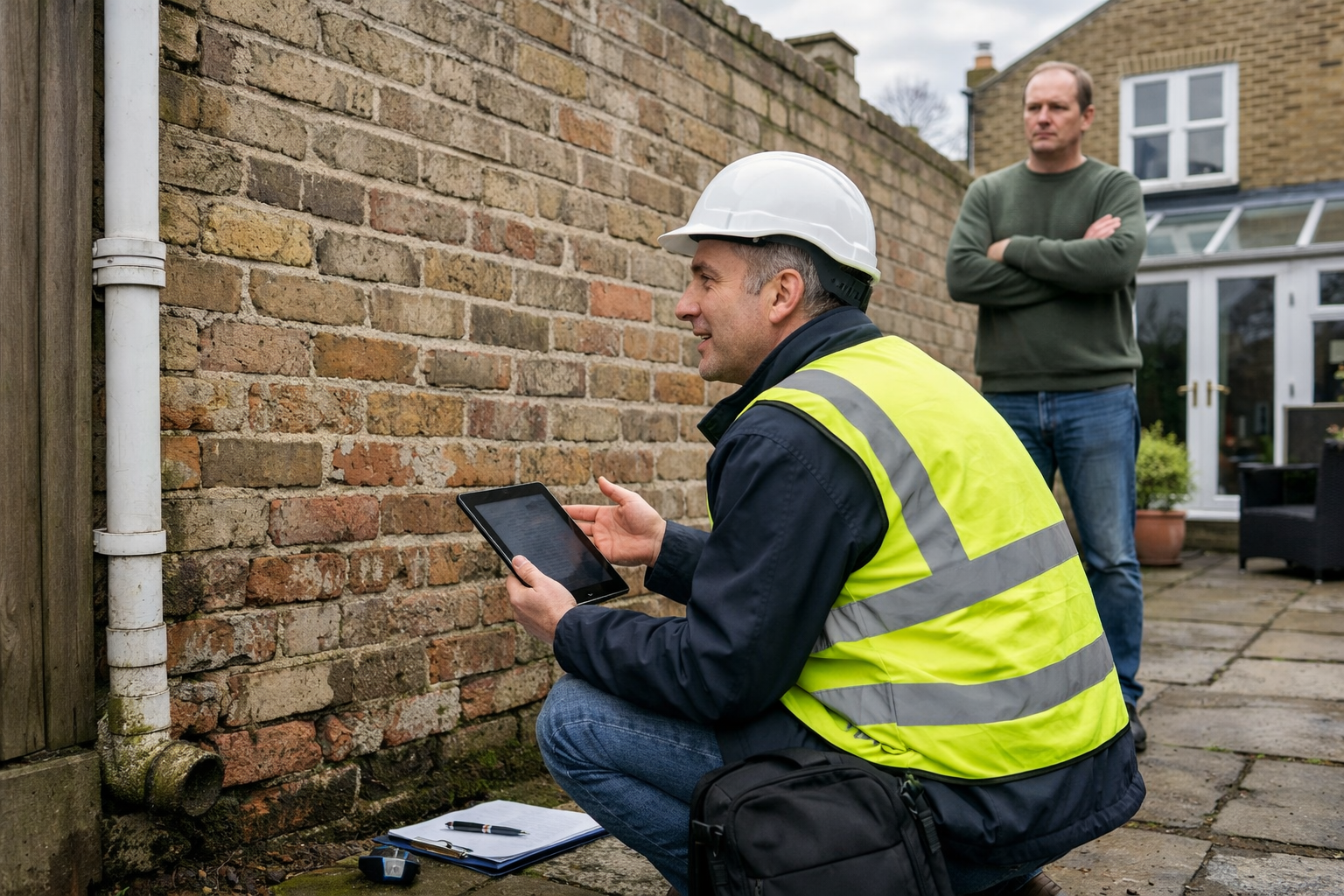
Understanding EQ in theory is one thing. Deploying it at each critical stage of a party wall project is another. Here is how emotional intelligence in party wall surveying shapes outcomes across the project lifecycle.
Stage 1: Serving the Notice 📬
The moment a party wall notice lands, the emotional clock starts ticking. Adjoining owners who feel blindsided or disrespected are far more likely to dissent and appoint their own surveyor — adding cost and delay for everyone involved.
EQ-informed best practice:
- Introduce the notice in person where possible, or with a covering letter that explains the process in plain language
- Acknowledge that construction is disruptive and that the neighbor’s concerns are valid
- Provide contact details and invite questions before formal dissent is considered
- Reference resources like having a party wall agreement without a surveyor for lower-stakes situations where consent may be straightforward
Sarah Tanner notes that in her experience, a 15-minute conversation at the door when serving a notice has prevented formal disputes in dozens of cases. The legal document is the same — but the human delivery changes everything.
Stage 2: The Schedule of Condition 🏚️
A schedule of condition protects both parties by documenting the pre-works state of the adjoining property. For many neighbors, this is the first time a professional has formally acknowledged that their property matters in this process.
Emotionally intelligent surveyors use this stage to build trust. Explaining why the schedule protects the neighbor — not just the building owner — shifts the dynamic from adversarial to collaborative. It signals: “We are here to be fair to everyone.”
Stage 3: Award Negotiation 📝
This is where emotional intelligence in party wall surveying faces its greatest test. Two surveyors — one appointed by the building owner, one by the adjoining owner — must agree on a party wall award that governs how works proceed. When the parties behind those surveyors are emotionally charged, negotiations can become proxy battles for unresolved neighbor grievances.
Strategies that work:
- Separate the legal from the personal. Remind all parties that the award is a technical document, not a verdict on who is “right.”
- Use neutral language. Avoid framing that implies fault or blame on either side.
- Acknowledge delays and frustrations openly. Pretending tension doesn’t exist rarely makes it disappear.
- Focus on shared interests. Both parties want the project completed safely and the neighbor’s property protected. That common ground is the foundation for agreement.
For complex projects, understanding the full range of types of party wall works helps surveyors contextualize risks accurately — preventing both over-reaction and under-preparation.
Stage 4: During Construction 🏗️
Even after an award is agreed, emotional flashpoints can arise. Unexpected noise, dust, or damage can reignite tensions. Surveyors who maintain open communication channels — and who respond quickly and empathetically to concerns — prevent minor incidents from becoming major disputes.
💡 Pro tip: A brief, proactive check-in with the adjoining owner midway through construction costs nothing and can prevent a complaint that derails the final weeks of a project.
Building Consensus: Practical Techniques for 2026 Projects
Emotional Intelligence in Party Wall Surveying: Managing Neighbor Disputes and Building Consensus in 2026 Projects ultimately comes down to one goal: getting both parties to a place where they can agree, proceed, and move on with their lives.
Here are consensus-building techniques that emotionally intelligent surveyors use in 2026:
✅ The “Concerns First” Opening
Rather than leading with legal rights and timelines, open neighbor conversations by asking: “What are your main concerns about this project?” This simple inversion signals respect and generates information that helps tailor the surveyor’s approach.
✅ Reframing Objections as Questions
When a neighbor says “I don’t want this to happen,” an emotionally intelligent surveyor hears: “What would need to be true for this to feel acceptable to me?” Reframing objections as unanswered questions opens negotiating space that pure legal argument closes.
✅ Transparent Cost Communication
One of the most common sources of neighbor distrust is confusion about who pays for what. Proactively explaining how to keep party wall costs down — and being clear about cost allocation in the award — removes a major source of anxiety and resentment.
✅ Written Summaries After Verbal Discussions
After any significant conversation, a brief written summary sent to both parties confirms what was discussed and agreed. This prevents misremembering, reduces suspicion, and creates a paper trail that protects everyone.
✅ Knowing When to Step Back
Sometimes the most emotionally intelligent move is to acknowledge that a dispute has moved beyond the surveyor’s role and recommend formal resolution mechanisms. Trying to force consensus when parties are too entrenched can backfire. Knowing the limits of informal mediation is itself a form of professional self-awareness.
The Business Case for EQ in Party Wall Practice
Beyond the human benefits, there is a clear commercial argument for emotional intelligence in party wall surveying.
| Outcome | Without EQ | With EQ |
|---|---|---|
| Notice dissent rate | Higher | Lower |
| Time to agreed award | Longer | Shorter |
| Client referrals | Fewer | More |
| Formal tribunal referrals | More frequent | Rare |
| Repeat business | Lower | Higher |
Surveyors who build reputations for fair, calm, and empathetic practice attract more instructions — from building owners who want smooth projects and from adjoining owners who feel they were treated with respect. In competitive urban markets like London, where party wall surveyors in North London, South London, and East London operate in densely packed residential areas, reputation is everything.
The Faculty of Party Wall Surveyors (FPWS) continues to develop professional standards and training events that increasingly incorporate communication and interpersonal skills alongside technical competencies [4].
Conclusion: Actionable Next Steps for Emotionally Intelligent Party Wall Practice
The technical framework of party wall surveying is well-established. The legal obligations under the Party Wall etc. Act 1996 are clear. What separates good surveyors from exceptional ones in 2026 is the ability to bring emotional intelligence to every stage of the process — from the first knock on a neighbor’s door to the signing of a final award.
Here are five actionable steps for surveyors and building owners alike:
-
Invest in EQ training. Communication and conflict resolution workshops are increasingly available through professional bodies. Treat them as seriously as CPD on technical matters.
-
Humanize the notice process. Never let legal formality replace human courtesy. A personal introduction alongside formal paperwork changes the entire emotional tone of a project.
-
Use the schedule of condition as a trust-builder. Frame it as protection for the neighbor, not just a legal formality.
-
Communicate costs proactively. Transparency about fees and responsibilities removes one of the most common sources of neighbor resentment.
-
Reflect after difficult cases. Emotionally intelligent professionals review what worked and what didn’t — not to assign blame, but to improve future practice.
In 2026, the surveyors who thrive will be those who understand that buildings are built between people, not just between boundary lines. Emotional intelligence is not a luxury — it is the foundation on which lasting professional trust is built.
References
[1] The Era Of Emotional Intelligence In 2026 – ayerhsmagazine.com
[2] Ceo And Board Survey – kornferry.com
[3] Watch – youtube.com
[4] Eeeventslist – fpws.org.uk
Speak to a RICS chartered party wall surveyor
Free initial consultation. Notices, awards and schedules of condition across London and nationwide.