
Only 15% of chartered surveyors in the United Kingdom are women — and within the niche discipline of party wall surveying, that figure is even smaller. Yet the stories emerging from this corner of the built environment sector tell a different story: one of rapid advancement, growing mentorship infrastructure, and a profession that, for those willing to enter it, offers genuine career mobility and financial reward.
Women in Party Wall Surveying: Breaking Barriers, Mentorship Paths, and Industry Insights for 2026 Careers is not just a headline. It reflects a real and measurable shift happening across London and beyond in 2026, as formal mentoring programmes, diversity networks, and a booming construction pipeline converge to create conditions that have never been more favourable for women entering or advancing within this field.
This article draws on current mentorship initiatives, lived career trajectories, and practical industry data to map out what the path forward looks like — and how to navigate it strategically.
Key Takeaways
- Women remain significantly underrepresented in party wall surveying, but structured mentorship programmes launched in 2026 are actively closing the gap.
- The Party Wall etc. Act 1996 creates consistent demand for qualified surveyors, making this a stable and growing career niche.
- Career entry routes are diverse — many successful women in the field began in administrative or assistant roles before qualifying.
- Formal mentoring, peer networks, and professional bodies are now critical tools for accelerating progression.
- London's active construction market means demand for party wall surveyors is high across all zones, creating strong employment prospects for 2026 and beyond.
The State of Gender Diversity in Party Wall Surveying in 2026

Party wall surveying sits at the intersection of law, construction, and neighbour relations. It is governed by the Party Wall etc. Act 1996, a piece of legislation that requires building owners to notify adjoining owners before undertaking certain types of structural work. The process involves serving party wall notices, preparing schedules of condition, and — where disputes arise — producing legally binding party wall awards.
It is technical, legally nuanced, and client-facing work. It is also, historically, a field dominated by men.
The reasons are structural rather than merit-based. Surveying as a profession has long drawn from civil engineering and construction management pipelines where women have been underrepresented at the entry level. Party wall surveying, as a specialist offshoot, inherited those same demographic patterns. However, 2026 marks a notable inflection point.
Several factors are driving change:
- Formal diversity and inclusion commitments from professional bodies including the Royal Institution of Chartered Surveyors (RICS)
- A new wave of structured mentorship programmes specifically targeting women in built environment careers
- Growing awareness of the profession among non-traditional entrants, including those from legal, administrative, and project management backgrounds
- London's sustained construction activity, which keeps demand for qualified party wall surveyors consistently high
The Chartered Institution of Civil Engineering Surveyors (CICES) launched its Women's Network Mentoring Programme on 8 March 2026, timed to coincide with International Women's Day. The 12-month programme provides practical guidance and structured support to women at various career stages across construction and surveying disciplines [1]. This kind of institutional backing signals that the profession is no longer simply talking about diversity — it is building infrastructure to support it.
Why Party Wall Surveying Specifically?
Party wall surveying offers something relatively rare in the built environment: a defined legal framework that creates consistent, recurring demand. Every time a homeowner in a London terrace wants to dig a basement, raise a shared wall, or build a rear extension, the Party Wall etc. Act 1996 is triggered. That demand does not disappear in economic downturns the way speculative development does.
For women evaluating career options within surveying, this stability is significant. The work is also highly client-facing and communication-intensive — skills that many women entering from administrative, legal, or customer-facing backgrounds already possess in abundance.
From PA to Associate Director: How Career Paths Actually Work

The story of Sarah Tanner — who moved from a personal assistant role into party wall surveying and eventually reached associate director level — is not an anomaly. It is, increasingly, a template.
Party wall surveying does not require a single prescribed entry route. While many practitioners hold RICS-accredited degrees, a significant number have qualified through the Assessment of Professional Competence (APC) route after working in the industry for several years. Others have entered through legal support roles, construction project administration, or even as building control officers.
This diversity of entry points is one of the profession's quiet strengths — and one that women in particular can leverage.
Typical Career Stages in Party Wall Surveying
| Stage | Role Examples | Key Skills Developed |
|---|---|---|
| Entry Level | Surveying assistant, admin support, PA | Document management, client communication, notice preparation |
| Junior Practitioner | Graduate surveyor, trainee party wall surveyor | Site inspections, schedule of condition drafting, legal correspondence |
| Mid-Level | Party wall surveyor, associate | Award preparation, dispute resolution, client management |
| Senior Level | Senior surveyor, associate director, director | Business development, team leadership, expert witness work |
The transition from entry to junior practitioner is often the most critical — and most supported — stage in 2026, thanks to the expansion of mentorship infrastructure.
The Role of Mentorship in Accelerating Progression
Structured mentorship is now widely recognised as one of the most effective tools for closing gender gaps in technical professions. The Women+ in Geospatial Mentorship Programme, now in its sixth year, has supported over 680 women across 82 countries through 279 mentorship relationships, offering one-to-one, group, and peer mentorship models [2]. While this programme focuses on geospatial careers, its model is directly applicable to party wall surveying — and its outcomes demonstrate what structured support can achieve.
The WiSE Network (Women in Surveying and Engineering) was established specifically to provide a safe and inclusive space for women in surveying, offering mentoring, networking, and peer support at all career stages [4]. For women in party wall surveying, connecting with networks like WiSE provides access to experienced practitioners who can share technical knowledge, navigate workplace dynamics, and advocate for progression.
"Mentorship is not just about technical knowledge transfer. It is about confidence, visibility, and knowing that someone who has walked this path is invested in your success."
The Future Surveyors Foundation, a non-profit organisation focused on creating opportunities for a diverse and inclusive surveying workforce, has highlighted the profession's significant skills shortages as both a challenge and an opportunity [3]. For women considering entry into party wall surveying in 2026, those skills shortages translate directly into hiring demand and negotiating leverage.
Skills That Transfer Directly Into Party Wall Work
Women entering from non-traditional backgrounds often underestimate how directly their existing skills apply. Consider the following:
- Legal or paralegal experience: Party wall awards are legally binding documents. Understanding legal language, procedure, and dispute resolution is immediately valuable.
- Project management: Coordinating between building owners, adjoining owners, contractors, and architects mirrors project management workflows closely.
- Administrative and document management: Preparing party wall notices and managing case files requires precision and organisation.
- Client communication: Managing anxious neighbours and assertive developers simultaneously demands emotional intelligence and clear communication — skills often developed in client-facing roles.
For those who want to understand the practical scope of the work before committing to qualification, resources like the guide on types of party wall works provide a clear picture of what the day-to-day role involves.
Women in Party Wall Surveying: Breaking Barriers, Mentorship Paths, and Industry Insights for 2026 Careers — Practical Guidance for Getting Started
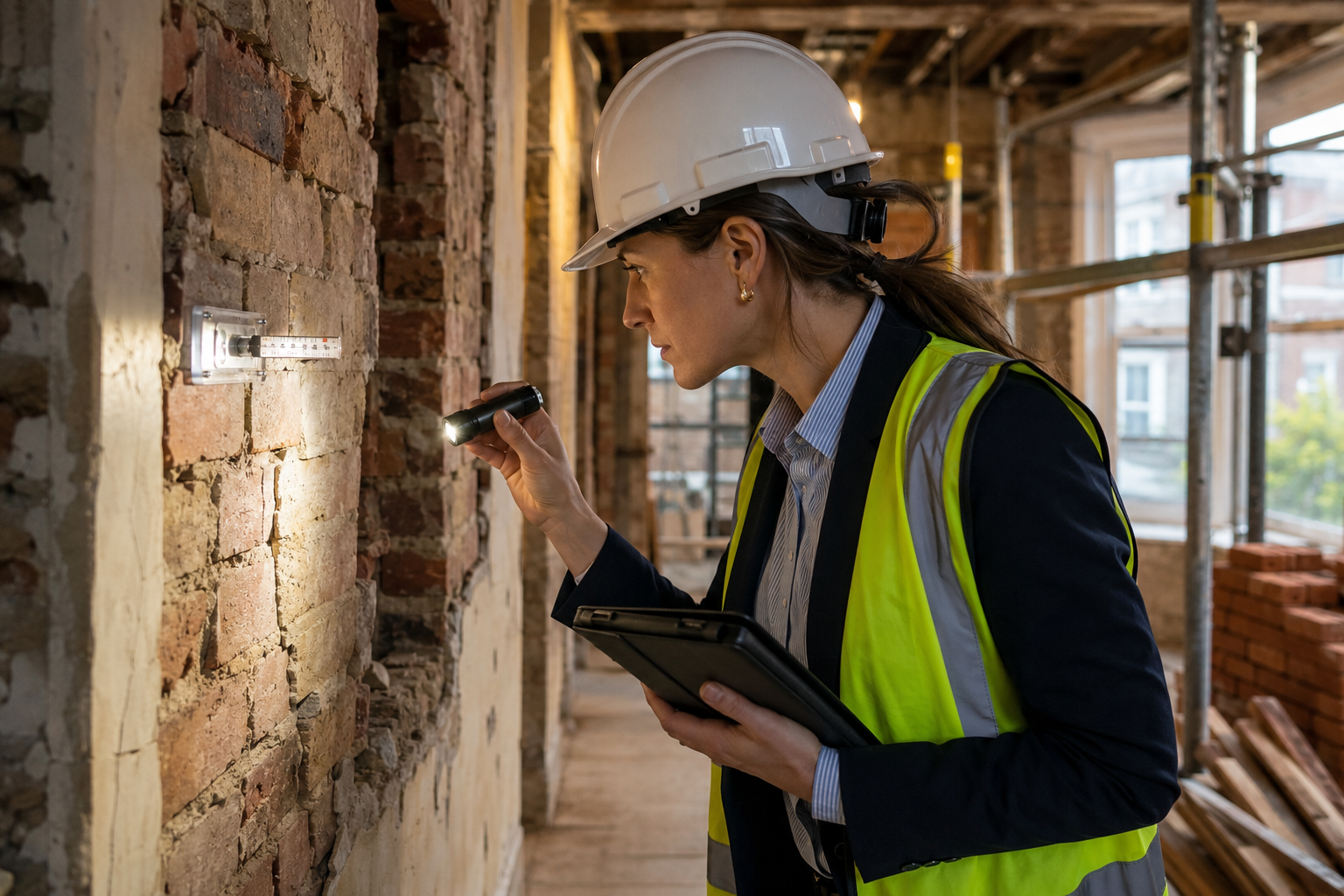
For women considering party wall surveying as a career in 2026, the practical question is: where do you begin? The answer depends on starting point, but several pathways are consistently effective.
Qualification Routes
Route 1: RICS-Accredited Degree + APC
The most traditional route. A degree in building surveying, civil engineering, or a related discipline, followed by the APC, leads to MRICS status. This route typically takes five to seven years from undergraduate entry.
Route 2: Experience-Based APC
For those already working in the built environment — including in administrative or support roles — the APC can be pursued based on documented professional experience. This route has opened the profession to many women who began in roles similar to Sarah Tanner's.
Route 3: Faculty of Party Wall Surveyors (FPWS) Membership
The FPWS offers a specialist qualification route specifically for party wall practitioners. This is particularly useful for those who want to focus exclusively on party wall work rather than broader surveying practice.
Building Technical Knowledge
Understanding the legal framework is non-negotiable. The Party Wall etc. Act 1996 is the foundation of all party wall work. Familiarity with how party wall awards are structured and what a schedule of condition involves will accelerate the learning curve significantly.
Practical resources — including templates and procedural guides — can help build confidence before formal qualification is complete. Understanding the costs of the party wall process is also important for advising clients accurately from early in a career.
Leveraging Mentorship Programmes in 2026
The landscape of mentorship support available to women in technical professions has expanded considerably. Key programmes to be aware of include:
- CICES Women's Network Mentoring Programme [1]: 12-month structured mentorship for women in construction and surveying, launched March 2026.
- WiSE Network [4]: Ongoing peer support, networking, and mentoring for women in surveying at all career stages.
- The Mentors Collective [9]: Custom mentor matching, certification programmes, and networking events focused on professional growth for women.
- Women in Stone Mentorship Program [6]: Established in 2016, this programme has guided hundreds of women through structured six-session mentorship relationships in construction-adjacent industries, providing a proven model applicable to surveying contexts.
The RADIATE Programme by U2030 offers a year-long leadership curriculum combining mentoring, peer networks, and immersive learning for women in technical infrastructure roles [10]. While focused on utilities, its structure — combining development curriculum with peer cohorts — is directly comparable to what is emerging in the surveying sector.
Networking Strategically in London's Party Wall Market
London is the most active market for party wall surveying in the United Kingdom, driven by the density of Victorian and Edwardian terraced housing, ongoing basement conversion activity, and a consistently active planning environment. Demand spans all zones — from North London to South London, East London to West London.
For women building a career in this market, geographic specialisation can be a smart early strategy. Developing deep knowledge of planning patterns, common construction types, and local dispute resolution norms in a specific area builds a reputation faster than attempting to cover the entire city from the outset.
Addressing the Confidence Gap
Research consistently shows that women in technical professions are more likely to underestimate their readiness for promotion or new roles than male counterparts with equivalent experience. In party wall surveying, this can manifest as hesitation to take on solo cases, reluctance to charge market rates, or delaying qualification attempts.
Structured mentorship directly addresses this. The SSPI-WISE Mentoring Program, which has facilitated over 30 mentor-mentee pairs globally in the satellite and space industry, specifically focuses on helping mentees define career goals and develop concrete plans to pursue them [7]. The same goal-setting framework applies directly to party wall surveying career planning.
Practical steps to build confidence include:
- Shadowing an experienced surveyor on site inspections before conducting them independently
- Reviewing completed party wall awards and schedules of condition to understand professional standards
- Joining professional networks and attending industry events to normalise peer-level conversation with senior practitioners
- Setting a clear 12-month qualification or progression milestone and sharing it with a mentor for accountability
The Business Case for Gender Diversity in Party Wall Surveying
The argument for greater diversity in party wall surveying is not purely ethical — it is commercial. Firms that employ diverse teams consistently outperform homogeneous ones on client satisfaction, problem-solving, and retention metrics. In a field where the work is fundamentally about managing competing interests between neighbours, the ability to bring different perspectives and communication styles to disputes is a direct business asset.
For building owners navigating the party wall process, having access to surveyors who can communicate clearly, manage conflict sensitively, and build trust with adjoining owners is worth paying for. Understanding the adjoining owner's perspective is a core competency — and one that benefits from diverse professional teams.
The WIMOs Mentoring Program, a 16-week structured initiative supporting women in maritime careers, reported that participants gained not just career guidance but measurable improvements in professional confidence and industry knowledge [8]. Similar outcomes are being reported by women completing mentorship programmes in construction-adjacent fields, reinforcing the value of structured support as a business investment, not just a welfare initiative.
Conclusion
Women in Party Wall Surveying: Breaking Barriers, Mentorship Paths, and Industry Insights for 2026 Careers is a conversation whose time has clearly arrived. The combination of a legally mandated, consistently in-demand profession; a growing ecosystem of structured mentorship programmes; and London's active construction market creates conditions that are genuinely favourable for women entering or advancing within this field in 2026.
Actionable next steps for women considering or advancing in party wall surveying:
- Audit your transferable skills against the competencies required for party wall work — legal literacy, communication, document management, and site awareness are all highly relevant.
- Identify your qualification route — whether RICS APC, FPWS membership, or an experience-based pathway — and set a clear 12-month milestone.
- Join a structured mentorship programme such as the CICES Women's Network Mentoring Programme or the WiSE Network to gain both technical guidance and professional visibility.
- Build geographic expertise in a specific London zone to accelerate reputation-building in a high-demand market.
- Use available resources — from understanding party wall notices to reviewing party wall award structures — to deepen technical knowledge before and during qualification.
The barriers are real but they are not insurmountable. The infrastructure to support women in this profession is stronger in 2026 than it has ever been. The question is not whether the opportunity exists — it is whether it will be taken.
References
[1] Mentoring – https://cices.org/about-us/committees/womens-network-hub/mentoring/?utm_source=openai
[2] Mentorship Programme – https://womeningeospatial.org/mentorship-programme/?utm_source=openai
[3] futuresurveyors – https://futuresurveyors.org/?utm_source=openai
[4] Wise Network – https://petacox.com/wise-network/?utm_source=openai
[5] Napfa Mentoring Programs – https://www.napfa.org/napfa-mentoring-programs?utm_source=openai
[6] Women In Stone Mentorship Program – https://www.naturalstoneinstitute.org/programs/women-in-stone/women-in-stone-mentorship-program/?utm_source=openai
[7] Sspi Wise Groups – https://www.sspi.org/sspi-wise-groups?utm_source=openai
[8] Mentoring – https://www.wimos.org/mentoring?utm_source=openai
[9] thementorscollective – https://www.thementorscollective.com/?utm_source=openai
[10] Radiate Program – https://www.utility2030.org/programs/radiate-program/?utm_source=openai