Britain’s housing shortage has pushed loft conversion applications to record highs, with over 47,000 projects approved in 2025 alone—yet nearly 30% face costly delays due to party wall compliance failures. As homeowners race to unlock valuable attic space in terraced and semi-detached properties, understanding Party Wall Awards for Loft Conversions and Roof Alterations: 2026 Compliance Essentials has become critical for avoiding legal disputes, construction stoppages, and expensive retrospective corrections.
The Party Wall etc. Act 1996 remains the primary legal framework governing all structural work affecting shared walls in 2026[1]. When loft conversions require cutting into party walls—typically for steel beam installation—formal procedures must be followed to protect both building owners and their neighbours. This comprehensive guide breaks down the notice requirements, surveyor award templates, and compliance essentials that every homeowner needs to navigate successfully.
Key Takeaways
- Two-month minimum notice is legally required before any structural work affecting party walls begins, with specific notice types depending on the work scope[1][2]
- Steel beam installation into shared walls triggers Party Wall Act requirements in most loft conversions, requiring formal agreements and surveyor involvement[2]
- Party Wall Awards typically take 6-10 weeks to issue once disputes arise, and must include provisions for vibration monitoring and structural protection measures[1]
- Thermal performance standards mandate U-values of 0.18W/m²K for new loft walls and 1.4W/m²K for windows under 2026 Building Regulations[3]
- Court injunctions can halt non-compliant projects, making proper party wall procedures essential for avoiding costly legal battles and construction delays[2]
Understanding Party Wall Awards for Loft Conversions and Roof Alterations: 2026 Compliance Essentials
What Is a Party Wall Award?
A Party Wall Award is a legally binding document prepared by appointed surveyors that sets out the rights and responsibilities of both property owners when structural work affects a shared wall. This formal agreement becomes necessary when neighbours do not consent to proposed works or fail to respond to party wall notices within the statutory timeframe.
The award document serves multiple critical functions:
✅ Authorizes specific construction activities that would otherwise constitute trespass
✅ Establishes working hours and access arrangements to minimize neighbour disruption
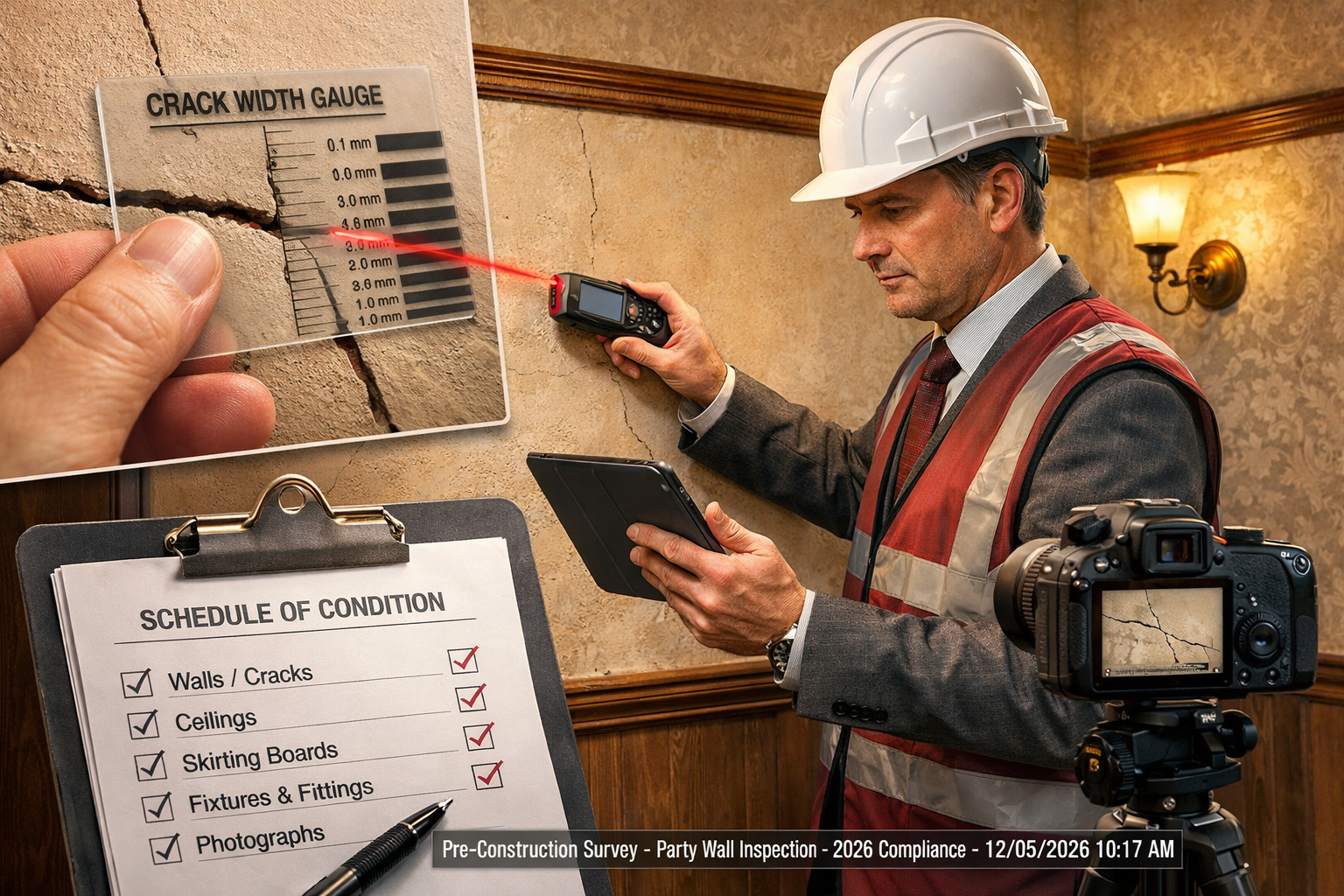
✅ Documents pre-construction property conditions through detailed schedules of condition
✅ Specifies monitoring requirements for vibration, noise, and structural movement
✅ Defines financial responsibilities for surveyor fees and potential damage remediation
For loft conversions, party wall awards become particularly important because the work typically involves significant structural interventions in the upper portions of shared walls—areas especially vulnerable to movement and damage.
The Party Wall etc. Act 1996: Still Governing in 2026
Despite being nearly three decades old, the Party Wall etc. Act 1996 continues to provide the complete legal framework for party wall matters in 2026, with no recent legislative amendments[1][2]. Understanding this Act is fundamental to Party Wall Awards for Loft Conversions and Roof Alterations: 2026 Compliance Essentials.
The Act covers three distinct notice types:
| Notice Type | Purpose | Advance Notice Required |
|---|---|---|
| Party Structure Notice | Work directly to party walls (cutting in beams, raising height) | 2 months |
| Line of Junction Notice | Building new walls on boundary lines | 1 month |
| 3/6 Metre Notice | Excavations near neighbouring foundations | 1 month |
For typical loft conversions in terraced or semi-detached properties, the Party Structure Notice is most relevant, as it governs the insertion of steel beams into shared walls[2].
🏗️ Important Note: The Act applies throughout England and Wales but does not extend to Scotland or Northern Ireland, which have separate legal frameworks for neighbouring property works.
Notice Requirements for Cutting Into Party Walls During Loft Conversions
The Two-Month Rule and What It Means
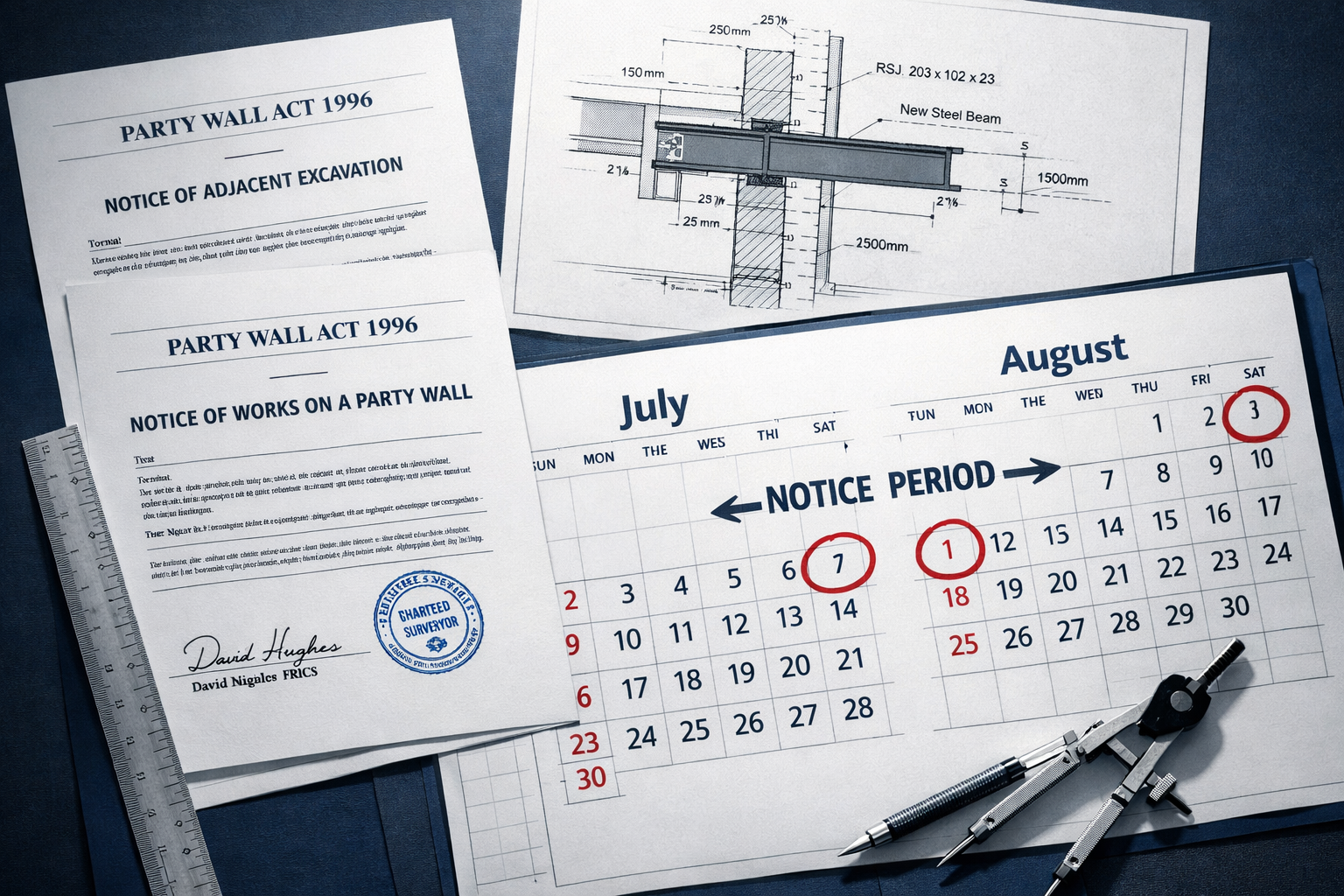
The Party Wall etc. Act 1996 mandates a minimum two-month notice period before any structural works affecting party walls can legally commence[1][2]. This timeline is non-negotiable and begins from the date your neighbour receives the formal notice—not from when you post it.
Here’s what the two-month period allows:
Days 1-14: Neighbour reviews the party wall notice and proposed works
Day 14: Deadline for neighbour to consent or dissent (failure to respond = deemed dissent)
Days 15-60: If dissent, surveyors are appointed and begin the award preparation process
Day 60+: Earliest date construction can legally begin (if consent given) or when award process should be completing
⚠️ Critical Timing Consideration: If your neighbour dissents or doesn’t respond, the actual timeline extends significantly. Party Wall Awards typically take 6-10 weeks to prepare and issue once the dispute process begins[1], meaning your total pre-construction period could extend to 3-4 months from initial notice.
What Triggers Party Wall Act Requirements in Loft Conversions
Not every loft conversion requires party wall procedures. Understanding which specific activities trigger the Act helps with planning and budgeting. For Party Wall Awards for Loft Conversions and Roof Alterations: 2026 Compliance Essentials, these are the most common triggers:
🔨 Works Requiring Party Wall Agreement:
- Cutting into party walls for steel beam installation – The most common trigger, as load-bearing beams typically need support from the shared wall[2]
- Removing chimney breasts from party walls – Often part of maximizing loft space
- Increasing party wall height – When raising the roof structure
- Inserting damp proof courses through party walls – For moisture control
- Underpinning party wall foundations – If additional support is needed for increased loads
- Demolishing and rebuilding portions of party walls – For structural modifications
✅ Works That May Avoid Party Wall Requirements:
- Beam-on-column designs where support beams rest on purpose-built columns rather than inside the party wall[1]
- Detached property conversions with no shared walls[1]
- Internal modifications that don’t affect the party wall structure
- Roof alterations that only affect your own side of a party wall without cutting or loading it
💡 Design Tip: Working with an architect experienced in party wall matters can help you design loft conversions that minimize or eliminate party wall involvement, potentially saving thousands in surveyor fees and avoiding neighbour disputes. Learn more about keeping party wall costs down.
Serving Proper Party Wall Notices
Serving a compliant party wall notice is the critical first step in the process. Defective notices can invalidate the entire procedure, potentially resulting in court injunctions to stop your work[2].
Essential Elements of a Valid Party Structure Notice:
📋 Building Owner Details: Your full name and property address
📋 Adjoining Owner Details: Neighbour’s full name and property address
📋 Work Description: Detailed explanation of proposed structural works
📋 Drawings and Plans: Cross-sections showing beam positions and wall interventions
📋 Proposed Start Date: Must be at least 2 months from notice date
📋 Rights Explanation: Clear statement of neighbour’s rights under the Act
The notice must be served on all adjoining owners—this includes not just immediate neighbours but also anyone with a legal interest in the adjoining property (leaseholders, mortgage lenders, etc.).
Delivery Methods:
✉️ Hand delivery with signed receipt (most secure)
✉️ Recorded delivery post (provides proof of service)
✉️ Regular post (acceptable but risky without delivery confirmation)
For a practical template, review this party wall contract template guide to understand proper notice formatting.
Surveyor Award Templates: Vibration Monitoring and Structural Props
What Goes Into a Comprehensive Party Wall Award
When preparing Party Wall Awards for Loft Conversions and Roof Alterations: 2026 Compliance Essentials, surveyors must include specific provisions that protect both properties during construction. A comprehensive award document typically contains:
Section 1: Preamble and Parties
- Names and addresses of building owner and adjoining owner(s)
- Appointed surveyor details and appointment dates
- Property descriptions and legal interests
Section 2: Works Authorization
- Detailed description of permitted works
- Architectural drawings and specifications
- Structural engineering calculations (where applicable)
- Permitted working hours (typically 8am-6pm Monday-Friday, 8am-1pm Saturday)
Section 3: Schedule of Condition
- Photographic record of adjoining property pre-construction
- Detailed descriptions of existing defects, cracks, and settlement
- Baseline measurements for monitoring purposes
- Date-stamped evidence protecting both parties
Section 4: Monitoring and Protection Provisions
This section has become increasingly detailed in 2026 awards, reflecting lessons learned from previous disputes:
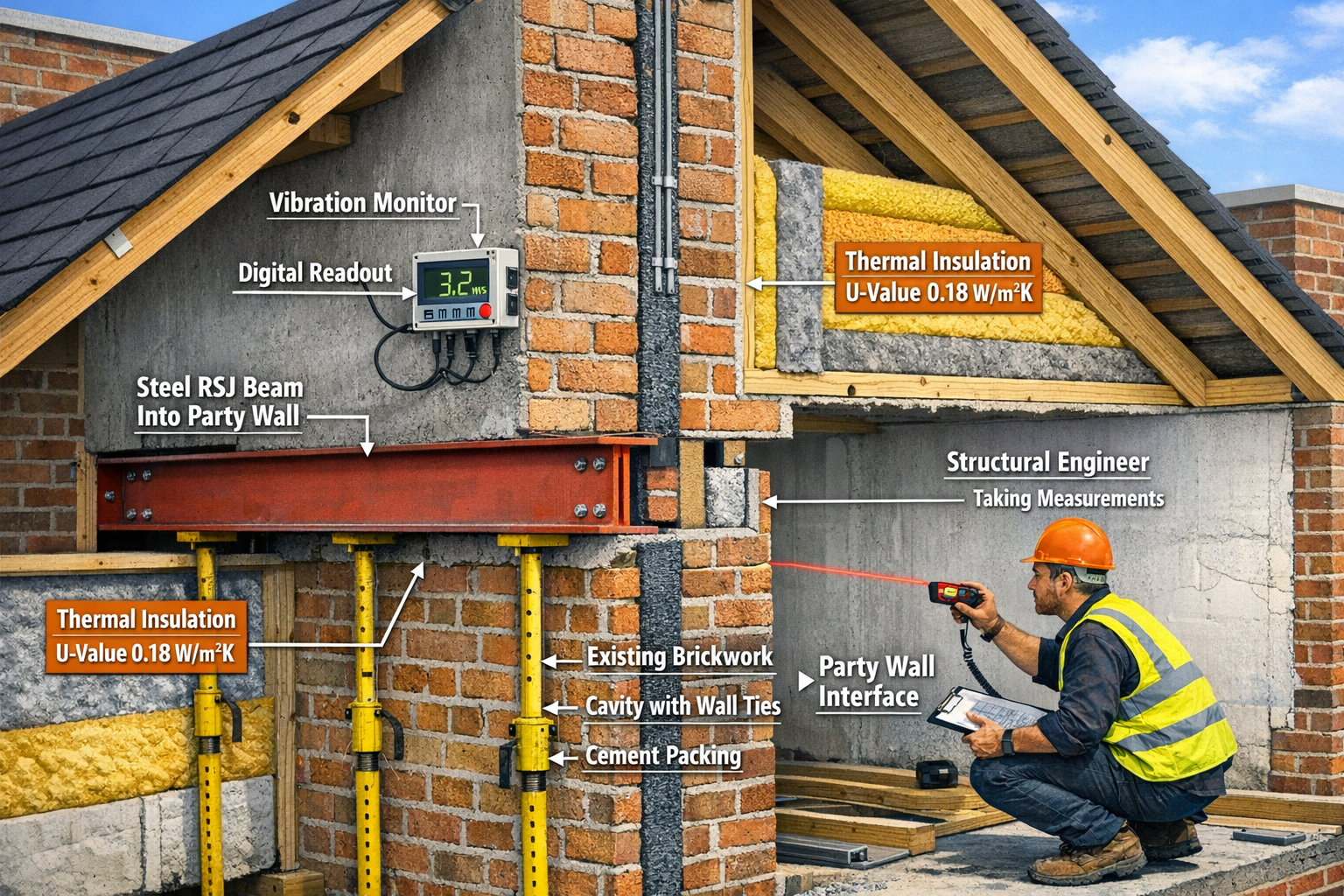
🔍 Vibration Monitoring Requirements:
- Installation of vibration sensors on party wall (typically 3-5 locations)
- Threshold limits (commonly 5-10mm/s peak particle velocity)
- Daily or weekly monitoring schedules during heavy works
- Immediate work cessation protocols if thresholds exceeded
🏗️ Structural Protection Measures:
- Temporary props and needles: Specifications for supporting party wall during beam insertion
- Load distribution: Requirements for spreading point loads across wall sections
- Dust and debris control: Measures to prevent contamination of adjoining property
- Access arrangements: Specific times and methods for surveyor inspections
Section 5: Dispute Resolution and Costs
- Surveyor fee allocations (typically building owner pays all fees)
- Damage remediation procedures
- Third surveyor appointment process if disputes arise
- Appeal rights under Section 10 of the Act
Vibration Monitoring Specifications for Loft Work
Loft conversions present unique vibration challenges because work occurs at height where structural movement is naturally amplified. Modern Party Wall Awards in 2026 increasingly mandate sophisticated monitoring to prevent damage claims.
Standard Vibration Monitoring Protocol:
| Work Phase | Monitoring Frequency | Threshold Limits | Action Required |
|---|---|---|---|
| Beam cutting/chasing | Continuous during work | 10mm/s PPV | Stop work if exceeded |
| Steel installation | Daily readings | 5mm/s PPV | Review if exceeded |
| General construction | Weekly readings | 15mm/s PPV | Document only |
PPV (Peak Particle Velocity) measures the maximum speed of particle movement during vibration events—the key metric for assessing structural damage risk.
📱 2026 Technology Update: Many surveyors now specify IoT-connected vibration sensors that provide real-time data to both parties via smartphone apps, reducing disputes about whether thresholds were exceeded.
Temporary Structural Support Requirements
When cutting into party walls to insert steel beams, temporary support systems prevent catastrophic collapse and minimize movement that could damage your neighbour’s property. Party Wall Awards must specify these requirements explicitly.
Typical Temporary Works Specifications:
🔧 Needling System: Steel needles passed through the party wall at regular intervals (typically 1.2-1.5m centers) to support the wall while creating beam pockets
🔧 Acrow Props: Adjustable steel props supporting the needles from floor levels below, with load distribution plates to prevent floor damage
🔧 Sequence Requirements: Step-by-step installation sequence to ensure wall is never unsupported during beam insertion
🔧 Inspection Points: Mandatory surveyor inspections before, during, and after temporary works installation
⚠️ Safety Critical: Temporary works design often requires structural engineer certification, which should be referenced in the Party Wall Award. Failure to provide adequate temporary support has resulted in partial wall collapses and six-figure damage claims.
For adjoining owners concerned about their rights during construction, understanding what to do when your neighbour is carrying out works provides essential guidance.
Addressing Rising Demand from Housing Shortages
The 2026 Loft Conversion Boom
Britain’s persistent housing shortage has transformed loft conversions from luxury upgrades to essential space solutions. With average house prices requiring 8.5x median incomes in 2026 and stamp duty costs making moving increasingly prohibitive, homeowners are looking upward rather than outward.
Key Market Drivers:
📈 Planning permission reforms making loft conversions easier to approve under permitted development
📈 Work-from-home permanence creating demand for dedicated home office spaces
📈 Multi-generational living requiring additional bedrooms for adult children or elderly parents
📈 Property value increases of 15-20% from well-executed loft conversions in urban areas
This surge in loft conversion activity has created corresponding increases in party wall disputes, with the Pyramus & Thisbe Club (the professional body for party wall surveyors) reporting a 34% increase in loft-related instructions between 2023-2025.
Common Disputes and How Awards Prevent Them
Understanding typical loft conversion disputes helps explain why comprehensive Party Wall Awards for Loft Conversions and Roof Alterations: 2026 Compliance Essentials have become so detailed.
Top 5 Loft Conversion Disputes in 2026:
1️⃣ Pre-existing vs. New Damage Claims
- Issue: Neighbour claims cracks caused by your work were actually present before
- Award Solution: Detailed photographic schedule of condition with dated evidence
2️⃣ Excessive Noise and Vibration
- Issue: Neighbour complains about construction disturbance levels
- Award Solution: Specified working hours and vibration monitoring thresholds
3️⃣ Unauthorized Access or Trespass
- Issue: Builders access neighbour’s property without permission
- Award Solution: Explicit access arrangements and notice requirements
4️⃣ Structural Movement and Cracking
- Issue: New cracks appear in neighbour’s property during construction
- Award Solution: Vibration monitoring and immediate work cessation protocols
5️⃣ Incomplete Remediation
- Issue: Building owner fails to repair damage after work completion
- Award Solution: Remediation obligations and financial security provisions
💼 Legal Protection: A properly prepared Party Wall Award provides legal authority to proceed with work while establishing clear obligations. Without one, neighbours can obtain court injunctions to immediately stop your construction, resulting in expensive delays and potential contractor demobilization costs[2].
Building Regulations Compliance: Beyond Party Walls
While party wall procedures address legal relationships with neighbours, Building Regulations govern the technical standards your loft conversion must meet. These are separate but complementary compliance requirements for Party Wall Awards for Loft Conversions and Roof Alterations: 2026 Compliance Essentials.
2026 Building Regulations Key Requirements:
🌡️ Thermal Performance Standards
- New loft walls: U-value of 0.18W/m²K maximum[3]
- New windows: U-value of 1.4W/m²K maximum[3]
- Existing gable walls: Must be upgraded to 0.18W/m²K standard[3]
🔥 Fire Safety Requirements
- 30-minute fire resistance for new floor structures
- Protected escape routes from loft rooms
- Smoke alarms on all levels interconnected
🪜 Structural Standards
- Adequate headroom (2.0m minimum in habitable areas)
- Staircase pitch and dimensions compliant with Approved Document K
- Floor loading capacity of 1.5kN/m² minimum
⚡ Electrical and Ventilation
- Electrical installation certificates (Part P compliance)
- Adequate ventilation (mechanical or natural)
- Emergency egress windows meeting size requirements
Important Distinction: Party Wall Awards authorize you to carry out specific works affecting shared structures. Building Regulations approval confirms those works meet safety and performance standards. You need both for legal compliance[3].
Local authority building control has enforcement powers ranging from requiring corrective action to ordering dismantling of non-compliant structures[3]. Retrospective applications can be submitted for work already underway, though this typically involves additional fees and potential remediation costs.
Cost Considerations for Party Wall Awards in 2026
Typical Fee Structures
Understanding the financial implications of Party Wall Awards for Loft Conversions and Roof Alterations: 2026 Compliance Essentials helps with accurate project budgeting.
Standard Party Wall Surveyor Fees (2026 London):
| Scenario | Building Owner’s Surveyor | Adjoining Owner’s Surveyor | Total Cost |
|---|---|---|---|
| Simple consent (no award) | £150-300 (notice prep) | £0 | £150-300 |
| Single adjoining owner award | £800-1,200 | £800-1,200 | £1,600-2,400 |
| Multiple adjoining owners | £800-1,200 | £800-1,200 each | £2,400-3,600+ |
| Complex/disputed cases | £1,500-3,000+ | £1,500-3,000+ | £3,000-6,000+ |
Additional Costs:
- Schedule of condition photography: £300-600
- Structural engineer’s temporary works design: £500-1,000
- Vibration monitoring equipment and reporting: £400-800
- Third surveyor fees (if appointed): £1,000-2,000+
💰 Who Pays? Under the Party Wall Act, the building owner (person carrying out works) typically pays all surveyor fees for both sides, plus any monitoring and inspection costs. This is a standard provision in Party Wall Awards and cannot usually be negotiated away.
For practical strategies to minimize these expenses, review our guide on how to keep party wall costs down.
When You Can Avoid Party Wall Procedures
Strategic design choices can sometimes eliminate party wall requirements entirely, saving thousands in fees and months in timeline delays.
Design Alternatives That Avoid Party Wall Act Triggers:
✅ Beam-on-Column Systems: Support beams rest on purpose-built steel columns rather than cutting into the party wall[1]
✅ Self-Supporting Roof Structures: Engineered trusses that don’t load the party wall
✅ Keeping Chimney Breasts Intact: Retaining existing party wall chimney breasts rather than removing them
✅ Working Within Your Own Structure: Modifications that don’t cut into, load, or alter the party wall
Case Example: A typical terraced house loft conversion requiring two steel beams might cost £2,400 in party wall fees with traditional beam-in-wall design. Switching to a beam-on-column design eliminates party wall requirements entirely, though it may add £800-1,200 in additional structural steelwork costs—still a net saving of £1,200-1,600 plus avoiding the two-month notice period.
However, this approach requires careful structural engineering and may not be suitable for all property configurations. Consult with an architect or structural engineer early in the design process to explore options.
For those proceeding without surveyors in straightforward cases, understanding the process of having a party wall agreement without a surveyor can be valuable—though this is only appropriate when neighbours fully consent.
Regional Considerations: Party Wall Surveyors Across London
The availability and experience of party wall surveyors varies significantly across London, affecting both costs and timelines for Party Wall Awards for Loft Conversions and Roof Alterations: 2026 Compliance Essentials.
Regional Surveyor Availability:
🏙️ Central London: Highest concentration of experienced surveyors, premium pricing, fastest response times. Find specialists through party wall surveyors in Central London.
🌳 North London: Strong surveyor availability in areas like Islington, Camden, and Haringey where Victorian terraces dominate. Connect with party wall surveyors in North London.
🌊 South London: Growing demand in areas like Wandsworth, Lambeth, and Lewisham. Locate party wall surveyors in South London.
🏛️ East London: Rapidly developing areas with mix of Victorian terraces and modern developments. Search party wall surveyors in East London.
🌆 West London: Premium residential areas with complex period properties. Find party wall surveyors in West London.
Selection Criteria for Your Surveyor:
✔️ RICS qualification (Royal Institution of Chartered Surveyors)
✔️ Pyramus & Thisbe Club membership (specialist party wall body)
✔️ Local experience with similar property types
✔️ Clear fee structure with no hidden charges
✔️ Professional indemnity insurance (minimum £2 million)
✔️ Responsive communication during initial inquiry
Practical Timeline for Loft Conversion Party Wall Process
Understanding realistic timelines helps coordinate contractors, secure financing, and manage expectations for Party Wall Awards for Loft Conversions and Roof Alterations: 2026 Compliance Essentials.
Complete Timeline from Notice to Construction:
Weeks 1-2: Notice Preparation and Service
- Architect finalizes structural drawings
- Building owner’s surveyor prepares Party Structure Notice
- Notice served on all adjoining owners
- ⏱️ Cumulative time: 2 weeks
Weeks 3-4: Neighbour Response Period
- Adjoining owners review proposed works
- Deadline for consent/dissent (14 days from receipt)
- If consent: proceed to construction (after 2-month notice period)
- If dissent/no response: proceed to surveyor appointment
- ⏱️ Cumulative time: 4 weeks
Weeks 5-6: Surveyor Appointment
- Adjoining owner appoints their surveyor (or building owner appoints on their behalf)
- Surveyors exchange contact details and preliminary information
- Initial site inspections scheduled
- ⏱️ Cumulative time: 6 weeks
Weeks 7-10: Award Preparation
- Schedule of condition survey of adjoining property
- Detailed photographic and written record
- Award document drafted with all provisions
- Review and negotiation period
- Award signed and served on both parties[1]
- ⏱️ Cumulative time: 10 weeks
Week 11+: Construction Commences
- Earliest legal start date (after 2-month notice minimum)
- Pre-commencement meeting with contractors
- Vibration monitoring equipment installed
- Regular surveyor inspections throughout works
- ⏱️ Total pre-construction time: 11+ weeks
📅 Planning Tip: Factor a minimum 3-month lead time from deciding to proceed with your loft conversion to being able to legally start construction when party wall procedures are required. Attempting to shortcut this process risks court injunctions and project delays[2].
Conclusion: Navigating Party Wall Awards Successfully in 2026
The surge in loft conversions driven by Britain’s housing shortage has made understanding Party Wall Awards for Loft Conversions and Roof Alterations: 2026 Compliance Essentials more important than ever for homeowners in terraced and semi-detached properties. While the Party Wall etc. Act 1996 continues to provide the legal framework, the practical application has evolved significantly, with more detailed monitoring requirements, sophisticated vibration tracking, and comprehensive protection measures now standard in 2026 awards.
Essential Success Factors:
🎯 Plan Early: Factor 3-4 months for party wall procedures before construction can begin
🎯 Serve Proper Notices: Ensure two-month minimum notice with complete documentation
🎯 Appoint Experienced Surveyors: RICS-qualified specialists save time and reduce disputes
🎯 Document Everything: Comprehensive schedules of condition protect all parties
🎯 Consider Design Alternatives: Beam-on-column systems may eliminate party wall requirements
🎯 Budget Realistically: Expect £1,600-2,400+ for standard party wall awards
🎯 Maintain Good Neighbour Relations: Communication prevents disputes escalating
Actionable Next Steps
If you’re planning a loft conversion in 2026:
- Obtain architectural drawings showing how beams will interact with party walls
- Determine if party wall procedures apply to your specific design
- Appoint a qualified party wall surveyor at least 3 months before planned construction start
- Serve formal notices on all adjoining owners with complete documentation
- Secure Building Regulations approval separately from party wall procedures
- Coordinate contractor scheduling around realistic party wall timelines
- Maintain detailed records throughout the process for future reference
The complexity of Party Wall Awards for Loft Conversions and Roof Alterations: 2026 Compliance Essentials reflects the serious legal and structural considerations involved when working on shared walls. However, with proper planning, qualified professional guidance, and adherence to statutory procedures, the process protects both your investment and your neighbour’s property rights, enabling your loft conversion to proceed smoothly and legally.
For additional guidance on your specific situation, explore our comprehensive resources on types of party wall works and understanding the Party Wall Act, or contact qualified surveyors in your area to discuss your project requirements.
References
[1] Party Wall Agreement Loft Conversion – houseup.co.uk
[2] Party Wall Surveyor Loft Conversion – biggerlivinglofts.com
[3] Building Regulations For Loft Conversions 2025 – extensionarchitecture.co.uk
Speak to a RICS chartered party wall surveyor
Free initial consultation. Notices, awards and schedules of condition across London and nationwide.