
Nearly 70% of property disputes in England and Wales stem from renovation work affecting shared walls—yet most homeowners remain unaware of their legal obligations until it’s too late. As the 2026 housing recovery boom drives unprecedented renovation activity across London and beyond, understanding when to engage a party wall surveyor has never been more critical to avoiding costly delays and neighbour disputes.
This comprehensive guide explores the 7 Key Scenarios Requiring a Party Wall Surveyor in 2026 Home Renovations, providing homeowners, developers, and contractors with essential checklists and early intervention strategies that prevent project derailments in today’s high-demand construction market.
Key Takeaways
- Building new walls on property boundaries or making structural alterations to existing party walls triggers mandatory notice requirements under the Party Wall etc. Act 1996
- Foundation excavations within 3-6 metres of a neighbour’s structure require surveyor assessment and protective measures to prevent subsidence damage
- Early surveyor involvement (3-4 months before work starts) prevents project delays, reduces dispute costs, and maintains positive neighbour relations
- Schedule of condition documentation protects both parties by establishing pre-work property conditions and streamlining damage claim resolution
- Professional party wall awards provide legally binding frameworks that clarify work scope, access rights, protective measures, and cost allocation

Understanding the 7 Key Scenarios Requiring a Party Wall Surveyor in 2026 Home Renovations
The Party Wall etc. Act 1996 governs work affecting shared structures between properties, but many homeowners struggle to identify which renovation projects require formal surveyor involvement. The following seven scenarios represent the most common situations where professional party wall surveyor engagement becomes essential.
Scenario 1: Building a New Party Wall on the Boundary Line 🏗️
When planning to construct a new wall directly on the boundary between two properties, serving a Line of Junction Notice becomes mandatory.[4] This scenario frequently occurs when:
- Erecting a new garden wall along the property line
- Building an extension that sits on the boundary
- Constructing a new garage or outbuilding at the boundary
- Replacing an existing boundary wall with a party wall structure
Surveyor Checklist for New Party Walls:
| Task | Timeline | Purpose |
|---|---|---|
| Identify all adjoining owners | 4 months before work | Ensure complete notification |
| Serve Line of Junction Notice | 1-2 months before work | Legal compliance |
| Arrange pre-work condition survey | 2-3 weeks before work | Document existing conditions |
| Obtain neighbour consent or appoint surveyors | 14 days after notice | Establish agreement framework |
| Finalize party wall award (if needed) | Before work commences | Legal protection for both parties |
The notice must codify specific details including the proposed work description, anticipated start date, and expected duration.[1] Neighbours then have 14 days to respond—either consenting to the work or appointing their own surveyor to negotiate terms.
Pro Tip: Engaging a party wall surveyor in Central London or your specific area early in the planning phase prevents rushed decisions and maintains project momentum during the 2026 construction boom.
Scenario 2: Excavating Foundations Near a Party Wall or Boundary 🔨
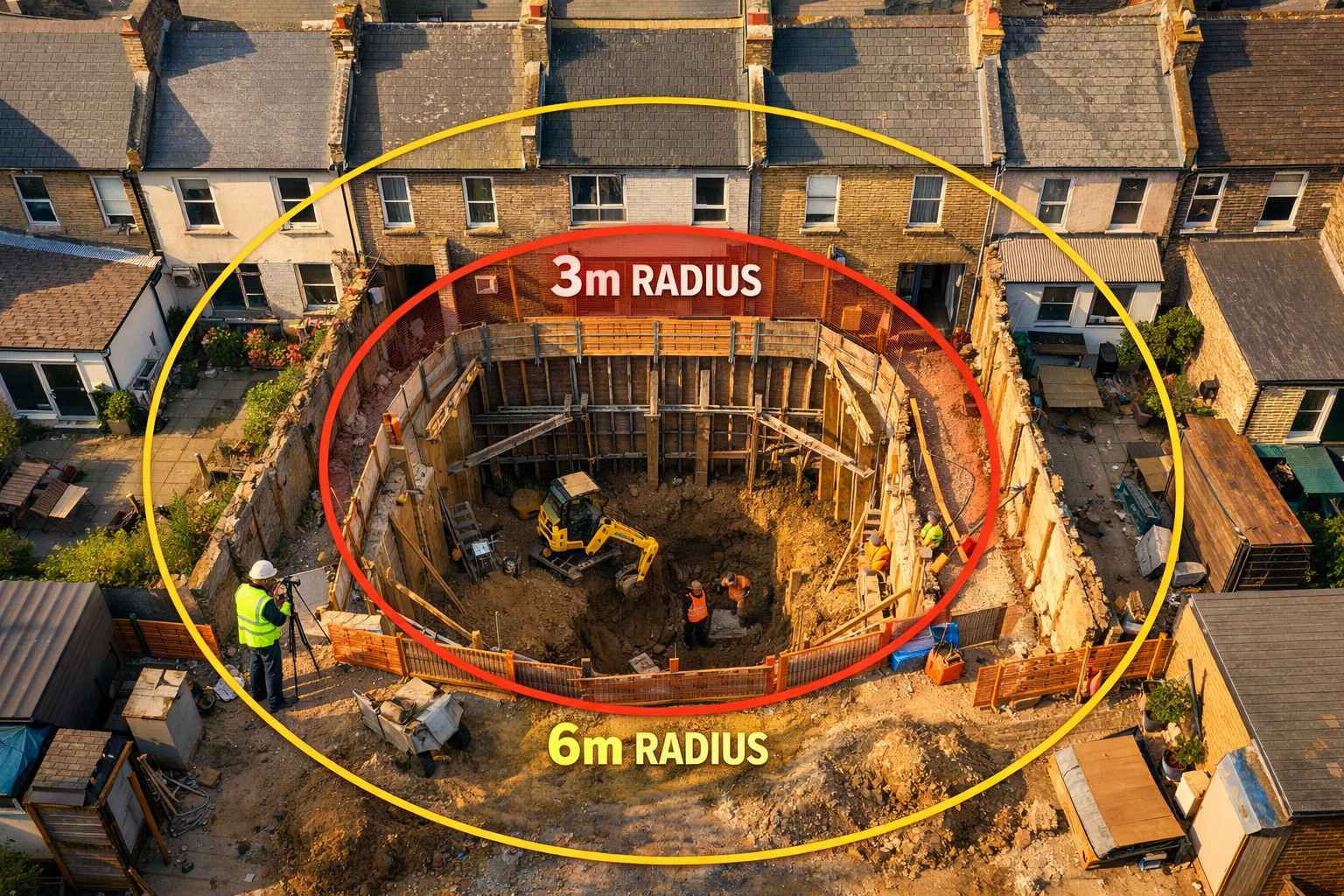
Foundation excavation represents one of the highest-risk scenarios requiring surveyor oversight. The Party Wall etc. Act 1996 mandates notice when digging:
- Within 3 metres of a neighbour’s structure if your excavation goes deeper than their foundation
- Within 6 metres of a neighbour’s structure if your excavation goes deeper than a line drawn at 45 degrees from the bottom of their foundation[2]
Why This Matters in 2026:
The current housing recovery has sparked a basement extension boom across London, with thousands of homeowners seeking to maximize property value through downward expansion. However, excavation near party walls can cause:
- Foundation settlement and subsidence
- Structural cracking in neighbouring properties
- Destabilization of shared walls
- Underground service disruption
A qualified surveyor assesses potential impact, determines necessary protective measures such as underpinning or temporary support systems, and ensures compliance throughout the excavation process.[1] For projects in densely populated areas, consider specialists like a party wall surveyor in North London who understand local soil conditions and typical foundation depths.
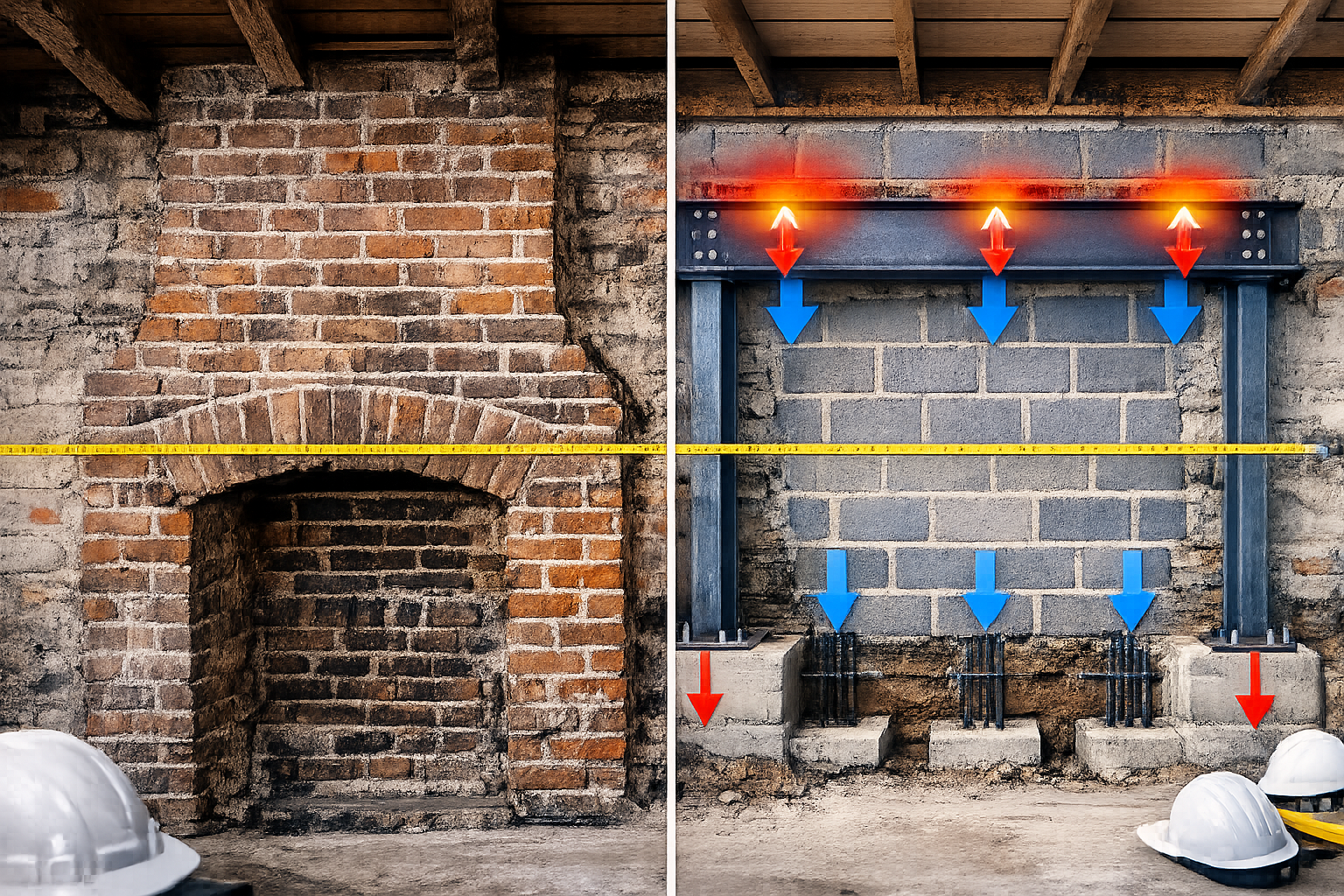
Scenario 3: Carrying Out Structural Alterations to an Existing Party Wall ⚙️
Structural modifications to shared walls require a Party Structure Notice and surveyor involvement.[4] Common alterations include:
- Removing chimney breasts that pass through or rest on the party wall
- Installing steel beams (RSJs) that bear on or penetrate the party wall
- Cutting into the wall to create new doorways or openings
- Inserting damp-proof courses that affect the wall structure
- Raising the height of an existing party wall
Each of these works can significantly impact the structural integrity and load distribution of the shared wall. A party wall surveyor:
✅ Evaluates the structural implications of proposed alterations
✅ Specifies protective measures to prevent damage
✅ Ensures work complies with building regulations and the Party Wall Act
✅ Documents pre-work conditions to establish baseline property status
✅ Monitors work progress to verify proper execution
Understanding what is a party structure notice and how to serve it prevents procedural errors that could delay your 2026 renovation by months.
Additional Critical Scenarios in the 7 Key Scenarios Requiring a Party Wall Surveyor in 2026 Home Renovations
Scenario 4: Underpinning a Party Wall Foundation 🏛️
Underpinning strengthens existing foundations by extending them deeper into the ground or broadening their base. This work becomes necessary when:
- Addressing subsidence or settlement issues
- Preparing for additional storeys above
- Correcting historical foundation deficiencies
- Accommodating adjacent excavation work
Because underpinning directly affects the party wall’s structural support, it represents one of the most sensitive scenarios requiring surveyor oversight.[1] The process involves:
- Pre-work structural assessment to determine underpinning requirements
- Detailed method statement outlining excavation sequence and support measures
- Continuous monitoring of the party wall and adjacent property during works
- Post-completion verification ensuring structural stability
Cost Considerations for 2026:
Underpinning costs vary significantly based on depth, soil conditions, and access constraints. However, failing to properly manage the party wall aspects can result in:
- Damage claims from neighbours (potentially £10,000-£50,000+)
- Injunctions halting work until disputes resolve
- Legal fees for dispute resolution
- Project delays extending months beyond schedule
Learn more about managing expenses through our guide on how to keep party wall costs down.
Scenario 5: Excavating for Basement Extensions Near Party Walls 🏠
The 2026 property market continues to see strong demand for basement conversions, particularly in space-constrained urban areas. However, basement excavation near party walls triggers multiple notice requirements and represents perhaps the most complex scenario for party wall surveyors.
Key Risk Factors:
- Lateral soil pressure changes affecting party wall stability
- Groundwater level alterations impacting foundations
- Vibration from excavation equipment causing structural stress
- Temporary support removal during construction phases
An experienced surveyor conducts thorough assessments including:
- Soil investigation reports and geotechnical analysis
- Structural calculations for temporary and permanent support systems
- Vibration monitoring protocols during excavation
- Dewatering impact assessments on adjacent properties
- Progressive condition surveys throughout the project
For complex basement projects, engaging specialists such as a party wall surveyor in East London or party wall surveyor in South London who regularly handle similar projects provides invaluable local expertise.
Scenario 6: Carrying Out Significant Repairs to a Party Wall 🔧
Even repair work—not just new construction—can require party wall procedures when the repairs:
- Involve cutting into or removing sections of the party wall
- Require temporary support or propping of the structure
- Affect the wall’s load-bearing capacity
- Necessitate access to the neighbour’s property
Common Repair Scenarios Requiring Surveyors:
- Repairing structural cracks that penetrate the full wall thickness
- Replacing deteriorated brickwork or masonry
- Installing wall ties or structural reinforcement
- Addressing water damage requiring wall opening
- Repointing that requires scaffolding on neighbour’s land
A surveyor inspects the extent of repairs needed, ensures appropriate protective measures are implemented, and documents the condition of adjacent properties before work begins.[1] This documentation becomes crucial if disputes arise about whether damage existed before or resulted from the repair work.
The schedule of condition process—involving detailed photographic and written records—reduces disputes about pre-existing damage and enables fair handling of any legitimate damage claims.[3]
Scenario 7: Building a New Wall in Close Proximity to a Party Wall 📐
Constructing a new wall near (but not on) a party wall still requires surveyor involvement when the work could affect the existing party wall structure. This scenario commonly occurs with:
- Parallel internal walls built close to the party wall that may transfer loads
- Load-bearing walls that connect to or abut the party wall
- Foundation work for the new wall that extends near party wall foundations
- Structural connections between the new wall and existing party wall
Assessment Criteria:
A party wall surveyor evaluates:
- Proximity of the new wall to the party wall
- Load transfer implications and structural interaction
- Foundation depth and potential underpinning requirements
- Construction methodology and vibration impact
- Access requirements during construction
Even when formal notices aren’t legally required, proactive surveyor engagement demonstrates good faith to neighbours and provides professional documentation of your construction methodology—valuable protection if disputes arise later.
The Party Wall Award Process: Essential Framework for 2026 Renovations
When neighbours disagree about proposed works or when higher-risk scenarios require formal documentation, surveyors produce a legally binding Party Wall Award.[3] This document establishes:
📋 Scope of permitted work with detailed specifications
⏰ Working hours and practices to minimize disruption
🛡️ Protective measures required during construction
🚪 Access arrangements to neighbouring properties for inspections
💷 Cost allocation between building and adjoining owners
📸 Condition survey requirements before and after works
Understanding party wall awards and the formal process provides clarity for all parties and creates an enforceable framework that protects everyone’s interests.
Notice Types and Timing: Critical Success Factors for 2026 Projects
The Party Wall etc. Act 1996 establishes three main notice types, each with specific requirements and timelines:[4]
1. Line of Junction Notice
- Purpose: Building a new wall on the boundary
- Timing: Serve at least 1 month before work starts
- Response period: 14 days for neighbour to consent or dissent
2. Party Structure Notice
- Purpose: Alterations to existing party walls
- Timing: Serve at least 2 months before work starts
- Response period: 14 days for neighbour to consent or dissent
3. Adjacent Excavation Notice
- Purpose: Excavations within 3-6 metres of neighbouring foundations
- Timing: Serve at least 1 month before work starts
- Response period: 14 days for neighbour to consent or dissent
2026 Best Practice Timing:
Given the high volume of renovation activity in 2026’s housing recovery, serve notices 3-4 months before planned work commencement.[2] This extended timeline:
- Provides neighbours adequate consideration time without feeling rushed
- Accommodates surveyor appointment and award preparation
- Prevents project delays from notice-period bottlenecks
- Demonstrates professionalism and good-faith cooperation
Review the complete details about party wall notices to ensure compliance with all procedural requirements.
Common Mistakes to Avoid in 2026 Home Renovations
❌ Failing to Identify All Adjoining Owners
Missing even one adjoining owner can delay projects for months. Always:
- Consult Land Registry documents for all adjacent properties
- Contact management companies for leasehold properties
- Identify owners of properties behind yours that may be affected by excavation
- Consider properties diagonally adjacent when excavating
❌ Starting Work Before Notice Periods Expire
Beginning work before the statutory notice period completes or before disputes resolve can result in:
- Injunctions forcing work stoppage
- Removal of completed work
- Damage claims and legal costs
- Criminal penalties under the Act
❌ Attempting DIY Party Wall Agreements
While it’s possible to have a party wall agreement without a surveyor when neighbours fully consent, professional involvement provides:
- Technical expertise for complex structural assessments
- Impartial third-party oversight
- Legally robust documentation
- Protection if disputes arise later
❌ Inadequate Pre-Work Condition Documentation
Failing to properly document neighbouring property conditions before work starts creates vulnerability to unfounded damage claims. Professional condition surveys should include:
- Comprehensive photographs of all rooms, particularly near the party wall
- Written descriptions of existing defects, cracks, and damage
- Video walkthroughs for additional documentation
- Dated and signed records acknowledged by all parties
Selecting the Right Party Wall Surveyor for Your 2026 Project
Choosing an experienced, qualified surveyor ensures smooth project progression and protects your interests. Consider:
Essential Qualifications:
- Membership in Royal Institution of Chartered Surveyors (RICS)
- Specialist party wall expertise and accreditation
- Professional indemnity insurance
- Local knowledge of your area’s construction practices
Experience Factors:
- Track record with projects similar to yours
- Reputation for impartiality and professionalism
- Responsiveness and communication style
- Clear fee structures and transparent costs
Geographic Expertise:
Local knowledge matters significantly. Surveyors familiar with your area understand:
- Typical foundation depths and soil conditions
- Local construction practices and building styles
- Common issues specific to the region
- Relationships with local building control
Whether you need a party wall surveyor in West London or another area, selecting someone with relevant local experience streamlines the process.
Cost Management: Understanding Party Wall Expenses in 2026
Party wall surveyor fees vary based on project complexity, but typical costs include:
Building Owner’s Surveyor Fees:
- Simple projects: £700-£1,200
- Moderate complexity: £1,200-£2,500
- Complex projects (basement extensions, major structural work): £2,500-£5,000+
Adjoining Owner’s Surveyor Fees:
- Generally similar to building owner’s surveyor fees
- Important: Building owner typically pays both surveyors’ fees
Additional Costs:
- Schedule of condition surveys: £300-£800 per property
- Party wall award preparation: Often included in surveyor fees
- Dispute resolution: Variable, potentially significant if disputes escalate
Review comprehensive information about costs of party wall processes to budget appropriately for your 2026 renovation.
Cost-Saving Strategies:
💡 Serve notices early to avoid rushed fees and premium charges
💡 Maintain open communication with neighbours to prevent disputes
💡 Use an agreed surveyor when neighbours consent (single surveyor for both parties)
💡 Provide clear, detailed plans reducing surveyor time spent clarifying proposals
💡 Schedule work efficiently to minimize monitoring visit requirements
Conclusion: Navigating Party Wall Requirements in 2026’s Housing Boom
The 7 Key Scenarios Requiring a Party Wall Surveyor in 2026 Home Renovations—from building new boundary walls to complex basement excavations—represent critical intervention points where professional surveyor involvement prevents costly disputes, project delays, and neighbour conflicts. As the housing recovery accelerates renovation activity across England and Wales, understanding these scenarios and acting proactively separates successful projects from derailed ones.
Your Action Plan for 2026 Renovation Success:
Step 1: Identify Your Scenario (Weeks 1-2)
- Review your renovation plans against the seven key scenarios
- Determine which notice types your project requires
- Identify all adjoining owners who need notification
Step 2: Engage a Qualified Surveyor (Weeks 3-4)
- Research and interview potential party wall surveyors
- Select a professional with relevant experience and local knowledge
- Discuss project timeline and fee structure
Step 3: Serve Notices Early (Months 1-2)
- Prepare detailed work descriptions and plans
- Serve appropriate notices 3-4 months before planned work start
- Allow adequate time for neighbour consideration and response
Step 4: Complete Pre-Work Documentation (Weeks before work)
- Arrange schedule of condition surveys for adjacent properties
- Document existing conditions thoroughly with photos and written records
- Finalize party wall awards if required
Step 5: Maintain Communication (Throughout project)
- Keep neighbours informed of progress and any changes
- Address concerns promptly and professionally
- Conduct post-work inspections to verify no damage occurred
The 2026 construction market presents tremendous opportunities for property enhancement, but success requires navigating party wall obligations professionally and proactively. Whether you’re planning a simple boundary wall or a complex basement extension, early surveyor involvement provides the technical expertise, legal protection, and dispute prevention that keeps your project on track.
Don’t let party wall complications derail your 2026 renovation dreams. Understanding these seven key scenarios and taking action early transforms potential obstacles into manageable processes—protecting your investment, maintaining neighbour relations, and ensuring your project proceeds smoothly from planning through completion.
For personalized guidance on your specific project, explore our comprehensive resources on types of party wall works or reach out to qualified professionals who can assess your unique situation and provide tailored recommendations for success in 2026’s dynamic renovation market.
References
[1] Scenarios That Require A Party Wall Surveyor – iconsurveyors.co.uk
[2] Partywallsurveyoressex – oseimc.com
[3] A Reasonable Party Wall Guide – howorth.uk
[4] Different Types Of Party Wall Notice Every Homeowner Should Know – westvilleassociates.com
Speak to a RICS chartered party wall surveyor
Free initial consultation. Notices, awards and schedules of condition across London and nationwide.