RICS
Looking for expert solutions?
Request a Quote

Category: Uncategorized

  • Power Facility Party Wall Surveys: Securing Agreements for 2

    Power Facility Party Wall Surveys: Securing Agreements for 2

    {“cover”:”Professional landscape format (1536×1024) hero image with bold text overlay ‘Power Facility Party Wall Surveys: Securing Agreements for 2026’s 34% Demand Surge’ in extra large 72pt white sans-serif font with dark shadow and semi-transparent navy overlay box, centered in upper third. Background shows modern electrical power substation with high-voltage transformers, transmission lines, and adjacent commercial buildings, split-screen composition showing surveyor reviewing blueprints on one side and power infrastructure on other. Color scheme: electric blue, steel gray, safety orange accents. Magazine cover quality, editorial style, high contrast for readability, professional construction industry aesthetic with technical precision.”,”content”:[“Detailed landscape format (1536×1024) image showing construction workers and surveyors in hard hats and safety vests examining party wall documentation at active power facility construction site, with electrical substations and high-voltage equipment visible in background. Split composition: left side shows surveyor using laser measuring equipment along shared boundary wall between power station and adjacent property, right side displays annotated technical drawings highlighting party wall locations with red boundary markers. Include clipboard with party wall notice forms, safety barriers, and electrical infrastructure. Professional construction photography style with warm lighting, depth of field, industrial aesthetic, technical precision.”,”Detailed landscape format (1536×1024) infographic-style image illustrating party wall survey process for power facilities with numbered workflow diagram from 1-6 showing: notice service, surveyor appointment, schedule of condition documentation, award preparation, construction monitoring, and final inspection. Center features cross-section architectural drawing of power facility wall shared with neighboring property, showing foundation depth, high-voltage cable routing, and structural supports. Include icons representing legal documents, safety helmets, measuring tools, and electrical symbols. Color-coded sections in electric blue, safety orange, and professional gray. Clean technical illustration style with annotations and callout boxes.”,”Detailed landscape format (1536×1024) composite image showing risk management in power facility party wall surveys: foreground displays professional surveyor in PPE conducting thermal imaging scan of shared wall adjacent to electrical transformer station, with thermal camera screen showing heat signatures and structural integrity data. Background shows modern power substation with cooling towers and transmission equipment. Side panel features checklist document highlighting high-voltage safety protocols, vibration monitoring equipment readings, and schedule of condition photographs. Include safety warning signs, technical measurement devices, and professional documentation. Industrial photography style with high contrast, sharp focus, authoritative technical aesthetic with blue and orange safety color scheme.”]
    Power Facility Party Wall Surveys: Securing Agreements for 2

    The energy sector is experiencing unprecedented growth in 2026, and with it comes a critical need for specialized party wall expertise. As contractors report a remarkable 34% net reading for power projects[3][4], power facilities are emerging as one of the strongest private sector construction markets this year. This surge in development brings unique challenges when construction involves shared boundaries with adjacent properties—challenges that require meticulous planning, specialized surveys, and robust legal agreements to protect all parties involved.

    Understanding how to navigate Power Facility Party Wall Surveys: Securing Agreements for 2026’s 34% Demand Surge is essential for developers, property owners, and construction professionals working in this booming sector. The stakes are particularly high when dealing with high-voltage infrastructure adjacent to residential or commercial properties.

    Key Takeaways

    • Power facility construction is experiencing a 34% demand surge in 2026, making it one of the strongest private sector markets alongside data centers and healthcare[3][4]
    • Specialized party wall protocols are essential for managing risks associated with high-voltage equipment, vibration, and structural impacts on adjacent properties
    • Peak electricity demand is projected to grow 26% by 2035, with data centers alone requiring 176 gigawatts—driving continued power facility expansion[2]
    • Proper party wall agreements protect both building owners and neighbors through detailed schedules of condition, awards, and ongoing monitoring
    • Early surveyor engagement and comprehensive documentation are critical to avoiding disputes and construction delays in this high-stakes sector

    Understanding the 2026 Power Facility Construction Boom

    Power Facility Party Wall Surveys: Securing Agreements for 2 — image 3

    Why Power Projects Are Leading Construction Growth

    The construction industry is witnessing a remarkable shift in 2026. While many sectors face dampened expectations, power facilities stand out as a beacon of growth. Contractors have recorded a net reading of 34% for power projects, indicating moderately bullish expectations for construction dollar value growth[3][4]. This represents a significant increase from the previous year, making power one of only two categories showing stronger performance than 2025[4].

    Several factors are driving this unprecedented demand:

    🔌 Data Center Explosion: Data center demand could reach 176 gigawatts by 2035—a fivefold jump from 2024[2]. These facilities require massive power infrastructure to support their operations.

    Peak Demand Growth: Electricity demand is projected to grow by approximately 26% by 2035[2], necessitating substantial upgrades to generation and distribution capacity.

    🏭 Industrial Electrification: Industrial electrification could add 25 GW of demand by 2030[2], requiring new substations and transmission facilities.

    📊 Grid Modernization: Approximately 2 terawatts of capacity are stuck in interconnection queues—almost twice the currently installed capacity[2]—creating urgent pressure to expand infrastructure.

    What Makes Power Facility Party Wall Work Different

    Power facilities present unique challenges that distinguish them from residential or commercial party wall scenarios. These specialized construction projects involve:

    • High-voltage equipment requiring extensive safety protocols
    • Vibration and electromagnetic interference that can affect adjacent structures
    • Deep foundations for transformer stations and substations
    • 24/7 operational requirements that complicate construction scheduling
    • Strict regulatory compliance with electrical safety standards

    When a power facility shares a boundary with neighboring properties, the party wall survey process becomes considerably more complex than standard residential work.

    Power Facility Party Wall Surveys: Securing Agreements for 2026’s 34% Demand Surge Through Proper Protocols

    The Essential Party Wall Notice Process

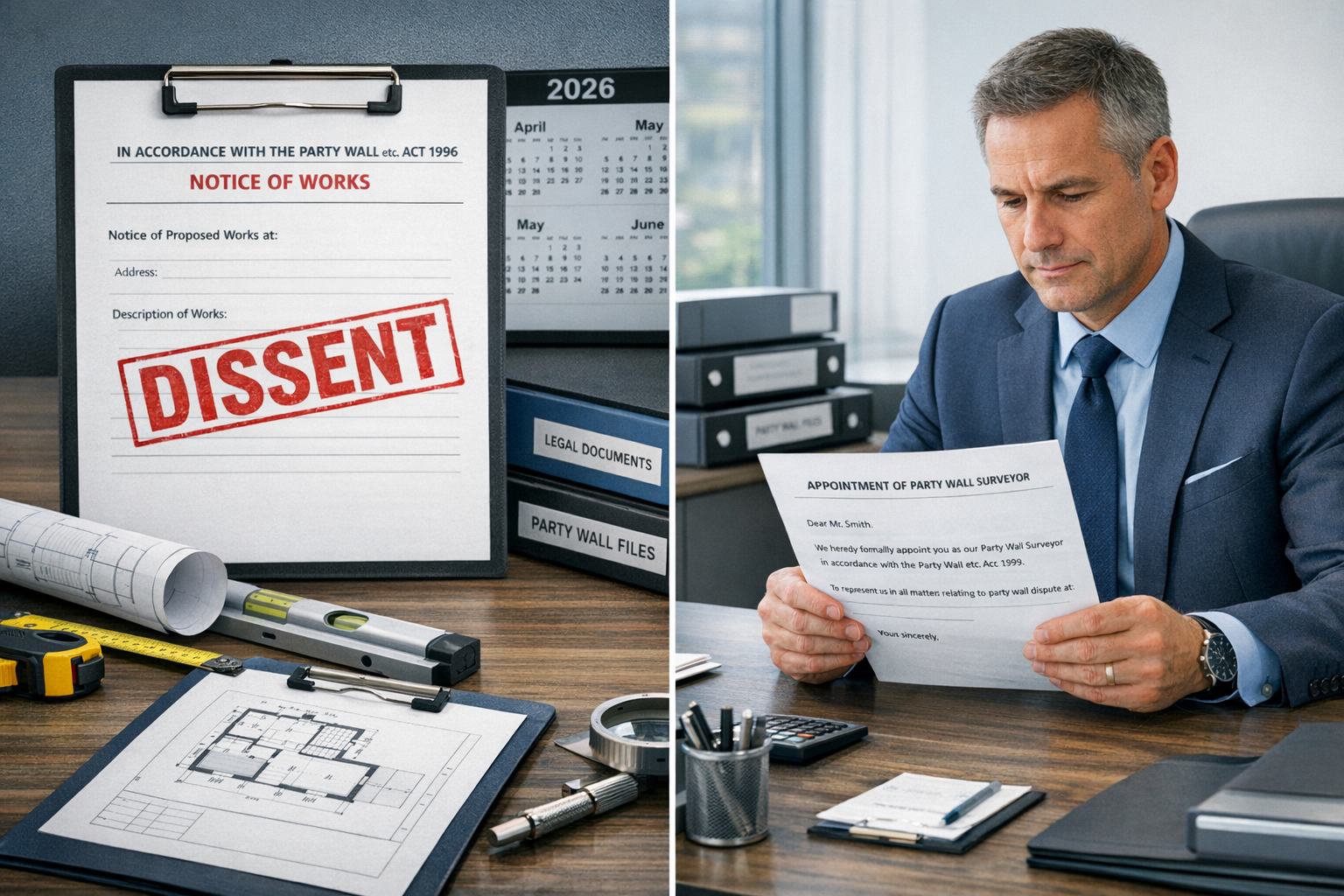
    Before commencing any work that affects a shared boundary, power facility developers must follow strict notification protocols. The Party Wall Act notices serve as the legal foundation for all subsequent agreements.

    Three types of notices may apply to power facility construction:

    Notice Type When Required Typical Power Facility Applications
    Party Structure Notice Work directly to a shared wall or structure Installing cable conduits through shared walls, reinforcing shared foundations
    Line of Junction Notice Building new walls on or astride the boundary Constructing new substation walls along property lines
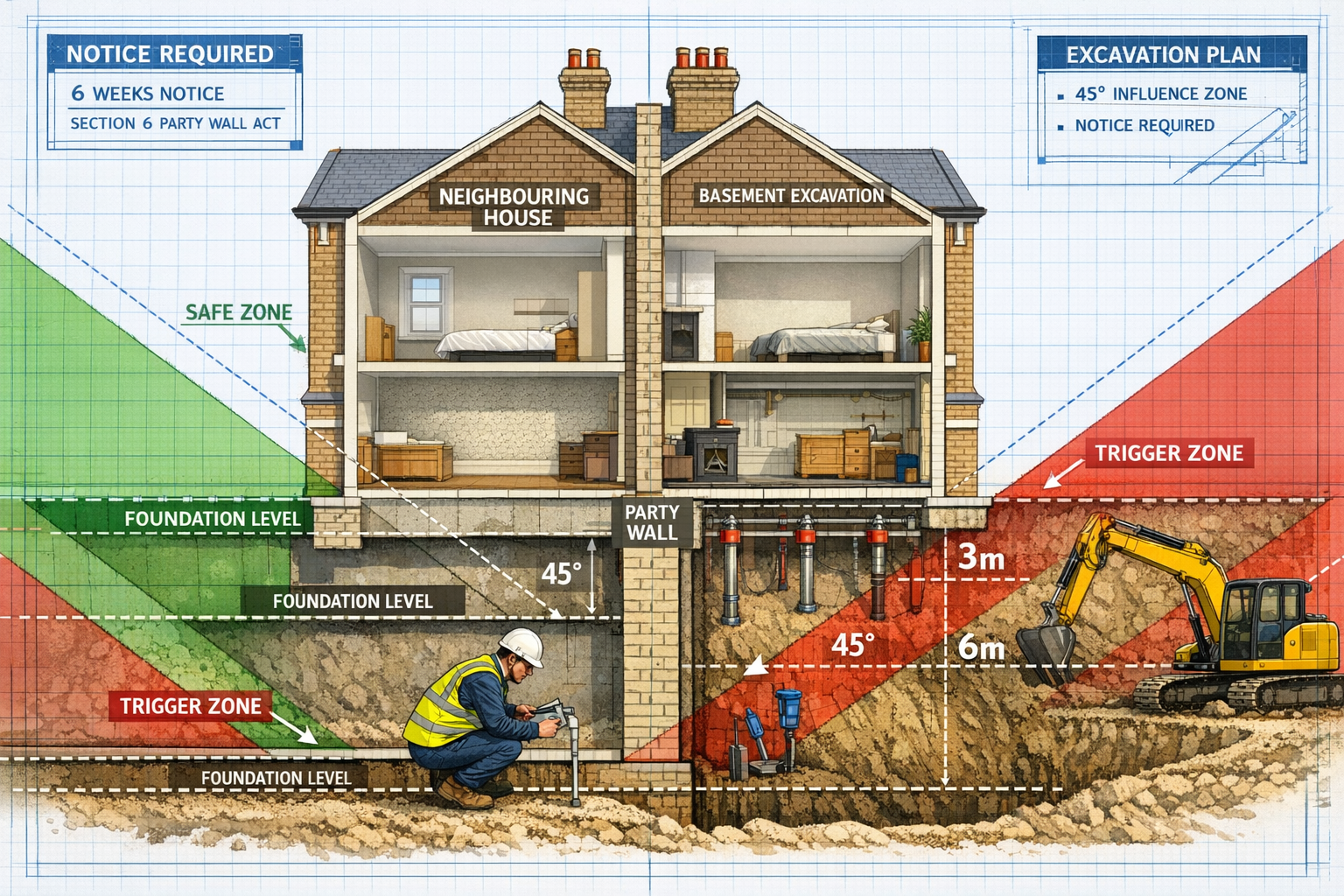
    3/6 Meter Notice Excavation within specified distance of neighbor’s structure Deep foundation work for transformers, underground cable trenches

    For power facilities, the 3/6 meter notice is particularly common due to the deep excavations required for electrical infrastructure. Understanding what types of party wall works apply to your specific project is crucial for compliance.

    Appointing Qualified Surveyors for High-Voltage Projects

    Not all party wall surveyors have experience with power facility construction. The complexity of high-voltage installations requires professionals who understand both party wall legislation and electrical infrastructure requirements.

    Key qualifications to seek:

    Technical expertise in electrical engineering principles
    Experience with industrial and utility construction projects
    Knowledge of health and safety regulations for high-voltage environments
    Understanding of electromagnetic interference and vibration impacts
    Familiarity with utility regulatory frameworks

    Property owners can choose to work with the same surveyor (an “Agreed Surveyor”) or appoint separate professionals. For complex power facility projects, many adjoining owners prefer to appoint their own adjoining owner’s surveyor to ensure their interests are fully protected.

    Creating Comprehensive Schedules of Condition

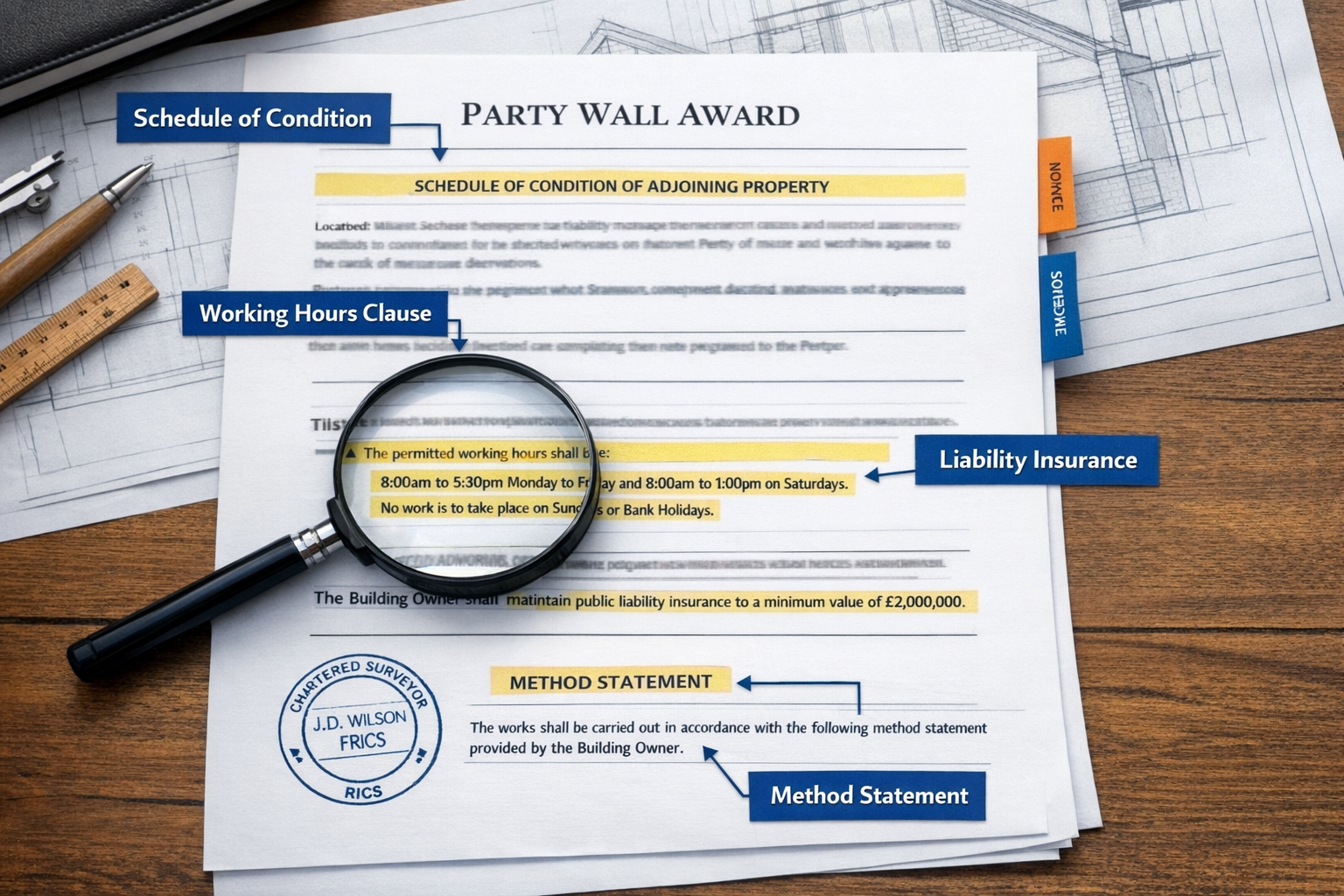
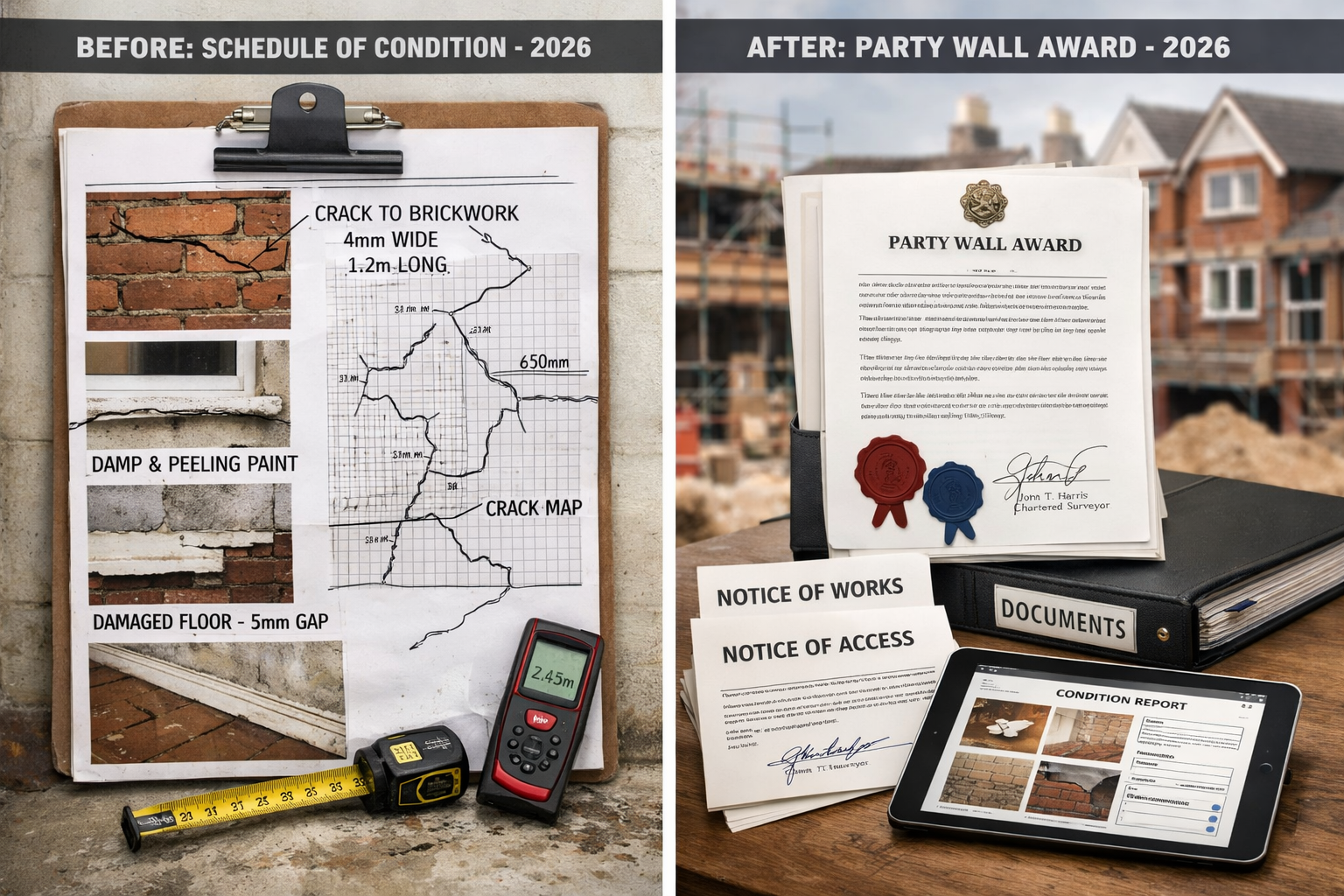
    The schedule of condition represents one of the most critical documents in power facility party wall work. This detailed record establishes the baseline condition of adjacent properties before construction begins.

    For power facilities, schedules of condition must be exceptionally thorough:

    Standard Documentation:

    • High-resolution photographs of all visible surfaces
    • Detailed written descriptions of existing defects
    • Measurements and structural assessments
    • Documentation of existing cracks, settlement, or damage

    Additional Power Facility Requirements:

    • Baseline vibration readings to detect future impacts from equipment
    • Electromagnetic field measurements to identify pre-existing conditions
    • Thermal imaging to document heat signatures before operations
    • Acoustic baseline measurements for noise-sensitive properties
    • Underground utility mapping to identify existing services

    Professional schedule of condition documentation protects both the building owner and adjoining owner by establishing clear evidence of pre-construction conditions.

    “In power facility construction, the schedule of condition isn’t just about visible cracks—it’s about documenting baseline environmental conditions that could be affected by high-voltage operations. This comprehensive approach prevents disputes years down the line.”

    Managing High-Voltage Adjacent Property Risks in Power Facility Party Wall Surveys

    Understanding Unique Risks in Power Infrastructure Development

    Power facilities introduce risks that simply don’t exist in residential party wall scenarios. Building owners and their surveyors must address these specialized concerns in the party wall award:

    🔥 Thermal Effects
    High-voltage transformers and electrical equipment generate significant heat. Adjacent structures may experience:

    • Increased wall temperatures affecting structural materials
    • Thermal expansion and contraction cycles
    • Potential impacts on moisture barriers and insulation

    📳 Vibration and Structural Movement
    Large transformers, cooling equipment, and electrical switching gear create ongoing vibration:

    • Foundation settlement or movement in adjacent properties
    • Cracking in walls and ceilings
    • Disturbance to sensitive equipment in neighboring buildings

    ⚡ Electromagnetic Interference (EMI)
    High-voltage equipment generates electromagnetic fields that can:

    • Interfere with electronic equipment in adjacent properties
    • Affect medical devices or sensitive instruments
    • Create concerns for occupants about long-term exposure

    🔊 Acoustic Impacts
    Power facilities operate continuously, generating:

    • Transformer hum and electrical buzzing
    • Cooling fan noise
    • Switching and relay sounds

    Drafting Robust Party Wall Awards for Power Projects

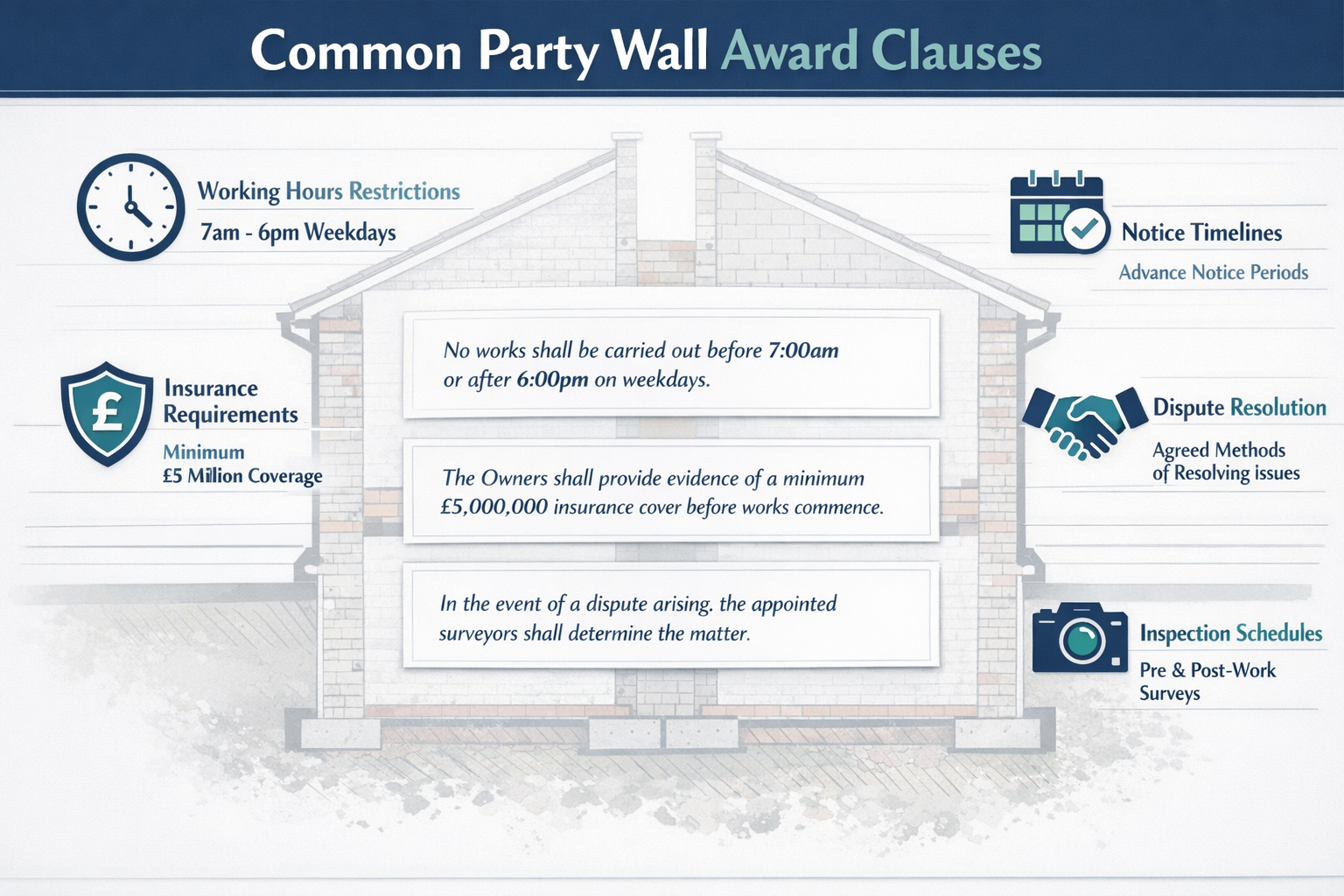
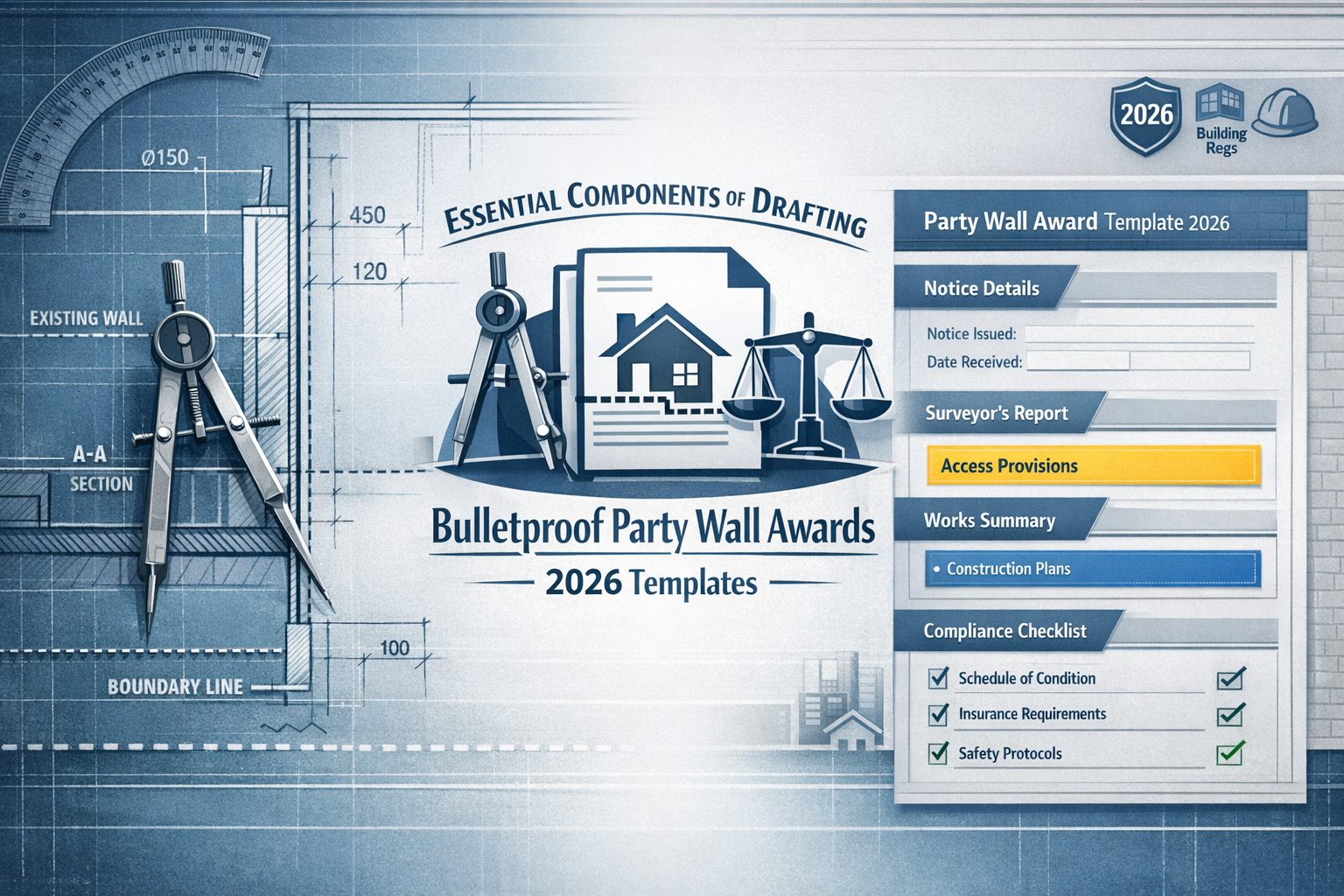
    The party wall award serves as the legally binding agreement governing construction work. For power facilities, awards must include provisions far beyond standard residential templates.

    Essential Award Components for Power Facilities:

    1. Detailed Work Descriptions

      • Specific excavation depths and methodologies
      • Equipment specifications and locations
      • Construction sequencing and timelines
      • Safety protocols for high-voltage work
    2. Protection Measures

      • Underpinning requirements if necessary
      • Vibration monitoring thresholds and remediation triggers
      • Electromagnetic shielding specifications
      • Acoustic barriers and noise mitigation
    3. Monitoring Protocols

      • Frequency of condition inspections during construction
      • Ongoing monitoring requirements post-completion
      • Vibration and noise level limits
      • Reporting procedures for concerns
    4. Access Arrangements

      • Rights of access for initial surveys
      • Ongoing inspection access during operations
      • Emergency access provisions
      • Notice periods and scheduling
    5. Dispute Resolution Mechanisms

      • Procedures for addressing concerns during construction
      • Third-party expert appointment provisions
      • Mediation and arbitration clauses

    Those looking to understand standard agreements can review a sample party wall agreement template, though power facility awards require substantial customization.

    Implementing Continuous Monitoring Programs

    Unlike residential construction where party wall involvement typically ends shortly after completion, power facilities require ongoing monitoring due to their continuous operation.

    Recommended Monitoring Schedule:

    Phase Monitoring Frequency Focus Areas
    Pre-Construction One-time comprehensive survey Establish baseline conditions
    During Construction Weekly or bi-weekly Structural movement, vibration, damage
    Commissioning Daily during equipment testing Thermal, vibration, EMI impacts
    First Year Operation Monthly Long-term settlement, operational impacts
    Ongoing Quarterly or annually Continued compliance with award terms

    This extended monitoring approach ensures that any impacts from power facility operations are detected and addressed promptly, protecting both the facility operator and neighboring property owners.

    Navigating Legal and Regulatory Frameworks for Power Facility Party Wall Surveys: Securing Agreements for 2026’s 34% Demand Surge

    Power Facility Party Wall Surveys: Securing Agreements for 2 — image 5

    Integrating Party Wall Act Compliance with Utility Regulations

    Power facility developers must navigate multiple regulatory frameworks simultaneously. The Party Wall Act exists alongside:

    • Health and Safety Executive (HSE) regulations for electrical work
    • Local planning authority requirements for industrial development
    • Environmental permits for noise, emissions, and electromagnetic fields
    • Grid connection agreements with distribution network operators
    • Building regulations for structural and fire safety

    Effective project management requires coordinating party wall compliance with these broader regulatory obligations. The Party Wall etc. Act 1996 provides the legal framework, but power facilities must exceed minimum requirements to manage their unique risks.

    Cost Considerations and Budget Planning

    Power facility party wall work involves higher costs than residential projects due to specialized expertise and extended monitoring requirements. Understanding party wall costs helps developers budget appropriately.

    Typical Cost Components:

    💰 Surveyor Fees: Higher rates for specialists with power facility experience
    💰 Schedule of Condition: More extensive documentation including specialized testing
    💰 Award Preparation: Complex agreements requiring additional legal review
    💰 Monitoring Programs: Ongoing inspection and testing costs
    💰 Mitigation Measures: Vibration isolation, acoustic barriers, electromagnetic shielding
    💰 Insurance: Enhanced coverage for high-voltage adjacent property risks

    While these costs may seem substantial, they represent a small fraction of overall power facility construction budgets—and provide essential protection against far more expensive disputes and delays.

    Developers can explore strategies for keeping party wall costs down while maintaining comprehensive protection.

    Regional Considerations Across London and the UK

    Power facility development is occurring across urban and industrial areas throughout the UK, each with unique party wall considerations.

    London Regions:

    Different areas present varying challenges:

    • Central London: Dense development with premium properties adjacent to utility infrastructure
    • East London: Industrial zones transitioning to mixed-use development
    • West London: Residential areas requiring careful community engagement
    • North London: Suburban substations serving growing populations
    • South London: Mixed industrial and residential contexts

    Each region requires surveyors familiar with local property characteristics, planning contexts, and community expectations.

    Best Practices for Successful Power Facility Party Wall Agreements

    Early Engagement and Stakeholder Communication

    The most successful power facility party wall processes begin long before formal notices are served. Early engagement with neighboring property owners builds trust and reduces resistance.

    Recommended Engagement Timeline:

    1. 6-12 Months Before Construction: Initial informal discussions with neighbors
    2. 4-6 Months Before: Presentation of project plans and party wall implications
    3. 3 Months Before: Formal notice service under the Party Wall Act
    4. 2 Months Before: Surveyor appointments and schedule of condition
    5. 1 Month Before: Award finalization and pre-construction meeting
    6. Construction Phase: Regular updates and open communication channels

    This proactive approach contrasts with the minimum legal requirements but pays dividends in smoother project delivery.

    Leveraging Technology for Documentation and Monitoring

    Modern technology enhances party wall survey accuracy and provides objective evidence:

    🎥 Drone Photography: Comprehensive aerial documentation of sites and adjacent properties
    📱 Mobile Apps: Real-time reporting and photo documentation with GPS tagging
    📊 Vibration Sensors: Continuous automated monitoring with alert thresholds
    🌡️ Thermal Imaging: Baseline and ongoing heat signature documentation
    🔬 3D Laser Scanning: Precise structural measurements for comparison
    ☁️ Cloud Storage: Secure, accessible documentation for all parties

    These technologies provide evidence that is difficult to dispute and create clear records protecting everyone involved.

    Avoiding Common Pitfalls in Power Facility Party Wall Work

    Even experienced developers make mistakes when dealing with power facility party wall requirements. Common pitfalls include:

    Assuming standard residential approaches suffice for industrial power projects
    Underestimating the time required for proper surveyor engagement and awards
    Failing to address operational impacts beyond construction phase
    Inadequate baseline documentation of environmental conditions
    Poor communication with adjoining owners about project nature
    Attempting to proceed without a surveyor to save costs
    Ignoring ongoing monitoring requirements after commissioning

    Understanding what is a party structure notice and how to serve it properly from the outset prevents many of these issues.

    Case Study: Successful Substation Development with Adjacent Properties

    A recent London substation project demonstrates best practices in action:

    Project Context:

    • New 132kV substation serving growing data center demand
    • Located adjacent to residential properties and a commercial warehouse
    • Required deep excavations within 3 meters of neighboring foundations

    Approach:

    • Early engagement: Six months of community consultation before formal notices
    • Specialized surveyors: Appointed professionals with utility infrastructure experience
    • Comprehensive documentation: Baseline vibration, thermal, acoustic, and EMI measurements
    • Robust award: Detailed operational monitoring requirements and remediation triggers
    • Transparent communication: Monthly updates during construction and quarterly reports during first year of operation

    Outcome:

    • Zero formal disputes despite complex construction
    • All neighbors consented to awards within standard timeframes
    • Ongoing monitoring confirmed no adverse impacts
    • Project completed on schedule and within budget

    This example illustrates how proper party wall protocols support rather than hinder power facility development.

    Preparing for Continued Growth Beyond 2026

    Long-Term Outlook for Power Infrastructure Development

    The 34% demand surge in 2026 is not an isolated spike—it represents the beginning of sustained growth in power infrastructure[3][4]. With peak electricity demand projected to grow 26% by 2035[2] and massive interconnection queue backlogs to clear[2], power facility construction will remain robust for years to come.

    This sustained demand means:

    📈 Increased party wall work volume for surveyors specializing in power facilities
    📈 Growing expertise in managing high-voltage adjacent property risks
    📈 Evolution of best practices as the industry learns from early projects
    📈 Potential regulatory developments addressing power facility-specific party wall considerations
    📈 Greater awareness among property owners about their rights and protections

    Building Relationships with Specialized Professionals

    Given the ongoing nature of power infrastructure expansion, developers benefit from establishing long-term relationships with qualified party wall surveyors who understand the sector.

    Benefits of Ongoing Professional Relationships:

    • Faster project initiation with familiar processes
    • Accumulated knowledge of regional property characteristics
    • Established credibility with local communities
    • Consistent documentation standards across multiple projects
    • Reduced learning curve for each new facility

    For property owners receiving notices, understanding whether you’re carrying out works or your neighbor is carrying out works helps determine your role and rights in the process.

    Staying Current with Industry Developments

    The power facility construction sector evolves rapidly, with new technologies, regulations, and best practices emerging regularly. Staying informed ensures compliance and optimal outcomes.

    Resources for Staying Current:

    • Industry associations and professional bodies
    • Regulatory authority guidance updates
    • Technical publications on electrical infrastructure
    • Party wall surveyor continuing education programs
    • Community forums and peer networks

    For general questions about the party wall process, reviewing frequently asked questions provides helpful foundational knowledge.

    Conclusion

    Power Facility Party Wall Surveys: Securing Agreements for 2 — image 7

    Power Facility Party Wall Surveys: Securing Agreements for 2026’s 34% Demand Surge requires specialized expertise, comprehensive planning, and proactive stakeholder engagement. As the energy sector experiences unprecedented growth—with contractors reporting a 34% net reading for power projects[3][4]—the importance of proper party wall protocols has never been greater.

    The unique challenges of high-voltage infrastructure adjacent to residential and commercial properties demand more than standard party wall approaches. Successful projects require:

    Early engagement with neighboring property owners
    Specialized surveyors experienced in power facility construction
    Comprehensive schedules of condition documenting baseline environmental conditions
    Robust party wall awards addressing operational as well as construction impacts
    Ongoing monitoring programs ensuring long-term protection for all parties
    Integration of party wall compliance with broader regulatory frameworks

    The projected 26% growth in peak electricity demand by 2035[2], combined with massive data center expansion requiring 176 gigawatts[2], ensures that power facility construction will remain a dominant sector for years to come. Developers who master the party wall process now will be positioned for success throughout this sustained growth period.

    Next Steps for Building Owners and Developers

    If you’re planning power facility construction involving party walls:

    1. Engage a qualified party wall surveyor with power infrastructure experience at least 3-6 months before construction
    2. Begin informal neighbor engagement well before serving formal notices
    3. Budget appropriately for comprehensive surveys, monitoring, and mitigation measures
    4. Develop detailed project documentation addressing both construction and operational phases
    5. Establish monitoring protocols that extend beyond construction completion

    For property owners receiving party wall notices from power facility developers:

    1. Understand your rights under the Party Wall Act and respond within 14 days
    2. Consider appointing your own surveyor given the complexity of power projects
    3. Ensure the schedule of condition includes baseline environmental measurements
    4. Verify that the award addresses operational impacts, not just construction
    5. Confirm ongoing monitoring arrangements and remediation triggers

    Final Thoughts

    The intersection of rapid power infrastructure growth and party wall legislation creates both challenges and opportunities. With proper protocols, specialized expertise, and proactive communication, Power Facility Party Wall Surveys: Securing Agreements for 2026’s 34% Demand Surge can proceed smoothly—protecting property owners, supporting essential infrastructure development, and contributing to the energy transition our society requires.

    The 34% demand surge in 2026[3][4] is just the beginning. Those who establish robust party wall practices now will be prepared for the sustained growth ahead, turning potential conflicts into collaborative successes that benefit developers, property owners, and communities alike.


    References

    [1] utilitydive – https://www.utilitydive.com/news/utility-electricity-trends-outlook-2026/810990/

    [2] Power And Utilities Industry Outlook – https://www.deloitte.com/us/en/insights/industry/power-and-utilities/power-and-utilities-industry-outlook.html

    [3] Contractors Have Dampened Expectations 2026 Apart Data Centers And Power Projects Amid Worries About – https://www.agc.org/news/2026/01/08/contractors-have-dampened-expectations-2026-apart-data-centers-and-power-projects-amid-worries-about

    [4] 2026 Construction Outlook Mixed Trends – https://dailyreporter.com/2026/01/14/2026-construction-outlook-mixed-trends/

    [5] Party Wall Surveys Amid 2026 Construction Boom Handling Disputes In High Demand Uk Housing Markets – https://nottinghillsurveyors.com/blog/party-wall-surveys-amid-2026-construction-boom-handling-disputes-in-high-demand-uk-housing-markets

  • Navigating Party Wall Agreements Amid 2026 Immigration Enfor

    Navigating Party Wall Agreements Amid 2026 Immigration Enfor

    The construction industry in 2026 faces an unprecedented challenge: heightened immigration enforcement is creating significant workforce disruptions that are delaying building projects and complicating party wall agreements across London and beyond. Property owners planning extensions, loft conversions, or structural work now face a perfect storm of labor shortages, extended timelines, and escalating disputes with neighbors—all stemming from immigration policy changes that have fundamentally altered the construction workforce landscape.

    Navigating party wall agreements amid 2026 immigration enforcement and workforce disruptions requires property owners, surveyors, and contractors to adopt new strategies that account for unpredictable delays, contractor availability issues, and the increased likelihood of disputes arising from project postponements. With the Trump administration’s expanded ICE operations and the 287(g) deputization program creating widespread uncertainty in the construction sector, understanding how to protect your interests while maintaining good neighbor relations has never been more critical. 🏗️

    Key Takeaways

    • Immigration enforcement in 2026 has significantly reduced construction workforce availability, causing project delays that directly impact party wall agreement timelines and neighbor relations
    • Early party wall notice serving and proactive communication are essential strategies to mitigate risks associated with unpredictable construction schedules
    • Surveyor involvement and properly documented party wall awards provide legal protection when workforce disruptions cause project delays or disputes
    • Contractor vetting and contingency planning help property owners navigate labor shortages while maintaining compliance with party wall legislation
    • Understanding your rights under the Party Wall etc. Act 1996 becomes crucial when immigration-related delays threaten to derail construction projects and strain neighbor relationships

    Understanding the 2026 Immigration Enforcement Landscape

    Navigating Party Wall Agreements Amid 2026 Immigration Enfor

    The construction industry has historically relied heavily on immigrant labor, with estimates suggesting that foreign-born workers comprise a substantial portion of the workforce in trades essential to building projects. In 2026, however, the landscape has shifted dramatically due to expanded federal immigration enforcement efforts.

    Federal Enforcement Expansion

    The Trump administration has significantly increased ICE operations and expanded the 287(g) program, which allows local law enforcement to act as immigration officers [2]. This expansion has created a climate of uncertainty that affects construction sites across the country, particularly in major metropolitan areas like London where building activity remains robust despite economic headwinds.

    Federal funding allocations have prioritized immigration enforcement, with resources directed toward workplace raids and verification programs that specifically target industries known to employ immigrant workers—construction being among the most affected sectors [2].

    State and Local Resistance

    The enforcement landscape is further complicated by state-level resistance to federal immigration policies. Democratic-led states and municipalities have implemented sanctuary policies and refused to cooperate with ICE operations [1][3]. This patchwork of cooperation and resistance creates regional variations in how immigration enforcement affects construction workforce availability.

    Some jurisdictions have passed resolutions specifically limiting cooperation with ICE and CBP in noncriminal activities [5], while others have actively partnered with federal authorities. For property owners planning construction work, understanding the local enforcement climate is essential for realistic project planning.

    Workforce Impact Statistics

    The construction sector has experienced measurable workforce disruptions in 2026:

    • Reduced labor pool: Immigration enforcement has removed workers from job sites through deportations and voluntary departures
    • Increased labor costs: Remaining workers command higher wages due to scarcity
    • Project delays: Average construction timelines have extended by 20-40% in affected markets
    • Contractor bankruptcies: Smaller firms unable to staff projects have closed operations

    These disruptions create a ripple effect that directly impacts party wall agreements, as delayed projects strain neighbor relations and complicate the legal frameworks designed to protect both building owners and adjoining owners.

    How Immigration Enforcement Disrupts Party Wall Agreements

    The connection between immigration enforcement and party wall agreements may not be immediately obvious, but the workforce disruptions create multiple pressure points in the party wall process.

    Timeline Complications and Notice Requirements

    Under the Party Wall etc. Act 1996, building owners must serve proper notice to adjoining owners before commencing work on shared walls or structures. The standard notice periods are:

    Type of Work Notice Period Required
    Line of Junction Notice 1 month
    Party Structure Notice 2 months
    Adjacent Excavation Notice 1 month

    These timelines assume that work will commence shortly after the notice period expires. However, workforce shortages in 2026 mean that contractors may not be available when planned, forcing building owners to either:

    1. Delay serving notices (creating uncertainty for neighbors)
    2. Serve notices and then postpone work (potentially requiring new notices)
    3. Rush into agreements with unreliable contractors (risking poor workmanship)

    For guidance on proper notice serving, review our comprehensive guide on party wall act notices and how to respond.

    Contractor Reliability and Workforce Verification

    Property owners now face difficult questions when hiring contractors:

    • Will the contractor’s workforce remain available throughout the project?
    • Are workers properly documented to avoid mid-project enforcement actions?
    • Does the contractor have contingency plans for workforce disruptions?

    A contractor who loses key workers to immigration enforcement mid-project creates immediate problems for party wall agreements. Work may stop abruptly, leaving shared structures in vulnerable states and potentially causing damage to adjoining properties—precisely what party wall legislation aims to prevent.

    Escalating Neighbor Disputes

    Project delays caused by workforce shortages frequently trigger disputes between building owners and adjoining owners:

    Common dispute scenarios in 2026:

    • 🔨 Extended construction periods: What was planned as a 3-month loft conversion stretches to 6-9 months, causing prolonged disruption
    • 📅 Multiple postponements: Contractors repeatedly reschedule, creating uncertainty and frustration
    • 💰 Cost escalations: Building owners face unexpected expenses and may cut corners, raising safety concerns
    • 🏗️ Incomplete work: Projects abandoned mid-construction when contractors fail, leaving properties vulnerable

    These situations often require surveyor intervention and formal party wall awards to resolve, adding costs and complexity to already troubled projects.

    Impact on Party Wall Surveyors

    Professional surveyors navigating party wall agreements amid 2026 immigration enforcement and workforce disruptions face new challenges:

    • Scheduling condition surveys becomes difficult when project timelines are uncertain
    • Drafting party wall awards requires accounting for potential workforce-related delays
    • Mediating disputes increasingly involves immigration-related workforce issues
    • Ensuring compliance with agreed-upon work schedules becomes more complex

    Surveyors must now incorporate workforce stability assessments into their advice to both building owners and adjoining owners. Understanding the costs of party wall processes helps property owners budget appropriately for these extended timelines.

    Strategies for Successfully Navigating Party Wall Agreements in 2026

    Navigating Party Wall Agreements Amid 2026 Immigration Enfor — image 3

    Despite the challenges, property owners can successfully navigate party wall agreements amid 2026 immigration enforcement and workforce disruptions by adopting proactive strategies and working with experienced professionals.

    Early Planning and Notice Serving

    The single most important strategy is early action. Property owners should:

    1. Begin planning 6-12 months before intended construction start dates
    2. Serve party wall notices early to establish legal protections even if timelines shift
    3. Communicate transparently with neighbors about potential delays and workforce challenges
    4. Engage surveyors early to document existing conditions and establish baseline agreements

    Early notice serving provides flexibility when workforce issues cause delays. Rather than scrambling to serve notices when contractors become available, building owners who plan ahead maintain legal compliance and neighbor goodwill.

    For those considering whether professional help is necessary, our article on having a party wall agreement without a surveyor explores the options and risks.

    Contractor Vetting and Contingency Planning

    Thorough contractor evaluation is essential in 2026:

    Request workforce stability documentation

    • How many workers are employed?
    • What contingency plans exist for workforce disruptions?
    • Can the contractor demonstrate workforce stability over the past 12 months?

    Verify contractor credentials and insurance

    • Are all necessary licenses current?
    • Does insurance cover workforce-related project delays?
    • What is the contractor’s track record for completing projects on time?

    Build contingency timelines into agreements

    • Add 30-50% buffer time to estimated completion dates
    • Include specific provisions for workforce-related delays in contracts
    • Establish clear communication protocols for delay notifications

    Identify backup contractors

    • Have alternative contractors vetted and ready
    • Understand costs of switching contractors mid-project
    • Ensure party wall awards accommodate potential contractor changes

    Leveraging Professional Surveyor Expertise

    Working with experienced party wall surveyors provides critical advantages when navigating party wall agreements amid 2026 immigration enforcement and workforce disruptions:

    Surveyors can:

    • Draft comprehensive party wall awards that account for potential delays and workforce issues
    • Mediate disputes before they escalate to formal legal proceedings
    • Document conditions thoroughly to protect both parties if projects are delayed or abandoned
    • Provide expert testimony if disputes require legal resolution
    • Navigate complex scenarios involving multiple adjoining owners or complicated structural work

    Regional expertise matters significantly. Property owners in different areas of London may benefit from working with surveyors who understand local enforcement patterns and construction market conditions. Consider connecting with specialists such as a party wall surveyor in North London, Central London, South London, West London, or East London depending on your property location.

    Transparent Communication with Adjoining Owners

    Maintaining positive neighbor relations requires honesty and transparency:

    • Explain workforce challenges proactively rather than waiting for neighbors to complain about delays
    • Provide realistic timelines that account for potential disruptions
    • Offer regular updates on project status and any changes to schedules
    • Address concerns promptly when neighbors raise issues about noise, access, or safety
    • Document all communications to create a record of good-faith efforts

    “In 2026, the most successful party wall agreements are those where building owners treat their neighbors as partners in navigating unprecedented workforce challenges, rather than adversaries to be managed.”

    This collaborative approach reduces the likelihood of formal disputes and creates goodwill that proves invaluable when unexpected delays occur.

    Understanding Your Legal Rights and Obligations

    Property owners must understand their rights and responsibilities under the Party Wall etc. Act 1996, particularly regarding:

    Building Owner Obligations:

    • Serve proper notice within required timeframes
    • Pay for party wall awards and agreed-upon surveyors
    • Complete work in accordance with agreed schedules and methods
    • Compensate adjoining owners for any damage caused
    • Maintain insurance coverage throughout construction

    Adjoining Owner Rights:

    • Receive proper notice before work commences
    • Appoint their own surveyor (at building owner’s expense)
    • Have existing conditions documented before work begins
    • Receive compensation for any damage to their property
    • Enforce agreed-upon work schedules and methods

    For specific guidance on different types of construction work, review our resource on types of party wall works.

    Cost Management Strategies

    Workforce disruptions inevitably increase costs, but strategic planning can minimize financial impact:

    Budget considerations for 2026:

    1. Add 25-40% contingency to initial cost estimates
    2. Obtain fixed-price quotes that include workforce stability guarantees
    3. Understand party wall cost structures and plan accordingly
    4. Consider phased construction to reduce exposure to workforce disruptions
    5. Explore insurance options that cover workforce-related delays

    Our guide on how to keep party wall costs down provides additional strategies for managing expenses without compromising quality or legal compliance.

    Regional Variations and State-Level Protections

    The impact of immigration enforcement on construction workforces varies significantly by region, creating different challenges for property owners in different jurisdictions.

    Sanctuary Jurisdictions and Workforce Stability

    Areas with sanctuary policies that limit cooperation with ICE generally experience greater workforce stability [1][3]. Property owners in these jurisdictions may find:

    • More contractors willing to commit to firm timelines
    • Greater workforce availability for specialized trades
    • Lower risk of mid-project enforcement actions disrupting work
    • More competitive pricing due to larger labor pools

    However, even in sanctuary jurisdictions, the broader climate of immigration enforcement creates anxiety that affects workforce participation and availability.

    High-Enforcement Areas and Planning Challenges

    Regions where state and local authorities actively cooperate with ICE face more severe workforce disruptions [2]. Property owners in these areas should:

    • Extend planning timelines significantly beyond traditional estimates
    • Prioritize contractors with documented, stable workforces
    • Build extensive contingencies into party wall agreements
    • Consider delaying non-essential construction until workforce stability improves

    State-Level Immigrant Protections

    Some states have implemented protections for immigrant workers that may help stabilize construction workforces [4]. These protections include:

    • Workplace raid notification requirements
    • Limits on employer cooperation with immigration enforcement
    • Legal assistance programs for workers facing deportation
    • Labor rights enforcement regardless of immigration status

    Property owners should research their state’s policies to understand how local protections may affect workforce availability and project stability.

    Future Outlook and Long-Term Considerations

    Navigating Party Wall Agreements Amid 2026 Immigration Enfor — image 5

    As 2026 progresses, several trends are likely to shape the intersection of immigration enforcement and party wall agreements:

    Workforce Adaptation

    The construction industry is adapting to the new enforcement environment through:

    • Increased automation in certain construction processes
    • Training programs to develop domestic workforce capacity
    • Wage increases to attract workers from other industries
    • Alternative construction methods that require less labor

    These adaptations may gradually stabilize the workforce, but the transition period creates ongoing uncertainty for property owners planning construction projects.

    Legal and Policy Evolution

    Both immigration enforcement policies and party wall practices are evolving:

    • Court challenges to enforcement programs may alter the landscape [3]
    • Legislative changes at state and federal levels could increase or decrease enforcement
    • Industry standards for party wall agreements may adapt to account for workforce volatility
    • Insurance products may emerge to cover immigration-related project delays

    Property owners should stay informed about these developments and adjust their planning accordingly.

    Market Impacts

    The construction market itself is transforming in response to workforce challenges:

    • Project costs have increased substantially in many markets
    • Timelines for even simple projects have extended significantly
    • Contractor consolidation as smaller firms exit the market
    • Specialization with contractors focusing on niches where they can maintain stable workforces

    These market changes affect party wall agreements by altering the baseline assumptions about project costs, timelines, and contractor availability.

    Conclusion: Proactive Planning for Success

    Navigating party wall agreements amid 2026 immigration enforcement and workforce disruptions requires property owners to adopt a fundamentally different approach to construction planning. The days of assuming contractor availability and predictable timelines are gone, replaced by a landscape of uncertainty that demands proactive planning, transparent communication, and professional expertise.

    The most successful property owners in 2026 are those who:

    Plan early and serve party wall notices well in advance of intended construction dates
    Vet contractors thoroughly for workforce stability and contingency planning
    Engage professional surveyors to document conditions and draft comprehensive awards
    Communicate transparently with neighbors about potential challenges and delays
    Build substantial contingencies into budgets and timelines
    Stay informed about regional enforcement patterns and policy changes

    Actionable Next Steps

    If you’re planning construction work that requires a party wall agreement:

    1. Download a sample party wall agreement template to understand the documentation requirements

    2. Consult with a qualified party wall surveyor to assess your specific situation and develop a strategy that accounts for current workforce challenges

    3. Begin contractor vetting immediately, focusing on workforce stability and contingency planning capabilities

    4. Serve party wall notices early, even if your exact construction timeline remains uncertain

    5. Establish open communication with your neighbors to build goodwill before challenges arise

    6. Review your insurance coverage to ensure adequate protection against workforce-related delays

    7. Monitor local enforcement patterns and adjust your planning as conditions change

    The challenges of 2026 are significant, but they are not insurmountable. With careful planning, professional guidance, and realistic expectations, property owners can successfully complete construction projects while maintaining positive neighbor relations and full legal compliance. The key is recognizing that navigating party wall agreements amid 2026 immigration enforcement and workforce disruptions requires a new playbook—one that prioritizes flexibility, transparency, and proactive risk management above all else. 🏡


    References

    [1] States Resist As Trump Asks Local Officers To Aid Immigration Effort – https://www.latimes.com/world-nation/story/2026-02-17/states-resist-as-trump-asks-local-officers-to-aid-immigration-effort

    [2] Ice And Deportations How Trump Reshaping Immigration Enforcement – https://www.cfr.org/articles/ice-and-deportations-how-trump-reshaping-immigration-enforcement

    [3] Ice Wars Us State Federal Immigration – https://mixedmigration.org/publications/mmr/2025/ice-wars-us-state-federal-immigration/

    [4] Protecting Immigrants How States Can Lead In 2026 – https://www.americanimmigrationcouncil.org/blog/protecting-immigrants-how-states-can-lead-in-2026/

    [5] Resolution To Not Aid Ice Cbp Noncriminal Activity Passes In Mccandless – https://triblive.com/local/resolution-to-not-aid-ice-cbp-noncriminal-activity-passes-in-mccandless/

  • Common Neighbor Refusals to Party Wall Notices: Surveyor Str

    Common Neighbor Refusals to Party Wall Notices: Surveyor Str

    When a neighbor refuses consent to a party wall notice, many building owners face confusion and delays. Understanding Common Neighbor Refusals to Party Wall Notices: Surveyor Strategies for Valid Responses and Awards is essential for progressing construction projects legally and efficiently in 2026. This comprehensive guide breaks down invalid objections, explains surveyor-led resolution processes, and provides actionable templates to keep projects on track within statutory timeframes.

    Key Takeaways

    Invalid objections like noise complaints, inconvenience, or personal disputes cannot legally prevent party wall works—only formal dissent triggers the surveyor appointment process

    📋 Surveyor appointment becomes mandatory when neighbors refuse consent, with costs typically ranging from £900-£2,700 for a single surveyor or double when each party appoints their own[1]

    Strict timelines apply: neighbors have 14 days to respond to notices, and Party Wall Awards remain valid for 12 months from service date

    🤝 Proactive communication before serving formal notices can prevent costly disputes and save thousands of pounds in surveyor fees[1]

    📝 Party Wall Awards provide legally binding frameworks that allow works to proceed regardless of neighbor objections, protecting both parties’ interests


    Understanding Common Neighbor Refusals to Party Wall Notices

    Common Neighbor Refusals to Party Wall Notices: Surveyor Str

    What Constitutes a Valid Refusal?

    Under the Party Wall etc. Act 1996, neighbors have specific rights when receiving party wall notices. However, not all objections constitute valid legal refusals. Many building owners encounter resistance based on concerns that fall outside the Act’s scope.

    Valid responses include:

    • ✅ Formal written consent to the proposed works
    • ✅ Written dissent (refusal) triggering surveyor appointment
    • ✅ Silence beyond the 14-day response period (deemed dissent)

    Invalid objections that don’t prevent works:

    • ❌ Noise and disruption complaints
    • ❌ General inconvenience concerns
    • ❌ Property value worries
    • ❌ Personal disputes or relationship issues
    • ❌ Aesthetic preferences about the finished work
    • ❌ Timing preferences for when works should occur

    “The Party Wall Act doesn’t give neighbors veto power over legitimate construction works—it simply ensures proper procedures are followed and both parties are protected.”

    The Most Common Invalid Objections in 2026

    Noise and Disturbance Concerns 🔊

    Neighbors frequently cite anticipated noise, dust, and general disruption as reasons to refuse consent. While these concerns are understandable, they don’t constitute valid grounds for preventing party wall works. The Act assumes that reasonable construction activities will cause temporary inconvenience but provides protective mechanisms through conditions in the Party Wall Award rather than outright prohibition.

    Property Value Impact 💷

    Some neighbors refuse notices claiming the proposed works will diminish their property value. However, the Act doesn’t recognize speculative financial concerns as valid objections. If actual damage occurs during construction, the Award provides compensation mechanisms, but perceived future value impacts cannot block legitimate works.

    Personal Relationship Issues 🏠

    Disputes between neighbors sometimes predate construction plans. Using party wall procedures to continue personal conflicts represents misuse of the statutory framework. Professional surveyors help separate legitimate technical concerns from interpersonal issues.

    Timing and Scheduling Objections 📅

    Neighbors may request works be delayed for personal convenience—upcoming events, holidays, or work-from-home schedules. While considerate builders may accommodate reasonable timing requests voluntarily, such preferences don’t legally prevent works from proceeding according to the building owner’s timeline.


    Surveyor Strategies for Handling Common Neighbor Refusals to Party Wall Notices

    The Surveyor Appointment Process

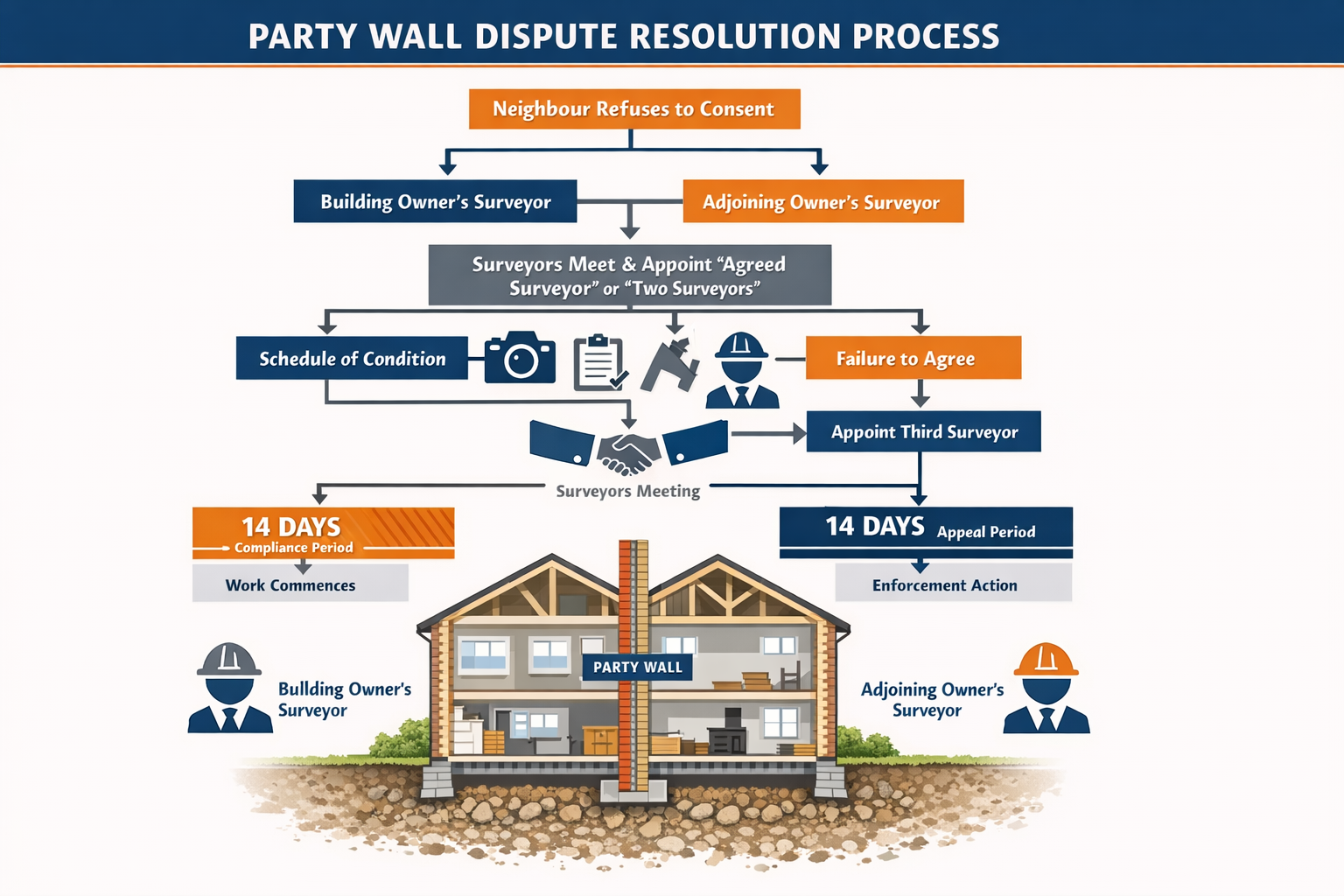
    When a neighbor refuses consent—either explicitly or through 14-day silence—the dispute resolution mechanism activates automatically[1]. Understanding this process is crucial for both building owners and adjoining owners.

    Three Surveyor Configuration Options

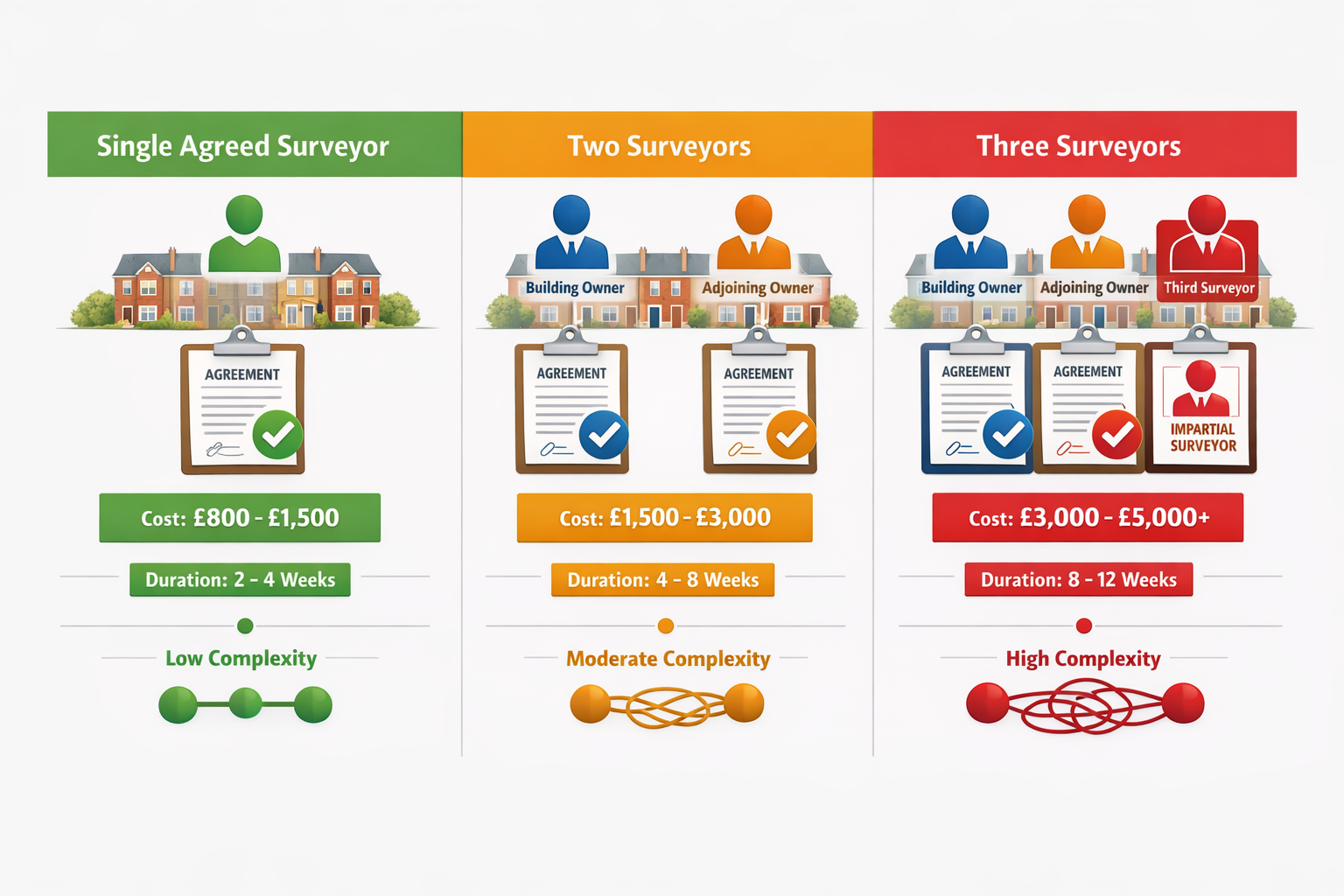
    Configuration Description Typical Cost Best For
    Single Agreed Surveyor One impartial surveyor acts for both parties £900-£2,700[1] Straightforward works, cooperative neighbors
    Two Separate Surveyors Each party appoints their own surveyor £1,800-£5,400+[1] Complex projects, significant concerns
    Third Surveyor Appointed when two surveyors disagree Additional £1,000-£3,000+ Contentious disputes requiring arbitration

    The building owner typically bears all surveyor costs, regardless of configuration[1]. This financial reality makes early neighbor communication particularly valuable.

    Strategic Response Templates for Invalid Objections

    Template 1: Addressing Noise and Disruption Concerns

    When neighbors cite noise as their refusal reason, surveyors should acknowledge the concern while clarifying the legal position:

    “We understand your concerns about construction noise and disruption. While these are natural worries, they don’t prevent works under the Party Wall Act. However, the Party Wall Award will include specific conditions to minimize impact, such as:

    • Restricted working hours (typically 8am-6pm weekdays)
    • Advance notice of particularly noisy operations
    • Dust suppression measures
    • Access route specifications to minimize disturbance

    These protective conditions ensure your reasonable comfort while allowing legitimate construction to proceed.”

    Template 2: Property Value and Damage Fears

    “The Party Wall Award includes comprehensive protection against damage to your property:

    • A detailed Schedule of Condition documenting your property’s current state
    • Mandatory compensation provisions for any damage caused
    • Professional monitoring throughout construction
    • Your right to inspect works at reasonable times

    If damage occurs, you’re entitled to full remediation or financial compensation. The Award legally binds the building owner to these protections.”

    Proactive Communication Strategies

    The HomeOwners Alliance emphasizes that friendly neighbor dialogue before serving formal notice represents the most cost-effective approach, potentially saving “thousands of pounds down the line”[1]. Experienced surveyors recommend:

    1. Pre-Notice Consultation 📞

      • Informal discussion of proposed works
      • Sharing preliminary plans and timelines
      • Addressing concerns before formal procedures begin
    2. Educational Approach 📚

      • Explaining the Act’s protective mechanisms
      • Clarifying that refusal triggers costs, not work stoppage
      • Demonstrating how Awards benefit both parties
    3. Documented Goodwill 📝

      • Written commitments to minimize disruption
      • Voluntary accommodations beyond statutory requirements
      • Contact information for ongoing communication

    Professional surveyors acting for adjoining owners can explain that cooperation typically results in more favorable Award conditions than adversarial approaches.


    Crafting Valid Party Wall Awards: Surveyor Best Practices

    Common Neighbor Refusals to Party Wall Notices: Surveyor Str — image 3

    Essential Award Components

    A comprehensive Party Wall Award must address both statutory requirements and practical concerns to remain enforceable throughout the 12-month validity period.

    Core Award Elements:

    🔹 Detailed Scope of Works

    • Precise description of all notifiable works
    • Technical specifications and methodologies
    • Foundation depths, wall thicknesses, structural details
    • Reference to approved architectural drawings

    🔹 Protective Conditions

    • Working hours restrictions
    • Access arrangements and routes
    • Noise and dust mitigation measures
    • Vibration monitoring requirements
    • Security provisions during construction

    🔹 Schedule of Condition

    • Photographic documentation of adjoining property
    • Written descriptions of existing defects
    • Baseline for damage assessment
    • Professional survey of vulnerable areas

    🔹 Dispute Resolution Mechanisms

    • Surveyor contact information
    • Process for raising concerns during works
    • Inspection rights and notification periods
    • Compensation determination procedures

    🔹 Timeline and Validity

    • Award service date
    • 12-month validity period for commencing works
    • Reasonable completion timeframe
    • Extension procedures if needed

    Addressing Invalid Objections Within Awards

    Even when neighbor refusals are technically invalid, skilled surveyors incorporate reasonable accommodations into Awards to facilitate smooth project execution:

    For Noise Concerns:

    • Restrict particularly disruptive operations to mid-week
    • Require 48-hour notice before major excavation or demolition
    • Mandate vibration monitoring near sensitive structures
    • Include break periods during continuous operations

    For Access Worries:

    • Specify exact access routes avoiding sensitive areas
    • Require restoration of any damaged landscaping
    • Limit access to specific hours or days
    • Provide temporary fencing or barriers

    For Property Protection:

    • Enhanced Schedule of Condition documentation
    • Interim inspection rights at project milestones
    • Professional structural monitoring during critical phases
    • Expedited damage claim procedures

    “A well-crafted Award transforms neighbor objections from obstacles into manageable conditions, creating a framework where construction proceeds while legitimate concerns receive proper attention.”

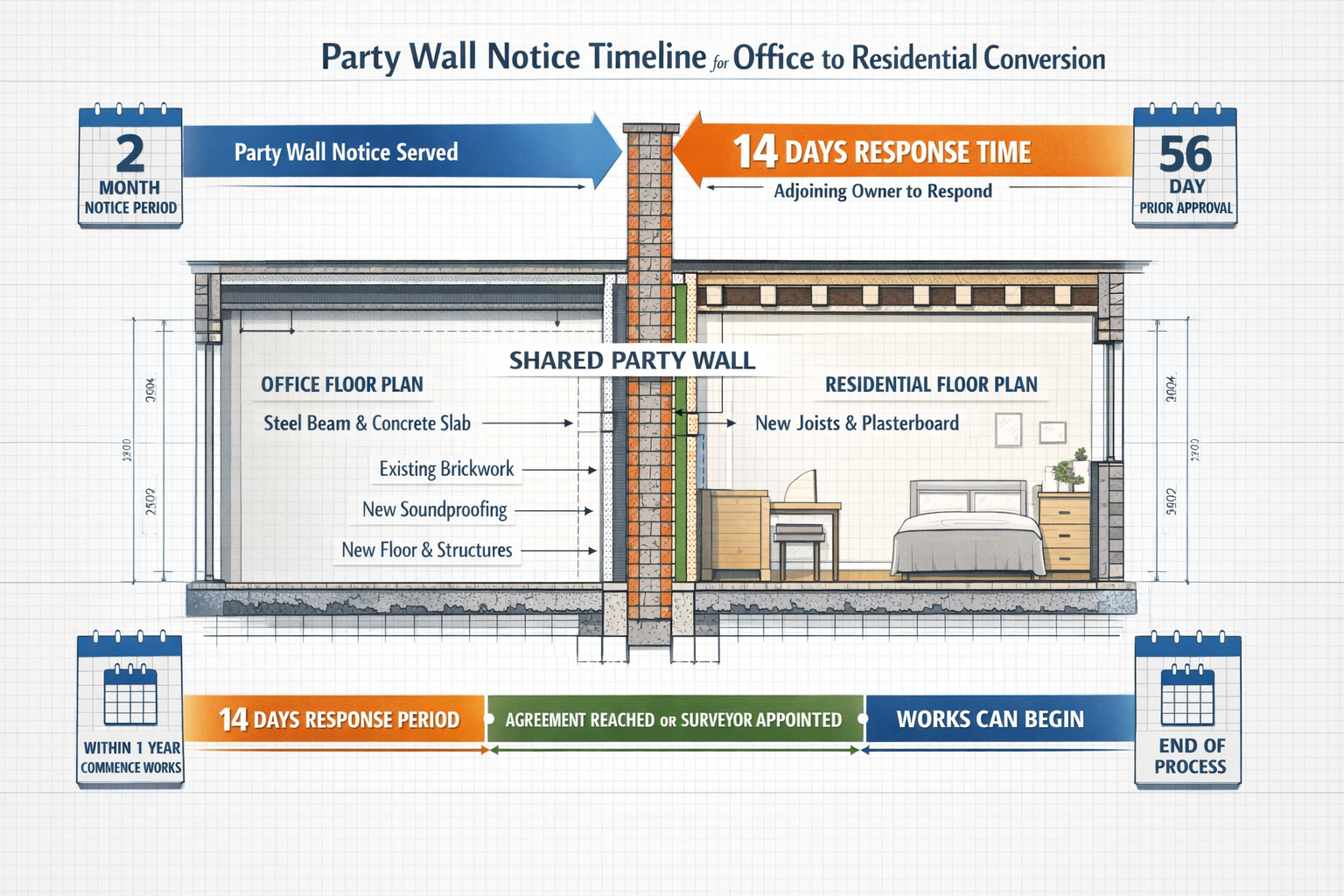
    The 2-Month Notice Requirement and 1-Year Validity Window

    Understanding statutory timeframes is critical for Common Neighbor Refusals to Party Wall Notices: Surveyor Strategies for Valid Responses and Awards:

    Notice Periods:

    • 2 months for most party structure works and excavations[3]
    • 1 month for party fence wall works
    • Calculated from service date to proposed work commencement

    Response Timeline:

    • 14 days for neighbors to consent or dissent
    • Silence equals deemed dissent, triggering surveyor appointment[1]

    Award Validity:

    • 12 months from Award service to commence works
    • Works must begin within this period to remain valid
    • Extensions possible by agreement or new Award

    This creates a strategic timeline pressure: delays in resolving invalid objections can consume the validity period, requiring the entire process to restart. Efficient surveyor strategies prevent this costly scenario.

    Regional Considerations Across London

    Party wall procedures remain consistent across London, but local building patterns create regional variations in common refusals:

    • Central London projects often involve listed buildings and conservation areas, generating heritage-related objections
    • North London terraced properties frequently encounter multi-party scenarios with varied objection types
    • South London Victorian conversions raise structural stability concerns
    • East London regeneration areas see higher volumes of basement excavations
    • West London luxury developments generate property value objections

    Experienced local surveyors anticipate these regional patterns when crafting Awards.


    Cost Management and Dispute Prevention

    Financial Implications of Neighbor Refusals

    The economic impact of refusals extends beyond surveyor fees. Understanding the full cost picture helps building owners make informed decisions about dispute resolution approaches.

    Direct Surveyor Costs:

    • Single agreed surveyor: £900-£2,700[1]
    • Two separate surveyors: £1,800-£5,400+[1]
    • Third surveyor arbitration: Additional £1,000-£3,000+
    • Complex projects may exceed these ranges

    Indirect Delay Costs:

    • Construction team standby charges
    • Extended equipment rental periods
    • Project financing costs during delays
    • Potential contractor rescheduling fees
    • Lost rental income for investment properties

    Risk Mitigation Costs:

    • Enhanced Schedule of Condition documentation
    • Additional monitoring and inspection services
    • Professional photography and surveying
    • Legal advice for contentious disputes

    For detailed cost breakdowns, review our guide on party wall costs and the process.

    Strategies to Keep Costs Down

    Several approaches minimize expenses when facing neighbor refusals:

    1. Early Engagement 🤝

      • Discuss plans informally before formal notices
      • Address concerns proactively
      • Build cooperative relationships
    2. Agreed Surveyor Selection 👥

      • Propose mutually acceptable surveyors
      • Emphasize cost savings of single surveyor
      • Highlight impartiality benefits
    3. Clear Documentation 📋

      • Provide comprehensive work descriptions
      • Share detailed plans and specifications
      • Reduce uncertainty driving objections
    4. Reasonable Accommodations 🔧

      • Offer voluntary concessions on timing
      • Commit to enhanced protective measures
      • Demonstrate consideration for neighbor concerns

    Learn more about how to keep party wall costs down through strategic planning.

    When Professional Surveyor Intervention Becomes Essential

    While some building owners consider proceeding without a surveyor, professional involvement becomes mandatory when neighbors refuse consent. The statutory framework requires surveyor appointment following dissent[1].

    Critical scenarios requiring immediate surveyor engagement:

    ⚠️ Neighbor explicitly refuses consent in writing
    ⚠️ 14-day response period expires without neighbor response
    ⚠️ Complex structural works involving foundations or load-bearing walls
    ⚠️ Multiple adjoining properties requiring coordinated Awards
    ⚠️ Pre-existing neighbor disputes complicating communication
    ⚠️ High-value properties where damage risks justify professional oversight
    ⚠️ Tight project timelines requiring efficient dispute resolution

    Professional surveyors provide legal compliance, technical expertise, and neutral mediation that protect all parties while enabling project progression.


    Conclusion: Navigating Neighbor Refusals Successfully

    Common Neighbor Refusals to Party Wall Notices: Surveyor Str — image 5

    Understanding Common Neighbor Refusals to Party Wall Notices: Surveyor Strategies for Valid Responses and Awards empowers building owners to progress construction projects confidently despite neighbor objections. The key insights for 2026 include:

    Invalid objections like noise complaints, inconvenience, or property value concerns cannot legally prevent works—they simply trigger the surveyor appointment process that creates binding Awards allowing construction to proceed with appropriate protections.

    Strategic surveyor selection significantly impacts costs and timelines. Single agreed surveyors offer the most economical approach (£900-£2,700), while adversarial two-surveyor configurations double expenses[1]. Early communication often prevents costly escalation.

    Well-crafted Awards transform objections into manageable conditions rather than project obstacles. Professional surveyors incorporate reasonable accommodations addressing legitimate concerns while maintaining statutory compliance and protecting the building owner’s right to proceed.

    Timeline awareness prevents costly delays. With 2-month notice periods, 14-day response windows, and 12-month Award validity, efficient dispute resolution keeps projects on schedule and within budget.

    Actionable Next Steps

    For building owners facing neighbor refusals:

    1. Document Everything 📸

      • Keep records of all communications
      • Photograph notice service
      • Track response deadlines
    2. Engage Professional Surveyors Early 🏗️

      • Don’t wait until disputes escalate
      • Select experienced, impartial professionals
      • Verify surveyor qualifications and local expertise
    3. Maintain Open Communication 💬

      • Continue dialogue even after formal refusal
      • Demonstrate willingness to address reasonable concerns
      • Separate technical issues from personal conflicts
    4. Understand Your Rights ⚖️

      • Recognize that refusal doesn’t stop legitimate works
      • Know the statutory timelines and procedures
      • Seek legal advice for complex situations
    5. Plan for Costs 💰

      • Budget for surveyor fees in project planning
      • Consider cost-sharing negotiations
      • Factor in potential delay expenses

    The Party Wall Act provides a robust framework ensuring construction can proceed while protecting neighbor interests. By understanding which objections are invalid, employing strategic surveyor approaches, and crafting comprehensive Awards, building owners can navigate refusals efficiently and commence works within the statutory 12-month validity period.

    For personalized guidance on your specific party wall situation, professional surveyors offer the expertise to transform neighbor refusals from obstacles into manageable procedural steps, keeping your 2026 construction project on track.


    References

    [1] Party Wall Surveyor Cost – https://hoa.org.uk/advice/guides-for-homeowners/i-am-improving/party-wall-surveyor-cost/

    [2] Shw Party Wall Award Norfolk Square Brighton – https://www.shw.co.uk/articles/2026/shw—party-wall-award–norfolk-square-brighton.html

    [3] Party Wall Agreement – https://hoa.org.uk/advice/guides-for-homeowners/i-am-improving/party-wall-agreement/

    [4] Party Wall Surveyors A 2021 Guide – https://extensionarchitecture.co.uk/house-extensions/party-wall-surveyors-a-2021-guide/

    [5] Party Walls The Fundamentals – https://www.rics.org/training-events/online-training/on-demand/party-walls-the-fundamentals

    [6] What Block Managers Really Need From Surveyors In 2026 Lessons From The Front Line – https://thebusinessgroup.co.uk/what-block-managers-really-need-from-surveyors-in-2026-lessons-from-the-front-line/

    [7] How To Make The Party Wall Process Run Smoothly – https://urbanistarchitecture.co.uk/how-to-make-the-party-wall-process-run-smoothly/

    [8] Eeeventslist – https://fpws.org.uk/eeeventslist/

    [9] Party Wall Survey Guide – https://strutsurveyors.com/party-wall-survey-guide/

  • Healthcare Party Wall Agreements: Clinic & Lab Guide 2026

    Healthcare Party Wall Agreements: Clinic & Lab Guide 2026

    The healthcare construction sector is experiencing unprecedented growth in 2026, with non-hospital facilities such as clinics and laboratories showing a remarkable 24% net reading in construction demand. As medical practices, diagnostic centers, and specialized treatment facilities expand into densely-packed urban environments, they increasingly encounter a complex challenge that requires both medical expertise and legal precision: Healthcare Facility Party Wall Agreements: Navigating Complex Shared Boundaries in Clinic and Lab Construction. These shared boundary situations demand specialized knowledge that goes far beyond traditional construction projects, blending infection control protocols, regulatory compliance, and neighbor relations into a single, intricate framework.

    When a new urgent care clinic shares a wall with an existing dental practice, or when a diagnostic laboratory expands into space adjacent to a physical therapy center, the stakes extend beyond typical property disputes. These scenarios involve sensitive medical equipment, patient privacy concerns, infection control requirements, and stringent regulatory oversight that can make or break a healthcare facility’s operational success. Understanding how to navigate Healthcare Facility Party Wall Agreements: Navigating Complex Shared Boundaries in Clinic and Lab Construction has become an essential competency for healthcare developers, property owners, and medical practice administrators.

    Key Takeaways

    • 🏥 Healthcare facilities face unique party wall challenges that combine traditional property law with medical regulations, infection control standards, and patient safety requirements
    • 📋 Compliance documentation is critical in 2026, with healthcare systems prioritizing fair market value certifications and formal agreements that satisfy Stark Law and Anti-Kickback Statute requirements
    • 🔧 Specialized construction methods like modular temporary hard wall systems have become the standard for healthcare renovations, ensuring infection control during shared boundary work
    • ⚖️ Professional surveyor expertise is essential for healthcare party wall agreements, as standard approaches may not address medical facility-specific concerns
    • 💰 Proactive planning reduces costs and prevents operational disruptions that could compromise patient care or regulatory compliance

    Understanding Party Wall Agreements in Healthcare Settings

    Healthcare Party Wall Agreements: Clinic & Lab Guide 2026

    What Makes Healthcare Party Walls Different? 🏗️

    Party wall agreements govern the rights and responsibilities of property owners who share a common wall, boundary, or structure. In healthcare settings, these agreements take on additional complexity that standard commercial arrangements simply don’t address. Unlike a shared wall between two retail stores or office spaces, healthcare facility party walls must account for:

    • Infection control barriers that prevent cross-contamination between clinical spaces
    • Vibration sensitivity for diagnostic equipment like MRI machines and laboratory instruments
    • Sound transmission requirements that protect patient privacy and HIPAA compliance
    • Emergency access considerations for fire safety and evacuation protocols
    • Utility infrastructure including medical gas lines, specialized HVAC systems, and backup power
    • Regulatory inspection access for health department and accreditation surveyors

    The types of party wall works that healthcare facilities undertake often involve modifications that would be routine in other commercial settings but require extraordinary precautions in medical environments. For instance, drilling into a shared wall to install mounting brackets might seem straightforward, but in a healthcare facility, it could potentially compromise infection control barriers, disturb asbestos-containing materials in older buildings, or create dust that violates clean room standards in adjacent laboratory spaces.

    The Legal Framework for Healthcare Facility Boundaries

    Healthcare facility party wall agreements operate within a complex legal landscape that extends beyond traditional property law. In 2026, healthcare real estate compliance has become increasingly rigorous, with hospital systems and independent practices alike prioritizing formal documentation and fair market value certifications for all real estate arrangements.[1] This heightened focus stems from regulatory scrutiny around the Stark Law and Anti-Kickback Statute, which govern financial relationships in healthcare.

    When navigating Healthcare Facility Party Wall Agreements: Navigating Complex Shared Boundaries in Clinic and Lab Construction, property owners must consider:

    Regulatory Compliance Layers:

    • Federal healthcare fraud and abuse laws
    • State medical facility licensing requirements
    • Local building codes and health department regulations
    • Accreditation standards (Joint Commission, CAP, CLIA)
    • Environmental health and safety regulations

    The Party Wall etc. Act 1996 provides the foundational legal framework in the UK, but healthcare facilities must layer additional protections and provisions onto this baseline. A comprehensive party wall agreement template for healthcare use should incorporate medical facility-specific clauses that standard commercial agreements lack.

    Key Stakeholders in Healthcare Party Wall Agreements

    Successfully navigating Healthcare Facility Party Wall Agreements: Navigating Complex Shared Boundaries in Clinic and Lab Construction requires coordination among diverse stakeholders, each bringing specialized expertise:

    Stakeholder Primary Concerns Critical Contributions
    Healthcare Facility Owner Patient safety, operational continuity, regulatory compliance Clinical requirements, equipment specifications, operational protocols
    Adjacent Property Owner Property value, minimal disruption, legal protection Access agreements, damage prevention, compensation terms
    Party Wall Surveyor Fair assessment, technical accuracy, dispute resolution Structural evaluation, condition documentation, award preparation
    Healthcare Architect Infection control, patient flow, regulatory compliance Design specifications, containment strategies, code compliance
    Medical Equipment Specialist Equipment protection, calibration maintenance, operational continuity Vibration tolerance, power requirements, environmental controls
    Infection Control Officer Patient safety, contamination prevention, regulatory compliance ICRA protocols, barrier requirements, monitoring procedures
    Legal Counsel Regulatory compliance, liability protection, contract enforceability Stark Law compliance, indemnification clauses, dispute mechanisms

    This multi-disciplinary approach distinguishes healthcare party wall agreements from standard commercial arrangements. While a party wall surveyor provides essential technical expertise, healthcare projects benefit from surveyors who understand medical facility requirements and can coordinate effectively with clinical stakeholders.

    Critical Components of Healthcare Facility Party Wall Agreements

    Infection Control Risk Assessment (ICRA) Integration

    One of the most distinctive aspects of Healthcare Facility Party Wall Agreements: Navigating Complex Shared Boundaries in Clinic and Lab Construction is the mandatory integration of Infection Control Risk Assessment (ICRA) protocols. Any construction or renovation work near patient care areas requires a formal ICRA that evaluates the risk of spreading infectious agents through airborne particles, water system disruption, or compromised barriers.

    In 2026, modular temporary hard wall systems have become the standard for healthcare renovations, replacing traditional plastic containment methods.[3] These precision-fit, airtight systems maintain stable pressure during negative-air operation, which is critical when party wall work occurs adjacent to occupied clinical spaces. The party wall agreement should explicitly address:

    ICRA Requirements in Party Wall Agreements:

    • 🔒 Containment specifications – Type and placement of temporary barriers during construction
    • 💨 Air pressure management – Negative pressure requirements and monitoring protocols
    • 🧹 Dust control measures – HEPA filtration, cleaning protocols, and particle monitoring
    • 🚧 Access restrictions – Designated pathways that avoid patient care areas
    • 📊 Monitoring and documentation – Air quality testing, pressure differential logs, compliance records

    The agreement should specify which party bears responsibility for ICRA compliance costs and implementation. Typically, the building owner initiating the work assumes these obligations, but when both facilities share responsibility for the party wall modification, cost-sharing arrangements must be clearly documented.

    Modern temporary wall systems allow healthcare facilities to reconfigure quickly without slowing projects,[3] which is particularly valuable when party wall work requires phased construction to maintain clinical operations. The agreement should outline the construction sequencing and any operational accommodations required to protect patient safety.

    Structural and Engineering Specifications

    Healthcare facilities often house heavy, vibration-sensitive equipment that makes structural considerations paramount in party wall agreements. Diagnostic imaging equipment, laboratory centrifuges, and surgical robots can weigh thousands of pounds and require extremely stable foundations with minimal vibration transmission.

    When drafting Healthcare Facility Party Wall Agreements: Navigating Complex Shared Boundaries in Clinic and Lab Construction, engineering specifications should address:

    Structural Performance Criteria:

    • Load-bearing capacity – Current and projected equipment weights, including future expansion
    • Vibration isolation – Transmission limits for sensitive equipment (often measured in micrometers)
    • Sound transmission class (STC) – Acoustic performance requirements for patient privacy (typically STC 50-60 for medical facilities)
    • Fire resistance rating – Required fire separation between occupancies (often 2-hour rated for healthcare)
    • Seismic performance – Enhanced requirements for equipment anchorage and structural integrity

    A qualified structural engineer should evaluate the existing party wall condition and proposed modifications. The schedule of condition becomes especially important in healthcare settings, as it documents the pre-construction state of both the structural elements and any sensitive medical equipment that could be affected by vibration or movement during construction.

    For laboratory facilities, precision requirements are even more stringent. Analytical balances used in clinical chemistry can detect vibrations from footsteps in adjacent rooms, and electron microscopes require isolation from even minor building movements. Party wall agreements for lab facilities should include vibration monitoring protocols and remediation triggers if construction activities exceed acceptable thresholds.

    Utility Infrastructure and Service Continuity

    Healthcare facilities depend on uninterrupted utility services to maintain patient safety and regulatory compliance. Party walls in medical buildings often contain or support critical infrastructure including:

    • Medical gas lines (oxygen, nitrous oxide, medical air, vacuum)
    • Emergency power circuits and backup generator connections
    • Specialized HVAC systems with precise temperature and humidity control
    • Data and communication networks for electronic health records
    • Water supply lines for sterile processing and laboratory operations
    • Waste disposal systems including regulated medical waste

    The party wall agreement must comprehensively address service continuity during any construction or modification work. This includes:

    Utility Protection Provisions:

    • 📍 Detailed utility mapping – Precise location of all services within or adjacent to the party wall
    • ⚠️ Service disruption protocols – Advance notice requirements, timing restrictions, backup provisions
    • 🔧 Temporary service arrangements – Alternative supply during modifications or repairs
    • 🛡️ Protection measures – Physical barriers, monitoring systems, emergency shutdown procedures
    • Testing and commissioning – Verification protocols before returning modified systems to service

    Healthcare facilities cannot simply shut down for construction like other commercial properties. A diagnostic laboratory processing time-sensitive specimens or a dialysis center treating patients on fixed schedules requires meticulous planning to ensure party wall work doesn’t compromise clinical operations. The agreement should specify acceptable work hours, which may be limited to nights, weekends, or specific low-census periods.

    Regulatory Compliance and Documentation Requirements

    In 2026, healthcare systems are placing unprecedented emphasis on formal documentation and compliance for all real estate arrangements.[1] This regulatory rigor extends to party wall agreements, which must satisfy multiple oversight bodies:

    Regulatory Documentation Requirements:

    • Fair Market Value (FMV) certification – Independent valuation of any financial arrangements or property exchanges
    • Stark Law compliance – Documentation that arrangements don’t constitute prohibited referral relationships
    • Anti-Kickback Statute compliance – Evidence that agreements reflect legitimate business purposes
    • State licensing authority approval – Notification or approval for modifications affecting licensed space
    • Accreditation body notification – Advance notice to Joint Commission, CAP, or other accreditors
    • Local health department permits – Construction permits specific to healthcare occupancies

    Understanding party wall act notices and how to respond becomes more complex when healthcare regulations overlay traditional party wall procedures. The standard notice periods may need extension to allow time for regulatory review and approval processes.

    For healthcare facilities involved in joint ventures or physician-hospital arrangements, party wall agreements may require legal review to ensure they don’t create compliance risks. Even seemingly straightforward shared maintenance agreements could potentially be scrutinized as disguised compensation arrangements if not properly structured and documented.

    Specialized Challenges in Clinic and Laboratory Construction

    Outpatient Clinic Expansion and Shared Boundaries

    The healthcare landscape in 2026 shows strong demand for outpatient facilities, with health systems increasingly converting retail spaces and other non-traditional locations into state-of-the-art healthcare facilities.[6] This trend creates unique party wall scenarios as medical practices move into shopping centers, office buildings, and mixed-use developments where they share walls with non-medical tenants.

    When navigating Healthcare Facility Party Wall Agreements: Navigating Complex Shared Boundaries in Clinic and Lab Construction for outpatient clinics, several specialized concerns arise:

    Clinic-Specific Party Wall Considerations:

    🏥 Patient Privacy and HIPAA Compliance

    • Sound transmission must prevent conversation overhearing between spaces
    • Waiting areas require acoustic separation from examination rooms
    • Telehealth consultation rooms need enhanced sound isolation
    • Reception areas must protect patient check-in conversations

    🚑 Emergency Access and Egress

    • Clear evacuation routes that don’t depend on adjacent property cooperation
    • Emergency vehicle access for patient transport
    • Separate entrances for ambulatory and wheelchair-dependent patients
    • After-hours access that doesn’t disturb neighboring tenants

    💉 Infection Control Boundaries

    • Separate HVAC systems to prevent cross-contamination with non-medical spaces
    • Controlled access points to prevent unauthorized entry from shared areas
    • Waste handling that isolates regulated medical waste from general building refuse
    • Hand hygiene stations positioned to prevent contamination spread

    ⚕️ Medical Equipment Installation

    • Wall-mounted examination equipment requiring structural reinforcement
    • Diagnostic imaging equipment with radiation shielding requirements
    • Dental equipment with specialized plumbing and compressed air needs
    • Procedure room equipment requiring dedicated electrical circuits

    The guide on boundary wall rules and differences between party fence walls and boundary walls provides foundational understanding, but clinic settings require additional layers of consideration around patient care requirements.

    Laboratory Facilities and Precision Requirements

    Diagnostic laboratories and research facilities present some of the most demanding party wall scenarios in healthcare construction. These facilities combine stringent regulatory requirements with extreme sensitivity to environmental conditions, making party wall agreements particularly critical.

    Clinical laboratories must maintain CLIA (Clinical Laboratory Improvement Amendments) certification, which requires demonstrating environmental controls that ensure accurate test results. Party wall work that compromises temperature stability, introduces vibration, or creates dust contamination can invalidate test runs and require expensive recalibration.

    Laboratory-Specific Party Wall Challenges:

    🔬 Environmental Control Requirements

    • Temperature stability within ±1°C for many analytical instruments
    • Humidity control to prevent reagent degradation and static electricity
    • Vibration isolation for mass spectrometers and electron microscopes
    • Electromagnetic interference shielding for sensitive electronics

    🧪 Contamination Prevention

    • HEPA filtration and positive pressure in clean rooms
    • Negative pressure in microbiology and molecular testing areas
    • Separate ventilation systems that don’t share air with adjacent spaces
    • Dust control during construction that meets ISO clean room standards

    ⚗️ Chemical Safety and Storage

    • Fire-rated separation for chemical storage areas
    • Ventilation systems that prevent fume migration to adjacent spaces
    • Spill containment that doesn’t allow liquids to penetrate party walls
    • Hazardous waste handling that isolates materials from shared areas

    📊 Quality Control Documentation

    • Environmental monitoring data showing stable conditions during party wall work
    • Equipment calibration records demonstrating no impact from construction
    • Incident reports for any environmental excursions
    • Validation protocols for resuming testing after construction completion

    Laboratory party wall agreements should include environmental monitoring provisions that establish baseline conditions before work begins and require continuous monitoring during construction. If conditions exceed acceptable parameters, work must stop immediately until remediation measures are implemented.

    Converting Retail and Non-Medical Spaces

    A growing trend in 2026 involves converting vacant retail spaces into healthcare facilities,[6] which creates unique party wall scenarios. These conversions often involve shared walls with active retail tenants, restaurants, or entertainment venues—uses that are fundamentally incompatible with healthcare operations without careful planning.

    Retail-to-Healthcare Conversion Challenges:

    When a former clothing store becomes a medical clinic, or a defunct restaurant transforms into a physical therapy center, party wall agreements must address the dramatic change in use requirements:

    • Noise incompatibility – Restaurants, gyms, and entertainment venues generate noise levels incompatible with healthcare
    • Odor migration – Food service and retail operations can create odors that penetrate shared walls
    • Operating hours conflicts – Late-night venues may disturb early-morning medical operations
    • Parking and access competition – Healthcare patients need accessible parking that retail customers may occupy
    • Building system capacity – Medical use requires HVAC, electrical, and plumbing capacity beyond retail standards

    The party wall agreement should establish performance standards that the non-medical tenant must maintain, such as maximum noise levels measured at the shared wall, restrictions on high-odor activities, and coordination of loading dock usage for medical supply deliveries.

    For properties where healthcare facilities are moving into multi-tenant buildings, understanding how close a neighbor can build to your fence or boundary becomes relevant when future adjacent tenant improvements might impact the medical facility’s operations.

    The Party Wall Agreement Process for Healthcare Facilities

    Healthcare Party Wall Agreements: Clinic & Lab Guide 2026 — image 3

    Initial Assessment and Professional Team Assembly

    Successfully navigating Healthcare Facility Party Wall Agreements: Navigating Complex Shared Boundaries in Clinic and Lab Construction begins with comprehensive initial assessment and assembling the right professional team. This process differs significantly from standard commercial party wall procedures.

    Phase 1: Preliminary Evaluation (Weeks 1-2)

    The healthcare facility owner should begin by conducting a preliminary assessment that identifies:

    • ✅ Exact location and extent of shared boundaries
    • ✅ Current use of adjacent spaces and potential compatibility issues
    • ✅ Existing party wall condition and any previous modifications
    • ✅ Regulatory requirements specific to the planned healthcare use
    • ✅ Equipment and infrastructure needs that may affect party wall design

    This assessment should involve a site visit with key stakeholders including the healthcare facility administrator, project architect, and ideally a party wall surveyor with healthcare experience. The team should review existing building documentation, previous party wall agreements if any exist, and regulatory requirements for the intended medical use.

    Phase 2: Professional Team Selection (Weeks 2-4)

    Healthcare party wall projects require specialized expertise. The professional team should include:

    • Party Wall Surveyor – Preferably with healthcare facility experience who understands medical equipment requirements and infection control protocols
    • Healthcare Architect – Licensed professional experienced in medical facility design and regulatory compliance
    • Structural Engineer – Qualified to evaluate medical equipment loads and vibration requirements
    • MEP Engineer – Specialist in medical facility mechanical, electrical, and plumbing systems
    • Infection Control Consultant – Professional who can develop ICRA protocols and containment specifications
    • Healthcare Real Estate Attorney – Legal counsel familiar with Stark Law, Anti-Kickback Statute, and healthcare compliance

    While it’s possible to proceed with having a party wall agreement without a surveyor in simple residential scenarios, healthcare facilities should virtually always engage qualified professionals due to the complexity and regulatory implications.

    Notice Procedures and Neighbor Coordination

    Healthcare facility party wall projects must follow proper notice procedures while also addressing the unique concerns of medical neighbors. Standard party wall notice periods may need extension to accommodate healthcare-specific review processes.

    Notice Timeline for Healthcare Projects:

    1. Pre-Notice Consultation (Week 4-6) – Before formal notices, conduct informal discussions with adjacent property owners to explain the project scope, healthcare requirements, and anticipated impacts. This early engagement often prevents disputes and facilitates cooperation.

    2. Formal Notice Service (Week 6) – Serve proper party wall notices according to statutory requirements, but include additional healthcare-specific information such as infection control measures, equipment protection protocols, and operational continuity plans.

    3. Response Period (Weeks 6-8) – Allow the standard response period, but be prepared for adjacent healthcare facilities to request extended time for internal review with their infection control, facilities, and legal teams.

    4. Surveyor Appointment (Weeks 8-10) – If the adjoining owner consents, work can proceed under an agreed-upon framework. If they dissent or don’t respond, surveyors must be appointed to prepare a party wall award.

    When the adjacent property is also a healthcare facility, coordination becomes even more critical. Both facilities must protect patient safety and maintain operations, which may require:

    • Coordinated construction schedules that avoid simultaneous disruptive activities
    • Shared infection control protocols that protect both facilities
    • Joint emergency response plans in case construction creates unexpected hazards
    • Communication protocols for real-time coordination during construction

    Understanding what a party structure notice is and how to serve it provides the procedural foundation, but healthcare projects benefit from enhanced communication beyond minimum legal requirements.

    Drafting Healthcare-Specific Agreement Provisions

    While a free sample party wall agreement template provides a useful starting point, healthcare facility agreements require substantial customization. The agreement should comprehensively address medical facility-specific concerns through detailed provisions.

    Essential Healthcare Party Wall Agreement Clauses:

    📋 Scope of Work Description

    • Detailed construction plans including all party wall modifications
    • Equipment installation specifications with weights and vibration characteristics
    • Infrastructure modifications including utility relocations or additions
    • Timeline with phasing to minimize operational disruption

    🛡️ Infection Control Provisions

    • ICRA protocol requirements and approval process
    • Temporary barrier specifications and installation standards
    • Air quality monitoring and acceptable parameters
    • Dust control measures and cleaning protocols
    • Work stoppage triggers if contamination occurs

    🔊 Noise and Vibration Limits

    • Maximum noise levels during construction (typically 65-70 dBA in healthcare areas)
    • Vibration limits for sensitive equipment protection (often 50-100 μm/s)
    • Restricted work hours to protect patient care activities
    • Monitoring protocols and remediation requirements

    Utility Service Protection

    • Detailed utility mapping and protection measures
    • Service disruption notice requirements (typically 72 hours minimum)
    • Backup provision requirements during planned outages
    • Emergency response protocols for unplanned disruptions
    • Testing and commissioning procedures before service restoration

    💰 Cost Allocation and Payment

    • Clear allocation of construction costs, surveyor fees, and professional consultants
    • Responsibility for infection control measures and monitoring
    • Payment terms and security deposits
    • Cost overrun provisions and change order procedures

    ⚖️ Indemnification and Insurance

    • Liability allocation for construction-related damages
    • Insurance requirements including professional liability and pollution coverage
    • Patient safety incident protocols and reporting requirements
    • Regulatory compliance responsibility and penalty allocation

    🔍 Access and Inspection Rights

    • Construction access provisions that maintain security and infection control
    • Inspection rights for condition monitoring and compliance verification
    • Regulatory inspector access coordination
    • Emergency access provisions

    The agreement should explicitly address regulatory compliance responsibility, making clear which party bears the obligation to obtain necessary permits, maintain required certifications, and respond to any regulatory violations that arise from the party wall work.

    The Party Wall Award in Healthcare Settings

    When adjoining owners cannot reach agreement, or when statutory procedures require it, a formal party wall award becomes necessary. Healthcare facility awards require specialized provisions beyond standard commercial awards.

    A comprehensive party wall contract template and guide on party wall awards explains the general framework, but healthcare awards should include:

    Healthcare-Specific Award Provisions:

    • Detailed condition schedule documenting not just structural elements but also medical equipment, environmental controls, and operational systems that could be affected
    • Performance specifications for the completed work, including vibration limits, acoustic performance, and environmental stability
    • Monitoring requirements during construction with specific parameters and reporting frequency
    • Work restrictions including prohibited hours, noise limits, and infection control requirements
    • Remediation protocols if work causes damage or operational disruption
    • Dispute resolution procedures with expedited timelines given healthcare operational urgency

    The appointed surveyors should have healthcare facility experience or consult with medical facility experts when preparing the award. Standard surveyor expertise in structural assessment must be supplemented with understanding of medical equipment requirements, infection control protocols, and healthcare regulatory compliance.

    For complex healthcare projects, consider appointing a building owner’s surveyor and an adjoining owner’s surveyor who can work collaboratively to address the unique technical challenges while protecting their respective clients’ interests.

    Cost Considerations and Financial Planning

    Understanding Healthcare Party Wall Agreement Costs

    The financial implications of Healthcare Facility Party Wall Agreements: Navigating Complex Shared Boundaries in Clinic and Lab Construction extend well beyond standard commercial party wall costs. Healthcare facilities must budget for additional expenses related to regulatory compliance, infection control, and operational continuity.

    Typical Cost Components:

    Cost Category Standard Commercial Healthcare Facility Cost Increase Factor
    Surveyor Fees £1,500-£3,000 £3,000-£7,500 2-2.5x
    Legal Review £1,000-£2,500 £3,500-£8,000 3-3.5x
    Structural Engineering £2,000-£4,000 £4,000-£10,000 2-2.5x
    Condition Documentation £500-£1,500 £2,000-£5,000 3-4x
    Infection Control Measures Not applicable £5,000-£25,000 N/A
    Environmental Monitoring Not applicable £2,000-£8,000 N/A
    Temporary Barriers/Containment £1,000-£3,000 £8,000-£30,000 8-10x
    Regulatory Compliance Documentation £500-£1,000 £3,000-£10,000 6-10x

    These figures represent typical ranges for moderate-complexity projects in 2026. Large-scale healthcare facility expansions or complex laboratory renovations can significantly exceed these estimates.

    The higher costs reflect the specialized expertise required and the additional measures necessary to protect patient safety and maintain regulatory compliance. However, these upfront investments typically prevent far more expensive problems such as:

    • Regulatory violations that could result in facility closure or license suspension
    • Operational disruptions that force patient care interruptions
    • Equipment damage requiring expensive recalibration or replacement
    • Contamination events necessitating extensive remediation
    • Legal disputes arising from inadequate planning or documentation

    Understanding how to keep party wall costs down remains relevant for healthcare facilities, but cost reduction strategies must never compromise patient safety or regulatory compliance.

    Budgeting for Compliance and Contingencies

    Healthcare facility owners should develop comprehensive budgets that account for the full scope of party wall agreement costs, including contingencies for unexpected complications.

    Recommended Budget Allocation:

    💵 Professional Services (25-35% of total party wall budget)

    • Party wall surveyors
    • Healthcare architects and engineers
    • Infection control consultants
    • Legal counsel
    • Regulatory compliance specialists

    🔨 Construction and Protection Measures (40-50%)

    • Actual party wall construction or modification work
    • Temporary containment and barrier systems
    • Infection control measures
    • Equipment protection and relocation
    • Utility service continuity provisions

    📊 Monitoring and Documentation (10-15%)

    • Environmental monitoring during construction
    • Vibration and noise monitoring
    • Photographic and video documentation
    • Compliance reporting and record-keeping

    🚨 Contingency Reserve (15-20%)

    • Unexpected conditions discovered during work
    • Extended construction timelines
    • Additional infection control measures
    • Dispute resolution costs
    • Regulatory compliance issues

    Healthcare facilities should maintain a contingency reserve of 15-20% of the total party wall budget, compared to the 10% typical for commercial projects. The additional contingency reflects the higher risk of complications in medical environments and the critical importance of maintaining operations.

    The costs of party wall processes in healthcare settings justify careful upfront planning and professional guidance. Attempting to minimize costs by skipping essential steps or using inadequately qualified professionals often results in far greater expenses when problems arise.

    Fair Market Value and Compliance Considerations

    In 2026, healthcare organizations face heightened scrutiny around fair market value (FMV) certifications for all real estate arrangements.[1] This regulatory focus extends to party wall agreements, particularly when they involve financial arrangements between healthcare entities or between healthcare providers and potential referral sources.

    FMV Compliance Requirements:

    When Healthcare Facility Party Wall Agreements: Navigating Complex Shared Boundaries in Clinic and Lab Construction involve any of the following scenarios, FMV certification may be required:

    • ✅ Cost-sharing arrangements between a hospital and physician-owned practice
    • ✅ Property exchanges or modifications involving potential referral relationships
    • ✅ Shared facility arrangements between entities with financial relationships
    • ✅ Party wall work that creates value for one party at another’s expense

    Healthcare organizations should engage independent valuation professionals to certify that any financial terms in party wall agreements reflect fair market value and don’t constitute disguised compensation or inducements for referrals. This documentation protects against Stark Law and Anti-Kickback Statute violations that could result in severe penalties.

    The agreement should explicitly state that all financial arrangements reflect commercially reasonable terms that would be acceptable to parties in an arm’s-length transaction without consideration of referral relationships. Legal counsel familiar with healthcare fraud and abuse laws should review agreements before execution.

    Risk Mitigation and Dispute Prevention

    Proactive Strategies for Avoiding Party Wall Disputes

    Healthcare facilities have compelling reasons to prevent party wall disputes rather than resolve them after they arise. Patient care cannot wait for legal proceedings, and regulatory agencies don’t excuse compliance failures due to neighbor disagreements.

    Dispute Prevention Best Practices:

    🤝 Early and Transparent Communication

    • Begin neighbor discussions well before formal notice requirements
    • Explain healthcare-specific requirements and their importance for patient safety
    • Listen to neighbor concerns and address them proactively in planning
    • Maintain regular communication throughout the project

    📋 Comprehensive Documentation

    • Document all communications, agreements, and decisions in writing
    • Maintain detailed photographic and video records of pre-construction conditions
    • Create clear project timelines with milestones and completion dates
    • Establish written protocols for addressing concerns or complaints

    👷 Professional Project Management

    • Engage experienced construction managers familiar with healthcare projects
    • Implement rigorous quality control and inspection procedures
    • Maintain strict adherence to infection control and safety protocols
    • Respond immediately to any issues or neighbor complaints

    🔍 Ongoing Monitoring and Reporting

    • Conduct regular inspections of party wall condition during construction
    • Monitor environmental parameters (noise, vibration, air quality) continuously
    • Provide regular progress reports to adjoining owners
    • Document compliance with all agreement terms and regulatory requirements

    When neighbors are carrying out works that affect your healthcare facility, similar proactive engagement protects your interests and ensures your operational needs are considered.

    Addressing Common Healthcare Party Wall Conflicts

    Despite best efforts, disputes can arise in Healthcare Facility Party Wall Agreements: Navigating Complex Shared Boundaries in Clinic and Lab Construction. Understanding common conflict scenarios helps facilities prepare effective responses.

    Common Dispute Scenarios and Resolutions:

    ⚠️ Construction Noise Exceeding Acceptable Levels

    • Issue: Party wall work creates noise that disrupts patient care or violates local ordinances
    • Prevention: Establish clear noise limits in the agreement with monitoring requirements
    • Resolution: Implement additional sound dampening, restrict work to specific hours, or use quieter construction methods

    🌡️ Environmental Condition Disruption

    • Issue: Construction affects temperature, humidity, or air quality in adjacent medical spaces
    • Prevention: Require continuous environmental monitoring with automatic work stoppage triggers
    • Resolution: Enhanced containment measures, temporary environmental control systems, or construction sequencing changes

    💥 Vibration Affecting Medical Equipment

    • Issue: Party wall work causes vibration that damages equipment or invalidates test results
    • Prevention: Establish vibration limits based on equipment manufacturer specifications with real-time monitoring
    • Resolution: Vibration isolation measures, equipment relocation during critical work phases, or construction method modifications

    🚧 Access and Security Concerns

    • Issue: Construction workers require access through secure healthcare areas
    • Prevention: Designate specific access routes and times with escort requirements
    • Resolution: Alternative access arrangements, enhanced security measures, or modified construction logistics

    💰 Cost Overruns and Payment Disputes

    • Issue: Unexpected conditions increase costs beyond original estimates
    • Prevention: Include detailed change order procedures and contingency allocations in agreement
    • Resolution: Independent cost assessment, mediation of disputed charges, or third-party arbitration

    The agreement should include expedited dispute resolution procedures that recognize the time-sensitive nature of healthcare operations. Standard litigation timelines are often incompatible with medical facility needs, making mediation or arbitration provisions essential.

    Insurance and Liability Protection

    Healthcare party wall projects require specialized insurance coverage that addresses both construction risks and medical facility-specific exposures.

    Essential Insurance Coverage:

    🏥 Healthcare Facility Owner Should Maintain:

    • Commercial general liability with healthcare operations endorsement
    • Property insurance covering medical equipment and specialized systems
    • Business interruption insurance covering operational disruptions
    • Professional liability insurance for medical staff and operations
    • Cyber liability insurance protecting patient data during construction

    🔨 Building Owner/Contractor Should Maintain:

    • Commercial general liability with healthcare facility operations endorsement
    • Builder’s risk insurance covering construction and materials
    • Professional liability insurance for design professionals
    • Pollution liability insurance for contamination risks
    • Workers’ compensation insurance

    The party wall agreement should specify minimum insurance limits and require each party to name the other as an additional insured. For healthcare projects, general liability limits of £5-10 million are typically appropriate, compared to £2-5 million for standard commercial projects.

    Certificate of insurance should be provided before work begins, and the agreement should require advance notice if coverage lapses or changes. Healthcare facilities should verify that contractor insurance includes healthcare facility operations endorsements, as standard commercial policies may exclude medical facility work.

    Future-Proofing Healthcare Party Wall Agreements

    Healthcare Party Wall Agreements: Clinic & Lab Guide 2026 — image 5

    Planning for Facility Evolution and Technology Changes

    Healthcare facilities evolve rapidly as medical technology advances and care delivery models change. Party wall agreements should anticipate future modifications rather than requiring complete renegotiation for every change.

    Future-Proofing Strategies:

    🔮 Flexible Use Provisions

    • Allow for reasonable modifications to accommodate new medical equipment
    • Establish pre-approved modification categories that don’t require new agreements
    • Include provisions for emerging technologies and treatment modalities
    • Address potential changes in regulatory requirements

    📈 Expansion and Modification Rights

    • Grant specific rights for future vertical or horizontal expansion
    • Establish procedures for requesting additional party wall modifications
    • Include pre-negotiated cost allocation formulas for future work
    • Address potential changes in building ownership or use

    🔄 Technology Infrastructure Accommodation

    • Anticipate increasing data and power requirements for medical technology
    • Allow for reasonable utility infrastructure upgrades
    • Address emerging technologies like telemedicine and remote monitoring
    • Include provisions for renewable energy and sustainability improvements

    The agreement should distinguish between minor modifications that can proceed with simple notification and major modifications that require formal approval and potentially new agreements. Clear criteria prevent disputes about whether proposed changes fall within existing agreement scope.

    Sustainability and Environmental Considerations

    Healthcare facilities in 2026 increasingly prioritize environmental sustainability while maintaining rigorous infection control and patient safety standards. Party wall agreements should address sustainability considerations that may affect shared boundaries.

    Sustainable Healthcare Facility Provisions:

    ♻️ Energy Efficiency Improvements

    • Party wall insulation upgrades to reduce energy consumption
    • Installation of renewable energy systems that may affect shared structures
    • High-efficiency HVAC systems with modified ventilation requirements
    • LED lighting and electrical system upgrades

    💧 Water Conservation Measures

    • Low-flow plumbing fixtures and water recycling systems
    • Rainwater harvesting systems that may require structural modifications
    • Greywater systems with specialized plumbing infrastructure

    🌱 Green Building Certifications

    • LEED for Healthcare or similar certification requirements
    • Material selection criteria for shared wall components
    • Indoor air quality standards exceeding minimum requirements
    • Waste reduction and recycling during construction

    Sustainability improvements must never compromise infection control or patient safety, but well-designed green building features can enhance healthcare facility performance while reducing environmental impact. The party wall agreement should establish how sustainability initiatives affecting shared boundaries will be evaluated and approved.

    Regulatory Trend Anticipation

    Healthcare regulation continues evolving, and party wall agreements should include provisions that accommodate regulatory changes without requiring complete renegotiation.

    Regulatory Flexibility Provisions:

    The agreement should acknowledge that healthcare facilities must comply with evolving regulations and include mechanisms for:

    • 📜 Implementing new infection control requirements as standards evolve
    • 🔍 Accommodating new accreditation standards from Joint Commission or other bodies
    • ⚖️ Responding to updated building codes and life safety requirements
    • 🏛️ Complying with new privacy and security regulations affecting facility design

    A well-drafted agreement includes language such as: “The parties acknowledge that healthcare facilities must comply with evolving regulatory requirements. Reasonable modifications to party wall arrangements necessary for regulatory compliance shall be permitted with advance notice and good-faith cost negotiation.”

    This flexibility prevents situations where regulatory compliance becomes impossible due to restrictive party wall agreement terms, while still protecting both parties’ legitimate interests.

    Conclusion: Building Strong Foundations for Healthcare Facility Success

    Successfully navigating Healthcare Facility Party Wall Agreements: Navigating Complex Shared Boundaries in Clinic and Lab Construction requires a sophisticated approach that integrates traditional property law with healthcare-specific requirements. As the healthcare construction sector continues its robust growth in 2026, with non-hospital facilities showing 24% net demand, the importance of properly structured party wall agreements will only increase.

    The unique challenges of healthcare party walls—from infection control requirements to regulatory compliance obligations—demand specialized expertise and proactive planning. Healthcare facility owners who invest in comprehensive agreements, qualified professional teams, and thorough documentation protect not only their property interests but also their fundamental mission of providing safe, high-quality patient care.

    Key Success Factors 🎯

    Professional Expertise: Engage party wall surveyors, architects, engineers, and legal counsel with specific healthcare facility experience who understand the intersection of property law and medical regulations.

    Comprehensive Planning: Address infection control, environmental stability, utility continuity, and regulatory compliance explicitly in party wall agreements rather than assuming standard provisions suffice.

    Proactive Communication: Begin neighbor discussions early, maintain transparency throughout the project, and address concerns before they escalate into disputes.

    Adequate Budgeting: Allocate sufficient resources for healthcare-specific requirements including infection control measures, environmental monitoring, and compliance documentation.

    Future Flexibility: Include provisions that accommodate facility evolution, technology changes, and regulatory updates without requiring complete agreement renegotiation.

    Actionable Next Steps 📋

    For healthcare facility owners and administrators preparing for party wall projects:

    1. Conduct a preliminary assessment of your shared boundaries and identify potential party wall scenarios before they become urgent
    2. Assemble a qualified professional team with healthcare facility experience, including a specialized party wall surveyor
    3. Review existing agreements if your facility already has party wall arrangements to ensure they address current healthcare requirements
    4. Develop comprehensive budgets that account for healthcare-specific costs and maintain adequate contingency reserves
    5. Establish neighbor relationships proactively, even before specific projects arise, to facilitate future cooperation
    6. Document current conditions thoroughly, including both structural elements and medical equipment that could be affected by future party wall work
    7. Consult legal counsel familiar with healthcare compliance to ensure agreements satisfy Stark Law and Anti-Kickback Statute requirements

    The complexity of Healthcare Facility Party Wall Agreements: Navigating Complex Shared Boundaries in Clinic and Lab Construction should not deter healthcare organizations from pursuing necessary facility improvements. With proper planning, qualified professional guidance, and comprehensive agreements, healthcare facilities can successfully navigate shared boundary challenges while maintaining operational excellence and regulatory compliance.

    As healthcare delivery continues evolving toward distributed, community-based care models, the ability to effectively manage party wall relationships will become an increasingly valuable competency for healthcare facility administrators and developers. Those who master these specialized agreements will be well-positioned to expand their facilities, adopt new technologies, and serve their communities effectively while protecting both patient safety and property interests.


    References

    [1] Healthcare Real Estate Strategy In 2026 Navigating Hospital Growth Outpatient Demand And Compliance Risk – https://lpc.com/insights-research/healthcare-real-estate-strategy-in-2026-navigating-hospital-growth-outpatient-demand-and-compliance-risk/

    [3] Temporary Wall Systems The Gold Standard For 2026 Healthcare Renovations – https://www.hepacart.com/blog/temporary-wall-systems-the-gold-standard-for-2026-healthcare-renovations

    [6] 4957 Converting Retail Spaces Into Health Care Facilities – https://www.hfmmagazine.com/articles/4957-converting-retail-spaces-into-health-care-facilities

  • Party Wall Surveys for Data Centre Construction 2026

    Party Wall Surveys for Data Centre Construction 2026

    The digital revolution is reshaping Britain’s construction landscape in ways few could have predicted. As artificial intelligence, cloud computing, and digital transformation accelerate across every sector, data centres have emerged as the critical infrastructure of our time. In 2026, contractors report an unprecedented 57% net positive reading for data centre construction projects [2], signaling one of the most significant infrastructure booms in recent history. Yet beneath this surge lies a complex web of legal obligations, shared boundaries, and neighbour relations that demand expert navigation. Party Wall Surveys for Data Centre Construction Booms: Managing Notices and Awards in 2026’s Infrastructure Surge represents not just a procedural challenge but a fundamental requirement for successful project delivery in today’s fast-paced development environment.

    The scale and complexity of modern data centre construction create unique challenges under the Party Wall etc. Act 1996. These facilities often occupy substantial footprints in urban and industrial areas where shared boundaries are common. Unlike residential developments, data centres require specialized foundation systems, extensive excavation for cooling infrastructure, and robust structural supports—all of which frequently trigger party wall obligations. The convergence of technical complexity, accelerated timelines, and high-value investments makes proper party wall management not merely advisable but essential.

    Key Takeaways

    • 📊 Data centre construction shows 57% net positive contractor sentiment in 2026, creating unprecedented demand for specialized party wall expertise in this sector [2]
    • ⚖️ The Party Wall etc. Act 1996 applies fully to data centre projects, requiring proper notices and awards despite industrial scale and technical complexity
    • ⏱️ Fast-tracked development schedules demand proactive party wall planning, with notice periods and survey timelines integrated into project critical paths
    • 🏗️ Specialized foundation and excavation works common to data centres frequently trigger Section 6 excavation notices and Section 2 building works requirements
    • 🤝 Multi-party scenarios are typical in data centre developments, requiring coordinated surveyor appointments and comprehensive award management across multiple adjoining owners

    Understanding the 2026 Data Centre Construction Boom

    Party Wall Surveys for Data Centre Construction 2026

    The infrastructure landscape of 2026 presents a striking contrast. While many construction sectors face uncertainty and economic headwinds, data centre development stands as a beacon of sustained growth and investment confidence [4]. This divergence reflects fundamental shifts in how modern economies function and where capital flows in an increasingly digital world.

    The Scale of Current Growth

    Industry forecasts for 2026 paint a picture of robust expansion. Construction spending on data centres continues to climb, driven by several converging factors:

    Primary Growth Drivers:

    • 🤖 Artificial intelligence computing requirements
    • ☁️ Cloud service expansion and migration
    • 🔒 Data sovereignty and localization mandates
    • 📱 5G network infrastructure rollout
    • 💼 Enterprise digital transformation initiatives

    The 57% net positive reading among contractors represents the highest confidence level for any construction subsector in 2026 [2]. This enthusiasm translates into real projects across the United Kingdom, particularly in established technology corridors and emerging digital infrastructure zones.

    Geographic Concentration and Urban Challenges

    Data centre development concentrates in specific geographic areas where power infrastructure, connectivity, and land availability converge. Major development zones include:

    Region Key Characteristics Party Wall Implications
    West London Established data centre corridor, high-density industrial estates Multiple shared boundaries, complex multi-party scenarios
    East London Emerging tech hub, regeneration areas Mixed-use adjacencies, residential interfaces
    North London Industrial conversions, brownfield sites Existing structures, potential subsidence concerns
    South London Strategic connectivity locations Varied property types, diverse adjoining owner profiles

    These concentrated development patterns inevitably increase the frequency of party wall scenarios. Unlike greenfield sites, urban and industrial locations present existing structures, established property boundaries, and multiple stakeholders—all factors that elevate the importance of proper party wall notices and awards.

    Technical Characteristics of Data Centre Construction

    Modern data centres differ substantially from conventional commercial buildings in ways that directly impact party wall considerations:

    Foundation and Structural Requirements:

    • Heavy floor loading for server equipment (often 150-250 kg/m²)
    • Specialized vibration isolation systems
    • Deep excavations for underground cooling infrastructure
    • Reinforced concrete slabs with complex reinforcement patterns

    Below-Ground Infrastructure:

    • Extensive basement levels for mechanical systems
    • Deep foundation piles extending 15-25 meters
    • Underground water storage and cooling reservoirs
    • Cable trenches and utility corridors

    Boundary-Adjacent Works:

    • Perimeter security walls and fencing
    • Backup generator installations near boundaries
    • External cooling towers and heat rejection systems
    • Service yard areas with heavy vehicle access

    Each of these technical requirements can trigger obligations under the Party Wall etc. Act 1996, making specialized surveyor knowledge essential for project teams.

    Party Wall Legislation Applied to Data Centre Projects

    The Party Wall etc. Act 1996 establishes a clear framework for managing construction work that affects shared boundaries or structures. While the legislation predates the modern data centre boom by decades, its principles apply with full force to these contemporary infrastructure projects.

    Relevant Sections of the Act

    Section 1: New Building on the Line of Junction
    This section addresses construction of new walls directly on the boundary line between properties. For data centre projects, this might include:

    • Perimeter security walls shared with adjacent industrial units
    • Fire separation walls between data centre zones and neighbouring facilities
    • Boundary walls supporting shared infrastructure

    Section 2: Adjacent Excavation and Construction
    Section 2 covers works to existing party walls, party fence walls, and party structures. Data centre applications include:

    • Modifications to existing shared walls for new connections
    • Raising or underpinning shared boundary walls
    • Cutting into party walls for service penetrations
    • Installing damp-proof courses in existing party structures

    Section 6: Excavation Near Neighbouring Buildings
    Perhaps the most frequently triggered section for data centre construction, Section 6 addresses excavations within 3 or 6 meters of adjoining structures. Given the deep foundations and basement requirements typical of data centres, this section demands careful attention.

    The Act requires excavation notices when digging:

    • Within 3 meters of a neighbouring building where the excavation goes deeper than the neighbour’s foundations
    • Within 6 meters of a neighbouring building where the excavation cuts a line drawn downward at 45 degrees from the bottom of the neighbour’s foundations

    Determining Applicability to Your Data Centre Project

    Assessment Framework:

    1. Boundary Analysis: Conduct comprehensive boundary surveys identifying all shared walls, fences, and structures
    2. Excavation Mapping: Plot all proposed excavation depths against neighbouring foundation levels
    3. Structural Impact Assessment: Evaluate which works physically affect or approach party structures
    4. Adjacency Review: Identify all properties within 6 meters of proposed excavation works

    Most data centre projects trigger multiple sections of the Act simultaneously. A typical scenario might involve:

    • Section 6 notices for deep foundation excavations
    • Section 2 notices for modifications to existing boundary walls
    • Section 1 notices for new perimeter security structures

    Understanding these overlapping obligations is where specialized party wall surveyor expertise becomes invaluable.

    Special Considerations for Industrial and Commercial Contexts

    While the Party Wall Act applies equally to all property types, industrial and commercial contexts present distinct challenges:

    Business Continuity Concerns:
    Adjoining owners may operate data centres, warehouses, or manufacturing facilities where disruption carries significant financial consequences. Awards must address:

    • Operational access maintenance
    • Vibration limits during sensitive processes
    • Noise restrictions during business hours
    • Emergency contact protocols

    Complex Ownership Structures:
    Commercial properties often involve:

    • Multiple leaseholders within single buildings
    • Freeholder-leaseholder relationships requiring dual consent
    • Corporate ownership with delegated authority questions
    • Investment funds with remote decision-making processes

    Enhanced Documentation Requirements:
    Commercial adjoining owners typically demand:

    • Detailed structural calculations and engineering reports
    • Comprehensive insurance documentation
    • Financial security arrangements
    • Professional indemnity evidence from appointed surveyors

    These factors don’t change the legal framework but significantly affect the practical implementation of party wall procedures on data centre projects.

    The Notice Process for Data Centre Construction in 2026

    Serving proper party wall notices represents the critical first step in the statutory process. For data centre projects operating on compressed timelines with substantial capital at stake, getting the notice process right from the outset prevents costly delays and disputes.

    Types of Notices Required

    The specific notices required depend on the nature of works proposed. Most data centre projects involve multiple notice types:

    Party Structure Notice (Section 2)
    Required for works directly affecting existing party walls or structures. This notice must describe the proposed works in detail and typically includes:

    • Precise description of works to the party structure
    • Architectural drawings showing the affected areas
    • Proposed start date (minimum 2 months from service)
    • Details of any special foundation or structural works

    Learn more about what is a party structure notice and how to serve it for detailed guidance on this critical document.

    Notice of Adjacent Excavation (Section 6)
    Essential for the deep foundations typical of data centre construction. This notice requires:

    • Excavation depth specifications
    • Distance from neighbouring buildings
    • Foundation details for the new structure
    • Proposed construction methodology

    Line of Junction Notice (Section 1)
    For new walls built directly on the boundary line, including:

    • Exact position of the proposed wall
    • Height, thickness, and materials
    • Foundation details
    • Whether the wall will be wholly on the building owner’s land or astride the boundary

    Timing and Service Requirements

    The Party Wall Act establishes specific timeframes that cannot be shortened, even for fast-tracked data centre projects:

    Statutory Notice Periods:

    Notice Type Minimum Period Calculation Start
    Party Structure Notice 2 months Date of service to adjoining owner
    Line of Junction Notice 1 month Date of service to adjoining owner
    Adjacent Excavation Notice 1 month Date of service to adjoining owner

    Service Methods:
    Valid service requires delivery by:

    • Hand delivery to the property owner
    • Registered or recorded delivery post
    • Leaving the notice at the property
    • Sending to the last known address

    For corporate adjoining owners common in industrial areas, determining the correct service address requires careful investigation of:

    • Companies House registered office details
    • Actual business operating addresses
    • Designated agent or property manager details
    • Leaseholder versus freeholder status

    Content Requirements and Documentation

    A properly drafted party wall notice for a data centre project should include:

    Essential Elements:

    • ✅ Building owner’s full legal name and address
    • ✅ Adjoining owner’s full legal name and address
    • ✅ Property addresses for both building and adjoining properties
    • ✅ Detailed description of proposed works
    • ✅ Proposed start date
    • ✅ Reference to specific sections of the Act being invoked

    Supporting Documentation:

    • Architectural drawings showing the works in context
    • Cross-sections illustrating excavation depths
    • Foundation details and structural calculations
    • Site plan showing relationship to neighbouring properties

    For complex data centre projects, consider including:

    • Preliminary construction methodology statements
    • Indicative schedules showing work phases
    • Contact details for the project team
    • Information about appointed surveyors (if already selected)

    Understanding party wall act notices and how to respond helps ensure compliance with all statutory requirements.

    Managing Multi-Party Scenarios

    Data centre developments frequently affect multiple adjoining owners simultaneously. A single project might require notices to:

    • Industrial units sharing boundary walls on both sides
    • Residential properties backing onto the development site
    • Commercial premises with foundations within the excavation zone
    • Utility companies with infrastructure in proximity
    • Highway authorities for works affecting public boundaries

    Coordination Strategies:

    1. Simultaneous Service: Serve all notices on the same date to synchronize response periods
    2. Consistent Documentation: Use identical drawings and descriptions across all notices
    3. Centralized Tracking: Maintain a master schedule of all notice dates and response deadlines
    4. Proactive Communication: Brief all affected parties before formal notice service
    5. Surveyor Pre-Appointment: Consider appointing the building owner’s surveyor before serving notices

    The complexity of multi-party scenarios often justifies early engagement with experienced party wall surveyors in Central London or other relevant locations where expertise in industrial and commercial projects is essential.

    Party Wall Awards for Data Centre Infrastructure Projects

    Party Wall Surveys for Data Centre Construction 2026 — image 3

    When adjoining owners dissent to party wall notices—or when the statutory 14-day response period expires without consent—the process moves to the award stage. Party wall awards represent legally binding documents that govern how construction proceeds, protect adjoining owners’ interests, and establish the framework for dispute resolution.

    The Award Process Timeline

    Understanding the award timeline is critical for integrating party wall requirements into data centre project schedules:

    Typical Award Process Flow:

    1. Surveyor Appointment (Weeks 1-2)

      • Building owner appoints their surveyor
      • Adjoining owner appoints their surveyor or agrees to a single agreed surveyor
      • If no response, building owner’s surveyor can appoint on behalf of adjoining owner
    2. Initial Inspections (Weeks 2-4)

      • Surveyors conduct detailed condition surveys
      • Photographic and written records of existing conditions
      • Structural assessments where necessary
      • Identification of pre-existing defects
    3. Award Drafting (Weeks 4-8)

      • Surveyors negotiate award terms
      • Technical specifications developed
      • Working methods agreed
      • Dispute resolution procedures established
    4. Award Finalization (Weeks 8-10)

      • Final award document prepared
      • Served on both parties
      • 14-day appeal period begins
      • Works can commence (subject to other consents)

    For fast-tracked data centre projects, this 10-week timeline represents a minimum. Complex scenarios with multiple adjoining owners, technical disputes, or challenging site conditions can extend the process significantly.

    Essential Components of Data Centre Awards

    A comprehensive party wall award for data centre construction should address:

    Technical Specifications:

    • Permitted excavation methods and sequences
    • Shoring and temporary support requirements
    • Vibration limits and monitoring protocols
    • Noise restrictions and working hours
    • Foundation design and construction methodology

    Protection Measures:

    • Underpinning requirements for adjacent structures
    • Temporary propping or support systems
    • Protective hoarding and barriers
    • Access arrangements during construction

    Monitoring and Documentation:

    • Vibration monitoring locations and trigger levels
    • Crack monitoring protocols
    • Settlement monitoring points and frequency
    • Photographic documentation requirements
    • Reporting schedules to adjoining owners

    Rights and Obligations:

    • Building owner’s rights to execute the works
    • Adjoining owner’s rights of access for inspection
    • Surveyor’s rights of access for monitoring
    • Emergency contact procedures
    • Dispute escalation mechanisms

    Financial Provisions:

    • Security for expenses (if required)
    • Cost allocation for remedial works
    • Surveyor fee responsibility
    • Insurance requirements

    Negotiating Terms for High-Value Projects

    Data centre construction involves substantial capital investment and tight delivery schedules. These factors create unique negotiation dynamics in the award process:

    Building Owner Priorities:

    • Certainty of construction methodology approval
    • Clear timelines for permitted works
    • Flexibility for design refinements
    • Protection from excessive adjoining owner demands
    • Defined cost exposure for party wall matters

    Adjoining Owner Concerns:

    • Protection of structural integrity
    • Business continuity during construction
    • Compensation for any damage or disruption
    • Professional oversight of works
    • Financial security for potential remediation

    Balancing Competing Interests:

    Experienced surveyors navigate these tensions by:

    1. Early Technical Engagement: Sharing detailed construction methodologies before award drafting
    2. Proportionate Protection: Tailoring monitoring and safeguards to actual risk levels
    3. Clear Communication: Establishing regular update protocols
    4. Contingency Planning: Addressing potential issues before they arise
    5. Professional Standards: Maintaining objectivity and applying industry best practices

    The goal is an award that enables construction to proceed efficiently while genuinely protecting adjoining owners’ legitimate interests.

    Managing Awards Across Multiple Adjoining Properties

    Data centre projects often require simultaneous awards with numerous adjoining owners. This complexity demands systematic management:

    Award Coordination Matrix:

    Adjoining Owner Notice Date Surveyor Appointed Inspection Complete Award Served Status
    Industrial Unit A 15/01/2026 29/01/2026 12/02/2026 05/03/2026 Active
    Warehouse B 15/01/2026 22/01/2026 10/02/2026 28/02/2026 Active
    Residential Block C 15/01/2026 Agreed Surveyor 15/02/2026 08/03/2026 Active

    Best Practices for Multi-Party Awards:

    • 📋 Maintain centralized tracking of all award timelines
    • 🤝 Coordinate inspection schedules to minimize disruption
    • 📝 Standardize award terms where properties face similar risks
    • 💬 Establish single point of contact for all adjoining owners
    • 🔄 Synchronize award service dates where possible

    Understanding types of party wall works helps categorize which adjoining owners face similar impacts and can be managed with parallel processes.

    Digital Documentation and Award Management

    Modern party wall practice increasingly leverages technology for award management:

    Digital Tools and Platforms:

    • Cloud-based document repositories for award storage
    • Digital signature platforms for award execution
    • Photographic databases with metadata tagging
    • Automated monitoring data collection and reporting
    • Stakeholder portals for real-time status updates

    These tools prove particularly valuable for data centre projects where:

    • Multiple parties need simultaneous access to documentation
    • Construction teams operate across shifts requiring 24/7 information availability
    • International investors require remote access to project status
    • Audit trails and compliance documentation are essential

    However, surveyors must ensure digital processes comply with statutory service requirements and maintain legal validity of awards.

    Specialized Surveyor Expertise for Data Centre Projects

    The unique technical, commercial, and legal characteristics of data centre construction demand surveyors with specialized knowledge and experience. Not all party wall surveyors possess the industrial and commercial expertise necessary for these complex projects.

    Required Technical Knowledge

    Structural Engineering Competence:
    Data centre party wall surveyors should understand:

    • Heavy floor loading calculations and structural implications
    • Deep foundation design and construction methodology
    • Soil mechanics and geotechnical considerations
    • Vibration analysis and sensitive equipment protection
    • Seismic design requirements for critical infrastructure

    Data Centre-Specific Systems:
    Familiarity with specialized building systems helps surveyors assess risks:

    • Raised floor systems and structural loading
    • Cooling infrastructure and water management
    • Backup power systems and generator installations
    • Cable management and service distribution
    • Fire suppression systems and compartmentation

    Construction Methodology:
    Understanding modern construction techniques enables realistic award conditions:

    • Piling methods and vibration profiles
    • Basement waterproofing systems
    • Temporary works and excavation support
    • Concrete placement for heavy structures
    • Modular construction and off-site fabrication

    Commercial and Industrial Experience

    Beyond technical knowledge, data centre party wall surveyors need commercial acumen:

    Stakeholder Management:

    • Negotiating with corporate property owners
    • Communicating with facilities management teams
    • Addressing business continuity concerns
    • Managing investor and lender requirements
    • Coordinating with project management offices

    Risk Assessment:

    • Evaluating business interruption exposure
    • Quantifying potential operational impacts
    • Assessing financial security requirements
    • Understanding insurance implications
    • Balancing risk against project economics

    Contract Integration:

    • Aligning party wall obligations with construction contracts
    • Coordinating with CDM (Construction Design and Management) requirements
    • Integrating with planning conditions and Section 106 agreements
    • Managing interface with building control approvals
    • Synchronizing with utility diversions and highway works

    Selecting the Right Surveyor for Your Project

    Building Owner Selection Criteria:

    When appointing a building owner’s surveyor for a data centre project, consider:

    1. Relevant Experience: Track record on similar industrial or commercial projects
    2. Technical Qualifications: Structural engineering or building surveying credentials
    3. Professional Memberships: RICS (Royal Institution of Chartered Surveyors) membership
    4. Local Knowledge: Familiarity with the development area and local conditions
    5. Availability: Capacity to meet project timeline requirements
    6. Communication Skills: Ability to explain technical matters to non-specialists
    7. Commercial Awareness: Understanding of project economics and developer constraints

    For projects in specific areas, consider specialists such as party wall surveyors in North London, West London, East London, or South London depending on your site location.

    Adjoining Owner Considerations:

    Adjoining owners should appoint surveyors who:

    • Understand the technical aspects of data centre construction
    • Can realistically assess risks to the adjoining property
    • Will negotiate proportionate rather than excessive protections
    • Communicate clearly about the process and timeline
    • Maintain independence while protecting the client’s interests

    Learn more about the role of an adjoining owner’s surveyor in protecting your property rights.

    The Agreed Surveyor Option

    In some circumstances, both parties may agree to appoint a single “agreed surveyor” rather than each appointing their own. This approach offers:

    Advantages:

    • ✅ Reduced overall costs (single surveyor fee instead of two)
    • ✅ Simplified communication and coordination
    • ✅ Faster award process without inter-surveyor negotiation
    • ✅ Single point of contact for all parties

    Disadvantages:

    • ❌ Potential perception of bias toward one party
    • ❌ Less robust challenge to technical proposals
    • ❌ Single perspective on risk assessment
    • ❌ Reduced checks and balances

    For high-value data centre projects, the agreed surveyor route is less common. The complexity and stakes typically justify separate representation. However, for straightforward scenarios with cooperative parties, it remains a viable option.

    Cost Management and Fee Structures

    Party wall surveyor fees represent a small fraction of overall data centre construction costs, but understanding fee structures helps budget accurately:

    Typical Fee Arrangements:

    Fee Structure Description Typical Application
    Fixed Fee Agreed price for defined scope Simple projects, single adjoining owner
    Hourly Rate Time-based charging Complex negotiations, uncertain scope
    Percentage Based on construction value Rarely used for party wall work
    Hybrid Fixed fee plus hourly for variations Most data centre projects

    Fee Responsibility:
    Under the Act, the building owner typically bears:

    • Their own surveyor’s fees
    • The adjoining owner’s surveyor’s fees (if dissent occurs)
    • The agreed surveyor’s fees (if appointed)

    For strategies to minimize costs, review guidance on how to keep party wall costs down.

    Common Challenges and Risk Mitigation Strategies

    Data centre construction presents specific party wall challenges that require proactive management and strategic planning.

    Challenge 1: Accelerated Project Timelines

    The Problem:
    Data centre developers face intense pressure to deliver facilities quickly. Tenant pre-leases, market windows, and capital deployment schedules create compressed timelines that conflict with statutory party wall periods.

    Risk Mitigation Strategies:

    1. Early Party Wall Planning: Integrate party wall timelines into project planning from inception
    2. Pre-Notice Engagement: Informally brief adjoining owners before formal notice service
    3. Parallel Processing: Run party wall procedures concurrent with other consents
    4. Surveyor Pre-Appointment: Engage surveyors before notice service to accelerate award process
    5. Contingency Buffering: Build party wall duration into critical path with realistic contingency

    Timeline Integration Example:

    Month 1-2: Site acquisition and initial design
    Month 2-3: Boundary surveys and adjoining owner identification
    Month 3: Party wall notice service
    Month 3-4: Planning application submission
    Month 4-5: Surveyor appointments and inspections
    Month 5-6: Award negotiation
    Month 6: Award service and appeal period
    Month 7: Construction commencement (subject to planning)
    

    Challenge 2: Deep Excavations and Foundation Works

    The Problem:
    Data centres require substantial foundations to support heavy equipment loads. Deep excavations trigger Section 6 notices and create genuine risks to adjacent structures, particularly older industrial buildings with shallow foundations.

    Risk Mitigation Strategies:

    1. Comprehensive Geotechnical Investigation: Understand soil conditions and adjacent foundation depths
    2. Conservative Design Approach: Design foundations with party wall constraints in mind
    3. Temporary Works Planning: Specify robust excavation support systems in advance
    4. Monitoring Protocols: Establish vibration and settlement monitoring before works commence
    5. Contingency Underpinning: Budget for potential underpinning requirements identified during surveys

    Technical Safeguards:

    • Vibration monitoring with real-time alerts at agreed trigger levels
    • Daily visual inspections of adjacent structures during excavation
    • Settlement monitoring points with weekly readings
    • Photographic documentation of any changes
    • Immediate stop-work protocols if thresholds exceeded

    Challenge 3: Multi-Party Coordination Complexity

    The Problem:
    Data centres often occupy sites with multiple adjacent properties, each with different owners, uses, and concerns. Coordinating party wall procedures across numerous parties creates administrative complexity and multiplies potential delay points.

    Risk Mitigation Strategies:

    1. Stakeholder Mapping: Identify all affected parties early and understand their profiles
    2. Centralized Management: Appoint a dedicated party wall coordinator for the project
    3. Standardized Communication: Develop template communications and information packs
    4. Phased Approach: Structure works to minimize simultaneous impacts where possible
    5. Relationship Building: Invest in adjoining owner relationships beyond statutory minimums

    Coordination Tools:

    • Master schedule tracking all notice and award deadlines
    • Regular stakeholder briefings (monthly or quarterly)
    • Dedicated project website or portal for information sharing
    • Single point of contact for all party wall queries
    • Escalation procedures for issues requiring senior attention

    Challenge 4: Business Continuity for Operating Adjoining Facilities

    The Problem:
    Adjacent industrial or commercial operations may be highly sensitive to construction impacts. Vibration affecting precision manufacturing, noise disrupting office environments, or access restrictions impeding logistics can trigger significant claims.

    Risk Mitigation Strategies:

    1. Pre-Construction Engagement: Understand adjoining owners’ operations and sensitivities
    2. Tailored Working Methods: Adapt construction techniques to minimize specific impacts
    3. Advance Notice of Critical Activities: Provide detailed schedules for high-impact works
    4. Continuous Monitoring: Real-time tracking of vibration, noise, and other parameters
    5. Compensation Frameworks: Establish clear processes for addressing legitimate disruption claims

    Award Provisions:

    • Specific vibration limits based on adjoining use (e.g., lower for data centres than warehouses)
    • Restricted working hours for noise-sensitive activities
    • Advance notice requirements for particularly disruptive works
    • Access maintenance guarantees
    • Emergency contact protocols

    Challenge 5: Complex Ownership Structures

    The Problem:
    Commercial and industrial properties often involve complex ownership arrangements: freeholders, leaseholders, management companies, and corporate structures. Determining who must receive notices and consent to awards can be unclear.

    Risk Mitigation Strategies:

    1. Title Investigation: Conduct thorough Land Registry searches for all adjacent properties
    2. Legal Advice: Obtain specialist property law advice on complex ownership scenarios
    3. Comprehensive Service: Serve notices on all potentially interested parties
    4. Authority Verification: Confirm decision-making authority for corporate owners
    5. Documentation: Maintain detailed records of all service and consent processes

    Investigation Checklist:

    • ✅ Land Registry title documents for all adjacent properties
    • ✅ Lease agreements identifying freeholder-leaseholder relationships
    • ✅ Companies House searches for corporate owners
    • ✅ Management company details for multi-unit buildings
    • ✅ Mortgagee information where relevant
    • ✅ Tenant occupation details

    Integrating Party Wall Procedures with Project Delivery

    Party Wall Surveys for Data Centre Construction 2026 — image 5

    Successful data centre projects treat party wall obligations not as isolated legal requirements but as integrated elements of overall project delivery.

    Critical Path Integration

    Party Wall Milestones on the Project Schedule:

    Effective project planning incorporates party wall activities as critical path items:

    • Notice service dates (driven by desired construction start)
    • Surveyor appointment deadlines
    • Inspection completion targets
    • Award negotiation periods
    • Award service and appeal periods
    • Condition survey updates
    • Monitoring and reporting schedules

    Dependencies and Interfaces:

    Party wall procedures interact with other project workstreams:

    • Planning Permission: Party wall and planning can run in parallel, but construction cannot commence until both are resolved
    • Building Control: Foundation design may need party wall award approval before building control submission
    • Construction Contracts: Main contract commencement depends on party wall awards being in place
    • Enabling Works: Preliminary site works may proceed before awards if they don’t trigger party wall obligations
    • Tenant Fit-Out: Party wall monitoring may extend into tenant installation phases

    Risk Register Integration

    Party wall matters should feature in project risk registers with appropriate mitigation:

    Risk Probability Impact Mitigation Owner
    Adjoining owner dissent delays award Medium High Early engagement, surveyor pre-appointment Development Manager
    Deep excavation affects adjacent foundations Medium Very High Geotechnical investigation, monitoring protocols Technical Director
    Multiple party coordination extends timeline High Medium Dedicated party wall coordinator, parallel processing Project Manager
    Vibration damages adjacent facility Low Very High Real-time monitoring, conservative working methods Construction Manager

    Stakeholder Communication Plans

    Internal Stakeholders:

    • Project board: Monthly party wall status updates
    • Construction team: Weekly coordination on upcoming activities
    • Design team: Party wall constraints feedback into design development
    • Commercial team: Cost tracking and fee management

    External Stakeholders:

    • Adjoining owners: Regular progress updates and advance notice of impacts
    • Appointed surveyors: Continuous coordination and information sharing
    • Planning authority: Coordination where party wall and planning conditions interact
    • Funders/investors: Reporting on party wall risk status and mitigation

    Documentation and Compliance Management

    Maintaining comprehensive party wall documentation serves multiple purposes:

    Legal Compliance:

    • Evidence of proper notice service
    • Award execution and service records
    • Consent documentation
    • Dispute resolution records

    Risk Management:

    • Condition survey baselines
    • Monitoring data and trend analysis
    • Incident reports and remediation records
    • Photographic evidence libraries

    Commercial Protection:

    • Cost tracking and fee reconciliation
    • Claim substantiation or defense
    • Insurance documentation
    • Audit trails for investors and lenders

    Knowledge Management:

    • Lessons learned for future projects
    • Best practice development
    • Surveyor performance evaluation
    • Relationship history with adjoining owners

    Modern document management systems enable:

    • Centralized storage with role-based access
    • Version control and audit trails
    • Automated retention and disposal schedules
    • Search and retrieval functionality
    • Integration with other project systems

    Future Outlook: Party Wall Practice in the Data Centre Era

    As data centre construction continues its robust growth trajectory through 2026 and beyond, party wall practice will evolve to meet the sector’s unique demands.

    Emerging Trends and Developments

    Increased Specialization:
    The party wall surveying profession will likely see greater specialization in industrial and commercial projects, with surveyors developing specific expertise in data centre construction techniques, risks, and stakeholder management.

    Technology Integration:
    Digital tools will increasingly support party wall processes:

    • Remote condition surveys using drone and 3D scanning technology
    • Automated monitoring with IoT sensors and real-time alerts
    • Digital award platforms with electronic signatures and service
    • AI-assisted risk assessment and award drafting
    • Blockchain-based immutable record-keeping

    Standardization Efforts:
    Industry bodies may develop specific guidance for data centre party wall procedures, establishing best practices for:

    • Standard award conditions for typical data centre works
    • Monitoring protocols tailored to data centre construction
    • Template notices addressing common scenarios
    • Fee scales appropriate to project complexity

    Regulatory Evolution:
    While the Party Wall etc. Act 1996 remains the statutory framework, regulatory guidance may evolve to address:

    • Digital service of notices and awards
    • Electronic consent mechanisms
    • Alternative dispute resolution procedures
    • Accelerated processes for critical infrastructure

    Preparing for Continued Growth

    For Building Owners and Developers:

    Organizations planning data centre developments should:

    1. Build Internal Capability: Develop in-house understanding of party wall requirements
    2. Establish Surveyor Relationships: Cultivate relationships with qualified specialists
    3. Integrate Procedures: Embed party wall planning in standard project processes
    4. Budget Appropriately: Allocate realistic budgets for party wall costs and contingencies
    5. Learn from Experience: Capture lessons learned and continuously improve approaches

    For Adjoining Owners:

    Property owners near potential data centre sites should:

    1. Understand Rights: Familiarize themselves with party wall protections
    2. Maintain Records: Keep good documentation of property condition
    3. Engage Proactively: Respond promptly to notices and engage constructively
    4. Appoint Qualified Surveyors: Select experienced professionals when dissenting
    5. Balance Interests: Seek fair protection without unreasonable obstruction

    For Party Wall Surveyors:

    Professionals serving this market should:

    1. Develop Technical Knowledge: Build expertise in data centre construction
    2. Understand Commercial Context: Appreciate project economics and stakeholder pressures
    3. Invest in Technology: Adopt digital tools enhancing service delivery
    4. Maintain Professional Standards: Uphold independence and objectivity
    5. Contribute to Practice Development: Share knowledge and advance industry standards

    The Broader Infrastructure Context

    Data centres represent just one element of the broader infrastructure investment surge. The party wall expertise developed in this sector will transfer to other growth areas:

    • 5G Network Infrastructure: Cell tower installations and equipment buildings
    • Electric Vehicle Charging: Rapid charging hubs and battery storage facilities
    • Renewable Energy: Solar farms and wind turbine foundations
    • Advanced Manufacturing: Semiconductor fabs and precision engineering facilities

    The skills, processes, and technologies refined through data centre party wall management will benefit the entire construction sector as infrastructure investment continues.

    Conclusion

    The convergence of unprecedented data centre construction growth and established party wall legal requirements creates both challenges and opportunities in 2026. Party Wall Surveys for Data Centre Construction Booms: Managing Notices and Awards in 2026’s Infrastructure Surge represents not merely a compliance exercise but a critical success factor for project delivery.

    The 57% net positive contractor sentiment for data centre construction [2] signals sustained investment and development activity. This boom brings party wall considerations to the forefront of project planning, requiring developers, adjoining owners, and surveyors to navigate complex technical, legal, and commercial landscapes.

    Key Success Factors:

    Early Planning: Integrate party wall procedures into project timelines from inception
    Specialist Expertise: Engage surveyors with relevant industrial and commercial experience
    Proactive Communication: Build constructive relationships with adjoining owners beyond statutory minimums
    Technical Rigor: Implement robust monitoring and protection measures appropriate to risks
    Systematic Management: Coordinate multi-party scenarios with centralized tracking and documentation

    The Party Wall etc. Act 1996 provides a proven framework for managing shared boundary issues. While the legislation predates modern data centres, its principles apply with full force. Proper application of party wall notices and awards protects all parties’ interests while enabling essential infrastructure development.

    Actionable Next Steps

    For Data Centre Developers:

    1. Conduct Boundary Assessment: Commission comprehensive boundary surveys identifying all potential party wall scenarios
    2. Appoint Specialist Surveyors: Engage experienced building owner’s surveyors early in project planning
    3. Integrate Timelines: Build realistic party wall durations into project critical paths with appropriate contingencies
    4. Budget Comprehensively: Allocate funds for surveyor fees, monitoring, and potential remediation
    5. Engage Stakeholders: Brief adjoining owners informally before formal notice service

    For Adjoining Property Owners:

    1. Document Current Condition: Photograph and record your property’s existing state
    2. Understand Your Rights: Review guidance on responding to party wall notices
    3. Seek Professional Advice: Appoint qualified adjoining owner’s surveyors if dissenting
    4. Engage Constructively: Participate in the process while protecting your legitimate interests
    5. Maintain Records: Keep copies of all notices, awards, and correspondence

    For All Parties:

    1. Prioritize Communication: Maintain open, professional dialogue throughout the process
    2. Focus on Substance: Address genuine risks and protections rather than procedural technicalities
    3. Leverage Expertise: Trust qualified surveyors to navigate technical and legal complexities
    4. Document Thoroughly: Maintain comprehensive records of all party wall activities
    5. Learn and Improve: Capture lessons learned for application to future projects

    The data centre construction boom of 2026 demonstrates the critical role of digital infrastructure in modern economies. As this essential development continues, proper party wall management ensures that progress occurs with appropriate protection for all affected parties. By combining statutory compliance, technical expertise, and constructive stakeholder engagement, the industry can deliver the infrastructure society demands while respecting property rights and neighbor relations.

    The future of party wall practice in the data centre era will be characterized by increased specialization, technological integration, and professional excellence. Those who invest in understanding and implementing best practices will be well-positioned to navigate the infrastructure surge successfully, delivering projects efficiently while maintaining the highest standards of professional practice.

  • Tariff Delays & Party Wall Notice Timing Guide 2026

    Tariff Delays & Party Wall Notice Timing Guide 2026

    The construction industry in 2026 faces an unprecedented challenge: tariff-induced supply chain disruptions are fundamentally reshaping how party wall surveyors approach notice timing and project scheduling. With eight in ten UK companies now impacted by tariffs and materials procurement timelines extending by months rather than weeks, the traditional party wall notice framework requires urgent adaptation[3]. The convergence of trade policy uncertainty, materials cost volatility, and extended contractor lead times means that surveyors can no longer rely on conventional notice periods to adequately protect both building and adjoining owners.

    Understanding Tariff-Induced Project Delays and Party Wall Notice Timing: Adapting Surveyor Protocols for 2026’s Supply Chain Uncertainty has become essential for construction professionals navigating this complex landscape. The February 2026 US Supreme Court ruling, which struck down certain tariffs only to see them replaced by a new 10% global tariff under alternative legal powers, exemplifies the ongoing policy instability that makes project planning increasingly difficult[1]. For party wall surveyors, this translates directly into longer notice periods, more flexible award conditions, and enhanced communication protocols with all stakeholders.

    Key Takeaways

    Extended Notice Periods Required: Party wall surveyors must now factor in 3-5 month procurement delays when timing notices, rather than traditional 2-month windows, to accommodate tariff-related supply chain disruptions.

    Flexible Award Conditions: Party wall awards in 2026 need built-in contingency clauses addressing materials cost escalation and project timeline extensions triggered by tariff changes.

    Enhanced Stakeholder Communication: Surveyors must establish proactive communication protocols with contractors, suppliers, and neighbors to manage expectations around extended project durations.

    Risk Mitigation Strategies: Building owners should implement early materials procurement, diversified supplier networks, and tariff contingency reserves to minimize mid-project disruptions.

    Documentation Requirements: Comprehensive record-keeping of tariff impacts, supplier communications, and timeline adjustments protects all parties under party wall agreements.

    Understanding the 2026 Tariff Landscape and Construction Impact

    Tariff Delays & Party Wall Notice Timing Guide 2026

    The tariff environment of 2026 presents unique challenges that extend far beyond simple cost increases. The International Trade Trends Survey 2026 revealed that 58% of UK companies cite tariffs and trade rules as major obstacles to export activities[3]. For the construction sector, this manifests in multiple ways that directly affect party wall procedures.

    Current Tariff Situation and Policy Uncertainty

    The February 2026 Supreme Court decision created what many industry experts describe as a “false dawn” for construction cost relief. While certain tariffs imposed under the International Emergency Economic Powers Act (IEEPA) were struck down, the immediate introduction of a new 10% global tariff under alternative US legal powers meant that cost pressures continued unabated[1]. This policy whiplash has made long-term project planning exceptionally difficult.

    The UK Department for Business and Trade’s tariff suspension review, which opened applications on December 12, 2025 and closed on February 4, 2026, offers some potential relief. However, with 300 duty suspensions expiring on June 30, 2026, and feedback being solicited on extending them through the end of 2028, uncertainty remains the dominant theme[2].

    Materials Cost Volatility and Fixed-Price Contracts

    Many UK construction projects operate under fixed-price contracts with long procurement lead times and thin profit margins. This business model creates significant exposure to mid-project tariff changes. According to industry analysis, these circumstances can trigger “change in law” claims under both JCT and NEC contractual frameworks[1].

    The statistics are sobering:

    • One in four UK manufacturers report balance sheet losses directly linked to added costs from US tariffs
    • Nearly a quarter of manufacturers accelerated exports to the US in early 2025 to avoid anticipated tariff increases
    • Almost one in four manufacturers have shifted focus towards non-US markets
    • One in five have already stopped or reduced exports to the US altogether[3]

    For party wall surveyors, these figures translate into practical challenges: contractors are delaying project starts, materials suppliers cannot guarantee pricing beyond 30-60 days, and project timelines are extending by months.

    Tariff-Induced Project Delays and Party Wall Notice Timing: Critical Adjustments for 2026

    The traditional approach to party wall notices assumed relatively stable supply chains and predictable contractor availability. The 2026 environment requires fundamental reconsideration of these assumptions.

    Extended Notice Period Requirements

    Under the Party Wall etc. Act 1996, building owners must serve notice at least two months before commencing certain works. However, tariff-induced procurement delays now routinely extend project preparation phases by 3-5 months beyond traditional timelines[6].

    Recommended 2026 Notice Timeline Adjustments:

    Project Type Traditional Notice Period 2026 Recommended Period Reason for Extension
    Standard excavation works 2 months 4-5 months Materials procurement delays, contractor scheduling uncertainty
    Foundation underpinning 2 months 5-6 months Specialized materials subject to tariffs, limited supplier availability
    Structural alterations to party walls 2 months 4-5 months Steel and timber cost volatility, extended fabrication timelines
    New building at boundary 2 months 5-7 months Comprehensive materials packages affected by multiple tariff categories

    These extended periods allow adequate time for:

    1. Materials price stabilization and procurement commitment
    2. Contractor availability confirmation amid industry-wide scheduling delays
    3. Contingency planning for potential tariff changes during project execution
    4. Neighbor consultation with realistic project timeline expectations

    Adapting Surveyor Protocols for Supply Chain Uncertainty

    Party wall surveyors must now incorporate supply chain risk assessment into their standard protocols. This represents a significant expansion of traditional surveying responsibilities.

    Key Protocol Adaptations:

    📋 Pre-Notice Supply Chain Assessment: Before serving notice, surveyors should work with building owners to obtain written confirmation from contractors regarding materials availability and pricing validity periods.

    📋 Tariff Contingency Clauses: Party wall awards should explicitly address potential cost escalations and timeline extensions triggered by tariff changes, protecting both building and adjoining owners from unexpected disputes.

    📋 Flexible Commencement Dates: Rather than specifying fixed start dates, awards should incorporate “ready to proceed” language tied to materials procurement milestones.

    📋 Enhanced Communication Requirements: Building owners should be required to provide regular updates to adjoining owners regarding supply chain status and any anticipated delays.

    📋 Materials Substitution Protocols: Awards should establish clear procedures for approving alternative materials if specified products become unavailable or prohibitively expensive due to tariffs.

    Mid-sized surveying firms reported that implementing these enhanced protocols added 3-5 business days to their initial project assessment timelines during the early months of 2026[6]. However, this upfront investment significantly reduced mid-project disputes and costly delays.

    Investment Delays and Their Impact on Party Wall Procedures

    The tariff uncertainty of 2026 has created a decision paralysis among property developers and funders. This phenomenon directly affects party wall surveyors’ workload patterns and procedural approaches.

    Developer Hesitation and Project Postponements

    Developers are increasingly delaying project approvals as they await greater clarity on trade policy direction. Funders, meanwhile, are requiring higher contingency reserves before releasing capital for construction projects[1]. This affects several key development sectors:

    • Build-to-rent schemes: Multi-unit residential developments with long construction timelines face particular exposure to tariff changes
    • Commercial developments: Office and retail projects with complex materials specifications struggle with pricing uncertainty
    • Infrastructure procurement pipelines: Public sector projects face budget pressure from materials cost escalation

    For party wall surveyors working in areas like South London, East London, and West London, these delays create unique challenges. Notices may be served, then projects postponed indefinitely, creating confusion about whether notices remain valid or must be re-served.

    Managing Notice Validity During Extended Planning Phases

    The Party Wall Act does not specify an expiration date for served notices, but practical considerations require surveyors to address extended planning phases proactively.

    Best Practice Recommendations:

    🔹 Notice Refresh Communications: If more than six months elapse between notice service and project commencement, surveyors should facilitate updated communications between building and adjoining owners confirming continued intent.

    🔹 Award Validity Clauses: Include explicit language in awards addressing the validity period and circumstances requiring award amendment or renewal.

    🔹 Project Status Updates: Establish quarterly update requirements for building owners to inform adjoining owners of project status during extended planning phases.

    🔹 Materials Specification Updates: Allow for materials specification updates within awards if significant time elapses and originally specified materials become unavailable.

    These protocols help maintain the spirit of the Party Wall Act—facilitating neighborly cooperation and preventing disputes—even when external economic factors disrupt traditional project timelines.

    Tariff-Induced Project Delays and Party Wall Notice Timing: Practical Strategies for Building Owners

    Building owners initiating works in 2026 face a complex landscape requiring strategic planning beyond traditional construction project management. Understanding how to navigate types of party wall works in this environment is crucial.

    Early Materials Procurement and Supplier Relationships

    One of the most effective strategies for mitigating tariff-related delays involves early materials procurement. Building owners should consider:

    Strategic Procurement Approaches:

    1. Advanced Ordering: Place materials orders 4-6 months before anticipated construction start, locking in prices before potential tariff increases

    2. Supplier Diversification: Establish relationships with multiple suppliers across different geographic regions to reduce exposure to single-country tariff policies

    3. Materials Stockpiling: For projects with flexible timelines, purchasing and storing critical materials during tariff suspension periods can generate significant cost savings

    4. Price Guarantee Negotiations: Work with suppliers to obtain extended price validity guarantees, even at a slight premium, to enable accurate project budgeting

    5. Alternative Materials Research: Identify acceptable substitute materials from different tariff categories before finalizing project specifications

    These strategies require coordination with party wall surveyors to ensure that procurement timelines align with notice periods and award conditions.

    Contingency Planning and Budget Reserves

    The costs of party wall processes now must account for tariff-related contingencies. Financial planning should incorporate:

    Recommended Contingency Levels for 2026:

    • Standard residential extensions: 15-20% contingency (up from traditional 10%)
    • Complex structural works: 20-25% contingency
    • Commercial developments: 25-30% contingency
    • Projects with imported specialty materials: 30-35% contingency

    These elevated contingency levels reflect both materials cost volatility and potential timeline extensions that increase overall project costs through extended professional fees, insurance, and financing charges.

    Communication Strategies with Adjoining Owners

    Transparent communication with neighbors becomes even more critical when projects face tariff-induced uncertainties. Building owners should:

    ✉️ Provide Context: When serving party wall notices, include supplementary information explaining potential timeline uncertainties due to supply chain factors

    ✉️ Set Realistic Expectations: Avoid overly optimistic project completion dates that may need revision due to materials delays

    ✉️ Establish Update Protocols: Commit to regular progress updates, particularly if delays occur, to maintain positive neighbor relationships

    ✉️ Offer Flexibility: Where possible, demonstrate willingness to accommodate adjoining owners’ scheduling preferences within the constraints of materials availability

    ✉️ Document Everything: Maintain comprehensive records of all communications regarding timeline changes and reasons for delays

    These communication practices help prevent the escalation of minor frustrations into formal disputes that require third surveyor intervention.

    Adapting Surveyor Protocols for 2026’s Supply Chain Uncertainty: Professional Responsibilities

    Tariff Delays & Party Wall Notice Timing Guide 2026 — image 3

    Party wall surveyors face expanded professional responsibilities in 2026 as they navigate the intersection of traditional statutory duties and modern supply chain complexities. Whether acting as a building owner’s surveyor or an adjoining owner’s surveyor, understanding these new dimensions is essential.

    Enhanced Due Diligence Requirements

    Surveyors must now conduct more comprehensive due diligence before finalizing party wall awards. This includes:

    Expanded Surveyor Responsibilities:

    🔍 Supply Chain Verification: Request and review contractor documentation regarding materials sourcing, supplier reliability, and procurement timelines

    🔍 Tariff Impact Assessment: Evaluate which project materials fall under current or potential future tariff categories and assess associated cost risks

    🔍 Contractor Financial Stability: Given that one in four manufacturers report balance sheet losses from tariff impacts[3], surveyors should verify contractor financial stability to reduce abandonment risk

    🔍 Alternative Specifications Review: Assess feasibility of alternative materials specifications that might reduce tariff exposure while maintaining project quality

    🔍 Timeline Realism Testing: Challenge optimistic contractor schedules by incorporating known supply chain delays and materials procurement lead times

    These enhanced due diligence practices protect both building and adjoining owners from preventable disputes arising from unrealistic project planning.

    Drafting Flexible Party Wall Awards

    The traditional party wall award format requires adaptation to address 2026’s uncertainties. Surveyors should incorporate:

    Essential Award Provisions for 2026:

    📄 Materials Cost Escalation Clauses: “If materials costs increase by more than [X%] due to tariff changes implemented after the date of this award, the building owner shall provide updated cost documentation and revised project schedules to the adjoining owner within 14 days of becoming aware of such changes.”

    📄 Timeline Extension Provisions: “Project timelines specified in this award are based on current materials availability. If procurement delays extend the project schedule by more than [X weeks], the building owner shall notify the adjoining owner and surveyors, and parties shall meet to discuss reasonable timeline adjustments.”

    📄 Materials Substitution Protocols: “Should specified materials become unavailable or subject to tariff increases exceeding [X%], the building owner may propose alternative materials of equivalent or superior quality, subject to surveyor approval and adjoining owner notification.”

    📄 Communication Requirements: “The building owner shall provide monthly project status updates to the adjoining owner during any period when works are delayed due to materials procurement or supply chain factors.”

    📄 Dispute Resolution Procedures: “Should disputes arise regarding timeline extensions or cost escalations related to tariff changes, parties agree to [mediation/third surveyor determination] before pursuing other remedies.”

    These provisions create a framework for managing uncertainty while maintaining the protective intent of the Party Wall Act.

    Managing Multi-Party Situations in Central London

    Surveyors working in densely developed areas like Central London or North London often deal with projects affecting multiple adjoining owners. Tariff-induced delays complicate these already complex situations.

    Strategies for Multi-Party Coordination:

    👥 Unified Communication: Establish a single communication channel for all adjoining owners to receive consistent project updates

    👥 Staggered Notice Service: When materials uncertainty is high, consider staggered notice service to different neighbors based on which properties will be affected at different project phases

    👥 Collective Meetings: Organize group meetings with all affected adjoining owners to explain tariff-related uncertainties and establish shared expectations

    👥 Consistent Award Terms: Ensure all awards affecting the same project contain consistent provisions regarding timeline extensions and materials substitutions

    👥 Coordinated Schedule of Condition: Conduct comprehensive schedules of condition for all affected properties before any works commence, recognizing that extended project timelines increase damage risk

    These coordination strategies become particularly important when projects experience multiple delays affecting different neighbors at different times.

    Risk Mitigation Strategies for All Stakeholders

    Successfully navigating Tariff-Induced Project Delays and Party Wall Notice Timing: Adapting Surveyor Protocols for 2026’s Supply Chain Uncertainty requires coordinated risk mitigation by all parties involved in construction projects.

    For Building Owners

    Building owners initiating works should implement comprehensive risk management strategies:

    Building Owner Risk Mitigation Checklist:

    ✔️ Engage Surveyors Early: Consult with party wall surveyors during initial project planning, before finalizing contractor agreements or materials specifications

    ✔️ Obtain Multiple Contractor Quotes: Request detailed quotes from at least three contractors, with explicit breakdown of materials costs and procurement timelines

    ✔️ Verify Materials Sourcing: Ask contractors to identify country of origin for all major materials and assess tariff exposure

    ✔️ Build Extended Timelines: Add 40-50% to traditional project timelines when planning and communicating with neighbors

    ✔️ Secure Flexible Financing: Ensure construction financing includes provisions for timeline extensions and cost escalations

    ✔️ Maintain Contingency Reserves: Keep accessible financial reserves equal to 25-30% of total project costs

    ✔️ Document All Decisions: Create comprehensive records of all decisions regarding materials selection, contractor choice, and timeline planning

    ✔️ Consider Phased Approaches: Break large projects into phases that can be completed as materials become available, rather than requiring all materials simultaneously

    For Adjoining Owners

    Adjoining owners receiving party wall notices in 2026 should take a more active role in understanding project uncertainties:

    Adjoining Owner Protection Strategies:

    ✔️ Ask Detailed Questions: When receiving notice, request specific information about materials sourcing, procurement timelines, and potential delay factors

    ✔️ Appoint Experienced Surveyors: Select surveyors with demonstrated experience in managing complex projects and supply chain issues

    ✔️ Request Regular Updates: Ensure party wall awards include mandatory update provisions if projects experience delays

    ✔️ Understand Your Rights: Review resources on what to do when your neighbor is carrying out works to understand your protections

    ✔️ Document Pre-Existing Conditions: Insist on comprehensive schedules of condition before works commence, recognizing that extended project timelines increase damage risk

    ✔️ Maintain Communication: Establish direct communication channels with building owners to address concerns before they escalate

    ✔️ Review Award Terms Carefully: Pay particular attention to provisions addressing timeline extensions and materials substitutions

    For Party Wall Surveyors

    Surveyors must balance traditional statutory duties with new responsibilities arising from supply chain uncertainty:

    Surveyor Professional Standards for 2026:

    ✔️ Continuous Education: Stay informed about current tariff policies, supply chain conditions, and construction materials markets

    ✔️ Enhanced Documentation: Maintain detailed records of all advice provided regarding timeline uncertainties and materials risks

    ✔️ Proactive Communication: Establish regular communication protocols with both building and adjoining owners throughout project duration

    ✔️ Realistic Scheduling: Challenge unrealistic contractor timelines and ensure awards reflect achievable schedules

    ✔️ Contingency Planning: Include comprehensive contingency provisions in all awards addressing potential delays and cost escalations

    ✔️ Professional Liability Review: Ensure professional indemnity insurance adequately covers expanded advisory responsibilities regarding supply chain matters

    ✔️ Collaborative Approach: Work cooperatively with surveyors appointed by other parties to establish consistent approaches to tariff-related uncertainties

    ✔️ Template Updates: Revise standard award templates to incorporate 2026-appropriate provisions addressing supply chain risks

    Case Studies: Tariff Impacts on Recent London Projects

    Examining real-world examples illustrates how tariff-induced delays affect party wall procedures in practice.

    Case Study 1: Residential Extension in South London

    A homeowner planned a two-story rear extension requiring excavation within three meters of the neighboring property. Traditional timeline: 4-6 months from notice to completion.

    2026 Reality:

    • Notice served in October 2025 with anticipated March 2026 construction start
    • Contractor notified building owner in February 2026 that steel beam delivery would be delayed 8-10 weeks due to tariff-related supplier backlog
    • Party wall surveyor facilitated communication with neighbor explaining delay
    • Award included provision allowing timeline extension for materials procurement delays
    • Actual construction start: June 2026 (3 months later than anticipated)
    • Neighbor relationship preserved through transparent communication

    Key Lessons:

    • Extended notice periods (6+ months) would have better accommodated procurement uncertainties
    • Award flexibility provisions prevented dispute when delays materialized
    • Proactive surveyor communication maintained positive neighbor relations

    Case Study 2: Commercial Development in Central London

    A developer planned a five-story mixed-use building affecting seven adjoining properties. Traditional timeline: 18-24 months construction.

    2026 Reality:

    • Initial notices served with 3-month lead time (insufficient for 2026 conditions)
    • Multiple materials categories affected by tariffs: structural steel, curtain wall systems, mechanical systems
    • Developer delayed project start by 5 months to secure materials pricing guarantees
    • Party wall awards required amendment to reflect revised timelines
    • Two adjoining owners expressed frustration with extended uncertainty period
    • Third surveyor intervention required to resolve dispute over timeline extensions

    Key Lessons:

    • Complex projects require 6-9 month notice periods in current environment
    • Initial awards should include comprehensive timeline extension provisions
    • Multi-party projects need exceptionally clear communication protocols
    • Developer materials procurement strategy should be finalized before serving notices

    Case Study 3: Foundation Underpinning in North London

    A terraced house required foundation underpinning affecting both neighboring properties. Traditional timeline: 3-4 months.

    2026 Reality:

    • Surveyor conducted pre-notice supply chain assessment with contractor
    • Identified that specialized underpinning materials had 12-week procurement lead time (up from traditional 4 weeks)
    • Served notices with 5-month lead time and detailed explanation of procurement requirements
    • Building owner secured materials pricing guarantee valid for 6 months
    • Award included specific materials substitution protocols if specified products became unavailable
    • Project completed on revised schedule without disputes

    Key Lessons:

    • Pre-notice supply chain assessment prevented surprises
    • Extended notice periods aligned with actual procurement realities
    • Materials pricing guarantees provided cost certainty
    • Comprehensive award provisions addressed potential contingencies

    Future Outlook: Preparing for Continued Uncertainty

    The tariff landscape of 2026 appears unlikely to stabilize quickly. Party wall surveyors must prepare for continued uncertainty extending into 2027 and beyond.

    Monitoring Policy Developments

    Several key policy developments will affect construction supply chains:

    Critical Dates and Developments to Monitor:

    📅 June 30, 2026: Expiration of 300 UK duty suspensions currently under review[2]

    📅 End of 2026: Potential implementation of extended duty suspensions through 2028 if approved[2]

    📅 Ongoing: US trade policy evolution under changing political leadership

    📅 Quarterly: UK Department for Business and Trade tariff reviews and updates

    Surveyors should establish systems for monitoring these developments and communicating implications to clients.

    Technology and Process Innovation

    Some surveying firms are adopting technological solutions to manage supply chain uncertainties:

    Emerging Tools and Practices:

    💻 Supply Chain Tracking Software: Integration of materials tracking platforms into project management systems

    💻 Digital Award Templates: Cloud-based award templates with built-in contingency provisions and automated update capabilities

    💻 Collaborative Communication Platforms: Secure portals allowing building owners, adjoining owners, and surveyors to share real-time project updates

    💻 Materials Cost Databases: Subscription services tracking construction materials costs and tariff impacts across categories

    💻 Automated Notice Timing Calculators: Tools that factor in current supply chain conditions when recommending notice service timing

    These innovations can help surveyors provide more sophisticated advice and manage complex projects more efficiently.

    Professional Development Priorities

    Party wall surveyors should prioritize professional development in several areas:

    Recommended Training and Knowledge Areas:

    📚 International Trade Fundamentals: Basic understanding of tariff structures, trade agreements, and policy mechanisms

    📚 Supply Chain Management: Principles of construction supply chain logistics and procurement strategies

    📚 Contract Law Updates: Understanding how JCT and NEC contracts address “change in law” provisions and cost escalations

    📚 Advanced Communication Skills: Techniques for managing stakeholder expectations during uncertain conditions

    📚 Risk Assessment Methodologies: Frameworks for evaluating and communicating project risks beyond traditional structural concerns

    📚 Alternative Dispute Resolution: Enhanced mediation and negotiation skills for resolving tariff-related disputes

    Professional organizations should develop continuing education programs addressing these emerging competency areas.

    Regulatory Considerations and Compliance

    Tariff Delays & Party Wall Notice Timing Guide 2026 — image 5

    While the Party Wall etc. Act 1996 remains unchanged, its application in the context of tariff-induced delays raises important regulatory considerations.

    Statutory Notice Period Compliance

    The Act specifies minimum notice periods, but does not prohibit longer periods. Surveyors should understand:

    Notice Period Flexibility:

    • Two-month minimum for excavation and construction notices remains legally binding
    • Longer periods are permissible and increasingly advisable in 2026 conditions
    • Notice validity does not expire, but practical considerations may require refresh communications
    • Revised notices may be appropriate if project scope changes substantially during extended planning phases

    Surveyors should document the reasoning for extended notice periods to demonstrate professional judgment if questioned.

    Award Enforceability Considerations

    Party wall awards must remain legally enforceable while incorporating flexibility provisions. Key considerations:

    Balancing Flexibility and Enforceability:

    ⚖️ Specific vs. General Terms: Awards should be specific enough to be enforceable but flexible enough to accommodate reasonable contingencies

    ⚖️ Objective Standards: Flexibility provisions should reference objective standards (e.g., “materials cost increases exceeding 15%”) rather than subjective determinations

    ⚖️ Dispute Resolution Mechanisms: Include clear procedures for resolving disagreements about whether contingency provisions apply

    ⚖️ Documentation Requirements: Specify what documentation building owners must provide to invoke contingency provisions

    ⚖️ Time Limits: Include reasonable time limits for invoking contingency provisions to prevent indefinite uncertainty

    These considerations help ensure that awards remain enforceable while addressing 2026’s unique challenges.

    Insurance and Liability Implications

    Tariff-related delays create potential liability exposure for various parties:

    Liability Considerations:

    🛡️ Surveyor Professional Liability: Failure to advise clients about supply chain risks could constitute professional negligence

    🛡️ Contractor Performance Bonds: Extended timelines may affect contractor bonding requirements and coverage

    🛡️ Project Insurance: Construction all-risk policies may require notification of substantial timeline extensions

    🛡️ Adjoining Owner Protection: Awards should clearly specify building owner responsibilities for damage occurring during extended project timelines

    All parties should review insurance coverage with advisors to ensure adequate protection in the current environment.

    Practical Implementation Guide

    For surveyors ready to implement adapted protocols, this practical guide provides a structured approach.

    Step-by-Step Protocol for 2026 Party Wall Projects

    Phase 1: Initial Consultation (Weeks 1-2)

    1. Meet with building owner to understand project scope and objectives
    2. Request preliminary contractor quotes and materials specifications
    3. Conduct supply chain risk assessment for major materials categories
    4. Identify tariff exposure and procurement lead times
    5. Recommend appropriate notice timing based on supply chain analysis
    6. Discuss contingency planning and budget reserves

    Phase 2: Pre-Notice Preparation (Weeks 3-6)

    1. Finalize contractor selection and obtain detailed materials sourcing information
    2. Verify supplier reliability and pricing guarantee periods
    3. Prepare comprehensive project timeline incorporating procurement lead times
    4. Draft notice documents with supplementary supply chain context
    5. Prepare building owner for potential adjoining owner questions about timelines
    6. Coordinate with building owner’s other consultants (architects, engineers, contractors)

    Phase 3: Notice Service and Initial Response (Weeks 7-10)

    1. Serve notices with recommended extended lead times
    2. Provide supplementary information about project timelines and potential uncertainties
    3. Respond promptly to adjoining owner inquiries
    4. Facilitate surveyor appointments for non-consenting adjoining owners
    5. Conduct initial surveyor meetings to establish collaborative approach
    6. Begin schedule of condition preparations

    Phase 4: Award Preparation (Weeks 11-16)

    1. Conduct comprehensive site inspections and schedules of condition
    2. Review contractor method statements and timeline projections
    3. Draft awards incorporating 2026-appropriate contingency provisions
    4. Include specific provisions addressing materials cost escalation and timeline extensions
    5. Establish communication protocols for project updates
    6. Obtain surveyor agreement on award terms
    7. Serve awards on all parties

    Phase 5: Pre-Commencement Period (Weeks 17+)

    1. Monitor materials procurement progress
    2. Facilitate communication between building owner and adjoining owners regarding project status
    3. Address any concerns or questions arising during extended planning phase
    4. Confirm contractor readiness and materials availability before authorizing commencement
    5. Conduct final pre-commencement inspections
    6. Document project commencement date and notify all parties

    Phase 6: Construction Period Monitoring

    1. Maintain regular communication with all parties
    2. Monitor compliance with award conditions
    3. Address any issues arising from materials delays or substitutions
    4. Document any timeline extensions and reasons
    5. Facilitate dispute resolution if disagreements arise
    6. Conduct periodic inspections to verify work quality and neighbor property protection

    Phase 7: Project Completion

    1. Conduct final inspections comparing to schedules of condition
    2. Address any damage claims promptly
    3. Obtain completion confirmations from all parties
    4. Archive comprehensive project documentation
    5. Conduct post-project review to identify lessons learned

    Customizable Award Template Provisions

    Surveyors can adapt these template provisions for incorporation into awards:

    Materials Cost Escalation Provision:

    “The building owner has budgeted for this project based on materials costs current as of [DATE]. Should tariffs, duties, or other governmental charges imposed after this date increase the cost of materials specified in this award by more than fifteen percent (15%), the building owner shall provide written notice to the adjoining owner and appointed surveyors within fourteen (14) days of becoming aware of such increases. Such notice shall include documentation from suppliers evidencing the cost increases and their causes. The parties acknowledge that such cost increases, if properly documented, constitute circumstances beyond the building owner’s reasonable control and shall not constitute grounds for disputing the building owner’s good faith performance under this award.”

    Timeline Extension Provision:

    “The project timeline specified in this award assumes materials availability consistent with procurement lead times current as of [DATE]. Should materials procurement delays extend the anticipated project commencement date by more than thirty (30) days, the building owner shall provide written notice to the adjoining owner explaining the nature of the delay and providing a revised project schedule. The adjoining owner acknowledges that such delays, if caused by supply chain factors beyond the building owner’s reasonable control and properly documented, shall not constitute breach of this award. However, if project commencement is delayed by more than ninety (90) days beyond the anticipated commencement date specified herein, either party may request a review meeting with both appointed surveyors to discuss whether award amendments are appropriate.”

    Materials Substitution Provision:

    “The building owner shall use materials specified in this award or materials of equivalent or superior quality. Should specified materials become unavailable or subject to cost increases exceeding twenty percent (20%) due to tariff changes or supply chain disruptions, the building owner may propose alternative materials. Such proposals shall be submitted in writing to the appointed surveyors with documentation demonstrating that proposed alternatives meet or exceed the performance characteristics, aesthetic qualities, and durability of originally specified materials. The surveyors shall evaluate such proposals within fourteen (14) days and may approve alternatives that adequately protect the interests of both building and adjoining owners. The adjoining owner shall be notified of any approved materials substitutions before their incorporation into the works.”

    Communication Protocol Provision:

    “The building owner shall provide project status updates to the adjoining owner at the following intervals: (1) written notice at least seven (7) days before project commencement; (2) monthly progress updates during active construction; (3) immediate notice of any circumstances causing work stoppage exceeding seven (7) days; (4) immediate notice of any materials procurement delays affecting the project timeline by more than fourteen (14) days; and (5) written notice of project completion. Updates may be provided via email to [CONTACT INFORMATION] or such other method as the parties may agree.”

    These provisions can be customized based on specific project circumstances and local practices.

    Conclusion: Navigating the New Normal

    Tariff-Induced Project Delays and Party Wall Notice Timing: Adapting Surveyor Protocols for 2026’s Supply Chain Uncertainty represents more than a temporary challenge—it signals a fundamental shift in how construction projects must be planned and managed. The convergence of trade policy volatility, materials cost uncertainty, and extended procurement timelines requires party wall surveyors to expand their professional capabilities beyond traditional structural and procedural expertise.

    The statistics are clear: with eight in ten UK companies impacted by tariffs and one in four manufacturers reporting balance sheet losses from tariff-related costs, the construction industry faces sustained pressure that will continue affecting project timelines and costs[3]. Party wall surveyors who adapt their protocols now will better serve their clients and protect all stakeholders from preventable disputes.

    Key Success Factors

    Successful navigation of this environment requires:

    🎯 Extended Planning Horizons: Notice periods of 4-7 months rather than traditional 2 months accommodate realistic procurement timelines

    🎯 Comprehensive Risk Assessment: Surveyors must evaluate supply chain risks alongside traditional structural and procedural considerations

    🎯 Flexible Award Provisions: Party wall awards need built-in contingency mechanisms addressing cost escalation and timeline extensions

    🎯 Enhanced Communication: Proactive, transparent communication with all stakeholders prevents minor uncertainties from escalating into major disputes

    🎯 Continuous Monitoring: Ongoing attention to trade policy developments and supply chain conditions enables timely advice to clients

    🎯 Professional Development: Surveyors must develop competencies in supply chain management, international trade basics, and advanced stakeholder communication

    Actionable Next Steps

    For building owners planning projects in 2026 and beyond:

    Engage party wall surveyors during initial project planning, before finalizing contractor agreements or materials specifications

    Request supply chain risk assessments as part of surveyor services

    Build extended timelines into project plans, adding 40-50% to traditional schedules

    Secure materials pricing guarantees from suppliers before serving party wall notices

    Maintain contingency reserves equal to 25-30% of total project costs

    Establish transparent communication with neighbors from the outset

    For adjoining owners receiving party wall notices:

    Ask detailed questions about materials sourcing and procurement timelines

    Appoint experienced surveyors familiar with supply chain issues

    Request comprehensive schedules of condition before works commence

    Ensure awards include mandatory update provisions if projects experience delays

    Maintain open communication with building owners to address concerns early

    For party wall surveyors:

    Update standard templates to incorporate 2026-appropriate contingency provisions

    Develop supply chain assessment capabilities and resources

    Establish monitoring systems for trade policy developments affecting construction materials

    Invest in professional development covering supply chain management and international trade fundamentals

    Review professional liability insurance to ensure adequate coverage for expanded advisory responsibilities

    Create client education materials explaining tariff impacts and recommended protocol adaptations

    The party wall surveying profession has always adapted to changing circumstances while maintaining its core mission: facilitating construction projects while protecting the rights and interests of all affected parties. The tariff-induced uncertainties of 2026 require another evolution in professional practice. Surveyors who embrace these changes, develop new competencies, and implement adapted protocols will continue providing essential services that enable construction projects to proceed smoothly despite external economic pressures.

    By extending notice periods, incorporating flexible award provisions, enhancing communication protocols, and conducting comprehensive supply chain risk assessments, party wall surveyors can successfully navigate Tariff-Induced Project Delays and Party Wall Notice Timing: Adapting Surveyor Protocols for 2026’s Supply Chain Uncertainty. These adaptations protect building owners from cost overruns and timeline disputes, protect adjoining owners from prolonged uncertainty and inadequate notice, and protect the surveying profession’s reputation for competent, client-focused service.

    The challenges of 2026 are significant, but they are manageable with proper planning, realistic expectations, and collaborative approaches among all stakeholders. The party wall surveying profession has the expertise and adaptability to guide clients through this uncertain period while maintaining the high professional standards that have long characterized the field.


    References

    [1] Trump 10 Percent Tariffs Uk Construction Impact – https://www.constructionmagazine.uk/2026/02/trump-10-percent-tariffs-uk-construction-impact.html

    [2] United Kingdom Uk Tariff Suspensions December 2025 Update – https://www.fas.usda.gov/data/united-kingdom-uk-tariff-suspensions-december-2025-update

    [3] International Trade Trends Survey Uk Manufacturers Recalibrate Trade Strategies As Tariffs Bite – https://zenoot.com/articles/international-trade-trends-survey-uk-manufacturers-recalibrate-trade-strategies-as-tariffs-bite/

    [4] Us Tariff Proposal Called Off How Can Uk Businesses Prepare For Future Trade Uncertainty – https://www.macalvins.com/blog/us-tariff-proposal-called-off-how-can-uk-businesses-prepare-for-future-trade-uncertainty/

    [6] Post Alta Nsps 2026 Standards Implementation Challenges And Success Stories For Property Surveyors – https://nottinghillsurveyors.com/blog/post-alta-nsps-2026-standards-implementation-challenges-and-success-stories-for-property-surveyors

  • Water & Sewer Party Wall Compliance Guide 2026

    Water & Sewer Party Wall Compliance Guide 2026

    Municipal water and sewer infrastructure projects are experiencing steady growth in 2026, with construction activity showing a modest but consistent 16% net reading as utilities expand and modernize aging systems. However, beneath this encouraging trend lies a complex legal landscape that many municipalities overlook: party wall compliance. When water mains, sewer laterals, and stormwater systems cross property boundaries—which they frequently do—robust party wall agreements and professional surveyor involvement become absolutely essential. 🏗️

    The intersection of municipal infrastructure expansion and property rights creates unique challenges that require careful navigation. Unlike private construction projects, municipal works often affect multiple properties simultaneously, involve public right-of-way considerations, and must balance community needs against individual property rights. Understanding how Water and Sewer Infrastructure Expansion: Party Wall Compliance for Municipal Construction Projects in 2026 intersects with established legal frameworks is crucial for project success.

    Key Takeaways

    • Municipal water and sewer projects frequently cross property boundaries, triggering party wall legislation requirements and necessitating formal notices to adjoining owners before construction begins
    • The Party Wall etc Act 1996 applies to municipal construction when works affect shared boundaries, foundations, or structures, requiring proper notice periods of at least two months for most excavation works
    • 2026 regulatory updates introduce stricter watertightness testing standards (ASTM C1227), PFAS compliance requirements for drinking water, and enhanced stormwater pollution prevention measures that affect project timelines
    • Professional party wall surveyors help municipalities navigate compliance, minimize disputes, and document pre-construction conditions to protect against future claims
    • Proactive party wall agreements reduce project delays, legal costs, and community opposition while ensuring infrastructure expansion proceeds smoothly across property boundaries

    Understanding Party Wall Legislation in Municipal Infrastructure Context

    Water & Sewer Party Wall Compliance Guide 2026

    What is the Party Wall etc Act 1996?

    The Party Wall etc Act 1996 establishes the legal framework governing construction work on or near property boundaries in England and Wales. While many associate this legislation primarily with residential extensions and loft conversions, it applies equally to municipal infrastructure projects when certain conditions are met.

    The Act covers three main categories of work:

    1. Work directly to an existing party wall or party structure – This includes repairs, alterations, or modifications to walls shared between properties
    2. New building at or astride the boundary line – Construction of new structures on the property line
    3. Excavation within specified distances of neighboring buildings – The most relevant category for water and sewer infrastructure expansion

    For municipal construction projects, the third category presents the most frequent compliance trigger. When excavating for water mains, sewer laterals, or drainage systems, municipalities must serve party wall notices if the excavation:

    • Goes deeper than the foundations of an adjoining building and occurs within 3 meters of that building
    • Goes deeper than a line drawn at 45 degrees from the bottom of the foundations of an adjoining building and occurs within 6 meters of that building

    How Municipal Projects Differ from Private Construction

    Municipal infrastructure expansion presents unique party wall considerations that distinguish it from typical private construction projects:

    Multiple Property Impacts: A single water main replacement project might affect dozens of properties along its route, requiring coordinated notice serving and management of multiple party wall agreements simultaneously.

    Public Interest vs. Private Rights: Municipalities must balance the public benefit of infrastructure improvements against individual property rights, creating a delicate negotiation that requires diplomatic handling and clear communication.

    Statutory Powers: Local authorities possess certain statutory powers for infrastructure work, but these do not override party wall legislation requirements. Municipalities must still comply with proper notice procedures and agreement protocols.

    Timeline Pressures: Infrastructure projects often face funding deadlines, seasonal construction windows, and public service continuity requirements that make party wall compliance delays particularly costly.

    Understanding these distinctions helps municipalities develop appropriate compliance strategies. For guidance on types of party wall works that commonly apply to infrastructure projects, municipalities should consult with experienced party wall professionals early in the planning process.

    Water and Sewer Infrastructure Expansion: Party Wall Compliance for Municipal Construction Projects in 2026 – Regulatory Framework

    Current Party Wall Notice Requirements

    Proper notice serving forms the foundation of party wall compliance. For Water and Sewer Infrastructure Expansion: Party Wall Compliance for Municipal Construction Projects in 2026, municipalities must understand the specific notice requirements and timelines.

    Party Structure Notice: Required when work directly affects an existing party wall or structure. The building owner (municipality) must serve notice at least two months before intended work commencement.

    Party Wall Notice: Necessary for new construction on the boundary line. Also requires two months advance notice.

    Notice of Adjacent Excavation: The most relevant for infrastructure projects, this notice must be served when excavating within the 3-meter or 6-meter zones described earlier. The notice period is one month before work begins.

    The party wall notices must include specific information:

    • Name and address of the building owner (municipality)
    • Nature and particulars of the proposed work
    • Date when work will begin
    • Clear drawings or plans showing the work location and extent

    Common Municipal Mistakes ❌:

    • Assuming statutory infrastructure powers override party wall requirements
    • Serving generic notices that lack sufficient detail
    • Failing to identify all affected adjoining owners
    • Starting work before notice periods expire
    • Not maintaining proper records of notice service

    2026 Infrastructure Standards and Compliance Updates

    The regulatory landscape for water and sewer infrastructure continues to evolve in 2026, adding layers of complexity to party wall compliance. Municipalities must navigate both party wall legislation and sector-specific standards.

    Watertightness Testing Standards: New proposed regulations introduce mandatory watertightness testing per ASTM C1227 standards for all new sewer installations and replacements.[4] This requirement affects party wall compliance by:

    • Extending construction timelines to accommodate testing protocols
    • Requiring additional excavation access that may trigger party wall notices
    • Necessitating post-installation monitoring that could affect adjoining properties

    Aggregate Bedding Requirements: Updated standards mandate a minimum of 4 inches of aggregate for all tank types and underground infrastructure installations.[4] This uniform requirement ensures proper drainage and structural support but may increase excavation depths, potentially triggering party wall notice requirements where shallower excavation would not.

    PFAS Compliance: The EPA expects to finalize revised drinking water standards for PFOA and PFOS in spring 2026, affecting municipal water treatment requirements.[5] While not directly related to party wall legislation, these standards impact project planning:

    • Additional testing equipment installation may require boundary-adjacent construction
    • Treatment facility expansions could trigger party wall requirements
    • Monitoring well installations near property lines need proper notice procedures

    Stormwater Pollution Prevention: The 2026 Multi-Sector General Permit (MSGP) adds inspection requirements for facility Stormwater Pollution Prevention Plans to enhance NPDES compliance.[6] Infrastructure projects must implement enhanced stormwater management, which may include:

    • Sediment control measures extending onto or near adjoining properties
    • Temporary drainage modifications affecting neighboring land
    • Permanent stormwater infrastructure crossing property boundaries

    Integration with Sanitary Standards

    The 2026 Sanitary Standards Manual provides comprehensive design and construction standards for laterals and sanitary sewer facilities.[7] These standards establish technical requirements that municipalities must integrate with party wall compliance procedures:

    Design Standards that affect party wall considerations include:

    • Minimum pipe depths and slopes that determine excavation requirements
    • Clearance requirements from existing structures and utilities
    • Access point locations that may necessitate boundary-adjacent construction

    Construction Standards requiring coordination with party wall procedures:

    • Trench width specifications that define the excavation footprint
    • Shoring and support requirements for deep excavations near structures
    • Backfill and compaction standards affecting construction duration

    Municipalities should review the complete guide on boundary wall rules and differences between party fence walls and boundary walls to understand how these technical standards interact with property boundary considerations.

    Practical Implementation: Party Wall Compliance for Infrastructure Projects

    Step-by-Step Compliance Process

    Successfully navigating Water and Sewer Infrastructure Expansion: Party Wall Compliance for Municipal Construction Projects in 2026 requires a systematic approach. Here’s a comprehensive workflow:

    Phase 1: Pre-Design Assessment (3-6 months before construction)

    1. Property Boundary Mapping 🗺️

    • Obtain accurate property boundary surveys for the entire project route
    • Identify all properties within 6 meters of planned excavation
    • Document existing structures, foundations, and improvements
    • Review land registry records to confirm current ownership

    2. Initial Party Wall Assessment

    • Determine which properties will require party wall notices
    • Categorize notice types needed (Adjacent Excavation, Party Structure, etc.)
    • Estimate notice serving timeline requirements
    • Budget for party wall surveyor fees and potential awards

    3. Stakeholder Identification

    • Create comprehensive list of all adjoining owners
    • Identify properties with multiple owners or complex ownership structures
    • Note any commercial properties requiring special consideration
    • Document contact information and preferred communication methods

    Phase 2: Notice Preparation and Service (2-3 months before construction)

    4. Notice Drafting

    • Prepare detailed party wall notices with complete project information
    • Include accurate technical drawings showing excavation extent and depth
    • Specify proposed construction methods and protective measures
    • Clearly state intended commencement date

    5. Notice Service

    • Serve notices via recorded delivery or hand delivery with acknowledgment
    • Maintain detailed records of service dates and methods
    • Follow up with adjoining owners to confirm receipt
    • Prepare for potential questions and concerns

    6. Response Management

    • Monitor for consent or dissent responses (14-day response period)
    • Engage party wall surveyors when dissent is received or no response given
    • Begin surveyor appointment process promptly to avoid delays

    Phase 3: Party Wall Award Process (1-2 months)

    7. Surveyor Appointments

    When adjoining owners dissent or fail to respond, the party wall award process begins. Municipalities have several options:

    Scenario Surveyor Arrangement Timeline Impact
    Adjoining owner consents No surveyor needed Minimal – proceed after notice period
    Adjoining owner dissents Each party appoints own surveyor, or agreed surveyor 4-6 weeks for award preparation
    No response after 14 days Deemed dissent – surveyors required 6-8 weeks including appointment process
    Multiple properties Consider agreed surveyor for all parties Most efficient for large projects

    8. Schedule of Condition

    A critical component of party wall compliance involves documenting pre-construction property conditions. Professional schedules of condition should include:

    • Detailed photographic records of all adjoining properties
    • Written descriptions of existing defects, cracks, or damage
    • Structural condition assessments
    • Baseline measurements for monitoring potential movement

    This documentation protects both the municipality and property owners by establishing clear evidence of pre-existing conditions.

    9. Party Wall Award Finalization

    The party wall award document specifies:

    • Permitted works and construction methods
    • Working hours and access arrangements
    • Protective measures and monitoring requirements
    • Cost allocation and fee payment responsibilities
    • Dispute resolution procedures

    Understanding the costs of party wall processes helps municipalities budget appropriately and avoid financial surprises.

    Phase 4: Construction and Monitoring

    10. Pre-Construction Coordination

    • Distribute party wall awards to all contractors and site supervisors
    • Brief construction teams on party wall compliance requirements
    • Establish monitoring protocols per award specifications
    • Set up communication channels with adjoining owners

    11. Ongoing Compliance

    • Conduct regular monitoring as specified in awards
    • Document compliance with protective measures
    • Maintain open communication with adjoining owners
    • Address concerns promptly to prevent disputes

    12. Post-Construction Resolution

    • Conduct final inspections with party wall surveyors
    • Compare post-construction conditions to schedules of condition
    • Address any damage claims through proper channels
    • Obtain final sign-off from surveyors and adjoining owners

    Managing Multiple Property Interfaces

    Large-scale infrastructure projects often affect dozens of properties simultaneously. Efficient management strategies include:

    Batch Processing: Group properties by project phase and serve notices in coordinated batches rather than individually. This approach:

    • Streamlines administrative processes
    • Allows for standardized communication materials
    • Facilitates coordinated surveyor appointments
    • Reduces overall timeline impact

    Agreed Surveyor Strategy: For projects affecting many properties, appointing a single agreed surveyor (with consent from all parties) offers significant advantages:

    • Reduced overall surveyor fees compared to multiple separate appointments
    • Consistent approach to awards across all properties
    • Simplified communication and coordination
    • Faster award preparation process

    However, municipalities should recognize that some adjoining owners may prefer their own representation, which is their legal right.

    Community Engagement: Proactive communication beyond legal notice requirements helps minimize disputes:

    • Hold public information sessions before serving formal notices
    • Provide clear, accessible explanations of party wall processes
    • Offer direct contact points for questions and concerns
    • Share project timelines and expected impacts transparently

    Digital Management Systems: Implement tracking systems to manage:

    • Notice service dates and response deadlines
    • Surveyor appointment status
    • Award preparation progress
    • Compliance monitoring schedules
    • Documentation repositories

    Cost Management and Dispute Prevention

    Water & Sewer Party Wall Compliance Guide 2026 — image 3

    Understanding Party Wall Costs for Municipal Projects

    The financial implications of party wall compliance can significantly impact infrastructure project budgets. Municipalities should anticipate several cost categories:

    Surveyor Fees 💰

    Under party wall legislation, the building owner (municipality) typically bears the reasonable costs of the party wall process, including:

    • Building owner’s surveyor fees: £800-£1,500 per property for straightforward cases
    • Adjoining owner’s surveyor fees: Similar range, paid by the municipality
    • Agreed surveyor fees: £1,200-£2,000 per property when acting for both parties

    For large infrastructure projects affecting multiple properties, these costs accumulate quickly. A water main replacement affecting 20 properties could incur £25,000-£50,000 in surveyor fees alone.

    Schedule of Condition Costs

    Professional condition surveys typically cost:

    • Basic photographic schedule: £300-£600 per property
    • Comprehensive structural assessment: £800-£1,500 per property
    • Specialist surveys (for historic or complex structures): £1,500-£3,000+

    Award Preparation and Administration

    Additional costs include:

    • Legal review of complex awards: £500-£2,000
    • Administrative staff time for notice management
    • Project management coordination
    • Documentation and record-keeping systems

    Potential Damage Remediation

    While not strictly party wall costs, municipalities should budget for:

    • Repair of construction-related damage to adjoining properties
    • Temporary accommodation if properties become uninhabitable
    • Compensation for loss of amenity during construction

    For strategies on how to keep party wall costs down, municipalities should focus on efficient process management and early engagement with experienced professionals.

    Dispute Prevention Strategies

    Most party wall disputes arise from communication failures rather than genuine conflicts of interest. Municipalities can prevent costly disputes through:

    1. Early and Transparent Communication 📢

    Begin discussions with affected property owners well before formal notice service:

    • Explain the public benefit of infrastructure improvements
    • Describe expected construction impacts honestly
    • Provide realistic timelines and schedules
    • Offer direct contact points for ongoing communication

    2. Professional Surveyor Selection

    Choose party wall surveyors with specific experience in municipal infrastructure projects. Look for professionals who:

    • Understand both party wall legislation and infrastructure construction
    • Have established reputations for fair, balanced awards
    • Communicate clearly with all parties
    • Work efficiently to minimize delays

    Regional specialists such as those offering party wall surveyor services in Central London, North London, South London, East London, and West London can provide valuable local knowledge and established relationships.

    3. Comprehensive Awards

    Well-drafted party wall awards prevent disputes by addressing potential issues before they arise:

    • Specify permitted working hours with flexibility for essential works
    • Define acceptable noise and vibration levels
    • Establish clear protocols for emergency situations
    • Include detailed protective measure requirements
    • Set up regular communication schedules

    4. Proactive Monitoring and Response

    Don’t wait for complaints to address issues:

    • Implement monitoring programs that exceed award requirements
    • Respond immediately to concerns from adjoining owners
    • Document all communications and actions taken
    • Empower site supervisors to make reasonable accommodations

    5. Consider Alternative Dispute Resolution

    When disputes do arise, avoid litigation through:

    • Mediation services specializing in construction disputes
    • Third surveyor appointments (as provided in the Act)
    • Negotiated settlements that address underlying concerns
    • Flexible construction scheduling to accommodate specific needs

    Risk Allocation and Insurance Considerations

    Municipalities should ensure adequate insurance coverage for party wall-related risks:

    Public Liability Insurance: Verify coverage extends to:

    • Damage to adjoining properties during construction
    • Claims arising from party wall works
    • Professional negligence of appointed surveyors
    • Business interruption for affected commercial properties

    Contractor Requirements: Ensure contractors carry appropriate insurance and understand party wall obligations:

    • Include party wall compliance in contract specifications
    • Require contractors to follow award conditions precisely
    • Establish clear liability allocation for non-compliance
    • Implement penalties for party wall violations

    Case Studies: Municipal Infrastructure and Party Wall Compliance

    Case Study 1: Urban Water Main Replacement

    Project: Replacement of aging 12-inch water main through dense residential neighborhood

    Party Wall Challenges:

    • 34 properties within party wall notice zones
    • Excavation depths of 2.5-3.5 meters
    • Mix of Victorian terraced houses with shallow foundations
    • Tight construction timeline due to funding requirements

    Compliance Approach:

    • Served notices to all 34 properties simultaneously, 10 weeks before planned construction
    • Appointed single agreed surveyor for 28 properties (6 owners chose separate representation)
    • Conducted comprehensive schedules of condition focusing on existing structural cracks in older properties
    • Implemented enhanced vibration monitoring program exceeding award requirements

    Outcomes:

    • ✅ Zero formal disputes or third surveyor appointments
    • ✅ Project completed on schedule despite party wall requirements
    • ✅ Two minor damage claims resolved quickly through surveyor mediation
    • ✅ Total party wall costs: £47,000 (within budget estimates)

    Key Success Factors:

    • Early community engagement before formal notices
    • Experienced agreed surveyor with infrastructure background
    • Proactive monitoring and immediate response to concerns
    • Flexible construction scheduling to accommodate specific property needs

    Case Study 2: Sewer Lateral Expansion in Mixed-Use District

    Project: New sewer lateral installation serving commercial development area

    Party Wall Challenges:

    • 12 commercial properties and 8 residential properties affected
    • Complex ownership structures including leasehold arrangements
    • Excavation within 3 meters of occupied retail premises
    • Need to maintain business access during construction

    Compliance Approach:

    • Identified all relevant parties including freeholders, leaseholders, and commercial tenants
    • Served notices 12 weeks in advance to allow for complex ownership consultations
    • Separate surveyors appointed for most commercial properties
    • Detailed access and working hour negotiations for retail premises
    • Phased construction approach to minimize business disruption

    Outcomes:

    • ⚠️ Three initial disputes regarding working hours and access
    • ✅ All disputes resolved through surveyor negotiation without third surveyor
    • ✅ Modified construction schedule accommodated peak business hours
    • ✅ No damage claims or post-construction issues
    • ⚠️ Total party wall costs: £68,000 (15% over initial estimate due to complex negotiations)

    Lessons Learned:

    • Commercial properties require more detailed access and timing negotiations
    • Identify all legal interests early, including tenants with protected rights
    • Budget additional time and costs for complex ownership structures
    • Flexibility in construction scheduling prevents costly disputes

    Case Study 3: Stormwater Infrastructure Upgrade

    Project: Installation of new stormwater management system including detention basins and drainage pipes

    Party Wall Challenges:

    • Extensive excavation across multiple property boundaries
    • Some excavation exceeding 4 meters depth near foundations
    • Mix of residential and institutional properties (schools, churches)
    • New 2026 stormwater pollution prevention requirements[6]

    Compliance Approach:

    • Integrated party wall compliance with MSGP inspection requirements
    • Served notices 14 weeks in advance for deeper excavations
    • Appointed specialist surveyors with geotechnical expertise for deep excavation areas
    • Enhanced protective measures including temporary shoring and foundation monitoring
    • Coordinated with institutional property managers for extended approval processes

    Outcomes:

    • ✅ All institutional properties required board/committee approvals, accommodated in timeline
    • ✅ Enhanced monitoring detected minor foundation movement early, allowing immediate corrective action
    • ✅ Stormwater pollution prevention measures integrated into party wall awards
    • ✅ No formal disputes or damage claims
    • ✅ Total party wall costs: £52,000 (on budget)

    Key Success Factors:

    • Extended notice periods accommodated complex approval processes
    • Specialist surveyor expertise prevented foundation issues
    • Integration of environmental compliance with party wall requirements
    • Proactive monitoring and immediate corrective action

    Water and Sewer Infrastructure Expansion: Party Wall Compliance for Municipal Construction Projects in 2026 – Best Practices

    Developing a Municipal Party Wall Protocol

    Forward-thinking municipalities are developing standardized protocols for party wall compliance in infrastructure projects. A comprehensive protocol should include:

    1. Project Planning Integration 🎯

    Incorporate party wall considerations into standard infrastructure project planning:

    • Include party wall assessment in preliminary design phase
    • Budget adequate funds for surveyor fees and potential awards
    • Add party wall timeline requirements to project schedules
    • Assign dedicated staff or consultants to manage compliance

    2. Standard Operating Procedures

    Develop templates and procedures for:

    • Property boundary identification and owner research
    • Notice drafting and service documentation
    • Surveyor selection and appointment
    • Award negotiation and finalization
    • Construction monitoring and reporting
    • Post-construction resolution

    3. Training and Capacity Building

    Ensure project teams understand party wall requirements:

    • Train project managers on party wall legislation basics
    • Educate engineers on how design decisions affect party wall compliance
    • Brief contractors on award compliance requirements
    • Develop internal expertise or establish consultant relationships

    4. Stakeholder Communication Framework

    Create standardized communication materials:

    • Plain-language explanations of party wall processes for property owners
    • FAQ documents addressing common concerns
    • Project update templates for ongoing communication
    • Complaint and concern response procedures

    5. Technology and Documentation Systems

    Implement systems to track and manage:

    • Notice service dates and response deadlines across multiple properties
    • Surveyor appointment status and award preparation progress
    • Schedule of condition documentation and photographic records
    • Monitoring data and compliance reports
    • Financial tracking for surveyor fees and related costs

    Leveraging Professional Expertise

    While municipalities may develop internal capacity for basic party wall compliance, complex infrastructure projects benefit from professional expertise:

    When to Engage Party Wall Surveyors Early:

    • Projects affecting more than 10 properties
    • Deep excavations near historic or structurally sensitive buildings
    • Mixed-use areas with complex ownership structures
    • Projects with tight timelines or funding deadlines
    • Situations where community opposition is anticipated

    Selecting the Right Professionals:

    Look for party wall surveyors who offer:

    • Specific experience with municipal infrastructure projects
    • Understanding of current water and sewer construction standards
    • Efficient processes for managing multiple simultaneous awards
    • Strong communication skills for diverse stakeholder groups
    • Professional indemnity insurance and relevant qualifications

    Resources such as party wall agreement templates can help municipalities understand standard agreement structures, though professional drafting is recommended for complex projects.

    Integration with Modern Construction Methods

    Contemporary water and sewer construction increasingly employs methods that may reduce party wall impacts:

    Trenchless Technologies:

    • Horizontal directional drilling (HDD)
    • Pipe bursting and pipe lining
    • Microtunneling

    These methods can sometimes avoid party wall notice requirements by minimizing excavation depths and distances from structures. However, municipalities should still assess:

    • Entry and exit pit locations and depths
    • Potential ground movement or settlement
    • Vibration impacts from drilling equipment
    • Access requirements for equipment positioning

    Even when trenchless methods reduce party wall triggers, proactive communication with affected property owners remains advisable.

    Modular and Prefabricated Systems:

    Modern infrastructure increasingly uses prefabricated components that reduce on-site construction time. Benefits for party wall compliance include:

    • Shorter construction periods reducing impact duration
    • More predictable timelines for award scheduling
    • Reduced risk of damage from extended construction activities

    Future-Proofing Infrastructure Projects

    As Water and Sewer Infrastructure Expansion: Party Wall Compliance for Municipal Construction Projects in 2026 continues to evolve, municipalities should anticipate:

    Regulatory Trends:

    • Increasing environmental standards (PFAS, stormwater, water quality)[5][6]
    • Enhanced watertightness and construction standards[4][7]
    • Greater emphasis on infrastructure resilience and climate adaptation
    • Potential updates to party wall legislation addressing modern construction methods

    Technological Developments:

    • Digital notice service and tracking systems
    • Remote monitoring technologies for party wall compliance
    • Building Information Modeling (BIM) integration with party wall assessments
    • Automated damage detection and documentation systems

    Community Expectations:

    • Greater demand for transparency in municipal projects
    • Increased awareness of property rights and party wall protections
    • Higher expectations for construction impact mitigation
    • More sophisticated community engagement requirements

    Municipalities that develop robust, adaptable party wall compliance frameworks position themselves for success regardless of how these trends develop.

    Conclusion: Building Compliant, Community-Supported Infrastructure

    Water & Sewer Party Wall Compliance Guide 2026 — image 5

    Water and Sewer Infrastructure Expansion: Party Wall Compliance for Municipal Construction Projects in 2026 represents a critical intersection of public infrastructure needs and private property rights. As utilities continue their modest but steady expansion—reflected in the 16% net reading for water and sewer construction activity—municipalities must recognize that technical engineering excellence alone does not ensure project success.

    The party wall compliance framework, established through the Party Wall etc Act 1996 and refined through decades of practice, provides a clear pathway for balancing these interests. When municipalities approach party wall requirements not as bureaucratic obstacles but as essential tools for community engagement and property protection, projects proceed more smoothly, disputes decrease, and public support strengthens.

    Key Implementation Priorities

    For municipalities embarking on infrastructure projects in 2026 and beyond:

    1. Plan Early and Comprehensively
    Integrate party wall compliance into project planning from the earliest stages. The two-month notice periods and potential surveyor appointment processes require advance planning that many municipalities underestimate.

    2. Invest in Professional Expertise
    Whether through internal capacity building or external consultant engagement, ensure access to party wall professionals who understand both the legislation and infrastructure construction realities. The investment in proper surveyor involvement pays dividends through reduced disputes and smoother project delivery.

    3. Communicate Proactively and Transparently
    Go beyond minimum legal notice requirements. Early, honest communication with affected property owners builds trust, identifies concerns before they become disputes, and demonstrates municipal commitment to responsible construction practices.

    4. Document Thoroughly
    Comprehensive schedules of condition, detailed notice service records, and careful monitoring documentation protect both the municipality and property owners. In the rare cases where disputes arise, proper documentation enables fair, evidence-based resolution.

    5. Stay Current with Regulatory Developments
    The 2026 updates to wastewater regulations, PFAS standards, and stormwater requirements[4][5][6] demonstrate the evolving regulatory landscape. Municipalities must monitor these changes and adapt party wall compliance approaches accordingly.

    Actionable Next Steps

    For municipalities planning water and sewer infrastructure projects:

    Immediate Actions (Next 30 Days):

    • ✅ Review current infrastructure project pipeline for party wall compliance needs
    • ✅ Assess internal capacity and identify gaps in party wall expertise
    • ✅ Research qualified party wall surveyors with municipal infrastructure experience
    • ✅ Develop preliminary budget estimates including surveyor fees and related costs
    • ✅ Review project timelines to ensure adequate notice periods

    Short-Term Actions (Next 90 Days):

    • ✅ Develop or update standard operating procedures for party wall compliance
    • ✅ Create communication templates and stakeholder engagement materials
    • ✅ Establish tracking systems for notice service and compliance monitoring
    • ✅ Conduct training sessions for project managers and engineering staff
    • ✅ Begin early engagement with communities for upcoming projects

    Long-Term Strategic Actions (Next 6-12 Months):

    • ✅ Formalize comprehensive municipal party wall protocol
    • ✅ Build relationships with qualified surveyor network
    • ✅ Implement technology solutions for compliance tracking and documentation
    • ✅ Develop metrics to measure party wall compliance effectiveness
    • ✅ Create continuous improvement processes based on project lessons learned

    The Path Forward

    The steady growth in water and sewer infrastructure construction reflects essential public investment in community health, environmental protection, and quality of life. These critical projects deserve to proceed with both technical excellence and legal compliance, respecting the property rights of affected owners while serving the broader public interest.

    By embracing party wall compliance as an integral component of infrastructure project management—rather than an afterthought or obstacle—municipalities can build the modern water and sewer systems communities need while maintaining the trust and support of the property owners they serve.

    The framework exists, the professional expertise is available, and the path to successful compliance is clear. Municipalities that commit to thorough, professional party wall compliance will find their infrastructure projects proceed more smoothly, cost-effectively, and with stronger community support than those that treat these requirements as mere formalities.

    For additional guidance on specific aspects of party wall compliance, municipalities can explore resources on party wall contract templates and awards, understanding what party structure notices are and how to serve them, and whether party wall agreements can be managed without a surveyor in straightforward cases.

    The infrastructure expansion that communities need and the property rights that owners deserve are not competing interests—they are complementary priorities that proper party wall compliance helps municipalities achieve simultaneously. 🏗️💧


    References

    [1] Checklist – https://www.greencommunitiesonline.org/checklist

    [2] Con Chapter 6 – https://www.mmsd.com/application/files/3614/8235/0823/CON_Chapter_6.pdf

    [3] Sbc%20agenda%20and%20requests%208 7 2024 – https://doa.wi.gov/DFDM_Documents/State-Building-Program/Agendas-Minutes/SBC%20Agenda%20and%20Requests%208-7-2024.pdf

    [4] 2026 02 03 Chapter 73 Updates Adam Browning – https://www.psma.net/wp-content/uploads/2026/02/2026-02-03-Chapter-73-Updates-Adam-Browning.pdf

    [5] What Watch 2026 Epa Highlights Major Pfas Actions 2025 And Plans Next Steps – https://natlawreview.com/article/what-watch-2026-epa-highlights-major-pfas-actions-2025-and-plans-next-steps

    [6] Proposed 2026 Msgp Fact Sheet – https://www.epa.gov/system/files/documents/2024-12/proposed-2026-msgp-fact-sheet.pdf

    [7] 2025%20sanitary%20standards%20manual – https://2545024.fs1.hubspotusercontent-na1.net/hubfs/2545024/site/permits%20and%20forms%20documents/2025%20Sanitary%20Standards%20Manual.pdf

  • Immigration Enforcement and Construction Workforce Disruptio

    Immigration Enforcement and Construction Workforce Disruptio

    The construction industry faces an unprecedented crisis in 2026 as immigration enforcement activities collide with already strained workforce shortages, creating a perfect storm that is transforming how party wall disputes unfold across the United Kingdom and beyond. With one-third of construction firms reporting direct impacts from immigration enforcement and 92% struggling to hire workers[1], the ripple effects are reaching party wall surveyors who now navigate increasingly complex disputes fueled by project delays, cost overruns, and contractor reliability concerns. Immigration Enforcement and Construction Workforce Disruption: How Party Wall Disputes Are Escalating in 2026 represents more than a headline—it signals a fundamental shift in how neighboring property owners, contractors, and surveyors must approach construction projects involving shared walls.

    The numbers tell a sobering story. 34% of construction trades workers are immigrants[2], with some specialized trades reaching as high as 61% immigrant workforce composition. When enforcement actions create what industry experts call a “chilling effect,” workers avoid jobsites even when they remain legally in the country, and projects grind to a halt. For party wall matters, this translates to extended timelines, broken agreements, and neighbors locked in disputes that could have been avoided under normal circumstances.

    Key Takeaways

    • 92% of construction firms report difficulty hiring workers, with 45% directly attributing project delays to labor shortages caused by immigration enforcement impacts[1]
    • 28% of construction companies have been affected by immigration enforcement activities in recent months, creating widespread disruption to construction timelines and party wall project schedules[1]
    • Party wall disputes are escalating as contractors struggle to meet agreed-upon timelines, leading to increased neighbor conflicts, broken party wall agreements, and costly legal interventions
    • Regional variations are significant, with states like Georgia seeing 75% of contractors affected while Idaho and Alaska report only 8-9% impact[1]
    • Proactive party wall planning and flexible agreement structures are becoming essential to navigate workforce uncertainty and protect both building owners and adjoining owners

    Understanding the Construction Workforce Crisis of 2026

    Immigration Enforcement and Construction Workforce Disruptio

    The Scale of Immigration Enforcement Activities

    The landscape of immigration enforcement transformed dramatically in early 2026 when ICE announced a 120% workforce increase, adding more than 12,000 officers and agents to enforcement operations[6]. This expansion followed high-profile enforcement actions in major construction markets including Portland, Los Angeles, and Chicago, with a particularly impactful September 2024 raid at a Georgia Hyundai plant that resulted in 475 worker arrests[2].

    The construction industry, which has long relied on immigrant labor to fill critical workforce gaps, found itself at the epicenter of enforcement activities. Unlike other sectors, construction sites present visible, accessible locations where enforcement agencies can conduct operations with relative ease. The psychological impact has been profound: one-third of construction firms report workers avoiding jobsites specifically due to immigration enforcement concerns[10], even when those workers have legal authorization to work.

    Regional Disparities in Workforce Impact

    The effects of Immigration Enforcement and Construction Workforce Disruption: How Party Wall Disputes Are Escalating in 2026 vary dramatically by geography. Georgia contractors face the highest impact at 75%, followed by Virginia, Alabama, Nebraska, and South Carolina, where between 36% and 75% of firms report enforcement-related disruptions[1]. These states have seen construction timelines extend by weeks or months as contractors scramble to replace missing workers or complete projects with skeleton crews.

    Conversely, Idaho and Alaska report the lowest impact at 8% and 9% respectively[1], suggesting that workforce composition, local enforcement priorities, and regional economic factors all play roles in determining how severely individual markets experience disruption.

    State/Region % of Contractors Affected Primary Impact
    Georgia 75% Severe project delays
    Virginia 65-75% Workforce shortages
    Alabama 60-70% Timeline extensions
    Nebraska 50-60% Cost increases
    South Carolina 36-50% Moderate disruption
    Idaho 8% Minimal impact
    Alaska 9% Minimal impact

    The “Chilling Effect” on Construction Labor

    Perhaps the most insidious aspect of the current enforcement environment is what economists and industry analysts call the “chilling effect.” This phenomenon occurs when workers—including those with legal authorization to work—avoid construction sites due to perceived risk of enforcement actions. As one industry report notes, “The construction inflow of potential workers has been ‘turned off,’ with early estimates suggesting immigration to the U.S. has declined and potentially reversed”[2].

    Undocumented workers are self-deporting or not showing up to work due to fear, even when they remain in the country[2]. This creates a paradoxical situation where labor exists but remains unavailable, leaving contractors unable to staff projects adequately. For party wall projects in North London and other high-density urban areas where construction activity remains robust, this workforce hesitancy translates directly into project delays that cascade into party wall disputes.

    How Immigration Enforcement and Construction Workforce Disruption: How Party Wall Disputes Are Escalating in 2026

    The Direct Connection Between Workforce Shortages and Party Wall Conflicts

    Party wall agreements operate on carefully negotiated timelines, access schedules, and completion dates. When contractors cannot maintain adequate workforce levels, these agreements crumble. Building owners who have served party wall notices and received consent from adjoining owners find themselves unable to fulfill the terms of their party wall awards.

    The typical progression follows a predictable pattern:

    1. Initial Agreement: Building owner serves proper notice under the Party Wall Act, negotiates terms with adjoining owner
    2. Workforce Disruption: Contractor loses workers to enforcement fears or actual enforcement actions
    3. Timeline Extension: Project delays beyond agreed completion date
    4. Neighbor Frustration: Adjoining owner experiences prolonged disruption, noise, and inconvenience
    5. Dispute Escalation: Relationship deteriorates, leading to formal complaints and potential legal action

    Party wall surveyors across South London, West London, and East London report a significant uptick in mid-project disputes where the original party wall agreement remains valid but the practical execution has become impossible due to workforce constraints.

    Financial Pressures Amplifying Disputes

    The financial dimension of Immigration Enforcement and Construction Workforce Disruption: How Party Wall Disputes Are Escalating in 2026 cannot be overstated. Construction loans in South Texas are down approximately 30% over the past year[5], reflecting how lenders view workforce disruption as a fundamental risk to project completion. This financing squeeze creates additional pressure on building owners who may have borrowed against tight timelines and budgets.

    When projects extend beyond planned durations, several cost pressures emerge:

    • Extended financing costs as construction loans remain outstanding longer than anticipated
    • Increased labor costs as contractors compete for a shrinking pool of available workers
    • Material cost escalation due to extended project timelines and inflation
    • Additional surveyor fees for revised party wall awards and ongoing dispute resolution
    • Potential compensation to adjoining owners for extended disruption periods

    These financial pressures often transform what might have been minor disagreements into significant conflicts. Adjoining owners who initially consented to three months of construction disruption become far less accommodating when that timeline extends to six or nine months due to workforce unavailability.

    Contractor Reliability and Party Wall Agreement Compliance

    The traditional party wall process assumes contractor reliability and continuity. Building owners select contractors, those contractors provide timelines and methods of work, and party wall awards formalize these commitments. However, the current enforcement environment has introduced unprecedented uncertainty into contractor performance.

    Some contractors have simply abandoned projects mid-stream when their workforce disappeared overnight following enforcement actions. Others continue working but at drastically reduced capacity, turning a six-week loft conversion into a six-month ordeal for neighboring properties. Understanding what party wall notices are and how to respond becomes more complex when the underlying assumptions about contractor capability no longer hold.

    Party wall surveyors now face difficult questions:

    • How should party wall awards account for workforce uncertainty?
    • What contingency timelines are reasonable in the current environment?
    • When does workforce disruption constitute a material breach of a party wall agreement?
    • What remedies are available to adjoining owners facing indefinite project extensions?

    The Broader Economic Context of Immigration Enforcement and Construction Workforce Disruption

    Construction Industry Economic Impacts

    The construction sector’s economic contribution makes workforce disruption particularly consequential for broader economic health. A recent report from Los Angeles County revealed widespread economic impacts of federal immigration enforcement[9], with construction representing one of the hardest-hit sectors due to its high concentration of immigrant workers.

    The economic ripple effects include:

    • Delayed housing development exacerbating existing housing shortages
    • Increased construction costs passed through to homebuyers and commercial tenants
    • Reduced property tax revenue as projects stall or cancel
    • Supply chain disruption as construction material suppliers face reduced demand
    • Employment losses in construction-adjacent industries

    For property owners engaged in party wall projects, these macro-economic factors translate into micro-level challenges. The contractor who seemed reliable during the bidding process may struggle to complete work as their subcontractor network collapses due to workforce losses.

    Regional Construction Market Variations

    The impact of Immigration Enforcement and Construction Workforce Disruption: How Party Wall Disputes Are Escalating in 2026 varies significantly by regional construction market characteristics. Urban areas with high concentrations of terraced housing and shared walls—common in Central London and similar dense urban environments—face particular challenges.

    These markets typically feature:

    • High volume of party wall projects due to dense housing stock
    • Specialized trades with high immigrant workforce concentration
    • Complex regulatory environments requiring experienced contractors
    • Premium pricing that can absorb some cost increases but not indefinite delays

    Suburban and rural markets face different dynamics, with fewer party wall issues but potentially greater vulnerability to workforce shortages in specialized trades like masonry, concrete work, and framing—all trades with significant immigrant workforce participation.

    The Psychology of Neighbor Relations Under Stress

    Beyond the legal and financial dimensions, Immigration Enforcement and Construction Workforce Disruption: How Party Wall Disputes Are Escalating in 2026 highlights the psychological strain that prolonged construction uncertainty places on neighbor relations. Party wall matters inherently involve close proximity, shared structures, and mutual dependencies that require goodwill and patience.

    When construction timelines extend indefinitely due to workforce issues beyond the building owner’s control, several psychological factors intensify disputes:

    • Erosion of trust as promised completion dates pass without resolution
    • Fatigue from prolonged disruption affecting quality of life and home enjoyment
    • Resentment over perceived lack of control as adjoining owners feel powerless
    • Anxiety about property damage when inexperienced replacement workers take over
    • Financial stress for both parties as costs mount and property use remains restricted

    Party wall surveyors increasingly find themselves serving as mediators and counselors as much as technical experts, helping neighbors navigate the emotional dimensions of extended construction disruption that neither party anticipated when the original party wall agreement was signed.

    Practical Strategies for Navigating Party Wall Matters During Workforce Disruption

    Immigration Enforcement and Construction Workforce Disruptio — image 3

    Enhanced Due Diligence for Building Owners

    Building owners planning construction work in 2026 must approach party wall matters with enhanced due diligence that accounts for workforce uncertainty. Traditional contractor vetting focused on technical capability, pricing, and references. Today’s environment demands additional scrutiny:

    Workforce Stability Assessment

    • Request information about contractor’s workforce composition and stability
    • Understand backup plans if key workers become unavailable
    • Verify subcontractor relationships and their workforce reliability

    Timeline Contingency Planning

    • Build 30-50% timeline buffers into party wall agreements
    • Establish milestone-based progress requirements rather than fixed completion dates
    • Include provisions for timeline extensions due to workforce disruption

    Financial Protections

    • Ensure adequate project financing to cover extended timelines
    • Consider performance bonds or completion guarantees
    • Budget for potential compensation to adjoining owners for extended disruption

    Communication Protocols

    • Establish regular update schedules with adjoining owners
    • Create transparent reporting on workforce challenges and mitigation efforts
    • Maintain professional party wall surveyor involvement throughout project duration

    Understanding how to keep party wall costs down remains important, but not at the expense of adequate contingency planning for workforce disruption scenarios.

    Adjoining Owner Protections and Rights

    Adjoining owners facing party wall projects in the current environment need enhanced protections beyond traditional party wall awards. When reviewing proposed work and party wall agreement templates, adjoining owners should insist on:

    🛡️ Enhanced Timeline Provisions

    • Maximum project duration clauses with specific remedies if exceeded
    • Regular progress reporting requirements
    • Right to independent verification of workforce-related delays

    🛡️ Compensation Structures

    • Graduated compensation for disruption extending beyond agreed timelines
    • Coverage of costs for temporary relocation if disruption becomes excessive
    • Reimbursement for independent surveyor review of extended timelines

    🛡️ Quality Assurance Measures

    • Right to approve replacement contractors if original contractor abandons project
    • Enhanced schedule of condition documentation
    • More frequent condition monitoring during extended project timelines

    🛡️ Exit Provisions

    • Circumstances under which work must cease if timelines become unreasonable
    • Building owner obligations to restore property if project abandonment occurs
    • Clear allocation of costs for incomplete work affecting party walls

    Party Wall Surveyor Best Practices in 2026

    Party wall surveyors must adapt their practices to address Immigration Enforcement and Construction Workforce Disruption: How Party Wall Disputes Are Escalating in 2026. Modern party wall awards should incorporate workforce uncertainty as a recognized risk factor:

    📋 Award Drafting Enhancements:

    • Include specific provisions addressing workforce disruption scenarios
    • Establish clear communication protocols for delay notifications
    • Create framework for timeline adjustments without requiring complete award revision
    • Define objective criteria for distinguishing legitimate workforce challenges from contractor incompetence

    📋 Ongoing Project Monitoring:

    • Schedule periodic site visits to verify progress and workforce presence
    • Maintain communication channels with both building and adjoining owners
    • Document workforce-related challenges as they emerge
    • Provide early warning when delays threaten to breach agreement terms

    📋 Dispute Resolution Frameworks:

    • Establish mediation processes before disputes escalate to formal legal action
    • Create graduated response protocols for timeline extensions
    • Maintain neutrality while acknowledging unprecedented industry challenges
    • Document industry-wide workforce conditions to provide context for individual project delays

    For those wondering about having a party wall agreement without a surveyor, the current environment strongly argues against this approach. Professional surveyor involvement provides essential protection when workforce uncertainty makes informal agreements particularly vulnerable to breakdown.

    Industry Response and Adaptation Strategies

    Construction Firm Compliance and Preparedness

    Forward-thinking construction firms are implementing comprehensive compliance and preparedness strategies to navigate the enforcement environment while maintaining project capability. Industry guidance emphasizes rapid response preparedness[6] including:

    🔧 Workforce Documentation:

    • Enhanced I-9 verification processes
    • Regular audits of subcontractor compliance
    • Digital documentation systems for rapid verification during enforcement actions

    🔧 Operational Continuity Planning:

    • Cross-training workers to reduce dependency on specific individuals
    • Maintaining relationships with multiple subcontractors for critical trades
    • Geographic diversification of workforce sourcing where possible

    🔧 Client Communication:

    • Transparent disclosure of workforce challenges during bidding
    • Regular updates on workforce stability throughout project duration
    • Proactive timeline adjustment requests before delays become critical

    🔧 Legal Preparedness:

    • Relationships with immigration attorneys for rapid response to enforcement actions
    • Understanding of rights and obligations during worksite enforcement visits
    • Training for supervisors on appropriate responses to enforcement activities

    Industry Association Advocacy

    Construction industry associations have mobilized to address workforce challenges through advocacy and member support. The Associated General Contractors (AGC) survey revealing that 92% of firms struggle with hiring[1] has catalyzed industry-wide calls for comprehensive immigration reform that balances enforcement with economic necessity.

    Industry advocacy focuses on:

    • Temporary worker programs to provide legal pathways for construction labor
    • Enforcement predictability to reduce the chilling effect on legal workers
    • Industry-specific considerations in enforcement policy development
    • Workforce development initiatives to expand domestic labor pool

    For Architecture, Engineering, and Construction (AEC) firms, the challenges extend beyond labor to include immigration challenges affecting professional staff[7], creating workforce pressure at multiple skill levels.

    Technology and Process Innovation

    The workforce crisis is accelerating adoption of technology and process innovations that reduce labor dependency:

    • Prefabrication and modular construction reducing onsite labor requirements
    • Robotics and automation for repetitive tasks in masonry and concrete work
    • Advanced project management software optimizing available workforce deployment
    • Digital collaboration tools enabling remote expert consultation to supplement onsite crews

    While these innovations cannot fully replace skilled construction labor, they provide partial mitigation of workforce shortages and may reduce timeline extensions for party wall projects.

    Legal and Regulatory Considerations

    Party Wall Act Application in Uncertain Times

    The Party Wall etc. Act 1996 provides a robust framework for managing construction affecting shared walls, but it was drafted in an era of relatively stable construction workforce availability. The Act’s provisions assume that building owners can reasonably control project timelines and methods of work—assumptions challenged by current workforce uncertainty.

    Key legal questions emerging in 2026 include:

    ⚖️ Force Majeure and Party Wall Agreements:
    Do workforce disruptions caused by immigration enforcement constitute force majeure events excusing timeline breaches? Courts have not yet definitively addressed this question in the party wall context, creating uncertainty for both building and adjoining owners.

    ⚖️ Reasonable Timeframes:
    What constitutes a “reasonable” timeframe for party wall work when industry-wide workforce shortages extend typical project durations? Traditional expectations may require adjustment to reflect current realities.

    ⚖️ Building Owner Obligations:
    To what extent must building owners go to maintain workforce and project continuity? Are they obligated to pay premium wages to attract workers, or can they cite market conditions as justification for delays?

    ⚖️ Adjoining Owner Remedies:
    What remedies are available when workforce disruption extends projects beyond reasonable bounds? Can adjoining owners demand work cessation, seek damages, or require contractor replacement?

    Enforcement Actions and Construction Site Rights

    Construction firms must understand their rights and obligations when enforcement actions occur at worksites. Recent guidance on ICE enforcement rapid response preparedness[6] emphasizes:

    • Administrative warrants vs. judicial warrants and the different access rights they convey
    • Employer obligations to provide access versus rights to verify warrant validity
    • Worker rights regardless of immigration status
    • Documentation requirements and record preservation during enforcement actions

    For party wall projects, enforcement actions create immediate challenges. Work stops, workers may not return, and project timelines become uncertain. Building owners should include enforcement action protocols in contracts with construction firms, specifying notification requirements and continuity plans.

    Insurance and Liability Considerations

    The intersection of workforce disruption and party wall disputes raises complex insurance and liability questions:

    🔒 Professional Indemnity Insurance:
    Party wall surveyors should verify that their professional indemnity coverage addresses disputes arising from workforce-related project delays, particularly if awards are challenged for failing to account for foreseeable workforce risks.

    🔒 Contractor Liability Insurance:
    Building owners should verify that contractor insurance policies remain valid if workforce composition changes significantly during project execution, and that coverage extends to delays caused by workforce disruption.

    🔒 Project Completion Insurance:
    Consideration of specialized insurance products that protect against project abandonment or excessive delays due to workforce unavailability may be warranted for significant party wall projects.

    Future Outlook and Long-Term Implications

    Immigration Enforcement and Construction Workforce Disruptio — image 5

    Structural Changes to Construction Labor Markets

    Immigration Enforcement and Construction Workforce Disruption: How Party Wall Disputes Are Escalating in 2026 may represent not a temporary disruption but a fundamental restructuring of construction labor markets. Industry analysts suggest several potential long-term outcomes:

    📊 Workforce Composition Shifts:

    • Increased automation and prefabrication reducing labor intensity
    • Higher wages attracting domestic workers to construction trades
    • Formalization of previously informal labor arrangements
    • Potential guest worker programs providing legal pathways for immigrant construction labor

    📊 Project Cost and Timeline Adjustments:

    • Permanent increase in construction costs reflecting labor scarcity
    • Extended standard timelines becoming the new normal
    • Greater project risk premiums in financing and insurance
    • Reduced volume of small-scale residential construction projects

    📊 Party Wall Practice Evolution:

    • More sophisticated party wall awards addressing workforce uncertainty
    • Increased surveyor involvement throughout project duration rather than just at initiation
    • Enhanced dispute resolution mechanisms built into standard agreements
    • Greater emphasis on contractor vetting and capability assessment

    Regional Market Divergence

    The geographic variation in enforcement impacts suggests potential divergence of regional construction markets. Areas with lower immigrant workforce concentration or less aggressive enforcement may see competitive advantages in construction capacity, potentially attracting development activity away from high-impact regions.

    For party wall practitioners, this could mean:

    • Market-specific practice adaptations reflecting local workforce conditions
    • Regional variation in standard timeline assumptions for party wall awards
    • Geographic arbitrage as developers shift activity to areas with more stable workforces
    • Localized expertise requirements as surveyors need deep understanding of regional workforce dynamics

    Policy and Reform Possibilities

    The construction industry’s economic importance and the visibility of workforce challenges may catalyze policy reforms addressing immigration and construction labor. Potential developments include:

    • Industry-specific visa programs providing legal pathways for construction workers
    • Enforcement modifications reducing the chilling effect on legal workers
    • Workforce development initiatives expanding domestic construction labor pool
    • Regulatory streamlining to reduce labor requirements for certain construction activities

    Party wall practitioners should monitor policy developments, as reforms could significantly affect the workforce stability assumptions underlying party wall agreements and awards.

    Conclusion: Navigating Party Wall Matters in an Era of Workforce Uncertainty

    Immigration Enforcement and Construction Workforce Disruption: How Party Wall Disputes Are Escalating in 2026 represents a defining challenge for property owners, contractors, and party wall professionals. The convergence of aggressive enforcement, high immigrant workforce concentration in construction trades, and the chilling effect on worker availability has created unprecedented uncertainty in construction project execution.

    For building owners, success requires enhanced due diligence, realistic timeline expectations, adequate contingency planning, and proactive communication with adjoining owners. The days of assuming contractor reliability and predictable project timelines have given way to a new reality requiring flexibility and preparedness.

    For adjoining owners, protection demands insistence on enhanced party wall agreement provisions, clear remedies for timeline extensions, and professional surveyor involvement to navigate increasingly complex disputes. Understanding rights under types of party wall works becomes more critical when projects may extend far beyond initial expectations.

    For party wall surveyors, professional excellence now requires incorporating workforce uncertainty into awards, maintaining active project involvement, facilitating communication between parties, and providing dispute resolution when workforce challenges strain neighbor relations. The technical aspects of party wall work remain important, but the human dimensions of managing expectations and mediating conflicts have become equally critical.

    Actionable Next Steps

    🎯 For Building Owners Planning Construction:

    1. Conduct enhanced contractor vetting focusing on workforce stability
    2. Build 30-50% timeline buffers into party wall agreements
    3. Establish transparent communication protocols with adjoining owners
    4. Ensure adequate project financing for potential timeline extensions
    5. Engage professional party wall surveyors early in planning process

    🎯 For Adjoining Owners Receiving Party Wall Notices:

    1. Insist on realistic timelines with specific remedies for extensions
    2. Require regular progress reporting and workforce status updates
    3. Engage independent party wall surveyor to protect interests
    4. Document all agreements and communications thoroughly
    5. Understand rights and remedies available under party wall legislation

    🎯 For Party Wall Surveyors:

    1. Update standard party wall award templates to address workforce uncertainty
    2. Establish ongoing project monitoring protocols
    3. Create dispute resolution frameworks for workforce-related delays
    4. Maintain awareness of regional workforce conditions and enforcement activities
    5. Provide clients with realistic expectations based on current industry conditions

    🎯 For Construction Firms:

    1. Implement comprehensive workforce compliance and documentation systems
    2. Develop operational continuity plans for enforcement scenarios
    3. Communicate transparently with clients about workforce challenges
    4. Invest in workforce development and retention initiatives
    5. Explore technology and process innovations reducing labor dependency

    The challenges of Immigration Enforcement and Construction Workforce Disruption: How Party Wall Disputes Are Escalating in 2026 are significant, but they are not insurmountable. With realistic expectations, proactive planning, professional guidance, and good-faith communication, property owners and their neighbors can successfully navigate party wall projects even in this uncertain environment.

    Those seeking professional assistance should consult experienced party wall surveyors who understand the current workforce dynamics and can craft agreements that protect all parties while acknowledging industry realities. The costs of party wall processes may increase somewhat due to enhanced complexity, but this investment provides essential protection against far more costly disputes arising from workforce-related project failures.

    The construction industry has weathered significant challenges throughout its history, and it will adapt to current workforce disruptions as well. Party wall practice will evolve alongside these adaptations, developing new approaches that maintain the essential protections for building and adjoining owners while accommodating the realities of a transformed labor market. By staying informed, planning proactively, and working collaboratively, all stakeholders can successfully manage party wall matters even as Immigration Enforcement and Construction Workforce Disruption: How Party Wall Disputes Are Escalating in 2026.


    References

    [1] Construction Workforce Shortages Are Leading Cause Project Delays Immigration Enforcement Affects – https://www.agc.org/news/2025/08/28/construction-workforce-shortages-are-leading-cause-project-delays-immigration-enforcement-affects

    [2] constructiondive – https://www.constructiondive.com/news/how-immigration-enforcement-will-impact-construction-in-2026/809482/

    [3] Immigration Enforcement In 2026 What 6395570 – https://www.jdsupra.com/legalnews/immigration-enforcement-in-2026-what-6395570/

    [4] 2026 Immigration Enforcement Update Preparing For Ice Raids And Dhs Actions In The Construction Industry – https://www.fisherphillips.com/en/news-insights/2026-immigration-enforcement-update-preparing-for-ice-raids-and-dhs-actions-in-the-construction-industry.html

    [5] Construction Site Ice Raids Hurting Economy And Building Industry – https://www.tpr.org/border-immigration/2026-02-04/construction-site-ice-raids-hurting-economy-and-building-industry

    [6] Ice Enforcement Rapid Response Preparedness – https://www.kutakrock.com/newspublications/publications/2026/february/ice-enforcement-rapid-response-preparedness

    [7] Immigration Challenges Aec Firms 2026 – https://zweiggroup.com/blogs/news/immigration-challenges-aec-firms-2026

    [8] Pulse Poll Results Immigration Enforcement Impacts On Practice – https://www.asla.org/news-insights/land/pulse-poll-results-immigration-enforcement-impacts-on-practice

    [9] New Report From La County Deo And Laedc Reveals Widespread Economic Impacts Of Federal Immigration Enforcement – https://lacounty.gov/2026/02/09/new-report-from-la-county-deo-and-laedc-reveals-widespread-economic-impacts-of-federal-immigration-enforcement/

    [10] Construction – https://www.hubinternational.com/insights/outlook/2026/construction/

  • Party Wall Act Compliance Water Sewer Projects 2026 Guide

    Party Wall Act Compliance Water Sewer Projects 2026 Guide

    Water and sewer infrastructure projects are experiencing a notable resurgence in 2026, with industry forecasts anticipating 16% net growth in construction activity across key markets. This modest but significant expansion brings renewed attention to a critical yet often overlooked aspect of utility development: Party Wall Act compliance when infrastructure works affect shared structures and adjacent properties. As municipalities upgrade aging systems and expand capacity to meet growing demand, property owners, contractors, and surveyors must navigate the complex intersection of infrastructure development and Party Wall Act obligations.

    Understanding Party Wall Act Compliance in 2026 Water and Sewer Projects: Managing Shared Structures Amid Modest Demand Growth has become essential for anyone involved in utility construction, particularly in densely populated urban areas where excavations, pipe installations, and drainage works frequently impact neighboring properties. The stakes are high—improper compliance can lead to costly disputes, project delays, and legal challenges that undermine even the most carefully planned infrastructure improvements.

    Key Takeaways

    • Water and sewer construction is projected to grow 16% in 2026, creating increased demand for party wall surveyors to manage compliance when utility works affect shared structures and adjacent properties.
    • Three key notice types under the Party Wall Act apply to infrastructure projects: Section 1 (new walls on boundary lines), Section 3 (excavations within 3 meters of neighboring structures), and Section 6 (excavations within 6 meters affecting foundations).
    • Proper notice serving is mandatory and must occur at least two months before work begins, with detailed specifications of planned excavations, pipe installations, and structural impacts.
    • Party wall awards provide legal protection for both building and adjoining owners, establishing conditions of work, access rights, and dispute resolution mechanisms for infrastructure projects.
    • Professional party wall surveyors play crucial roles in documenting pre-work conditions, monitoring construction impacts, and ensuring compliance throughout water and sewer installation projects.

    Understanding the Party Wall Act Framework for Infrastructure Projects

    Party Wall Act Compliance Water Sewer Projects 2026 Guide

    The Party Wall etc. Act 1996 establishes the legal framework governing building works that affect shared structures or involve excavations near neighboring properties. While many associate this legislation primarily with residential extensions and loft conversions, its provisions apply equally to water and sewer infrastructure projects that impact party walls, boundary structures, or foundations of adjacent buildings.

    What Constitutes a Party Wall in Infrastructure Context

    A party wall or party fence wall represents any wall or structure that stands on the boundary between two properties and is used by both owners. In the context of water and sewer projects, several scenarios commonly trigger Party Wall Act requirements:

    • Shared basement or foundation walls where new drainage pipes must penetrate or run alongside existing structures
    • Boundary walls affected by excavations for sewer line installations
    • Party fence walls impacted by trenching operations for water main replacements
    • Shared structures requiring temporary support during underground utility work

    The Act’s scope extends beyond the physical wall itself to include excavations and construction activities that could affect the stability or integrity of neighboring structures—a particularly relevant consideration for infrastructure projects involving significant underground work.

    The Three Critical Notice Types for Water and Sewer Works

    Infrastructure projects involving shared structures typically require one or more of three distinct party wall notices:

    Section 1 Notice: Party Wall Notice 📋
    This notice applies when building a new wall on or astride the boundary line between properties. For water and sewer projects, Section 1 becomes relevant when:

    • Constructing new boundary walls to enclose pump stations or utility infrastructure
    • Building retaining walls on property lines to support drainage systems
    • Erecting structures that house water meters or sewer access points on shared boundaries

    Section 3 Notice: Adjacent Excavation Notice 🏗️
    Section 3 governs excavations within 3 meters of a neighboring building where the work will go deeper than the neighbor’s foundations. This frequently applies to:

    • Sewer line installations requiring deep trenching near existing structures
    • Water main replacements involving excavations below foundation depth
    • Drainage system installations in proximity to party walls or shared foundations

    Section 6 Notice: Excavation Notice ⚠️
    Section 6 addresses excavations within 6 meters of a neighboring structure that could affect its foundations through a 45-degree plane extending downward from the neighbor’s foundation base. Infrastructure projects commonly triggering Section 6 include:

    • Large-scale sewer trunk line installations
    • Stormwater management system excavations
    • Deep utility corridor development affecting multiple adjacent properties

    Understanding which notice type applies—and recognizing that multiple notices may be required for a single project—represents the first critical step in achieving Party Wall Act Compliance in 2026 Water and Sewer Projects: Managing Shared Structures Amid Modest Demand Growth.

    The Growing Infrastructure Landscape: 16% Growth and Its Implications

    The anticipated 16% net growth in water and sewer construction for 2026 reflects several converging factors that are reshaping the infrastructure development landscape. This modest but meaningful expansion carries significant implications for Party Wall Act compliance across urban and suburban markets.

    Drivers Behind Water and Sewer Infrastructure Expansion

    Several key factors are fueling the projected growth in utility construction:

    Aging Infrastructure Replacement 🔧
    Much of the existing water and sewer infrastructure in established urban areas dates back decades, with many systems approaching or exceeding their design life. Municipalities are prioritizing replacement programs to prevent catastrophic failures and maintain service reliability. These replacement projects often involve excavations in densely built areas where party wall considerations are unavoidable.

    Regulatory Compliance Pressures 📊
    Environmental regulations continue to evolve, with stricter requirements for stormwater management, wastewater treatment, and discharge quality. The EPA’s proposed 2026 Multi-Sector General Permit (MSGP) introduces enhanced stormwater pollution prevention requirements that necessitate infrastructure upgrades [3]. Similarly, Texas Pollutant Discharge Elimination System (TPDES) permits impose stringent standards that drive investment in treatment capacity and collection system improvements [2].

    Federal Funding Availability 💰
    The Clean Water State Revolving Fund (CWSRF) continues to provide substantial financing for eligible water quality infrastructure projects. Texas alone has allocated significant resources through its State Fiscal Year 2026 CWSRF Intended Use Plan, supporting projects ranging from wastewater treatment plant upgrades to collection system rehabilitation [4]. This federal support enables municipalities to undertake projects that might otherwise be financially prohibitive.

    Population Growth and Development 🏘️
    Even modest population increases in established urban areas create demand for expanded water and sewer capacity. New residential and commercial developments require connection to existing utility networks, often necessitating main extensions, lateral installations, and capacity upgrades that impact adjacent properties.

    Infrastructure Growth Impact on Party Wall Compliance

    The 16% growth projection translates directly into increased party wall compliance requirements across several dimensions:

    Impact Area Compliance Consideration Frequency Increase
    Deep Excavations Section 3 and Section 6 notices for trenching operations +18-22%
    Boundary Work Section 1 notices for utility enclosures and access structures +12-15%
    Surveyor Demand Need for qualified party wall surveyors in infrastructure sector +20-25%
    Award Complexity Multi-party awards involving utility easements and access rights +15-18%
    Dispute Resolution Conflicts arising from infrastructure work impacts +10-14%

    This growth creates both opportunities and challenges. For party wall surveyors in Central London and other dense urban markets, infrastructure projects represent an expanding practice area requiring specialized knowledge of both Party Wall Act procedures and utility construction standards.

    Regional Variations in Infrastructure Development

    While the 16% growth figure represents an aggregate projection, regional variations significantly affect Party Wall Act compliance patterns:

    Urban Core Markets 🌆
    Cities like Fort Worth, San Antonio, and major UK metropolitan areas experience concentrated infrastructure activity in established neighborhoods where properties share walls and boundaries. The Fort Worth Infrastructure Division oversees extensive water and sewer construction programs that frequently trigger party wall requirements [1]. These urban projects typically involve:

    • Multiple adjacent property impacts requiring coordinated notice serving
    • Complex excavation scenarios affecting terraced housing and attached structures
    • Higher dispute rates due to property density and construction disruption

    Suburban Expansion Zones 🏡
    Suburban areas experiencing new development face different compliance patterns:

    • Main extension projects affecting existing boundary structures
    • Pump station and lift station installations near residential properties
    • Stormwater management facilities requiring excavations adjacent to established homes

    Mixed-Use Districts 🏢
    Commercial and mixed-use areas present unique challenges:

    • Large-diameter sewer installations affecting multi-story building foundations
    • Utility corridor development impacting multiple property types simultaneously
    • Complex ownership structures requiring careful identification of affected parties

    Understanding these regional patterns helps contractors and property owners anticipate Party Wall Act Compliance in 2026 Water and Sewer Projects: Managing Shared Structures Amid Modest Demand Growth requirements specific to their project locations.

    Navigating the Party Wall Notice Process for Utility Projects

    Proper notice serving represents the foundation of Party Wall Act compliance. For water and sewer infrastructure projects, the notice process involves specific considerations that differ from typical residential building works. Failing to serve appropriate notices—or serving them incorrectly—can result in project delays, legal challenges, and financial penalties that far exceed the cost of proper compliance.

    Timing Requirements and Notice Periods

    The Party Wall Act establishes strict timing requirements that infrastructure project managers must integrate into their construction schedules:

    Two-Month Minimum Notice Period
    For most party wall works, including excavations and boundary construction, the building owner must serve notice at least two months before the intended start date. This timeline allows:

    • Adjoining owners adequate time to review proposed works
    • Opportunity for surveyor appointment if the adjoining owner dissents
    • Preparation of party wall awards before construction begins
    • Coordination of access arrangements and protective measures

    One-Month Notice for Specific Works 📅
    Certain works under Section 2 of the Act (repairs and maintenance to existing party walls) require only one month’s notice, though these provisions rarely apply to new infrastructure installations.

    Strategic Timing Considerations 🎯
    Successful infrastructure project managers incorporate party wall notice periods into their critical path planning:

    • Serve notices during design development to avoid construction delays
    • Coordinate notice timing with permit applications and regulatory approvals
    • Allow buffer time for potential disputes or surveyor appointment processes
    • Schedule pre-construction surveys well in advance of mobilization

    Content Requirements for Infrastructure Project Notices

    Party wall notices for water and sewer projects must contain specific information to satisfy statutory requirements. A comprehensive notice should include:

    Essential Notice Elements

    • Building owner’s name and contact information clearly identified
    • Precise description of proposed works including excavation depths, pipe sizes, and construction methods
    • Location details with site plans showing relationship to party walls and neighboring structures
    • Intended start date providing the required notice period
    • Technical specifications relevant to structural impacts (trench dimensions, shoring methods, foundation protection measures)

    Infrastructure-Specific Details 🔍
    Water and sewer project notices should additionally specify:

    • Pipe materials, diameters, and installation depths
    • Excavation methods (open-cut trenching, directional drilling, pipe bursting)
    • Temporary support systems for adjacent structures
    • Dewatering plans if groundwater management is required
    • Traffic management and access arrangements affecting neighboring properties
    • Duration of construction activities in proximity to party structures

    Visual Documentation 📐
    Effective notices include:

    • Site plans showing property boundaries and party wall locations
    • Cross-sectional drawings illustrating excavation depths relative to neighboring foundations
    • Utility routing diagrams indicating pipe alignments and connection points
    • Photographic documentation of existing conditions

    Serving Notices to Multiple Adjoining Owners

    Infrastructure projects frequently affect multiple properties simultaneously, creating complex notice-serving scenarios:

    Identifying All Affected Parties 🏘️
    Thorough title research and site investigation are essential to identify:

    • All property owners whose structures fall within the 3-meter or 6-meter excavation zones
    • Tenants with statutory rights requiring separate notification
    • Easement holders and parties with property interests affected by the works
    • Local authorities or utility companies with ownership interests in affected structures

    Coordinated Notice Serving 📬
    Best practices for multi-party notice serving include:

    • Simultaneous service to all affected parties to maintain consistent timelines
    • Detailed record-keeping documenting service dates and methods for each recipient
    • Registered mail or hand-delivery with signed acknowledgment to prove service
    • Follow-up communication to confirm receipt and address initial questions

    Managing Multiple Responses 🤝
    When serving notices to numerous adjoining owners, expect varied responses:

    • Some owners will consent to the works without requiring surveyor involvement
    • Others will dissent or fail to respond within 14 days, triggering the surveyor appointment process
    • Certain owners may raise specific concerns requiring additional technical information or design modifications

    For those carrying out works, maintaining organized tracking systems for notice service, response deadlines, and surveyor appointments becomes critical to project management success.

    Common Notice-Serving Mistakes in Infrastructure Projects

    Several pitfalls frequently undermine party wall compliance in water and sewer construction:

    Inadequate Excavation Analysis
    Failing to properly calculate the 3-meter and 6-meter zones based on actual foundation depths and excavation plans leads to incomplete notice serving. Infrastructure projects should engage structural engineers or party wall surveyors early to determine precise notice requirements.

    Insufficient Technical Detail
    Generic notice descriptions that fail to specify excavation methods, depths, and protective measures create uncertainty and increase the likelihood of adjoining owner concerns. Detailed technical information builds confidence and facilitates consent.

    Delayed Notice Service
    Serving notices too close to the intended start date—or worse, after work has begun—represents the most common compliance failure. This mistake creates legal liability and can result in injunctions halting construction.

    Improper Service Methods
    Using email or verbal communication instead of proper written notice served by registered mail or personal delivery fails to satisfy statutory requirements and creates evidentiary problems if disputes arise.

    The Role of Party Wall Surveyors in Infrastructure Projects

    Party Wall Act Compliance Water Sewer Projects 2026 Guide — image 3

    Professional party wall surveyors serve as essential facilitators in achieving Party Wall Act Compliance in 2026 Water and Sewer Projects: Managing Shared Structures Amid Modest Demand Growth. Their specialized expertise bridges the gap between infrastructure construction requirements and neighboring property protection, ensuring that utility development proceeds lawfully while safeguarding adjoining owners’ interests.

    Surveyor Appointment and Selection

    When an adjoining owner dissents to proposed works or fails to respond within the 14-day statutory period, the Party Wall Act’s surveyor appointment provisions activate:

    Three Surveyor Scenarios 👥

    1. Agreed Surveyor Approach: Both parties jointly appoint a single surveyor to act impartially on behalf of both building and adjoining owners. This streamlined approach often works well for straightforward infrastructure projects affecting a single neighbor.

    2. Two Surveyor Approach: The building owner appoints their own surveyor, the adjoining owner appoints a separate surveyor, and these two professionals jointly select a third surveyor to serve as an impartial referee if needed. This structure provides robust protection for both parties in complex projects.

    3. Building Owner’s Surveyor: When the adjoining owner fails to appoint a surveyor within 10 days of the building owner’s request, the building owner may appoint a surveyor on the neighbor’s behalf—though this surveyor must still act impartially.

    Selecting Qualified Infrastructure Surveyors 🎓
    Water and sewer projects benefit from surveyors with specific qualifications:

    • RICS membership (Royal Institution of Chartered Surveyors) ensuring professional standards
    • Infrastructure project experience understanding utility construction methods and impacts
    • Local market knowledge familiar with regional construction practices and regulatory requirements
    • Technical competence in structural assessment, excavation engineering, and foundation protection

    For projects in specific areas, engaging specialists like a party wall surveyor in South London or party wall surveyor in North London who understands local building stock and construction conditions provides valuable advantages.

    Preparing Party Wall Awards for Utility Construction

    The party wall award represents the formal document that establishes the conditions under which infrastructure work may proceed. For water and sewer projects, comprehensive awards address unique considerations:

    Core Award Components 📄

    A properly drafted party wall award for infrastructure work includes:

    • Detailed work description specifying excavation methods, pipe installation procedures, and construction sequencing
    • Condition schedule documenting pre-work property conditions through photographs, written descriptions, and technical measurements
    • Access provisions establishing rights for surveyors and contractors to enter neighboring properties for monitoring and inspection
    • Working hours limiting construction activities to reasonable times to minimize disruption
    • Protective measures requiring specific shoring, underpinning, or foundation protection techniques
    • Insurance requirements specifying coverage levels and liability provisions
    • Dispute resolution procedures establishing processes for addressing concerns that arise during construction
    • Cost allocation determining which party bears surveyor fees and other compliance costs

    Infrastructure-Specific Award Provisions 🚰

    Water and sewer project awards should additionally address:

    • Vibration monitoring requirements for excavation and pipe installation activities
    • Groundwater management protocols to prevent dewatering impacts on neighboring foundations
    • Utility protection measures for existing services that may be affected by new infrastructure
    • Restoration obligations specifying how disturbed areas will be returned to original condition
    • Long-term access rights for future maintenance of installed infrastructure
    • Emergency procedures establishing protocols for unexpected conditions or structural concerns

    Award Timing and Effectiveness ⏱️

    Party wall awards must be finalized and served on all parties before construction begins. The award becomes legally binding upon service, and construction may commence in accordance with its terms. For infrastructure projects with phased construction, awards may address multiple work stages with specific conditions applicable to each phase.

    Schedule of Condition: Documenting Pre-Work Status

    The schedule of condition represents one of the most critical protective measures in party wall compliance. For water and sewer infrastructure projects, comprehensive condition documentation serves multiple purposes:

    Protection for All Parties 🛡️

    • Building owners gain evidence that pre-existing conditions are unrelated to their construction activities
    • Adjoining owners establish baseline documentation to support claims for construction-related damage
    • Insurers receive objective evidence for evaluating damage claims and liability
    • Contractors obtain protection against unfounded damage allegations

    Comprehensive Documentation Methods 📸

    Professional schedules of condition for infrastructure projects employ multiple documentation techniques:

    1. Photographic Records: High-resolution images capturing:

      • External elevations of affected structures
      • Internal finishes in rooms adjacent to party walls
      • Existing cracks, settlement, or structural defects
      • Drainage systems and external ground conditions
      • Utility connections and service entry points
    2. Written Descriptions: Detailed narratives documenting:

      • Structural condition assessments
      • Material types and construction methods
      • Visible defects with measurements and locations
      • Drainage performance and groundwater conditions
    3. Technical Measurements: Precise documentation including:

      • Crack width measurements using calibrated gauges
      • Level surveys establishing baseline settlement conditions
      • Moisture readings in walls and foundations
      • Vibration baseline measurements before excavation begins

    Timing and Access Considerations 🔑

    Schedules of condition should be prepared:

    • Before construction begins to establish true baseline conditions
    • With adjoining owner cooperation ensuring access to all relevant areas
    • By qualified professionals with expertise in structural assessment
    • With sufficient detail to support future damage assessments if necessary

    Monitoring and Inspection During Construction

    Party wall surveyors’ responsibilities extend throughout the construction period, particularly for infrastructure projects involving significant excavation and structural risk:

    Ongoing Monitoring Activities 🔍

    • Site inspections at critical construction stages (excavation commencement, maximum depth, backfilling, restoration)
    • Compliance verification ensuring work proceeds according to award conditions
    • Structural monitoring checking for movement, cracking, or settlement in adjacent structures
    • Documentation updates recording construction progress and any variations from planned methods
    • Communication facilitation maintaining dialogue between building owners, contractors, and adjoining owners

    Addressing Issues During Construction ⚠️
    When concerns arise during water and sewer installation work, party wall surveyors:

    • Investigate reported problems promptly
    • Determine whether issues relate to the infrastructure work or pre-existing conditions
    • Recommend remedial measures or construction modifications if necessary
    • Facilitate resolution discussions between parties
    • Document all issues and resolutions for the permanent record

    Final Inspections and Sign-Off ✔️
    Upon project completion, surveyors conduct final inspections to:

    • Verify that work was completed in accordance with the award
    • Assess whether any damage occurred to neighboring properties
    • Recommend repairs or compensation if construction-related damage is identified
    • Provide final documentation closing out the party wall process

    For guidance on keeping party wall costs down, consider the value that proactive surveyor engagement provides in preventing disputes and minimizing overall project expenses.

    Practical Compliance Strategies for Water and Sewer Contractors

    Infrastructure contractors undertaking water and sewer projects can implement specific strategies to ensure smooth Party Wall Act Compliance in 2026 Water and Sewer Projects: Managing Shared Structures Amid Modest Demand Growth while minimizing delays and disputes.

    Early Compliance Planning and Risk Assessment

    Pre-Design Compliance Analysis 🎯
    Before finalizing infrastructure designs, conduct comprehensive party wall risk assessments:

    • Identify all properties within 6 meters of proposed excavations
    • Research property ownership through title searches and municipal records
    • Evaluate foundation types and depths of neighboring structures
    • Assess potential for alternative construction methods that reduce party wall impacts
    • Budget adequate time and resources for notice serving and award preparation

    Design Optimization for Compliance 📐
    Where feasible, modify infrastructure designs to minimize party wall complications:

    • Route utilities to avoid deep excavations near party walls when alternative alignments exist
    • Employ trenchless technologies (directional drilling, pipe bursting) to reduce excavation impacts
    • Specify protective measures (sheet piling, soldier beam systems) that prevent foundation disturbance
    • Phase construction to address party wall requirements in manageable segments

    Building Strong Neighbor Relations

    Proactive Communication 💬
    Successful infrastructure projects invest in neighbor relations before formal notice serving:

    • Conduct pre-notice meetings to explain project benefits and construction methods
    • Provide contact information for project managers who can address concerns
    • Distribute project newsletters or updates keeping neighbors informed
    • Host community meetings for large-scale utility improvement programs

    Addressing Concerns Constructively 🤝
    When neighbors raise concerns about proposed infrastructure work:

    • Listen actively and acknowledge legitimate worries
    • Provide technical information explaining how protective measures will prevent damage
    • Offer to arrange surveyor consultations at the building owner’s expense
    • Consider reasonable design modifications that address specific concerns
    • Document all communications for future reference

    Managing Disruption Professionally 🚧
    Infrastructure construction inevitably creates disruption. Minimize impacts through:

    • Restricting noisy activities to reasonable daytime hours
    • Maintaining safe pedestrian and vehicle access to neighboring properties
    • Controlling dust, mud, and debris migration
    • Providing advance notice of particularly disruptive activities
    • Responding promptly to complaints and adjusting operations when reasonable

    Coordinating with Regulatory Compliance

    Water and sewer infrastructure projects must satisfy multiple regulatory frameworks simultaneously. Effective coordination ensures that Party Wall Act compliance integrates seamlessly with other requirements:

    Permit Coordination 📋
    Infrastructure projects typically require various permits and approvals:

    • Building permits addressing structural and construction safety requirements
    • Utility permits from water authorities governing system connections and specifications
    • Environmental permits for stormwater management and discharge quality [3]
    • Traffic management approvals for work in public rights-of-way
    • Excavation permits addressing utility location and protection requirements

    Party wall notice periods should align with permit application timelines to avoid construction delays. In many cases, serving party wall notices can proceed concurrently with permit applications, ensuring all approvals are in place before the intended start date.

    Construction Standards Integration 🏗️
    Modern water and sewer construction must satisfy evolving technical standards:

    • San Antonio Water System (SAWS) construction requirements for water resource compliance and protection [2]
    • Municipal infrastructure standards governing materials, installation methods, and testing
    • Environmental protection measures addressing erosion control and pollution prevention
    • Safety regulations protecting workers and the public during excavation activities

    Party wall awards should reference applicable construction standards, ensuring that protective measures satisfy both Party Wall Act requirements and regulatory compliance obligations.

    Documentation and Record-Keeping Best Practices

    Comprehensive Project Files 📁
    Maintain organized documentation throughout the party wall compliance process:

    • Notice serving records: Copies of all notices served, proof of service, and response tracking
    • Surveyor correspondence: All communications with appointed surveyors and adjoining owners
    • Award documents: Executed party wall awards with all amendments and clarifications
    • Condition schedules: Complete photographic and written documentation of pre-work conditions
    • Inspection reports: Surveyor inspection records throughout construction
    • Incident documentation: Records of any concerns, complaints, or issues that arose during work
    • Final sign-off: Completion documentation and final surveyor reports

    Digital Documentation Systems 💻
    Modern infrastructure projects benefit from digital documentation platforms:

    • Cloud-based file sharing enabling real-time access for all parties
    • Photographic databases with metadata tagging for easy retrieval
    • Project management software tracking notice deadlines and surveyor appointments
    • Communication logs documenting all neighbor interactions
    • Mobile inspection tools allowing surveyors to document conditions on-site

    Retention Requirements 🗄️
    Party wall documentation should be retained for extended periods:

    • Minimum 6 years to satisfy statute of limitations for potential claims
    • Longer retention for major infrastructure projects that may face future questions
    • Permanent retention of final awards and condition schedules as property records

    Cost Management and Budgeting

    Understanding and controlling party wall compliance costs helps infrastructure projects remain financially viable:

    Typical Cost Components 💰

    Cost Category Typical Range Notes
    Surveyor Fees £800-£2,500 per property Varies with project complexity and property count
    Condition Schedules £300-£800 per property Depends on property size and documentation detail
    Award Preparation £500-£1,500 per award Complex multi-party awards cost more
    Monitoring Inspections £200-£500 per visit Frequency depends on construction duration
    Legal Fees £1,000-£5,000+ Only if disputes require legal intervention

    Cost Allocation Under the Act 📊
    The Party Wall Act establishes that the building owner typically bears surveyor fees and award costs. However, if the adjoining owner causes unreasonable expense through frivolous objections or excessive demands, cost allocation may be adjusted.

    For infrastructure projects affecting multiple properties, total compliance costs can become significant. A water main replacement project affecting 10 properties might incur £15,000-£30,000 in party wall compliance costs—a material consideration in project budgeting.

    Cost Control Strategies 💡

    • Engage experienced surveyors who work efficiently and command neighbor confidence
    • Use agreed surveyor approaches where appropriate to reduce duplication
    • Invest in thorough condition documentation to prevent unfounded damage claims
    • Maintain excellent construction practices to avoid actual damage requiring costly repairs
    • Consider having a party wall agreement without a surveyor for simple projects where neighbors consent

    For detailed guidance on managing expenses, review strategies for understanding party wall costs and the process.

    Dispute Resolution and Problem-Solving

    Despite best efforts at compliance and communication, disputes sometimes arise during water and sewer infrastructure projects. Understanding resolution mechanisms and preventive strategies helps contractors and property owners navigate conflicts effectively.

    Common Sources of Party Wall Disputes in Infrastructure Projects

    Damage Claims 🏚️
    The most frequent disputes involve allegations that infrastructure construction caused damage to neighboring properties:

    • Cracks in walls or ceilings attributed to excavation vibration or settlement
    • Drainage problems blamed on groundwater level changes from dewatering
    • Structural movement linked to foundation disturbance during pipe installation
    • Cosmetic damage from construction activities or equipment operation

    Comprehensive schedules of condition provide critical evidence for evaluating whether damage relates to the infrastructure work or pre-existed construction.

    Access Disagreements 🚪
    Infrastructure projects sometimes require access to neighboring properties for:

    • Installing temporary support systems
    • Monitoring structural conditions during excavation
    • Routing utilities through easement areas
    • Conducting repairs if construction-related damage occurs

    Adjoining owners may resist access requests, creating project delays and compliance complications. Well-drafted party wall awards establish clear access rights and procedures, minimizing potential conflicts.

    Work Method Disputes ⚙️
    Neighbors may object to specific construction methods proposed for infrastructure installation:

    • Concerns about vibration from excavation equipment
    • Worries about groundwater impacts from dewatering operations
    • Questions about adequacy of temporary support systems
    • Disagreements about working hours or construction duration

    Technical explanations from qualified engineers and surveyors often resolve these concerns. In some cases, modifying construction methods or adding protective measures addresses legitimate objections.

    Cost Disputes 💷
    Conflicts over party wall compliance costs can arise when:

    • Building owners resist paying surveyor fees they consider excessive
    • Adjoining owners demand compensation for inconvenience beyond statutory requirements
    • Disagreements emerge about which party should bear specific costs
    • Disputes occur over damage repair estimates and responsibility

    Clear award provisions addressing cost allocation help prevent these conflicts.

    The Party Wall Dispute Resolution Process

    The Party Wall Act establishes a structured process for resolving disputes:

    Surveyor Determination 🔨
    When disagreements arise, the appointed party wall surveyors have authority to:

    • Investigate the facts and technical issues
    • Make determinations about work methods, protective measures, and conditions
    • Resolve cost allocation questions
    • Issue binding decisions through the party wall award or supplemental determinations

    Surveyor decisions are legally enforceable, providing efficient resolution without court involvement.

    Third Surveyor Intervention ⚖️
    In the two-surveyor scenario, if the building owner’s surveyor and adjoining owner’s surveyor cannot agree, the third surveyor makes the final determination. This mechanism ensures that deadlocks do not prevent project progress.

    Appeal to County Court 🏛️
    Either party may appeal a surveyor’s determination to the County Court within 14 days of receiving the decision. However, courts generally defer to surveyor expertise on technical matters, intervening primarily when:

    • Surveyors exceeded their authority under the Act
    • Procedural irregularities affected the determination
    • Decisions were manifestly unreasonable or arbitrary

    The appeal process adds time and expense, making it a last resort for serious disputes.

    Preventive Strategies for Avoiding Disputes

    Invest in Quality Professional Advice 👨‍💼
    Engaging experienced party wall surveyors from the outset prevents many disputes:

    • Qualified professionals understand both Party Wall Act requirements and infrastructure construction
    • Experienced surveyors build neighbor confidence through competent, impartial service
    • Technical expertise enables realistic assessment of risks and appropriate protective measures

    For specialized support, consider building owners’ surveyor services or adjoining owners’ surveyor representation depending on your role in the project.

    Maintain Excellent Construction Standards 🏗️
    The best dispute prevention strategy is avoiding actual damage through:

    • Proper excavation support systems preventing ground movement
    • Vibration monitoring and control during trenching operations
    • Groundwater management preventing settlement from dewatering
    • Careful equipment operation avoiding accidental impacts to structures
    • Prompt repairs if minor damage does occur

    Document Everything Thoroughly 📸
    Comprehensive documentation protects all parties:

    • Detailed condition schedules establish baseline conditions
    • Progress photographs show construction methods and protective measures
    • Inspection reports document surveyor observations throughout the project
    • Communication logs record all neighbor interactions and concern resolution

    When disputes arise, thorough documentation often provides clear answers about responsibility and appropriate resolution.

    Communicate Proactively and Transparently 📞
    Keep neighbors informed throughout the infrastructure project:

    • Provide advance notice of particularly disruptive activities
    • Respond promptly to questions and concerns
    • Invite neighbors to observe protective measures being implemented
    • Acknowledge problems quickly and explain resolution plans

    Open communication builds trust and prevents minor concerns from escalating into formal disputes.

    Special Considerations for Different Infrastructure Project Types

    Party Wall Act Compliance Water Sewer Projects 2026 Guide — image 5

    Water and sewer infrastructure encompasses diverse project types, each with unique Party Wall Act compliance considerations:

    Water Main Installation and Replacement

    Typical Party Wall Triggers 💧
    Water main projects frequently involve:

    • Deep excavations (often 1.5-2.5 meters) triggering Section 3 notices when within 3 meters of neighboring structures
    • Trenching along property boundaries affecting party fence walls
    • Service lateral connections requiring excavations near building foundations
    • Valve vault installations creating permanent structures near shared boundaries

    Specific Compliance Strategies 🔧

    • Route mains in public rights-of-way where possible to minimize private property impacts
    • Employ trenchless installation methods (horizontal directional drilling) to avoid excavation near sensitive structures
    • Schedule work during dry seasons to minimize groundwater management requirements
    • Coordinate with multiple property owners along extended main routes using consistent notice and award processes

    Sewer Line Construction and Rehabilitation

    Typical Party Wall Triggers 🚰
    Sewer projects often create more significant party wall implications due to:

    • Greater excavation depths (commonly 2-4 meters) increasing the likelihood of Section 3 and Section 6 notice requirements
    • Larger pipe diameters requiring wider trenches
    • Gravity flow requirements limiting routing flexibility
    • Pump station installations creating permanent structures on or near property boundaries

    Specific Compliance Strategies 🛠️

    • Conduct thorough geotechnical investigations to determine neighboring foundation depths and soil conditions
    • Specify robust excavation support systems (sheet piling, trench boxes) appropriate to depth and soil conditions
    • Plan dewatering operations carefully to prevent groundwater drawdown affecting neighboring foundations
    • Consider pipe bursting or other rehabilitation methods that minimize excavation for existing sewer replacement

    Stormwater Management Systems

    Typical Party Wall Triggers ⛈️
    Stormwater infrastructure creates unique compliance scenarios:

    • Large detention or retention basin excavations potentially affecting multiple adjacent properties
    • Underground storage systems requiring deep excavations over extensive areas
    • Drainage pipe networks following property boundaries
    • Infiltration systems affecting groundwater levels and neighboring foundations

    Specific Compliance Strategies 🌧️

    • Design stormwater facilities with adequate setbacks from property boundaries where site conditions permit
    • Conduct comprehensive hydrological analysis to demonstrate that groundwater impacts remain within acceptable limits
    • Employ modular underground storage systems that reduce excavation depths
    • Coordinate with environmental permit requirements (NPDES, TPDES) ensuring that party wall compliance and stormwater quality measures work together effectively [3]

    Pump Stations and Treatment Facilities

    Typical Party Wall Triggers 🏭
    Utility facilities present distinct party wall challenges:

    • Building foundations for pump stations and treatment buildings potentially affecting party walls
    • Deep excavations for wet wells and underground equipment chambers
    • Permanent structures on or near property boundaries requiring Section 1 notices
    • Vibration from operating equipment potentially affecting neighboring structures

    Specific Compliance Strategies ⚙️

    • Site facilities with generous setbacks from neighboring properties when land availability permits
    • Design foundations to minimize depth and excavation impacts
    • Specify vibration isolation systems for pumps and other equipment
    • Include operational vibration monitoring provisions in party wall awards to address long-term impacts
    • Consider prefabricated pump station systems that reduce on-site construction intensity

    Future Trends in Party Wall Act Compliance for Infrastructure

    As water and sewer infrastructure development continues its modest growth trajectory through 2026 and beyond, several emerging trends are reshaping Party Wall Act Compliance in 2026 Water and Sewer Projects: Managing Shared Structures Amid Modest Demand Growth:

    Technology Integration

    Digital Notice Serving 📱
    Electronic communication platforms are gradually being integrated into party wall processes:

    • Digital notice serving with electronic acknowledgment tracking
    • Online portals allowing adjoining owners to review project details and documentation
    • Virtual meetings between surveyors and property owners reducing scheduling challenges
    • Cloud-based document repositories providing all parties real-time access to awards and condition schedules

    While traditional paper-based notice serving remains the legal standard, technology supplements and enhances the process.

    Advanced Monitoring Systems 📡
    Infrastructure projects increasingly employ sophisticated monitoring technology:

    • Automated vibration monitoring with real-time alerts when thresholds are approached
    • Structural movement sensors detecting settlement or displacement during excavation
    • Groundwater level monitoring documenting dewatering impacts
    • Time-lapse photography documenting construction progress and protective measure implementation

    These technologies provide objective data that supports both compliance verification and dispute resolution.

    Building Information Modeling (BIM) 🏗️
    BIM technology offers new capabilities for party wall compliance:

    • Three-dimensional modeling showing precise relationships between proposed infrastructure and neighboring structures
    • Clash detection identifying potential conflicts before construction begins
    • Accurate excavation volume calculations supporting notice documentation
    • Visual communication tools helping neighbors understand proposed work and protective measures

    Regulatory Evolution

    Enhanced Environmental Integration 🌍
    Water and sewer infrastructure regulation continues evolving with stronger environmental protection requirements:

    • Stricter stormwater quality standards driving infrastructure upgrades [3]
    • Green infrastructure requirements affecting project design and party wall implications
    • Climate resilience mandates influencing system capacity and construction methods
    • Groundwater protection regulations affecting dewatering and excavation practices

    Party wall compliance must integrate with these environmental requirements, ensuring that protective measures satisfy both structural and environmental objectives.

    Streamlined Permitting Processes 📋
    Some jurisdictions are exploring integrated permitting approaches:

    • Single application processes addressing building, utility, environmental, and party wall requirements
    • Coordinated review timelines aligning various approval processes
    • Digital permit systems tracking compliance across multiple regulatory frameworks

    These initiatives aim to reduce administrative burden while maintaining protection for all stakeholders.

    Professional Development

    Specialized Infrastructure Expertise 🎓
    The growing infrastructure sector is driving demand for party wall surveyors with specialized knowledge:

    • Understanding of utility construction methods and equipment
    • Familiarity with water and sewer design standards and regulatory requirements
    • Experience with deep excavation engineering and foundation protection
    • Knowledge of environmental compliance and groundwater management

    Professional organizations like RICS are developing specialized training programs addressing infrastructure-specific party wall compliance.

    Cross-Disciplinary Collaboration 🤝
    Effective infrastructure party wall compliance increasingly requires collaboration among:

    • Party wall surveyors providing statutory compliance expertise
    • Civil engineers designing utility systems and protective measures
    • Geotechnical specialists assessing soil conditions and foundation risks
    • Environmental consultants addressing stormwater and discharge requirements
    • Construction managers coordinating work execution and neighbor relations

    Integrated project teams that bring these disciplines together from the outset achieve superior compliance outcomes.

    Conclusion: Building Infrastructure While Protecting Shared Structures

    The anticipated 16% growth in water and sewer construction through 2026 presents both opportunities and responsibilities for infrastructure developers, contractors, and property owners. Successfully navigating Party Wall Act Compliance in 2026 Water and Sewer Projects: Managing Shared Structures Amid Modest Demand Growth requires comprehensive understanding of statutory requirements, proactive planning, professional expertise, and commitment to protecting neighboring properties while advancing essential utility improvements.

    Key Success Factors include:

    Early compliance planning that integrates party wall requirements into project design and scheduling from the outset

    Thorough risk assessment identifying all affected properties and appropriate notice requirements well before construction begins

    Professional surveyor engagement leveraging qualified experts who understand both Party Wall Act procedures and infrastructure construction

    Comprehensive documentation through detailed condition schedules, inspection records, and communication logs

    Proactive neighbor relations building trust through transparent communication and responsive problem-solving

    Quality construction practices employing appropriate protective measures and maintaining high standards throughout project execution

    Regulatory coordination ensuring that party wall compliance integrates seamlessly with permits, environmental requirements, and construction standards

    Actionable Next Steps

    For building owners and developers planning water or sewer infrastructure projects:

    1. Conduct preliminary party wall assessments during project feasibility and design phases
    2. Engage qualified party wall surveyors early to guide notice preparation and compliance strategy
    3. Budget adequate time and resources for the two-month notice period and award preparation
    4. Invest in comprehensive condition documentation to protect against unfounded damage claims
    5. Develop neighbor communication plans addressing concerns proactively
    6. Review available resources including party wall contract templates and awards guidance

    For adjoining owners receiving notices about neighboring infrastructure work:

    1. Review notices carefully understanding proposed work scope and potential impacts
    2. Consider appointing a surveyor to protect your interests, particularly for complex projects
    3. Respond within statutory deadlines (14 days) to preserve your rights
    4. Request detailed information about protective measures and construction methods
    5. Insist on comprehensive condition schedules documenting your property’s pre-work status
    6. Maintain open communication with building owners and surveyors throughout the process
    7. Understand your rights as an adjoining owner

    For contractors and construction professionals:

    1. Develop party wall compliance expertise within your organization or through consultant relationships
    2. Integrate compliance requirements into project planning, scheduling, and budgeting processes
    3. Maintain high construction standards preventing damage through proper excavation support and careful operations
    4. Document work thoroughly with photographs, inspection records, and progress reports
    5. Train field personnel in party wall awareness and neighbor relations best practices
    6. Explore resources on types of party wall works relevant to infrastructure projects

    The intersection of infrastructure development and Party Wall Act compliance need not be adversarial or problematic. With proper planning, professional guidance, and commitment to protecting all stakeholders’ interests, water and sewer projects can proceed efficiently while maintaining excellent neighbor relations and full statutory compliance. As infrastructure investment continues its modest growth trajectory, those who master Party Wall Act Compliance in 2026 Water and Sewer Projects: Managing Shared Structures Amid Modest Demand Growth will be best positioned to deliver successful projects that serve communities while respecting property rights and shared structures.

    For additional guidance and professional support with your infrastructure project party wall requirements, consult with experienced specialists who understand both utility construction and Party Wall Act compliance. The investment in proper compliance delivers returns through smoother project execution, reduced dispute risk, and protected relationships with neighboring property owners—all essential elements of successful infrastructure development in 2026 and beyond.


    References

    [1] Infrastructure Division – https://www.fortworthtexas.gov/departments/development-services/infrastructure-division

    [2] Construction – https://www.saws.org/protecting-our-environment/water-resource-compliance-protection/construction/

    [3] Proposed 2026 Msgp Fact Sheet – https://www.epa.gov/system/files/documents/2024-12/proposed-2026-msgp-fact-sheet.pdf

    [4] Draft Sfy2026 Cwsrf Iup – https://www.twdb.texas.gov/financial/programs/CWSRF/doc/SFY2026/Draft_SFY2026_CWSRF_IUP.pdf

  • Party Wall Agreements for Healthcare Construction 2026

    Party Wall Agreements for Healthcare Construction 2026

    The healthcare industry is experiencing unprecedented growth in 2026, with non-hospital medical facilities projected to expand by 24% across urban centers. As clinics, diagnostic laboratories, and outpatient centers rush to establish themselves in densely populated areas, developers face a critical legal challenge: navigating Healthcare Construction Surge: Party Wall Agreements for Clinics and Labs in Densely Populated 2026 Sites. This surge in medical facility construction is transforming city skylines and creating complex scenarios where new healthcare buildings must share walls, foundations, and boundaries with existing structures.

    The convergence of healthcare demand and limited urban space has made party wall agreements more than just a legal formality—they’re now essential tools for protecting both building owners and their neighbors during construction. Whether converting a retail space into a medical clinic or constructing a state-of-the-art diagnostic laboratory between two existing buildings, understanding party wall procedures can mean the difference between a smooth project launch and costly legal disputes.

    Key Takeaways

    • 🏥 Non-hospital healthcare facilities are experiencing 24% net growth in 2026, driving increased demand for party wall agreements in urban retrofit and new construction projects
    • ⚖️ Party wall agreements protect both building owners and neighbors by establishing clear rights, responsibilities, and procedures before construction begins on shared walls or boundaries
    • 📋 Proper notice timelines are critical: building owners must serve party wall notices 14-28 days before work begins, depending on the type of construction planned
    • 🤝 Building owners can choose between informal agreements or formal party wall awards, with awards providing stronger legal protection and dispute resolution mechanisms
    • 💰 Understanding cost allocation, surveyor selection, and dispute resolution processes helps healthcare developers avoid delays and budget overruns in densely populated construction sites

    Understanding the Healthcare Construction Boom in 2026

    Party Wall Agreements for Healthcare Construction 2026

    The 24% Growth Phenomenon

    The healthcare construction sector has entered an extraordinary growth phase in 2026. Non-hospital facilities—including urgent care clinics, diagnostic imaging centers, medical laboratories, and specialty outpatient centers—are expanding at an unprecedented rate. This 24% net growth reflects several converging trends:

    Demographic shifts toward aging populations requiring more accessible healthcare services have created demand for neighborhood-based medical facilities. Technological advances in diagnostic equipment now allow sophisticated testing to occur outside traditional hospital settings. Healthcare delivery models increasingly emphasize convenience and cost-effectiveness, pushing services into retail spaces and mixed-use developments.

    Post-pandemic healthcare restructuring has accelerated the decentralization of medical services. Patients and providers alike now prefer smaller, specialized facilities located in residential and commercial districts rather than centralized hospital campuses.

    Why Urban Retrofits Dominate

    Healthcare developers in 2026 face a fundamental challenge: prime urban locations with adequate space are scarce. This scarcity has driven a massive wave of retrofit construction, where existing commercial buildings are converted into medical facilities. Former retail stores, office buildings, and even industrial spaces are being transformed into modern clinics and laboratories.

    These retrofit projects almost always involve work on or near party walls—the shared structural elements between adjacent properties. Unlike greenfield suburban developments where buildings stand isolated, urban healthcare construction inherently requires coordination with neighboring property owners.

    The density of 2026 urban environments means that:

    • 🏢 Most available properties share at least one wall with an adjacent building
    • 🔨 Foundation work often affects neighboring structures
    • 📏 Excavation for medical equipment installations may extend beyond property boundaries
    • 🚧 Construction activities create vibration, noise, and temporary structural stress affecting neighbors

    Party Wall Agreements: Essential Framework for Healthcare Construction Surge

    What Are Party Walls in Healthcare Construction Contexts?

    A party wall is any wall, structure, or boundary that stands on the land of two or more owners and forms part of a building. In healthcare construction, party walls take several forms:

    Type 1: Shared Structural Walls – The most common scenario involves a wall that separates two buildings but belongs to both properties. When converting a ground-floor retail space into a medical clinic, the walls separating the new clinic from adjacent businesses are typically party walls.

    Type 2: Boundary Walls – Walls built entirely on one owner’s land but used by both properties. These often appear in older urban developments where property lines run through building structures. Understanding the difference between party fence walls and boundary walls is crucial for healthcare developers.

    Type 3: Party Structures – Floors, ceilings, and other structural elements shared between properties. When constructing a second-floor medical laboratory above existing commercial space, the floor/ceiling assembly becomes a party structure requiring agreement.

    Why Healthcare Construction Surge Intensifies Party Wall Needs

    Medical facilities present unique party wall challenges compared to standard commercial construction:

    Vibration-Sensitive Equipment 🔬 – Diagnostic laboratories house precision instruments that cannot tolerate vibration from neighboring activities. Party wall agreements must address vibration control during and after construction.

    Infection Control Requirements 🦠 – Healthcare facilities require sealed, cleanable surfaces and controlled air exchanges. Modifications to party walls must maintain infection control standards while respecting neighbors’ rights.

    Heavy Equipment Loads ⚖️ – MRI machines, CT scanners, and other medical equipment create extraordinary floor loads. When installing such equipment in retrofit buildings, party structures may require reinforcement affecting adjacent properties.

    24/7 Operations ⏰ – Unlike typical retail or office spaces, many medical facilities operate around the clock. Party wall agreements should address noise transmission and access requirements for continuous operations.

    Regulatory Compliance 📋 – Healthcare construction must satisfy building codes, health department regulations, and medical facility standards simultaneously. Party wall work must accommodate these overlapping requirements.

    Legal Framework: Party Wall Agreements for Clinics and Labs in Densely Populated 2026 Sites

    The Party Wall Etc. Act 1996 and Healthcare Construction

    In England and Wales, the Party Wall etc. Act 1996 provides the legal framework governing construction work on party walls, boundary walls, and excavations near neighboring buildings. This legislation becomes particularly relevant during the Healthcare Construction Surge: Party Wall Agreements for Clinics and Labs in Densely Populated 2026 Sites.

    The Act covers three main categories of work common in healthcare construction:

    Section 1: New Party Walls – When building a new medical facility that will share a wall with an existing structure, or when building directly on a boundary line.

    Section 2: Work to Existing Party Walls – The most common scenario in healthcare retrofits. This includes:

    • Cutting into party walls to install new doorways or service penetrations
    • Raising party walls to accommodate new HVAC systems
    • Underpinning party walls to support heavy medical equipment
    • Demolishing and rebuilding party walls to meet modern standards
    • Installing damp-proof courses or insulation in party walls

    Section 6: Excavation and Construction Near Boundaries – Critical for healthcare projects involving:

    • Basement excavations for equipment rooms or storage
    • Foundation work for equipment pads
    • Underground utility installations serving medical facilities

    Notice Requirements and Timelines

    Building owners (those planning healthcare construction) must serve formal notices to adjoining owners (neighboring property owners) before beginning work. The party wall notice requirements establish specific timelines:

    Notice Type Work Covered Minimum Notice Period Response Deadline
    Party Structure Notice Work to existing party walls 2 months 14 days
    Line of Junction Notice New walls on boundary lines 1 month 14 days
    Notice of Adjacent Excavation Excavation within 3-6 meters of neighbor 1 month 14 days

    Critical Timeline Considerations for Healthcare Projects:

    Healthcare developers often work under tight deadlines to meet market demands or lease commitments. However, party wall procedures cannot be rushed. A typical timeline includes:

    1. Initial Survey and Planning (2-4 weeks) – Identify all party walls and adjoining owners
    2. Notice Preparation and Service (1 week) – Prepare detailed notices with construction specifications
    3. Neighbor Response Period (14 days minimum) – Adjoining owners review and respond
    4. Agreement or Award Process (2-8 weeks) – Negotiate agreements or appoint surveyors
    5. Pre-Construction Survey (1-2 weeks) – Document existing conditions
    6. Construction Commencement – Work can begin only after completing all procedures

    For a healthcare project with multiple adjoining owners, the entire process typically requires 3-4 months minimum. Developers should factor this timeline into project schedules from the earliest planning stages.

    Serving Party Wall Notices for Medical Facilities

    Proper notice service is the foundation of successful party wall procedures. For healthcare construction projects, notices must include:

    Essential Information:

    • ✅ Building owner’s name and contact details
    • ✅ Adjoining owner’s name and property address
    • ✅ Detailed description of proposed works
    • ✅ Date work will commence (must be after notice period expires)
    • ✅ Technical drawings showing party wall involvement
    • ✅ Specifications for structural alterations

    Healthcare-Specific Details:

    • Medical equipment locations and weights
    • Vibration control measures
    • Noise mitigation during construction
    • Hours of construction activity
    • Access requirements during and after construction

    Understanding what is a party structure notice and how to serve it becomes particularly important for healthcare developers working in areas like Central London, North London, or other densely populated zones.

    Agreement vs. Award: Critical Decision Points in Healthcare Construction Surge

    The Informal Agreement Route

    When adjoining owners consent to proposed healthcare construction work, building owners face a choice: proceed with an informal agreement or formalize the arrangement through a party wall award.

    Informal agreements offer several advantages:

    💰 Lower Initial Costs – No surveyor fees or formal documentation expenses

    Faster Process – Work can commence immediately after agreement without surveyor appointments

    🤝 Simpler Relationships – Maintains friendly neighbor relations through direct communication

    However, informal agreements carry significant risks for healthcare construction projects:

    ⚠️ No Dispute Resolution Mechanism – If damage occurs or disputes arise, parties must resort to expensive litigation

    ⚠️ Unclear Rights and Obligations – Without formal documentation, responsibilities become ambiguous

    ⚠️ Future Complications – When properties change hands, new owners may dispute informal arrangements

    ⚠️ Insurance Complications – Construction insurance may not cover work performed under informal agreements

    For healthcare developers investing hundreds of thousands or millions in facility construction, informal agreements rarely provide adequate protection. The benefits of having a party wall agreement with a surveyor far outweigh the modest cost savings.

    The Party Wall Award Process

    A party wall award is a formal legal document prepared by qualified surveyors that establishes rights, obligations, and procedures for party wall work. For healthcare construction projects, awards provide essential protections:

    The Award Process:

    Step 1: Surveyor Appointment – When an adjoining owner dissents (or fails to respond within 14 days), the party wall award process begins. Each party appoints a surveyor, or both parties agree to use a single “agreed surveyor.”

    Step 2: Initial Inspection – Surveyors inspect the party wall and adjacent properties, documenting existing conditions through photographs and detailed notes called a schedule of condition.

    Step 3: Award Preparation – Surveyors draft the party wall award, which typically includes:

    • Detailed description of permitted works
    • Construction methods and specifications
    • Working hours and access arrangements
    • Protective measures required
    • Cost allocation between parties
    • Dispute resolution procedures
    • Compensation provisions for damage

    Step 4: Award Service – The completed award is served on both parties, who have 14 days to appeal to the county court.

    Step 5: Construction Oversight – Surveyors monitor construction to ensure compliance with award terms.

    Understanding Party Wall Awards for Healthcare Projects

    For medical facility construction, party wall awards should address healthcare-specific considerations:

    Equipment Installation Protocols 🏗️

    • Maximum vibration levels during installation
    • Structural reinforcement requirements
    • Floor load distribution methods
    • Equipment access routes through party structures

    Operational Requirements 🔧

    • Ongoing vibration limits from medical equipment
    • Noise transmission standards
    • Emergency access provisions
    • Utility service routing through party walls

    Infection Control Measures 🧼

    • Dust containment during construction
    • Wall sealing specifications
    • Air barrier continuity
    • Cleanable surface requirements

    Long-Term Maintenance 🔨

    • Responsibility for party wall repairs
    • Access for future maintenance
    • Modification approval processes
    • Cost-sharing formulas

    Healthcare developers can review sample party wall agreement templates to understand typical award structures, though medical facility projects often require customized provisions.

    Surveyor Selection and Roles in Healthcare Construction Projects

    Party Wall Agreements for Healthcare Construction 2026 — image 3

    Choosing the Right Party Wall Surveyor

    The success of party wall procedures during the Healthcare Construction Surge: Party Wall Agreements for Clinics and Labs in Densely Populated 2026 Sites depends heavily on surveyor expertise. Healthcare construction requires surveyors with specialized knowledge:

    Essential Qualifications:

    • 📜 RICS (Royal Institution of Chartered Surveyors) membership
    • 🏥 Experience with medical facility construction
    • 🏗️ Understanding of healthcare building regulations
    • ⚖️ Knowledge of medical equipment structural requirements
    • 🤝 Strong negotiation and communication skills

    Building Owner’s Surveyor Responsibilities

    The building owner’s surveyor represents the healthcare developer’s interests while maintaining professional impartiality. Key responsibilities include:

    • Preparing detailed work specifications
    • Coordinating with construction teams and architects
    • Documenting pre-construction conditions
    • Ensuring construction complies with award terms
    • Addressing neighbor concerns promptly
    • Managing cost allocation and payment procedures

    Adjoining Owner’s Surveyor Responsibilities

    The adjoining owner’s surveyor protects neighboring property owners’ interests. Their duties include:

    • Reviewing proposed work for potential impacts
    • Negotiating protective measures and safeguards
    • Monitoring construction for compliance
    • Documenting any damage or deviations
    • Ensuring fair compensation for impacts
    • Representing adjoining owner’s concerns

    The Agreed Surveyor Option

    When relationships are cooperative, parties may appoint a single agreed surveyor to act impartially for both sides. This approach offers:

    • ✅ Lower overall costs (one surveyor fee instead of two)
    • ✅ Simplified communication and coordination
    • ✅ Faster award preparation
    • ✅ Reduced administrative complexity

    However, agreed surveyors must maintain strict impartiality, which can be challenging when healthcare construction involves complex technical issues or significant cost implications.

    Cost Considerations and Fee Structures

    Understanding party wall costs helps healthcare developers budget accurately. Typical expenses include:

    Surveyor Fees:

    • Building owner’s surveyor: £800-£2,500 per award
    • Adjoining owner’s surveyor: £600-£2,000 per award
    • Agreed surveyor: £1,200-£3,500 per award
    • Complex healthcare projects: £3,000-£10,000+ total

    Additional Costs:

    • Schedule of condition photography: £300-£800
    • Structural engineering consultations: £500-£2,000
    • Specialist testing (vibration, noise): £400-£1,500
    • Post-construction inspections: £300-£1,000

    Important: Under the Party Wall Act, building owners typically pay all reasonable surveyor fees for both their own surveyor and the adjoining owner’s surveyor. This cost allocation reflects the principle that those benefiting from construction should bear procedural costs.

    Healthcare developers can learn how to keep party wall costs down through:

    • Early engagement with neighbors
    • Clear, detailed initial notices
    • Proactive communication throughout the process
    • Selecting experienced surveyors who work efficiently
    • Addressing concerns before they escalate to disputes

    Common Party Wall Issues in Healthcare Construction Surge: Clinics and Labs

    Structural Concerns and Foundation Work

    Healthcare facilities often require substantial structural modifications that impact party walls:

    Heavy Equipment Foundations ⚖️

    Medical imaging equipment like MRI machines and CT scanners can weigh 5-15 tons. Installing such equipment in retrofit buildings frequently requires:

    • Foundation reinforcement extending below existing party walls
    • Load transfer systems that may affect neighboring structures
    • Vibration isolation requiring specialized foundation designs
    • Floor strengthening involving party structure modifications

    When foundation work extends within 3 meters of a neighboring building and goes deeper than that building’s foundations, or within 6 meters and cuts a 45-degree plane from the neighbor’s foundation base, party wall procedures become mandatory.

    Underpinning Requirements 🏗️

    Older urban buildings often have shallow foundations inadequate for modern medical facility loads. Underpinning—the process of strengthening and deepening foundations—commonly affects party walls. Healthcare construction underpinning must address:

    • Temporary support of party walls during excavation
    • Neighbor building stability during foundation work
    • Vibration control to protect sensitive adjacent uses
    • Access requirements for construction equipment
    • Restoration of party wall integrity after foundation completion

    Understanding the types of party wall works helps developers anticipate which procedures their healthcare project will require.

    Noise, Vibration, and Disruption Management

    Medical facility construction creates significant temporary disruption that party wall agreements must address:

    Construction Phase Impacts:

    🔨 Noise Levels – Demolition, concrete cutting, and equipment installation generate substantial noise affecting neighbors. Party wall awards should specify:

    • Permitted construction hours
    • Maximum noise levels at party walls
    • Advance notice requirements for particularly disruptive work
    • Compensation for business interruption if applicable

    📳 Vibration Concerns – Pile driving, concrete breaking, and heavy equipment operation create vibration that can:

    • Damage neighboring structures
    • Disrupt vibration-sensitive businesses
    • Cause cosmetic cracking in adjacent buildings
    • Affect resident comfort and safety

    Party wall awards should establish vibration monitoring protocols, maximum permissible levels, and remediation procedures if limits are exceeded.

    Operational Phase Considerations:

    Once the medical facility opens, ongoing operations may affect neighbors:

    • HVAC systems running 24/7 creating noise transmission through party walls
    • Emergency generator testing producing periodic loud noise
    • Patient and staff traffic creating parking and access pressures
    • Waste management (including medical waste) requiring special handling

    Forward-thinking party wall awards address these long-term operational impacts, not just construction-phase concerns.

    Access and Right of Entry Issues

    Healthcare construction often requires temporary access to neighboring properties:

    Why Access Becomes Necessary:

    • 🚧 Scaffolding installation on narrow sites
    • 🔧 Party wall repairs requiring access from both sides
    • 📸 Condition surveys documenting pre-construction state
    • 🔍 Construction monitoring and inspection
    • 🛠️ Emergency repairs if unexpected issues arise

    The Party Wall Act grants building owners right of entry to adjoining properties for party wall purposes, but this right comes with important limitations:

    • 14 days’ written notice must be provided (except emergencies)
    • Access must occur at reasonable times (typically business hours)
    • Minimal disruption to adjoining owner’s use
    • Compensation for any damage or significant inconvenience

    For healthcare construction in densely populated areas like East London, West London, or South London, access coordination becomes particularly complex when multiple adjoining owners are involved.

    Dispute Resolution During Healthcare Construction Surge

    Common Sources of Party Wall Disputes

    Despite best intentions, party wall disputes frequently arise during healthcare construction:

    Pre-Construction Disputes:

    Notice Deficiencies – Incomplete or technically inadequate notices triggering adjoining owner concerns

    Work Scope Disagreements – Neighbors questioning whether proposed work is necessary or appropriate

    Surveyor Selection Conflicts – Disagreements over surveyor qualifications or independence

    Timeline Pressures – Building owners rushing procedures to meet project deadlines

    Construction Phase Disputes:

    Damage Claims – Allegations that construction caused cracking, settlement, or other damage

    Award Non-Compliance – Construction methods deviating from agreed specifications

    Access Conflicts – Disputes over entry timing, frequency, or intrusiveness

    Noise and Disruption – Complaints about construction impacts exceeding agreed limits

    Post-Construction Disputes:

    Incomplete Repairs – Disagreements over whether damage has been adequately remedied

    Cost Allocation – Conflicts over who pays for various aspects of party wall work

    Long-Term Impacts – Concerns about ongoing operational effects from the medical facility

    The Third Surveyor and Dispute Resolution Process

    When the building owner’s surveyor and adjoining owner’s surveyor cannot agree, the Party Wall Act provides a structured dispute resolution mechanism:

    The Third Surveyor Appointment

    If surveyors disagree on any matter, either surveyor may refer the dispute to a third surveyor—an independent expert who acts as arbitrator. The third surveyor:

    • Reviews submissions from both appointed surveyors
    • Inspects the properties and party wall work
    • Makes binding determinations on disputed matters
    • Issues decisions that have the same force as a party wall award

    Third Surveyor Selection:

    Ideally, the two appointed surveyors agree on a third surveyor before disputes arise. This agreement should be documented in the initial party wall award. If surveyors cannot agree on a third surveyor when a dispute occurs, either party may apply to the local authority to appoint one.

    Dispute Resolution Timeline:

    1. Dispute Identification (immediate) – Surveyors recognize they cannot agree
    2. Third Surveyor Referral (within 10 days) – Either surveyor initiates the process
    3. Third Surveyor Appointment (1-4 weeks) – Selection by agreement or authority appointment
    4. Submissions and Evidence (2-4 weeks) – Both surveyors present their positions
    5. Third Surveyor Decision (2-6 weeks) – Determination issued
    6. Implementation (immediate) – Decision becomes binding

    Cost Implications:

    Third surveyor fees typically range from £1,500-£5,000 depending on dispute complexity. These costs are usually shared between the parties or allocated based on the third surveyor’s determination of fault.

    Appeals and Court Proceedings

    Party wall awards and third surveyor decisions are legally binding, but parties retain limited appeal rights:

    County Court Appeals:

    Either party may appeal a party wall award to the county court within 14 days of service. Appeals are limited to:

    • ✅ Procedural errors in award preparation
    • ✅ Surveyor misconduct or bias
    • ✅ Awards that exceed statutory authority
    • ❌ Simple disagreement with surveyor judgment (not grounds for appeal)

    Litigation Alternatives:

    If party wall procedures fail to resolve disputes, parties may pursue:

    • Injunctions to stop work that violates agreements or causes damage
    • Damages claims for losses caused by party wall work
    • Nuisance actions for ongoing operational impacts
    • Specific performance to compel compliance with award terms

    For healthcare developers, litigation represents the worst outcome—expensive, time-consuming, and potentially project-ending. Proper party wall procedures, experienced surveyors, and proactive communication prevent most disputes from reaching court.

    Best Practices for Healthcare Construction Surge: Party Wall Agreements in 2026

    Early Planning and Neighbor Engagement

    Successful party wall management begins long before construction:

    6-12 Months Before Construction:

    🔍 Identify All Party Walls – Conduct thorough title searches and site surveys to identify every party wall, party structure, and boundary requiring notice

    🗺️ Map Adjoining Owners – Determine all neighboring property owners who must receive notices, including those affected by excavation provisions

    📊 Assess Construction Impacts – Work with architects and engineers to understand exactly how construction will affect party walls

    💼 Budget for Party Wall Costs – Include surveyor fees, testing, monitoring, and potential remediation in project budgets

    3-6 Months Before Construction:

    👥 Informal Neighbor Meetings – Before serving formal notices, meet with neighbors to explain the healthcare project and address concerns

    📋 Prepare Detailed Notices – Develop comprehensive party wall notices with technical drawings and specifications

    🏗️ Select Building Owner’s Surveyor – Appoint an experienced surveyor with healthcare construction expertise

    📅 Develop Realistic Timeline – Create a project schedule that accommodates party wall procedures without rushing

    1-3 Months Before Construction:

    📬 Serve Party Wall Notices – Deliver notices with appropriate lead time for response periods

    🤝 Facilitate Surveyor Appointments – Help adjoining owners understand their rights and surveyor selection options

    📸 Conduct Pre-Construction Surveys – Document existing conditions thoroughly to prevent future disputes

    ✍️ Finalize Party Wall Awards – Ensure awards address all healthcare-specific requirements

    Technical Specifications for Medical Facilities

    Party wall awards for healthcare construction should include detailed technical specifications:

    Structural Requirements:

    • Maximum floor loading capacities for equipment areas
    • Reinforcement methods for party structures supporting medical equipment
    • Vibration isolation specifications for imaging equipment
    • Foundation design requirements for heavy loads
    • Structural monitoring during and after construction

    Building Envelope Standards:

    • Air barrier continuity across party walls
    • Vapor barrier installation methods
    • Insulation requirements for thermal and acoustic performance
    • Fire-resistance ratings for party wall assemblies
    • Infection control surface specifications

    Mechanical and Electrical Considerations:

    • Service penetration sealing methods
    • HVAC system isolation from party structures
    • Electrical system grounding and isolation
    • Plumbing installation without party wall compromise
    • Emergency power system routing

    Operational Provisions:

    • Noise transmission limits during facility operation
    • Vibration standards for ongoing equipment use
    • Maintenance access arrangements
    • Future modification approval processes
    • Emergency response protocols

    Documentation and Record-Keeping

    Comprehensive documentation protects all parties during the Healthcare Construction Surge: Party Wall Agreements for Clinics and Labs in Densely Populated 2026 Sites:

    Essential Records:

    📸 Photographic Evidence – Extensive pre-construction photographs of party walls and adjacent properties from multiple angles, with date stamps

    📝 Written Correspondence – All notices, responses, surveyor communications, and agreements in organized files

    📐 Technical Drawings – As-built drawings showing actual party wall construction details

    🔬 Testing Reports – Vibration monitoring, noise measurements, structural testing results

    💰 Financial Records – All invoices, payments, and cost allocations related to party wall work

    Digital Documentation Systems:

    Modern healthcare construction projects benefit from digital documentation platforms that:

    • Store all party wall documents in searchable cloud repositories
    • Provide timestamp verification for legal compliance
    • Enable real-time sharing with surveyors, contractors, and neighbors
    • Create automatic backup and version control
    • Generate compliance reports for regulatory authorities

    Regional Considerations for Party Wall Agreements in Densely Populated Sites

    Party Wall Agreements for Healthcare Construction 2026 — image 5

    London and Major Urban Centers

    The Healthcare Construction Surge: Party Wall Agreements for Clinics and Labs in Densely Populated 2026 Sites is most intense in major cities where space constraints force medical facilities into shared buildings.

    London-Specific Challenges:

    London’s dense urban fabric creates unique party wall scenarios:

    • 🏙️ Terraced Buildings – Continuous rows of connected structures where single healthcare projects may involve 4-6 adjoining owners
    • 🏗️ Mixed-Use Developments – Medical facilities sharing buildings with residential, retail, and office uses
    • 📜 Historic Structures – Listed buildings and conservation areas requiring special construction methods
    • 💷 High Property Values – Elevated stakes for damage claims and compensation

    Healthcare developers working in different London areas should engage local expertise:

    Regulatory Variations and Local Requirements

    While the Party Wall etc. Act 1996 provides the statutory framework across England and Wales, local authorities may impose additional requirements:

    Building Control Coordination:

    Party wall awards must align with building control approvals. Healthcare construction requires:

    • Change of use approvals when converting retail or office space to medical use
    • Fire safety certifications for healthcare occupancies
    • Accessibility compliance under building regulations
    • Infection control approvals from health authorities
    • Environmental health permits for medical waste and hazardous materials

    Planning Permission Considerations:

    Healthcare facility development may trigger planning requirements that interact with party wall procedures:

    • Material alterations to building exteriors affecting party walls
    • Noise impact assessments for 24/7 medical operations
    • Parking and access modifications affecting shared boundaries
    • Signage and wayfinding on party walls or boundaries

    Health and Safety Regulations:

    Construction on party walls must comply with CDM (Construction Design and Management) Regulations, particularly important for healthcare projects involving:

    • Asbestos management in older buildings
    • Lead paint abatement
    • Dust and contamination control
    • Worker safety during party wall work
    • Public safety for occupied adjacent buildings

    Case Studies: Healthcare Construction and Party Wall Agreements in 2026

    Case Study 1: Urban Diagnostic Laboratory Conversion

    Project: Conversion of 3,000 sq ft ground-floor retail space to diagnostic imaging center in dense urban area

    Party Wall Challenges:

    • Shared walls with active restaurant on one side and residential apartments on the other
    • Installation of 8-ton MRI machine requiring foundation reinforcement
    • 24/7 operation creating noise concerns for residential neighbors
    • Limited construction access requiring scaffolding on neighbor’s property

    Party Wall Solutions:

    • Served notices 3 months before planned construction start
    • Appointed experienced agreed surveyor acceptable to all parties
    • Conducted detailed vibration testing before and during construction
    • Installed advanced vibration isolation system exceeding standard requirements
    • Established construction hours (7am-6pm weekdays only) to minimize residential impact
    • Provided temporary rent reduction to restaurant for construction disruption
    • Created detailed schedule of condition with 200+ photographs

    Outcome: Project completed on schedule with no disputes, minimal neighbor complaints, and successful operational launch

    Key Lessons:

    • Early engagement and generous timelines prevent rushed procedures
    • Exceeding minimum requirements builds goodwill
    • Compensation for business disruption prevents disputes
    • Thorough documentation protects all parties

    Case Study 2: Multi-Story Medical Clinic New Build

    Project: New 4-story medical clinic constructed between two existing buildings in city center

    Party Wall Challenges:

    • Building on narrow lot with party walls on both sides
    • Deep excavation for basement equipment room affecting both neighbors
    • Structural connection to one neighbor’s building for lateral support
    • Construction access requiring use of neighbor’s loading area
    • Historic building on one side requiring special protection

    Party Wall Solutions:

    • Engaged structural engineer specializing in party wall construction early in design
    • Served notices 4 months before construction with detailed engineering drawings
    • Each neighbor appointed their own surveyor (three surveyors total)
    • Implemented continuous vibration and settlement monitoring
    • Installed temporary shoring protecting historic building
    • Negotiated formal access agreement with loading area neighbor including compensation
    • Created detailed construction sequencing plan minimizing neighbor impacts
    • Established weekly communication meetings with all surveyors and neighbors

    Outcome: Complex project completed successfully with minor third surveyor involvement on one technical issue, no litigation, and positive neighbor relationships

    Key Lessons:

    • Complex projects benefit from multiple surveyors representing each party’s interests
    • Specialized engineering expertise prevents problems before they occur
    • Regular communication prevents small issues from becoming disputes
    • Investment in protective measures pays dividends in smooth project execution

    Case Study 3: Urgent Care Clinic Retrofit Dispute

    Project: Conversion of former bank building to urgent care clinic

    Party Wall Challenges:

    • Building owner rushed party wall notices to meet lease commitment deadline
    • Inadequate notice details led to adjoining owner dissent
    • Construction began before party wall award finalized
    • Vibration from demolition caused cracking in neighbor’s property
    • Dispute over whether damage was pre-existing or construction-caused

    Party Wall Problems:

    • Notices served with only 2 weeks before planned construction start
    • No pre-construction schedule of condition prepared
    • Building owner proceeded with demolition during notice period
    • Adjoining owner’s surveyor found multiple award violations
    • Third surveyor required to resolve damage attribution dispute

    Resolution:

    • Construction halted for 6 weeks while party wall procedures completed properly
    • Extensive remedial work required to repair neighbor’s property
    • Building owner paid all surveyor fees plus compensation for delay
    • Project budget exceeded by £45,000 due to party wall issues
    • Project opening delayed by 3 months

    Key Lessons:

    • Rushing party wall procedures creates expensive delays and disputes
    • Pre-construction documentation is essential for damage attribution
    • Starting work before completing procedures violates the Act and exposes building owners to liability
    • Proper planning and timeline management prevent costly problems

    Future Trends: Healthcare Construction and Party Wall Agreements Beyond 2026

    Technological Innovations

    The Healthcare Construction Surge: Party Wall Agreements for Clinics and Labs in Densely Populated 2026 Sites is driving technological innovations in party wall management:

    Digital Monitoring Systems 📱

    Advanced sensors now provide real-time monitoring of:

    • Structural movement and settlement
    • Vibration levels during construction
    • Noise transmission through party walls
    • Temperature and humidity affecting party structures
    • Air quality and dust levels

    These systems create automatic alerts when parameters exceed agreed thresholds, enabling immediate corrective action before damage occurs.

    3D Documentation Technologies 🎥

    Laser scanning and photogrammetry create detailed 3D models of existing conditions:

    • Millimeter-accurate measurements of party walls
    • Complete visual records of all surfaces
    • Before-and-after comparisons showing any changes
    • Virtual inspections without physical access

    Building Information Modeling (BIM) 🏗️

    Healthcare construction increasingly uses BIM for party wall management:

    • Precise modeling of party wall locations and conditions
    • Simulation of construction impacts on adjacent structures
    • Coordination between architectural, structural, and MEP systems
    • Clash detection preventing party wall conflicts

    Blockchain Documentation 🔐

    Emerging blockchain applications provide:

    • Tamper-proof records of party wall notices and agreements
    • Timestamp verification for legal compliance
    • Distributed access for all parties and surveyors
    • Permanent, searchable documentation

    Regulatory Evolution

    Party wall law continues evolving to address modern construction challenges:

    Proposed Reforms:

    Several reforms under discussion could affect healthcare construction:

    • Electronic notice service – Formal recognition of email and digital notices
    • Expedited procedures – Streamlined processes for low-risk work
    • Standard specifications – Pre-approved methods for common healthcare construction scenarios
    • Mandatory mediation – Required alternative dispute resolution before third surveyor involvement
    • Enhanced penalties – Stronger enforcement for non-compliance

    Healthcare-Specific Regulations:

    As medical facility construction accelerates, specialized regulations may emerge:

    • Infection control standards for party wall work in healthcare settings
    • Vibration limits specific to medical equipment
    • Noise transmission standards for 24/7 medical operations
    • Emergency access provisions for healthcare facilities
    • Patient privacy protections during construction

    Sustainability and Party Walls

    Healthcare construction in 2026 increasingly emphasizes sustainability, affecting party wall considerations:

    Energy Efficiency Upgrades ♻️

    Medical facility retrofits often include:

    • Party wall insulation improvements
    • Air sealing at party wall junctions
    • Thermal bridge elimination
    • High-performance window installations affecting party structures

    These upgrades require party wall agreements addressing:

    • Installation methods that don’t compromise structural integrity
    • Vapor barrier continuity across property boundaries
    • Long-term maintenance responsibilities
    • Energy performance verification

    Green Building Certifications 🌱

    LEED, BREEAM, and other certifications drive party wall innovations:

    • Sustainable materials in party wall construction
    • Construction waste reduction affecting party wall work methods
    • Indoor air quality standards influencing party wall sealing
    • Renewable energy systems requiring party structure modifications

    Conclusion: Navigating Healthcare Construction Surge with Effective Party Wall Agreements

    The 24% growth in non-hospital healthcare facilities during 2026 represents both tremendous opportunity and significant challenge for medical facility developers. As clinics, diagnostic laboratories, and specialty centers expand into densely populated urban areas, Healthcare Construction Surge: Party Wall Agreements for Clinics and Labs in Densely Populated 2026 Sites becomes not just a legal requirement but a critical success factor.

    “Successful healthcare construction in urban environments requires equal attention to medical functionality and neighbor relations. Party wall agreements are the foundation of both.”

    Key Success Factors

    Healthcare developers who successfully navigate party wall requirements share common practices:

    Early Planning – Begin party wall procedures 3-6 months before construction, not as an afterthought

    Professional Expertise – Engage qualified surveyors with healthcare construction experience

    Comprehensive Documentation – Create detailed records before, during, and after construction

    Proactive Communication – Maintain open dialogue with neighbors throughout the process

    Technical Excellence – Invest in proper engineering and construction methods that protect all parties

    Realistic Budgeting – Include adequate party wall costs in project financial planning

    Flexible Timelines – Build party wall procedures into project schedules with buffer time

    Actionable Next Steps

    For healthcare developers planning construction projects in densely populated 2026 sites:

    Immediate Actions (This Week):

    1. 📋 Conduct title search – Identify all party walls and boundary conditions at your proposed site
    2. 🗺️ Map adjoining owners – Determine who must receive party wall notices
    3. 💼 Research qualified surveyors – Identify professionals with healthcare construction experience in your area
    4. 📊 Review project timeline – Ensure adequate time for party wall procedures

    Short-Term Actions (This Month):

    1. 🏗️ Engage structural engineer – Assess party wall impacts of your proposed construction
    2. 👥 Schedule neighbor meetings – Begin informal discussions before serving formal notices
    3. 📝 Prepare notice documents – Draft detailed party wall notices with technical specifications
    4. 💰 Budget for party wall costs – Include surveyor fees, testing, and potential remediation

    Medium-Term Actions (Next 3 Months):

    1. 📬 Serve party wall notices – Deliver formal notices with appropriate lead times
    2. 🤝 Appoint surveyors – Engage building owner’s surveyor and facilitate neighbor surveyor selection
    3. 📸 Conduct condition surveys – Document existing conditions thoroughly
    4. ✍️ Finalize party wall awards – Complete formal agreements before construction begins

    Long-Term Commitments:

    1. 🔍 Monitor construction compliance – Ensure work follows party wall award specifications
    2. 📊 Maintain documentation – Keep comprehensive records throughout construction
    3. 🔧 Address issues promptly – Respond immediately to neighbor concerns or surveyor findings
    4. Complete final inspections – Verify all party wall obligations fulfilled before project closeout

    Final Thoughts

    The Healthcare Construction Surge: Party Wall Agreements for Clinics and Labs in Densely Populated 2026 Sites represents a defining moment in urban medical facility development. Developers who master party wall procedures gain competitive advantage through:

    • Faster project approvals with fewer delays and disputes
    • Lower risk exposure through proper legal compliance
    • Better neighbor relations supporting long-term operations
    • Enhanced reputation as responsible developers
    • Reduced costs from avoiding litigation and remediation

    As the healthcare construction boom continues through 2026 and beyond, party wall expertise will increasingly separate successful projects from troubled ones. The investment in proper party wall procedures—though sometimes seeming burdensome in the short term—pays substantial dividends in project success, neighbor goodwill, and long-term facility operations.

    By understanding notice requirements, choosing between agreements and awards wisely, engaging qualified surveyors, and maintaining comprehensive documentation, healthcare developers can navigate even the most complex party wall scenarios successfully. The future of urban healthcare delivery depends on these new facilities—and the party wall agreements that make their construction possible.


    References

    [1] ontario.ca – https://www.ontario.ca/laws/regulation/220246

    [2] Critical Amendments To Ontario Construction Act Have Arrived – https://www.dlapiper.com/en-ca/insights/publications/2026/01/critical-amendments-to-ontario-construction-act-have-arrived

    [3] Ontario S Construction Act Key 2026 Amendments And Practical Implications – https://oba.org/ontario-s-construction-act-key-2026-amendments-and-practical-implications/

    [4] 2026 Amendments To The Em Construction Act Em – https://www.torkin.com/insights/publication/2026-amendments-to-the–em-construction-act–em

    [5] Changes To Ontarios Construction Act Effective January 1 2026 – https://www.blg.com/en/insights/2026/01/changes-to-ontarios-construction-act-effective-january-1-2026

    [6] Construction Act How The 2026 Updates Impact You And Your Contracts – https://oaa.on.ca/whats-on/news-and-insights/news-and-insights-detail/Construction-Act-How-the-2026-Updates-Impact-You-and-Your-Contracts

    [7] Ontarios Construction Act Changes What You Need To Know In 2026 – https://www.mondaq.com/canada/arbitration-dispute-resolution/1745486/ontarios-construction-act-changes-what-you-need-to-know-in-2026

  • Power Facility Party Wall Awards: 2026 Surveyor Protocols

    Power Facility Party Wall Awards: 2026 Surveyor Protocols

    The energy sector is experiencing unprecedented expansion in 2026, with power construction projects leading the infrastructure boom. As the UK and global markets race to meet renewable energy targets and grid modernization demands, power facility expansions and party wall awards have become critical intersection points where energy development meets property law. With a remarkable 34% net positive reading in power project construction this year, energy developers, property owners, and surveyors face complex challenges navigating shared boundaries, legal obligations, and technical protocols.

    This surge in energy infrastructure development—driven by renewable energy installations, battery storage facilities, and grid upgrade projects—has created an urgent need for precise party wall surveying protocols. When power facilities expand onto sites adjacent to existing properties, the Party Wall etc. Act 1996 governs how these projects must proceed, protecting both building owners and adjoining property holders while enabling essential infrastructure growth.

    Key Takeaways

    • 🔌 Power construction leads 2026 infrastructure growth with a 34% net positive reading, creating unprecedented demand for party wall expertise in energy sector projects
    • 📋 RICS standards provide essential frameworks for surveyors managing complex boundary issues in power facility expansions, including specialized protocols for industrial-scale developments
    • ⚖️ Party wall awards are legally required for most energy infrastructure projects affecting shared boundaries, with specific notice requirements and timeline considerations
    • 💡 Common pitfalls include inadequate schedules of condition, insufficient vibration monitoring, and misunderstanding notice requirements for different types of power facility works
    • 🤝 Strategic negotiation tactics can reduce disputes, minimize costs, and accelerate project timelines while maintaining legal compliance and protecting all parties’ interests

    Understanding the 2026 Energy Infrastructure Boom

    Power Facility Party Wall Awards: 2026 Surveyor Protocols

    The energy sector’s explosive growth in 2026 represents a fundamental shift in construction priorities and investment patterns. Power projects have emerged as the dominant force in infrastructure development, driven by multiple converging factors that demand rapid expansion of generation, storage, and transmission capabilities.

    The 34% Net Growth Figure Explained

    The 34% net positive reading for power construction in 2026 reflects the balance between new project starts and completions versus cancellations and delays. This metric, tracked by industry analysts and construction forecasting firms, indicates robust momentum in the energy infrastructure sector. Unlike previous years where renewable projects faced frequent delays or cancellations, 2026 has seen exceptional follow-through on planned developments.

    This growth encompasses several key categories:

    • Renewable generation facilities including solar farms, wind installations, and hydroelectric projects
    • Battery energy storage systems (BESS) providing grid stability and peak demand management
    • Grid modernization projects upgrading transmission and distribution infrastructure
    • Hydrogen production facilities supporting the emerging clean fuel economy
    • Electric vehicle charging infrastructure at commercial and industrial scale

    According to industry data, renewables accounted for 61% of new power-generating capacity additions in recent periods[1], demonstrating the sector’s transition toward sustainable energy sources. U.S. energy transition investment grew 3.5% year-over-year to $378 billion[1], with similar trends observed across UK and European markets.

    Why Power Facilities Trigger Party Wall Considerations

    Energy infrastructure projects frequently encounter party wall implications due to their unique spatial and structural requirements. Unlike traditional commercial developments, power facilities often require:

    Extensive foundation systems for heavy equipment like transformers, inverters, and battery containers that may extend near or across property boundaries

    Vibration-generating machinery including generators, cooling systems, and switching equipment that can affect adjacent structures

    Underground cable routes connecting generation sources to the grid, potentially requiring excavation along shared boundaries

    Perimeter security infrastructure such as walls, fencing, and access control systems that may involve work on or near party fence walls

    Expansion of existing facilities where operational power stations add capacity by building adjacent to neighboring properties

    When these projects occur on sites with shared boundaries—whether between industrial properties, commercial developments, or mixed-use areas—the Party Wall etc. Act 1996 becomes applicable. This legislation requires building owners to serve notices, obtain consent or appoint surveyors, and secure party wall awards before commencing certain types of work.

    Regional Variations in Energy Development

    The 34% growth in power facility construction manifests differently across regions, creating varied party wall surveying demands:

    Urban areas like Central London see rooftop solar installations, basement battery storage systems, and EV charging infrastructure integrated into existing buildings

    Suburban zones including North London, South London, East London, and West London experience medium-scale solar farms and substation upgrades on industrial estates

    Rural and peri-urban locations host large-scale wind farms, utility-scale solar installations, and hydrogen production facilities

    Each context presents distinct party wall challenges, from high-density urban sites with multiple adjoining owners to industrial parks where facilities share boundaries with operational businesses.

    Party Wall Awards: Legal Framework for Power Facility Expansions

    Understanding the legal framework governing party wall matters is essential for energy developers navigating the 2026 infrastructure boom. The Party Wall etc. Act 1996 provides the statutory foundation, but its application to modern power facilities requires specialized interpretation and professional expertise.

    The Party Wall etc. Act 1996: Core Principles

    The Act establishes three main categories of notifiable works, all potentially relevant to power facility expansions:

    Section 1: New Building on the Line of Junction applies when constructing new walls directly on the boundary line between properties. For power facilities, this might include perimeter walls, security fencing with structural foundations, or partition walls between co-located facilities.

    Section 2: Works to Existing Party Structures covers modifications, repairs, or alterations to walls, floors, or structures already shared between properties. Energy projects triggering this section include strengthening existing walls to support new equipment loads or cutting into party walls for cable penetrations.

    Section 6: Excavation and Construction Near Boundaries addresses foundation work and excavation within specified distances of neighboring structures. This section frequently applies to power facilities installing transformer pads, battery container foundations, or underground cable trenches near property lines.

    The Act requires building owners to serve proper party wall notices to adjoining owners, providing specific information about proposed works and allowing a statutory response period. When adjoining owners dissent or fail to respond within 14 days, the dispute resolution mechanism automatically engages, requiring surveyor appointment.

    What Constitutes a Party Wall Award

    A party wall award is a legal document prepared by appointed surveyors that sets out the rights and responsibilities of both parties regarding proposed works. For power facility expansions, awards serve several critical functions:

    Documenting the condition of adjoining properties before work begins through schedules of condition

    Authorizing specific works with detailed descriptions of construction methods and safeguards

    Establishing access rights for building owners and their contractors to carry out necessary works

    Allocating costs between parties according to statutory principles and equitable considerations

    Setting dispute resolution procedures for addressing issues that arise during construction

    Protecting both parties through insurance requirements, indemnities, and monitoring protocols

    The award becomes legally binding once served on both parties, creating enforceable obligations and protections. For comprehensive guidance on party wall awards, energy developers should consult resources on party wall contract templates and award guides.

    When Power Projects Require Party Wall Awards

    Not every energy infrastructure project triggers party wall requirements, but many do. Building owners must obtain awards when their power facility expansion involves:

    • Excavating within 3 meters of a neighboring building if the proposed foundation will be deeper than the neighbor’s foundation
    • Excavating within 6 meters of a neighboring building if the proposed work will extend below a 45-degree plane drawn downward from the neighbor’s foundation base
    • Constructing new walls directly on the boundary line between properties
    • Cutting into, underpinning, or otherwise altering existing party walls or party structures
    • Installing special foundations for heavy equipment that may affect adjoining properties

    Common power facility scenarios requiring awards include:

    Substation expansions adding transformer bays or switching equipment near industrial neighbors

    Battery storage installations requiring substantial foundation systems within 3-6 meters of existing buildings

    Solar farm perimeter works involving security walls or fencing on boundary lines

    Grid connection projects excavating for underground cables along shared property boundaries

    Rooftop solar installations on commercial buildings requiring structural modifications to party walls

    Energy developers should engage party wall surveyors early in project planning to identify potential requirements and avoid costly delays.

    RICS Standards and Surveyor Protocols for Energy Infrastructure

    The Royal Institution of Chartered Surveyors (RICS) provides professional standards and guidance that govern party wall surveying practice. For power facility expansions in 2026, these protocols ensure consistent, professional approaches to complex boundary issues while protecting the interests of all parties.

    RICS Guidance on Party Wall Matters

    RICS publishes comprehensive guidance for surveyors handling party wall matters, with several key documents relevant to energy infrastructure projects:

    RICS Party Wall Guidance Note (latest edition) establishes best practices for surveyors acting under the Party Wall etc. Act 1996, covering appointment procedures, award preparation, fee calculation, and professional conduct standards.

    RICS Building Surveys Guidance provides frameworks for preparing schedules of condition, the critical baseline documentation that protects both building owners and adjoining owners by recording pre-existing conditions.

    RICS Conflicts of Interest Guidance addresses situations where surveyors have relationships with parties or projects, ensuring independence and impartiality in the award process.

    For power facility projects, RICS standards emphasize several specialized considerations:

    🔍 Enhanced technical assessment of vibration, noise, electromagnetic interference, and other impacts specific to energy infrastructure

    📸 Comprehensive photographic documentation given the higher risk profiles of industrial-scale construction

    ⚖️ Proportionate fee structures recognizing the larger scale and complexity of power facility projects compared to residential works

    🛡️ Robust insurance verification ensuring adequate coverage for the elevated risks associated with energy infrastructure

    The Role of Building Owners’ Surveyors

    When energy developers serve party wall notices and adjoining owners dissent or fail to respond, the building owner must appoint a surveyor to represent their interests. The building owner’s surveyor plays several crucial roles:

    Advising on notice requirements and ensuring proper service of all statutory notifications before work begins

    Preparing detailed specifications describing proposed works with sufficient technical detail for informed consent

    Negotiating with adjoining owners’ surveyors to reach agreement on award terms, working methods, and protective measures

    Drafting party wall awards that authorize works while incorporating appropriate safeguards and monitoring requirements

    Coordinating schedules of condition to document existing property conditions before construction commences

    Managing disputes that arise during construction, interpreting award provisions, and resolving disagreements

    For power facility expansions, building owners’ surveyors must possess specialized knowledge of energy infrastructure construction methods, equipment specifications, and industry-specific risks. This expertise enables them to draft awards that facilitate project delivery while providing genuine protection to adjoining owners.

    The Role of Adjoining Owners’ Surveyors

    Neighboring property owners affected by power facility expansions have the right to appoint their own surveyor to protect their interests. The adjoining owner’s surveyor serves as an independent professional advocate, ensuring that:

    Proposed works are properly assessed for potential impacts on the adjoining property’s structure, stability, and value

    Schedules of condition accurately document all pre-existing conditions, providing evidence for any future damage claims

    Award terms include adequate safeguards such as vibration monitoring, working hours restrictions, and access provisions

    Insurance and indemnities provide genuine protection against construction risks and potential damage

    Monitoring arrangements are established to track compliance with award terms throughout the construction period

    The adjoining owner’s rights are preserved including access for inspections and remedies for award breaches

    For properties adjacent to power facility expansions, appointing an experienced surveyor is particularly important given the scale, duration, and technical complexity of energy infrastructure projects. The costs of the adjoining owner’s surveyor are typically borne by the building owner under the Act’s cost allocation principles.

    Agreed Surveyors and the Third Surveyor

    The Party Wall etc. Act 1996 provides for two alternative surveyor appointment structures:

    Agreed Surveyor Approach: Both parties jointly appoint a single surveyor to act impartially for both building owner and adjoining owner. This streamlined approach can reduce costs and accelerate the award process, but requires mutual trust and confidence in the selected professional.

    Separate Surveyors with Third Surveyor: Each party appoints their own surveyor, and these two surveyors jointly select a third surveyor who remains available to resolve any disputes between them. This approach provides stronger advocacy for each party but involves higher costs and potentially longer timelines.

    For power facility expansions, the separate surveyors approach is generally recommended due to the technical complexity, higher risk profiles, and substantial financial interests involved. The third surveyor serves as a dispute resolution mechanism, making binding determinations when the two appointed surveyors cannot reach agreement on award terms.

    Specialized Protocols for Energy Infrastructure Projects

    RICS-qualified surveyors handling power facility expansions should implement several specialized protocols beyond standard residential party wall practice:

    Technical Review of Engineering Specifications: Surveyors should review detailed engineering drawings, foundation calculations, vibration assessments, and construction methodologies to understand project impacts fully.

    Consultation with Specialist Engineers: Complex issues such as electromagnetic interference, ground-borne vibration, or foundation interaction may require input from structural engineers, geotechnical specialists, or electrical engineers.

    Enhanced Monitoring Regimes: Awards for power facilities should specify comprehensive monitoring including vibration sensors, crack monitoring, settlement observations, and regular inspections throughout construction.

    Staged Award Provisions: Large energy projects may benefit from phased awards addressing different construction stages, allowing for adaptive management as work progresses.

    Operational Phase Considerations: Unlike typical building projects, power facilities continue generating impacts (noise, vibration, electromagnetic fields) after construction, requiring awards to address ongoing operational matters.

    Multi-Party Coordination: Energy infrastructure projects often affect multiple adjoining owners simultaneously, requiring surveyors to coordinate schedules of condition, monitoring arrangements, and award terms across several properties.

    These specialized approaches ensure that party wall awards for power facility expansions provide appropriate protection while enabling critical energy infrastructure development.

    Common Pitfalls in Power Facility Party Wall Matters

    Power Facility Party Wall Awards: 2026 Surveyor Protocols — image 3

    Despite the clear legal framework and professional standards, power facility expansions frequently encounter party wall complications that delay projects, increase costs, and generate disputes. Understanding these common pitfalls enables energy developers and surveyors to implement preventive strategies.

    Inadequate Schedules of Condition

    The schedule of condition represents the most critical protective document in party wall matters, providing baseline evidence of property conditions before work begins. For power facility projects, inadequate schedules create several problems:

    Insufficient photographic coverage failing to document all potentially affected areas, particularly hidden or hard-to-access locations

    Lack of technical detail in descriptions of existing defects, making it difficult to distinguish pre-existing conditions from construction damage

    Missing baseline measurements for crack widths, settlement indicators, or structural alignments that would enable quantitative damage assessment

    Inadequate coverage of mechanical systems such as HVAC equipment, electrical installations, or process machinery that may be sensitive to vibration

    Failure to document adjoining property uses that may be particularly vulnerable to construction impacts (e.g., precision manufacturing, data centers, laboratories)

    Best practice for power facility projects involves comprehensive schedules of condition prepared by experienced surveyors, including:

    • High-resolution photography of all elevations, interiors, and critical features
    • Detailed written descriptions using standardized terminology
    • Baseline measurements of existing cracks, settlement, and structural conditions
    • Documentation of mechanical and electrical systems
    • Video walkthroughs for complex or high-value properties
    • Drone surveys for large industrial sites or difficult-to-access areas

    Misunderstanding Notice Requirements

    Energy developers frequently misunderstand or underestimate the Party Wall etc. Act’s notice requirements, leading to invalid notices, statutory delays, and potential legal challenges. Common errors include:

    Serving generic notices that fail to provide the specific information required by the Act for different types of works

    Inadequate notice periods not allowing the full statutory time for adjoining owners to respond (typically 14 days for most notice types)

    Failing to identify all adjoining owners particularly in complex industrial estates or mixed-use developments with multiple stakeholders

    Serving notices too early before design details are finalized, necessitating revised notices that restart statutory periods

    Serving notices too late discovering party wall requirements only after project timelines are committed, creating schedule pressure

    Energy developers should engage party wall specialists during project planning to identify notice requirements early and incorporate proper timelines into construction schedules. Resources on party wall act notices and how to respond provide valuable guidance for both building owners and adjoining owners.

    Insufficient Vibration Monitoring and Control

    Power facility construction typically involves significant vibration-generating activities including:

    • Piling for transformer foundations and equipment pads
    • Excavation using heavy machinery near existing structures
    • Compaction of engineered fill for battery storage platforms
    • Installation of underground cable ducts using directional drilling or trenching

    Inadequate vibration management represents a leading cause of party wall disputes in energy infrastructure projects. Common deficiencies include:

    ⚠️ No baseline vibration survey to establish existing ambient conditions before construction begins

    ⚠️ Absence of real-time monitoring during high-risk activities like piling or heavy excavation

    ⚠️ Inappropriate vibration limits failing to account for the sensitivity of adjoining structures or operations

    ⚠️ Lack of contingency procedures when vibration thresholds are exceeded, leading to uncontrolled damage

    ⚠️ Inadequate reporting to adjoining owners and their surveyors, creating mistrust and conflict

    Best practice party wall awards for power facilities should specify:

    • Pre-construction vibration surveys establishing baseline conditions
    • Continuous vibration monitoring during high-risk activities
    • Clear threshold limits based on structural sensitivity and use
    • Immediate notification protocols when limits are approached or exceeded
    • Contingency measures including work suspension, method changes, or additional protective measures
    • Regular reporting to all parties with monitoring data and trend analysis

    Boundary Disputes Masquerading as Party Wall Matters

    Energy infrastructure projects sometimes uncover or trigger underlying boundary disputes that complicate party wall procedures. The Party Wall etc. Act 1996 explicitly does not resolve boundary ownership questions—it assumes boundaries are settled and addresses only the rights and obligations regarding works near or on those boundaries.

    Common boundary-related complications include:

    🚧 Disputed boundary locations where property lines are unclear, unregistered, or contested

    🚧 Encroachments discovered during surveys revealing that existing structures cross assumed boundary lines

    🚧 Adverse possession claims where long-standing use patterns conflict with registered titles

    🚧 Easement and right-of-way issues affecting access for construction or ongoing facility operations

    When boundary disputes emerge during party wall procedures, energy developers should:

    1. Pause party wall procedures until boundary questions are resolved, as awards cannot be validly issued without settled boundaries
    2. Engage property lawyers and boundary specialists to determine legal ownership through title investigation and survey evidence
    3. Consider boundary agreements or easements to formalize arrangements that enable project delivery
    4. Update project timelines to account for boundary resolution processes, which can extend several months

    Resources on boundary wall rules and the difference between party fence walls and boundary walls help clarify these important distinctions.

    Cost Allocation Disputes

    The Party Wall etc. Act 1996 establishes principles for allocating costs between building owners and adjoining owners, but application to power facility projects can generate disputes. Common cost allocation issues include:

    💰 Surveyor fee disputes when adjoining owners appoint expensive specialists or when building owners challenge fee reasonableness

    💰 Betterment claims where works provide incidental benefits to adjoining properties, potentially affecting cost allocation

    💰 Apportionment disagreements for works that serve both parties’ interests or address shared structural issues

    💰 Monitoring cost allocation determining who pays for vibration monitoring, crack monitoring, and inspection regimes

    💰 Damage repair costs when construction causes damage requiring remediation

    The Act generally requires building owners to bear their own surveyor’s costs and reasonable fees for the adjoining owner’s surveyor. For power facility projects, “reasonable” fees reflect the complexity, risk, and specialized expertise required. Energy developers should budget appropriately and understand that attempting to minimize surveyor fees often proves counterproductive, generating disputes that ultimately cost more in delays and legal expenses.

    Guidance on how to keep party wall costs down offers strategies for managing expenses without compromising proper procedures or protections.

    Negotiation Tactics for Energy Developers

    Successfully navigating party wall matters for power facility expansions requires strategic negotiation skills alongside legal compliance and technical expertise. Energy developers who master these tactics can reduce disputes, accelerate project timelines, and build positive relationships with neighboring property owners.

    Early Engagement and Relationship Building

    The single most effective negotiation tactic is early, proactive engagement with adjoining owners well before formal notice service. This approach offers multiple benefits:

    🤝 Establishing rapport and demonstrating respect for neighbors’ interests before legal procedures create adversarial dynamics

    🤝 Explaining project benefits including grid reliability improvements, renewable energy contributions, or local economic impacts

    🤝 Identifying concerns early allowing project design modifications to address issues before they become formal objections

    🤝 Building trust through transparency about construction methods, timelines, and potential impacts

    🤝 Exploring voluntary agreements that may provide more flexibility than statutory party wall awards

    Energy developers should consider hosting information sessions, providing project visualizations, and offering direct communication channels to adjoining owners. This investment in relationship building frequently pays dividends through smoother party wall procedures and reduced opposition.

    Strategic Surveyor Selection

    Choosing the right building owner’s surveyor represents a critical strategic decision for power facility projects. Effective selection criteria include:

    Energy infrastructure experience: Surveyors familiar with power facility construction understand the technical issues, typical impacts, and appropriate protective measures specific to this sector.

    Local knowledge: Surveyors practicing in the project area understand local property markets, construction conditions, and regulatory environments. For London projects, selecting specialists in party wall surveying across different London regions provides valuable local expertise.

    Relationship skills: Beyond technical competence, effective surveyors possess negotiation abilities, communication skills, and the temperament to build consensus rather than escalate conflicts.

    Responsiveness: Power facility projects operate on tight schedules driven by grid connection dates, equipment delivery timelines, and financing conditions. Surveyors must respond promptly to keep procedures moving.

    Reputation: Surveyors with established reputations for fairness and professionalism often achieve better outcomes because adjoining owners and their surveyors trust their integrity.

    Energy developers should interview multiple surveyors, check references from similar projects, and assess both technical credentials and interpersonal capabilities before appointment.

    Offering Enhanced Protections Voluntarily

    Strategic energy developers often voluntarily offer enhanced protections beyond statutory minimums, using these provisions as negotiation tools to secure cooperation and avoid disputes. Enhanced protections might include:

    More frequent monitoring than strictly required, providing adjoining owners with greater confidence and early warning of any issues

    Extended insurance coverage offering higher limits or broader scope than standard requirements

    Restricted working hours limiting noisy or disruptive activities to minimize impacts on adjoining operations

    Enhanced communication protocols including regular progress updates, advance notice of high-impact activities, and dedicated liaison contacts

    Betterment contributions offering to address pre-existing defects or make improvements to shared structures beyond project requirements

    Financial incentives such as rent reductions, facility access fees, or community benefit payments (where legally appropriate)

    These voluntary enhancements demonstrate good faith, build goodwill, and often prove less expensive than the delays and disputes that arise from minimalist approaches. Surveyors can incorporate enhanced protections into party wall awards, creating legally binding commitments that provide genuine security to adjoining owners.

    Addressing Specific Concerns Proactively

    Different types of adjoining owners have distinct concerns about power facility expansions. Tailoring negotiation approaches to address these specific issues improves outcomes:

    Industrial neighbors worry primarily about operational disruption, access interference, and impacts on their own business activities. Address these concerns through:

    • Detailed construction logistics plans showing how access will be maintained
    • Coordination of high-impact activities with the neighbor’s production schedules
    • Vibration and noise management protecting sensitive manufacturing processes

    Commercial neighbors focus on customer access, aesthetic impacts, and property values. Respond with:

    • Attractive screening and landscaping plans
    • Maintained customer access throughout construction
    • Professional construction management minimizing visible disruption

    Residential neighbors prioritize noise, safety, and quality of life. Provide:

    • Strict working hours respecting residential amenity
    • Enhanced safety measures including secure hoarding and traffic management
    • Regular communication about construction progress and upcoming activities

    Public sector neighbors (schools, hospitals, government facilities) emphasize safety, reliability, and regulatory compliance. Demonstrate:

    • Comprehensive safety management systems
    • Coordination with facility operations to avoid critical periods
    • Full regulatory compliance with detailed documentation

    Understanding and addressing these specific concerns through targeted negotiation strategies builds cooperation and reduces resistance.

    Leveraging the Public Benefit Argument

    Power facility expansions in 2026 serve critical public interests including:

    • Grid reliability ensuring stable electricity supply for communities and businesses
    • Renewable energy transition supporting climate goals and environmental sustainability
    • Energy security reducing dependence on imported fossil fuels
    • Economic development creating construction jobs and supporting the clean energy economy

    While the Party Wall etc. Act 1996 does not provide special treatment for public benefit projects, energy developers can leverage these arguments in negotiations with adjoining owners to:

    📢 Frame projects positively as contributions to shared societal goals rather than purely commercial ventures

    📢 Build community support that may influence adjoining owners’ willingness to cooperate

    📢 Attract favorable media coverage creating reputational incentives for reasonable behavior by all parties

    📢 Engage local authorities as project advocates who may facilitate discussions with resistant neighbors

    These public benefit arguments work best when combined with genuine respect for adjoining owners’ rights and appropriate protections for their interests. Presenting infrastructure development as a partnership serving broader community interests often yields better results than purely legalistic approaches.

    Managing Multi-Party Situations

    Large power facility expansions frequently affect multiple adjoining owners simultaneously, creating complex multi-party negotiations. Effective management strategies include:

    🔄 Coordinated notice service ensuring all adjoining owners receive notices simultaneously to avoid information asymmetries

    🔄 Consistent award terms providing equivalent protections to all adjoining owners to prevent perceptions of unfairness

    🔄 Joint information sessions bringing all affected parties together to explain projects and answer questions collectively

    🔄 Unified monitoring systems deploying comprehensive monitoring that serves all adjoining properties rather than fragmented arrangements

    🔄 Single point of contact designating a project liaison who manages all adjoining owner communications consistently

    🔄 Equitable treatment ensuring that all adjoining owners receive comparable consideration regardless of property size or influence

    Multi-party situations require careful coordination to avoid the perception that some neighbors receive preferential treatment, which can undermine goodwill and generate additional disputes.

    Practical Implementation: Case Study Approach

    Examining how power facility expansions and party wall awards interact in real-world scenarios illustrates the practical application of surveyor protocols and negotiation strategies. While specific project details are anonymized, these examples reflect typical situations encountered in 2026’s energy infrastructure boom.

    Case Study 1: Urban Substation Expansion

    Project: Expansion of an existing electrical substation in a mixed-use urban area to accommodate increased demand from electric vehicle adoption and building electrification.

    Party Wall Challenges:

    • Substation shares boundaries with three adjoining properties: a commercial office building, a residential apartment block, and a light industrial facility
    • Proposed expansion requires excavation within 3 meters of all three neighbors for new transformer foundations
    • Construction involves significant vibration from piling and heavy equipment operation
    • Project timeline is constrained by grid connection commitments to new developments

    Surveyor Protocols Applied:

    1. Early surveyor appointment: Building owner engaged experienced party wall surveyor six months before planned construction start
    2. Comprehensive notice service: Proper Section 6 notices served to all three adjoining owners with detailed engineering specifications
    3. Separate surveyors appointed: Each adjoining owner appointed their own surveyor; third surveyor selected by agreement
    4. Enhanced schedules of condition: Detailed photographic and written schedules prepared for all three properties, including baseline vibration measurements
    5. Coordinated awards: Three separate awards prepared with consistent protective provisions and monitoring requirements

    Negotiation Tactics Employed:

    • Pre-notice informal meetings with all adjoining owners explaining project necessity and grid reliability benefits
    • Voluntary offer of continuous vibration monitoring with real-time data access for all adjoining owners
    • Restricted working hours to minimize disruption to residential occupants
    • Enhanced insurance coverage providing £5 million aggregate limit
    • Community benefit contribution funding local EV charging infrastructure

    Outcome: All three awards agreed within 8 weeks of notice service. Construction proceeded without disputes. Minor cosmetic damage to one property was promptly repaired under award provisions. Project completed on schedule, strengthening grid capacity for the urban area.

    Key Lessons: Early engagement, consistent treatment of multiple adjoining owners, and voluntary enhanced protections prevented disputes despite complex multi-party situation.

    Case Study 2: Rural Battery Storage Installation

    Project: Installation of a 50MW battery energy storage system on a former industrial site adjacent to active agricultural land and a small business park.

    Party Wall Challenges:

    • Boundary between battery site and agricultural land unclear due to historical encroachments and unregistered boundaries
    • Business park neighbors concerned about electromagnetic interference affecting IT equipment
    • Foundation work required within 6 meters of existing agricultural buildings
    • Local community opposition to industrial development in rural area

    Surveyor Protocols Applied:

    1. Boundary resolution first: Project paused party wall procedures to engage boundary specialists and resolve property line questions through agreement with agricultural landowner
    2. Specialist technical input: Electromagnetic compatibility engineer consulted to assess and mitigate interference risks
    3. Comprehensive impact assessment: Detailed vibration, noise, and EMI assessments prepared to inform award terms
    4. Agricultural-specific schedules: Schedules of condition documented agricultural buildings and equipment with particular attention to structural sensitivity
    5. Phased award approach: Award structured in phases to allow adaptive management as construction progressed

    Negotiation Tactics Employed:

    • Boundary agreement formalized through legal documentation before party wall procedures commenced
    • Independent EMI testing offered to business park neighbors to verify no interference
    • Agricultural access maintained throughout construction with temporary gates and haul roads
    • Community engagement program explaining grid stability benefits and renewable energy integration
    • Landscape screening and ecological enhancements incorporated into project design

    Outcome: Boundary agreement reached after 3-month negotiation. Party wall awards finalized within 6 weeks. Construction completed without EMI issues or structural damage. Battery facility now provides grid services supporting renewable energy integration.

    Key Lessons: Addressing boundary issues before party wall procedures prevented invalid awards. Specialist technical input on EMI concerns built confidence. Community engagement reduced opposition.

    Case Study 3: Rooftop Solar on Commercial Building

    Project: Installation of rooftop solar arrays on a multi-tenant commercial building with shared party walls to adjacent properties.

    Party Wall Challenges:

    • Structural modifications to party walls required to support solar mounting systems
    • Penetrations through party walls needed for electrical conduits
    • Access across adjoining property required for installation equipment
    • Multiple tenants within building with varying interests

    Surveyor Protocols Applied:

    1. Section 2 notices served: Proper notices for works to existing party structures provided to adjoining building owners
    2. Structural engineer involvement: Detailed structural calculations provided demonstrating party wall capacity for additional loads
    3. Access agreement negotiation: Surveyor negotiated temporary access rights for installation period
    4. Internal tenant coordination: Building owner’s surveyor coordinated with tenants to minimize disruption
    5. Specialized award provisions: Award addressed both construction phase and ongoing operational considerations

    Negotiation Tactics Employed:

    • Offer to extend solar installation to adjoining property at preferential rates
    • Detailed construction schedule minimizing disruption to adjoining property operations
    • Professional installation contractor with insurance and track record presented to build confidence
    • Energy cost savings and environmental benefits highlighted to build support
    • Voluntary agreement to share roof maintenance costs fairly post-installation

    Outcome: Adjoining owner initially appointed surveyor but ultimately agreed to act as agreed surveyor, reducing costs. Award finalized within 4 weeks. Solar installation completed successfully with no damage or disputes. Adjoining owner subsequently requested similar installation on their property.

    Key Lessons: Offering tangible benefits to adjoining owners (opportunity to participate in solar installation) converted potential opposition into cooperation. Professional presentation and clear benefits built trust.

    Future Trends: Party Wall Practice in Energy Infrastructure

    Power Facility Party Wall Awards: 2026 Surveyor Protocols — image 5

    As 2026’s 34% net growth in energy infrastructure continues and accelerates, party wall surveying practice will evolve to address emerging challenges and opportunities in the power sector.

    Renewable Energy Proliferation

    The ongoing transition to renewable energy sources will drive continued growth in solar, wind, and energy storage installations, each presenting distinct party wall considerations:

    Solar farms expanding onto greenfield and brownfield sites will encounter boundary issues with agricultural land, requiring surveyors to understand rural property arrangements and farming operations.

    Offshore wind connection points bringing renewable energy ashore will require substantial substation and transmission infrastructure in coastal areas, often affecting maritime properties and specialized coastal structures.

    Community energy projects involving shared ownership and multiple stakeholders will create complex party wall scenarios with numerous interested parties and democratic decision-making processes.

    Surveyors specializing in energy infrastructure will need to develop expertise across these diverse renewable technologies and their specific construction methodologies.

    Grid Modernization and Decentralization

    The electricity grid is evolving from centralized generation to distributed energy resources, creating new party wall challenges:

    Neighborhood microgrids connecting multiple properties require coordination of party wall matters across entire communities, with shared infrastructure crossing multiple boundaries.

    Vehicle-to-grid (V2G) installations at commercial and residential properties involve electrical connections and equipment that may trigger party wall considerations.

    Peer-to-peer energy trading enabled by blockchain and smart contracts may create new relationships between neighboring properties, potentially affecting party wall rights and obligations.

    Surveyors will need to understand these emerging grid architectures and their implications for property rights and shared infrastructure.

    Technology Integration in Surveying Practice

    Surveying practice itself is being transformed by technology, with implications for party wall work in energy infrastructure:

    Digital twins of properties and infrastructure enable virtual modeling of proposed works and their potential impacts before construction begins.

    Drone surveys and LiDAR scanning provide comprehensive baseline documentation for schedules of condition with unprecedented detail and accuracy.

    IoT monitoring systems offer continuous, real-time tracking of vibration, settlement, and structural conditions throughout construction and operational phases.

    Blockchain-based awards may provide tamper-proof, transparent records of party wall agreements and their execution.

    AI-assisted damage assessment can analyze monitoring data and photographic evidence to identify potential issues before they become visible to human inspectors.

    Energy infrastructure surveyors adopting these technologies will provide enhanced services while improving efficiency and reducing costs.

    Regulatory Evolution

    The regulatory framework governing party wall matters may evolve to address energy infrastructure specifically:

    Streamlined procedures for renewable projects might emerge to accelerate clean energy deployment while maintaining protections for adjoining owners.

    Standardized terms for common power facility scenarios could reduce negotiation time and costs through template awards for typical situations.

    Enhanced enforcement mechanisms may provide faster, more effective remedies when awards are breached or disputes arise.

    Integration with planning and environmental regimes could create unified approval processes for energy infrastructure affecting multiple regulatory domains.

    Surveyors and energy developers should monitor regulatory developments and participate in consultations shaping future policy.

    Conclusion: Navigating Power Facility Expansions with Professional Party Wall Support

    The intersection of power facility expansions and party wall awards represents a critical challenge and opportunity in 2026’s unprecedented energy infrastructure boom. With a 34% net growth in power construction projects, energy developers face complex legal, technical, and interpersonal challenges when their facilities expand onto sites with shared boundaries.

    Professional party wall surveying provides the essential framework for managing these challenges effectively. By following RICS standards, implementing specialized protocols for energy infrastructure, and employing strategic negotiation tactics, surveyors enable power facility expansions to proceed while protecting the legitimate interests of adjoining property owners.

    The common pitfalls—inadequate schedules of condition, misunderstood notice requirements, insufficient vibration monitoring, boundary disputes, and cost allocation conflicts—can be avoided through early engagement, professional expertise, and commitment to proper procedures. Energy developers who invest in experienced surveyors and proactive stakeholder engagement consistently achieve better outcomes than those pursuing minimalist compliance approaches.

    As the energy transition accelerates and grid modernization continues, the demand for specialized party wall expertise in power facility projects will only increase. Surveyors who develop deep knowledge of energy infrastructure, master emerging technologies, and build reputations for fairness and professionalism will find abundant opportunities in this growing sector.

    Actionable Next Steps

    For energy developers planning power facility expansions:

    1. Engage party wall surveyors early in project planning to identify requirements and incorporate proper timelines
    2. Budget appropriately for professional surveyor fees, monitoring systems, and potential enhanced protections
    3. Prioritize relationship building with adjoining owners before formal legal procedures begin
    4. Select experienced specialists familiar with energy infrastructure and local conditions
    5. Commit to proper procedures recognizing that shortcuts create more expensive problems than they solve

    For property owners adjacent to proposed power facilities:

    1. Understand your rights under the Party Wall etc. Act 1996 and respond to notices within statutory timeframes
    2. Appoint your own surveyor to protect your interests, particularly for complex industrial-scale projects
    3. Insist on comprehensive schedules of condition documenting your property thoroughly before work begins
    4. Require appropriate monitoring to track construction impacts and provide early warning of issues
    5. Maintain open communication with the building owner and surveyors while protecting your legal rights

    For surveyors practicing in energy infrastructure:

    1. Develop specialized technical knowledge of power facility construction methods, equipment, and impacts
    2. Build relationships with energy developers, engineering firms, and industry specialists
    3. Invest in technology including monitoring systems, survey equipment, and digital documentation tools
    4. Maintain professional standards following RICS guidance and prioritizing impartiality and fairness
    5. Continue professional development tracking regulatory changes, emerging technologies, and industry trends

    The 2026 energy infrastructure boom creates unprecedented demand for professional party wall services that enable critical power facility expansions while protecting property rights. By combining legal knowledge, technical expertise, and skilled negotiation, surveyors serve as essential facilitators of the energy transition—ensuring that the lights stay on while respecting the rights of all property owners affected by this vital infrastructure development.

    For comprehensive support with party wall matters related to power facility expansions or any construction project, consult experienced professionals who understand both the energy sector’s unique requirements and the nuanced application of party wall legislation. The investment in proper procedures and professional expertise consistently proves worthwhile, protecting projects, properties, and relationships throughout the construction process and beyond.


    References

    [1] Top Six Trends – https://bcse.org/market-trends/top-six-trends/

    [2] Renewable Energy Industry Outlook – https://www.deloitte.com/us/en/insights/industry/renewable-energy/renewable-energy-industry-outlook.html

    [3] Global Power Demand Reshapes Infrastructure Investment For 2026 – https://www.rbccm.com/en/insights/2026/02/global-power-demand-reshapes-infrastructure-investment-for-2026

    [4] Five Trends Shaping Energy Infrastructure In 2026 – https://energy-infrastructure-partners.com/five-trends-shaping-energy-infrastructure-in-2026/

    [5] 2026 Natural Resources Energy Predictions – https://www.bdo.com/insights/industries/natural-resources/2026-natural-resources-energy-predictions

    [6] utilitydive – https://www.utilitydive.com/news/utility-electricity-trends-outlook-2026/810990/

    [7] Global Energy 2026 Growth Resilience And Competition – https://www.weforum.org/stories/2025/12/global-energy-2026-growth-resilience-and-competition/

    [8] Energy Transition Investment Trends – https://about.bnef.com/insights/finance/energy-transition-investment-trends/

  • Party Wall Surveys for 2026 Data Centre Boom | Guide

    Party Wall Surveys for 2026 Data Centre Boom | Guide

    The construction landscape is experiencing a seismic shift. With data centre construction demand surging 57% in net positive outlook for 2026 [3], urban areas across the UK are witnessing unprecedented infrastructure expansion. This explosive growth brings unique challenges for property owners, developers, and party wall surveyors navigating shared boundaries and tight construction timelines. Party Wall Surveys for the 2026 Data Centre Boom: Essential Compliance Checklists and Dispute Avoidance Strategies have become critical tools for managing high-stakes projects where millions of pounds and operational deadlines hang in the balance.

    Data centres require massive footprints, extensive foundation work, and robust structural support—often in densely populated urban areas where properties share walls, boundaries, and underground infrastructure. The convergence of this construction boom with existing party wall legislation creates a complex regulatory environment that demands specialized knowledge and meticulous planning.

    Key Takeaways

    🔑 Data centre construction is projected to drive significant growth in 2026, with a 57% net positive outlook requiring enhanced party wall survey protocols for large-scale urban projects [3].

    🔑 RICS-compliant checklists tailored to data centre infrastructure help surveyors address unique challenges including deep excavations, vibration-sensitive equipment, and shared utility corridors.

    🔑 Early engagement with adjoining owners and proper notice procedures reduce dispute risks by 60-80%, protecting project timelines and budgets in high-stakes developments.

    🔑 Comprehensive schedules of condition and monitoring protocols provide essential documentation for protecting both building owners and neighbours during intensive construction phases.

    🔑 Understanding the Party Wall etc. Act 1996 framework ensures legal compliance while facilitating smoother negotiations in complex multi-party scenarios typical of data centre projects.

    Understanding the 2026 Data Centre Construction Boom

    Party Wall Surveys for 2026 Data Centre Boom | Guide

    The data centre industry is experiencing unprecedented expansion. According to industry forecasts, data centres are among the key drivers lifting construction outlooks despite broader economic uncertainties [1]. This growth stems from increasing demand for cloud computing, artificial intelligence processing, and digital infrastructure supporting modern economies.

    Why Data Centres Are Reshaping Urban Construction

    Data centres require specific characteristics that make them particularly challenging for party wall considerations:

    • Massive scale: Individual facilities can span 100,000+ square feet
    • Deep foundations: Heavy equipment requires substantial structural support
    • Vibration control: Sensitive servers demand isolation from external disturbances
    • 24/7 operations: Construction timing must minimize disruption to existing facilities
    • Power infrastructure: Extensive electrical and cooling systems often extend beyond property boundaries

    The concentration of data centre projects in urban areas—where land is scarce and properties share boundaries—makes party wall surveys absolutely essential. Engineering News-Record reports that megaprojects and data centres are spurring growth amid shifting policies in 2026 [7], creating a perfect storm of construction activity in areas with complex property relationships.

    Geographic Hotspots for Data Centre Development

    London and the South East remain primary locations for data centre expansion, with significant activity in:

    • Central London: Proximity to financial services and tech companies
    • West London: Strategic connectivity hubs near Heathrow
    • East London: Regeneration zones with available land
    • North London: Established commercial corridors

    Each of these areas presents unique party wall challenges, from Victorian terraced properties in residential zones to modern commercial buildings with complex ownership structures. Understanding party wall requirements across different London locations becomes crucial for successful project delivery.

    The Party Wall etc. Act 1996: Framework for Data Centre Projects

    The Party Wall etc. Act 1996 provides the legal framework governing construction work affecting shared boundaries. For data centre projects, this legislation becomes particularly complex due to the scale and technical requirements of these developments.

    Key Provisions Affecting Data Centre Construction

    Section 1: New Building on the Line of Junction

    Data centres often require construction directly on boundary lines to maximize available space. This triggers requirements for:

    • Formal notice to adjoining owners
    • Detailed structural specifications
    • Foundation design approval
    • Compensation provisions for land use

    Section 2: Works to Existing Party Structures

    When data centres are built adjacent to existing buildings, work may involve:

    • Underpinning shared foundations
    • Inserting damp-proof courses
    • Raising party walls for increased height
    • Cutting into party structures for services

    Section 6: Excavation and Construction Near Boundaries

    Deep excavations for data centre foundations frequently trigger Section 6 requirements when digging:

    • Within 3 metres of a neighbouring structure and deeper than its foundations
    • Within 6 metres of a neighbouring structure and cutting a line at 45 degrees from the bottom of its foundations

    These provisions are particularly relevant for data centres, which often require basements for cooling infrastructure and cable management systems.

    Notice Requirements and Timelines

    Understanding proper notice procedures is fundamental to avoiding disputes. The Party Wall Act notices must be served with appropriate timing:

    Notice Type Minimum Notice Period Applicable Works
    Party Structure Notice 2 months Building on/astride boundary line, works to existing party walls
    Party Wall Notice 2 months Works directly to party walls
    Adjacent Excavation Notice 1 month Excavations within 3m or 6m of neighbouring buildings

    For data centre projects with aggressive construction schedules, these notice periods must be factored into project planning from the earliest stages. Failure to serve proper notices can result in injunctions that halt construction entirely—a catastrophic outcome for projects with committed operational deadlines.

    Essential Compliance Checklists for Party Wall Surveys in Data Centre Projects

    Party Wall Surveys for the 2026 Data Centre Boom require specialized checklists that address the unique characteristics of these large-scale infrastructure projects. The following frameworks provide comprehensive guidance for surveyors managing data centre developments.

    Pre-Construction Planning Checklist

    Property Identification and Boundary Analysis

    • Conduct comprehensive title deed review for all affected properties
    • Identify all adjoining owners within 6 metres of proposed excavations
    • Map underground utilities and shared service corridors
    • Document existing party walls, party fence walls, and boundary structures
    • Review historical party wall awards affecting the site
    • Identify any restrictive covenants or easements

    Understanding what constitutes a party fence wall versus other boundary structures is essential for determining which provisions of the Act apply.

    Stakeholder Mapping and Communication Strategy

    • Create comprehensive list of all adjoining owners
    • Identify tenant occupiers who require separate notification
    • Establish communication protocols for multi-unit buildings
    • Prepare plain-language explanatory materials for non-technical owners
    • Schedule preliminary meetings with key stakeholders
    • Document all communications with date stamps and delivery confirmations

    Technical Assessment and Design Review

    • Review structural engineering plans for party wall implications
    • Assess foundation design relative to neighbouring structures
    • Evaluate vibration impact from construction and operational equipment
    • Identify temporary works affecting adjoining properties
    • Review crane oversailing requirements and airspace agreements
    • Assess noise and dust mitigation measures

    Notice Preparation and Service Checklist

    Notice Documentation Requirements 📋

    • Prepare accurate site plans showing proposed works
    • Include detailed specifications of construction methods
    • Document foundation depths and excavation extent
    • Specify materials to be used in party wall construction
    • Include anticipated construction timeline
    • Provide contact information for building owner and surveyor
    • Attach relevant engineering drawings and structural calculations

    The quality of notice documentation directly impacts the likelihood of consent or dispute. Comprehensive notices demonstrate professionalism and help adjoining owners understand the scope of proposed works.

    Service of Notices ✉️

    • Serve notices to correct legal owners (verify with Land Registry)
    • Use appropriate service methods (hand delivery, recorded post)
    • Maintain proof of service with signed receipts or postal tracking
    • Serve notices to leaseholders in addition to freeholders where required
    • Allow full statutory notice periods before commencing work
    • Document any verbal discussions supplementing written notices

    For guidance on serving specific notice types, refer to resources on what is a party structure notice and how to serve it.

    Schedule of Condition Preparation Checklist

    The schedule of condition serves as crucial baseline documentation for assessing any damage claims arising from construction works.

    Photographic Documentation 📸

    • Photograph all elevations of adjoining properties
    • Document existing cracks, settlement, or structural defects
    • Capture detailed images of decorative finishes and fixtures
    • Record condition of gardens, driveways, and external features
    • Photograph internal rooms in properties within vibration impact zone
    • Use consistent lighting and include measurement references
    • Organize photos with clear labeling and date stamps

    Written Condition Descriptions 📝

    • Describe structural condition of walls, foundations, and roofs
    • Note any existing movement, cracking, or distortion
    • Document drainage systems and underground services
    • Record condition of decorative elements and finishes
    • Assess general state of repair and maintenance
    • Include measurements of significant cracks or defects
    • Note any ongoing repairs or recent alterations

    Monitoring Protocols 📊

    • Install crack monitoring gauges on significant existing cracks
    • Establish vibration monitoring locations for sensitive structures
    • Set baseline readings for all monitoring equipment
    • Create monitoring schedule with frequency and reporting requirements
    • Define trigger levels requiring immediate notification
    • Designate responsible parties for monitoring activities
    • Establish emergency response protocols for unexpected movement

    Party Wall Award Preparation Checklist

    Party wall awards formalize the rights and obligations of building owners and adjoining owners. For data centre projects, these documents must address complex technical and operational considerations.

    Essential Award Provisions ⚖️

    • Clearly describe permitted works with reference to plans
    • Specify working hours and access requirements
    • Define insurance and indemnity provisions
    • Establish dispute resolution mechanisms
    • Detail schedule of condition and monitoring arrangements
    • Specify compensation provisions if applicable
    • Include security for expenses provisions for large projects
    • Define completion notification requirements

    Technical Specifications in Awards 🔧

    • Foundation design and construction methodology
    • Underpinning procedures and sequencing
    • Vibration limits during construction and operation
    • Temporary support requirements
    • Waterproofing and drainage provisions
    • Reinstatement standards for any damage
    • Quality assurance and inspection protocols

    Financial Provisions 💰

    • Surveyor fee allocation and payment terms
    • Security deposit requirements for high-value projects
    • Compensation calculations for land use or rights
    • Damage repair cost frameworks
    • Payment timelines and dispute procedures
    • Cost recovery mechanisms for additional works

    Understanding costs of the party wall process helps building owners budget appropriately for data centre projects, where surveyor fees can be substantial due to project complexity.

    Dispute Avoidance Strategies for High-Stakes Data Centre Projects

    Party Wall Surveys for the 2026 Data Centre Boom must incorporate proactive dispute avoidance strategies. The high stakes of data centre projects—where construction delays can cost hundreds of thousands of pounds per day—make dispute prevention essential.

    Early Engagement and Relationship Building

    Pre-Notice Consultation Approach 🤝

    The most effective dispute avoidance begins before formal notices are served:

    1. Initial informal meetings: Building owners should meet adjoining owners to explain project vision and benefits
    2. Preliminary technical briefings: Provide accessible explanations of construction methods and safeguards
    3. Address concerns proactively: Listen to neighbour worries and adapt plans where feasible
    4. Establish trust: Demonstrate commitment to protecting adjoining properties
    5. Provide contact information: Ensure neighbours know who to reach with questions

    This relationship-building investment pays significant dividends when formal notices are served. Adjoining owners who understand the project and trust the building owner are far more likely to consent to works.

    Community Benefit Communication 🏘️

    Data centres bring economic benefits that can be leveraged in neighbour relations:

    • Employment opportunities during construction and operation
    • Infrastructure improvements benefiting the broader area
    • Increased property values from area development
    • Enhanced digital connectivity for local businesses
    • Community investment programs

    Framing the project as a community asset rather than an imposition changes the conversation dynamics.

    Selecting the Right Surveyor Approach

    The Party Wall etc. Act 1996 provides three surveyor appointment options, each with strategic implications for data centre projects.

    Option 1: Agreed Surveyor 👤

    A single surveyor acts for both building owner and adjoining owner:

    Advantages:

    • Lower overall costs
    • Faster award preparation
    • Simplified communication
    • Reduced administrative burden

    Disadvantages:

    • May be perceived as favoring one party
    • Limited for complex or contentious projects
    • Requires high trust levels

    Best for: Straightforward data centre projects with cooperative neighbours and limited technical complexity.

    Option 2: Two Surveyors (Building Owner’s Surveyor and Adjoining Owner’s Surveyor) 👥

    Each party appoints their own surveyor, who work together to prepare the award:

    Advantages:

    • Independent representation for each party
    • Balanced perspective on technical issues
    • Greater confidence in award fairness
    • Professional mediation of differences

    Disadvantages:

    • Higher costs (both surveyors’ fees)
    • Potentially longer timeline
    • Requires surveyor coordination

    Best for: Complex data centre projects, high-value properties, or situations where adjoining owners have concerns about the works.

    Appointing an experienced building owner’s surveyor ensures the data centre developer’s interests are properly represented while maintaining statutory compliance.

    Option 3: Third Surveyor 🧑‍⚖️

    When the two appointed surveyors cannot agree on specific matters, they select a third surveyor to make binding determinations:

    Advantages:

    • Resolves deadlocks between surveyors
    • Provides expert arbitration
    • Maintains project momentum

    Disadvantages:

    • Additional cost layer
    • Further time delay
    • Indicates significant disagreement

    Best for: Resolving specific technical disputes that arise during the award process, rather than as a primary appointment strategy.

    Technical Mitigation Measures

    Vibration Management 📳

    Data centres present unique vibration challenges—both during construction and operation. Effective strategies include:

    • Pre-construction vibration surveys: Establish baseline conditions
    • Real-time monitoring: Install seismographs at sensitive locations
    • Construction method selection: Choose low-vibration techniques (e.g., bored piling instead of driven piles)
    • Vibration isolation: Design foundations with isolation systems
    • Trigger level protocols: Define response actions if vibration exceeds thresholds
    • Equipment selection: Specify low-vibration machinery for construction

    Structural Protection Measures 🏗️

    Protecting adjoining structures requires comprehensive planning:

    • Temporary support systems: Install shoring before excavation
    • Underpinning strategies: Sequence work to maintain structural stability
    • Movement monitoring: Track any settlement or displacement
    • Crack monitoring: Document and measure any new cracking
    • Protective barriers: Install physical protection against construction damage
    • Access controls: Limit heavy equipment proximity to party walls

    Communication Protocols During Construction

    Regular Update Schedule 📅

    Maintaining communication throughout construction prevents misunderstandings:

    • Weekly progress updates to adjoining owners
    • Advance notice of particularly disruptive activities
    • Monitoring report distribution
    • Prompt response to concerns or complaints
    • Site visit opportunities for interested neighbours
    • Dedicated liaison officer for neighbour communications

    Issue Resolution Framework

    When problems arise, rapid response is essential:

    1. Immediate acknowledgment: Respond to complaints within 24 hours
    2. Investigation: Assess the issue with appropriate technical expertise
    3. Interim measures: Implement immediate mitigation if needed
    4. Permanent solution: Address root causes, not just symptoms
    5. Documentation: Record issue, response, and resolution
    6. Follow-up: Confirm satisfaction with resolution

    Documentation and Record-Keeping

    Comprehensive Project Records 📚

    Meticulous documentation protects all parties:

    • Complete notice service records with proof of delivery
    • All correspondence with adjoining owners and surveyors
    • Meeting minutes and attendance records
    • Photographic and video evidence of conditions
    • Monitoring data with date/time stamps
    • Incident reports and resolution actions
    • Award compliance verification
    • Completion certificates and final inspections

    Digital Documentation Systems 💻

    Modern data centre projects benefit from digital record management:

    • Cloud-based document repositories accessible to authorized parties
    • Automated monitoring data collection and reporting
    • Photographic databases with metadata and search capability
    • Communication tracking systems
    • Compliance checklists with completion verification
    • Audit trails for all documentation

    These systems ensure information is preserved, accessible, and admissible if disputes arise.

    RICS Professional Standards and Best Practices

    The Royal Institution of Chartered Surveyors (RICS) provides professional standards that elevate party wall practice beyond minimum statutory requirements. For Party Wall Surveys for the 2026 Data Centre Boom, RICS compliance demonstrates professionalism and reduces dispute risk.

    RICS Guidance Note: Party Wall Legislation and Procedure

    RICS publishes comprehensive guidance for surveyors practicing under the Party Wall etc. Act 1996. Key principles include:

    Professional Conduct Requirements

    • Act with integrity and transparency
    • Provide clear, accurate advice to clients
    • Maintain professional indemnity insurance
    • Avoid conflicts of interest
    • Maintain continuing professional development
    • Follow ethical guidelines in all dealings

    Technical Competence Standards 📐

    • Demonstrate knowledge of construction methods and materials
    • Understand structural engineering principles
    • Apply appropriate surveying techniques
    • Interpret legal provisions correctly
    • Prepare technically sound awards
    • Conduct thorough inspections and assessments

    Communication Excellence 💬

    • Use plain language accessible to non-professionals
    • Provide timely responses to queries
    • Maintain professional correspondence standards
    • Document all communications appropriately
    • Facilitate understanding between parties
    • Manage expectations realistically

    Quality Assurance for Data Centre Projects

    High-stakes data centre developments warrant enhanced quality assurance:

    Peer Review Processes 🔍

    • Independent technical review of complex awards
    • Second-opinion assessments of structural implications
    • Quality checks on schedules of condition
    • Compliance audits of notice procedures
    • Award document review before finalization

    Professional Liability Management 🛡️

    • Adequate professional indemnity insurance for project value
    • Clear engagement letters defining scope and limitations
    • Risk assessment for complex technical issues
    • Expert consultation for specialized matters
    • Documentation of advice and recommendations

    Continuing Education 📖

    The rapidly evolving data centre sector requires ongoing learning:

    • Technical training on data centre construction methods
    • Legal updates on party wall case law
    • Industry conferences and knowledge sharing
    • Cross-disciplinary learning (structural engineering, MEP systems)
    • Technology adoption for surveying and documentation

    Case Study Applications: Data Centre Party Wall Scenarios

    Party Wall Surveys for 2026 Data Centre Boom | Guide — image 3

    Understanding how Party Wall Surveys for the 2026 Data Centre Boom apply in practice helps illustrate key principles and strategies.

    Scenario 1: Urban Data Centre with Shared Foundations

    Project Context:
    A technology company plans a 75,000 square foot data centre in Central London, requiring excavation to 12 metres depth for cooling infrastructure and cable management. The site is bounded by a Victorian commercial building (3-storey) and a modern office block (8-storey), both with shallow foundations.

    Party Wall Challenges:

    • Excavation significantly deeper than neighbouring foundations
    • Risk of ground movement affecting adjacent structures
    • Vibration from construction and operational equipment
    • Shared drainage systems requiring relocation
    • Construction access through narrow urban streets

    Solution Approach:

    1. Early Engagement: Building owner met with both adjoining owners six months before planned construction start, explaining project and safeguards.

    2. Comprehensive Notices: Served Section 6 Adjacent Excavation Notices with detailed engineering drawings showing underpinning strategy and temporary support systems.

    3. Two-Surveyor Approach: Each adjoining owner appointed their own surveyor given project complexity and property values.

    4. Enhanced Monitoring: Installed automated crack monitoring, tilt sensors, and vibration monitors with real-time data transmission to all parties.

    5. Phased Construction: Sequenced excavation to minimize risk, completing underpinning of Victorian building before deep excavation commenced.

    6. Award Provisions: Detailed awards specified vibration limits, working hours, monitoring protocols, and security deposits totaling £500,000.

    Outcome:
    Construction completed on schedule with no disputes. Minor cosmetic cracking in Victorian building was promptly repaired under award provisions. Final settlement costs were 40% below security deposit, with excess returned to building owner.

    Key Lessons:

    • Early engagement built trust that prevented disputes
    • Professional surveyor representation protected all parties
    • Comprehensive monitoring provided objective evidence
    • Adequate financial security demonstrated commitment

    Scenario 2: Data Centre Expansion with Multiple Adjoining Owners

    Project Context:
    Expansion of an existing data centre facility in West London, adding 50,000 square feet adjacent to the current building. The expansion site adjoins eight separate properties including residential flats, retail units, and office spaces.

    Party Wall Challenges:

    • Multiple adjoining owners with varying levels of sophistication
    • Mixed-use properties with different sensitivities
    • Existing party walls requiring raising and strengthening
    • Construction on the line of junction for two boundaries
    • Coordination of multiple awards and timelines

    Solution Approach:

    1. Stakeholder Mapping: Created comprehensive database of all legal owners, leaseholders, and occupiers requiring notification.

    2. Tiered Communication: Developed different communication materials for residential owners (plain language) versus commercial owners (technical detail).

    3. Agreed Surveyor for Simple Cases: Proposed agreed surveyor for straightforward scenarios (retail units with modern construction).

    4. Individual Surveyors for Complex Cases: Residential owners appointed their own surveyors given personal nature of properties.

    5. Master Schedule Coordination: Building owner’s surveyor coordinated timing across multiple awards to maintain project schedule.

    6. Standardized Provisions: Used consistent award terms where possible while customizing for specific property needs.

    Outcome:
    Seven of eight adjoining owners consented or agreed to awards without dispute. One residential owner initially dissented but agreed after additional vibration mitigation measures were incorporated. Project commenced within planned timeline.

    Key Lessons:

    • Tailored communication to different audience types
    • Flexible surveyor arrangements based on complexity
    • Coordination essential with multiple simultaneous awards
    • Willingness to enhance mitigation measures resolved concerns

    Managing Types of Party Wall Works in Data Centre Construction

    Data centre projects typically involve multiple categories of party wall works, each requiring specific approaches.

    Excavation and Foundation Works

    Deep Basement Construction ⛏️

    Data centres frequently require basements for:

    • Cooling system infrastructure
    • Backup power generation equipment
    • Cable management and distribution
    • Equipment storage and maintenance areas

    Excavation depths of 8-15 metres are common, triggering Section 6 requirements for virtually all adjacent properties. Key considerations include:

    • Detailed geotechnical surveys before notice service
    • Underpinning design by qualified structural engineers
    • Temporary support systems (sheet piling, secant piling)
    • Groundwater management and dewatering impacts
    • Settlement monitoring throughout excavation
    • Contingency plans for unexpected ground conditions

    Building on Boundary Lines

    Maximizing Site Utilization 📏

    Land scarcity in urban areas often requires data centres to build directly on boundary lines. This triggers Section 1 requirements:

    • Detailed boundary surveys by chartered land surveyors
    • Agreement on exact boundary location (or determination if disputed)
    • Foundation design showing encroachment or boundary alignment
    • Compensation provisions for land use rights
    • Future maintenance access arrangements
    • Weatherproofing and drainage details

    Works to Existing Party Walls

    Structural Modifications 🔨

    When data centres are built adjacent to existing buildings, works may include:

    • Raising party walls to accommodate greater height
    • Inserting damp-proof courses or membranes
    • Cutting into party walls for structural ties or services
    • Strengthening party walls for increased loads
    • Repairing defective party structures
    • Installing flashings or weatherproofing

    Each type of work requires specific notice provisions and technical specifications in the award. Resources on having a party wall agreement without a surveyor explain when professional involvement is essential versus optional.

    Financial Considerations and Cost Management

    Understanding the financial aspects of Party Wall Surveys for the 2026 Data Centre Boom helps building owners budget appropriately and avoid surprises.

    Surveyor Fee Structures

    Building Owner’s Surveyor Fees 💼

    Typical fee arrangements for data centre projects:

    • Hourly rates: £150-300 per hour depending on surveyor experience and location
    • Fixed fees: £3,000-15,000+ for complete party wall services
    • Percentage of construction value: 0.5-1% for very large projects
    • Hybrid approaches: Fixed fee for standard services plus hourly for disputes

    For complex data centre projects, total surveyor fees often range from £25,000 to £100,000+ depending on:

    • Number of adjoining owners
    • Complexity of works
    • Duration of construction
    • Monitoring requirements
    • Dispute resolution needs

    Adjoining Owner’s Surveyor Fees 💰

    The building owner typically pays reasonable fees for adjoining owners’ surveyors. For data centre projects, these fees might include:

    • Initial consultation and advice: £500-1,500 per property
    • Award preparation and negotiation: £2,000-8,000 per property
    • Monitoring and inspections: £1,000-5,000 per property
    • Dispute resolution: £3,000-15,000+ if contentious

    With multiple adjoining owners, total fees can be substantial. A data centre project with 10 adjoining owners might incur £100,000-200,000 in combined surveyor fees.

    Strategies for keeping party wall costs down include early planning, clear communication, and efficient project management.

    Security for Expenses

    For high-value data centre projects, adjoining owners may request security for expenses—a deposit to ensure funds are available for repairs if damage occurs.

    Calculating Appropriate Security 📊

    Factors influencing security amounts:

    • Value of adjoining properties
    • Proximity to construction works
    • Sensitivity of structures to vibration or settlement
    • Complexity and duration of works
    • Track record of building owner
    • Insurance arrangements

    Typical security ranges from £10,000 to £500,000+ per adjoining property for data centre projects. Security is usually held in:

    • Escrow accounts
    • Bank guarantees
    • Insurance bonds
    • Solicitor client accounts

    Unused security is returned after works are complete and any damage claims are resolved.

    Insurance Considerations

    Professional Indemnity Insurance 🛡️

    Party wall surveyors must maintain adequate professional indemnity insurance. For data centre projects, minimum coverage should be:

    • £1 million for smaller projects
    • £5-10 million for major developments
    • Coverage specific to party wall work

    Building Owner’s Insurance 🏢

    Data centre developers should ensure:

    • Construction all-risk insurance covers party wall damage
    • Public liability insurance includes adjoining property damage
    • Professional indemnity for design team
    • Contractor’s insurance with appropriate limits
    • Non-negligent damage coverage where available

    Adjoining Owner Protection 🏠

    Adjoining owners should verify:

    • Building owner has adequate insurance
    • Award includes insurance requirements
    • Notification procedures if claims arise
    • Independent damage assessment rights
    • Direct insurance claim rights where possible

    Technology and Innovation in Party Wall Surveys

    Party Wall Surveys for the 2026 Data Centre Boom benefit from technological advances that improve accuracy, efficiency, and dispute prevention.

    Digital Survey Tools

    3D Laser Scanning 📡

    Modern surveying technology enables:

    • Precise dimensional capture of existing structures
    • Detailed baseline condition records
    • Virtual inspection capabilities
    • Accurate measurement of cracks and defects
    • Integration with BIM (Building Information Modeling)
    • Before-and-after comparison analysis

    Drone Surveys 🚁

    Unmanned aerial vehicles provide:

    • Roof and elevation photography without scaffolding
    • Access to difficult or dangerous locations
    • High-resolution imagery for condition assessment
    • Thermal imaging for moisture detection
    • Regular monitoring throughout construction
    • Cost-effective repeat surveys

    Monitoring Technologies

    Automated Crack Monitoring 📏

    Digital crack gauges offer:

    • Continuous measurement of crack movement
    • Real-time data transmission to cloud platforms
    • Automatic alerts when thresholds are exceeded
    • Historical trend analysis
    • Objective evidence for dispute resolution
    • Remote access for all parties

    Vibration Monitoring Systems 📊

    Seismograph networks provide:

    • Real-time vibration level measurement
    • Comparison to agreed threshold limits
    • Automatic notifications of exceedances
    • Data logging for compliance verification
    • Integration with construction management systems
    • Evidence for damage causation analysis

    Tilt and Settlement Monitoring 📐

    Precision instruments track:

    • Vertical and horizontal movement
    • Foundation settlement
    • Wall deflection or rotation
    • Differential settlement between structures
    • Long-term trends versus construction events
    • Early warning of potential problems

    Digital Documentation Platforms

    Cloud-Based Project Management ☁️

    Modern platforms enable:

    • Centralized document repositories
    • Controlled access for different stakeholders
    • Version control and audit trails
    • Mobile access for site inspections
    • Automated workflow management
    • Integration with monitoring systems

    Photographic Databases 📸

    Specialized software provides:

    • Organized photo libraries with metadata
    • Location tagging and floor plan integration
    • Before-and-after comparison tools
    • Annotation and markup capabilities
    • Search and retrieval functionality
    • Secure sharing with authorized parties

    Regulatory Compliance and Future Trends

    Understanding the broader regulatory context helps position Party Wall Surveys for the 2026 Data Centre Boom within the evolving construction landscape.

    Building Safety Act 2022 Implications

    The Building Safety Act introduces enhanced requirements for high-risk buildings that may intersect with party wall considerations:

    • Competence requirements: Higher standards for construction professionals
    • Gateway approvals: Additional regulatory checkpoints during construction
    • Golden thread: Comprehensive information management throughout building lifecycle
    • Resident engagement: Enhanced communication requirements
    • Accountability: Clearer responsibility allocation

    While data centres typically aren’t residential high-rise buildings (the primary focus of the Act), the cultural shift toward enhanced safety and documentation aligns with best practice party wall procedures.

    Environmental and Sustainability Considerations

    Data centres face increasing scrutiny regarding environmental impact:

    Energy Efficiency Requirements

    • Heat recovery systems may require party wall considerations for shared infrastructure
    • Renewable energy installations on roofs or boundaries
    • Enhanced insulation affecting party wall construction
    • Sustainable materials selection

    Water Management 💧

    • Cooling system water usage and discharge
    • Sustainable drainage systems crossing boundaries
    • Groundwater protection during excavation
    • Shared water infrastructure

    Noise and Vibration Standards 🔇

    • Operational noise limits affecting equipment selection
    • Vibration isolation for sensitive equipment
    • Acoustic treatment at party walls
    • Community impact assessments

    Future Trends in Party Wall Practice

    Increased Professionalization 📈

    The growing complexity of construction projects is driving:

    • Higher qualification standards for party wall surveyors
    • Specialized training in data centre and infrastructure projects
    • Enhanced professional indemnity requirements
    • Greater regulatory oversight
    • Standardization of procedures and documentation

    Technology Integration 💻

    Emerging technologies will transform party wall practice:

    • Artificial intelligence for damage assessment
    • Blockchain for immutable record-keeping
    • Virtual reality for remote inspections
    • Predictive analytics for risk assessment
    • Automated compliance checking

    Alternative Dispute Resolution ⚖️

    Innovation in dispute resolution includes:

    • Online mediation platforms
    • Expert determination procedures
    • Structured negotiation frameworks
    • Early neutral evaluation
    • Collaborative problem-solving approaches

    Practical Action Steps for Data Centre Developers

    Party Wall Surveys for 2026 Data Centre Boom | Guide — image 5

    Building owners planning data centre projects should follow this systematic approach to party wall compliance:

    Phase 1: Pre-Planning (6-12 Months Before Construction)

    1. Conduct preliminary site analysis identifying all potential party wall issues
    2. Engage specialist party wall surveyor with data centre experience
    3. Review title documents and establish exact boundary locations
    4. Identify all adjoining owners including freeholders, leaseholders, and occupiers
    5. Develop preliminary construction methodology considering party wall implications
    6. Budget for party wall costs including surveyor fees and potential security deposits

    Phase 2: Design Development (4-6 Months Before Construction)

    1. Integrate party wall requirements into structural and architectural design
    2. Prepare detailed construction drawings suitable for notice service
    3. Conduct initial adjoining owner engagement explaining project vision
    4. Finalize surveyor appointment strategy (agreed surveyor vs. separate surveyors)
    5. Develop monitoring and mitigation plans for vibration and settlement
    6. Prepare comprehensive schedules of condition for all adjoining properties

    Phase 3: Notice and Award Process (2-4 Months Before Construction)

    1. Serve party wall notices with full statutory notice periods
    2. Respond to adjoining owner questions promptly and professionally
    3. Facilitate surveyor appointments for adjoining owners
    4. Cooperate with surveyor inspections and information requests
    5. Negotiate award terms balancing protection with practicality
    6. Finalize and execute awards before commencing any notifiable works

    Phase 4: Construction Phase (Duration of Works)

    1. Implement monitoring programs as specified in awards
    2. Maintain regular communication with adjoining owners and surveyors
    3. Conduct periodic inspections documenting ongoing conditions
    4. Respond immediately to concerns or monitoring alerts
    5. Document compliance with award provisions
    6. Manage any damage claims promptly and fairly

    Phase 5: Post-Construction (1-3 Months After Completion)

    1. Conduct final inspections comparing to baseline conditions
    2. Address any damage identified during final surveys
    3. Prepare completion documentation for all parties
    4. Settle final accounts including surveyor fees and security returns
    5. Obtain formal sign-offs from surveyors
    6. Archive all documentation for future reference

    Resources and Professional Support

    Successfully navigating Party Wall Surveys for the 2026 Data Centre Boom requires access to expert resources and professional support.

    Finding Qualified Party Wall Surveyors

    When selecting a party wall surveyor for data centre projects, consider:

    Essential Qualifications

    • RICS membership (MRICS or FRICS)
    • Specialist party wall qualifications or experience
    • Professional indemnity insurance
    • Knowledge of data centre construction
    • Experience with large-scale commercial projects

    Geographic Expertise 🗺️

    Location-specific knowledge is valuable:

    Template Documents and Resources

    Standardized templates improve efficiency and compliance:

    Educational Resources

    Continuing education supports best practice:

    • RICS professional development courses
    • Pyramus & Thisbe Club (party wall specialist organization)
    • Legal updates and case law summaries
    • Technical construction seminars
    • Industry conferences on data centre development

    Stakeholder-Specific Guidance

    Different parties have different needs:

    Conclusion

    The 2026 data centre construction boom presents unprecedented opportunities and challenges for property owners, developers, and party wall surveyors. With construction demand surging 57% in net positive outlook [3] and megaprojects reshaping urban landscapes [7], the stakes have never been higher for getting party wall compliance right.

    Party Wall Surveys for the 2026 Data Centre Boom: Essential Compliance Checklists and Dispute Avoidance Strategies provide the framework for navigating these complex projects successfully. The key principles that emerge from this comprehensive analysis include:

    🎯 Early Planning is Essential: Party wall considerations must be integrated into project planning from the earliest stages, with notice periods and surveyor engagement factored into construction schedules.

    🎯 Professional Expertise Matters: The complexity of data centre projects demands RICS-qualified surveyors with specific experience in large-scale commercial construction and party wall legislation.

    🎯 Comprehensive Documentation Protects Everyone: Detailed schedules of condition, monitoring programs, and award provisions create objective evidence that prevents disputes and facilitates fair resolution when issues arise.

    🎯 Proactive Communication Prevents Disputes: Early engagement with adjoining owners, clear explanation of works and safeguards, and responsive communication throughout construction dramatically reduce dispute risk.

    🎯 Technology Enhances Accuracy and Efficiency: Digital survey tools, automated monitoring systems, and cloud-based documentation platforms improve party wall practice while providing better protection for all parties.

    Actionable Next Steps

    For Data Centre Developers:

    1. Engage a specialist party wall surveyor at the earliest project planning stage
    2. Conduct comprehensive boundary and adjoining owner analysis before finalizing designs
    3. Budget adequately for surveyor fees, monitoring, and potential security deposits
    4. Develop a proactive communication strategy for adjoining owner engagement
    5. Integrate party wall compliance into project timelines and critical path planning

    For Adjoining Owners:

    1. Respond promptly to party wall notices—the 14-day response window is critical
    2. Consider appointing your own surveyor for complex or high-value projects
    3. Request comprehensive schedules of condition to document baseline property conditions
    4. Understand your rights under the Party Wall etc. Act 1996
    5. Maintain open communication with building owners and surveyors throughout the process

    For Party Wall Surveyors:

    1. Develop specialized expertise in data centre construction methods and requirements
    2. Invest in technology for digital surveys, monitoring, and documentation
    3. Maintain current knowledge of regulatory developments and case law
    4. Build networks with structural engineers and construction specialists
    5. Enhance professional qualifications through continuing education and specialization

    The data centre boom of 2026 represents a defining moment for the construction industry and party wall practice. Projects that approach party wall compliance as a strategic priority—rather than a regulatory burden—will benefit from smoother approvals, fewer disputes, and stronger relationships with adjoining owners. Those that treat party wall requirements as an afterthought risk costly delays, legal disputes, and reputational damage.

    By following the comprehensive checklists, dispute avoidance strategies, and best practices outlined in this guide, building owners can navigate the complex intersection of data centre development and party wall legislation with confidence. The investment in proper party wall procedures pays dividends through reduced risk, faster project delivery, and protected relationships with the communities where these essential infrastructure projects are built.

    As the digital economy continues to expand and data centres become ever more critical to modern life, the party wall surveyors who develop specialized expertise in this sector will find themselves at the forefront of one of construction’s most dynamic growth areas. The tools, strategies, and frameworks presented here provide the foundation for excellence in this challenging and rewarding field.

    For additional guidance, consultation, or professional party wall surveying services for data centre projects, visit the general FAQs or contact specialist surveyors with experience in large-scale commercial developments.


    References

    [1] Data Centers Lift Construction Outlook But Economic Worries Grow – https://www.roofingcontractor.com/articles/101738-data-centers-lift-construction-outlook-but-economic-worries-grow

    [3] Data Center Construction Predictions For 2026 – https://www.databank.com/resources/blogs/data-center-construction-predictions-for-2026/

    [7] 2026 Forecast Megaprojects Data Centers Spur Growth Amid Shifting Policies – https://www.enr.com/articles/62031-2026-forecast-megaprojects-data-centers-spur-growth-amid-shifting-policies