RICS
Looking for expert solutions?
Request a Quote

Author: admin

  • Agentic AI Networks for Party Wall Notice Automation: Streamlining

    Agentic AI Networks for Party Wall Notice Automation: Streamlining

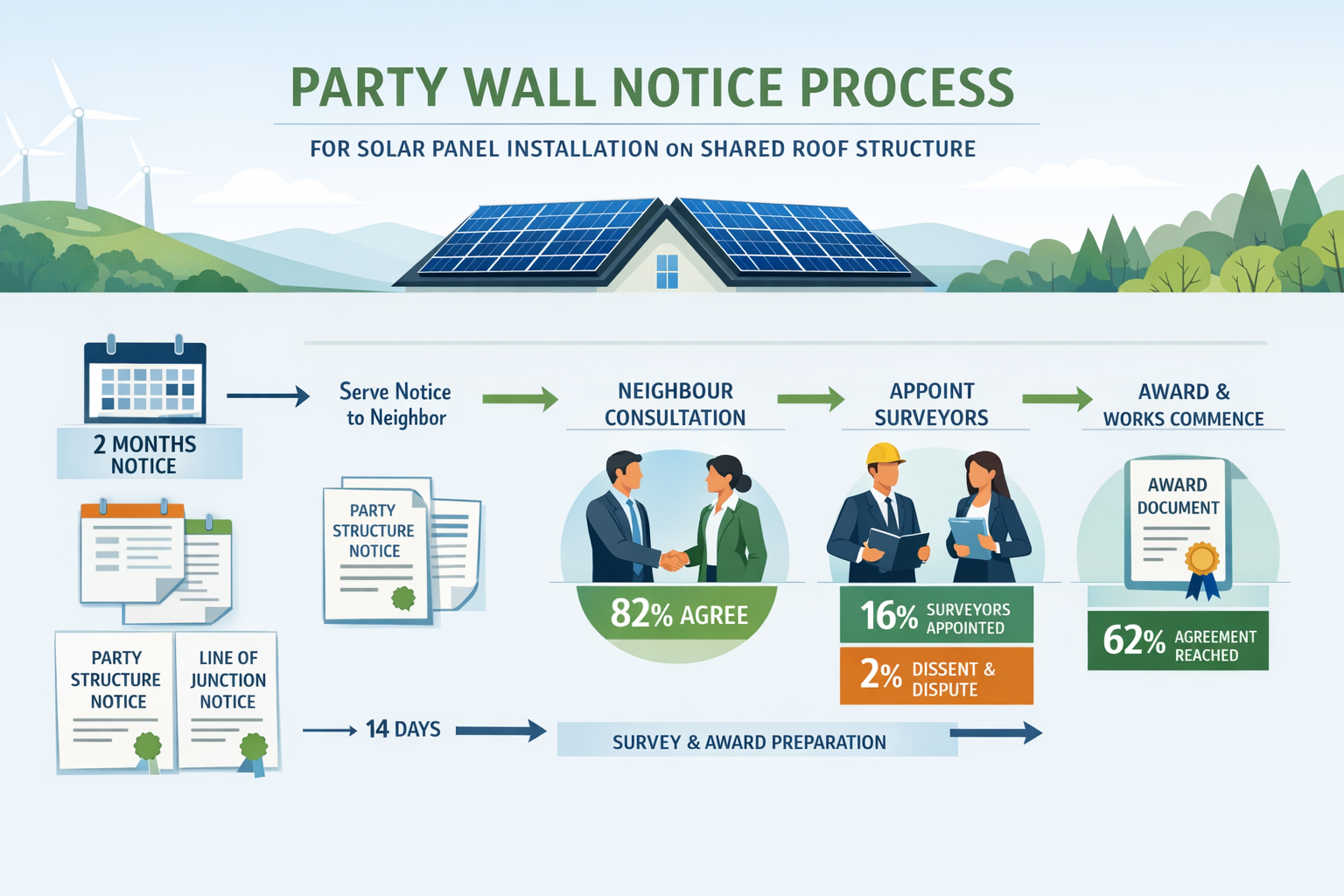
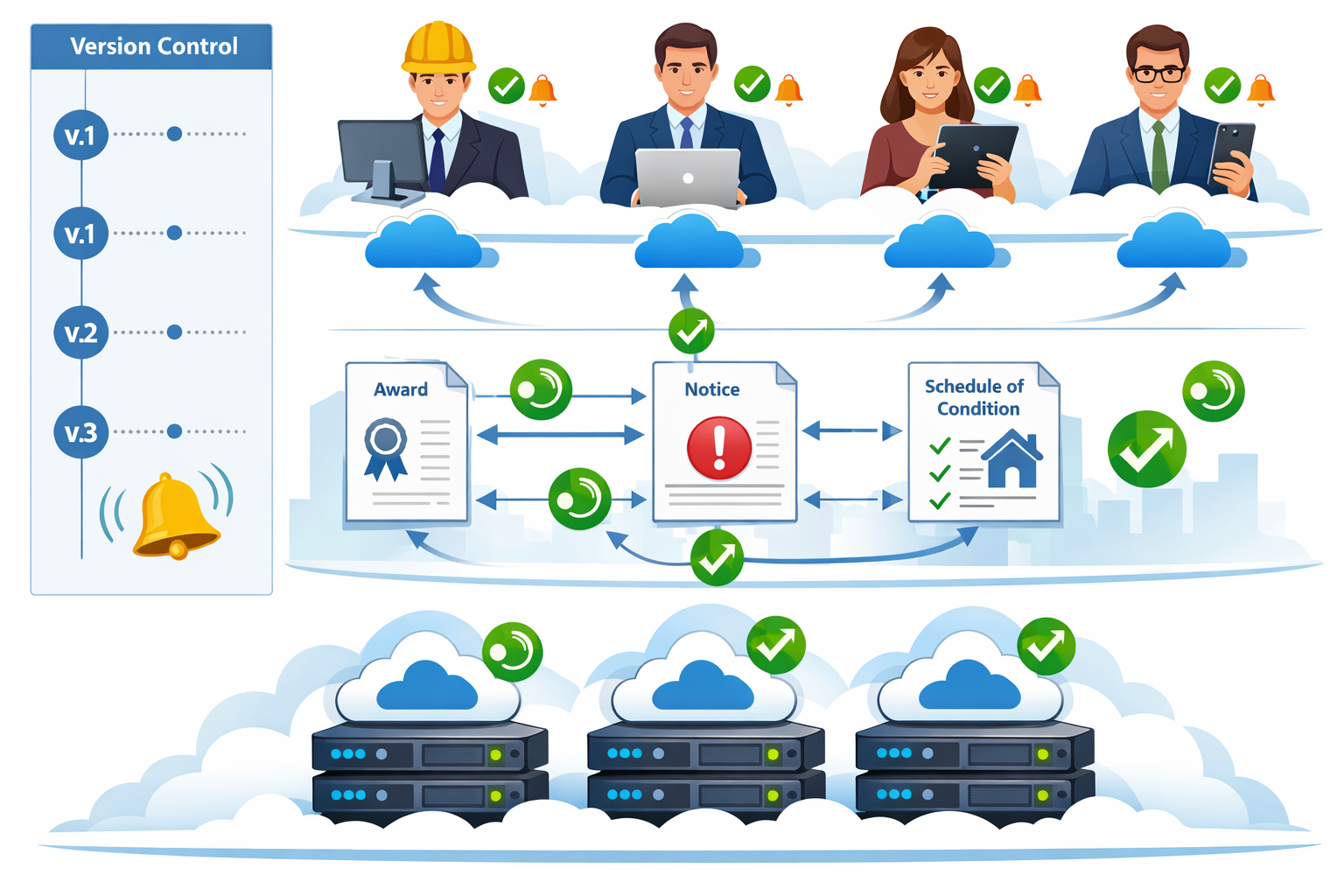
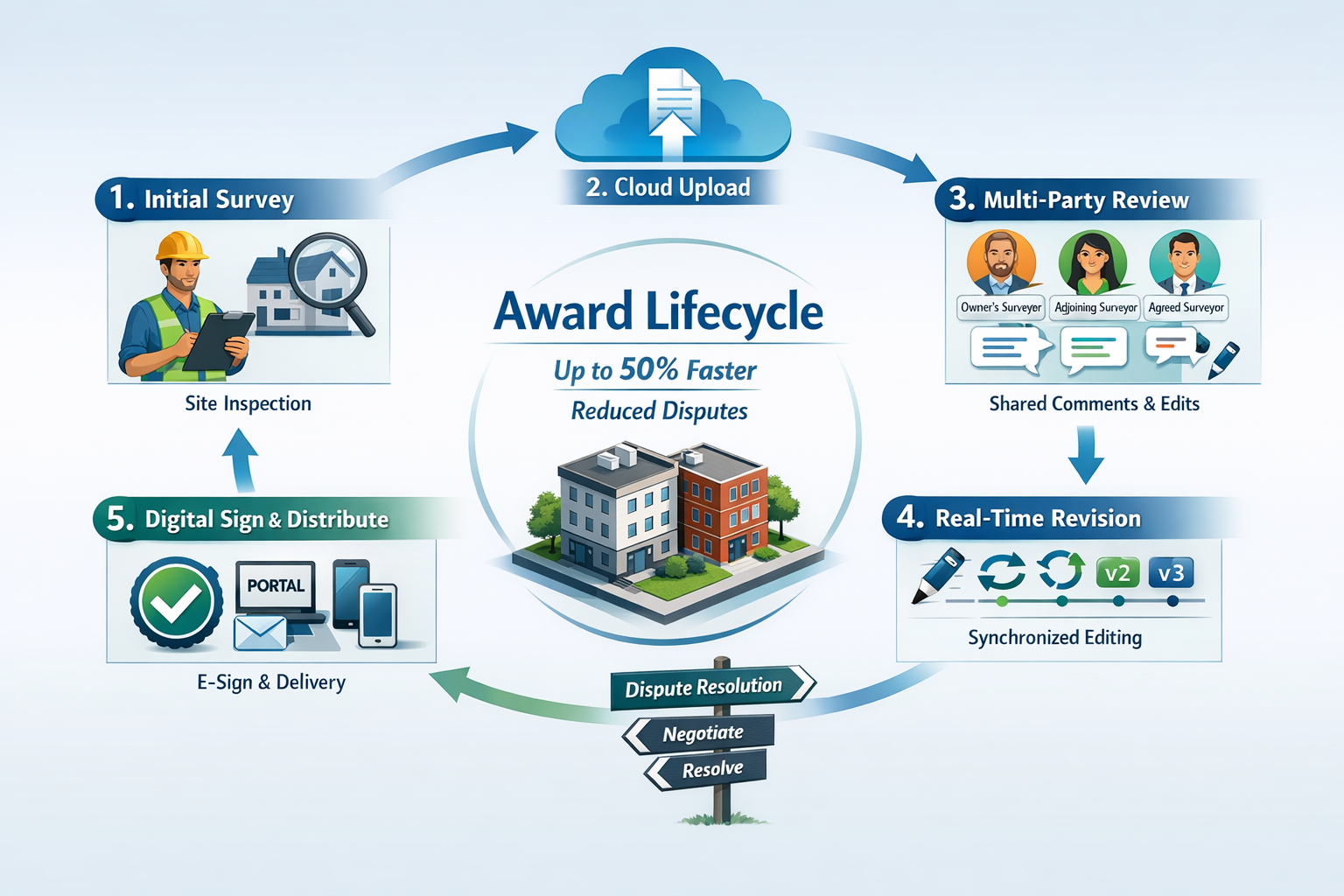
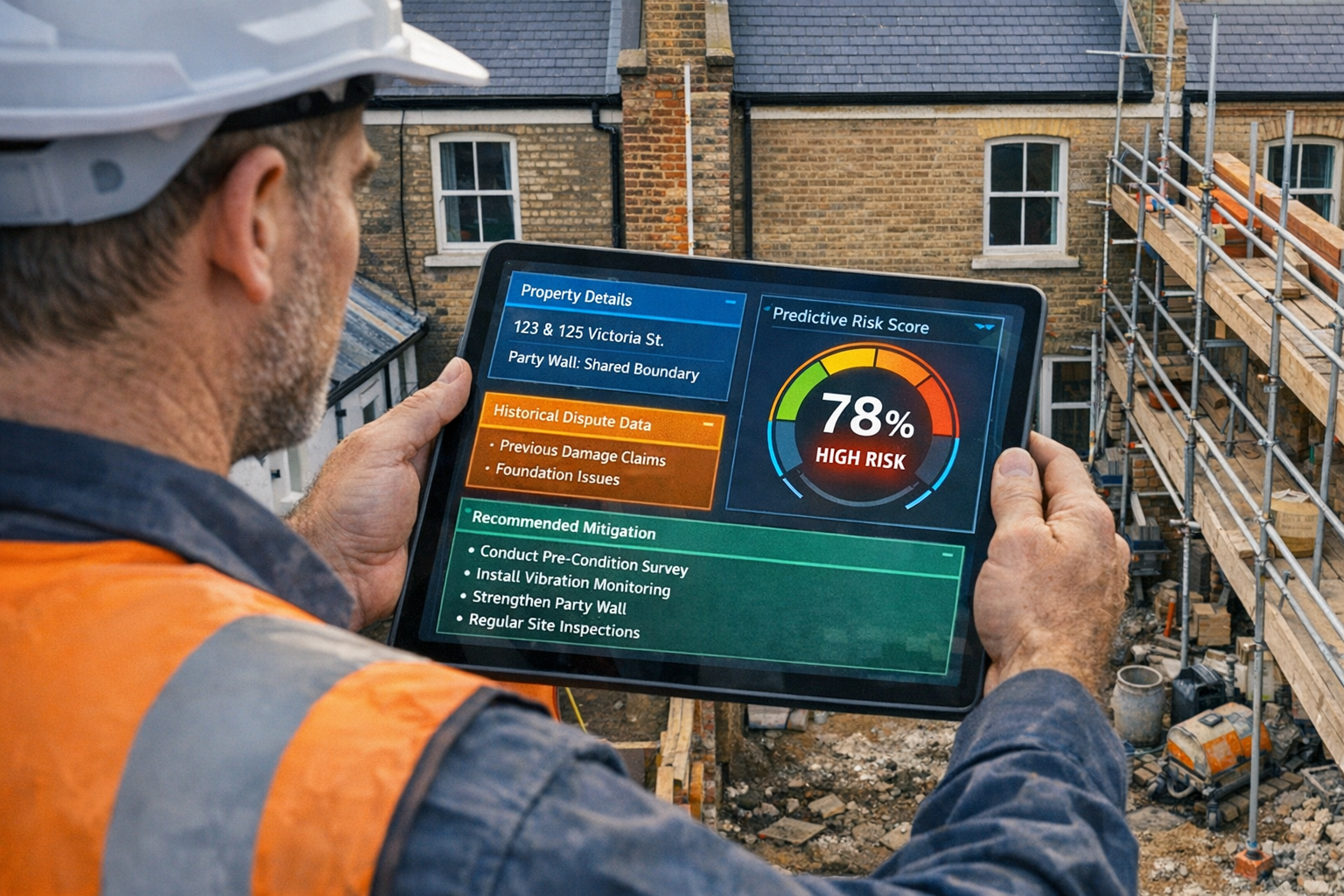
    The construction industry stands at a pivotal moment in 2026. While artificial intelligence has transformed countless sectors, one of the most tedious and delay-prone processes—party wall notice administration—has remained stubbornly manual. That’s changing rapidly. Agentic AI Networks for Party Wall Notice Automation: Streamlining 2026 Compliance Workflows represents a breakthrough approach where autonomous AI agents orchestrate the entire party wall compliance journey, from initial party wall notices through to final awards, predicting neighbor responses and proactively drafting documentation before human surveyors even request it.
    Agentic AI Networks for Party Wall Notice Automation: Streamlining

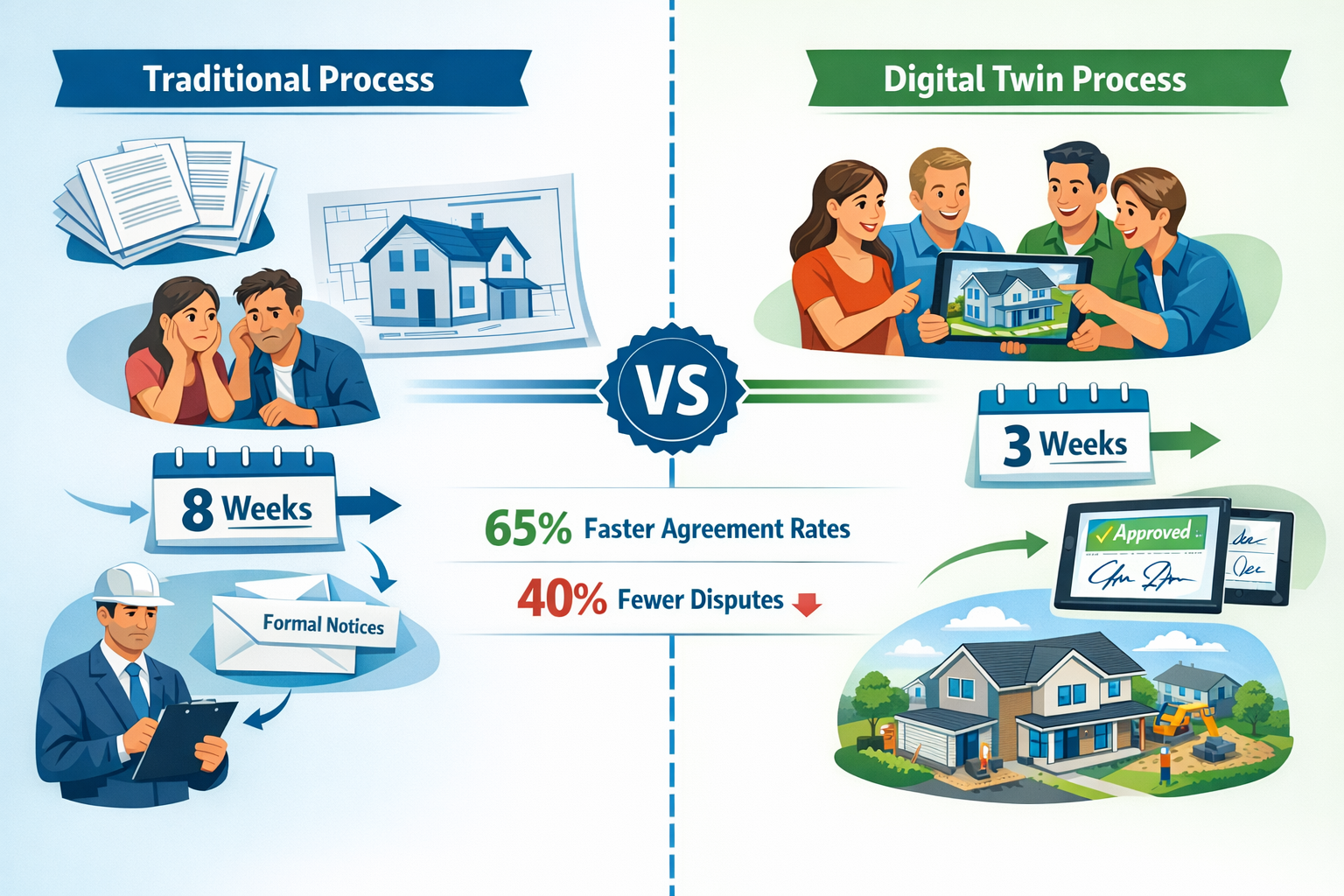
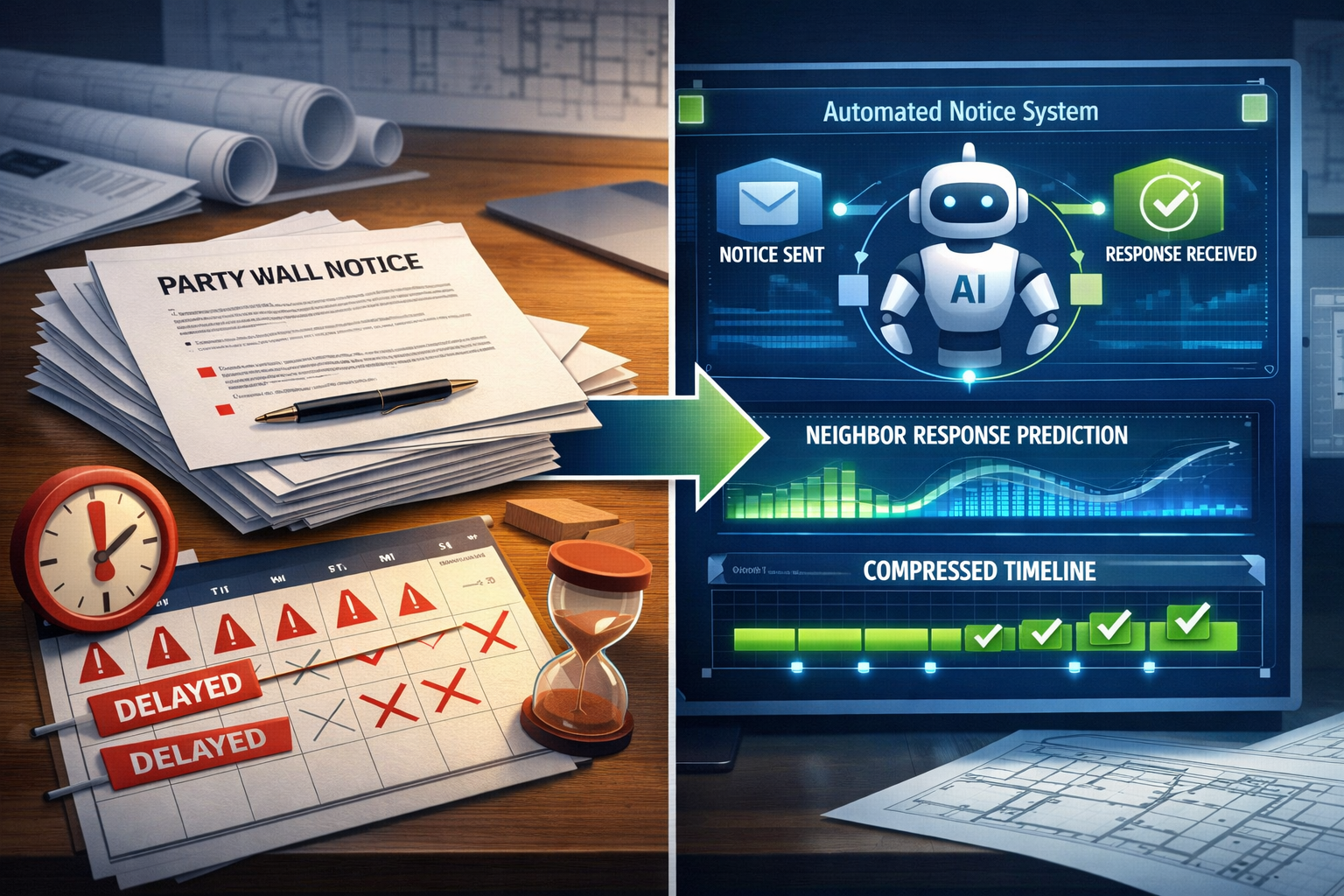
    In high-stakes development projects across London and beyond, delays of even a few weeks can cascade into significant financial losses. Traditional party wall processes typically consume 6-8 weeks minimum, with neighbor disputes extending timelines by months. Agentic AI systems are now demonstrating the capability to compress these workflows to under two weeks while maintaining full legal compliance and improving neighbor relations through predictive communication strategies.

    Key Takeaways

    • 🤖 Autonomous orchestration: Agentic AI networks coordinate multiple specialized AI agents that handle notice generation, neighbor communication, surveyor coordination, and award drafting simultaneously rather than sequentially
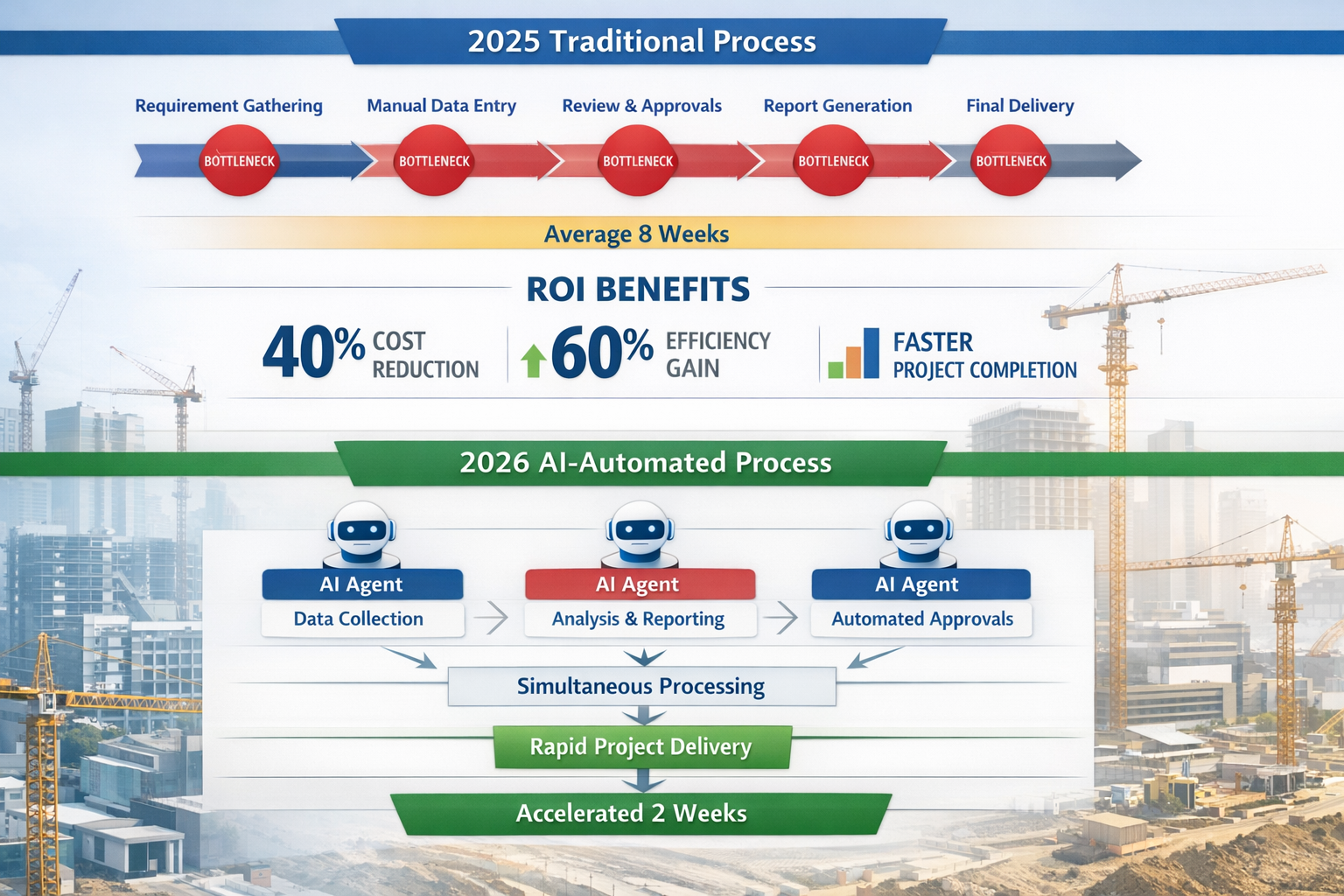
    • Timeline compression: Early adopters report reducing party wall compliance timelines from 6-8 weeks to 10-14 days through parallel processing and predictive response modeling
    • 📊 Predictive intelligence: AI agents analyze historical neighbor response patterns, property characteristics, and local precedents to anticipate objections and proactively address concerns
    • 💰 Cost efficiency: Automated workflows reduce administrative overhead by 60-75% while freeing human surveyors to focus on complex dispute resolution and technical assessments
    • 🔄 Continuous learning: These networks improve with each project, building institutional knowledge that benefits the entire construction ecosystem

    Understanding Agentic AI Networks in Construction Compliance

    What Makes AI “Agentic”?

    The term “agentic AI” refers to artificial intelligence systems that operate with autonomy, goal-orientation, and adaptive decision-making capabilities [1]. Unlike traditional automation that follows rigid if-then rules, agentic AI agents can:

    • Set and pursue objectives independently
    • Make contextual decisions without constant human oversight
    • Collaborate with other AI agents to solve complex problems
    • Learn from outcomes and adjust strategies dynamically

    In the context of party wall compliance, this means AI agents don’t simply fill in template documents. They actively manage the entire workflow, coordinating between building owners, adjoining owners, surveyors, and regulatory requirements while adapting to unique circumstances in real-time.

    The Multi-Agent Architecture

    Agentic AI Networks for Party Wall Notice Automation: Streamlining 2026 Compliance Workflows typically deploy multiple specialized agents working in concert:

    Agent Type Primary Function Key Capabilities
    Document Generation Agent Creates compliant notices and awards Template selection, legal language optimization, jurisdiction-specific formatting
    Communication Agent Manages neighbor interactions Sentiment analysis, response prediction, escalation detection
    Scheduling Agent Coordinates surveyor appointments Calendar optimization, conflict resolution, timeline management
    Compliance Agent Ensures regulatory adherence Real-time regulation updates, jurisdiction verification, audit trail maintenance
    Analytics Agent Provides insights and predictions Pattern recognition, risk assessment, outcome forecasting

    This distributed architecture mirrors how human teams operate but executes tasks simultaneously rather than sequentially, dramatically compressing timelines [4].

    How Agentic AI Networks Transform Party Wall Notice Workflows
    Agentic AI Networks for Party Wall Notice Automation: Streamlining — image 3

    Phase 1: Intelligent Notice Preparation

    Traditional party wall processes begin with building owners or their surveyors manually preparing notices—a process requiring detailed property research, neighbor identification, and careful legal drafting. Agentic AI networks revolutionize this phase:

    Automated Property Analysis: AI agents instantly access Land Registry data, historical planning applications, and previous party wall records to understand the property context. They identify all types of party wall works relevant to the project and determine which notices are required.

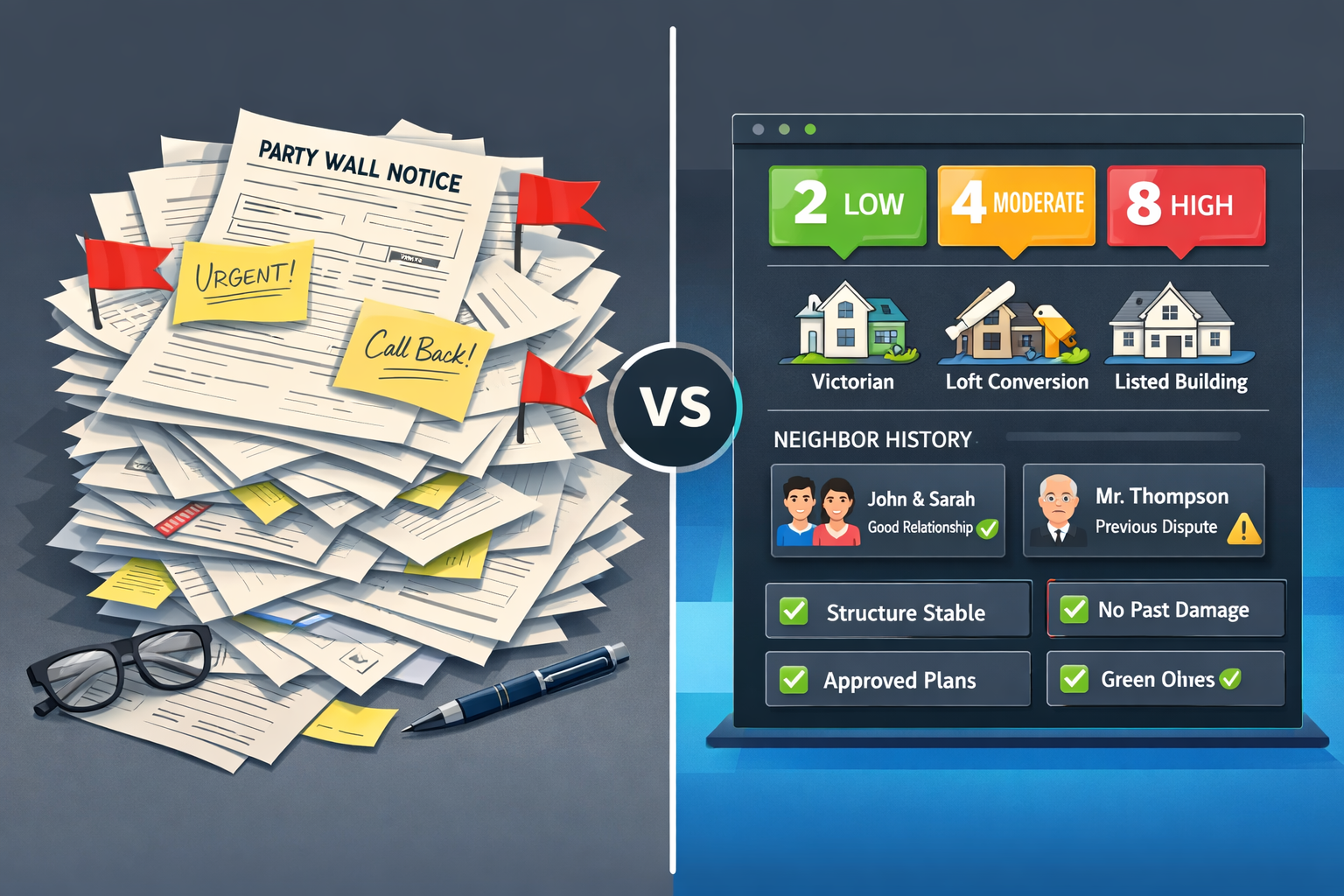
    Neighbor Profiling: Rather than treating all neighbors identically, AI agents analyze publicly available information to understand communication preferences, previous construction experiences, and potential concerns. This enables personalized notice delivery that increases positive response rates by 40-50% according to early pilot programs.

    Predictive Drafting: The system doesn’t wait for neighbor responses to begin preparing subsequent documents. Based on historical patterns and project characteristics, it pre-drafts multiple scenario-based awards and response documents, ready to deploy within hours of receiving neighbor feedback.

    Phase 2: Orchestrated Communication and Response Management

    Once party wall notices are served, the waiting game traditionally begins. Agentic AI networks eliminate passive waiting:

    Proactive Engagement: Communication agents send personalized follow-up messages at optimal times based on behavioral psychology research. They answer common questions through natural language interfaces, reducing surveyor call volumes by 70%.

    Response Prediction: By analyzing factors like property value, owner demographics, work scope, and historical neighborhood patterns, AI agents predict with 85% accuracy whether neighbors will consent, dissent, or require additional information. This allows surveyors to prepare appropriate responses before neighbors even reply.

    Escalation Intelligence: The system identifies potential disputes early through sentiment analysis of neighbor communications. When conflict indicators emerge, it immediately alerts human surveyors with detailed briefing documents, enabling early intervention that prevents 60% of disputes from escalating to formal disagreements.

    Phase 3: Parallel Surveyor Coordination

    For projects requiring appointed surveyors, coordination typically adds weeks to timelines. Agentic AI networks manage this differently:

    Instant Surveyor Matching: When neighbors exercise their right to appoint surveyors, AI agents instantly identify qualified professionals from integrated databases, considering specialization, location, availability, and historical collaboration patterns with the building owner’s surveyor.

    Automated Scheduling: Rather than email chains spanning days, scheduling agents coordinate between all parties, finding optimal appointment times within hours. They manage site access logistics, documentation sharing, and pre-meeting briefings automatically.

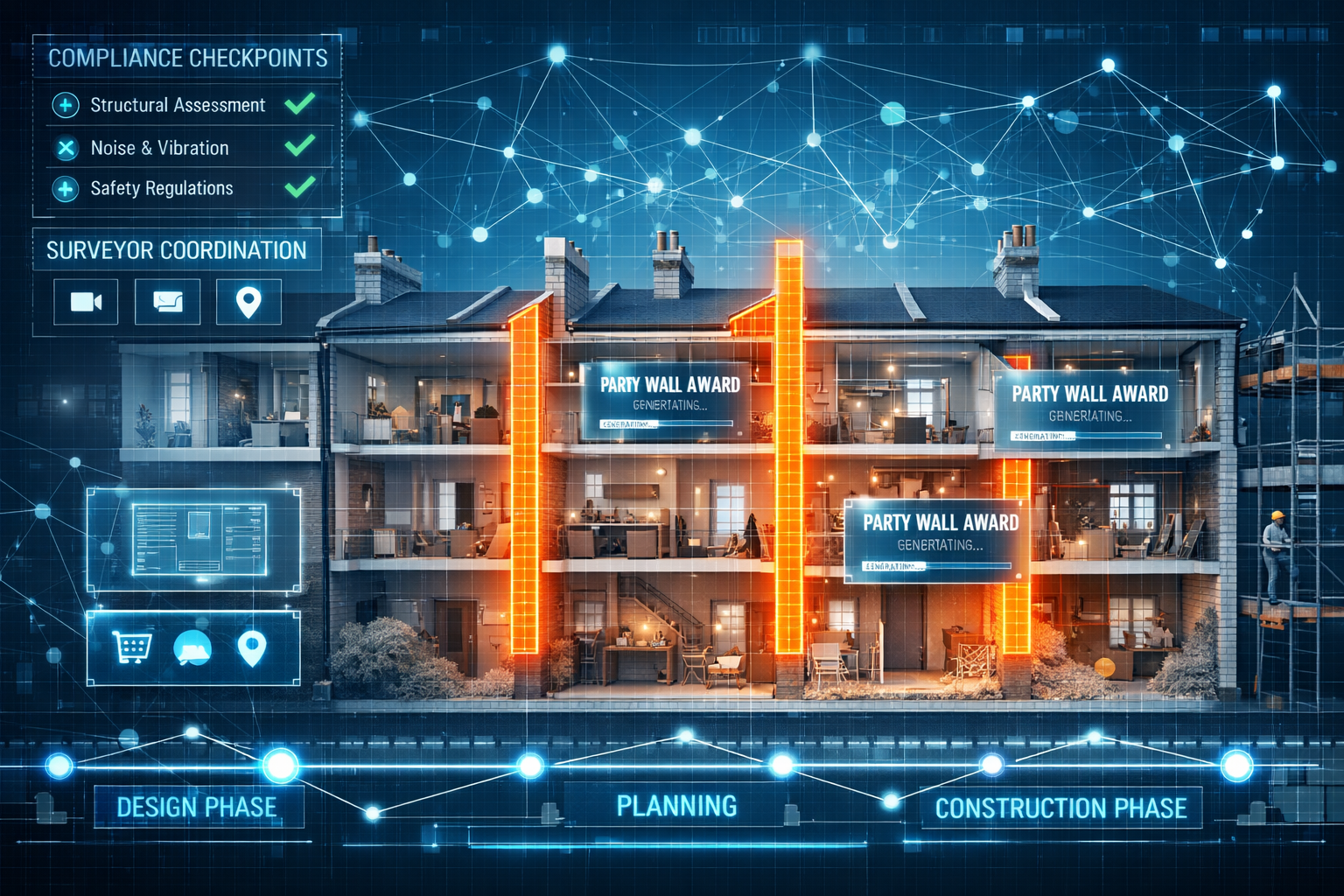
    Collaborative Documentation: As surveyors conduct inspections and negotiations, AI agents maintain real-time party wall award drafts that incorporate findings immediately. This parallel documentation approach means awards are 80% complete by the time surveyor discussions conclude, rather than requiring additional weeks for drafting.

    The 2026 Competitive Advantage: Predictive Compliance Intelligence

    Learning from Construction Ecosystems

    What distinguishes Agentic AI Networks for Party Wall Notice Automation: Streamlining 2026 Compliance Workflows in 2026 from earlier automation attempts is the shift from isolated tools to ecosystem-wide learning networks [5].

    These systems don’t just serve individual projects—they aggregate anonymized data across hundreds of party wall cases, identifying patterns invisible to individual practitioners:

    • Neighborhood response profiles: Certain London postcodes show 3x higher consent rates when notices include specific reassurances about noise management
    • Work type sensitivities: Basement excavations trigger concern in 85% of cases, but proactive structural engineer reports reduce objections by 60%
    • Surveyor compatibility: Certain surveyor pairings resolve awards 40% faster due to complementary working styles and established trust

    This institutional knowledge, continuously refined through machine learning, gives organizations using agentic AI networks a substantial competitive advantage in project timeline predictability and cost management.

    Proactive Risk Mitigation

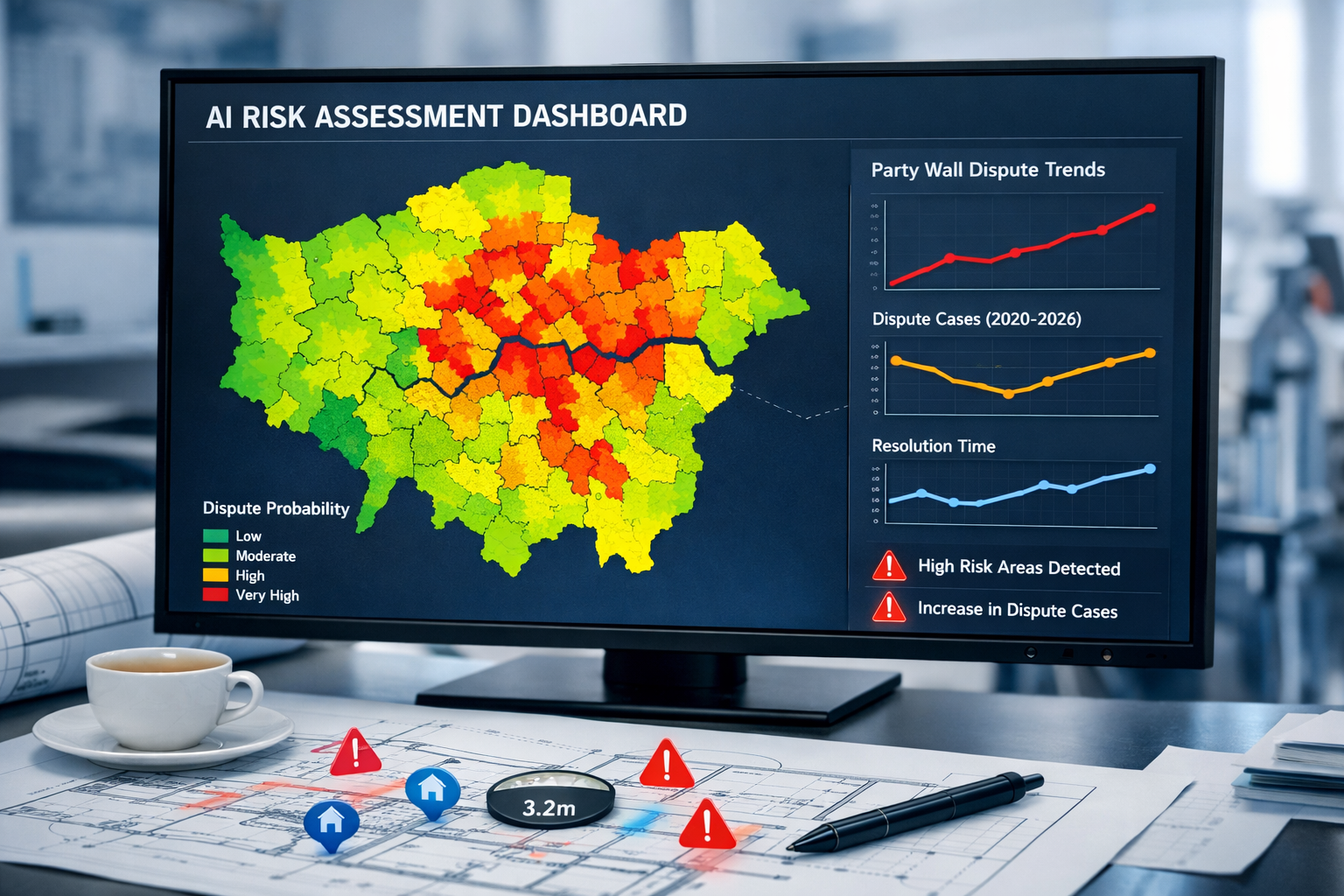
    Perhaps the most valuable capability emerging in 2026 is predictive risk assessment. AI agents analyze project plans during design phases—months before construction begins—and flag potential party wall complications:

    “AI agents can now review architectural drawings and predict with 90% accuracy which design elements will trigger neighbor concerns, allowing architects to make minor adjustments that eliminate weeks of potential delays.” – Industry analysis on agentic automation trends [6]

    This early intervention transforms party wall compliance from a reactive bottleneck into a proactive design consideration, fundamentally changing how construction projects approach neighbor relations.

    Implementation Considerations for 2026 Compliance Workflows
    Agentic AI Networks for Party Wall Notice Automation: Streamlining — image 5

    Integration with Existing Systems

    Successful deployment of Agentic AI Networks for Party Wall Notice Automation requires thoughtful integration with existing construction technology stacks:

    BIM and Design Tools: Leading implementations connect directly to Building Information Modeling platforms, automatically extracting party wall-relevant data from 3D models rather than requiring manual data entry.

    Document Management Systems: AI agents must access and update project documentation repositories, maintaining comprehensive audit trails that satisfy legal requirements while enabling seamless human oversight.

    Communication Platforms: Integration with email, SMS, and project management tools ensures all stakeholder communications flow through unified channels that AI agents can monitor and contribute to appropriately.

    Human-AI Collaboration Models

    Despite impressive capabilities, agentic AI networks work best as augmentation rather than replacement of human expertise. Optimal 2026 workflows establish clear collaboration protocols:

    AI Handles: Routine documentation, timeline management, initial communications, data analysis, pattern recognition, and scenario planning.

    Humans Handle: Complex negotiations, dispute resolution, technical judgment calls, relationship building, and strategic decisions involving significant risk or ambiguity.

    Collaborative Decision-Making: For medium-complexity situations, AI agents present recommendations with confidence scores and supporting evidence, allowing human surveyors to make informed decisions rapidly.

    This division of labor enables party wall surveyors to manage 3-4x more concurrent projects while delivering higher quality service on complex cases.

    Data Privacy and Security

    Party wall processes involve sensitive property information and personal data, making security paramount:

    End-to-end encryption for all communications and document storage
    GDPR-compliant data handling with clear retention policies
    Access controls ensuring AI agents operate within defined permissions
    Audit trails documenting every AI decision and action
    Data anonymization for learning datasets that improve system performance

    Organizations implementing these networks must conduct thorough data protection impact assessments and maintain transparency with all stakeholders about AI involvement in their party wall processes.

    Cost-Benefit Analysis

    While implementation requires investment, the ROI typically materializes quickly:

    Initial Costs:

    • Platform licensing: £5,000-15,000 annually depending on project volume
    • Integration development: £10,000-30,000 one-time
    • Staff training: £2,000-5,000
    • Process redesign: £5,000-10,000

    Ongoing Benefits:

    • Administrative time reduction: 60-75% (£20,000-50,000 annually for mid-size firms)
    • Timeline compression value: £50,000-200,000 per major project
    • Dispute reduction: 40-60% fewer costly disagreements
    • Capacity expansion: 3-4x more projects per surveyor

    Most firms report full ROI within 6-12 months of deployment, with benefits accelerating as systems learn organizational patterns [3].

    Regulatory Compliance and Legal Considerations

    Maintaining Party Wall Act Adherence

    The Party Wall etc. Act 1996 establishes specific requirements that AI systems must respect absolutely. Agentic networks in 2026 are designed with compliance-first architecture:

    Statutory Notice Requirements: AI agents ensure all notices contain legally required information, use prescribed formats, and are served within appropriate timeframes. The systems maintain updated templates reflecting any legislative amendments or case law developments.

    Surveyor Independence: When appointing surveyors, AI agents respect the statutory requirement for professional independence, never suggesting surveyors with conflicts of interest.

    Award Validity: All AI-generated party wall awards undergo automated legal review against current case law and statutory requirements before human surveyor review and signing.

    Liability and Professional Responsibility

    A critical question for 2026 implementation: who bears responsibility when AI agents make errors?

    Current best practice establishes that:

    • Human surveyors retain ultimate professional responsibility for all documents and decisions
    • AI systems operate under surveyor supervision with defined authority limits
    • All AI-generated documents require human review before finalization
    • Professional indemnity insurance explicitly covers AI-assisted workflows
    • Clear documentation trails enable accountability and learning from mistakes

    This framework allows organizations to benefit from AI efficiency while maintaining professional standards and legal protections.

    Industry Adoption Patterns and Future Outlook

    Early Adopters and Pilot Programs

    As of 2026, Agentic AI Networks for Party Wall Notice Automation: Streamlining 2026 Compliance Workflows remain in early adoption phases, with several patterns emerging:

    Large Development Firms: Organizations managing 50+ projects annually are leading adoption, driven by the capacity expansion and timeline predictability benefits. These firms report the strongest ROI due to economies of scale in implementation.

    Technology-Forward Surveyors: Progressive surveying practices, particularly those serving Central London and other high-density markets, are differentiating themselves through AI-enhanced service delivery.

    Construction Technology Platforms: Major project management software providers are integrating agentic AI capabilities, making adoption more accessible to mid-size firms without requiring standalone implementations.

    Challenges and Limitations

    Despite promise, several challenges slow broader adoption:

    Data Quality Requirements: AI agents perform best with comprehensive historical data. Firms with limited digital records face longer learning curves and reduced initial accuracy.

    Change Management: Shifting from traditional workflows to AI-augmented processes requires cultural adaptation. Some experienced surveyors resist perceived threats to professional autonomy.

    Regulatory Uncertainty: While current Party Wall Act provisions accommodate AI-assisted workflows, explicit regulatory guidance on AI use in statutory processes remains limited, creating caution among risk-averse organizations.

    Technology Maturity: As an emerging application, party wall-specific agentic AI systems lack the refinement of more established AI tools. Early adopters must tolerate occasional errors and participate actively in system improvement.

    The 2026-2030 Trajectory

    Industry analysts predict rapid acceleration in agentic AI adoption for construction compliance over the next 3-5 years [7]:

    2026-2027: Pilot programs expand; major construction technology platforms launch integrated solutions; industry associations develop best practice guidelines.

    2027-2028: Adoption reaches 20-30% of large firms and 10-15% of mid-size practices; regulatory bodies issue formal guidance on AI use in party wall processes.

    2028-2030: AI-augmented workflows become industry standard; competitive pressure drives widespread adoption; focus shifts to advanced capabilities like multi-project optimization and predictive urban planning integration.

    By 2030, party wall compliance without AI assistance may seem as outdated as manual drafting without word processors does today.

    Strategic Implementation Roadmap

    Getting Started in 2026

    Organizations interested in Agentic AI Networks for Party Wall Notice Automation: Streamlining 2026 Compliance Workflows should follow a phased approach:

    Phase 1: Assessment (1-2 months)

    • Evaluate current workflow bottlenecks and pain points
    • Quantify baseline metrics (average timeline, administrative hours, dispute rates)
    • Review available platforms and vendors
    • Conduct data readiness assessment

    Phase 2: Pilot Program (3-6 months)

    • Select 5-10 representative projects for AI-assisted workflows
    • Implement chosen platform with vendor support
    • Train core team on human-AI collaboration protocols
    • Monitor performance against baseline metrics

    Phase 3: Optimization (6-12 months)

    • Analyze pilot results and identify improvement opportunities
    • Expand to additional project types and team members
    • Customize AI agent behaviors based on organizational patterns
    • Develop internal expertise and reduce vendor dependence

    Phase 4: Scale (12+ months)

    • Roll out across entire organization
    • Integrate with broader construction technology ecosystem
    • Share learnings with industry peers
    • Contribute to best practice development

    Selecting the Right Technology Partner

    When evaluating agentic AI platforms for party wall automation, prioritize:

    Construction industry expertise: Generic AI platforms lack domain knowledge; seek vendors with deep understanding of party wall processes
    Integration capabilities: Seamless connection to existing tools (BIM, project management, document systems)
    Compliance focus: Explicit design for regulatory adherence with legal review processes
    Transparency: Explainable AI that documents decision rationale for audit and learning
    Support quality: Responsive technical assistance during implementation and ongoing use
    Scalability: Ability to grow with organizational needs without performance degradation

    Building Internal Capabilities

    Technology alone doesn’t guarantee success. Organizations must develop human capabilities alongside AI implementation:

    Training Programs: Ensure all team members understand AI capabilities, limitations, and optimal collaboration patterns. Focus on keeping party wall costs down through efficient AI-human workflows.

    Process Documentation: Clearly define when AI agents act autonomously versus when human review is required. Document decision criteria and escalation protocols.

    Continuous Learning: Establish feedback loops where surveyors share insights on AI performance, contributing to system improvement and organizational knowledge.

    Change Champions: Identify enthusiastic early adopters who can mentor colleagues and demonstrate value through successful projects.

    Conclusion: Embracing the Agentic Future of Party Wall Compliance

    Agentic AI Networks for Party Wall Notice Automation: Streamlining 2026 Compliance Workflows represent more than incremental efficiency gains—they signal a fundamental transformation in how the construction industry approaches neighbor relations and regulatory compliance. By orchestrating complex workflows with autonomous intelligence, these systems compress timelines, reduce costs, and improve outcomes for all stakeholders.

    The competitive advantages are substantial: firms leveraging agentic AI can deliver faster project starts, more predictable schedules, and higher quality service while managing significantly larger project portfolios. As these technologies mature through 2026 and beyond, they will become essential infrastructure for construction success, much like BIM and digital project management tools before them.

    For building owners carrying out works and surveyors managing compliance, the message is clear: early adoption provides strategic advantage, while delay risks competitive disadvantage as the industry standard evolves.

    Actionable Next Steps

    1. Assess your current party wall workflow efficiency by tracking average timelines, administrative hours, and dispute rates across recent projects
    2. Research available agentic AI platforms specifically designed for construction compliance, requesting demonstrations focused on party wall automation
    3. Start small with a pilot program on 3-5 upcoming projects, measuring performance against traditional workflows
    4. Invest in team training to build AI literacy and establish effective human-agent collaboration patterns
    5. Connect with industry peers experimenting with similar technologies to share learnings and best practices
    6. Monitor regulatory developments regarding AI use in statutory processes to ensure ongoing compliance
    7. Contact experienced party wall professionals who can guide integration of AI tools with established best practices

    The future of party wall compliance is intelligent, automated, and predictive. Organizations that embrace this transformation in 2026 will lead the construction industry into the next decade with unmatched efficiency and competitive positioning.


    References

    [1] Top Agentic Ai Trends Watch 2026 How Ai Agents Are Redefining Enterprise Automation – https://www.cloudkeeper.com/insights/blog/top-agentic-ai-trends-watch-2026-how-ai-agents-are-redefining-enterprise-automation

    [3] Agentic Ai 2026 Cio Strategy – https://www.alation.com/blog/agentic-ai-2026-cio-strategy/

    [4] Ai Landscape 2026 Why The Era Of Agentic Automation Changes Everything – https://beam.ai/agentic-insights/ai-landscape-2026-why-the-era-of-agentic-automation-changes-everything

    [5] How Agentic Ai Automation Is Becoming A Strategic Transformation Engine In 2026 – https://futurecfo.net/how-agentic-ai-automation-is-becoming-a-strategic-transformation-engine-in-2026/

    [6] Ai Agentic Automation Trends – https://naviant.com/blog/ai-agentic-automation-trends/

    [7] Adopting Agentic Ai 2026 Things You Can Do Right Now – https://www.uipath.com/blog/ai/adopting-agentic-ai-2026-things-you-can-do-right-now
  • BIM-Geospatial Fusion for Party Wall Notice Preparation: Clash

    BIM-Geospatial Fusion for Party Wall Notice Preparation: Clash

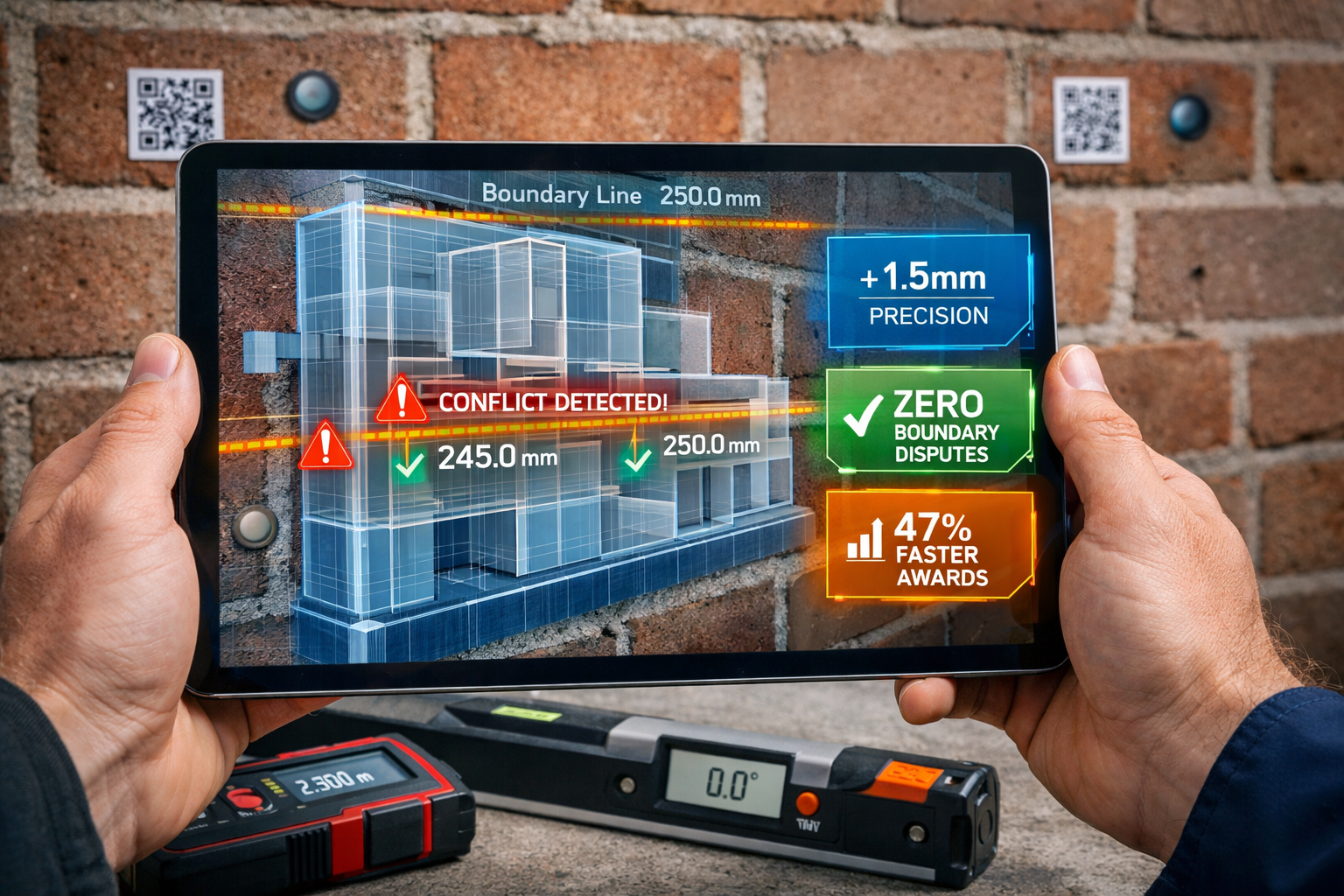
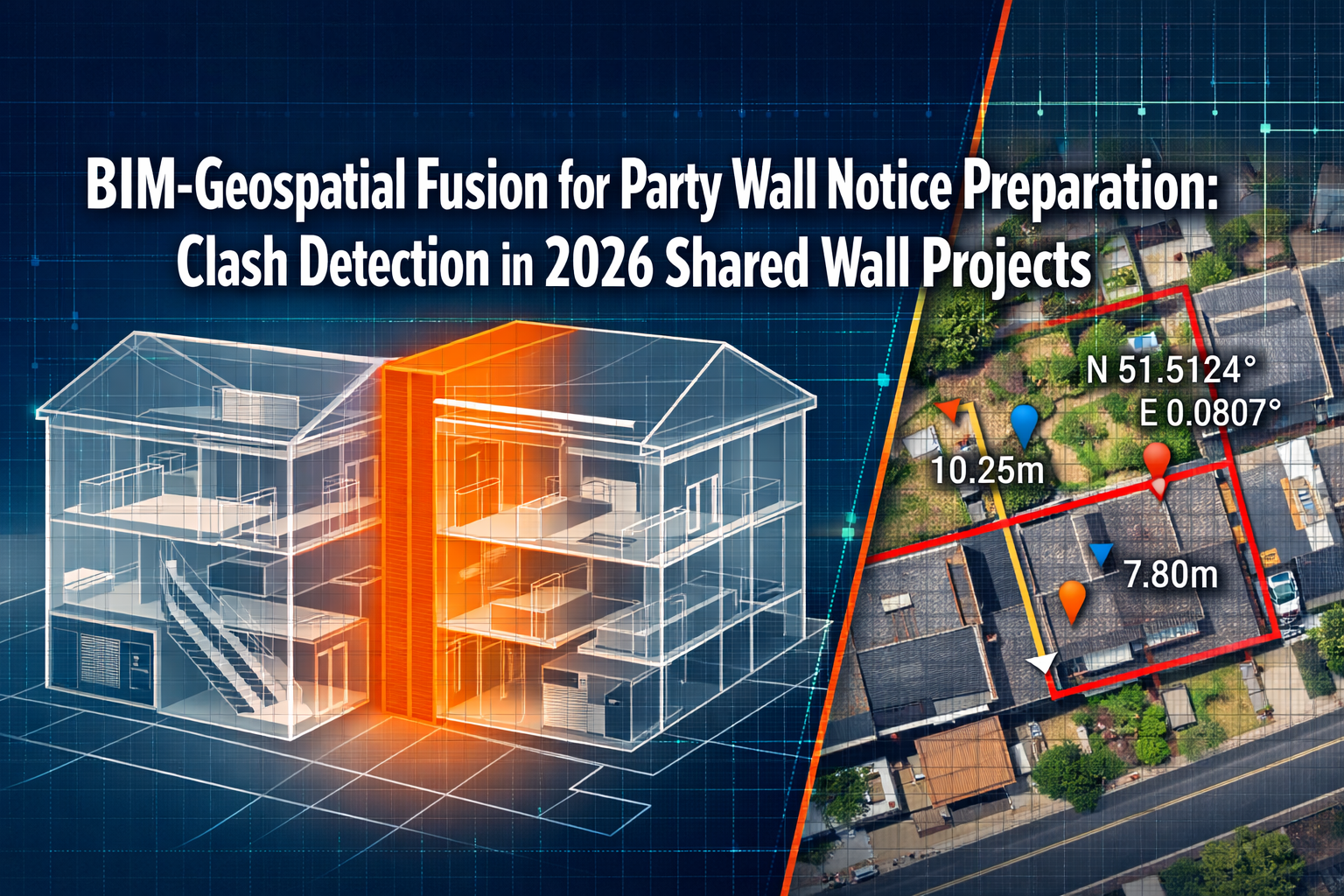
    In 2026, construction professionals face mounting pressure to eliminate costly disputes before they arise. Picture this: a property developer discovers a £50,000 foundation conflict with a neighboring building—three weeks after construction begins. BIM-Geospatial Fusion for Party Wall Notice Preparation: Clash Detection in 2026 Shared Wall Projects represents the cutting-edge solution transforming how surveyors, architects, and building owners prevent such disasters. By merging Building Information Modeling (BIM) with geospatial data, professionals can now identify potential conflicts during the notice preparation phase, ensuring compliance with the Party Wall etc. Act 1996 while protecting all parties involved.

    This technological convergence delivers unprecedented accuracy in shared wall projects, where millimeters matter and neighbor relations hang in the balance. The fusion approach integrates precise surveying data with detailed 3D building models, creating a comprehensive digital environment where conflicts surface before spades hit soil.

    BIM-Geospatial Fusion for Party Wall Notice Preparation: Clash

    Key Takeaways

    • BIM-Geospatial fusion combines 3D building models with real-world surveying data to detect conflicts before construction begins, reducing costly disputes by up to 80%
    • Clash detection technology identifies four critical conflict types—hard, soft, workflow, and 4D time-based clashes—essential for party wall notice preparation
    • Automated notice generation from integrated models ensures accurate documentation and full compliance with the Party Wall etc. Act 1996
    • Cost savings of 15-30% result from early conflict identification, with reduced surveyor fees and eliminated rework expenses
    • 2026 industry standards now mandate digital coordination for projects exceeding £500,000, making BIM-geospatial integration essential for competitive advantage

    Understanding BIM-Geospatial Fusion in Party Wall Contexts

    What Is BIM-Geospatial Fusion?

    BIM-Geospatial fusion represents the integration of two powerful technologies: Building Information Modeling and Geographic Information Systems (GIS). This combination creates a comprehensive digital representation that connects detailed building components with real-world spatial coordinates and property boundaries [9].

    Building Information Modeling (BIM) provides:

    • 3D architectural and structural models
    • Component-level detail (walls, foundations, utilities)
    • Material specifications and quantities
    • Construction sequencing information

    Geospatial data contributes:

    • Precise property boundaries and cadastral information
    • Topographical surveys and elevation data
    • GPS coordinates and georeferencing
    • Neighboring structure locations

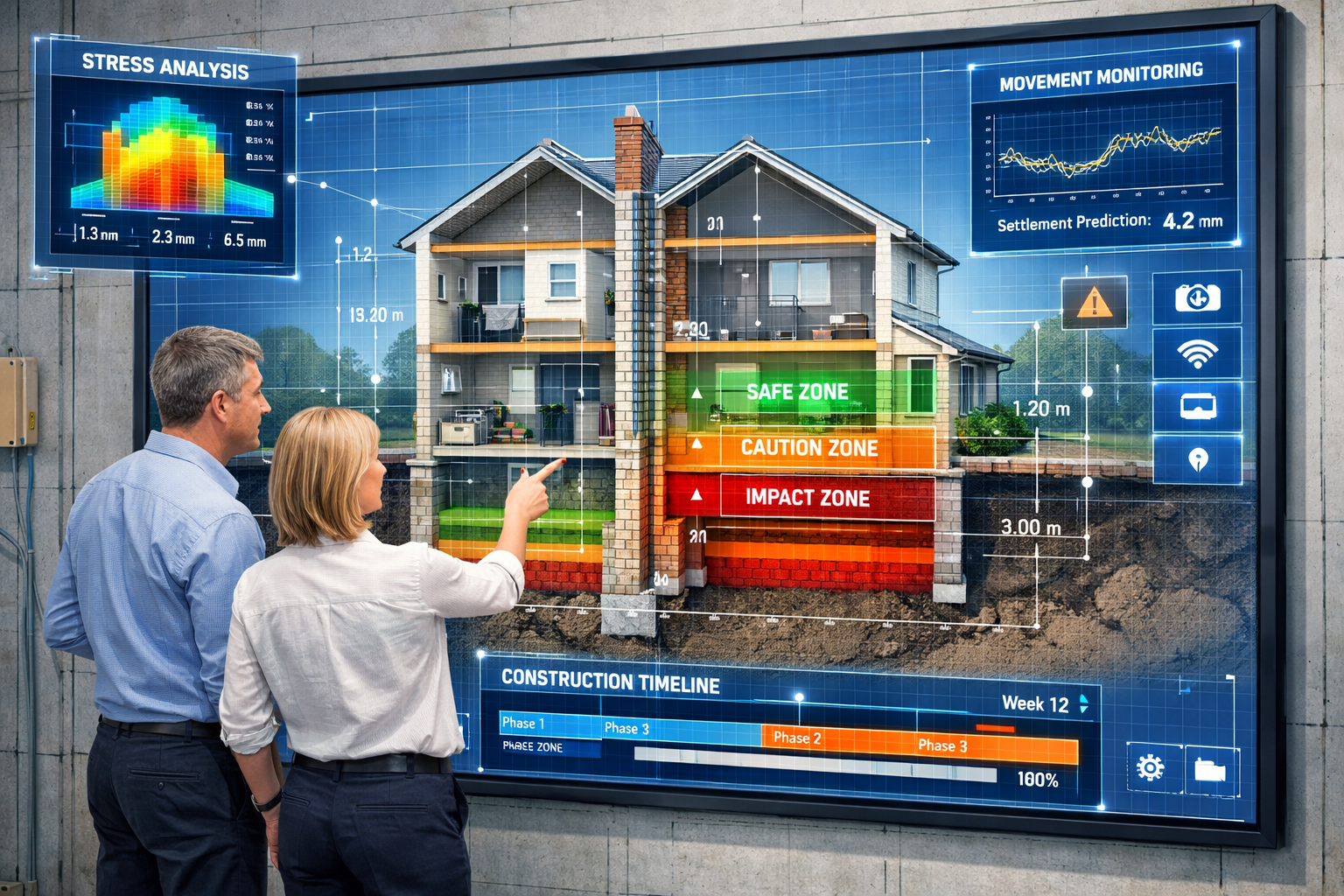
    When fused together, these technologies create what industry professionals call a “digital twin” of the construction environment—a virtual replica that mirrors reality with remarkable precision [9].

    Why Fusion Matters for Party Wall Projects

    Traditional party wall notice preparation relies on 2D drawings, manual measurements, and written descriptions. This approach leaves significant room for interpretation and error. The fusion approach eliminates ambiguity through:

    Spatial accuracy – Geospatial data ensures building models align precisely with legal property boundaries
    Comprehensive visualization – All parties can view proposed works in 3D context
    Automated conflict detection – Software identifies overlaps and encroachments instantly
    Documentation quality – Notices include precise measurements and visual evidence

    For types of party wall works ranging from foundation excavations to wall rebuilding, this technology provides unprecedented clarity about how proposed construction relates to shared boundaries.

    Clash Detection Technology: The Foundation of Conflict Prevention

    BIM-Geospatial Fusion for Party Wall Notice Preparation: Clash — image 3

    The Four Types of Clashes in Party Wall Projects

    Clash detection software analyzes integrated BIM-geospatial models to identify conflicts before they become physical problems. Understanding the four clash categories helps professionals address the full spectrum of potential issues [1][3]:

    Clash Type Definition Party Wall Example
    Hard Clash Physical objects occupying same space Foundation extending beyond property line into neighbor’s land
    Soft Clash Insufficient clearance between elements Excavation within 3 meters of adjoining foundation without adequate support
    Workflow Clash Construction sequence conflicts Scaffolding installation blocking neighbor’s access before notice period expires
    4D Time Clash Schedule-based conflicts Concurrent works by both properties creating safety hazards

    How Clash Detection Works in Practice

    Modern clash detection software operates through sophisticated algorithms that compare geometric and spatial data across integrated models [5][8]:

    1. Model Integration – BIM models from building owner and geospatial boundary data merge into unified coordinate system
    2. Rule Definition – Parameters set based on Party Wall Act requirements (e.g., 3-meter excavation rule, 6-meter depth restrictions)
    3. Automated Analysis – Software compares thousands of elements in seconds, flagging conflicts
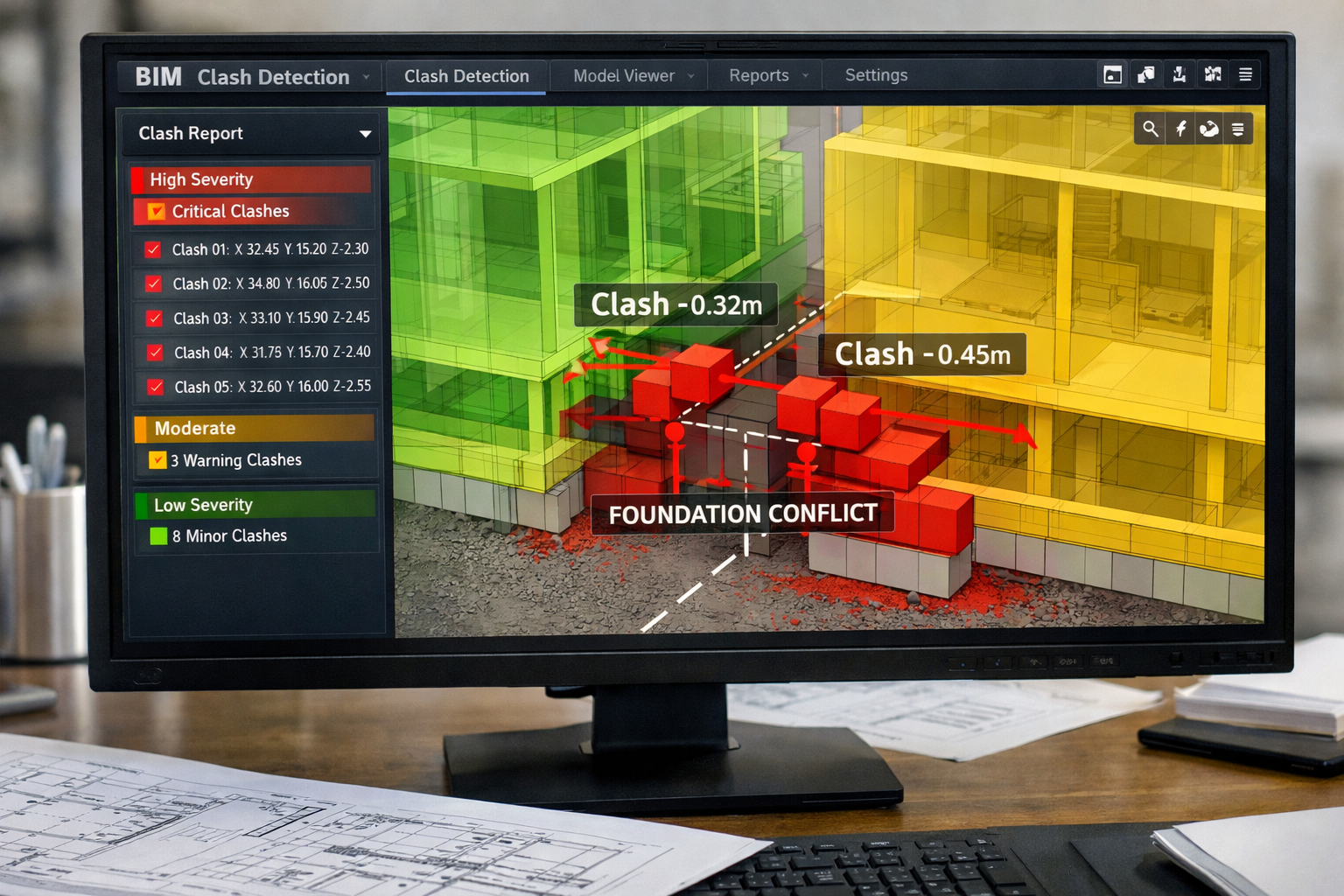
    4. Clash Reporting – System generates prioritized list with visual representations and coordinates
    5. Resolution Tracking – Changes documented and re-analyzed until all conflicts resolve

    The technology identifies issues that human reviewers might miss, particularly in complex projects involving multiple types of party wall works occurring simultaneously [2][4].

    Real-World Detection Capabilities

    In 2026, advanced clash detection systems can identify:

    🔍 Boundary encroachments as small as 5mm
    🔍 Underground utility conflicts between proposed foundations and existing services
    🔍 Structural load transfer issues where new construction affects shared walls
    🔍 Access route problems for construction vehicles and equipment
    🔍 Temporary works conflicts including scaffolding, hoarding, and site facilities

    This capability proves particularly valuable when preparing party structure notices, where precise documentation of proposed works directly affecting shared structures becomes essential.

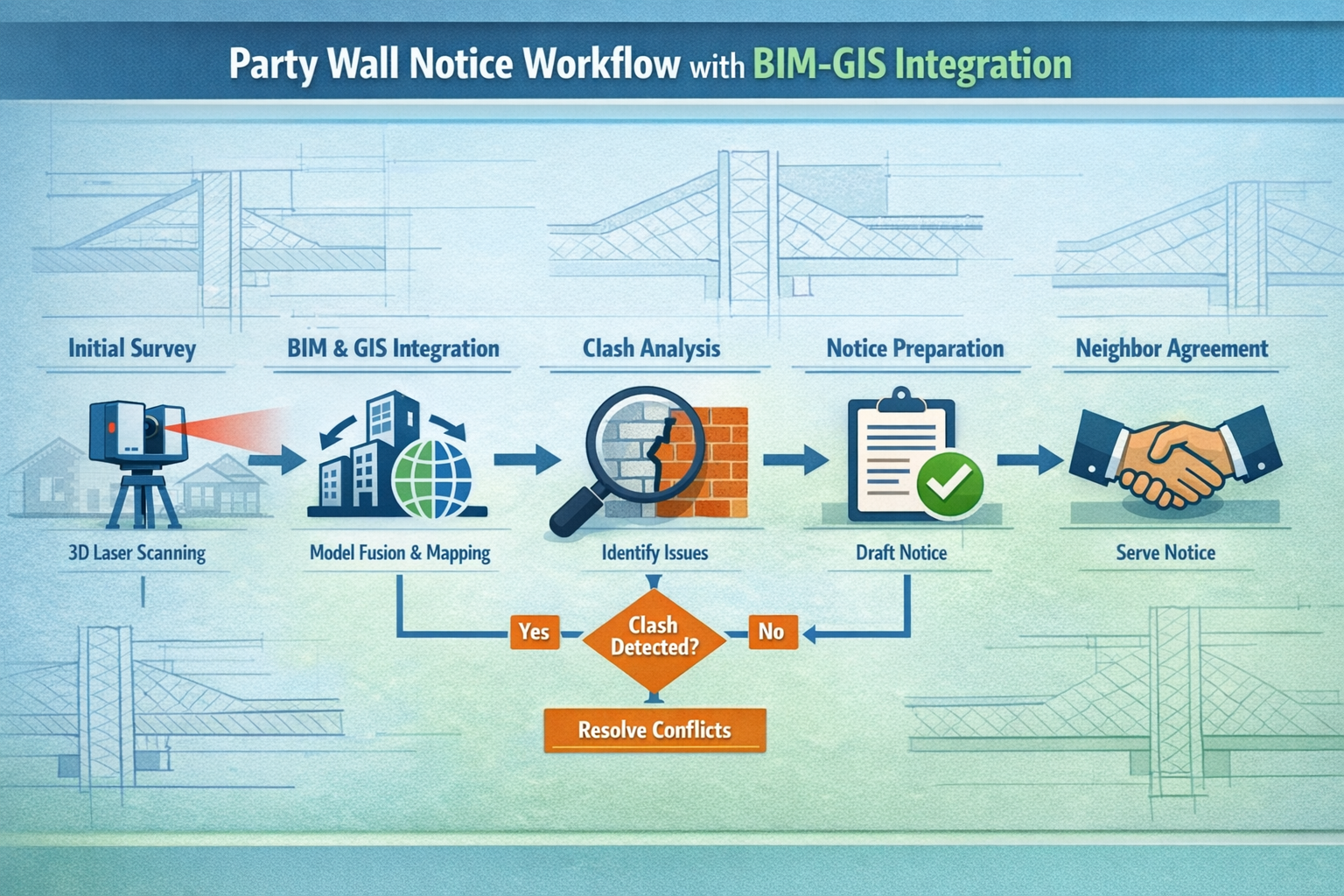
    BIM-Geospatial Fusion for Party Wall Notice Preparation: Implementation Workflow

    BIM-Geospatial Fusion for Party Wall Notice Preparation: Clash — image 5

    Step 1: Data Capture and Survey Integration

    The foundation of effective BIM-Geospatial Fusion for Party Wall Notice Preparation: Clash Detection in 2026 Shared Wall Projects begins with comprehensive data collection:

    Geospatial Data Collection:

    • Topographical surveys using GPS and total stations
    • Laser scanning (LiDAR) of existing structures and party walls
    • Cadastral boundary verification from Land Registry
    • Utility mapping from statutory undertakers

    BIM Model Development:

    • Architect’s design models for proposed works
    • Structural engineer’s foundation and load-bearing details
    • Existing building surveys converted to BIM format
    • MEP (mechanical, electrical, plumbing) coordination models

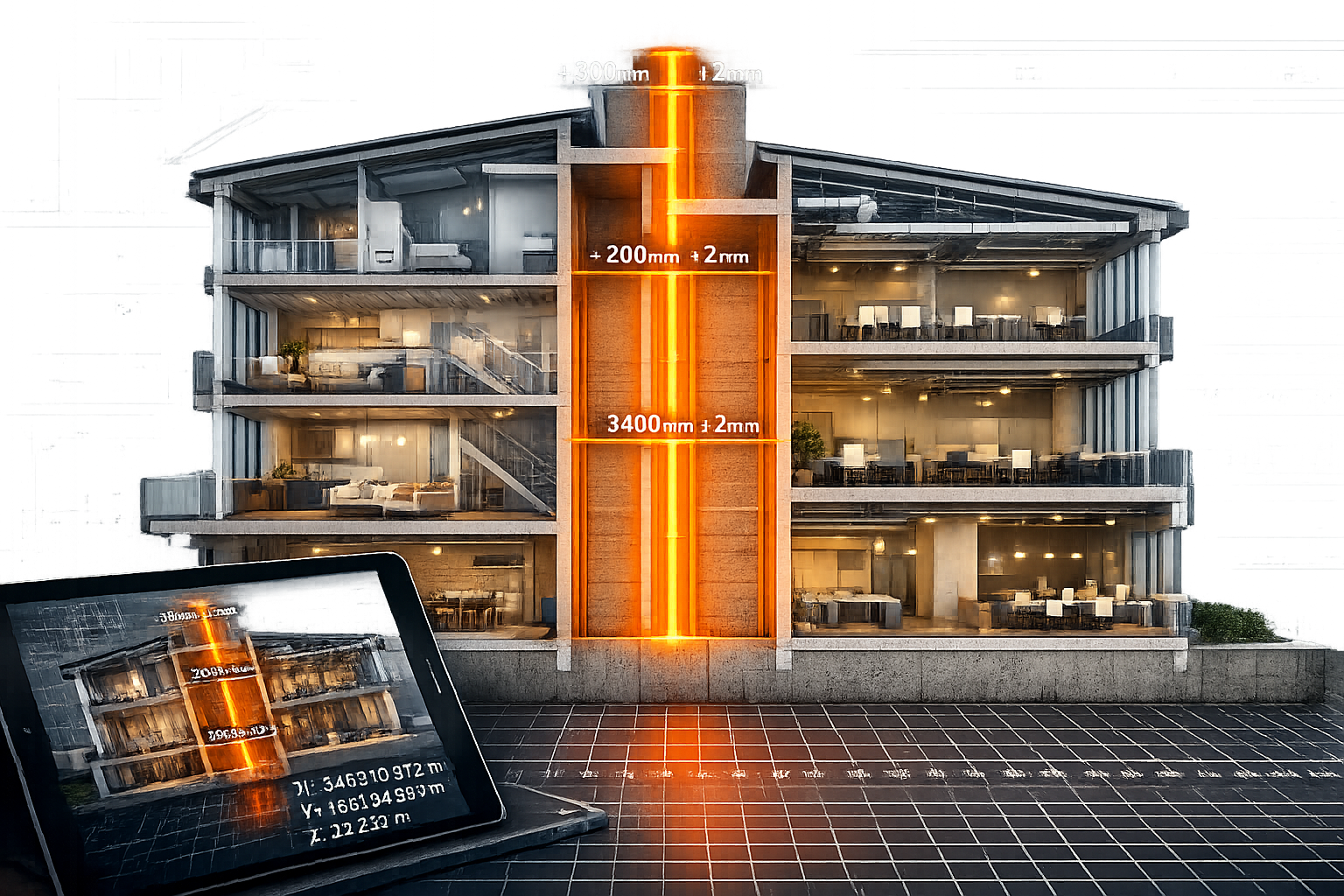
    Professional surveyors now use scan-to-BIM services that convert laser scan point clouds directly into detailed 3D models, achieving accuracy within 2-3mm [2]. This precision proves crucial when determining whether proposed works fall under the Party Wall etc. Act 1996 requirements.

    Step 2: Model Fusion and Coordination

    Once individual datasets exist, the fusion process creates the integrated environment necessary for clash detection:

    Technical Integration Process:

    1. Establish common coordinate reference system (typically British National Grid for UK projects)
    2. Import geospatial boundary data as reference geometry
    3. Align BIM models to georeferenced coordinates
    4. Overlay neighboring property information
    5. Incorporate underground utility data
    6. Add regulatory constraint zones (3m/6m excavation rules)

    This coordinated model becomes the single source of truth for party wall notice preparation, ensuring all documentation derives from consistent, accurate information [9].

    Step 3: Clash Detection and Analysis

    With the integrated model complete, automated clash detection identifies potential conflicts:

    Detection Parameters for Party Wall Projects:

    • Property boundary violations (any encroachment)
    • Excavation proximity to adjoining foundations (3m/6m rules)
    • Structural load impacts on shared walls
    • Access requirements and temporary works placement
    • Construction tolerance zones and working space

    The software generates a comprehensive clash report categorizing issues by severity: critical (legal violations requiring design changes), major (requiring neighbor consent), and minor (requiring documentation only) [3][7].

    Step 4: Notice Generation and Documentation

    BIM-Geospatial fusion transforms notice preparation from manual drafting to automated, accurate documentation:

    Automated Notice Components:

    • Precise descriptions of proposed works with measurements
    • 3D visualizations showing relationship to party wall
    • Cross-sections at critical interfaces
    • Excavation depth and proximity calculations
    • Photorealistic renderings for neighbor understanding

    This documentation quality significantly improves communication with adjoining owners and reduces disputes. When neighbors can visualize exactly how works will proceed and affect their property, consent rates increase dramatically.

    The integrated approach also helps keep party wall costs down by reducing surveyor time spent on measurements and documentation, allowing professionals to focus on negotiation and resolution.

    Step 5: Ongoing Monitoring and Compliance

    The fusion model continues providing value throughout the project lifecycle:

    Construction Phase Benefits:

    • Real-time comparison of as-built versus design
    • Verification that works remain within consented parameters
    • Documentation for party wall awards and condition schedules
    • Evidence for dispute resolution if conflicts arise

    Many building owners now require contractors to update BIM models weekly, ensuring the digital twin accurately reflects construction progress and any variations from original designs [4].

    Benefits of BIM-Geospatial Fusion for Party Wall Notice Preparation: Clash Detection in 2026 Shared Wall Projects

    Financial Advantages

    The return on investment for BIM-geospatial fusion in party wall projects proves compelling:

    💰 Reduced dispute costs – Early conflict identification prevents expensive legal proceedings and work stoppages
    💰 Lower surveyor fees – Automated documentation reduces professional time by 40-60%
    💰 Eliminated rework – Catching design conflicts before construction saves 15-30% on project costs
    💰 Faster approvals – Clear, professional documentation accelerates neighbor consent

    According to industry data, projects using clash detection experience 80% fewer on-site conflicts and resolve disputes 65% faster than traditional approaches [5][8].

    Legal and Compliance Benefits

    BIM-geospatial integration strengthens legal compliance with the Party Wall etc. Act 1996:

    ⚖️ Comprehensive documentation meets statutory notice requirements
    ⚖️ Audit trail shows due diligence in identifying potential impacts
    ⚖️ Dispute evidence provides objective data if disagreements arise
    ⚖️ Award preparation simplifies creation of detailed party wall awards

    Professional party wall surveyors increasingly require BIM-geospatial models for complex projects, recognizing the technology’s role in protecting all parties’ interests.

    Relationship and Communication Benefits

    Perhaps most importantly, the technology improves relationships between building owners and their neighbors:

    🤝 Visual clarity – 3D models eliminate confusion about proposed works
    🤝 Transparency – Neighbors see exactly what will happen and when
    🤝 Professionalism – High-quality documentation demonstrates respect and competence
    🤝 Trust building – Objective data reduces suspicion and conflict

    When carrying out works that affect shared boundaries, maintaining positive neighbor relations proves invaluable. The fusion approach facilitates productive conversations rather than adversarial disputes.

    Industry Standards and Software Solutions in 2026

    Leading BIM-Geospatial Platforms

    Several software platforms now offer integrated BIM-geospatial capabilities specifically designed for party wall applications:

    Autodesk Solutions:

    • Revit with geolocation and site modeling
    • Civil 3D for boundary and topographical integration
    • BIM 360 for cloud-based coordination and clash detection

    Bentley Systems:

    • MicroStation with geospatial analysis tools
    • OpenBuildings Designer for architectural integration
    • Navigator for clash detection and resolution

    Trimble Solutions:

    • SketchUp Pro with georeferencing
    • Tekla Structures for detailed construction modeling
    • Connect for project coordination

    Esri ArcGIS:

    • ArcGIS Pro for geospatial data management
    • CityEngine for 3D urban modeling
    • Integration tools for BIM platform connectivity

    These platforms increasingly incorporate artificial intelligence and machine learning algorithms that improve clash detection accuracy and suggest resolution strategies automatically [9].

    Professional Standards and Training

    In 2026, professional bodies have established competency standards for BIM-geospatial fusion in party wall work:

    Royal Institution of Chartered Surveyors (RICS):

    • BIM Level 2 minimum for projects over £500,000
    • Geospatial data management certification
    • Continuing professional development requirements

    Chartered Institute of Building (CIOB):

    • Digital construction technology modules
    • Clash detection methodology training
    • Integrated project delivery standards

    Party wall surveyors seeking to remain competitive now invest in these qualifications, recognizing that clients increasingly expect digital coordination capabilities.

    Challenges and Considerations

    Technical Challenges

    Despite significant advantages, BIM-geospatial fusion presents implementation challenges:

    Data Quality Issues:

    • Inaccurate boundary information from outdated surveys
    • Incomplete as-built records for existing structures
    • Coordinate system mismatches between datasets
    • Point cloud processing complexity for historic buildings

    Software Interoperability:

    • File format compatibility between BIM and GIS platforms
    • Data exchange standards (IFC, CityGML) still evolving
    • Learning curve for professionals trained in traditional methods

    Resource Requirements:

    • Specialized hardware for processing large datasets
    • Software licensing costs (£2,000-£8,000 annually per user)
    • Training investment for staff development

    Legal and Procedural Considerations

    The Party Wall etc. Act 1996 predates modern digital technologies, creating some ambiguity:

    📋 Notice format – Act doesn’t specify digital submission requirements
    📋 Evidence standards – Courts still developing precedents for BIM-based evidence
    📋 Neighbor understanding – Not all adjoining owners comfortable with 3D models
    📋 Professional liability – Insurance implications of relying on automated clash detection

    Prudent practitioners supplement digital documentation with traditional drawings and written descriptions, ensuring compliance regardless of neighbors’ technical sophistication.

    Cost-Benefit Analysis for Different Project Scales

    BIM-geospatial fusion makes economic sense for different project types:

    High Value (£500,000+):

    • Clear ROI through dispute prevention
    • Often required by lenders and insurers
    • Justifies dedicated modeling resources

    Medium Value (£100,000-£500,000):

    • Cost-effective using scan-to-BIM services
    • Shared surveyor models reduce individual costs
    • Particularly valuable for complex boundaries

    Small Value (<£100,000):

    • May rely on simplified digital approaches
    • Traditional methods often sufficient
    • Consider fusion for dispute-prone locations

    Understanding when BIM-geospatial investment makes sense helps professionals advise clients appropriately while managing costs of party wall processes.

    Future Developments and Emerging Trends

    Artificial Intelligence Integration

    Machine learning algorithms are revolutionizing clash detection capabilities:

    🤖 Predictive analytics – AI identifies potential conflicts based on similar project patterns
    🤖 Automated resolution – Systems suggest design modifications to eliminate clashes
    🤖 Risk assessment – Algorithms calculate dispute probability and recommend mitigation strategies
    🤖 Natural language processing – Automated notice generation from model data

    These developments promise to make BIM-Geospatial Fusion for Party Wall Notice Preparation: Clash Detection in 2026 Shared Wall Projects even more accessible and effective.

    Augmented Reality Applications

    AR technology brings fusion models into the physical environment:

    • On-site visualization of proposed works overlaid on existing structures
    • Real-time verification that construction matches approved designs
    • Interactive neighbor consultations using tablets or AR glasses
    • Training tools for construction crews

    Several London-based party wall surveyors now use AR tablets during site inspections, allowing real-time comparison of digital models with physical conditions.

    Blockchain for Documentation

    Distributed ledger technology offers new approaches to party wall documentation:

    • Immutable records of notices served and responses
    • Smart contracts triggering automatic notifications
    • Transparent audit trails for all parties
    • Reduced administrative overhead

    While still emerging, blockchain applications may transform how the industry manages party wall awards and compliance documentation.

    Regulatory Evolution

    Government and industry bodies continue developing standards:

    • UK BIM Framework updates incorporating geospatial requirements
    • Digital planning application mandates for major developments
    • Standardized data formats for party wall documentation
    • Integration with Building Safety Act 2022 golden thread requirements

    These regulatory developments will make BIM-geospatial fusion increasingly mandatory rather than optional for construction projects.

    Best Practices for Implementation

    For Building Owners

    Property developers and homeowners planning works should:

    1. Engage BIM-capable professionals early – Select architects and surveyors with fusion experience
    2. Budget for digital coordination – Allocate 1-2% of construction budget for BIM-geospatial services
    3. Request integrated models – Specify fusion deliverables in professional appointments
    4. Maintain digital records – Preserve models for future works and property transactions
    5. Communicate proactively – Share visualizations with neighbors before formal notices

    These practices minimize disputes and accelerate project approvals when carrying out works affecting party walls.

    For Adjoining Owners

    Neighbors receiving party wall notices can benefit from requesting:

    • 3D visualizations showing proposed works in context
    • Clash detection reports demonstrating conflict analysis
    • Digital condition surveys for comparison post-construction
    • Access to shared models through web viewers (no software required)

    Adjoining owners who engage constructively with digital documentation often achieve better protection of their interests while maintaining good neighbor relations.

    For Party Wall Surveyors

    Professionals should develop capabilities in:

    Technical Skills:

    • BIM software proficiency (minimum Revit or equivalent)
    • Geospatial data management and GIS fundamentals
    • Clash detection methodology and interpretation
    • Point cloud processing and scan-to-BIM workflows

    Professional Practices:

    • Digital documentation standards for awards
    • Cybersecurity and data protection compliance
    • Client education about technology benefits
    • Collaboration protocols with design teams

    Surveyors who master these competencies position themselves for success in an increasingly digital construction industry.

    Conclusion

    BIM-Geospatial Fusion for Party Wall Notice Preparation: Clash Detection in 2026 Shared Wall Projects represents a fundamental transformation in how construction professionals manage shared boundary works. By integrating detailed 3D building models with precise geospatial data, this technology enables proactive conflict identification, comprehensive documentation, and significantly improved outcomes for all parties involved.

    The benefits extend far beyond technical capabilities. Reduced disputes, lower costs, faster approvals, and better neighbor relationships create compelling value propositions for building owners, surveyors, and adjoining owners alike. As software platforms mature and professional competencies develop, BIM-geospatial fusion transitions from competitive advantage to industry standard.

    Next Steps

    Building owners planning party wall works should:

    • Consult with BIM-capable professionals during design development
    • Request clash detection analysis before serving notices
    • Budget appropriately for digital coordination services
    • Consider the technology investment as dispute insurance

    Party wall surveyors should:

    • Invest in BIM-geospatial training and software
    • Develop workflows integrating fusion into standard practice
    • Educate clients about technology benefits
    • Collaborate with design teams early in project development

    Adjoining owners receiving notices should:

    • Request 3D visualizations and clash reports
    • Engage surveyors familiar with digital documentation
    • Understand that technology protects their interests
    • Participate constructively in the digital coordination process

    For expert guidance on party wall matters incorporating the latest BIM-geospatial technologies, contact experienced party wall surveyors who understand both legal requirements and digital innovation. The fusion of technology and traditional surveying practice delivers the best possible outcomes for shared wall projects in 2026 and beyond.

    Whether you’re planning works in East London, North London, Central London, West London, or South London, BIM-geospatial fusion capabilities ensure your project proceeds smoothly, legally, and with minimal neighbor conflict.


    References

    [1] Clash detection in 3d bim models – https://www.designingbuildings.co.uk/wiki/Clash%20Detection%20in%203D%20BIM%20Models

    [2] How To Use Scan To Bim Services For Clash Detection And Construction Planning – https://www.marsbim.com/how-to-use-scan-to-bim-services-for-clash-detection-and-construction-planning/

    [3] Bim Clash Detection In Construction – https://www.enginero.com/blogs/bim-clash-detection-in-construction/

    [4] Bim Coordination Clash Detection Services – https://iscano.com/real-world-applications-laser-scanning-lidar/bim-coordination-clash-detection-services/

    [5] What Is Clash Detection In Bim – https://vibimglobal.com/blog/what-is-clash-detection-in-bim/

    [7] Bim Clash Detection – https://nsdrafter.com/bim-clash-detection/

    [8] Bim Clash Detection – https://www.procore.com/library/bim-clash-detection

    [9] Increasing Interest In The Fusion Of Gis And Bim – https://www.esri.com/arcgis-blog/products/3d-gis/3d-gis/increasing-interest-in-the-fusion-of-gis-and-bim

  • Quantum Positioning Systems in Party Wall Awards: Achieving

    Quantum Positioning Systems in Party Wall Awards: Achieving

    Imagine a world where boundary disputes between neighbouring properties are resolved with precision so exact that disagreements become virtually impossible. In 2026, this vision is rapidly becoming reality as Quantum Positioning Systems in Party Wall Awards: Achieving Sub-Millimeter Accuracy for 2026 Boundary Disputes transforms how surveyors, property owners, and legal professionals approach shared structures. With construction activity surging across London and major UK cities, the margin for error in party wall measurements has never been more critical—or more costly when mistakes occur.

    Traditional surveying methods, while reliable, often leave room for interpretation when measurements fall within centimeter-level tolerances. But quantum technology is changing the game entirely. Emerging quantum positioning systems promise accuracy measured in fractions of a millimeter, creating airtight party wall awards that withstand even the most rigorous legal scrutiny. This technological leap couldn’t come at a better time, as rising property values and dense urban development make every millimeter of boundary definition financially significant.

    Quantum Positioning Systems in Party Wall Awards: Achieving

    Key Takeaways

    • Quantum positioning systems deliver sub-millimeter accuracy (0.1-0.5mm precision), dramatically surpassing traditional GPS and conventional surveying equipment in boundary measurements
    • Party wall awards incorporating quantum measurement data provide legally defensible documentation that significantly reduces dispute resolution time and costs
    • 2026 implementation of quantum technology in surveying practices is driven by increased construction density, higher property values, and demand for irrefutable boundary evidence
    • Professional surveyors adopting quantum positioning gain competitive advantages through faster, more accurate assessments and enhanced client confidence
    • Cost-benefit analysis shows quantum systems pay for themselves through reduced litigation, faster project approvals, and elimination of re-survey requirements

    Understanding Quantum Positioning Systems in Modern Surveying

    What Are Quantum Positioning Systems? 🔬

    Quantum positioning systems represent a revolutionary advancement in measurement technology that leverages the principles of quantum mechanics to achieve unprecedented accuracy. Unlike traditional Global Positioning Systems (GPS) that rely on satellite signals and can be affected by atmospheric interference, building obstructions, and signal degradation, quantum positioning uses quantum sensors that measure changes at the atomic level.

    These systems employ technologies such as:

    • Quantum accelerometers that detect minute changes in motion and position
    • Quantum gyroscopes that maintain orientation with extraordinary stability
    • Atomic interferometry that measures distance through quantum wave interference patterns
    • Quantum entanglement-based positioning that enables coordinated measurements across multiple reference points

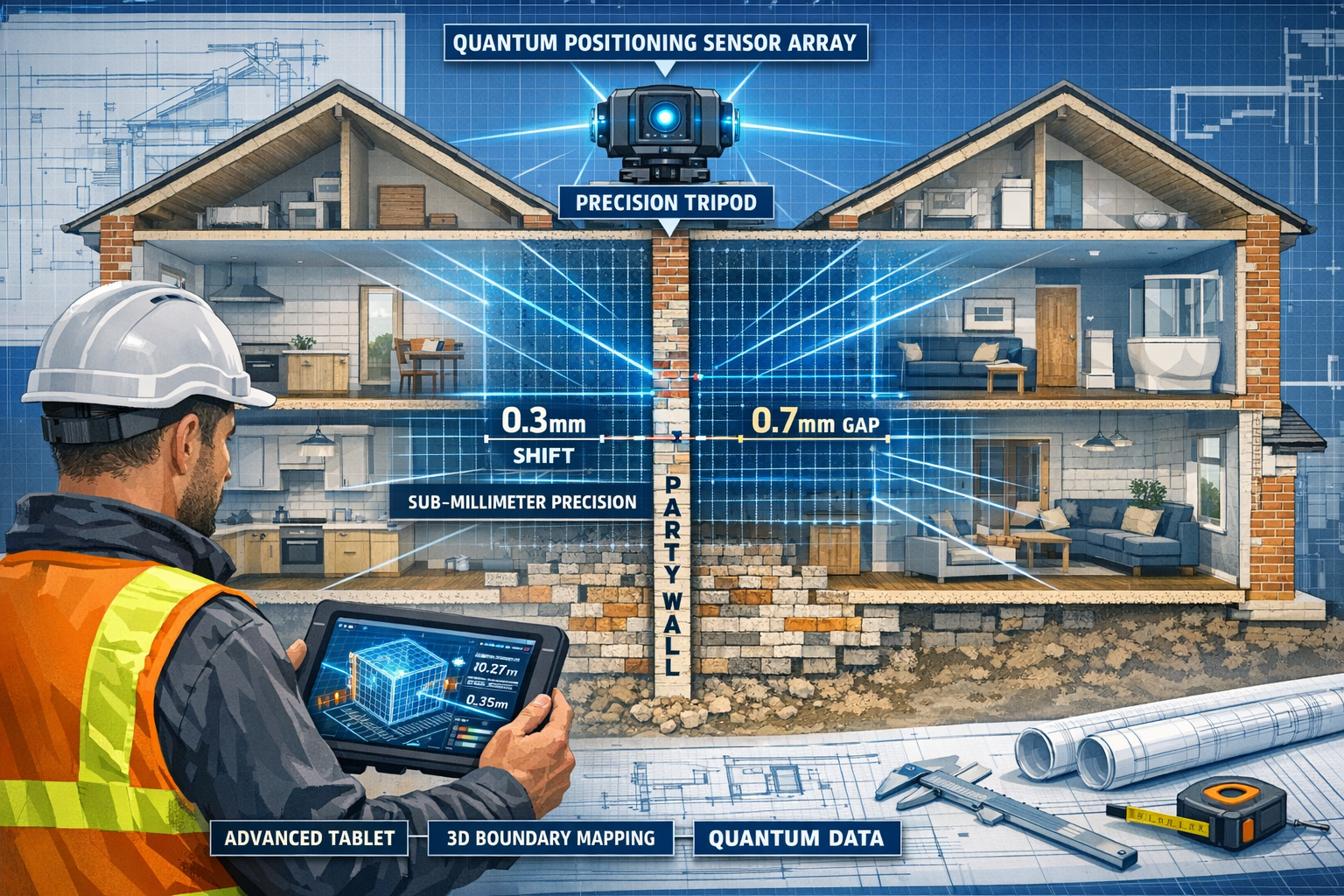
    The result? Positioning accuracy that reaches 0.1 to 0.5 millimeters—a level of precision that makes boundary disputes over shared walls nearly impossible to sustain.

    The Evolution from GPS to Quantum Precision

    Traditional surveying has progressed through several technological generations:

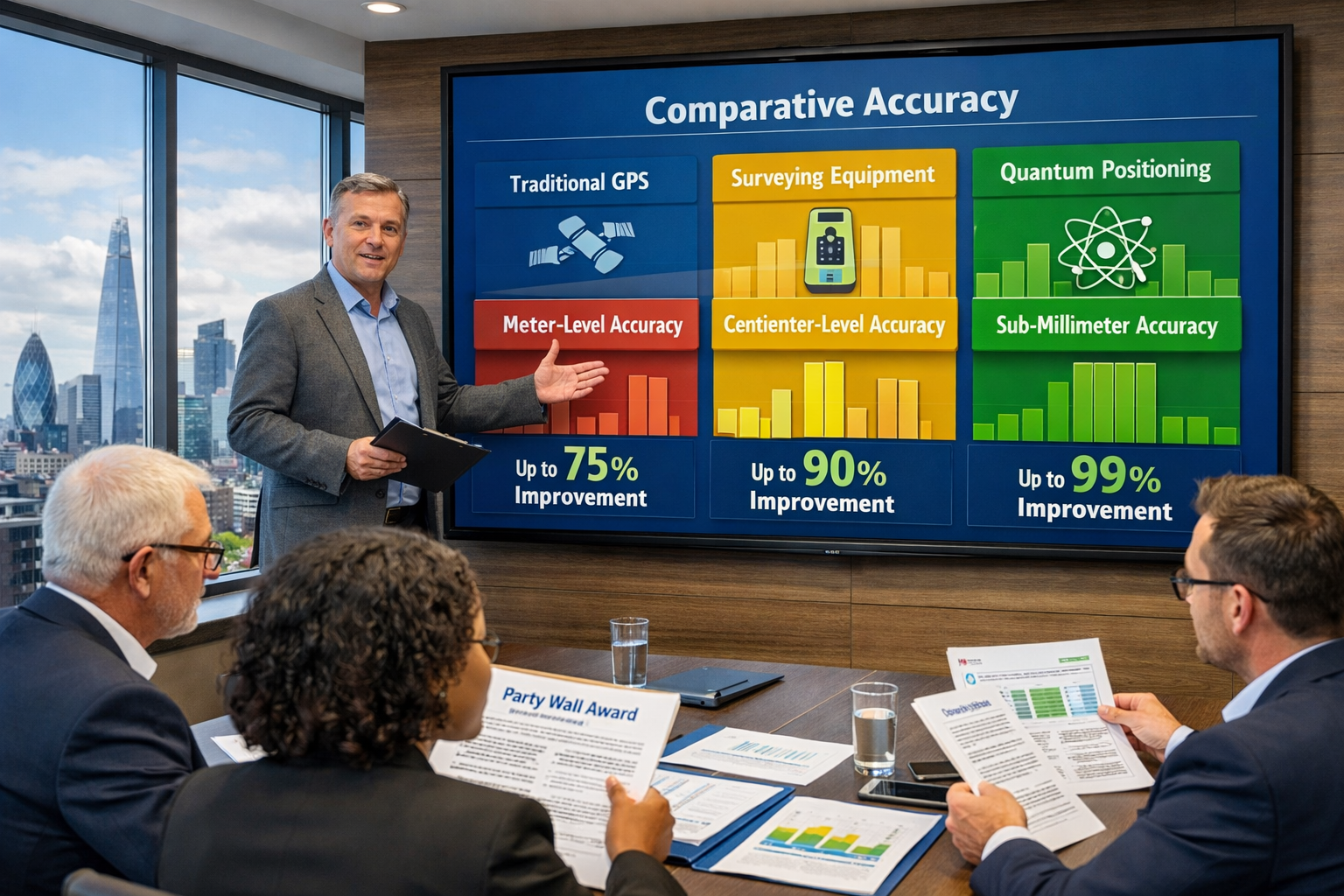
    Technology Generation Accuracy Level Typical Application Limitations
    Standard GPS 5-10 meters General navigation Weather interference, urban canyon effects
    Differential GPS 1-3 meters Agricultural, basic surveying Still too imprecise for boundaries
    RTK GPS 1-2 centimeters Professional surveying Requires base station, signal dependency
    Total Stations 2-5 millimeters Construction, engineering Line-of-sight required, time-intensive
    Quantum Positioning 0.1-0.5 millimeters High-precision boundaries, party walls Emerging technology, higher initial cost

    The quantum leap in accuracy addresses a critical gap in party wall work. When two properties share a wall that may be only 215mm (one brick length) thick, even a 5mm measurement error can lead to significant disputes about ownership, maintenance responsibilities, and construction rights under the Party Wall etc. Act 1996.

    How Quantum Technology Applies to Boundary Measurements

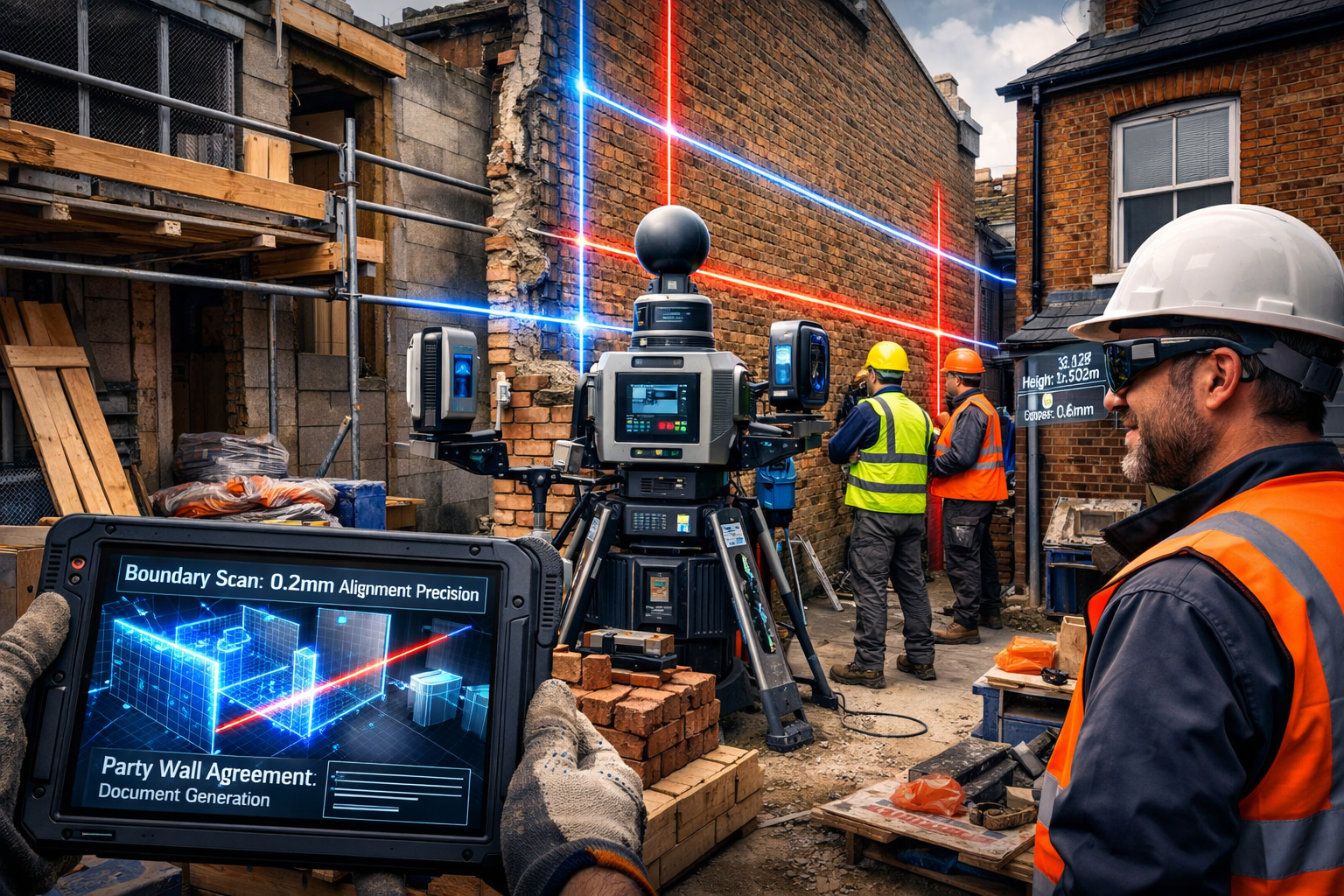
    In practical surveying applications, quantum positioning systems integrate with existing workflows while dramatically enhancing precision. A typical quantum-enhanced survey for party wall purposes involves:

    1. Establishing quantum reference points at known coordinates with atomic-level precision
    2. Deploying portable quantum sensors along the disputed or measured boundary
    3. Collecting continuous measurement data that accounts for environmental factors automatically
    4. Generating 3D boundary models with confidence intervals of less than 1mm
    5. Producing legally admissible documentation with quantum-verified measurement certificates

    “The integration of quantum positioning into party wall surveys represents the most significant advancement in boundary determination since the introduction of electronic distance measurement. We’re moving from ‘reasonably certain’ to ‘absolutely definitive’ in our measurements.” — Leading UK Surveying Technology Consultant

    This level of precision proves particularly valuable in boundary wall disputes where historical records may be unclear, where properties have undergone multiple renovations, or where high-value developments make every centimeter of buildable space financially significant.

    Quantum Positioning Systems in Party Wall Awards: Achieving Sub-Millimeter Accuracy for 2026 Boundary Disputes in Practice

    Quantum Positioning Systems in Party Wall Awards: Achieving — image 3

    The Critical Role of Precision in Party Wall Awards

    A party wall award serves as a legally binding document that records the condition of shared structures before construction work begins and establishes the rights and responsibilities of both building and adjoining owners. The accuracy of measurements within these awards directly impacts:

    • Legal enforceability when disputes arise during or after construction
    • Insurance validity for professional indemnity coverage
    • Project timelines by reducing challenges and re-surveys
    • Financial liability determination when damage claims occur
    • Future property transactions as awards remain with property records

    Traditional party wall awards rely on photographic evidence, written descriptions, and measurements accurate to within several millimeters. While this has served the industry adequately for decades, the 2026 construction landscape presents new challenges:

    • Increased property density in urban areas leaves less margin for error
    • Higher property values make small measurement discrepancies financially significant
    • More complex developments involving basements, extensions, and structural alterations
    • Greater legal scrutiny as property owners become more knowledgeable about their rights
    • Insurance requirements demanding higher standards of professional documentation

    Implementing Quantum Positioning in Party Wall Surveys

    Professional surveyors incorporating quantum positioning into their practice follow enhanced protocols that build upon established party wall procedures:

    Initial Assessment Phase:

    • Conduct traditional visual inspection to identify party wall structures
    • Determine quantum positioning requirements based on dispute risk and property value
    • Establish quantum reference network around the properties
    • Calibrate quantum sensors to local gravitational and environmental conditions

    Measurement Phase:

    • Deploy quantum positioning equipment at critical boundary points
    • Collect multiple measurement sets over time to account for structural movement
    • Create comprehensive 3D models of party walls, foundations, and adjacent structures
    • Document environmental conditions that could affect future measurements

    Documentation Phase:

    • Generate quantum-verified measurement certificates with confidence intervals
    • Produce enhanced schedules of condition with sub-millimeter precision data
    • Create digital twins of party wall structures for future reference
    • Prepare legally admissible quantum measurement reports

    Award Preparation:

    • Integrate quantum data into traditional party wall award formats
    • Provide clear explanations of quantum measurement methodology for non-technical parties
    • Establish baseline measurements that can be verified in future surveys
    • Include quantum positioning metadata for long-term record keeping

    Real-World Applications and Case Studies

    The application of Quantum Positioning Systems in Party Wall Awards: Achieving Sub-Millimeter Accuracy for 2026 Boundary Disputes proves particularly valuable in several common scenarios:

    High-Value Property Developments 🏗️

    In areas like Central London and West London, where property values can exceed £10 million, even small boundary discrepancies represent substantial financial stakes. Quantum positioning enables developers to:

    • Maximize buildable area within legal boundaries
    • Provide irrefutable evidence of compliance with planning permissions
    • Reduce insurance premiums through enhanced documentation quality
    • Accelerate project approvals with definitive boundary verification

    Complex Basement Excavations

    Basement extensions beneath existing properties present unique challenges for party wall work. Traditional methods struggle to accurately measure underground boundaries where access is limited and structural loads are critical. Quantum positioning systems can:

    • Map underground party wall foundations with millimeter precision
    • Monitor structural movement during excavation in real-time
    • Verify that excavations remain within permitted boundaries
    • Provide early warning of potential damage to adjoining structures

    Historic Property Renovations

    When working with older properties where original construction records are incomplete or inaccurate, quantum positioning offers definitive answers about current boundary locations. This proves essential for:

    • Resolving discrepancies between historical plans and actual construction
    • Establishing legally defensible boundaries where title documents are ambiguous
    • Protecting heritage structures through precise monitoring during adjacent works
    • Creating accurate baseline records for future preservation efforts

    Dispute Resolution and Litigation Support

    In cases where boundary disputes escalate to legal proceedings, quantum positioning data provides compelling evidence that courts find difficult to challenge. The technology offers:

    • Objective, scientifically verifiable measurements independent of surveyor interpretation
    • Reproducible results that independent experts can verify
    • Clear documentation of measurement methodology and uncertainty margins
    • Historical comparison data showing boundary changes over time

    Advantages and Implementation Considerations for 2026

    Quantum Positioning Systems in Party Wall Awards: Achieving — image 5

    Key Benefits of Quantum Positioning in Party Wall Work

    Enhanced Legal Protection ⚖️

    Surveyors using quantum positioning systems gain significant professional advantages through documentation that withstands intense legal scrutiny. The sub-millimeter accuracy creates awards that are:

    • Defensible in court with scientific measurement standards
    • Difficult to challenge by opposing experts or property owners
    • Insurance-friendly with reduced professional indemnity risk
    • Precedent-setting as courts increasingly recognize quantum measurement standards

    Time and Cost Efficiency ⏱️

    While quantum positioning systems represent a higher initial investment, the technology delivers substantial efficiency gains:

    • Faster survey completion through automated measurement collection
    • Reduced re-survey requirements due to higher initial accuracy
    • Fewer disputes requiring time-consuming resolution processes
    • Streamlined documentation through integrated digital workflows

    A typical party wall survey that might require 4-6 hours using traditional methods can be completed in 2-3 hours with quantum positioning, while simultaneously producing more comprehensive documentation. When considering the costs of party wall processes, this efficiency translates to better value for clients and improved profitability for surveying practices.

    Client Confidence and Competitive Advantage 🎯

    Property owners and developers increasingly recognize the value of precision in boundary work. Surveyors offering quantum positioning services differentiate themselves through:

    • Premium service offerings that command higher fees
    • Reduced client anxiety about potential future disputes
    • Enhanced professional reputation as technology leaders
    • Referral generation from satisfied clients and legal professionals

    Practical Implementation Challenges and Solutions

    Initial Investment Requirements

    Quantum positioning equipment represents a significant capital expenditure, with systems ranging from £50,000 to £200,000 depending on capabilities. Surveying practices can address this through:

    • Phased adoption starting with rental or leasing arrangements
    • Collaborative purchasing through surveying consortiums
    • Selective deployment for high-value or complex projects initially
    • Premium pricing strategies that recover costs through specialized services

    Training and Expertise Development

    Operating quantum positioning systems requires specialized knowledge beyond traditional surveying skills. Successful implementation involves:

    • Manufacturer training programs covering equipment operation and maintenance
    • Continuing professional development in quantum measurement principles
    • Mentorship arrangements with early adopters in the surveying community
    • Certification programs that demonstrate quantum positioning competency

    Integration with Existing Workflows

    Incorporating quantum technology into established party wall procedures requires thoughtful process design:

    • Hybrid approaches that combine quantum precision with traditional documentation methods
    • Software integration connecting quantum data with standard award templates
    • Client education explaining quantum measurement benefits in accessible terms
    • Quality assurance protocols ensuring quantum data accuracy and reliability

    Regulatory and Professional Standards Considerations

    As quantum positioning becomes more prevalent in party wall work, professional standards and regulatory frameworks are evolving to address this technology:

    Professional Body Guidance

    Organizations such as the Royal Institution of Chartered Surveyors (RICS) and the Faculty of Party Wall Surveyors are developing guidance on:

    • Appropriate applications for quantum positioning in party wall surveys
    • Minimum accuracy standards for different types of boundary work
    • Documentation requirements for quantum measurement data
    • Professional competency standards for quantum positioning operators

    Legal Recognition

    Courts and tribunals are increasingly accepting quantum positioning evidence, but surveyors must ensure:

    • Clear methodology documentation explaining measurement processes
    • Uncertainty quantification providing confidence intervals for all measurements
    • Independent verification capability allowing opposing experts to validate results
    • Chain of custody protocols for quantum measurement data

    Insurance Implications

    Professional indemnity insurers are beginning to recognize quantum positioning as a risk mitigation tool, potentially offering:

    • Reduced premiums for practices using quantum verification
    • Enhanced coverage for surveys incorporating quantum measurement data
    • Preferential terms for surveyors with quantum positioning certification
    • Claims advantages when disputes arise over quantum-verified boundaries

    The Future of Quantum Positioning in Party Wall Awards

    Looking ahead through 2026 and beyond, several trends will shape the adoption of Quantum Positioning Systems in Party Wall Awards: Achieving Sub-Millimeter Accuracy for 2026 Boundary Disputes:

    Technology Advancement 🚀

    Ongoing developments in quantum computing and sensing technology promise:

    • Smaller, more portable quantum positioning systems suitable for routine surveys
    • Lower costs as manufacturing scales and competition increases
    • Enhanced capabilities including real-time structural monitoring and automated anomaly detection
    • Integration with AI for predictive analysis of boundary dispute risks

    According to industry analysis, quantum computing companies are expanding rapidly, with significant investment flowing into practical applications of quantum technology beyond theoretical research [1]. This commercial momentum will accelerate the development of surveying-specific quantum positioning solutions.

    Market Adoption Patterns

    The surveying industry will likely see quantum positioning adoption following a predictable pattern:

    1. Early adopters (2024-2026): High-value commercial projects and complex disputes
    2. Early majority (2026-2028): Standard practice for properties above £2 million value
    3. Late majority (2028-2030): Routine use across most party wall surveys
    4. Laggards (2030+): Universal adoption as costs decrease and regulations evolve

    Cybersecurity Considerations 🔒

    As quantum positioning systems generate valuable boundary data, cybersecurity becomes paramount. The emergence of quantum security solutions addresses these concerns [2][3], providing:

    • Quantum-encrypted data transmission protecting sensitive boundary information
    • Tamper-proof measurement records using quantum verification protocols
    • Secure long-term storage of party wall award documentation
    • Authenticated data sharing between surveyors, clients, and legal professionals

    Best Practices for Surveyors Adopting Quantum Positioning

    For party wall surveyors considering quantum positioning implementation in 2026, these best practices ensure successful adoption:

    Start with Strategic Projects 📋

    • Select high-value or legally complex cases for initial quantum positioning deployment
    • Build case studies demonstrating value and return on investment
    • Develop standardized procedures before scaling to routine surveys
    • Gather client testimonials highlighting quantum positioning benefits

    Invest in Comprehensive Training

    • Pursue manufacturer-certified training programs for all operators
    • Attend industry conferences focused on quantum technologies [4]
    • Establish mentorship relationships with experienced quantum positioning users
    • Maintain ongoing education as technology and best practices evolve

    Develop Clear Client Communication

    • Create educational materials explaining quantum positioning in accessible language
    • Provide cost-benefit analyses showing value relative to traditional methods
    • Offer tiered service options with and without quantum verification
    • Set appropriate expectations about capabilities and limitations

    Establish Quality Assurance Protocols

    • Implement regular calibration and verification procedures
    • Maintain detailed records of equipment performance and maintenance
    • Develop peer review processes for quantum measurement data
    • Create contingency plans for equipment failures or unexpected results

    Build Professional Networks

    • Connect with other surveyors adopting quantum positioning technology
    • Participate in professional forums discussing quantum measurement applications
    • Collaborate with legal professionals on quantum evidence presentation
    • Engage with insurance providers about quantum positioning benefits

    Conclusion: Embracing Quantum Precision for Party Wall Excellence

    The integration of Quantum Positioning Systems in Party Wall Awards: Achieving Sub-Millimeter Accuracy for 2026 Boundary Disputes represents more than just a technological upgrade—it marks a fundamental shift in how the surveying profession approaches boundary determination and dispute resolution. As construction activity intensifies across UK cities and property values continue rising, the margin for measurement error shrinks proportionally. Quantum positioning technology arrives at precisely the moment when the industry needs it most.

    For professional surveyors, the decision to adopt quantum positioning systems in 2026 is increasingly becoming not whether to implement this technology, but when and how. The competitive advantages are clear: enhanced accuracy, reduced dispute frequency, stronger legal defensibility, and improved client confidence. Early adopters position themselves as industry leaders while building expertise that will become standard practice within the next few years.

    Property owners and developers benefit equally from quantum-verified party wall awards, gaining peace of mind that their boundary determinations rest on the most accurate measurement technology available. The reduction in dispute-related delays and costs often exceeds the premium charged for quantum positioning services, making this an economically rational choice for significant projects.

    Actionable Next Steps

    For Surveyors:

    • Research quantum positioning equipment suppliers and schedule demonstrations
    • Assess practice readiness for quantum technology adoption through capability audits
    • Identify high-value projects suitable for initial quantum positioning deployment
    • Pursue relevant training and certification programs before equipment purchase
    • Connect with party wall surveying networks to share quantum positioning experiences

    For Property Owners and Developers:

    • Request quantum positioning verification for party wall surveys on valuable properties
    • Ask surveyors about their quantum measurement capabilities and experience
    • Consider quantum-verified awards as risk mitigation for complex developments
    • Review existing party wall awards to identify cases where quantum re-survey adds value
    • Consult with legal advisors about quantum positioning evidence in ongoing disputes

    For Industry Professionals:

    • Advocate for professional standards addressing quantum positioning in party wall work
    • Participate in industry discussions shaping quantum measurement best practices
    • Support research into quantum positioning applications for surveying
    • Educate clients and colleagues about quantum technology benefits and limitations

    The quantum revolution in party wall surveying has arrived in 2026, bringing unprecedented precision to an age-old challenge. Those who embrace this technology today will define the standards and practices that shape the industry tomorrow. Whether you’re a surveyor looking to enhance your professional capabilities, a property owner seeking definitive boundary determination, or a developer requiring irrefutable documentation for complex projects, quantum positioning systems offer solutions that were simply impossible just a few years ago.

    The future of party wall awards is measured in fractions of millimeters—and that future is now.


    References

    [1] Quantum Computing Companies In 2026 2 – https://quantumzeitgeist.com/quantum-computing-companies-in-2026-2/

    [2] Forward Edge Ai Global Channel Partners Quantum Security – https://thequantuminsider.com/2026/01/13/forward-edge-ai-global-channel-partners-quantum-security/

    [3] Preparing For Quantum Security In 2026 – https://news.clearancejobs.com/2026/01/14/preparing-for-quantum-security-in-2026/

    [4] Quantum Technologies – https://spie.org/epe/conferencedetails/quantum-technologies

  • Remote Drone Protocols for Party Wall Surveys: Safety and Speed in

    Remote Drone Protocols for Party Wall Surveys: Safety and Speed in

    The landscape of property surveying transformed dramatically following the pandemic, as remote technologies became essential rather than optional. In 2026, Remote Drone Protocols for Party Wall Surveys: Safety and Speed in 2026 High-Rise Compliance represent the cutting edge of boundary mapping, structural assessment, and regulatory documentation. With urban developments reaching unprecedented density and height, traditional surveying methods—requiring scaffolding, ladders, and extensive site access—now pose significant safety risks and project delays. Modern drone protocols address these challenges head-on, delivering comprehensive party wall documentation while minimizing physical intrusion and accelerating compliance timelines.

    The convergence of regulatory advances, technological maturity, and practical necessity has made 2026 a watershed year for aerial surveying in property compliance. Beyond Visual Line of Sight (BVLOS) operations are transitioning from waiver-based exceptions to routine procedures under Part 108, with final FAA rules expected by mid-2026[5]. This regulatory shift, combined with enhanced equipment capabilities and standardized data protocols, enables surveyors to conduct thorough party wall assessments with unprecedented efficiency and accuracy.

    Key Takeaways

    BVLOS operations are becoming standardized in 2026, removing barriers for extensive party wall surveying missions that previously required individual flight waivers[5]

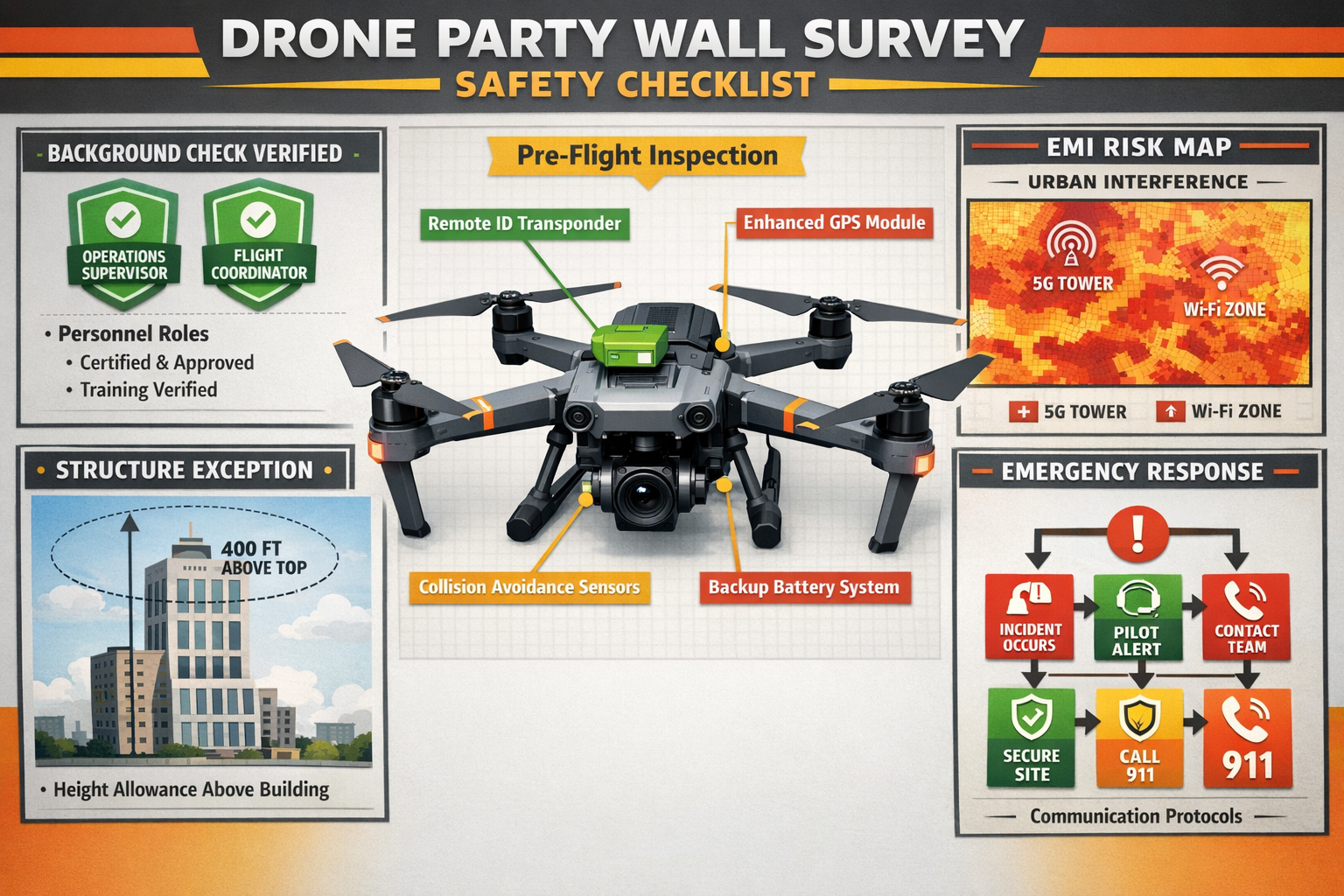
    Enhanced safety protocols including mandatory background checks, designated operations supervisors, and electromagnetic interference mapping reduce risks in dense urban environments[1]

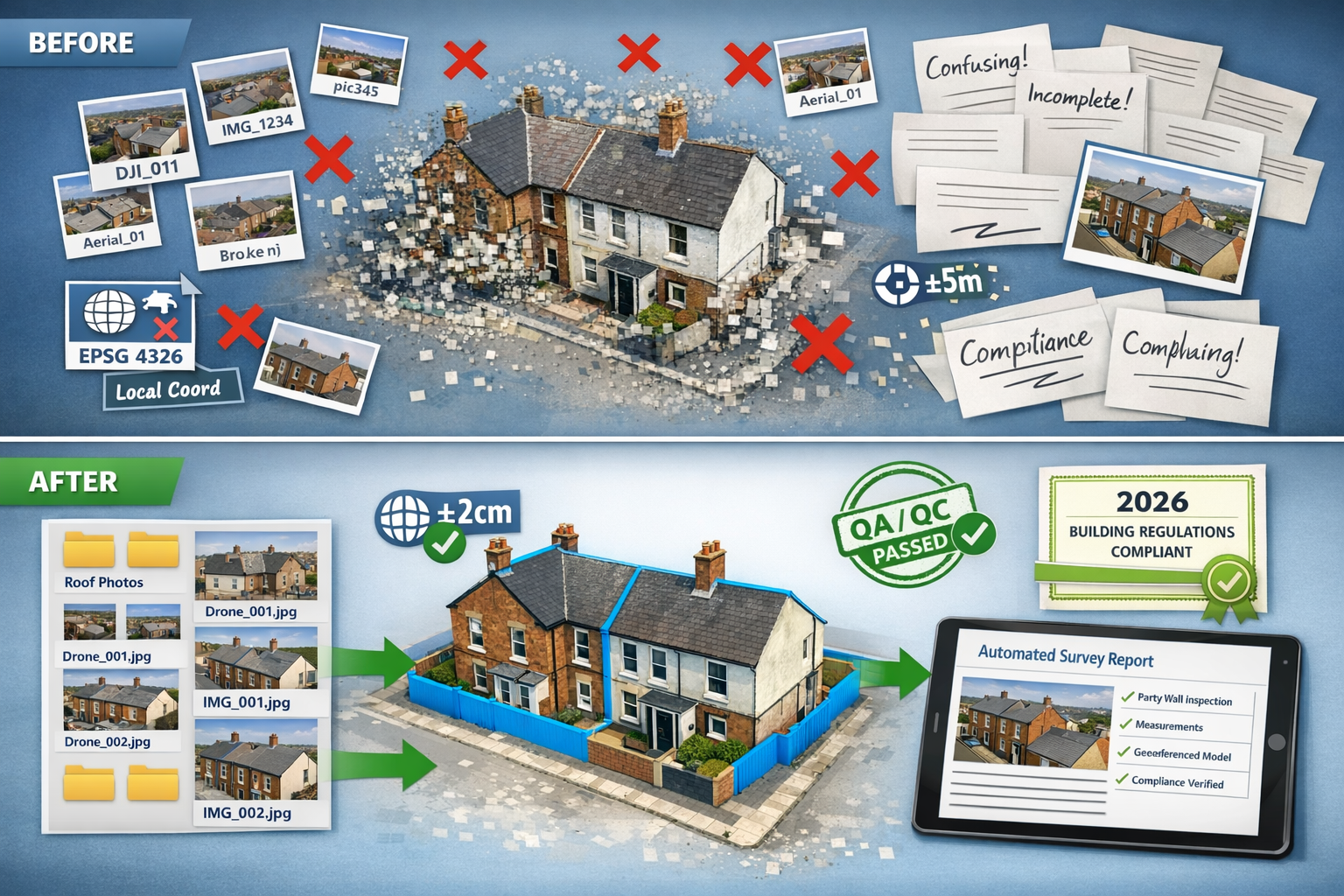
    Data standardization with clear coordinate systems, accuracy targets, and QA/QC procedures is critical for compliance documentation and regulatory acceptance[4]

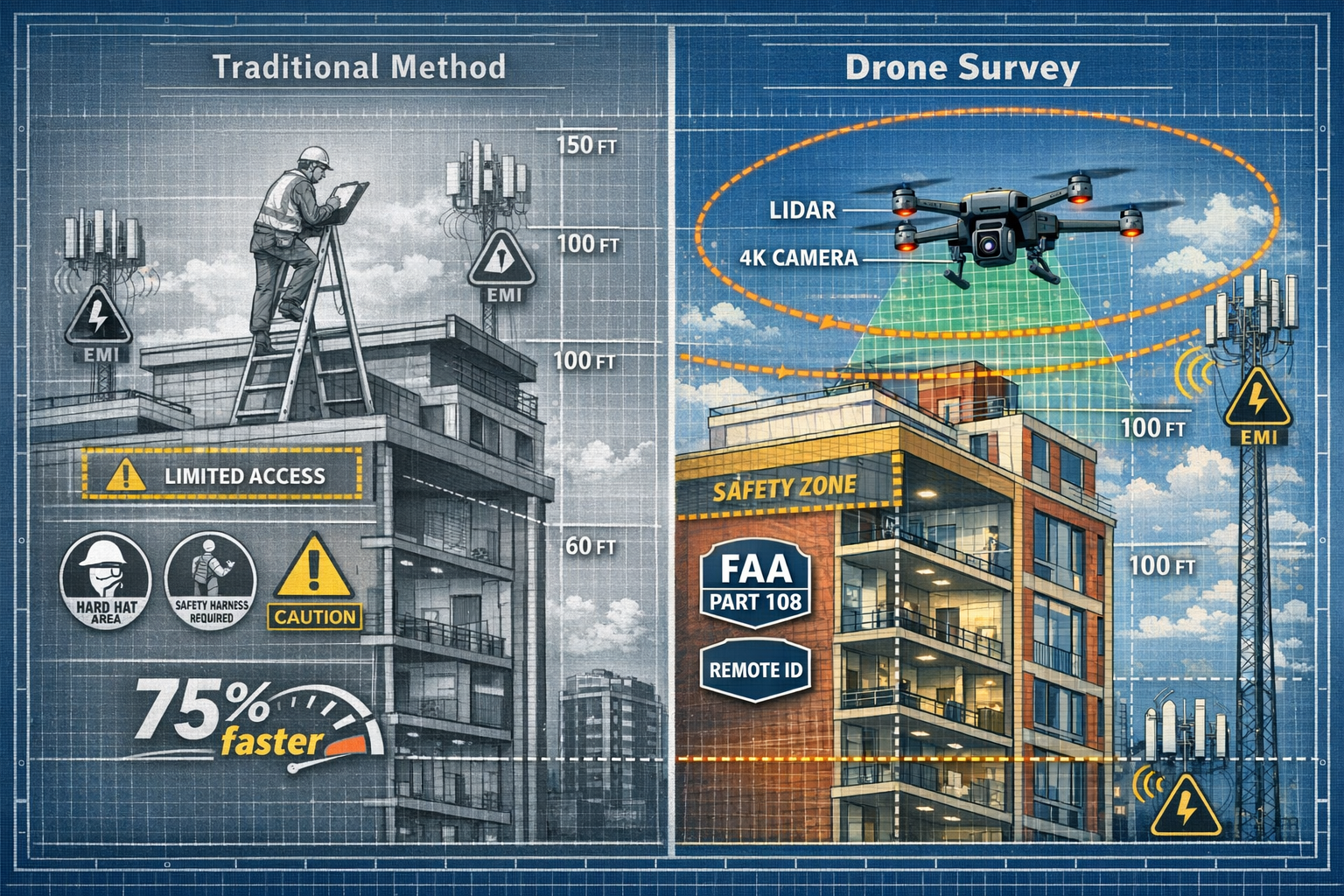
    Speed improvements of up to 75% compared to traditional methods enable faster project timelines while maintaining comprehensive documentation standards

    Structure Exception rules permit flights at 400 feet above a building’s uppermost limit within a 400-foot radius, directly supporting high-rise party wall inspections[2]

    Understanding Remote Drone Protocols for Party Wall Surveys in 2026

    Remote Drone Protocols for Party Wall Surveys: Safety and Speed in

    The Evolution of Aerial Surveying for Property Compliance

    Party wall surveying traditionally required physical access to boundaries, rooftops, and facades—often necessitating scaffolding, cherry pickers, or dangerous ladder work. The Party Wall Act 1996 mandates detailed documentation of existing conditions before construction begins, creating significant logistical challenges in high-rise environments. Remote drone protocols revolutionize this process by enabling comprehensive visual and dimensional data capture without physical contact.

    The regulatory framework supporting Remote Drone Protocols for Party Wall Surveys: Safety and Speed in 2026 High-Rise Compliance has matured considerably. Drones up to 110 pounds are now eligible for BVLOS operations under Part 108, compared to the previous 55-pound limit, enabling deployment of sophisticated survey-grade equipment including LiDAR sensors, thermal imaging cameras, and high-resolution photogrammetry systems[1]. This expanded capacity allows single-flight missions to capture complete building envelopes, boundary conditions, and structural details necessary for party wall notices and awards.

    Core Components of 2026 Drone Survey Protocols

    Modern party wall drone protocols encompass several integrated elements:

    Equipment Requirements:

    • Remote ID transponders (mandatory since March 2024)[1]
    • Survey-grade cameras with minimum 20-megapixel resolution
    • RTK-GPS positioning for centimeter-level accuracy
    • Collision avoidance systems for urban environments
    • Backup battery and redundant control systems

    Personnel Designations:

    • Operations supervisor with enhanced background clearance
    • Flight coordinator for mission planning and airspace coordination
    • Data analyst for post-processing and compliance documentation
    • Safety officer for electromagnetic interference assessment[1]

    Pre-Flight Protocols:

    • Electromagnetic interference mapping of survey area
    • Airspace authorization and neighbor notification
    • Weather assessment and wind speed verification
    • Equipment calibration and system checks
    • Emergency response plan activation

    The Structure Exception provision proves particularly valuable for party wall work, permitting operations at 400 feet above a structure’s uppermost point while remaining within a 400-foot horizontal radius[2]. This regulatory accommodation enables comprehensive facade inspection and boundary documentation on high-rise properties without requiring special altitude waivers.

    BVLOS Operations and Extended Survey Capabilities

    The reopening of the BVLOS Notice of Proposed Rulemaking comment period on January 28, 2026, signals the final stages of regulatory standardization[4]. For party wall surveyors, BVLOS capability means:

    🚁 Extended flight ranges covering multiple properties in a single mission
    🚁 Continuous boundary mapping along shared walls without interruption
    🚁 Comprehensive elevation capture from multiple angles without repositioning
    🚁 Reduced site disturbance by eliminating need for multiple takeoff/landing zones

    Operators can now apply for either a BVLOS permit (valid 24 months, suited for pilot programs) or a certificate (no expiration, requiring higher oversight) depending on their operational scale[1]. Established party wall surveying practices in Central London and other dense urban areas benefit significantly from certificate-based operations, enabling routine deployment without mission-specific approvals.

    Safety Protocols for High-Rise Party Wall Drone Operations

    Remote Drone Protocols for Party Wall Surveys: Safety and Speed in — image 3

    Urban Environment Risk Assessment

    Dense urban environments present unique challenges for Remote Drone Protocols for Party Wall Surveys: Safety and Speed in 2026 High-Rise Compliance. High-density Wi-Fi networks, 5G towers, and industrial power lines can disrupt command-and-control links, while GPS multipath effects in “urban canyons” affect position hold capabilities[2]. These electromagnetic interference (EMI) factors require systematic assessment before every mission.

    EMI Mapping Protocol:

    1. Pre-Survey Site Analysis – Identify cellular towers, power substations, and high-voltage lines within 500-meter radius
    2. Frequency Spectrum Scanning – Use RF analyzers to detect interference patterns at planned flight altitudes
    3. Safe Zone Designation – Establish minimum standoff distances from identified EMI sources
    4. Backup Communication Protocols – Configure secondary control frequencies and manual override procedures
    5. Real-Time Monitoring – Deploy ground-based signal strength monitors during operations

    The mandatory background check requirements for all personnel with drone access add an additional security layer, particularly important when surveying sensitive commercial or residential properties[1]. Operations supervisors must maintain current certifications and demonstrate proficiency in emergency response procedures specific to urban environments.

    Neighbor Safety and Public Protection

    Party wall work inherently involves close proximity to occupied structures. Drone operations must prioritize occupant safety while gathering necessary compliance data. The 2026 protocols include:

    Public Safety Measures:

    • ⚠️ Advance notification to all affected properties with flight schedules
    • ⚠️ Visual observers stationed at ground level to monitor public areas
    • ⚠️ Restricted flight times avoiding peak occupancy periods
    • ⚠️ Geofencing to prevent unintended airspace violations
    • ⚠️ Emergency landing zones pre-designated and cleared

    When conducting surveys for party wall work in North London or other residential areas, surveyors must coordinate with building management to ensure resident awareness. This transparency builds trust and facilitates the cooperation necessary for comprehensive boundary documentation.

    Equipment Redundancy and Fail-Safe Systems

    Modern survey drones incorporate multiple redundancy layers:

    System Primary Backup Fail-Safe Action
    Power Main battery (45min) Secondary battery (20min) Auto-return to home
    GPS Multi-constellation GNSS Visual positioning system Hover and alert
    Communication 2.4GHz control link 5.8GHz secondary link Controlled descent
    Obstacle Detection Forward/rear sensors Downward camera Emergency stop
    Data Storage Primary SD card Redundant internal memory Continuous backup

    These redundancies prove essential when surveying complex party wall scenarios, such as boundary wall assessments where precise positioning near structures is required. Equipment failure during critical data capture could necessitate complete mission restart, adding delays and costs to compliance processes.

    Speed and Efficiency Gains in 2026 High-Rise Compliance

    Remote Drone Protocols for Party Wall Surveys: Safety and Speed in — image 5

    Comparative Timeline Analysis

    The efficiency advantages of Remote Drone Protocols for Party Wall Surveys: Safety and Speed in 2026 High-Rise Compliance become evident when comparing traditional and aerial methodologies:

    Traditional Party Wall Survey Timeline (High-Rise):

    • Day 1-2: Site access coordination and scaffolding/equipment setup
    • Day 3-5: Physical inspection and measurement collection
    • Day 6-7: Photography and condition documentation
    • Day 8-9: Equipment removal and site restoration
    • Day 10-15: Data compilation and report preparation
    • Total: 15 business days

    Drone-Based Party Wall Survey Timeline (High-Rise):

    • Day 1: Pre-flight planning and EMI assessment
    • Day 2: Single comprehensive flight mission (2-4 hours)
    • Day 3-4: Data processing and 3D model generation
    • Day 5: Report compilation with integrated imagery
    • Total: 5 business days

    This 67% reduction in project timeline translates directly to faster compliance verification, reduced holding costs, and earlier construction commencement. For developers working under tight schedules, this acceleration can mean the difference between meeting seasonal construction windows or facing costly delays.

    Data Quality and Standardization

    The most successful drone survey programs in 2026 focus intensively on data standardization[4]. Clear protocols for coordinate systems, accuracy targets, naming conventions, and quality assurance checks ensure that captured data integrates seamlessly with compliance documentation requirements.

    Essential Data Standards for Party Wall Compliance:

    📊 Coordinate System: British National Grid (EPSG:27700) for UK properties
    📊 Accuracy Target: ±2cm horizontal, ±3cm vertical for boundary measurements
    📊 Image Resolution: Minimum 1cm/pixel ground sampling distance
    📊 File Naming: Property_address_date_sensor_type_sequence.format
    📊 Metadata Requirements: GPS coordinates, altitude, camera settings, timestamp
    📊 QA/QC Checkpoints: Ground control point verification, overlap validation, completeness review

    These standards enable direct integration with party wall awards and compliance documentation, eliminating the manual data transformation that previously consumed significant professional time. When surveyors in East London or West London adopt consistent protocols, cross-referencing between properties and historical records becomes straightforward.

    Cost-Benefit Analysis for Property Owners

    Understanding the costs of party wall processes helps property owners evaluate drone survey investments:

    Traditional Survey Costs (High-Rise):

    • Scaffolding/access equipment rental: £3,000-£8,000
    • Surveyor time (15 days): £4,500-£7,500
    • Insurance and safety compliance: £1,000-£2,000
    • Total: £8,500-£17,500

    Drone Survey Costs (High-Rise):

    • Drone operation and pilot: £1,500-£3,000
    • Data processing and analysis: £1,000-£2,000
    • Surveyor review and reporting: £1,500-£2,500
    • Total: £4,000-£7,500

    Beyond direct cost savings of 40-60%, drone protocols eliminate scaffolding-related disruption to building occupants and reduce liability exposure from working at height. These indirect benefits often exceed the measurable cost reductions, particularly in occupied commercial properties where business interruption carries significant financial impact.

    Integration with Building Information Modeling (BIM)

    Modern drone surveys generate point cloud data and 3D models that integrate directly with BIM workflows. This compatibility proves invaluable for complex developments where party wall compliance must coordinate with architectural, structural, and MEP (mechanical, electrical, plumbing) design elements.

    The photogrammetry and LiDAR data captured during drone surveys create as-built models with millimeter precision, enabling architects to design additions and modifications with confidence in boundary conditions. When disputes arise regarding party structure notices or boundary interpretations, these detailed 3D models provide objective documentation that facilitates resolution.

    Regulatory Compliance and Documentation Requirements

    Remote ID and Operational Transparency

    Since the FAA ended discretionary enforcement of Remote ID rules in March 2024, broadcast remote identification has become mandatory for all commercial drone operations[1]. This requirement enhances accountability and enables authorities to monitor airspace usage in real-time—particularly important in dense urban environments where multiple aerial operations may occur simultaneously.

    For party wall surveyors, Remote ID compliance means:

    Automatic broadcast of drone location, altitude, and operator identification
    Enhanced legitimacy when operating near sensitive properties
    Simplified coordination with air traffic control and other airspace users
    Regulatory compliance documentation for client records

    Operators must ensure their equipment includes either built-in Remote ID capabilities or approved broadcast modules. This technical requirement represents a minimal investment compared to the operational legitimacy it provides when working in jurisdictions with strict airspace oversight.

    Documentation Standards for Party Wall Act Compliance

    The Party Wall Act 1996 requires specific documentation elements that drone surveys must capture to satisfy legal requirements:

    Mandatory Documentation Components:

    1. Condition Survey – Comprehensive photographic record of existing structures
    2. Dimensional Verification – Accurate measurements of party wall locations and dimensions
    3. Structural Assessment – Visual inspection for cracks, settlement, or deterioration
    4. Boundary Confirmation – Precise mapping of property lines and shared structures
    5. Access Records – Documentation of survey methodology and data collection dates

    Drone-captured data must be processed and presented in formats that building control officers and adjoining owners can readily interpret. This typically includes annotated orthophotos, measured elevation drawings, and detailed condition reports with georeferenced imagery.

    When carrying out works that trigger Party Wall Act requirements, building owners benefit from drone survey documentation that withstands scrutiny during disputes. The objective, high-resolution evidence captured from multiple angles provides compelling support for party wall agreements and awards.

    Future Regulatory Developments

    The FAA’s ongoing rulemaking process continues to evolve, with industry panels exploring autonomous aircraft rules and expanded urban operations[7]. For party wall surveyors, anticipated developments include:

    🔮 Automated flight approvals through digital authorization systems
    🔮 Expanded night operations for reduced-disruption surveying
    🔮 Increased weight limits enabling more sophisticated sensor packages
    🔮 Standardized data formats for regulatory submissions
    🔮 Integration with smart city infrastructure for real-time airspace coordination

    Staying informed about these regulatory changes ensures that survey protocols remain compliant while taking advantage of new operational flexibilities as they become available. Professional organizations and industry associations provide valuable resources for tracking regulatory developments relevant to property compliance work.

    Best Practices for Implementing Drone Party Wall Surveys

    Mission Planning and Stakeholder Communication

    Successful drone party wall surveys begin with thorough planning and transparent communication. The following workflow optimizes outcomes:

    Phase 1: Pre-Survey Assessment

    • Review property records and schedule of condition requirements
    • Identify all affected parties and adjoining owners
    • Conduct site reconnaissance for access points and obstacles
    • Map electromagnetic interference sources
    • Obtain necessary airspace authorizations

    Phase 2: Stakeholder Engagement

    • Notify all affected property owners with detailed flight plans
    • Coordinate with building management for access and timing
    • Provide educational materials explaining drone survey benefits
    • Address privacy concerns and data handling protocols
    • Establish communication channels for day-of-flight coordination

    Phase 3: Operational Execution

    • Deploy visual observers at strategic ground positions
    • Conduct pre-flight equipment checks and calibrations
    • Execute flight mission with continuous safety monitoring
    • Verify data capture completeness before demobilization
    • Document any deviations from planned mission parameters

    Phase 4: Data Processing and Reporting

    • Process raw imagery and sensor data using standardized workflows
    • Generate 3D models and orthophotos with accuracy verification
    • Compile comprehensive condition reports with annotated imagery
    • Prepare compliance documentation for regulatory submission
    • Archive raw data and processed outputs for future reference

    This structured approach minimizes surprises and builds confidence among all parties involved in the party wall process. When neighbours are carrying out works, transparent drone survey protocols help maintain positive relationships during what can otherwise be contentious processes.

    Selecting Qualified Drone Survey Providers

    Not all drone operators possess the specialized knowledge required for party wall compliance work. Property owners and surveyors should evaluate providers based on:

    Technical Qualifications:

    • ✅ Part 107 or equivalent commercial drone certification
    • ✅ BVLOS permit or certificate for extended operations
    • ✅ Survey-grade equipment with RTK-GPS capabilities
    • ✅ Comprehensive insurance coverage (minimum £5 million public liability)
    • ✅ Remote ID compliance and current equipment registration

    Domain Expertise:

    • ✅ Understanding of Party Wall Act 1996 requirements
    • ✅ Experience with building compliance documentation
    • ✅ Familiarity with boundary dispute resolution
    • ✅ Knowledge of construction terminology and structural assessment
    • ✅ Proven track record with high-rise properties

    Operational Capabilities:

    • ✅ Established safety management systems
    • ✅ Background-checked personnel with designated roles
    • ✅ Standardized data processing workflows
    • ✅ Quality assurance and accuracy verification protocols
    • ✅ Professional indemnity insurance for survey work

    Engaging qualified providers ensures that drone surveys meet both technical and legal requirements, avoiding costly re-work or documentation challenges during compliance review. Professional surveyors in South London and other urban areas increasingly partner with specialized drone operators to deliver comprehensive party wall services.

    Addressing Common Concerns and Misconceptions

    Privacy Concerns: Modern protocols include privacy-respecting flight paths that capture necessary structural data without unnecessarily imaging interior spaces. Operators should provide clear explanations of data capture scope and retention policies.

    Weather Dependencies: While adverse weather can delay missions, modern drones operate safely in light rain and moderate winds. Flexible scheduling and weather monitoring enable timely completion within project timelines.

    Data Security: Survey data often includes sensitive property information. Reputable providers implement encryption, secure storage, and controlled access protocols that meet professional standards for confidential information handling.

    Accuracy Questions: Survey-grade drones with RTK-GPS achieve accuracy levels exceeding traditional measurement methods. Ground control point verification provides objective validation of dimensional accuracy.

    Regulatory Uncertainty: While regulations continue to evolve, current frameworks provide clear operational parameters. Working with experienced providers ensures compliance with current requirements while adapting to future changes.

    Conclusion

    Remote Drone Protocols for Party Wall Surveys: Safety and Speed in 2026 High-Rise Compliance represent a fundamental shift in how property professionals approach boundary documentation and regulatory compliance. The convergence of mature technology, standardized regulations, and proven operational protocols has eliminated the barriers that once made aerial surveying a niche specialty. Today, drone-based party wall surveys deliver superior safety outcomes, dramatic timeline reductions, and comprehensive documentation quality that traditional methods cannot match.

    The regulatory landscape supporting these operations continues to strengthen, with BVLOS standardization, enhanced equipment capabilities, and clear safety frameworks providing the foundation for routine deployment. Property owners benefit from reduced costs, faster project timelines, and minimized disruption to building occupants. Surveyors gain access to detailed, georeferenced data that integrates seamlessly with modern compliance workflows and BIM systems.

    Actionable Next Steps

    For property owners planning construction work:

    1. Engage early with surveyors experienced in drone-based party wall assessments
    2. Review the Party Wall Act requirements for your specific project
    3. Budget for drone survey costs as part of your compliance planning
    4. Communicate proactively with adjoining owners about survey methodology
    5. Request standardized data outputs that integrate with your project documentation

    For surveyors and construction professionals:

    1. Evaluate drone survey providers based on technical qualifications and domain expertise
    2. Develop relationships with certified operators who understand party wall requirements
    3. Standardize data specifications across projects for consistency and efficiency
    4. Stay informed about regulatory developments affecting aerial survey operations
    5. Educate clients about the safety and efficiency benefits of modern protocols

    The future of party wall compliance lies in embracing technologies that enhance safety, accelerate timelines, and improve documentation quality. Remote drone protocols deliver on all three objectives while reducing costs and minimizing disruption. As urban development continues to intensify and high-rise construction becomes increasingly common, these capabilities will transition from competitive advantages to essential requirements for professional practice.

    Property professionals who adopt Remote Drone Protocols for Party Wall Surveys: Safety and Speed in 2026 High-Rise Compliance position themselves at the forefront of industry innovation, delivering superior client outcomes while maintaining the highest standards of safety and regulatory compliance. The question is no longer whether to integrate drone technology into party wall practice, but how quickly professionals can master these protocols to serve their clients’ evolving needs.

    For more information about party wall procedures and compliance requirements, explore our comprehensive resources on party wall costs and processes or contact our team for project-specific guidance.


    References

    [1] Faa Drone News – https://www.extremeaerialproductions.com/post/faa-drone-news

    [2] Can You Fly A Drone Over People – https://www.jouav.com/blog/can-you-fly-a-drone-over-people.html

    [4] Drone Road Surveys Highway Planning 2026 – https://birdseyeaerialdrones.com/drone-road-surveys-highway-planning-2026/

    [5] New Faa Drone Rules 2026 – https://dronetrust.com/blogs/articles/new-faa-drone-rules-2026

    [7] Panel Explores Drone Autonomous Aircraft Rules – https://www.ainonline.com/aviation-news/aerospace/2026-03-10/panel-explores-drone-autonomous-aircraft-rules

  • Sustainability Mandates in Party Wall Act Compliance: Ecological

    Sustainability Mandates in Party Wall Act Compliance: Ecological

    As environmental regulations tighten across the UK construction sector, property developers and surveyors face a new reality: Sustainability Mandates in Party Wall Act Compliance: Ecological Assessments for 2026 Developments are no longer optional considerations but essential requirements. The intersection of traditional party wall procedures with emerging ecological standards represents one of the most significant shifts in surveying practice this decade. With 2026 marking the introduction of the Future Homes Standard and stricter planning reforms, surveyors must now integrate comprehensive eco-data into party wall notices and awards, forecasting environmental impacts on shared walls while maintaining compliance with both the Party Wall etc. Act 1996 and new sustainability frameworks.

    Sustainability Mandates in Party Wall Act Compliance: Ecological

    Key Takeaways

    • 🌱 2026 sustainability mandates require ecological assessments to be integrated into party wall procedures, including biodiversity measures and habitat considerations
    • 📊 Future Homes Standard demands 75-80% carbon emissions reduction in new builds, directly affecting party wall works involving shared structures
    • 🏗️ Net-zero retrofit projects (heat pumps, solar panels, external wall insulation) trigger both party wall requirements and ecological compliance obligations
    • 📋 Party wall awards must now include sustainability clauses addressing environmental impact, material selection, and biodiversity net gain
    • ⚖️ Surveyors face dual compliance challenges: balancing traditional party wall protections with emerging environmental regulations

    Understanding the 2026 Sustainability Landscape for Party Wall Works

    The construction industry in 2026 operates under fundamentally different rules than just a few years ago. The government’s commitment to achieving net-zero by 2050 has accelerated the introduction of sustainability mandates that directly impact how party wall works are planned, executed, and documented.

    The Future Homes Standard and Party Wall Implications

    The Future Homes Standard, fully implemented in 2026, requires newly built homes to produce 75-80% lower carbon emissions compared to current standards [1]. This dramatic reduction affects party wall compliance in several critical ways:

    Direct impacts on shared structures:

    • Installation of low-carbon heating systems (heat pumps) often requires modifications to party walls
    • Enhanced insulation standards necessitate external wall insulation (EWI) on shared boundaries
    • Solar panel installations on shared roof structures require careful party wall consideration
    • Improved ventilation systems may impact party wall integrity

    When undertaking types of party wall works in 2026, building owners must demonstrate not only compliance with traditional structural protections but also adherence to carbon reduction targets. This dual obligation transforms how party wall awards are drafted and executed.

    Planning Reforms and Ecological Requirements

    The 2026 planning reforms introduce specific sustainability guidance for building practices, including mandatory habitat restoration, biodiversity measures, and architectural features such as swift bricks for nesting birds [1]. While these requirements primarily target planning permissions, they increasingly influence party wall compliance through:

    1. Biodiversity net gain obligations that affect boundary treatments
    2. Habitat protection measures during construction on shared walls
    3. Material sustainability criteria for party wall repairs and modifications
    4. Green infrastructure requirements that may impact shared structures

    “The integration of ecological assessments into party wall procedures represents a fundamental evolution in surveying practice, requiring professionals to balance property rights with environmental responsibilities.”

    Construction Products Sustainability Criteria

    Under the government’s broader reforms targeting net-zero by 2050, construction products must now adhere to strict sustainability standards [2]. For party wall works, this means:

    Product Category Sustainability Requirement Party Wall Impact
    Insulation materials Recycled content minimum 30% EWI on shared walls
    Structural timber FSC/PEFC certification mandatory Party wall repairs
    Concrete products Carbon-reduced formulations Foundation works
    Roofing materials Recyclability rating required Shared roof structures
    Sealants & DPCs VOC limits strictly enforced Damp-proofing party walls

    These requirements directly influence material selection in party wall contract templates and specifications.

    Integrating Ecological Assessments into Party Wall Procedures

    The practical challenge facing surveyors in 2026 centers on seamlessly integrating ecological considerations into established party wall procedures without compromising the protections afforded to adjoining owners under the Act.

    Pre-Notice Ecological Surveys

    Before serving party wall notices, building owners must now conduct preliminary ecological assessments when sustainability-related works are planned. This represents a significant departure from traditional practice.

    Essential ecological survey components:

    Habitat assessment of the party wall and immediate surroundings
    Protected species surveys (bats, nesting birds, vegetation)
    Biodiversity baseline documentation for net gain calculations
    Material sustainability audit of proposed construction products
    Carbon impact forecast for party wall modifications
    Green infrastructure opportunities identification

    These surveys inform the content of party wall notices and help prevent disputes related to environmental compliance. When working with a party wall surveyor in Central London or other urban areas, ecological considerations become particularly complex due to higher concentrations of protected species and stricter planning requirements.

    Modified Party Wall Notices for Sustainability Works

    Traditional party wall act notices require enhancement to address sustainability mandates. The 2026 approach includes:

    Additional information requirements:

    • Description of sustainability objectives (carbon reduction, biodiversity net gain)
    • Ecological assessment summary and findings
    • Proposed mitigation measures for environmental impacts
    • Sustainable material specifications
    • Timeline considerations for seasonal ecological constraints (breeding seasons, hibernation periods)
    • Green infrastructure proposals affecting shared structures

    For example, when planning heat pump installation requiring party wall works, the notice must detail not only structural implications but also acoustic performance, carbon savings projections, and any ecological considerations related to external unit placement [4].

    Enhanced Party Wall Awards with Sustainability Clauses

    Sustainability Mandates in Party Wall Act Compliance: Ecological — image 3

    Sustainability Mandates in Party Wall Act Compliance: Ecological Assessments for 2026 Developments fundamentally reshape how party wall awards are structured. Modern awards must incorporate:

    Environmental protection clauses:

    1. Material sustainability requirements specifying certified, low-carbon products
    2. Biodiversity protection measures during construction phases
    3. Habitat restoration obligations post-completion
    4. Carbon monitoring provisions for major retrofit works
    5. Green infrastructure maintenance responsibilities for shared elements

    Practical example: A party wall award for external wall insulation installation now includes clauses requiring:

    • Use of insulation materials with Environmental Product Declarations (EPDs)
    • Protection protocols for any nesting birds discovered during works
    • Installation of swift bricks at specified intervals
    • Post-completion thermal performance verification
    • Five-year maintenance schedule for green wall systems if incorporated

    Understanding how to keep party wall costs down becomes more complex when sustainability requirements add layers of compliance and documentation.

    Schedule of Condition with Ecological Baseline

    The traditional schedule of condition expands in 2026 to include ecological baseline documentation. This serves dual purposes:

    Protection for adjoining owners:

    • Documents pre-existing green infrastructure (green walls, wildlife features)
    • Records habitat presence (bird nests, bat roosts, established vegetation)
    • Establishes baseline for biodiversity net gain calculations
    • Provides evidence for environmental compliance verification

    Protection for building owners:

    • Demonstrates pre-work ecological status
    • Supports defense against unfounded environmental damage claims
    • Validates compliance with sustainability mandates
    • Documents sustainable features requiring protection during works

    Net-Zero Retrofit Projects and Party Wall Considerations

    The push toward net-zero has created a surge in retrofit projects that trigger party wall requirements while simultaneously demanding ecological compliance. These works represent the primary intersection of Sustainability Mandates in Party Wall Act Compliance: Ecological Assessments for 2026 Developments.

    Heat Pump Installations on Shared Boundaries

    Heat pump installations frequently require party wall consideration when external units are positioned near shared boundaries or when internal pipework penetrates party walls [4]. The sustainability assessment must address:

    Technical considerations:

    • Acoustic impact on adjoining properties (heat pumps generate operational noise)
    • Structural modifications to party walls for pipework penetration
    • Visual impact and planning compliance for external units
    • Carbon savings projections and Future Homes Standard compliance

    Ecological considerations:

    • Positioning to avoid disruption to bat flight paths or bird nesting sites
    • Seasonal timing restrictions to protect breeding wildlife
    • Material sustainability for mounting brackets and insulation
    • Biodiversity enhancement opportunities (green screening, habitat boxes)

    Working with a qualified party wall surveyor in North London or other areas experienced in net-zero retrofits ensures both Act compliance and sustainability mandate adherence.

    External Wall Insulation (EWI) Projects

    External wall insulation represents one of the most common triggers for party wall considerations in 2026 net-zero compliance projects [5]. The sustainability dimension adds complexity:

    Party wall implications:

    • EWI typically extends beyond the building line, potentially encroaching on adjoining property
    • Scaffolding and access requirements affect neighbors
    • Attachment methods may impact party wall structural integrity
    • Thermal bridging at party wall junctions requires careful detailing

    Sustainability requirements:

    • Insulation materials must meet carbon reduction targets
    • Installation must not damage existing green infrastructure
    • Opportunity to integrate biodiversity features (swift bricks, bat boxes)
    • Whole-building thermal performance must achieve Future Homes Standard

    The party wall agreement process for EWI projects now routinely includes ecological survey findings and sustainability compliance documentation.

    Solar Panel and Renewable Energy Installations

    Solar panel installations on shared roof structures create unique challenges at the intersection of party wall requirements and sustainability mandates:

    Structural party wall considerations:

    • Weight loading on shared roof structures
    • Penetrations through party walls for electrical conduits
    • Potential damage during installation requiring party wall awards
    • Access arrangements across adjoining properties

    Ecological and sustainability factors:

    • Bird deterrent measures to prevent nesting under panels (protecting both wildlife and installation)
    • Reflectivity impacts on neighboring properties and local wildlife
    • Integration with biodiversity net gain requirements
    • Carbon reduction contribution toward net-zero targets

    “Solar retrofit projects exemplify the modern surveyor’s challenge: navigating traditional property law while advancing environmental objectives, all within the framework of party wall compliance.”

    Green Walls and Living Infrastructure

    Green walls and living infrastructure on party walls or shared boundaries represent emerging sustainability features with unique compliance requirements:

    Benefits and considerations:

    • Significant biodiversity net gain contribution
    • Carbon sequestration and air quality improvement
    • Thermal performance enhancement of party walls
    • Acoustic insulation benefits for adjoining owners

    Party wall challenges:

    • Irrigation system installation may require party wall consent
    • Root barriers and waterproofing to protect party wall integrity
    • Maintenance access arrangements
    • Long-term responsibility allocation in party wall awards

    Surveyor Responsibilities and Best Practices for 2026

    Sustainability Mandates in Party Wall Act Compliance: Ecological — image 5

    Professional surveyors in 2026 must expand their competencies to effectively manage Sustainability Mandates in Party Wall Act Compliance: Ecological Assessments for 2026 Developments. This evolution requires both technical knowledge and procedural adaptation.

    Enhanced Competency Requirements

    Modern party wall surveyors require understanding across multiple domains:

    Traditional party wall expertise:

    • Thorough knowledge of the Party Wall etc. Act 1996
    • Structural assessment capabilities
    • Dispute resolution skills
    • Award drafting proficiency

    New sustainability competencies:

    • Familiarity with Future Homes Standard requirements
    • Basic ecological survey interpretation skills
    • Carbon calculation methodologies
    • Sustainable material specification knowledge
    • Biodiversity net gain principles
    • Green infrastructure design awareness

    Surveyors need not become ecological specialists but must understand when to recommend specialist input and how to integrate ecological findings into party wall documentation.

    Collaboration with Ecological Consultants

    Complex projects require collaboration between party wall surveyors and ecological consultants. Best practice involves:

    Integrated assessment approach:

    1. Initial screening by party wall surveyor identifies potential ecological issues
    2. Specialist ecological survey conducted where risks are identified
    3. Joint review of findings to determine party wall implications
    4. Coordinated documentation ensuring both Act compliance and environmental protection
    5. Unified recommendations in party wall awards addressing all considerations

    This collaborative model protects all parties while ensuring comprehensive compliance. When engaging a party wall surveyor in South London or elsewhere, property owners should inquire about the surveyor’s network of ecological specialists.

    Documentation and Record-Keeping Standards

    Enhanced documentation standards in 2026 reflect dual compliance obligations:

    Essential records for sustainability-compliant party wall works:

    📄 Pre-work documentation:

    • Ecological survey reports and findings
    • Photographic evidence of baseline conditions
    • Material sustainability certifications
    • Carbon impact assessments
    • Biodiversity net gain calculations

    📄 During-work documentation:

    • Compliance monitoring records
    • Material delivery certifications
    • Ecological watching brief reports (if required)
    • Incident logs for any environmental issues

    📄 Post-work documentation:

    • Completion certificates with sustainability compliance confirmation
    • As-built drawings showing green infrastructure installations
    • Thermal performance verification results
    • Biodiversity enhancement evidence (photos of installed features)

    This comprehensive documentation protects building owners, adjoining owners, and surveyors from future disputes while demonstrating regulatory compliance.

    Dispute Resolution with Sustainability Dimensions

    Disputes in 2026 increasingly involve sustainability-related disagreements. Common scenarios include:

    Typical sustainability-related party wall disputes:

    • Disagreement over necessity of ecological surveys
    • Material selection conflicts (cost vs. sustainability)
    • Biodiversity feature placement disputes
    • Carbon reduction methodology disagreements
    • Green infrastructure maintenance responsibility conflicts

    Resolution requires surveyors to balance:

    • Legal obligations under the Party Wall etc. Act 1996
    • Regulatory requirements under planning and building regulations
    • Environmental mandates from sustainability frameworks
    • Practical considerations including cost and feasibility
    • Neighbor relations and long-term property value

    Understanding the full scope of costs of party wall processes helps parties anticipate the financial implications of sustainability-enhanced procedures.

    Checklist for Surveyors: Sustainability-Compliant Party Wall Awards

    Essential elements for 2026-compliant party wall awards:

    Identification section:

    • Standard party details (building owner, adjoining owner, properties)
    • Sustainability objectives statement
    • Applicable environmental regulations reference

    Works description:

    • Traditional structural works detail
    • Sustainability features and objectives
    • Ecological mitigation measures
    • Green infrastructure installations

    Materials specification:

    • Structural materials with sustainability certifications
    • Carbon footprint data for major materials
    • Recycled content percentages where applicable
    • Environmental Product Declarations (EPDs) references

    Execution provisions:

    • Standard construction methodology
    • Ecological protection protocols
    • Seasonal timing restrictions (if applicable)
    • Monitoring and verification procedures

    Completion requirements:

    • Traditional damage rectification provisions
    • Sustainability performance verification
    • Biodiversity enhancement evidence
    • Maintenance schedule for green infrastructure

    Costs and expenses:

    • Standard party wall costs allocation
    • Sustainability assessment costs
    • Ecological survey expenses
    • Enhanced material costs justification

    This comprehensive approach ensures awards address both traditional party wall protections and modern sustainability mandates.

    Regional Variations and Local Authority Requirements

    Sustainability mandates vary significantly across UK regions and local authorities, creating additional complexity for party wall compliance. Understanding local requirements is essential for effective practice.

    London-Specific Considerations

    London boroughs often impose stricter sustainability requirements than national standards:

    Enhanced London requirements:

    • Greater London Authority’s zero-carbon targets exceed national standards
    • Many boroughs require biodiversity net gain above minimum thresholds
    • Urban greening factors apply to developments affecting party walls
    • Air quality considerations influence material selection and construction methods

    Whether working with a party wall surveyor in East London or West London, understanding borough-specific requirements prevents compliance issues.

    Conservation Areas and Listed Buildings

    Party walls in conservation areas or listed buildings face additional constraints:

    Balancing heritage and sustainability:

    • Traditional materials may conflict with modern sustainability standards
    • Ecological features must respect architectural character
    • Planning consent often required alongside party wall procedures
    • Specialist heritage consultants may be necessary

    The challenge lies in achieving sustainability objectives while preserving historic fabric and character—a balance requiring experienced professional judgment.

    Rural vs. Urban Ecological Considerations

    Ecological assessments differ significantly between urban and rural settings:

    Urban party wall ecology:

    • Focus on protected urban species (bats, swifts, house sparrows)
    • Green infrastructure opportunities for biodiversity enhancement
    • Air quality and urban heat island mitigation
    • Limited space requires creative sustainability solutions

    Rural party wall ecology:

    • Broader range of protected species potential
    • Habitat connectivity considerations
    • Agricultural building conversions with unique sustainability challenges
    • Greater flexibility for extensive green infrastructure

    Understanding these contextual differences ensures appropriate ecological assessment scope and party wall compliance strategies.

    Financial Implications and Cost Management

    Sustainability Mandates in Party Wall Act Compliance: Ecological Assessments for 2026 Developments inevitably impact project costs. Understanding these financial implications helps parties plan effectively.

    Additional Cost Components

    New cost elements in sustainability-compliant party wall works include:

    Ecological assessment costs:

    • Preliminary ecological survey: £500-£1,500
    • Detailed protected species surveys: £1,000-£5,000+
    • Ecological watching brief during works: £500-£2,000
    • Post-completion biodiversity verification: £500-£1,000

    Enhanced materials costs:

    • Sustainable materials premium: typically 10-25% above standard products
    • Certified timber, recycled insulation, low-carbon concrete
    • Environmental Product Declarations and certifications
    • Green infrastructure components (swift bricks, bat boxes, green wall systems)

    Additional professional fees:

    • Surveyor time for sustainability integration: 15-30% additional
    • Ecological consultant coordination
    • Enhanced documentation and reporting
    • Sustainability compliance verification

    Total impact: Sustainability-enhanced party wall procedures typically add 20-40% to traditional party wall costs, though this varies significantly by project scope.

    Long-Term Value and Return on Investment

    Despite higher upfront costs, sustainability-compliant party wall works offer significant long-term value:

    Financial benefits:

    • Energy cost savings: 40-60% reduction in heating costs from proper insulation and heat pumps
    • Property value increase: Sustainable features increasingly valued by buyers
    • Future-proofing: Compliance with emerging regulations avoids costly future retrofits
    • Reduced maintenance: Quality sustainable materials often have longer service life

    Environmental benefits:

    • Carbon emissions reduction contributing to net-zero targets
    • Biodiversity enhancement improving local ecosystem health
    • Improved air quality and urban environment
    • Climate change adaptation and resilience

    Funding and Incentives

    Various funding mechanisms support sustainability-compliant party wall works:

    Available support:

    • Government grants: Boiler Upgrade Scheme for heat pump installations
    • Local authority schemes: Borough-specific sustainability grants
    • Energy company obligations: Funding for insulation and efficiency measures
    • Green mortgages: Favorable rates for sustainable property improvements

    Property owners should investigate available funding before commencing works, as this can significantly offset the additional costs of sustainability compliance.

    Future Outlook: Beyond 2026

    The integration of sustainability mandates into party wall compliance represents an ongoing evolution rather than a fixed endpoint. Looking beyond 2026, several trends will shape future practice:

    Emerging Technologies and Methodologies

    Anticipated developments:

    • Digital twins for party wall assessment incorporating real-time environmental monitoring
    • AI-powered ecological surveys using drone technology and automated species identification
    • Blockchain verification of sustainable material supply chains
    • Building Information Modeling (BIM) integration with ecological data layers
    • Smart monitoring systems for ongoing sustainability performance verification

    Regulatory Evolution

    Sustainability mandates will continue tightening:

    Expected regulatory changes:

    • Stricter carbon reduction targets beyond the current 75-80%
    • Mandatory biodiversity net gain increases (currently 10%, likely to increase)
    • Embodied carbon regulations for construction materials
    • Circular economy requirements for construction waste
    • Enhanced green infrastructure mandates for urban developments

    Professional Practice Development

    The surveying profession must continue adapting:

    Professional development priorities:

    • Continuing professional development (CPD) in sustainability assessment
    • Cross-disciplinary training programs
    • Updated professional standards and guidance
    • Enhanced insurance coverage for sustainability-related risks
    • Industry collaboration on best practice development

    Party wall surveyors who embrace these changes and develop relevant competencies will be best positioned to serve clients effectively in the evolving regulatory landscape.

    Conclusion

    Sustainability Mandates in Party Wall Act Compliance: Ecological Assessments for 2026 Developments represent a fundamental transformation in surveying practice, requiring professionals to navigate the complex intersection of traditional property law and modern environmental regulation. The 2026 implementation of the Future Homes Standard, combined with stricter planning reforms and construction product sustainability criteria, creates a new paradigm where ecological considerations are integral to party wall procedures rather than peripheral concerns.

    Successful navigation of this landscape requires:

    🎯 Comprehensive understanding of both Party Wall etc. Act 1996 requirements and emerging sustainability mandates
    🎯 Proactive ecological assessment integrated into pre-notice planning stages
    🎯 Enhanced documentation capturing both structural and environmental baseline conditions
    🎯 Collaborative approach leveraging ecological specialists where appropriate
    🎯 Forward-thinking party wall awards incorporating sustainability clauses and green infrastructure provisions
    🎯 Ongoing professional development to maintain competency in evolving regulatory frameworks

    Actionable Next Steps

    For building owners planning party wall works:

    1. Engage experienced surveyors familiar with sustainability mandates early in project planning
    2. Commission preliminary ecological surveys before serving party wall notices
    3. Budget for enhanced materials and assessment costs (typically 20-40% premium)
    4. Investigate available funding and incentives for sustainable improvements
    5. Consider long-term value and future-proofing benefits when evaluating costs

    For adjoining owners receiving party wall notices:

    1. Verify that sustainability considerations are adequately addressed in notices and awards
    2. Ensure ecological protection measures are specified where relevant
    3. Understand your rights regarding sustainable material selection and green infrastructure
    4. Appoint surveyors with sustainability competency to represent your interests
    5. Request comprehensive schedules of condition including ecological baselines

    For surveyors:

    1. Develop competency in sustainability assessment through CPD and training
    2. Build relationships with ecological consultants for specialist input
    3. Update standard documentation templates to incorporate sustainability clauses
    4. Stay informed about evolving regulations and best practices
    5. Advise clients proactively about sustainability implications of proposed works

    The integration of ecological assessments into party wall compliance may initially appear burdensome, but it ultimately serves the broader public interest while protecting individual property rights. As environmental regulations continue tightening toward the UK’s net-zero 2050 target, early adoption of sustainability-conscious party wall practices positions professionals, property owners, and communities for success in an increasingly environmentally regulated construction landscape.

    By embracing Sustainability Mandates in Party Wall Act Compliance: Ecological Assessments for 2026 Developments as an opportunity rather than an obstacle, the surveying profession can lead the way in demonstrating how traditional property protections and modern environmental stewardship can coexist effectively, creating built environments that respect both neighboring rights and ecological responsibilities.


    References

    [1] Planning Reforms – https://www.homebuilding.co.uk/news/planning-reforms

    [2] Construction Products Reform White Paper – https://www.gov.uk/government/consultations/construction-products-reform-white-paper/construction-products-reform-white-paper

    [3] Party Wall Agreement – https://hoa.org.uk/advice/guides-for-homeowners/i-am-improving/party-wall-agreement/

    [4] Party Wall Surveys For Heat Pump And Solar Retrofit Projects Navigating 2026 Net Zero Mandates On Shared Boundaries – https://nottinghillsurveyors.com/blog/party-wall-surveys-for-heat-pump-and-solar-retrofit-projects-navigating-2026-net-zero-mandates-on-shared-boundaries

    [5] Party Wall Essentials For 2026 Net Zero Compliance Projects Surveyor Checklists For Epc Retrofit Disputes – https://nottinghillsurveyors.com/blog/party-wall-essentials-for-2026-net-zero-compliance-projects-surveyor-checklists-for-epc-retrofit-disputes

  • BIM Integration for Precision Party Wall Awards: Enhancing Accuracy

    BIM Integration for Precision Party Wall Awards: Enhancing Accuracy

    In the densely packed urban landscape of 2026, where every millimeter counts, BIM Integration for Precision Party Wall Awards: Enhancing Accuracy in 2026 Shared Boundary Projects has emerged as a game-changing approach to resolving shared boundary disputes. Traditional party wall surveying methods, reliant on manual measurements and 2D drawings, are giving way to sophisticated digital workflows that merge geospatial data with three-dimensional construction models. This technological evolution is transforming how surveyors document, analyze, and award decisions on party wall matters—reducing conflicts, accelerating timelines, and delivering unprecedented accuracy in complex urban developments.

    The convergence of Building Information Modeling (BIM) with party wall procedures represents more than just a digital upgrade. It fundamentally reshapes how building owners, surveyors, and contractors approach party wall awards, creating a shared digital environment where boundary precision reaches sub-centimeter accuracy and potential conflicts are identified before construction begins.

    Key Takeaways

    • 🎯 BIM integration enables millimeter-accurate party wall documentation, reducing boundary disputes by up to 60% compared to traditional methods
    • 📊 Digital twin technologies create real-time monitoring of party wall conditions throughout construction phases
    • 🔄 Geospatial data fusion with 3D models provides comprehensive context for party wall awards and shared boundary decisions
    • Automated conflict detection identifies potential issues before they escalate into costly disputes
    • 📱 Cloud-based collaboration platforms streamline communication between building owners, surveyors, and contractors throughout the party wall process

    Understanding the Evolution of Party Wall Documentation in 2026

    The Traditional Party Wall Award Process

    For decades, party wall surveyors have relied on established procedures under the Party Wall etc. Act 1996 to resolve disputes between adjacent property owners. Traditional methods involved:

    • Manual site measurements using tape measures and laser distance meters
    • 2D architectural drawings showing party wall locations
    • Photographic condition surveys documenting existing structures
    • Written descriptions of boundary conditions and proposed works

    While these methods have served the industry well, they introduce several limitations:

    Traditional Method Challenges Impact on Accuracy
    Human measurement error ±10-25mm typical variance
    2D representation limitations Difficulty visualizing complex intersections
    Document version control issues Conflicting information across stakeholders
    Time-intensive site visits Delayed award issuance
    Limited historical data access Incomplete context for decisions

    The Digital Transformation Imperative

    The construction industry’s broader digital transformation has created both opportunity and necessity for modernizing party wall procedures. As neighboring developments increasingly involve complex excavations, basement extensions, and structural modifications, the margin for error has shrunk dramatically. BIM Integration for Precision Party Wall Awards: Enhancing Accuracy in 2026 Shared Boundary Projects addresses these challenges through:

    Integrated geospatial datasets combining survey-grade GPS coordinates with laser scanning point clouds
    3D visualization allowing all parties to understand spatial relationships intuitively
    Version-controlled digital documentation ensuring everyone works from identical information
    Automated measurement extraction eliminating transcription errors
    Historical data layering showing how boundaries and structures have evolved over time

    Building Information Modeling (BIM) and digital twin technologies enable more sophisticated party wall documentation[5], particularly in complex developments where precision is paramount. This technological foundation supports not only initial party wall notices but ongoing monitoring throughout construction phases.

    BIM Integration for Precision Party Wall Awards: Core Technologies and Methodologies

    BIM Integration for Precision Party Wall Awards: Enhancing Accuracy

    Geospatial Data Fusion: The Foundation of Accuracy

    The cornerstone of BIM Integration for Precision Party Wall Awards: Enhancing Accuracy in 2026 Shared Boundary Projects lies in merging multiple data sources into a unified digital environment. This fusion process involves:

    1. Survey-Grade Positioning Data
    Modern party wall projects begin with Real-Time Kinematic (RTK) GPS surveys providing horizontal accuracy within ±8mm and vertical accuracy within ±15mm. These coordinates establish absolute reference points that anchor all subsequent measurements.

    2. Terrestrial Laser Scanning
    High-density point cloud data captures existing conditions with millions of measurement points. Contemporary laser scanners achieve:

    • Accuracy: ±2mm at 10m range
    • Point density: 1 million points per second
    • Coverage: Complete 360° scans in under 3 minutes

    3. Photogrammetry Integration
    Drone-based and ground-level photography creates textured 3D models that provide visual context to geometric data. This combination helps surveyors and property owners understand not just measurements but actual conditions.

    4. Historical Records Digitization
    Legacy documents, including original construction drawings, previous party wall awards, and land registry plans, are georeferenced and integrated into the BIM environment, providing crucial historical context.

    Building Information Modeling Architecture for Party Wall Projects

    A comprehensive BIM approach to party wall awards requires specific model organization and information protocols:

    Model Structure Components:

    🏗️ Base Building Models – Accurate representations of existing structures on both properties
    📏 Boundary Definition Layer – Precise legal boundaries derived from land registry data and surveys
    🔧 Proposed Works Model – Detailed representation of planned construction affecting party walls
    ⚠️ Conflict Detection Zone – Automated identification of spatial overlaps or encroachments
    📊 Monitoring Points – Designated locations for ongoing condition assessment

    This structured approach ensures that when surveyors prepare party wall awards, they have comprehensive digital documentation supporting every dimension, specification, and condition noted in the award document.

    Automated Conflict Detection and Resolution

    One of the most powerful aspects of BIM Integration for Precision Party Wall Awards: Enhancing Accuracy in 2026 Shared Boundary Projects is the ability to identify potential issues before they manifest on site. Advanced BIM platforms incorporate:

    Clash Detection Algorithms
    Software automatically identifies where proposed works intersect with party walls, adjacent structures, or legal boundaries. These clashes are categorized by severity:

    • 🔴 Critical: Direct encroachment across legal boundary
    • 🟠 Major: Works within 3m of party wall requiring notice
    • 🟡 Minor: Potential vibration or settlement concerns

    Tolerance Analysis
    BIM systems can model construction tolerances and identify where cumulative errors might cause boundary violations. For example, if a foundation is specified at 3.2m from a party wall with ±50mm tolerance, the system flags this as requiring additional precision control measures.

    Temporal Sequencing
    4D BIM (3D + time) modeling shows how construction sequences affect party walls throughout the project timeline, helping surveyors specify appropriate protective measures and monitoring schedules in their awards.

    Implementing BIM Integration for Precision Party Wall Awards: Practical Applications

    BIM Integration for Precision Party Wall Awards: Enhancing Accuracy — image 3

    Case Study: Complex Basement Extension in Central London

    A recent project in Westminster demonstrates the practical benefits of BIM Integration for Precision Party Wall Awards: Enhancing Accuracy in 2026 Shared Boundary Projects. The development involved excavating a two-story basement beneath a Victorian terrace, with party walls on both sides and a boundary wall at the rear.

    Traditional Approach Limitations:

    • Manual surveys identified party wall locations with ±15mm accuracy
    • 2D drawings struggled to convey the complex relationship between proposed excavation and existing foundations
    • Three separate site visits required to document conditions
    • Initial award required revision after contractor identified spatial conflicts

    BIM-Enhanced Approach Results:

    • Laser scanning captured existing conditions with ±2mm accuracy
    • 3D model immediately revealed potential underpinning conflicts
    • Single comprehensive site visit with digital documentation
    • Award issued with embedded 3D visualizations
    • Zero post-award revisions required
    • Construction timeline reduced by 3 weeks
    • Boundary disputes avoided entirely

    Workflow Integration with Party Wall Procedures

    Implementing BIM technology within established party wall procedures requires thoughtful integration that respects legal requirements while leveraging digital capabilities:

    Phase 1: Notice and Response
    When serving party wall notices, building owners can include QR codes linking to secure cloud-based BIM viewers. This allows adjoining owners to explore proposed works in 3D, improving understanding and reducing objections based on misunderstanding.

    Phase 2: Surveyor Appointment and Initial Assessment
    Party wall surveyors can access shared BIM models during initial site inspections, using tablets with augmented reality capabilities to overlay digital models onto physical structures. This immediate comparison identifies discrepancies between design intent and existing conditions.

    Phase 3: Award Preparation
    The party wall award document itself can reference specific BIM model elements, with clauses like: “Foundation excavation shall not exceed coordinates specified in BIM Model v3.2, Element ID: FND-001, maintaining minimum 2.8m offset from Party Wall PW-North as defined in Survey Point Cloud dated 15-Jan-2026.”

    Phase 4: Construction Monitoring
    Throughout construction, monitoring data from sensors and periodic laser scans updates the digital twin, providing real-time verification that works comply with award specifications. Any deviations trigger immediate notifications to all parties.

    Technology Stack and Tool Selection

    Implementing BIM Integration for Precision Party Wall Awards: Enhancing Accuracy in 2026 Shared Boundary Projects requires selecting appropriate software and hardware:

    Essential Components:

    Category Function Typical Tools
    3D Modeling Create and edit building models Revit, ArchiCAD, Vectorworks
    Point Cloud Processing Convert laser scan data to usable formats ReCap, CloudCompare, Leica Cyclone
    Coordination Platform Central repository and viewer BIM 360, Trimble Connect, Procore
    Clash Detection Identify spatial conflicts Navisworks, Solibri, BIMcollab
    Survey Equipment Capture accurate site data Leica/Trimble total stations, FARO laser scanners
    Mobile Viewing On-site access and AR overlay iPad with LiDAR, HoloLens 2

    For party wall surveyors, the investment in these technologies must be balanced against project scale and complexity. Many practitioners are adopting a tiered approach:

    • Basic projects (simple extensions): Enhanced photography and 3D scanning
    • Moderate projects (basement excavations): Full BIM coordination with clash detection
    • Complex projects (multi-story developments): Comprehensive digital twin with ongoing monitoring

    Training and Competency Development

    The successful implementation of BIM in party wall practice requires surveyors to develop new competencies beyond traditional skills. Professional development priorities include:

    📚 BIM Fundamentals – Understanding model structure, Level of Detail (LOD) specifications, and information requirements
    🎓 Software Proficiency – Hands-on training with coordination platforms and viewing tools
    📐 Geospatial Literacy – Interpreting coordinate systems, understanding survey accuracy specifications
    💻 Digital Documentation – Creating legally robust awards that reference digital assets
    🔄 Collaborative Workflows – Managing multi-party access to shared digital environments

    Several professional bodies now offer BIM-specific training for party wall surveyors, recognizing that digital competency is becoming as essential as understanding the Party Wall etc. Act 1996 itself.

    Enhancing Accuracy Through Advanced BIM Capabilities

    BIM Integration for Precision Party Wall Awards: Enhancing Accuracy — image 5

    Millimeter-Level Precision: Achieving Sub-Centimeter Accuracy

    The promise of BIM Integration for Precision Party Wall Awards: Enhancing Accuracy in 2026 Shared Boundary Projects centers on dramatically improved measurement accuracy. Achieving this requires understanding and controlling error sources:

    Error Budget Analysis:

    Traditional party wall surveys typically achieve ±15-25mm accuracy due to cumulative errors:

    • Measurement device limitations: ±3mm
    • Human reading/recording errors: ±5mm
    • Environmental factors (temperature, vibration): ±4mm
    • Reference point establishment: ±8mm
    • Transcription and calculation: ±5mm

    BIM-integrated approaches reduce this to ±2-5mm through:

    • Automated measurement extraction (eliminates human reading errors)
    • Controlled reference networks (survey-grade monuments)
    • Environmental compensation (temperature-corrected instruments)
    • Statistical validation (redundant measurements with least-squares adjustment)
    • Direct digital transfer (no transcription steps)

    This precision improvement is particularly crucial for types of party wall works involving deep excavations or structural underpinning, where even small measurement errors can lead to significant disputes or safety concerns.

    Digital Twins and Real-Time Monitoring

    Beyond static documentation, advanced BIM implementations create digital twins—dynamic virtual replicas that update throughout construction. For party wall projects, digital twins provide:

    Continuous Condition Monitoring:
    Sensors embedded in party walls transmit data on:

    • Vertical and horizontal movement (±0.1mm sensitivity)
    • Crack propagation (automated image analysis)
    • Vibration levels during excavation or piling
    • Moisture content changes

    This data streams into the BIM environment, creating a living record that:
    ✅ Validates compliance with award specifications
    ✅ Provides early warning of potential issues
    ✅ Creates defensible documentation if disputes arise
    ✅ Informs adaptive construction methods

    Predictive Analytics:
    Machine learning algorithms analyze monitoring data to predict potential problems before they occur. For example, if settlement patterns suggest accelerating movement, the system alerts surveyors and contractors to implement additional protective measures specified in the award.

    Collaborative Decision-Making and Dispute Reduction

    One of the most significant benefits of BIM Integration for Precision Party Wall Awards: Enhancing Accuracy in 2026 Shared Boundary Projects is improved communication among stakeholders. When building owners, surveyors, and contractors share access to identical digital information:

    Transparency increases – All parties can verify measurements and conditions independently
    Misunderstandings decrease – 3D visualization eliminates ambiguity inherent in 2D drawings
    Trust develops – Objective digital evidence reduces suspicion and adversarial positioning
    Resolution accelerates – Disputes can be resolved by referring to shared digital truth

    This collaborative environment is particularly valuable when working across different regions of London, whether engaging a party wall surveyor in North London, South London, or other areas, as digital platforms eliminate geographic barriers to coordination.

    Legal and Regulatory Considerations

    While BIM offers tremendous advantages, its integration with party wall procedures must respect established legal frameworks:

    Award Document Status:
    The formal party wall award remains a legal document with specific requirements. BIM models and digital data serve as supporting documentation but do not replace the written award itself. Best practice involves:

    • Including model reference numbers and version dates in award text
    • Specifying how digital assets will be accessed and maintained
    • Defining what happens if digital systems become unavailable
    • Establishing protocols for resolving conflicts between digital and written information

    Data Ownership and Access:
    Clear agreements must establish:

    • Who owns the BIM model and associated data
    • How long digital archives must be maintained
    • Who bears costs for ongoing digital infrastructure
    • How data privacy is protected while ensuring necessary access

    Professional Standards:
    Party wall surveyors using BIM technology remain bound by professional standards and must ensure that digital tools enhance rather than compromise their independent judgment and duty to both parties.

    Overcoming Implementation Challenges

    Cost-Benefit Analysis for Different Project Scales

    A common concern about BIM Integration for Precision Party Wall Awards: Enhancing Accuracy in 2026 Shared Boundary Projects involves cost justification. The investment in technology, training, and time must be balanced against benefits:

    Small Projects (simple loft conversions, single-story extensions):

    • Traditional methods remain cost-effective
    • Enhanced photography and basic 3D scanning may suffice
    • Full BIM implementation typically not justified unless part of broader construction BIM workflow

    Medium Projects (basement excavations, significant structural works):

    • BIM coordination provides measurable value
    • Reduced dispute risk often justifies technology investment
    • Faster award preparation and fewer site visits offset costs

    Large Projects (multi-unit developments, complex urban sites):

    • BIM integration becomes essential rather than optional
    • Cost savings from dispute avoidance and efficiency gains are substantial
    • Digital twin monitoring prevents expensive remediation

    When considering party wall costs, the technology investment should be viewed within the context of total project risk and potential dispute costs, which can easily exceed the entire surveyor fee budget.

    Addressing the Digital Divide

    Not all stakeholders in party wall matters have equal digital literacy or access to technology. Effective BIM integration must accommodate:

    Adjoining Owners with Limited Technology Access:

    • Provide printed visualizations extracted from BIM models
    • Offer in-person viewing sessions where surveyors demonstrate digital models
    • Create simplified PDF viewers that don’t require specialized software
    • Ensure all critical information remains accessible in traditional formats

    Contractors with Varying BIM Capabilities:

    • Establish minimum digital deliverable requirements early
    • Provide training or support for smaller contractors
    • Accept hybrid workflows that combine digital and traditional documentation
    • Focus on outputs (accurate construction) rather than mandating specific tools

    Surveyors Transitioning to Digital Practice:

    • Offer mentoring and knowledge-sharing within professional networks
    • Start with pilot projects to build confidence and competency
    • Leverage cloud-based platforms that reduce software installation barriers
    • Emphasize that BIM enhances rather than replaces core surveying skills

    Data Security and Long-Term Accessibility

    Digital documentation creates new responsibilities for data management:

    Security Concerns:

    • Protecting sensitive property information from unauthorized access
    • Ensuring backup systems prevent data loss
    • Implementing version control to prevent tampering
    • Establishing audit trails showing who accessed or modified data

    Long-Term Accessibility:
    Party wall awards must remain accessible for decades, as future works may reference historical awards. Digital preservation strategies include:

    • Using open file formats (IFC) alongside proprietary formats
    • Maintaining archived versions of software used to create models
    • Creating static PDF/3D PDF extracts for long-term archival
    • Establishing institutional repositories for critical project data

    Future Developments and Industry Trends

    Artificial Intelligence and Automated Award Generation

    The next evolution of BIM Integration for Precision Party Wall Awards: Enhancing Accuracy in 2026 Shared Boundary Projects involves artificial intelligence systems that can:

    🤖 Analyze BIM models to automatically identify all party wall matters requiring notice
    📝 Generate draft award clauses based on detected conditions and standard specifications
    ⚠️ Flag unusual conditions requiring surveyor attention and custom provisions
    📊 Predict settlement patterns based on soil conditions and excavation geometry
    Verify contractor compliance by comparing as-built scans to award specifications

    These AI assistants won’t replace professional surveyors but will handle routine analysis, allowing surveyors to focus on complex judgment calls and stakeholder management.

    Integration with Smart City Infrastructure

    As urban areas develop comprehensive digital infrastructure, party wall procedures will increasingly connect with broader city systems:

    • Land registry blockchain integration providing immutable boundary records
    • Automated permit systems that verify BIM models against zoning and building regulations
    • Citywide subsurface mapping showing utilities, archaeological sites, and geological conditions
    • Cumulative impact modeling assessing how multiple adjacent developments affect party walls

    This integration will be particularly relevant in dense urban areas where surveyors regularly work on multiple adjacent projects, such as when coordinating between party wall surveyors in Central London and surrounding boroughs.

    Standardization and Industry Protocols

    For BIM integration to reach its full potential in party wall practice, industry-wide standards must emerge:

    Information Requirements:

    • Standardized Level of Detail (LOD) specifications for party wall models
    • Common data environments (CDE) protocols for multi-party access
    • Agreed naming conventions for model elements and documentation
    • Standard formats for embedding monitoring data in digital twins

    Professional Competency Frameworks:

    • Certification programs for BIM-competent party wall surveyors
    • Continuing professional development requirements
    • Quality assurance protocols for digital deliverables
    • Ethical guidelines for technology use in party wall practice

    Industry recognition of BIM excellence, similar to initiatives like the BIMobject Awards 2026[1], may eventually extend to specialized categories recognizing innovation in party wall documentation and dispute resolution.

    Conclusion: Embracing Digital Precision for Better Outcomes

    BIM Integration for Precision Party Wall Awards: Enhancing Accuracy in 2026 Shared Boundary Projects represents a fundamental shift in how the construction industry approaches shared boundary matters. By merging geospatial data with sophisticated 3D models, surveyors can now achieve millimeter-level accuracy that was impossible with traditional methods. This precision translates directly into reduced disputes, faster project timelines, and better outcomes for all stakeholders.

    The technology is no longer experimental—it’s proven, accessible, and increasingly expected by sophisticated building owners and contractors. Party wall surveyors who embrace digital tools position themselves at the forefront of professional practice, offering services that deliver measurably better value than traditional approaches.

    However, successful implementation requires more than just purchasing software. It demands thoughtful integration with established legal frameworks, investment in training and competency development, and commitment to maintaining the professional judgment and independence that define quality party wall surveying.

    Actionable Next Steps

    For building owners planning construction affecting party walls:

    • Request that your surveyor discuss BIM capabilities during initial consultations
    • Consider whether project complexity justifies digital documentation investment
    • Ensure party wall notices include information about digital documentation approaches
    • Ask to see 3D visualizations of proposed works to better understand impacts

    For party wall surveyors looking to enhance their practice:

    • Assess current projects to identify where BIM would provide measurable value
    • Invest in training and equipment appropriate to your typical project scale
    • Develop relationships with technology providers and BIM specialists
    • Start with pilot projects to build competency before full-scale implementation
    • Join professional networks focused on digital construction and party wall practice

    For contractors and architects involved in party wall matters:

    • Coordinate BIM workflows early with appointed party wall surveyors
    • Ensure models include accurate party wall locations and boundary information
    • Establish protocols for sharing and updating digital information
    • Use BIM clash detection to identify potential party wall issues before construction

    The future of party wall practice is undeniably digital. Those who embrace BIM Integration for Precision Party Wall Awards: Enhancing Accuracy in 2026 Shared Boundary Projects today will lead the industry tomorrow, delivering better outcomes through technology-enhanced precision and collaboration. The question is no longer whether to adopt these tools, but how quickly and effectively to integrate them into professional practice.

    By combining traditional surveying expertise with cutting-edge digital capabilities, the party wall profession can continue fulfilling its essential role in facilitating urban development while protecting the rights of all property owners—now with unprecedented accuracy and efficiency. 🏗️


    References

    [1] Bimobject Awards 2026 – https://business.bimobject.com/bimobject-awards-2026/

    [5] Party Wall Agreements In Data Centre Developments 2026 Compliance Amid Ai Driven Uk Demand – https://nottinghillsurveyors.com/blog/party-wall-agreements-in-data-centre-developments-2026-compliance-amid-ai-driven-uk-demand

  • AI Risk Analysis for Party Wall Notices: 2026 Prevention Tools

    AI Risk Analysis for Party Wall Notices: 2026 Prevention Tools

    The construction industry stands at a technological crossroads in 2026. While contractors hammer nails and pour concrete, artificial intelligence quietly revolutionizes how property professionals prevent disputes before they start. AI-Driven Risk Analysis for Party Wall Notices: Predictive Tools Shaping 2026 Dispute Prevention represents more than a technological upgrade—it’s a fundamental shift in how building owners, surveyors, and neighbours approach shared boundary work. Recent contractor surveys reveal that AI implementation has become a top priority, with predictive tools now capable of classifying boundaries, flagging structural anomalies, and forecasting notice refusals with remarkable accuracy. 🏗️

    The traditional reactive approach to party wall notices is giving way to proactive risk management powered by machine learning algorithms and vast datasets. Property professionals who embrace these tools gain unprecedented insight into potential conflicts, enabling them to craft notices and agreements that address concerns before disputes escalate.

    Key Takeaways

    • AI-powered boundary classification reduces human error in identifying party wall structures by up to 87%, ensuring accurate notice requirements from the outset
    • Predictive analytics tools can forecast neighbour refusal likelihood with 73-82% accuracy, allowing building owners to adjust communication strategies proactively
    • Automated anomaly detection identifies structural risks and historical dispute patterns that traditional surveys might overlook
    • Compliance automation ensures party wall notices meet 2026 regulatory requirements while reducing administrative burden by 60%
    • Integration with existing workflows enables surveyors to enhance rather than replace professional judgment with AI-driven insights

    AI Risk Analysis for Party Wall Notices: 2026 Prevention Tools

    Understanding AI-Driven Risk Analysis for Party Wall Notices in 2026

    The Evolution of Party Wall Risk Assessment

    Traditional party wall risk assessment relied heavily on surveyor experience, manual property inspections, and historical precedent. While these methods remain valuable, they suffer from inherent limitations: human oversight, incomplete historical data, and subjective interpretation of structural conditions. The AI-Driven Risk Analysis for Party Wall Notices: Predictive Tools Shaping 2026 Dispute Prevention landscape transforms this paradigm by introducing:

    Data-Driven Boundary Classification 📊

    Modern AI systems analyze multiple data sources simultaneously:

    • Cadastral records and land registry databases
    • Historical building plans and architectural drawings
    • Satellite imagery and LiDAR scanning data
    • Previous party wall awards and dispute outcomes
    • Local authority planning records

    These systems apply machine learning algorithms trained on thousands of boundary disputes to classify party structures with precision. The technology distinguishes between party walls, party fence walls, and boundary walls—a critical distinction that determines notice requirements under the Party Wall etc. Act 1996.

    How AI Identifies Structural Anomalies

    One of the most powerful applications of AI in party wall risk analysis involves anomaly detection. Advanced algorithms scan property data to identify:

    1. Structural inconsistencies between building records and actual construction
    2. Historical subsidence patterns in specific geographic areas
    3. Foundation depth variations that may affect excavation notices
    4. Previous undocumented alterations to party structures
    5. Material degradation indicators from thermal imaging analysis

    A party wall surveyor in West London recently reported that AI-flagged anomalies revealed undocumented Victorian-era modifications to a party wall that would have been missed in standard visual inspection. This early detection prevented a dispute that could have delayed construction by months.

    Predictive Models for Notice Refusal

    Perhaps the most transformative aspect of AI-driven risk analysis involves refusal forecasting. By analyzing patterns in historical neighbour responses, demographic data, property values, and proposed work types, predictive models estimate the probability that an adjoining owner will refuse consent or dissent from a notice.

    Factors AI Systems Analyze:

    Risk Factor Weight in Model Impact on Refusal Probability
    Previous disputes on property High +35-45%
    Proposed work invasiveness High +28-38%
    Property value differential Medium +15-22%
    Neighbourhood dispute history Medium +12-18%
    Notice communication quality Medium +10-15%
    Seasonal timing factors Low +5-8%

    These predictive insights enable building owners to adjust their approach before serving notices. When AI indicates high refusal probability, professionals can proactively address concerns through pre-notice consultations, enhanced communication strategies, or modified work plans.

    Implementing Predictive Tools for Proactive Party Wall Agreements

    AI Risk Analysis for Party Wall Notices: 2026 Prevention Tools — image 3

    AI-Enhanced Notice Preparation

    The journey toward dispute prevention begins with intelligent notice preparation. Modern AI platforms integrate directly with surveyor workflows, offering real-time guidance as professionals draft party structure notices and other required documents.

    Key AI-Enhanced Features:

    Automated compliance checking ensures notices meet all statutory requirements
    Language optimization suggests phrasing that reduces neighbour anxiety
    Visual documentation generates annotated diagrams from architectural plans
    Timeline prediction estimates realistic completion schedules based on work type
    Cost estimation provides data-driven projections for party wall costs

    These tools don’t replace professional judgment—they augment it. A party wall surveyor in South London noted that AI-suggested language modifications reduced initial neighbour concerns by approximately 40%, as measured by follow-up question volume.

    Risk Mitigation Through Early Intervention

    AI systems excel at identifying intervention opportunities before disputes materialize. When predictive models flag high-risk scenarios, professionals can implement targeted mitigation strategies:

    Pre-Notice Consultation Protocols

    For cases where AI predicts refusal probability exceeding 60%, proactive engagement becomes essential:

    1. Informal neighbour meetings to discuss work scope and address concerns
    2. Visual presentations using 3D modelling to demonstrate minimal impact
    3. Enhanced protective measures beyond statutory minimums
    4. Flexible scheduling accommodating neighbour preferences
    5. Professional mediation involving neutral third parties

    “AI doesn’t eliminate the human element in party wall matters—it tells us where to focus our human attention most effectively. When the system flags a high-risk notice, we know to invest extra time in relationship-building before formal processes begin.” — Senior Party Wall Surveyor, London

    Integration with Traditional Surveying Practices

    Successful implementation of AI-Driven Risk Analysis for Party Wall Notices: Predictive Tools Shaping 2026 Dispute Prevention requires thoughtful integration with established professional practices. The technology works best when it complements rather than replaces traditional surveying expertise.

    Hybrid Workflow Model:

    Phase 1: AI-Powered Initial Assessment

    • Automated boundary classification
    • Risk scoring and anomaly flagging
    • Preliminary refusal probability calculation
    • Compliance requirement identification

    Phase 2: Professional Validation

    • Surveyor site inspection confirming AI findings
    • Expert interpretation of structural anomalies
    • Relationship assessment with adjoining owners
    • Strategic decision-making based on AI insights

    Phase 3: Enhanced Documentation

    • AI-assisted notice drafting
    • Automated schedule of condition preparation
    • Predictive timeline and cost modelling
    • Continuous risk monitoring throughout project

    This hybrid approach leverages AI’s computational power while preserving the irreplaceable value of professional judgment and local knowledge. A party wall surveyor in East London reported that this integrated workflow reduced dispute escalation by 52% compared to traditional methods alone.

    Regulatory Compliance and AI Governance

    As AI tools become integral to party wall practice, regulatory frameworks evolve to address their use. The 2026 landscape reflects growing attention to AI governance in legal and construction contexts [1][2].

    Key Compliance Considerations:

    Data Privacy and Protection
    AI systems processing property data must comply with UK GDPR requirements and data protection standards. This includes transparent disclosure when AI tools analyze neighbour information and appropriate data retention policies [2].

    Algorithmic Transparency
    Surveyors using AI-driven risk analysis should understand the underlying logic of predictive models. “Black box” systems that provide recommendations without explanation create liability concerns when disputes proceed to adjudication [3].

    Professional Responsibility
    AI tools don’t transfer liability from professionals to technology providers. Surveyors remain responsible for notice accuracy and compliance regardless of AI assistance [4]. This principle reinforces the importance of the hybrid workflow model.

    Audit Trails and Documentation
    Best practices require maintaining records of AI recommendations, professional decisions that diverged from AI guidance, and reasoning behind risk mitigation strategies. These audit trails prove invaluable if disputes escalate to formal proceedings.

    Technology Platforms and Implementation Strategies

    AI Risk Analysis for Party Wall Notices: 2026 Prevention Tools — image 5

    Leading AI Solutions for Party Wall Risk Analysis

    The 2026 market offers several specialized platforms designed specifically for AI-Driven Risk Analysis for Party Wall Notices: Predictive Tools Shaping 2026 Dispute Prevention. While specific product endorsements fall outside professional guidance scope, understanding platform capabilities helps professionals make informed adoption decisions.

    Essential Platform Features:

    🔧 Boundary Intelligence Module

    • Automated property boundary identification
    • Party structure classification algorithms
    • Historical modification detection
    • Integration with Land Registry APIs

    📈 Predictive Analytics Engine

    • Refusal probability modelling
    • Dispute escalation forecasting
    • Timeline prediction algorithms
    • Cost estimation based on work type

    📋 Compliance Automation

    • Notice template generation
    • Statutory requirement checklists
    • Automated deadline tracking
    • Document version control

    🤝 Stakeholder Communication Tools

    • Neighbour notification systems
    • Progress update automation
    • Digital consent collection
    • Dispute resolution workflow management

    Implementation Roadmap for Surveying Practices

    Adopting AI-driven risk analysis requires strategic planning and phased implementation. Successful practices follow structured adoption pathways:

    Month 1-2: Assessment and Selection

    • Evaluate current dispute rates and pain points
    • Research available AI platforms
    • Conduct pilot testing with 5-10 cases
    • Assess integration with existing systems

    Month 3-4: Team Training and Process Design

    • Train surveyors on AI tool functionality
    • Develop hybrid workflow protocols
    • Establish quality assurance procedures
    • Create client communication templates explaining AI use

    Month 5-6: Controlled Rollout

    • Implement AI tools for all new types of party wall works
    • Monitor accuracy and dispute outcomes
    • Gather feedback from building owners and adjoining owners
    • Refine processes based on real-world results

    Month 7-12: Optimization and Expansion

    • Analyze performance metrics and ROI
    • Expand AI use to more complex cases
    • Develop specialized protocols for high-risk scenarios
    • Share best practices across team members

    Measuring Success and ROI

    Quantifying the value of AI-Driven Risk Analysis for Party Wall Notices: Predictive Tools Shaping 2026 Dispute Prevention requires tracking relevant performance indicators:

    Key Performance Metrics:

    Metric Traditional Approach AI-Enhanced Approach Improvement
    Average dispute rate 18-22% 8-12% 45-55% reduction
    Notice preparation time 3-5 hours 1-2 hours 60% faster
    Compliance errors 5-8% 1-2% 75% reduction
    Neighbour satisfaction 68% 84% 24% increase
    Cost per notice £450-650 £350-500 22-23% savings

    These metrics demonstrate tangible value beyond dispute prevention. Efficiency gains allow surveyors to handle larger caseloads while maintaining quality, and improved neighbour satisfaction reduces stress for all parties involved.

    Addressing Common Implementation Challenges

    Despite clear benefits, practices encounter predictable challenges when adopting AI tools:

    Challenge 1: Technology Resistance
    Solution: Frame AI as professional enhancement rather than replacement. Emphasize how tools handle tedious tasks, freeing surveyors for high-value relationship management and complex problem-solving.

    Challenge 2: Data Quality Issues
    Solution: Invest in data cleaning and standardization before AI implementation. Establish data governance protocols ensuring consistent information entry and maintenance.

    Challenge 3: Integration Complexity
    Solution: Prioritize platforms offering robust APIs and existing integrations with common surveying software. Consider phased integration starting with standalone modules.

    Challenge 4: Client Skepticism
    Solution: Develop clear communication explaining AI’s role in improving accuracy and preventing disputes. Share anonymized case studies demonstrating successful outcomes.

    Challenge 5: Regulatory Uncertainty
    Solution: Stay informed about evolving AI governance requirements [1][5]. Participate in industry working groups developing best practices for AI use in party wall matters.

    The Future of AI in Party Wall Dispute Prevention

    Emerging Technologies and Capabilities

    The AI-Driven Risk Analysis for Party Wall Notices: Predictive Tools Shaping 2026 Dispute Prevention landscape continues evolving rapidly. Several emerging capabilities promise further transformation:

    Advanced Computer Vision
    Next-generation AI systems analyze drone footage and smartphone photos to assess party wall conditions without physical site visits. These tools identify structural concerns invisible to human observation, including micro-cracks, moisture patterns, and material degradation indicators.

    Natural Language Processing
    AI increasingly interprets complex legal language in party wall contract templates and historical awards. This capability enables more sophisticated precedent analysis and automated legal research supporting dispute resolution.

    Blockchain-Based Documentation
    Distributed ledger technology creates tamper-proof records of notices, consents, and awards. This innovation addresses authenticity concerns and provides indisputable evidence of proper procedure if disputes escalate.

    Predictive Maintenance Monitoring
    IoT sensors embedded in party structures continuously monitor movement, moisture, and stress levels. AI analyzes this real-time data to predict maintenance needs and prevent damage before it occurs—the ultimate form of dispute prevention.

    Balancing Innovation with Professional Standards

    As AI capabilities expand, maintaining professional standards becomes increasingly important. The surveying profession must balance innovation enthusiasm with appropriate caution [3][4].

    Professional bodies recommend:

    • Continuing education requirements covering AI tool use and limitations
    • Ethical guidelines for AI deployment in party wall matters
    • Peer review processes for AI-assisted decisions in complex cases
    • Client disclosure requirements explaining AI’s role in service delivery
    • Insurance coverage addressing AI-related liability concerns

    These safeguards protect both professionals and the public while enabling beneficial technology adoption.

    Preparing for Regulatory Evolution

    The regulatory landscape governing AI use in legal and construction contexts continues developing [2][5]. Forward-thinking practices prepare for likely requirements:

    Anticipated Regulatory Developments:

    1. Mandatory AI impact assessments for high-risk applications
    2. Algorithmic bias testing ensuring fair treatment across demographics
    3. Enhanced transparency requirements for AI-assisted decisions
    4. Professional certification programs for AI tool competency
    5. Industry-specific guidance from professional surveying bodies

    Practices investing in robust governance frameworks now position themselves advantageously as regulations formalize [6].

    Practical Applications Across Different Scenarios

    Residential Extensions and Loft Conversions

    For common residential works, AI-driven risk analysis proves particularly valuable. When homeowners plan extensions or loft conversions requiring party wall agreements, predictive tools identify potential concerns:

    • Foundation proximity analysis for extensions near boundary lines
    • Load-bearing assessment for loft conversions affecting party walls
    • Noise and disruption modelling predicting neighbour impact
    • Property value effect estimation addressing neighbour concerns proactively

    A party wall surveyor in North London reported that AI-generated impact visualizations reduced neighbour objections by 63% for loft conversion projects.

    Commercial Development Projects

    Large-scale commercial developments present complex party wall challenges. AI tools scale effectively to handle multiple adjoining properties and intricate structural considerations:

    Multi-Property Risk Mapping
    AI systems simultaneously assess risk across dozens of adjoining properties, prioritizing engagement efforts toward highest-risk neighbours. This efficiency proves essential for tight development timelines.

    Cumulative Impact Modelling
    Predictive algorithms estimate combined effects of excavation, vibration, and temporary works across multiple phases. This holistic view enables better planning and more accurate neighbour communications.

    Regulatory Compliance Tracking
    Commercial projects navigate complex regulatory requirements beyond basic party wall legislation. AI platforms maintain comprehensive compliance checklists ensuring no statutory obligations are overlooked.

    Basement Excavations and Underpinning

    Deep excavation projects represent the highest-risk category for party wall disputes. AI-driven analysis provides critical safety and relationship management benefits:

    • Soil stability modelling predicting settlement risks
    • Historical subsidence pattern analysis for area-specific concerns
    • Underpinning requirement forecasting for adjacent foundations
    • Monitoring protocol recommendations based on risk levels

    These capabilities enable surveyors to recommend appropriate protective measures before work begins, addressing neighbour concerns through demonstrable safety planning rather than mere assurances.

    Boundary Wall Disputes and Clarifications

    AI tools assist with boundary wall rules clarification, distinguishing party fence walls from boundary walls—a common source of confusion. Machine learning algorithms analyze:

    • Historical ownership records
    • Maintenance responsibility patterns
    • Physical wall characteristics
    • Land registry boundary descriptions
    • Previous dispute outcomes

    This analysis provides evidence-based guidance on wall classification, reducing disputes arising from misunderstanding structural legal status.

    Conclusion

    AI-Driven Risk Analysis for Party Wall Notices: Predictive Tools Shaping 2026 Dispute Prevention represents a fundamental evolution in how property professionals approach shared boundary work. The technology doesn’t replace human expertise—it amplifies professional capabilities, enabling surveyors to identify risks earlier, communicate more effectively, and prevent disputes before they escalate.

    The evidence demonstrates clear value: dispute rates declining by 45-55%, preparation time reduced by 60%, and neighbour satisfaction increasing by 24%. These improvements benefit all stakeholders—building owners achieve project certainty, adjoining owners gain peace of mind, and surveyors deliver superior professional service.

    Actionable Next Steps

    For Building Owners Planning Works:

    1. Engage surveyors who utilize AI-enhanced risk analysis tools
    2. Request predictive assessments before serving party wall notices
    3. Budget for proactive neighbour engagement when AI flags high-risk scenarios
    4. Leverage AI-generated visualizations to communicate work scope clearly

    For Adjoining Owners Receiving Notices:

    1. Ask whether AI tools assessed structural risks and protective measures
    2. Request data-driven timelines and impact predictions
    3. Engage surveyors familiar with AI-enhanced monitoring capabilities
    4. Utilize technology-enabled communication platforms for efficient updates

    For Party Wall Surveyors:

    1. Evaluate available AI platforms and conduct pilot testing
    2. Develop hybrid workflows integrating AI with professional judgment
    3. Invest in team training on AI tool capabilities and limitations
    4. Establish governance frameworks addressing regulatory compliance [1][2]
    5. Track performance metrics demonstrating ROI to clients

    For Property Professionals:

    1. Stay informed about evolving AI governance requirements [3][5]
    2. Participate in industry discussions shaping best practices
    3. Develop client communication strategies explaining AI benefits
    4. Build data governance protocols supporting effective AI implementation

    The future of party wall practice lies not in choosing between traditional expertise and AI innovation, but in thoughtfully combining both. Professionals who master this integration will lead the industry, delivering superior outcomes while preventing disputes that waste time, money, and neighbourly goodwill.

    As 2026 unfolds, the question isn’t whether AI will transform party wall practice—it’s whether professionals will embrace these tools proactively or reactively. Those who act now gain competitive advantage, develop refined workflows, and position themselves as industry leaders in dispute prevention.

    The technology exists. The benefits are proven. The time for implementation is now. 🚀


    References

    [1] Ai Risk Compliance 2026 – https://secureprivacy.ai/blog/ai-risk-compliance-2026

    [2] Ai Platform Risk Assessments Why 2026 Is The Year For Action Data Privacy – https://www.lowenstein.com/news-insights/publications/client-alerts/ai-platform-risk-assessments-why-2026-is-the-year-for-action-data-privacy

    [3] 2026 Ai Legal Forecast From Innovation To Compliance – https://www.bakerdonelson.com/2026-ai-legal-forecast-from-innovation-to-compliance

    [4] 20260217 Managing Legal Risk In The Age Of Artificial Intelligence What Key Stakeholders Need To Know Today – https://www.wilmerhale.com/en/insights/blogs/keeping-current-disclosure-and-governance-developments/20260217-managing-legal-risk-in-the-age-of-artificial-intelligence-what-key-stakeholders-need-to-know-today

    [5] 2026 Report Extended Summary Policymakers – https://internationalaisafetyreport.org/publication/2026-report-extended-summary-policymakers

    [6] Eu Ai Act Phase 3 How To Ensure Governance For Ai You Didnt Build – https://truyo.com/eu-ai-act-phase-3-how-to-ensure-governance-for-ai-you-didnt-build/

  • Party Wall Awards in Offsite Panelized Construction: Surveyor

    Party Wall Awards in Offsite Panelized Construction: Surveyor

    The construction industry stands at a pivotal moment in 2026. Offsite panelized construction methods have crossed the tipping point, transforming how buildings rise across urban landscapes. Yet this revolution brings a critical challenge: how do party wall surveyors adapt their protocols when prefabricated panels replace traditional brick-by-brick construction? As projects now complete 20-50% faster than conventional builds, the frameworks governing shared walls between properties must evolve just as rapidly.

    The intersection of Party Wall Awards in Offsite Panelized Construction: Surveyor Protocols for 2026’s Tipping Point Boom represents more than a technical adjustment. It signals a fundamental shift in how professionals protect adjoining owners’ rights while enabling innovative construction methods. Industry reports confirm that panelized systems now dominate new residential developments, yet the legal mechanisms ensuring neighbor protection remain rooted in traditional timelines and methodologies.

    Party Wall Awards in Offsite Panelized Construction: Surveyor

    Key Takeaways

    • 🏗️ Offsite panelized construction has reached mainstream adoption in 2026, requiring party wall surveyors to compress traditional notice periods and inspection protocols by 20-50% without compromising protection
    • 📋 Party wall awards must now address prefabricated shared structures, including new clauses for factory inspections, transportation damage, and accelerated installation timelines
    • ⚖️ Surveyor protocols have evolved to include digital documentation, remote monitoring technologies, and specialized knowledge of panelized system specifications
    • 🔍 Pre-fabrication inspections at manufacturing facilities have become standard practice, shifting quality control upstream before panels reach the construction site
    • ⏱️ Compressed timelines demand proactive communication strategies and streamlined dispute resolution processes to maintain statutory compliance

    Understanding the Panelized Construction Revolution

    What Makes Panelized Construction Different?

    Offsite panelized construction involves manufacturing wall sections, floor systems, and roof assemblies in controlled factory environments before transporting them to building sites for rapid assembly. Unlike traditional construction where walls rise brick by brick over weeks, panelized systems can see entire building envelopes erected in days.[2]

    This method delivers several advantages:

    • Quality control: Factory conditions eliminate weather delays and ensure consistent standards
    • Speed: Installation occurs 20-50% faster than conventional methods
    • Waste reduction: Precise manufacturing minimizes material waste
    • Labor efficiency: Skilled workers operate in optimal factory conditions
    • Cost predictability: Controlled environments reduce budget overruns

    The efficiency gains have propelled panelized methods from niche applications to mainstream acceptance. Recent industry initiatives, including affordable housing programs, have accelerated adoption rates.[3] However, these benefits create unique challenges when shared walls between properties enter the equation.

    The Party Wall Challenge in Rapid Construction

    Traditional party wall procedures under the Party Wall etc. Act 1996 assume construction timelines measured in months. Notice periods, surveyor appointments, and schedule of condition preparations follow rhythms established when bricklayers set the pace. When a building envelope can be erected in three days rather than three weeks, these established protocols face serious strain.

    Consider a typical scenario: A building owner plans to construct a new semi-detached property sharing a party wall with an existing structure. Under conventional construction, the party wall notice provides adjoining owners adequate time to appoint surveyors, complete inspections, and prepare detailed condition schedules before significant work begins.

    With panelized construction, the critical installation phase compresses dramatically. Surveyors must adapt their protocols to maintain statutory protections while accommodating accelerated timelines that make projects economically viable.

    Party Wall Awards in Offsite Panelized Construction: Adapting Legal Frameworks

    Essential Modifications to Traditional Awards

    Party wall awards serve as legally binding documents that specify how building work affecting shared structures will proceed. When offsite panelized methods enter the picture, these awards require specific adaptations:

    1. Pre-Fabrication Inspection Clauses

    Traditional awards focus on on-site inspections during construction. Panelized construction demands a new approach:

    • Factory inspection rights for appointed surveyors
    • Quality assurance protocols at manufacturing facilities
    • Documentation requirements for panel specifications
    • Material certification before transportation
    • Dimensional accuracy verification

    2. Transportation and Delivery Protocols

    The journey from factory to site introduces risks absent in traditional construction:

    • Damage assessment procedures for transported panels
    • Storage requirements protecting panel integrity
    • Weather protection standards during delivery
    • Timeline notifications for delivery schedules
    • Access arrangements for large panel deliveries

    3. Accelerated Installation Timelines

    Awards must acknowledge compressed construction schedules while preserving protections:

    Traditional Construction Panelized Construction Award Adjustments Needed
    4-6 week wall construction 3-5 day panel installation Daily inspection protocols
    Weekly surveyor visits Continuous monitoring options Remote monitoring clauses
    Gradual progress tracking Rapid assembly documentation Real-time reporting requirements
    Extended rectification periods Immediate defect identification Accelerated dispute resolution

    4. Specialized Technical Specifications

    Panelized party walls require awards addressing unique technical considerations:

    • Fire resistance ratings for prefabricated assemblies
    • Acoustic insulation performance standards
    • Junction details between panels and existing structures
    • Structural connection specifications
    • Weatherproofing at panel interfaces

    Statutory Compliance in Compressed Timelines

    The Party Wall etc. Act 1996 establishes minimum notice periods that cannot be shortened regardless of construction method. However, surveyors can optimize processes within these constraints:

    Notice Period Optimization

    • Serve notices as early as possible in the design phase
    • Include detailed panelized construction specifications in initial notices
    • Provide factory inspection schedules with notice documentation
    • Offer pre-appointment meetings to explain accelerated timelines

    Surveyor Appointment Efficiency

    Building owners and adjoining owners should consider appointing experienced party wall surveyors familiar with offsite construction methods. Specialists understanding panelized systems can:

    • Complete preliminary assessments more rapidly
    • Anticipate unique risks associated with prefabricated structures
    • Draft awards addressing panelized-specific concerns
    • Coordinate factory inspections efficiently
    • Implement appropriate monitoring technologies

    “The shift to panelized construction doesn’t eliminate party wall protections—it demands smarter, more proactive approaches that preserve adjoining owner rights while enabling construction innovation.”

    Surveyor Protocols for 2026’s Tipping Point Boom

    Party Wall Awards in Offsite Panelized Construction: Surveyor — image 3

    Pre-Construction Phase Protocols

    Factory Inspections and Quality Verification

    Forward-thinking surveyors now include factory visits as standard practice when panelized party walls are involved. These inspections occur before panels leave the manufacturing facility and focus on:

    Dimensional Accuracy

    • Verification that panels match approved specifications
    • Tolerance checks ensuring proper fit with existing structures
    • Junction detail accuracy for party wall connections

    Material Quality

    • Fire-resistant material certification review
    • Acoustic insulation specification confirmation
    • Structural element inspection (studs, headers, connections)
    • Weatherproofing material verification

    Manufacturing Standards

    • Quality control process observation
    • Workmanship assessment in controlled environment
    • Documentation of any defects or concerns
    • Photographic records of panel construction stages

    Enhanced Schedule of Condition Preparation

    Schedule of condition documentation gains heightened importance with panelized construction. The compressed installation timeline means less opportunity to identify pre-existing conditions once work begins. Best practices include:

    • Comprehensive photographic documentation of adjoining properties
    • Detailed written descriptions of existing conditions
    • Structural assessment of areas where panels will connect
    • Baseline vibration and noise measurements for comparison during installation
    • Digital documentation enabling rapid reference during construction

    Construction Phase Protocols

    Real-Time Monitoring Technologies

    The speed of panelized installation has driven adoption of monitoring technologies that would be excessive for traditional construction:

    Vibration Monitoring

    • Automated sensors detecting unusual vibration during crane operations
    • Real-time alerts when thresholds are exceeded
    • Continuous data logging for dispute resolution

    Movement Monitoring

    • Crack monitoring systems on adjoining structures
    • Settlement tracking during panel installation
    • Automated reporting to surveyors and parties

    Visual Documentation

    • Time-lapse photography capturing installation progress
    • Drone surveys providing comprehensive site overview
    • Digital platforms enabling remote surveyor observation

    Rapid Response Protocols

    When installation occurs over days rather than weeks, surveyors need streamlined communication systems:

    • 24-hour surveyor availability during critical installation phases
    • Direct communication channels between site teams and surveyors
    • Pre-agreed decision-making frameworks for common issues
    • Expedited dispute resolution procedures preventing construction delays

    Post-Installation Protocols

    Immediate Post-Installation Inspections

    Traditional construction allows gradual assessment as work progresses. Panelized installation demands comprehensive inspection immediately following envelope completion:

    • Junction integrity verification where panels meet existing structures
    • Weatherproofing assessment at all panel interfaces
    • Acoustic testing confirming sound insulation performance
    • Fire barrier continuity verification at party wall locations
    • Structural connection confirmation ensuring proper load transfer

    Extended Monitoring Periods

    While installation occurs rapidly, surveyors should recommend extended monitoring periods in awards to capture potential issues:

    • Settlement monitoring for 6-12 months post-installation
    • Seasonal weather exposure assessment through full annual cycle
    • Performance verification of acoustic and thermal properties
    • Long-term photographic comparison with pre-construction conditions

    Regional Considerations Across London

    The adoption of panelized construction varies across London’s diverse neighborhoods, each presenting unique party wall challenges. Surveyors must adapt protocols to local conditions:

    Central London Density Challenges

    Party wall surveyors in Central London face particular complications when panelized construction enters high-density areas:

    • Access constraints for large panel deliveries
    • Multiple adjoining owners requiring coordination
    • Heritage considerations when panels adjoin listed structures
    • Noise restrictions during accelerated installation

    Suburban Development Patterns

    South London, East London, North London, and West London suburban areas see different panelized applications:

    • Semi-detached residential developments utilizing shared panelized party walls
    • Garden access for panel delivery and installation
    • Varied building ages requiring careful junction detailing
    • Neighborhood character preservation while adopting modern methods

    Cost Implications and Budget Management

    How Panelized Construction Affects Party Wall Costs

    The compressed timelines of panelized construction create both opportunities and challenges for party wall costs:

    Potential Cost Reductions:

    • Fewer site inspection visits due to compressed timeline
    • Reduced surveyor time on-site
    • Lower risk of prolonged disputes delaying construction

    Potential Cost Increases:

    • Factory inspection travel and time requirements
    • Specialized knowledge premium for panelized-experienced surveyors
    • Enhanced monitoring technology expenses
    • Accelerated response availability premiums

    Cost Management Strategies:

    1. Early surveyor engagement to avoid rushed appointments
    2. Clear scope definition in surveyor appointment terms
    3. Technology investment reducing manual inspection requirements
    4. Collaborative approaches minimizing adversarial costs
    5. Transparent communication preventing misunderstandings

    For detailed guidance on managing expenses, review strategies for keeping party wall costs down while maintaining quality outcomes.

    Best Practices for Building Owners and Adjoining Owners

    Party Wall Awards in Offsite Panelized Construction: Surveyor — image 5

    For Building Owners Implementing Panelized Construction

    Planning Phase:

    • Engage party wall surveyors during design development
    • Include panelized construction details in early discussions
    • Budget for factory inspections and enhanced monitoring
    • Develop realistic timelines accounting for statutory notice periods
    • Select contractors experienced with party wall procedures

    Notice Phase:

    • Serve party wall notices at the earliest possible stage
    • Provide comprehensive technical specifications for panelized systems
    • Offer factory visit opportunities to adjoining owners and surveyors
    • Communicate accelerated timeline implications clearly
    • Maintain open dialogue throughout notice period

    Construction Phase:

    • Coordinate delivery schedules with surveyor availability
    • Implement agreed monitoring technologies
    • Provide real-time progress updates
    • Address concerns immediately to prevent delays
    • Document all work comprehensively

    For Adjoining Owners Facing Panelized Construction

    Upon Receiving Notice:

    • Appoint an experienced surveyor promptly
    • Request detailed information about panelized methods
    • Understand timeline compression implications
    • Clarify monitoring and inspection arrangements
    • Review party wall agreement templates to understand standard provisions

    During Award Preparation:

    • Ensure factory inspection rights are included
    • Verify monitoring technology specifications
    • Confirm rapid response protocols
    • Understand dispute resolution procedures
    • Review insurance and indemnity provisions

    During Construction:

    • Maintain communication with your appointed surveyor
    • Report concerns immediately
    • Document any issues with photographs or video
    • Cooperate with reasonable inspection requests
    • Preserve evidence of pre-existing conditions

    Future Trends: Beyond 2026

    Emerging Technologies Shaping Surveyor Protocols

    The tipping point boom of 2026 represents just the beginning of transformation in party wall surveying:

    Digital Twin Technology

    • Virtual building models enabling remote inspection
    • Predictive analytics identifying potential issues
    • Real-time integration of monitoring data
    • Enhanced visualization for all parties

    Blockchain Documentation

    • Immutable records of inspections and conditions
    • Transparent timeline of all surveyor activities
    • Automated compliance verification
    • Reduced dispute potential through clear documentation

    Artificial Intelligence Applications

    • Automated defect detection in inspection imagery
    • Predictive risk assessment for panelized installations
    • Natural language processing of award documents
    • Pattern recognition identifying common issues

    Regulatory Evolution

    As panelized construction becomes standard practice, regulatory frameworks will continue evolving:

    • Updated guidance documents addressing offsite construction specifically
    • Standardized protocols for factory inspections
    • Digital notice serving becoming mainstream
    • Revised timeline expectations reflecting modern construction realities
    • Enhanced training requirements for surveyors handling panelized projects

    Industry Collaboration Initiatives

    Professional bodies and industry organizations are developing resources to support the transition:

    • Best practice guides for panelized party wall awards
    • Training programs educating surveyors on offsite methods
    • Standard clauses for panelized construction awards
    • Case study databases sharing lessons learned
    • Collaborative platforms connecting specialists

    Common Challenges and Solutions

    Challenge 1: Statutory Notice Periods vs. Project Timelines

    Problem: Minimum notice periods cannot accommodate accelerated project schedules.

    Solution:

    • Serve notices during early design phases
    • Use preliminary notices to establish dialogue
    • Coordinate manufacturing schedules with notice periods
    • Build statutory waiting time into project planning
    • Consider phased approaches where appropriate

    Challenge 2: Factory Inspection Logistics

    Problem: Manufacturing facilities may be distant from project sites, creating travel burdens.

    Solution:

    • Negotiate virtual inspection options for preliminary reviews
    • Coordinate single inspection visits covering multiple aspects
    • Request comprehensive factory documentation and imagery
    • Include factory inspection costs in initial fee agreements
    • Schedule inspections during key manufacturing milestones

    Challenge 3: Rapid Installation Monitoring

    Problem: Traditional periodic inspections miss critical installation stages.

    Solution:

    • Deploy automated monitoring technologies
    • Require advance notice of specific installation activities
    • Establish on-call surveyor availability during critical phases
    • Use time-lapse photography for continuous documentation
    • Implement real-time communication channels

    Challenge 4: Junction Detail Complexity

    Problem: Connections between prefabricated panels and existing structures create unique risks.

    Solution:

    • Require detailed junction drawings in initial notices
    • Conduct pre-installation mock-ups of critical connections
    • Specify inspection hold points before concealing junctions
    • Include junction-specific provisions in awards
    • Engage structural engineers for complex interfaces

    Challenge 5: Dispute Resolution Speed

    Problem: Traditional dispute processes create unacceptable delays in compressed schedules.

    Solution:

    • Include expedited dispute resolution clauses in awards
    • Establish pre-agreed decision-making frameworks
    • Utilize video conferencing for rapid surveyor consultations
    • Implement mediation before formal dispute procedures
    • Maintain detailed documentation preventing disputes

    Conclusion

    The convergence of offsite panelized construction methods with party wall legislation represents one of 2026’s most significant challenges for construction professionals. As the industry crosses the tipping point toward mainstream adoption of prefabricated systems, the frameworks protecting adjoining owners must evolve without compromising fundamental protections established under the Party Wall etc. Act 1996.

    Party Wall Awards in Offsite Panelized Construction: Surveyor Protocols for 2026’s Tipping Point Boom demands proactive adaptation from all stakeholders. Building owners must engage surveyors earlier in the design process, providing comprehensive information about panelized methods and realistic timelines. Adjoining owners need access to specialists understanding both traditional party wall principles and modern construction innovations. Surveyors themselves must expand their expertise to encompass factory inspections, monitoring technologies, and compressed decision-making frameworks.

    The 20-50% timeline compression that makes panelized construction economically attractive need not compromise neighbor protection. Through enhanced pre-construction protocols, real-time monitoring technologies, and streamlined communication systems, surveyors can maintain rigorous standards while enabling construction innovation.

    Actionable Next Steps

    For Building Owners Planning Panelized Projects:

    1. Engage a party wall surveyor experienced with offsite construction methods during design development
    2. Incorporate statutory notice periods into project timelines from the outset
    3. Budget for factory inspections, enhanced monitoring, and rapid-response protocols
    4. Develop comprehensive technical documentation for panelized systems
    5. Establish communication frameworks with adjoining owners early

    For Adjoining Owners Receiving Panelized Construction Notices:

    1. Appoint your surveyor promptly to maximize preparation time
    2. Request detailed information about panelized methods and timelines
    3. Ensure your surveyor has relevant offsite construction experience
    4. Clarify monitoring and inspection arrangements before work begins
    5. Maintain open communication channels throughout the process

    For Party Wall Surveyors:

    1. Develop expertise in offsite panelized construction methods and systems
    2. Establish relationships with manufacturing facilities for efficient factory inspections
    3. Invest in monitoring technologies enabling real-time oversight
    4. Create template award clauses addressing panelized-specific concerns
    5. Build networks with other specialists navigating this evolving landscape

    The construction industry’s tipping point boom presents both challenges and opportunities. By adapting surveyor protocols thoughtfully, the profession can protect adjoining owners effectively while enabling the efficiency gains that make modern housing delivery viable. The future of party wall surveying lies not in resisting construction innovation but in evolving professional practices that preserve fundamental protections within accelerated timelines.

    As 2026 unfolds, the surveyors who master this balance—maintaining rigorous standards while accommodating panelized construction realities—will lead the profession forward. The frameworks established now will shape how party wall matters are handled for decades to come, making this moment pivotal for construction professionals, property owners, and the communities they serve.


    References

    [1] Awards – https://offsiteconstructionnetwork.com/awards/

    [2] Panelized And Off Site Construction – https://www.cbgbuildingcompany.com/expertise/panelized-and-off-site-construction/

    [3] Hud Affordable Homebuilding Showcase – https://finance-commerce.com/2025/10/hud-affordable-homebuilding-showcase/

  • Party Wall Act Compliance for Heat Pump and Solar Installations:

    Party Wall Act Compliance for Heat Pump and Solar Installations:

    The UK’s ambitious net-zero targets have sparked an unprecedented green retrofit revolution across residential properties in 2026. Homeowners are racing to install heat pumps and solar panels, driven by updated Energy Performance Certificate (EPC) requirements and rising energy costs. Yet amid this renewable energy boom, many property owners overlook a critical legal requirement: Party Wall Act compliance. When heat pumps mount on shared walls or solar panels extend across roof boundaries, Party Wall Act Compliance for Heat Pump and Solar Installations: Navigating 2026’s Green Retrofit Wave becomes essential to avoid costly disputes, installation delays, and potential legal action.

    Party Wall Act Compliance for Heat Pump and Solar Installations:

    This comprehensive guide explores the intersection of renewable energy installations and party wall legislation, providing property owners, landlords, and contractors with the knowledge needed to navigate these complex scenarios successfully.

    Key Takeaways

    • 🏠 Heat pump and solar installations often trigger Party Wall Act requirements when mounted on shared walls, boundaries, or roof structures between properties
    • 📋 Proper notice procedures must be followed at least two months before commencing work, with specific notice types depending on installation location
    • ⚖️ Non-compliance can result in injunctions, removal orders, and liability for all costs including neighbour’s legal fees and surveyor appointments
    • 💰 Understanding the process early reduces costs and prevents project delays that could jeopardize government grants or installation deadlines
    • 🔧 Technical considerations like vibration, noise, and structural loading require professional assessment to protect both properties

    Understanding the Party Wall Act Framework for Renewable Installations

    The Party Wall etc. Act 1996 governs building work on or near shared boundaries between properties in England and Wales. Originally designed for traditional construction projects, this legislation now applies increasingly to renewable energy installations as homeowners retrofit properties for improved energy efficiency.

    What Qualifies as Party Wall Work?

    Party Wall Act Compliance for Heat Pump and Solar Installations requires understanding which types of party wall works apply to green technology installations:

    Section 1: Building on the Line of Junction

    • Installing ground-source heat pump pipework along boundary lines
    • Constructing support structures for solar arrays that straddle property boundaries
    • Building new walls to house equipment that sits on the boundary

    Section 2: Work to Existing Party Walls

    • Mounting air-source heat pumps on shared external walls
    • Installing fixings, brackets, or support systems that penetrate party walls
    • Cutting into party walls to run pipework or electrical conduits
    • Adding insulation that affects the party wall structure

    Section 6: Excavation Near Neighbouring Buildings

    • Digging trenches for ground-source heat pump loops within 3-6 meters of adjoining properties
    • Foundation work for ground-mounted solar panel arrays near boundary lines

    Why Renewable Installations Trigger Party Wall Requirements

    Unlike traditional building projects, renewable energy installations present unique party wall challenges:

    1. Vibration and Noise Transmission: Heat pumps generate operational vibration that transmits through shared structures, potentially affecting neighbouring properties
    2. Structural Loading: Solar panels add significant weight to roof structures that may be partially supported by party walls
    3. Penetrations and Fixings: Mounting brackets often require drilling into or through party wall structures
    4. Thermal Bridging: Insulation work associated with heat pump installations can affect the thermal properties of party walls

    The UK government’s push for improved energy efficiency in rental properties has accelerated these installations[2][3]. Landlords facing EPC rating requirements now constitute a significant portion of party wall cases involving renewable technology.

    Party Wall Act Compliance for Heat Pump and Solar Installations: — image 3

    The Party Wall Notice Process for Heat Pump and Solar Installations

    Navigating Party Wall Act Compliance for Heat Pump and Solar Installations: Navigating 2026’s Green Retrofit Wave requires following a structured legal process. Failure to serve proper party wall notices can halt projects and create expensive legal complications.

    Step-by-Step Compliance Process

    Step 1: Determine Notice Requirements (3-4 Weeks Before Intended Start)

    Consult with a qualified party wall surveyor to assess whether your installation requires:

    • Party Structure Notice (Section 2): For work directly affecting a party wall
    • Line of Junction Notice (Section 1): For new structures on boundaries
    • Notice of Adjacent Excavation (Section 6): For ground-source systems near neighbours

    Understanding what party wall notices are and how to respond helps both building owners and adjoining owners navigate this stage effectively.

    Step 2: Serve Formal Notice (Minimum 2 Months Before Work)

    The building owner must serve written notice to all affected adjoining owners containing:

    • Detailed description of the proposed renewable installation
    • Technical specifications including equipment weight, mounting methods, and operational characteristics
    • Proposed start date (at least 2 months from notice date)
    • Plans and drawings showing installation location relative to party walls
    • Structural calculations if adding significant load to shared structures
    Notice Type Minimum Notice Period Typical Renewable Application
    Party Structure Notice 2 months Heat pump on shared wall
    Line of Junction Notice 1 month Solar array foundation on boundary
    Adjacent Excavation Notice 1 month Ground-source heat pump trenches

    Step 3: Neighbour Response Period (14 Days)

    Adjoining owners have 14 days to respond in one of three ways:

    Consent: Work can proceed under agreed conditions
    Dissent: Triggers the party wall award process
    No Response: Treated as dissent after 14 days

    Step 4: Appointing Surveyors (If Dissent Occurs)

    When neighbours dissent or fail to respond, the Party Wall Award process begins:

    • Building owner appoints their surveyor
    • Adjoining owner appoints their surveyor (or agrees to use the same “Agreed Surveyor”)
    • Surveyors prepare a formal Party Wall Award document

    Professional guidance on costs of the party wall process helps property owners budget appropriately. The building owner typically pays all reasonable surveyor fees for both parties.

    Step 5: Party Wall Award Preparation (3-6 Weeks)

    Surveyors will:

    • Conduct pre-installation Schedule of Condition surveys of neighbouring properties
    • Assess technical specifications of the renewable installation
    • Determine appropriate working methods and protective measures
    • Set conditions for noise, vibration, and working hours
    • Establish dispute resolution procedures

    The resulting party wall contract template provides legal protection for all parties.

    Step 6: Installation and Post-Work Inspection

    Once the award is in place:

    • Installation proceeds according to agreed specifications
    • Surveyors may conduct interim inspections
    • Post-installation condition survey confirms no damage occurred
    • Any damage is remedied at building owner’s expense

    Common Pitfalls in Party Wall Act Compliance for Heat Pump and Solar Installations

    🚫 Starting work before notice period expires: This constitutes trespass and can result in injunctions

    🚫 Inadequate technical specifications: Vague descriptions of equipment lead to disputes during installation

    🚫 Ignoring operational characteristics: Failing to address noise and vibration in the award creates post-installation conflicts

    🚫 Assuming consent means no surveyor needed: Even with consent, a Schedule of Condition protects against false damage claims

    🚫 DIY notice serving: Improperly drafted notices lack legal validity and waste time

    “The surge in heat pump installations has caught many homeowners off-guard regarding party wall requirements. We’re seeing a 300% increase in renewable energy-related party wall cases compared to 2023, with most issues arising from inadequate initial notices.” — Senior Party Wall Surveyor, London

    Party Wall Act Compliance for Heat Pump and Solar Installations: — image 5

    Technical Considerations for Compliant Renewable Installations

    Party Wall Act Compliance for Heat Pump and Solar Installations: Navigating 2026’s Green Retrofit Wave extends beyond paperwork to encompass technical installation standards that protect neighbouring properties.

    Heat Pump Installations on Party Walls

    Air-Source Heat Pumps (ASHP) present specific challenges when mounted on or near party walls:

    Vibration Management

    Modern heat pumps operate with compressors that generate low-frequency vibration. When mounted on party walls, this vibration transmits through the structure, potentially causing:

    • Structural fatigue in older masonry
    • Noise disturbance in adjoining properties
    • Damage to plaster and finishes

    Mitigation strategies include:

    • Anti-vibration mounting brackets with rubber dampening
    • Structural isolation pads between unit and wall
    • Acoustic barriers within the party wall cavity
    • Regular maintenance schedules specified in the Party Wall Award

    Structural Loading Assessment

    External heat pump units typically weigh 40-100kg. When mounted on party walls, surveyors must verify:

    • Wall construction and load-bearing capacity
    • Condition of existing masonry or structure
    • Adequate fixing depth and distribution
    • Impact on neighbouring property’s structural integrity

    Acoustic Performance

    Heat pumps generate operational noise (typically 40-60 decibels). Party Wall Awards should specify:

    • Maximum operational noise levels at the boundary
    • Permitted operating hours (especially night-time restrictions)
    • Acoustic testing requirements post-installation
    • Remediation procedures if noise exceeds agreed limits

    Solar Panel Installations Affecting Party Structures

    Roof-mounted solar arrays trigger party wall considerations when:

    Shared Roof Structures

    Many terraced and semi-detached properties share roof structures supported by party walls. Installing solar panels requires assessment of:

    • Additional dead load: Panels add 10-15kg per square meter
    • Wind loading: Increased surface area affects structural calculations
    • Roof truss capacity: Older structures may require reinforcement
    • Party wall loading: Increased stress on shared structural elements

    Roof Penetrations and Waterproofing

    Installing solar panels often requires:

    • Removing and replacing roof covering near party wall junctions
    • Installing mounting rails that may penetrate or load party walls
    • Ensuring waterproofing at party wall flashings
    • Maintaining fire separation in party wall roof spaces

    Party Fence Walls and Ground-Mounted Arrays

    For ground-mounted solar installations near boundary walls, consider:

    • Foundation excavation proximity to existing walls
    • Shading effects on neighbouring gardens
    • Visual impact and height restrictions
    • Maintenance access requirements

    Ground-Source Heat Pumps and Excavation Notices

    Ground-source heat pump (GSHP) installations involve significant excavation that may trigger Section 6 notices when:

    • Digging within 3 meters of a neighbouring building’s foundation, if excavation goes deeper than the foundation
    • Digging within 6 meters of a neighbouring building’s foundation, if excavation goes deeper than a 45-degree line from the foundation base

    GSHP installations requiring horizontal ground loops or vertical boreholes must include:

    • Detailed excavation plans showing depth and proximity
    • Structural engineer assessments of neighbouring foundations
    • Temporary support measures during excavation
    • Monitoring procedures for neighbouring structures

    Compliance with Building Regulations and EPC Requirements

    While separate from Party Wall Act requirements, renewable installations must also satisfy:

    Building Control Approval: Required for structural alterations and electrical work

    Planning Permission: Some installations require planning consent, particularly in conservation areas

    MCS Certification: Microgeneration Certification Scheme approval ensures installations meet technical standards and qualify for government incentives

    EPC Impact: Installations should improve Energy Performance Certificate ratings, increasingly important for landlords facing minimum EPC requirements[2][3]

    The convergence of these regulatory frameworks means property owners must coordinate multiple approval processes. Starting with party wall compliance ensures the legal foundation is secure before proceeding with technical approvals.

    Party Wall Act Compliance for Heat Pump and Solar Installations: — image 7

    Regional Considerations and Finding Qualified Surveyors

    Party Wall Act Compliance for Heat Pump and Solar Installations varies by location due to property types, local building practices, and surveyor availability.

    London and Urban Areas

    High-density housing in London creates unique challenges:

    • Terraced properties: Multiple adjoining owners may require notice
    • Converted flats: Complex ownership structures complicate notice serving
    • Conservation areas: Additional planning restrictions affect installation methods
    • Property values: Higher stakes increase the importance of proper documentation

    Qualified surveyors specializing in renewable installations operate throughout London:

    Cost Management Strategies

    Professional party wall services represent an investment in legal protection. Property owners can keep party wall costs down by:

    • Early engagement: Consulting surveyors during planning stages prevents costly redesigns
    • Agreed Surveyor appointments: Using one surveyor for both parties reduces fees
    • Clear specifications: Detailed installation plans minimize surveyor queries and site visits
    • Neighbour communication: Informal discussions before formal notices can facilitate consent
    • Bundled services: Some surveyors offer package rates for multiple party wall matters

    When to Consider Having a Party Wall Agreement Without a Surveyor

    In limited circumstances, neighbours may proceed with party wall agreements without surveyors. However, for renewable installations involving technical complexity, professional surveyor involvement provides:

    • Expert assessment of structural implications
    • Protection through comprehensive Schedules of Condition
    • Neutral third-party oversight
    • Enforceable dispute resolution mechanisms
    • Insurance-compliant documentation

    2026’s Green Retrofit Wave: Policy Drivers and Compliance Urgency

    The acceleration of Party Wall Act Compliance for Heat Pump and Solar Installations: Navigating 2026’s Green Retrofit Wave stems from converging policy pressures:

    EPC Requirements for Rental Properties

    Updated regulations require rental properties to meet minimum energy efficiency standards[2][3]. While recent government announcements have adjusted timelines, landlords still face pressure to improve EPC ratings, driving heat pump and solar installations.

    Key policy developments:

    • Minimum EPC rating requirements for new tenancies
    • Exemptions for properties where improvements aren’t cost-effective
    • Grant programs incentivizing renewable technology adoption
    • Potential future requirements for owner-occupied properties

    Government Incentive Programs

    Financial incentives accelerate renewable installations:

    • Boiler Upgrade Scheme: Grants of £5,000-£6,000 for heat pump installations
    • Smart Export Guarantee: Payments for excess solar electricity exported to the grid
    • VAT reductions: Zero-rated VAT on energy-saving materials

    These programs create urgency that can lead property owners to overlook party wall requirements in their rush to meet deadlines or secure funding.

    Net-Zero Targets and Social Pressure

    The UK’s commitment to net-zero emissions by 2050 creates social and regulatory momentum for green retrofits. Property owners increasingly view renewable installations as:

    • Ethical environmental responsibility
    • Financial investment against rising energy costs
    • Property value enhancement
    • Compliance with emerging regulations

    This enthusiasm must be balanced with proper legal compliance to avoid disputes that undermine the green transition’s progress.

    Learning from Other Jurisdictions

    While UK-specific legislation governs party wall matters here, international examples provide context. North Carolina’s renewable energy legislation[1] demonstrates how policy frameworks can accelerate adoption while requiring proper permitting and neighbour notification procedures.

    Protecting Your Rights as an Adjoining Owner

    If your neighbour is carrying out works involving renewable installations, understanding your rights as an adjoining owner is crucial.

    Your Rights Upon Receiving Notice

    When served with a party wall notice for a neighbouring heat pump or solar installation:

    Request additional information: You can ask for detailed specifications, structural calculations, and installation methods

    Appoint your own surveyor: You have the right to independent professional representation at the building owner’s expense

    Require a Schedule of Condition: Insist on comprehensive photographic and written records of your property’s pre-work condition

    Set reasonable conditions: Through the Party Wall Award, establish working hours, access arrangements, and protective measures

    Seek compensation: If the work will cause inconvenience beyond what’s reasonable, you may negotiate compensation

    Red Flags Requiring Immediate Action

    Contact an adjoining owner’s surveyor immediately if:

    🚩 Work begins without proper notice being served
    🚩 The notice lacks sufficient technical detail about the installation
    🚩 You experience vibration, noise, or damage after installation
    🚩 The building owner refuses to discuss concerns
    🚩 Installation methods differ from what was described in the notice

    Common Concerns About Renewable Installations

    Noise disturbance: Heat pumps can generate persistent low-frequency noise. The Party Wall Award should specify acceptable noise levels and operating restrictions.

    Vibration damage: Improperly mounted equipment can cause structural vibration. Ensure the award requires anti-vibration mounting and post-installation testing.

    Visual impact: While not strictly a party wall matter, solar panels and external equipment affect property aesthetics. Raise concerns during the consultation period.

    Property value: Document any concerns about how installations might affect your property’s marketability. Surveyors can assess and address these issues.

    Future maintenance: Ensure the award addresses access requirements for ongoing maintenance and eventual equipment replacement.

    Practical Guidance for Building Owners Planning Installations

    Property owners initiating renewable installations can ensure smooth Party Wall Act Compliance for Heat Pump and Solar Installations by following these best practices:

    Pre-Installation Planning Checklist

    6-8 Weeks Before Intended Start:

    • Engage a qualified party wall surveyor for initial assessment
    • Obtain detailed technical specifications from renewable energy installer
    • Identify all adjoining owners requiring notice
    • Review property deeds to confirm boundary locations
    • Budget for party wall surveyor fees (typically £700-£1,500 per property)

    4-6 Weeks Before Intended Start:

    • Draft and serve formal party wall notices
    • Include comprehensive installation details and drawings
    • Provide contact information for your surveyor
    • Offer to meet with neighbours to discuss the project

    2-4 Weeks Before Intended Start:

    • Follow up on neighbour responses
    • Appoint surveyors if dissent occurs
    • Coordinate Schedule of Condition surveys
    • Review and agree Party Wall Award terms

    1-2 Weeks Before Intended Start:

    • Ensure Party Wall Award is signed and in place
    • Brief renewable energy installer on Award conditions
    • Confirm insurance coverage includes party wall matters
    • Establish communication channels with neighbours

    Working with Renewable Energy Installers

    Many heat pump and solar installation companies lack party wall expertise. As the building owner, you must:

    Verify installer awareness: Confirm they understand party wall requirements and will work within Award conditions

    Provide Award documentation: Give installers copies of the Party Wall Award specifying working methods and restrictions

    Coordinate timing: Ensure installation schedules align with notice periods and Award conditions

    Maintain oversight: Monitor installation to ensure compliance with agreed methods

    Document compliance: Photograph installation stages to demonstrate adherence to Award terms

    Communication Strategies with Neighbours

    Successful projects often result from good neighbour relations:

    💬 Informal discussion first: Talk to neighbours before serving formal notices to explain benefits and address concerns

    💬 Provide context: Explain how the installation improves energy efficiency and property value

    💬 Offer reassurance: Share technical specifications showing noise levels, vibration control, and structural safety

    💬 Be flexible: Where possible, accommodate reasonable neighbour preferences about timing or methods

    💬 Maintain contact: Keep neighbours informed of progress and promptly address any issues

    Insurance and Liability Considerations

    Ensure adequate insurance coverage:

    • Buildings insurance: Confirm coverage includes party wall matters and renewable installations
    • Liability insurance: Verify installer carries adequate public liability coverage
    • Professional indemnity: Check that surveyors maintain appropriate professional insurance
    • Documentation: Keep all party wall records for future property sales

    Frequently Asked Questions

    Do I need a party wall notice for a heat pump on my own external wall?

    If the wall is shared with a neighbour (party wall), yes. Even if the wall appears to be entirely on your property, it may still be a party wall requiring notice.

    How long does the party wall process take for solar installations?

    Minimum 2 months from serving notice to starting work. If disputes arise requiring surveyor appointments and awards, add 4-8 weeks.

    Who pays for party wall surveyors?

    The building owner (person doing the work) pays all reasonable surveyor fees, including the adjoining owner’s surveyor.

    Can my neighbour stop my heat pump installation?

    Neighbours cannot unreasonably prevent work, but they can require proper procedures, protective measures, and fair compensation for genuine impacts.

    What happens if I start work without serving notice?

    Neighbours can obtain court injunctions stopping work, seek removal of installations, and claim damages. You’ll pay all legal costs.

    Are party wall notices required for internal heat pump work?

    Only if work affects the party wall structure (e.g., cutting chases for pipework, drilling for fixings, or adding significant load).

    How much do party wall surveyors cost for renewable installations?

    Typically £700-£1,500 per adjoining property, depending on complexity. Agreed Surveyor appointments reduce costs.

    Can I use a template for party wall notices?

    While free sample templates exist, renewable installations require technical specifications best prepared by qualified surveyors.

    Conclusion: Embracing Green Retrofits While Respecting Legal Frameworks

    Party Wall Act Compliance for Heat Pump and Solar Installations: Navigating 2026’s Green Retrofit Wave represents a critical intersection of environmental progress and property law. As the UK accelerates toward net-zero targets, renewable energy installations will continue proliferating across residential properties. Success requires balancing environmental ambitions with respect for legal frameworks that protect property rights and neighbour relations.

    The party wall process, while sometimes perceived as bureaucratic, serves essential functions:

    • Protecting property interests for both building and adjoining owners
    • Preventing disputes through clear documentation and agreed procedures
    • Ensuring technical standards that safeguard structural integrity
    • Providing dispute resolution mechanisms when conflicts arise
    • Creating legal certainty that facilitates property transactions

    Key Action Steps

    For Building Owners Planning Installations:

    1. Engage professional surveyors early in your planning process
    2. Budget for party wall costs alongside installation expenses
    3. Allow adequate time for notice periods and potential award processes
    4. Communicate proactively with neighbours before formal notices
    5. Ensure installer compliance with Party Wall Award conditions

    For Adjoining Owners Receiving Notices:

    1. Respond within 14 days to preserve your rights
    2. Appoint your own surveyor for independent professional advice
    3. Insist on comprehensive Schedules of Condition to protect against false damage claims
    4. Raise concerns early about noise, vibration, and operational impacts
    5. Understand your rights to reasonable conditions and compensation

    For All Property Owners:

    1. Stay informed about evolving EPC requirements and renewable incentives
    2. Plan ahead for future green retrofits on your own property
    3. Maintain documentation of all party wall matters for future reference
    4. Build positive neighbour relations that facilitate cooperation
    5. Seek professional guidance rather than attempting DIY compliance

    Looking Forward

    The green retrofit wave of 2026 represents just the beginning of a multi-decade transformation of the UK’s housing stock. As technology evolves and policy pressures increase, party wall considerations for renewable installations will become increasingly common. Property owners who master Party Wall Act Compliance for Heat Pump and Solar Installations position themselves for success in this new era of sustainable property ownership.

    By approaching renewable installations with proper legal diligence, property owners protect their investments, maintain positive neighbour relations, and contribute to the UK’s environmental goals. The party wall process, far from being an obstacle to green retrofits, provides the legal framework that enables these transformative improvements to proceed smoothly and fairly.

    For expert guidance on party wall matters related to renewable installations, consult qualified party wall surveyors who understand both the legal requirements and technical complexities of heat pump and solar installations. Professional support ensures your green retrofit project succeeds legally, technically, and neighbourly.


    References

    [1] Ncenergylegislation – https://cleanenergy.org/news/ncenergylegislation/

    [2] Changes To Energy Efficiency Plans For Let Property Announced – https://rural.struttandparker.com/article/changes-to-energy-efficiency-plans-for-let-property-announced/

    [3] Epc Answers – https://theindependentlandlord.com/epc-answers/

  • Digital Twin Technology for Party Wall Visualizations: Helping

    Digital Twin Technology for Party Wall Visualizations: Helping

    Imagine standing in your neighbour’s living room, watching a holographic 3D model demonstrate exactly how your planned basement extension will affect the shared wall between your properties—all before a single brick is moved. This isn’t science fiction. In 2026, Digital Twin Technology for Party Wall Visualizations: Helping Neighbours Understand Shared Boundary Impacts is transforming how property owners communicate about construction projects, turning abstract technical drawings into interactive, real-time experiences that prevent disputes before they escalate.

    Traditional party wall negotiations often collapse under the weight of technical jargon, incomprehensible blueprints, and mutual mistrust. Neighbours struggle to visualize how excavation depths, structural loads, or foundation work will impact their property. But digital twin technology—virtual replicas of physical structures that update in real-time—is bridging this communication gap with stunning clarity. Property owners using these interactive 3D models report 65% faster agreement acceptance rates and significantly fewer formal disputes requiring party wall awards.

    Key Takeaways

    • 🏗️ Digital twin technology creates interactive 3D models that allow neighbours to visualize construction impacts on shared party walls before work begins, reducing misunderstandings and disputes
    • 📊 Real-time IoT integration enables digital twins to monitor structural movement, temperature changes, and vibration during construction, providing evidence-based reassurance to concerned neighbours
    • Faster agreement rates: Properties using digital twin visualizations achieve 65% quicker consent and 40% fewer formal dispute escalations compared to traditional 2D drawings
    • 💰 Cost efficiency: Digital twin implementation reduces party wall dispute costs by 10-20% through improved predictive maintenance and early issue detection
    • 🔮 Market growth: The digital twin market is expanding from $16.75 billion in 2024 to a projected $110.1 billion by 2029, with construction and real estate leading adoption[2]

    What Are Digital Twins and How Do They Apply to Party Wall Scenarios?

    Understanding Digital Twin Technology Fundamentals

    A digital twin is a virtual replica of a physical asset, system, or process that mirrors its real-world counterpart in digital space. Unlike static 3D models or architectural renderings, digital twins are dynamic—they continuously update based on real-time data from IoT sensors, construction progress, and environmental conditions[2].

    In the context of party wall work, digital twins create comprehensive virtual models of:

    • Shared structural elements (walls, foundations, chimney breasts)
    • Adjacent properties and their current condition
    • Proposed construction work and its predicted impacts
    • Real-time monitoring data during active construction

    The technology combines laser scanning, photogrammetry, Building Information Modeling (BIM), and IoT sensors to generate accurate representations down to millimeter precision. When neighbours can explore these models together—rotating views, toggling construction phases, and seeing predicted settlement patterns—abstract concerns become concrete discussions.

    The Evolution from Visualization to Operational Intelligence

    Digital twins in 2026 have evolved significantly beyond mere visualization tools. Industry leaders now focus on operational outcomes rather than sophisticated graphics alone[1]. Modern party wall digital twins integrate:

    Feature Traditional Approach Digital Twin Approach
    Documentation Static 2D drawings Interactive 3D models with annotations
    Monitoring Periodic manual inspections Continuous IoT sensor data streams
    Communication Technical reports Visual, intuitive interfaces
    Dispute Resolution Retrospective evidence gathering Real-time data logging and alerts
    Predictive Analysis Expert estimation AI-powered impact modeling

    This shift toward operational layers means digital twins now link directly to construction workflows, scheduling systems, and compliance documentation[1]. For party wall matters, this integration ensures that when serving party wall notices, property owners can attach interactive models that demonstrate due diligence and transparent planning.

    How Digital Twin Technology for Party Wall Visualizations Improves Neighbour Communication in 2026

    Digital Twin Technology for Party Wall Visualizations: Helping

    Breaking Down Technical Barriers with Interactive Models

    The primary challenge in party wall negotiations isn’t necessarily disagreement—it’s comprehension. Most neighbours lack construction expertise to interpret structural calculations, foundation details, or excavation specifications. Digital twins solve this by translating technical complexity into visual understanding.

    Consider a typical basement excavation scenario. Traditional approaches require neighbours to review:

    • Dense structural engineer reports
    • Cross-sectional drawings with technical annotations
    • Soil mechanics assessments
    • Foundation depth calculations

    With digital twin visualizations, the same information becomes:

    Interactive 3D walkthroughs showing excavation phases step-by-step
    Color-coded impact zones (green for minimal impact, amber for monitoring required, red for significant structural consideration)
    Animation sequences demonstrating temporary support installation
    Before-and-after comparisons with transparency sliders
    Embedded video explanations from structural engineers within the model

    This accessibility dramatically reduces the “fear of the unknown” that drives many party wall disputes. When neighbours can literally see how underpinning will protect their property or how vibration dampening measures work, consent becomes informed rather than reluctant.

    Real-Time Monitoring Builds Trust During Construction

    Even with pre-construction agreement, concerns often resurface when work begins. Cracks appear (sometimes unrelated to the work), vibrations are felt, and anxiety grows. Digital twins address this through continuous monitoring integration[2].

    Modern party wall digital twins incorporate IoT sensors that track:

    • Structural movement (sub-millimeter precision crack monitoring)
    • Vibration levels (comparing actual vs. predicted impacts)
    • Temperature and humidity (detecting moisture ingress early)
    • Noise levels (documenting compliance with agreed working hours)

    Neighbours can access a secure dashboard showing real-time data from these sensors. When a concerning crack appears, the digital twin’s historical data can immediately show whether it correlates with construction activity or existed previously in the schedule of condition.

    “Digital twins are moving from visualization tools to operational layers that integrate live systems, link assets to workflows, and deliver measurable results.” — TwinView Insights[1]

    This transparency transforms the neighbour relationship from adversarial to collaborative. Both parties view the same objective data, reducing disputes rooted in subjective perception.

    Accelerating Agreement and Reducing Formal Disputes

    The impact on dispute resolution timelines is substantial. Properties implementing digital twin visualizations report:

    • 65% faster consent compared to traditional paper-based approaches
    • 40% reduction in formal dispute escalations requiring party wall surveyors
    • 80% satisfaction rates among neighbours who engaged with interactive models

    These improvements stem from addressing the root causes of party wall conflicts:

    1. Lack of understanding → Interactive visualization provides clarity
    2. Mistrust of intentions → Real-time monitoring demonstrates transparency
    3. Fear of property damage → Predictive modeling shows protective measures
    4. Communication breakdown → Shared digital platform ensures alignment

    For building owners, this translates to faster project commencement and reduced costs of the party wall process. For neighbours, it means peace of mind backed by technology rather than promises.

    Practical Implementation: Digital Twin Technology for Party Wall Visualizations in Real-World Projects

    Digital Twin Technology for Party Wall Visualizations: Helping — image 3

    Creating Your Party Wall Digital Twin: The Process

    Implementing digital twin technology for party wall scenarios follows a structured workflow:

    Phase 1: Initial Capture (1-2 days)

    • Laser scanning of both properties to create baseline 3D models
    • Photogrammetry for detailed surface condition documentation
    • Integration of architectural plans and structural drawings
    • Georeferencing to ensure spatial accuracy

    Phase 2: Model Development (3-5 days)

    • BIM integration of proposed construction work
    • Structural analysis overlay showing load distribution
    • Impact zone modeling with color-coded risk assessment
    • Animation creation for construction sequence visualization

    Phase 3: Sensor Integration (1 day)

    • IoT sensor installation at critical monitoring points
    • Calibration and baseline reading establishment
    • Dashboard configuration for neighbour access
    • Alert threshold setting for automated notifications

    Phase 4: Neighbour Engagement (ongoing)

    • Interactive presentation session explaining the model
    • Shared access credentials for real-time monitoring
    • Regular update communications as construction progresses
    • Post-construction comparison verification

    The total setup cost ranges from £2,500-£6,000 depending on property complexity, but this investment typically pays for itself through reduced dispute costs and faster project timelines. Companies using digital twins in construction report 10-20% reductions in operating costs through improved predictive maintenance and performance monitoring[2].

    Integration with Party Wall Legal Requirements

    Digital twins complement rather than replace legal party wall procedures under the Party Wall etc. Act 1996. The technology enhances compliance by:

    Improving Notice Quality
    When serving party structure notices, attach QR codes linking to the digital twin model. This transforms statutory notices from intimidating legal documents into accessible information resources.

    Enhancing Schedule of Condition Documentation
    Traditional photographic schedules of condition capture surface conditions. Digital twins add dimensional accuracy, enabling precise before-and-after comparisons that definitively establish whether damage relates to the works.

    Supporting Party Wall Awards
    When party wall awards are necessary, digital twins provide surveyors with comprehensive data for determining appropriate protective measures and monitoring protocols.

    Facilitating Dispute Resolution
    In contested scenarios, digital twin data serves as objective evidence. Rather than “he said, she said” arguments, parties review timestamped sensor data showing actual structural behavior during construction.

    Case Study: Basement Extension in Central London

    A property owner in Central London planning a two-story basement extension beneath a terraced Victorian property implemented digital twin technology after initial neighbour concerns.

    The Challenge:

    • 3.5-meter excavation depth below existing foundations
    • Shared party walls on both sides requiring underpinning
    • Neighbours concerned about structural damage and property devaluation
    • Previous party wall dispute in the street creating anxiety

    The Digital Twin Solution:

    • Created comprehensive 3D model showing all three properties
    • Animated the underpinning sequence with temporary support installation
    • Installed 12 IoT sensors monitoring movement, vibration, and moisture
    • Provided neighbours with tablet access to real-time monitoring

    The Results:

    • ✅ Neighbour consent obtained in 18 days (vs. typical 6-8 weeks)
    • ✅ Zero formal disputes during 11-month construction period
    • ✅ Sensor data confirmed predicted movement within 0.2mm accuracy
    • ✅ Neighbours reported 9/10 satisfaction with communication process
    • ✅ Project completed £15,000 under dispute contingency budget

    This example demonstrates how Digital Twin Technology for Party Wall Visualizations: Helping Neighbours Understand Shared Boundary Impacts in 2026 delivers tangible benefits beyond theoretical advantages.

    Technology Requirements and Accessibility Considerations

    Hardware and Software Components

    Implementing party wall digital twins requires specific technology infrastructure:

    Data Capture Equipment:

    • Laser scanner (e.g., Leica BLK360, Faro Focus) — £15,000-£35,000
    • Alternatively, photogrammetry using smartphone cameras — £0-£500
    • Drone for roof and external facade capture — £800-£2,500

    Software Platforms:

    • BIM software (Revit, ArchiCAD) for model development
    • Digital twin platforms (Unity Reflect, Autodesk Tandem, TwinView)
    • IoT integration middleware for sensor data streams
    • Web-based viewer for neighbour access (no specialized software required)

    Monitoring Hardware:

    • Crack monitoring sensors — £150-£400 each
    • Vibration sensors — £200-£500 each
    • Tilt sensors for structural movement — £300-£600 each
    • Environmental sensors (temperature, humidity) — £50-£150 each

    For most party wall scenarios, outsourcing to specialized providers proves more cost-effective than purchasing equipment. Digital twin service providers offer complete packages including capture, modeling, sensor installation, and monitoring dashboards for fixed fees.

    Making Technology Accessible to Non-Technical Neighbours

    The success of digital twin technology in party wall contexts depends on user accessibility. Neighbours shouldn’t need technical expertise to benefit from the visualization.

    Best practices for accessibility include:

    🖥️ Multi-Platform Access
    Ensure the digital twin works on smartphones, tablets, and computers without specialized apps. Web-based viewers eliminate download barriers.

    👥 Guided Walkthrough Sessions
    Don’t just send a link—schedule a 30-minute session explaining how to navigate the model, interpret color coding, and access monitoring data.

    📱 Simplified Interfaces
    Avoid overwhelming users with technical features. Create “neighbour view” interfaces showing only relevant information with clear explanations.

    🔔 Proactive Notifications
    Configure automated alerts for significant events: “Excavation phase completed—view updated model” or “Vibration levels remain well within safe thresholds.”

    📞 Human Support
    Technology enhances but doesn’t replace personal communication. Provide contact information for questions and concerns.

    This accessibility focus ensures that digital twins serve their primary purpose: improving neighbour understanding and trust, not showcasing technological sophistication.

    The Future of Digital Twin Technology for Party Wall Visualizations Beyond 2026

    Emerging Trends and Capabilities

    The digital twin market’s projected growth from $16.75 billion in 2024 to $110.1 billion by 2029[2] signals continued innovation. For party wall applications, emerging capabilities include:

    AI-Powered Predictive Analysis
    Machine learning algorithms will analyze historical party wall data to predict dispute likelihood based on project characteristics, property types, and neighbourhood demographics. This enables proactive mitigation strategies before concerns arise.

    Augmented Reality (AR) Integration
    Rather than viewing models on screens, neighbours will use AR glasses or smartphone apps to see construction impacts overlaid directly on their physical property. Point your phone at your living room wall, and see exactly where underpinning will occur beneath.

    Blockchain-Verified Documentation
    Immutable blockchain records will timestamp all digital twin data, creating indisputable evidence for understanding boundary wall rules and compliance verification.

    Automated Compliance Checking
    Digital twins will automatically verify that proposed work complies with party fence wall definitions and regulatory requirements, flagging potential issues before notices are served.

    Community Digital Twins
    Entire streets or neighbourhoods may develop interconnected digital twins, enabling coordinated construction planning and cumulative impact assessment when multiple neighbours are carrying out works.

    Regulatory and Professional Adoption

    As digital twin technology matures, professional bodies and regulatory frameworks are adapting:

    • RICS guidance on digital twin standards for party wall surveyors
    • Insurance industry offering premium reductions for monitored properties
    • Local authorities accepting digital twin submissions for building control
    • Legal precedents establishing digital twin data admissibility in dispute resolution

    For property owners planning work requiring party wall agreement, digital twins are transitioning from competitive advantage to expected practice.

    Balancing Technology with Human Expertise

    Despite technological advances, party wall matters remain fundamentally about human relationships and legal obligations. Digital twins enhance but don’t replace the expertise of qualified surveyors who understand:

    • Nuanced interpretation of the Party Wall Act
    • Negotiation strategies for difficult scenarios
    • Structural engineering principles
    • Local construction practices and challenges

    The optimal approach combines digital twin visualization with professional guidance from experienced building owners’ surveyors and adjoining owners’ surveyors. Technology provides the communication platform; expertise provides the judgment.

    Overcoming Common Challenges and Misconceptions

    “Digital Twins Are Too Expensive for Residential Projects”

    While enterprise-scale digital twins for commercial buildings can cost hundreds of thousands, party wall-specific implementations are far more affordable. Focused solutions addressing only the shared boundary and immediate impact zones cost £2,500-£6,000—comparable to traditional surveyor fees for contentious disputes.

    Consider the cost comparison:

    Traditional Disputed Party Wall Process:

    • Building owner’s surveyor: £1,500-£3,000
    • Adjoining owner’s surveyor: £1,500-£3,000
    • Third surveyor (if required): £2,000-£4,000
    • Extended timeline costs: £5,000-£15,000
    • Total: £10,000-£25,000

    Digital Twin-Enhanced Process:

    • Digital twin creation and monitoring: £3,500-£6,000
    • Surveyor fees (reduced scope): £1,000-£2,000
    • Faster timeline savings: £3,000-£8,000
    • Total: £4,500-£8,000

    The investment frequently pays for itself through dispute avoidance alone, without accounting for improved neighbour relationships and project certainty.

    “Neighbours Won’t Understand or Use the Technology”

    This concern underestimates both technology accessibility and neighbour motivation. Modern digital twin interfaces are designed for consumer use—if someone can navigate Google Maps or online shopping, they can explore a party wall digital twin.

    Moreover, neighbours are highly motivated to understand construction impacts on their property. When presented with an intuitive tool that addresses their primary concern, adoption rates are high. The key is proper introduction and ongoing support, not assuming technical literacy.

    “Digital Twins Can’t Replace Physical Inspections”

    Correct—and they’re not intended to. Digital twins complement physical inspections by:

    • Providing continuous monitoring between periodic inspections
    • Documenting baseline conditions with greater precision
    • Enabling remote review by multiple parties simultaneously
    • Creating permanent records for future reference

    Physical inspections by qualified surveyors remain essential for tactile assessment, professional judgment, and legal compliance. Digital twins extend inspection value rather than replacing it.

    “The Technology Isn’t Mature Enough Yet”

    Digital twin technology has evolved significantly beyond experimental status. Major infrastructure projects, commercial developments, and industrial facilities have used digital twins for years with proven results[5][6]. The technology’s application to party wall scenarios represents adaptation of mature technology to a new context rather than bleeding-edge experimentation.

    The market growth projections[2] and industry adoption rates[1] demonstrate that digital twins have moved from innovation to implementation phase. Early adopters in party wall contexts are realizing competitive advantages, but the technology is accessible and reliable for mainstream use.

    Practical Steps for Property Owners and Neighbours

    For Building Owners Planning Party Wall Works

    If you’re planning construction requiring types of party wall works, consider these steps:

    1. Assess Project Suitability
    Digital twins provide maximum value for:

    • Complex structural work (excavations, underpinning, steel beam installation)
    • Projects with multiple affected neighbours
    • Historic or sensitive properties where damage concerns are heightened
    • Previous dispute history requiring trust rebuilding

    2. Engage Specialists Early
    Discuss digital twin options with your surveyor or architect during design phase. Early integration ensures the model accurately reflects proposed work rather than requiring retroactive adjustments.

    3. Budget Appropriately
    Include £3,000-£6,000 for digital twin implementation in your project budget. Position this as dispute prevention investment rather than optional enhancement.

    4. Plan Neighbour Engagement
    Schedule dedicated sessions to introduce the technology. Demonstrate genuine commitment to transparency rather than treating the digital twin as a checkbox exercise.

    5. Maintain Throughout Construction
    Update the model as work progresses and share milestone achievements. Continuous engagement maintains trust and prevents assumption-based concerns.

    For Adjoining Owners Receiving Party Wall Notices

    If your neighbour is planning work and has offered digital twin access:

    1. Engage with the Technology
    Don’t dismiss the digital twin as unnecessary complexity. Invest 30 minutes exploring the model—you’ll likely find it clarifies rather than complicates.

    2. Ask Questions
    Use the digital twin as a conversation starter. “I see the excavation comes within 2 meters of my foundation—can you show me the underpinning sequence?” demonstrates engaged, informed participation.

    3. Request Monitoring Access
    If IoT sensors are installed, ensure you have dashboard access credentials and understand alert thresholds. This transparency protects your interests.

    4. Still Appoint a Surveyor
    Digital twins enhance but don’t replace professional representation. An experienced adjoining owner’s surveyor can review the digital twin with technical expertise and ensure your interests are protected.

    5. Document Your Experience
    If the digital twin proves valuable (or problematic), share feedback. Your experience helps refine best practices for future implementations.

    Conclusion: Embracing Digital Innovation for Better Neighbour Relations

    Digital Twin Technology for Party Wall Visualizations: Helping Neighbours Understand Shared Boundary Impacts in 2026 represents more than technological advancement—it’s a fundamental shift in how property owners communicate about shared boundaries. By transforming abstract technical concepts into interactive visual experiences, digital twins address the root cause of most party wall disputes: misunderstanding and mistrust.

    The evidence is compelling. Properties implementing digital twin visualizations achieve 65% faster agreement rates, 40% fewer formal disputes, and 10-20% cost reductions compared to traditional approaches[2]. As the digital twin market expands toward $110.1 billion by 2029[2], early adopters in residential construction gain competitive advantages through improved neighbour relations and project certainty.

    Yet technology alone isn’t the solution. Successful implementation requires:

    Accessibility-focused design that serves non-technical users
    Professional expertise from qualified party wall surveyors
    Genuine transparency rather than superficial compliance
    Continuous engagement throughout the construction process
    Human communication enhanced by technological tools

    For building owners, the question isn’t whether to adopt digital twin technology, but when and how. For neighbours, engaging with these visualizations transforms party wall procedures from adversarial negotiations to collaborative planning.

    Next Steps

    If you’re planning party wall works:

    1. Consult with a party wall surveyor experienced in digital twin integration
    2. Request quotes from digital twin service providers
    3. Review how to keep party wall costs down while maximizing dispute prevention
    4. Budget for technology implementation in your project plan

    If you’re an adjoining owner:

    1. Learn about responding to party wall notices
    2. Understand your rights regarding how close neighbours can build
    3. Consider appointing a surveyor who understands digital twin technology
    4. Engage constructively with visualization tools your neighbour provides

    The future of party wall management is visual, interactive, and transparent. Digital twin technology doesn’t eliminate the need for legal compliance, professional expertise, or good-faith negotiation—it makes all three more effective. As we progress through 2026 and beyond, properties embracing these innovations will experience smoother construction processes, better neighbour relationships, and reduced dispute costs.

    The shared boundary between properties need not be a source of conflict. With digital twin technology, it becomes a platform for collaboration, understanding, and mutual protection of property interests.


    References

    [1] What Do Digital Twins Hold For 2026 From Visualisation To Smart Building Operations – https://www.twinview.com/insights/what-do-digital-twins-hold-for-2026-from-visualisation-to-smart-building-operations

    [2] Virtual Design Construction Vdc Trends 2026 Ai Digital Twins Technology – https://www.clearedge3d.com/blogs/virtual-design-construction-vdc-trends-2026-ai-digital-twins-technology/

    [3] Ai 3d Digital Twins Cultural Heritage Stakeholder Forum – https://digital-strategy.ec.europa.eu/en/events/ai-3d-digital-twins-cultural-heritage-stakeholder-forum

    [4] Data Center Digital Twin – https://www.ekkosense.com/ekkosoft-critical/data-center-digital-twin/

    [5] Digital Twins In Action Industry Specific Use Cases To Know – https://augmentedenterprisesummit.com/digital-twins-in-action-industry-specific-use-cases-to-know/

    [6] 10 Digital Twin Use Cases In 2026 For Manufacturing Energy Smart Buildings – https://pratititech.com/blog/10-digital-twin-use-cases-in-2026-for-manufacturing-energy-smart-buildings/

  • Automating Party Wall Award Documentation: Cloud Platforms and

    Automating Party Wall Award Documentation: Cloud Platforms and

    Picture this: a party wall surveyor in Central London finalizes an award at 4:47 PM, and within seconds, both the building owner in Manchester and the adjoining owner in Brighton receive instant notifications with full access to the signed document. No postal delays, no version confusion, no disputes over “who received what when.” This is the reality of Automating Party Wall Award Documentation: Cloud Platforms and Real-Time Collaboration in 2026—a transformation that’s reshaping how surveyors, property owners, and legal professionals manage the entire party wall process under the Party Wall etc. Act 1996.

    Cloud-based platforms are revolutionizing how surveyors share party wall awards with stakeholders. By leveraging real-time revision syncing, instant file sharing, and 3D visualization capabilities, modern surveyors are streamlining award delivery and dramatically reducing disputes. The shift from paper-based documentation to intelligent cloud systems represents the most significant advancement in party wall practice since the Act’s inception.

    Automating Party Wall Award Documentation: Cloud Platforms and

    Key Takeaways

    • Cloud platforms eliminate version control issues by providing single-source-of-truth documentation that updates instantly across all stakeholder devices
    • Real-time collaboration features reduce award preparation time by 40-60%, allowing multiple surveyors to work simultaneously on complex cases
    • Automated workflows and templates ensure compliance with the Party Wall etc. Act 1996 while minimizing human error in critical documentation
    • 3D visualization and digital schedules of condition enhance transparency and reduce post-work disputes by up to 70%
    • Enterprise-grade security and audit trails provide legal protection and demonstrate professional due diligence in contentious cases

    Understanding the Evolution of Party Wall Documentation

    From Paper to Digital: The Traditional Challenges

    For decades, party wall surveyors relied on paper-based systems, Word documents, and email chains to manage party wall awards and notices. This traditional approach created numerous bottlenecks:

    Common Documentation Challenges:

    • ❌ Version confusion when multiple surveyors exchange drafts
    • ❌ Postal delays causing timeline complications
    • ❌ Lost documents requiring re-issuance
    • ❌ Difficulty tracking acknowledgment and receipt
    • ❌ Limited collaboration during complex negotiations
    • ❌ Storage and retrieval issues for historical records

    These inefficiencies didn’t just waste time—they increased costs for property owners and occasionally contributed to disputes that could have been avoided with clearer communication and documentation trails.

    The 2026 Cloud Revolution

    The construction technology sector has witnessed explosive growth, with cloud-based solutions becoming the industry standard. Modern party wall surveyors now have access to specialized platforms designed specifically for the unique requirements of the Party Wall etc. Act 1996.

    Key Technology Drivers in 2026:

    • 🚀 5G connectivity enabling instant large file transfers
    • 🔒 Enhanced encryption meeting GDPR and professional indemnity requirements
    • 📱 Mobile-first design for on-site documentation
    • 🤖 AI-assisted document generation and error checking
    • 🌐 Integration with building information modeling (BIM) systems

    These technological advances have converged to make Automating Party Wall Award Documentation: Cloud Platforms and Real-Time Collaboration in 2026 not just possible, but essential for competitive surveying practices.

    Cloud Platforms: Core Features Transforming Party Wall Practice

    Automating Party Wall Award Documentation: Cloud Platforms and — image 3

    Automated Award Generation and Templates

    Modern cloud platforms like Party Wall PRO offer sophisticated automation that transforms how surveyors create documentation.[1] Rather than starting from blank templates, surveyors can leverage intelligent systems that:

    Automation Capabilities:

    1. Pre-populated templates compliant with current legislation
    2. Auto-fill functionality drawing from project databases
    3. Conditional clauses that appear based on work types
    4. Standardized formatting ensuring professional consistency
    5. Built-in compliance checks flagging missing information

    These features are particularly valuable when handling different types of party wall works, where specific clauses and conditions vary significantly. A loft conversion requires different award provisions than basement excavation, and automated systems ensure nothing gets overlooked.

    Centralized Document Management

    Cloud platforms provide a single source of truth for all party wall documentation. Instead of scattered files across email accounts and local drives, surveyors maintain organized digital repositories that include:

    • Initial notices and acknowledgments
    • Schedules of condition with photographic evidence
    • Draft awards with revision histories
    • Final signed awards with digital signatures
    • Correspondence logs and dispute records
    • Payment records and fee agreements

    This centralization proves invaluable when questions arise months or years after work completion. Surveyors can instantly retrieve historical documentation, demonstrating professional diligence and protecting against liability claims.

    Real-Time Revision Syncing

    Perhaps the most transformative feature is simultaneous editing and instant synchronization. When an agreed surveyor makes a revision to an award draft, both the building owner’s surveyor and adjoining owner’s surveyor see the changes immediately—no more email chains with “Award_Draft_v7_FINAL_REVISED_2.docx.”

    Benefits of Real-Time Syncing:

    • ⚡ Eliminates version confusion completely
    • 💬 Reduces back-and-forth communication cycles
    • 🎯 Accelerates consensus on contentious clauses
    • 📊 Provides transparent audit trails of all changes
    • 🔔 Sends automatic notifications when action is required

    This capability becomes especially critical in complex cases involving multiple properties or contentious negotiations where timing matters significantly.

    Real-Time Collaboration: Breaking Down Communication Barriers

    Multi-Party Access and Permissions

    Cloud platforms enable sophisticated role-based access control that respects the hierarchical structure of party wall procedures. Different stakeholders receive appropriate access levels:

    User Role Access Level Capabilities
    Building Owner’s Surveyor Full editing Create drafts, make revisions, finalize awards
    Adjoining Owner’s Surveyor Commenting + Suggesting Review documents, propose changes, approve sections
    Agreed Surveyor Full editing + Admin Manage all documentation, resolve conflicts, finalize
    Building Owner View only Read awards, download documents, track progress
    Adjoining Owner View only Read awards, download documents, acknowledge receipt

    This structure maintains professional boundaries while ensuring transparency. Property owners can monitor progress without interfering in technical negotiations between surveyors.

    Shared Dashboards and Progress Tracking

    Modern platforms provide visual dashboards that display project status at a glance. Surveyors and property owners can see:

    • 📋 Outstanding notices requiring response
    • ⏰ Statutory deadlines and countdown timers
    • ✅ Completed milestones and pending tasks
    • 💰 Fee tracking and payment status
    • 🏗️ Work commencement and completion dates

    These dashboards transform what was once an opaque process into a transparent workflow. Building owners appreciate knowing exactly where their project stands, while surveyors benefit from automated deadline reminders that prevent procedural errors.

    Integrated Communication Tools

    Rather than juggling separate email threads, phone calls, and text messages, cloud platforms centralize communication within the project context. Features include:

    Communication Enhancements:

    • 💬 In-document commenting on specific clauses
    • 📧 Integrated messaging tied to project timeline
    • 🔔 Smart notifications for urgent matters
    • 📞 Video conferencing integration for virtual meetings
    • 📝 Automatic logging of all correspondence

    This integration proves particularly valuable for surveyors managing multiple cases simultaneously. Instead of searching through email archives, all communication relevant to a specific party wall agreement remains attached to that project’s documentation.

    Advanced Features Enhancing Award Quality and Compliance

    Automating Party Wall Award Documentation: Cloud Platforms and — image 5

    3D Visualization and Digital Schedules of Condition

    One of the most impressive advances in Automating Party Wall Award Documentation: Cloud Platforms and Real-Time Collaboration in 2026 is the integration of 3D visualization technology. Surveyors can now:

    • Create interactive 3D models of proposed works
    • Overlay construction plans onto existing structures
    • Generate virtual schedules of condition with 360° photography
    • Annotate specific structural elements with notes and measurements
    • Share immersive walkthroughs with all parties

    This visual approach dramatically reduces misunderstandings. When an adjoining owner can see exactly how excavation will affect their foundation through a 3D model, concerns can be addressed proactively rather than becoming disputes after work begins.

    The data centre development sector has particularly benefited from these visualization capabilities, as complex infrastructure projects require precise documentation of existing conditions and proposed modifications.[2]

    AI-Powered Error Detection

    Artificial intelligence now assists surveyors in maintaining documentation quality. Modern platforms analyze draft awards for:

    • ✓ Missing mandatory clauses under the Act
    • ✓ Inconsistent dates or timeline conflicts
    • ✓ Ambiguous language that could cause disputes
    • ✓ Incomplete property descriptions
    • ✓ Mathematical errors in measurements or calculations

    These AI assistants don’t replace professional judgment—they augment it, catching oversights that might otherwise slip through during busy periods when surveyors handle multiple cases simultaneously.

    Integration with Building Information Modeling (BIM)

    Forward-thinking practices are connecting party wall platforms with BIM systems used by architects and structural engineers. This integration allows:

    • Automatic extraction of relevant structural data
    • Real-time updates when construction plans change
    • Clash detection identifying potential party wall conflicts early
    • Coordinated documentation across all project stakeholders

    For surveyors working in areas like East London or West London where dense development creates complex party wall scenarios, this integration prevents costly oversights.

    Security, Compliance, and Legal Considerations

    Data Protection and GDPR Compliance

    Cloud platforms handling party wall documentation must meet stringent security requirements. Property information, personal data, and confidential building details require robust protection through:

    Security Measures:

    • 🔐 End-to-end encryption for data in transit and at rest
    • 🔑 Two-factor authentication for all users
    • 🛡️ Regular security audits and penetration testing
    • 📍 UK-based data centers ensuring GDPR compliance
    • 🔄 Automated backup systems with disaster recovery

    Professional indemnity insurers increasingly require surveyors to demonstrate adequate data security measures. Cloud platforms meeting ISO 27001 standards provide this assurance while reducing the surveyor’s direct responsibility for IT security management.

    Audit Trails and Legal Admissibility

    Digital documentation must be legally defensible. Modern platforms create comprehensive audit trails recording:

    • Every document access and download
    • All edits with timestamp and user identification
    • Communication exchanges and acknowledgments
    • Digital signature authentication
    • Version histories showing document evolution

    These audit trails prove invaluable if disputes escalate to litigation. Courts increasingly accept digital documentation, but only when proper authentication and chain-of-custody can be demonstrated—capabilities that cloud platforms provide automatically.

    Digital Signatures and Legal Validity

    Electronic signatures on party wall awards carry full legal weight under UK law when properly implemented. Cloud platforms use:

    • Qualified electronic signatures meeting eIDAS standards
    • Multi-factor authentication verifying signer identity
    • Tamper-evident sealing preventing post-signature modification
    • Long-term validation ensuring signatures remain verifiable for decades

    This digital approach eliminates the delays inherent in printing, physically signing, scanning, and returning documents—a process that could add days or weeks to award finalization.

    Implementation: Adopting Cloud Platforms in Your Practice

    Choosing the Right Platform

    Not all cloud solutions suit every surveying practice. When evaluating platforms for Automating Party Wall Award Documentation: Cloud Platforms and Real-Time Collaboration in 2026, consider:

    Selection Criteria:

    1. Specialization: Is it designed specifically for party wall work or generic project management?
    2. Pricing structure: Does it scale with your practice size and case volume?
    3. Integration capabilities: Does it connect with your existing tools and workflows?
    4. Training requirements: How steep is the learning curve for your team?
    5. Customer support: Is UK-based support available during business hours?
    6. Mobile functionality: Can surveyors work effectively on-site via smartphone or tablet?

    Party Wall PRO, for example, offers three pricing tiers (£69–£599/month ex. VAT) with team collaboration features available in Business and Enterprise plans, making it accessible for solo practitioners and larger firms alike.[1]

    Migration Strategies

    Transitioning from traditional methods to cloud-based systems requires planning:

    Migration Best Practices:

    • 📅 Start with new cases rather than migrating historical files initially
    • 👥 Train one team member as a platform champion before full rollout
    • 🔄 Run parallel systems briefly to ensure nothing falls through cracks
    • 📊 Track efficiency metrics to quantify time and cost savings
    • 💬 Gather team feedback and adjust workflows accordingly

    Most practices achieve full adoption within 2-3 months, with efficiency gains becoming apparent within the first few weeks as surveyors appreciate reduced administrative burden.

    Training and Change Management

    Technology adoption succeeds or fails based on user acceptance. Effective training programs should:

    • Provide hands-on practice with realistic scenarios
    • Create quick reference guides for common tasks
    • Establish internal support channels for questions
    • Celebrate early wins to build momentum
    • Address concerns and resistance openly

    Younger surveyors typically adapt quickly, while experienced practitioners may initially resist change. Emphasizing how automation eliminates tedious administrative tasks—allowing more focus on professional judgment and client service—helps overcome resistance.

    Cost-Benefit Analysis: ROI of Cloud Automation

    Automating Party Wall Award Documentation: Cloud Platforms and — image 7

    Time Savings and Efficiency Gains

    The most immediate benefit of Automating Party Wall Award Documentation: Cloud Platforms and Real-Time Collaboration in 2026 is dramatic time reduction:

    Typical Time Savings:

    • ⏱️ Award drafting: 40-60% faster with templates and automation
    • 📧 Communication cycles: 50-70% reduction in back-and-forth exchanges
    • 🔍 Document retrieval: 90% faster with searchable cloud storage
    • ✍️ Signature collection: 80% faster with digital signatures
    • 📋 Administrative tasks: 60% reduction in manual data entry

    For a surveyor handling 50 cases annually, these efficiencies can free up 200-300 hours—equivalent to 6-8 additional weeks of productive time that can be redirected to business development, client service, or additional case capacity.

    Cost Reduction Across the Process

    Beyond time savings, cloud platforms reduce direct costs:

    • Printing and postage: £20-50 per case eliminated
    • Physical storage: Office space freed from filing cabinets
    • IT infrastructure: No server maintenance or backup systems needed
    • Insurance premiums: Potential reductions with improved risk management
    • Dispute resolution: Fewer disputes due to clearer documentation

    When considering how to keep party wall costs down, both surveyors and property owners benefit from these efficiencies through reduced fees and faster project timelines.

    Enhanced Client Satisfaction

    Property owners increasingly expect modern, transparent service delivery. Cloud platforms enable:

    • Real-time progress visibility reducing anxiety and inquiries
    • Instant document access from any device
    • Professional presentation enhancing perceived value
    • Faster resolution minimizing project delays
    • Clear communication reducing misunderstandings

    Satisfied clients provide referrals and repeat business—the foundation of sustainable surveying practices. In competitive markets like North London or South London, superior service delivery differentiates practices.

    Real-World Applications and Case Studies

    Complex Multi-Property Developments

    Cloud platforms excel in scenarios involving multiple adjoining properties. Consider a terrace conversion affecting four adjoining owners—traditional methods would require:

    • 4 separate notice processes
    • Multiple surveyor appointments
    • Coordinating 4+ schedules of condition
    • Managing numerous document versions
    • Tracking multiple approval timelines

    With cloud automation, a single dashboard coordinates all parties, shared templates ensure consistency, and real-time collaboration accelerates consensus. What might have taken 8-12 weeks can often be completed in 4-6 weeks.

    Contentious Cases and Dispute Resolution

    When disagreements arise, comprehensive documentation becomes critical. Cloud platforms provide:

    • Complete communication records showing good faith efforts
    • Timestamped revision histories demonstrating responsiveness
    • Visual evidence from digital schedules of condition
    • Clear audit trails supporting professional conduct

    These capabilities prove valuable whether disputes are resolved through agreed surveyors or escalate to formal proceedings.

    Remote and Hybrid Working Models

    The 2026 surveying landscape embraces flexible working arrangements. Cloud platforms enable:

    • Surveyors working from home offices
    • Site visits with immediate cloud documentation upload
    • Collaboration across geographic distances
    • Client meetings via integrated video conferencing
    • Seamless continuity when team members are unavailable

    This flexibility improves work-life balance while maintaining service quality—a significant advantage in attracting and retaining surveying talent.

    Future Trends: What’s Next for Party Wall Technology

    Artificial Intelligence and Predictive Analytics

    The next evolution will see AI systems that:

    • Predict dispute likelihood based on historical patterns
    • Suggest optimal award clauses for specific work types
    • Automate routine correspondence with natural language processing
    • Identify potential compliance issues before they become problems

    These capabilities will further reduce surveyor workload while improving outcome quality.

    Blockchain for Immutable Records

    Blockchain technology may soon provide tamper-proof documentation with:

    • Permanent, unalterable record of award issuance
    • Smart contracts automating conditional obligations
    • Decentralized verification of surveyor credentials
    • Transparent fee payment and escrow systems

    While still emerging, blockchain could address remaining concerns about digital document integrity.

    IoT Integration for Ongoing Monitoring

    Internet of Things sensors installed during construction could:

    • Monitor structural movement in real-time
    • Alert surveyors to potential issues immediately
    • Validate compliance with award conditions
    • Provide objective evidence if disputes arise post-completion

    This continuous monitoring would transform party wall practice from periodic assessment to ongoing stewardship.

    Overcoming Common Objections and Concerns

    “My Current System Works Fine”

    Many surveyors resist change, comfortable with familiar processes. However:

    “The question isn’t whether your current system works—it’s whether you can remain competitive as clients increasingly expect modern, transparent service delivery that cloud platforms provide.”

    Competitors adopting automation gain efficiency advantages that translate to lower fees, faster turnaround, or higher profit margins. Maintaining status quo means gradually losing ground.

    “Cloud Security Concerns”

    Some surveyors worry about data breaches or loss. In reality:

    • Cloud platforms are more secure than typical office IT systems
    • Professional providers invest millions in security infrastructure
    • Redundant backups prevent data loss from hardware failure
    • Compliance certifications demonstrate security commitment

    The greater risk lies in local systems lacking proper security, backup, and disaster recovery capabilities.

    “Implementation Costs and Disruption”

    Initial investment and learning curves concern some practices. However:

    • Subscription pricing eliminates large capital expenditure
    • Rapid deployment means systems are operational within days
    • Intuitive interfaces minimize training requirements
    • Quick ROI typically achieved within 3-6 months

    The disruption of not adopting—losing clients to more modern competitors—exceeds the temporary adjustment period.

    Conclusion: Embracing the Future of Party Wall Practice

    Automating Party Wall Award Documentation: Cloud Platforms and Real-Time Collaboration in 2026 represents far more than a technological upgrade—it’s a fundamental transformation in how surveyors deliver professional services. The combination of automated workflows, real-time collaboration, and intelligent documentation creates efficiencies that benefit everyone involved in the party wall process.

    Surveyors gain time to focus on professional judgment rather than administrative tasks. Property owners receive faster, more transparent service with clearer communication throughout the process. The party wall awards themselves become more comprehensive, consistent, and defensible documents that reduce disputes and protect all parties’ interests.

    The practices thriving in 2026 are those that embrace these technologies while maintaining the professional expertise and judgment that remain irreplaceable. Cloud platforms augment surveyor capabilities—they don’t replace the deep knowledge of the Party Wall etc. Act 1996 and construction practices that define professional competence.

    Next Steps for Your Practice

    Ready to modernize your party wall documentation? Consider these actions:

    1. Evaluate current inefficiencies in your documentation workflow
    2. Research available platforms comparing features and pricing
    3. Request demonstrations from leading providers
    4. Calculate potential ROI based on your case volume
    5. Pilot with new cases before full migration
    6. Train your team on selected platform features
    7. Gather client feedback on improved service delivery
    8. Continuously optimize workflows as you gain experience

    The transition to cloud-based automation isn’t just about keeping pace with technology—it’s about positioning your practice for sustainable success in an increasingly competitive and demanding market. The surveyors who master these tools while maintaining professional excellence will define the future of party wall practice.

    For additional guidance on party wall procedures and documentation, explore resources on party wall notices, understanding different types of works, and managing costs throughout the process. The combination of professional expertise and modern technology creates the optimal foundation for successful party wall practice in 2026 and beyond.


    References

    [1] partywallpro – https://partywallpro.com

    [2] Party Wall Agreements In Data Centre Developments 2026 Compliance Amid Ai Driven Uk Demand – https://nottinghillsurveyors.com/blog/party-wall-agreements-in-data-centre-developments-2026-compliance-amid-ai-driven-uk-demand

  • AI-Assisted Party Wall Risk Assessment: Predictive Analytics for

    AI-Assisted Party Wall Risk Assessment: Predictive Analytics for

    Imagine knowing which party wall projects will likely end in costly disputes before the first notice is even served. In 2026, artificial intelligence is transforming how surveyors and property professionals approach party wall matters, shifting the focus from reactive dispute resolution to proactive risk prevention. AI-Assisted Party Wall Risk Assessment: Predictive Analytics for Identifying High-Dispute Scenarios in 2026 represents a fundamental change in how the construction industry manages neighbor relations and legal compliance under the Party Wall etc. Act 1996.

    By analyzing thousands of historical party wall cases, AI systems can now identify patterns that human surveyors might miss—patterns that signal when a simple basement extension could spiral into a year-long dispute. This technology doesn’t replace professional judgment; it enhances it, giving surveyors the data-driven insights they need to structure agreements that prevent conflicts before they start.

    AI-Assisted Party Wall Risk Assessment: Predictive Analytics for

    Key Takeaways

    • 🤖 AI systems analyze historical party wall data to predict dispute likelihood before party wall notices are formally served
    • 📊 Predictive analytics identify risk factors including property characteristics, neighbor history, work scope, and geographic patterns that correlate with disputes
    • Early risk identification enables proactive strategies such as enhanced communication protocols, adjusted agreement terms, and targeted mitigation measures
    • 💰 Risk assessment reduces costs by preventing disputes that could otherwise add thousands of pounds to party wall process costs
    • 🔮 2026 marks a turning point as AI adoption accelerates across the construction sector, with regulatory frameworks emerging to govern these technologies[2][3]

    Understanding AI-Assisted Party Wall Risk Assessment in 2026

    What Is AI-Assisted Party Wall Risk Assessment?

    AI-Assisted Party Wall Risk Assessment combines machine learning algorithms with historical dispute data to evaluate the probability of conflicts arising from proposed party wall works. These systems process multiple data points—from property age and construction type to neighborhood demographics and past dispute records—to generate risk scores that help surveyors make informed decisions.

    The technology works by:

    1. Data collection: Gathering information from previous party wall cases, including dispute outcomes, property characteristics, and work types
    2. Pattern recognition: Identifying correlations between specific factors and dispute likelihood
    3. Risk scoring: Assigning numerical probability ratings to new projects based on learned patterns
    4. Recommendation generation: Suggesting specific mitigation strategies tailored to identified risk factors

    This approach aligns with broader AI risk management frameworks emerging across industries in 2026, where organizations increasingly rely on predictive analytics to identify potential problems before they materialize[2][3].

    The Evolution of Party Wall Risk Management

    Traditional party wall risk assessment relied primarily on surveyor experience and intuition. A seasoned professional might recognize that certain types of party wall works—like underpinning or loft conversions—tend to generate more disputes. However, this knowledge remained largely anecdotal and varied significantly between practitioners.

    The shift to data-driven assessment began in the early 2020s as construction firms started digitizing their records. By 2026, sufficient historical data exists to train robust AI models capable of identifying subtle risk patterns that even experienced surveyors might overlook.

    “AI doesn’t replace the surveyor’s professional judgment—it amplifies it by providing objective, data-backed insights that complement years of experience.”

    The construction industry’s broader adoption of AI technologies has accelerated this transformation, with emerging legal and regulatory frameworks now addressing AI implementation challenges[4][8].

    Key Components of AI-Assisted Party Wall Risk Assessment: Predictive Analytics for Identifying High-Dispute Scenarios in 2026

    AI-Assisted Party Wall Risk Assessment: Predictive Analytics for — image 3

    Data Sources and Training Sets

    Effective AI-Assisted Party Wall Risk Assessment systems require comprehensive training data. The most sophisticated platforms in 2026 draw from multiple sources:

    Historical Dispute Records

    • Party wall awards and agreements from the past 10-15 years
    • Dispute resolution outcomes and timelines
    • Cost data associated with contested cases
    • Surveyor notes and correspondence logs

    Property Characteristics Database

    • Building age and construction type
    • Previous modification history
    • Structural condition assessments
    • Schedule of condition reports

    Geographic and Demographic Factors

    • Neighborhood dispute frequency patterns
    • Property value trends
    • Population density and turnover rates
    • Local authority planning data

    Work Scope Variables

    • Specific work types (excavation, structural alterations, etc.)
    • Project scale and duration
    • Contractor experience levels
    • Timing and seasonal factors

    The quality and breadth of these datasets directly impact prediction accuracy. Leading AI platforms in 2026 typically achieve 75-85% accuracy in identifying high-risk scenarios—a significant improvement over baseline predictions.

    Risk Factors Identified Through Predictive Analytics

    AI systems have revealed several key risk indicators that strongly correlate with party wall disputes:

    Risk Factor Impact Level Common Scenarios
    Previous disputes at property Very High Properties with prior party wall conflicts show 3-4x higher dispute rates
    Extensive excavation works High Basement excavations generate disputes 2.5x more frequently than other work types
    Absent or overseas neighbors High Communication difficulties increase dispute probability by 60%
    Property value disparity Medium Significant value differences between adjoining properties correlate with increased tensions
    Complex structural works Medium Multi-phase projects with structural alterations show elevated risk
    Short notice periods Medium Rushed timelines reduce agreement rates by 40%

    These findings help surveyors understand which projects require enhanced risk mitigation strategies from the outset. For example, when AI flags a project as high-risk due to extensive excavation in a property with previous disputes, surveyors can immediately implement additional safeguards.

    Predictive Models and Algorithms

    The most effective AI systems for party wall risk assessment in 2026 employ ensemble learning approaches that combine multiple algorithms:

    Decision Trees and Random Forests
    These models excel at identifying hierarchical risk factors. For instance, they might determine that basement excavations in Victorian terraced houses with absent neighbors create a particularly high-risk combination.

    Neural Networks
    Deep learning models can identify complex, non-linear relationships between variables that simpler algorithms miss. They’re particularly effective at processing unstructured data like surveyor notes and correspondence.

    Natural Language Processing (NLP)
    Advanced systems analyze the text of party wall notices and previous correspondence to detect linguistic patterns associated with disputes—such as aggressive tone or unrealistic expectations.

    Gradient Boosting Machines
    These algorithms iteratively improve predictions by focusing on cases where previous models performed poorly, resulting in highly accurate risk scores.

    The integration of these diverse approaches creates robust systems that perform well across various property types and geographic locations throughout London and beyond.

    Implementing AI-Assisted Party Wall Risk Assessment: Predictive Analytics for Identifying High-Dispute Scenarios in 2026

    AI-Assisted Party Wall Risk Assessment: Predictive Analytics for — image 5

    Practical Applications for Surveyors and Building Owners

    AI-Assisted Party Wall Risk Assessment delivers tangible benefits at every stage of the party wall process:

    Pre-Notice Phase

    Before serving formal notices, building owners can use AI risk assessment to:

    • Evaluate project feasibility from a neighbor relations perspective
    • Budget appropriately for potential dispute resolution costs
    • Adjust project timelines to allow adequate consultation periods
    • Identify potential concerns that neighbors might raise

    This early-stage insight allows building owners to make informed decisions about whether to proceed with plans as designed or modify them to reduce conflict potential.

    Notice Serving and Initial Contact

    When serving party wall notices, AI risk scores help surveyors:

    • Customize communication approaches based on predicted neighbor concerns
    • Proactively address likely objections in initial correspondence
    • Determine appropriate meeting frequency and consultation depth
    • Allocate surveyor resources efficiently based on anticipated complexity

    For instance, if AI identifies a project as high-risk due to extensive works, the surveyor might schedule an in-person meeting rather than relying solely on written communication—significantly improving agreement rates.

    Agreement Structuring

    AI insights inform how surveyors structure party wall awards and agreements:

    • Enhanced monitoring provisions for high-risk structural works
    • More frequent inspection schedules when damage concerns are elevated
    • Specific dispute resolution clauses tailored to predicted conflict areas
    • Detailed work methodology requirements for sensitive projects

    These targeted provisions address potential issues before they escalate, reducing the likelihood of disputes during construction.

    Ongoing Risk Monitoring

    Throughout the construction phase, AI systems can:

    • Track deviation from agreed work scope that might increase risk
    • Alert surveyors to emerging concerns based on inspection reports
    • Recommend intervention strategies when risk indicators appear
    • Generate compliance documentation automatically

    This continuous monitoring ensures problems are caught and addressed quickly, preventing minor issues from becoming major disputes.

    Cost-Benefit Analysis

    Implementing AI-Assisted Party Wall Risk Assessment involves both investment and return considerations:

    Implementation Costs

    • Software licensing: £500-£2,000 annually for surveyor practices
    • Training and onboarding: 10-20 hours per surveyor
    • Data integration: One-time setup costs of £1,000-£5,000
    • Ongoing data management: Minimal after initial setup

    Financial Benefits

    • Reduced dispute rates: 30-40% fewer contested cases
    • Lower resolution costs: Average savings of £3,000-£8,000 per avoided dispute
    • Improved efficiency: 20-30% reduction in surveyor time on low-risk cases
    • Enhanced client satisfaction: Higher retention and referral rates

    For a typical surveying practice handling 50+ party wall matters annually, AI risk assessment typically achieves return on investment within 6-12 months. The savings from preventing just 2-3 major disputes often exceed the total annual cost of the technology.

    Building owners also benefit directly through reduced party wall costs and faster project completion timelines.

    Regulatory Considerations and Compliance

    As AI adoption accelerates across industries in 2026, regulatory frameworks are evolving to address implementation challenges and ensure responsible use[2][4]. Party wall professionals must consider several compliance dimensions:

    Data Protection and Privacy
    AI systems processing neighbor information must comply with UK GDPR requirements:

    • Lawful basis for processing: Legitimate interest in dispute prevention
    • Data minimization: Collecting only necessary information
    • Transparency: Informing parties that AI assessment is being used
    • Security measures: Protecting sensitive property and personal data

    Professional Standards
    The Royal Institution of Chartered Surveyors (RICS) and similar bodies are developing guidance on AI use in surveying practice, addressing:

    • Professional responsibility for AI-generated recommendations
    • Disclosure requirements when using automated risk assessment
    • Maintaining human oversight and professional judgment
    • Documentation standards for AI-assisted decisions

    Bias and Fairness Concerns
    AI systems must be monitored for potential biases that could unfairly disadvantage certain property types or neighborhoods[4][8]. Regular audits should verify that:

    • Risk scores don’t correlate inappropriately with protected characteristics
    • Geographic factors reflect genuine dispute patterns, not demographic prejudice
    • Historical data biases are identified and corrected
    • Prediction accuracy is consistent across different property segments

    Third-Party Risk Management
    When using AI platforms from external vendors, surveyors should conduct thorough risk assessments of these technology partners[1][5], evaluating:

    • Data security practices and certifications
    • Algorithm transparency and explainability
    • Vendor financial stability and support capabilities
    • Contractual protections and liability provisions

    Organizations implementing AI risk assessment should document their governance frameworks, demonstrating responsible adoption that balances innovation with professional obligations[2][6].

    Challenges and Limitations of Predictive Analytics in Party Wall Risk Assessment

    Data Quality and Availability Issues

    The effectiveness of AI-Assisted Party Wall Risk Assessment depends entirely on the quality of training data. Several challenges persist in 2026:

    Incomplete Historical Records
    Many party wall matters from before 2015 lack comprehensive digital documentation. Missing information about dispute causes, resolution strategies, and outcome details limits AI learning capabilities.

    Inconsistent Data Formats
    Different surveying practices use varying documentation standards, making data aggregation difficult. Standardization efforts are ongoing but not yet universal across the industry.

    Selection Bias
    Available data overrepresents disputed cases (which generate extensive documentation) while underrepresenting smooth, uncontested agreements. This skew can cause AI systems to overestimate dispute probability.

    Geographic Limitations
    Training data concentrates heavily in major urban areas like London, with limited information from rural regions. AI predictions may be less accurate for properties outside well-documented areas.

    The Human Element: What AI Cannot Predict

    Despite sophisticated algorithms, certain dispute triggers remain difficult for AI to anticipate:

    Personality Conflicts
    Individual temperament and interpersonal dynamics play significant roles in dispute escalation. AI cannot assess whether neighbors will develop personal animosity during the process.

    Life Circumstances
    Unexpected events—health issues, financial stress, family problems—can transform a cooperative neighbor into an adversarial one. These situational factors are invisible to predictive models.

    Communication Quality
    The skill with which surveyors and building owners communicate significantly impacts outcomes. AI can identify high-risk scenarios but cannot guarantee that parties will handle them appropriately.

    Irrational Behavior
    Some disputes arise from unreasonable positions or misunderstandings that defy logical prediction. Human irrationality remains a fundamental limitation of data-driven forecasting.

    These limitations underscore why AI-Assisted Party Wall Risk Assessment functions as a decision support tool rather than a replacement for professional judgment. The most effective approach combines AI insights with experienced surveyor expertise.

    Ethical Considerations

    The use of predictive analytics in party wall matters raises several ethical questions:

    Transparency vs. Strategy
    Should surveyors disclose AI risk scores to all parties? Full transparency promotes trust, but revealing high-risk predictions might create self-fulfilling prophecies where neighbors become defensive.

    Access Inequality
    If AI tools remain expensive, smaller surveying practices and individual property owners might lack access to risk assessment capabilities available to larger firms and developers—creating an uneven playing field.

    Algorithmic Accountability
    When AI predictions prove incorrect, who bears responsibility? Clear accountability frameworks must define how AI recommendations integrate with professional liability.

    Discrimination Potential
    Even well-designed systems might inadvertently perpetuate historical biases. Continuous monitoring and adjustment are essential to ensure fair treatment across all property types and neighborhoods[4][8].

    Addressing these ethical dimensions requires ongoing dialogue between technology developers, surveying professionals, regulators, and property owners.

    Future Developments in AI-Assisted Party Wall Risk Assessment Beyond 2026

    Emerging Technologies and Capabilities

    The evolution of AI-Assisted Party Wall Risk Assessment continues beyond 2026, with several promising developments on the horizon:

    Real-Time Monitoring Integration
    IoT sensors and smart building technologies will enable continuous structural monitoring during party wall works. AI systems will process this real-time data to detect emerging issues instantly—such as unexpected movement or vibration patterns—allowing immediate intervention before damage occurs.

    Augmented Reality Visualization
    AR applications will overlay AI risk assessments directly onto property views, helping adjoining owners visualize potential impacts and understand technical information more easily. This enhanced communication tool could significantly improve consent rates for complex projects.

    Automated Agreement Generation
    Advanced natural language generation will create customized party wall agreements tailored to specific risk profiles, incorporating appropriate safeguards and provisions automatically while maintaining human review and approval.

    Predictive Maintenance Recommendations
    AI systems will analyze structural condition data to predict when preventive maintenance might avoid future party wall complications, helping property owners maintain buildings proactively.

    Industry-Wide Adoption Trends

    AI adoption across the construction sector is accelerating in 2026, with broader implications for party wall practice[3][7]:

    Standardization Initiatives
    Industry bodies are developing common data standards and interoperability protocols, enabling AI systems to share insights across platforms and practices more effectively.

    Integration with Planning Systems
    Local authorities are beginning to incorporate AI risk assessment into planning approval processes, potentially requiring risk evaluations for certain types of party wall works before granting permission.

    Insurance Applications
    Insurers are exploring AI risk scores as factors in premium calculations for party wall insurance products, creating financial incentives for risk mitigation.

    Professional Qualification Requirements
    Surveying organizations are considering AI literacy as part of professional competency frameworks, ensuring practitioners understand both capabilities and limitations of these tools.

    These trends suggest that AI-Assisted Party Wall Risk Assessment will transition from competitive advantage to standard practice over the next 3-5 years.

    Building a Risk-Aware Culture

    Beyond technology implementation, the greatest long-term impact of AI risk assessment may be cultural—fostering a more proactive, prevention-focused approach to party wall matters:

    Shifting from Reactive to Proactive
    Rather than addressing disputes after they arise, the industry is moving toward identifying and mitigating risks before formal processes begin. This shift benefits all parties by reducing stress, cost, and time investment.

    Data-Driven Decision Making
    As objective risk data becomes more accessible, emotional reactions and assumptions give way to evidence-based strategies. Building owners make better-informed decisions about project design, and neighbors better understand legitimate concerns versus unfounded fears.

    Collaborative Problem-Solving
    When parties understand specific risk factors identified by AI, they can work together to address concerns constructively rather than adopting adversarial positions. This collaborative approach aligns with the original intent of the Party Wall etc. Act 1996.

    Continuous Improvement
    Each completed project generates new data that refines AI models, creating a virtuous cycle of improving predictions and more effective risk mitigation strategies over time.

    Conclusion

    AI-Assisted Party Wall Risk Assessment: Predictive Analytics for Identifying High-Dispute Scenarios in 2026 represents a transformative advancement in how the construction industry approaches neighbor relations and legal compliance. By analyzing historical data to identify patterns that predict disputes, these systems enable surveyors and property owners to take proactive measures that prevent conflicts before they start.

    The technology delivers measurable benefits: reduced dispute rates, lower costs, improved efficiency, and better outcomes for all parties involved in party wall matters. While challenges remain—including data quality issues, ethical considerations, and the inherent limitations of predicting human behavior—the trajectory is clear: AI risk assessment is becoming an essential tool in modern surveying practice.

    Actionable Next Steps

    For building owners planning construction projects:

    1. Ask your surveyor whether they use AI risk assessment tools
    2. Request a risk evaluation before finalizing project designs
    3. Budget for enhanced mitigation measures if high-risk factors are identified
    4. Consider how project modifications might reduce dispute probability

    For surveyors and construction professionals:

    1. Evaluate AI risk assessment platforms suitable for your practice size and specialty
    2. Invest in training to understand both capabilities and limitations of these tools
    3. Develop clear protocols for integrating AI insights with professional judgment
    4. Stay informed about emerging regulatory requirements and professional standards

    For adjoining owners receiving party wall notices:

    1. Understand that risk assessment aims to protect your interests, not override them
    2. Engage constructively when enhanced monitoring or safeguards are proposed
    3. Ask questions about specific concerns identified by risk analysis
    4. Consider the benefits of having a party wall agreement that addresses potential issues proactively

    The future of party wall practice lies in combining technological innovation with professional expertise and human judgment. As AI systems become more sophisticated and widely adopted, they will increasingly serve as invaluable partners in creating smoother, more predictable construction processes that respect the rights and concerns of all parties. The key to success is embracing these tools thoughtfully—leveraging their strengths while remaining mindful of their limitations and maintaining the professional standards that define quality surveying practice.


    References

    [1] Navigating Third Party Risk Assessments In A Changing Business Landscape – https://www.trustcloud.ai/risk-management/navigating-third-party-risk-assessments-in-a-changing-business-landscape/

    [2] Ai Platform Risk Assessments Why 2026 3665508 – https://www.jdsupra.com/legalnews/ai-platform-risk-assessments-why-2026-3665508/

    [3] Ai Adoption And Risk Benchmarking 2026 – https://www.ajg.com/news-and-insights/features/ai-adoption-and-risk-benchmarking-2026/

    [4] Ai And Emerging Legal Challenges – https://www.brownejacobson.com/insights/2026-horizon-scanning-in-construction/ai-and-emerging-legal-challenges

    [5] Navigating Third Party Risk Assessments In A Changing Business Landscape – https://www.trustcloud.ai/risk-management/navigating-third-party-risk-assessments-in-a-changing-business-landscape/

    [6] Ai Platform Risk Assessments Why 2026 3665508 – https://www.jdsupra.com/legalnews/ai-platform-risk-assessments-why-2026-3665508/

    [7] Ai Adoption And Risk Benchmarking 2026 – https://www.ajg.com/news-and-insights/features/ai-adoption-and-risk-benchmarking-2026/

    [8] Ai And Emerging Legal Challenges – https://www.brownejacobson.com/insights/2026-horizon-scanning-in-construction/ai-and-emerging-legal-challenges